






Who Am I?
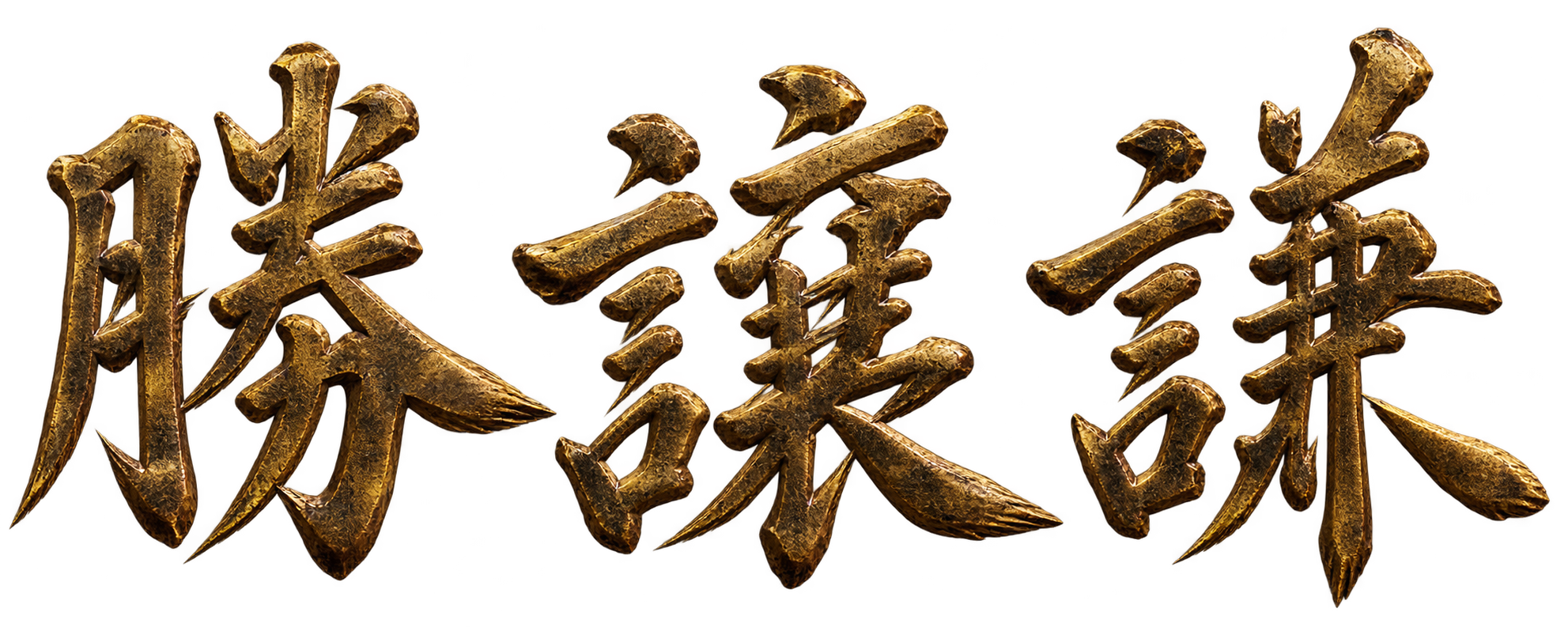
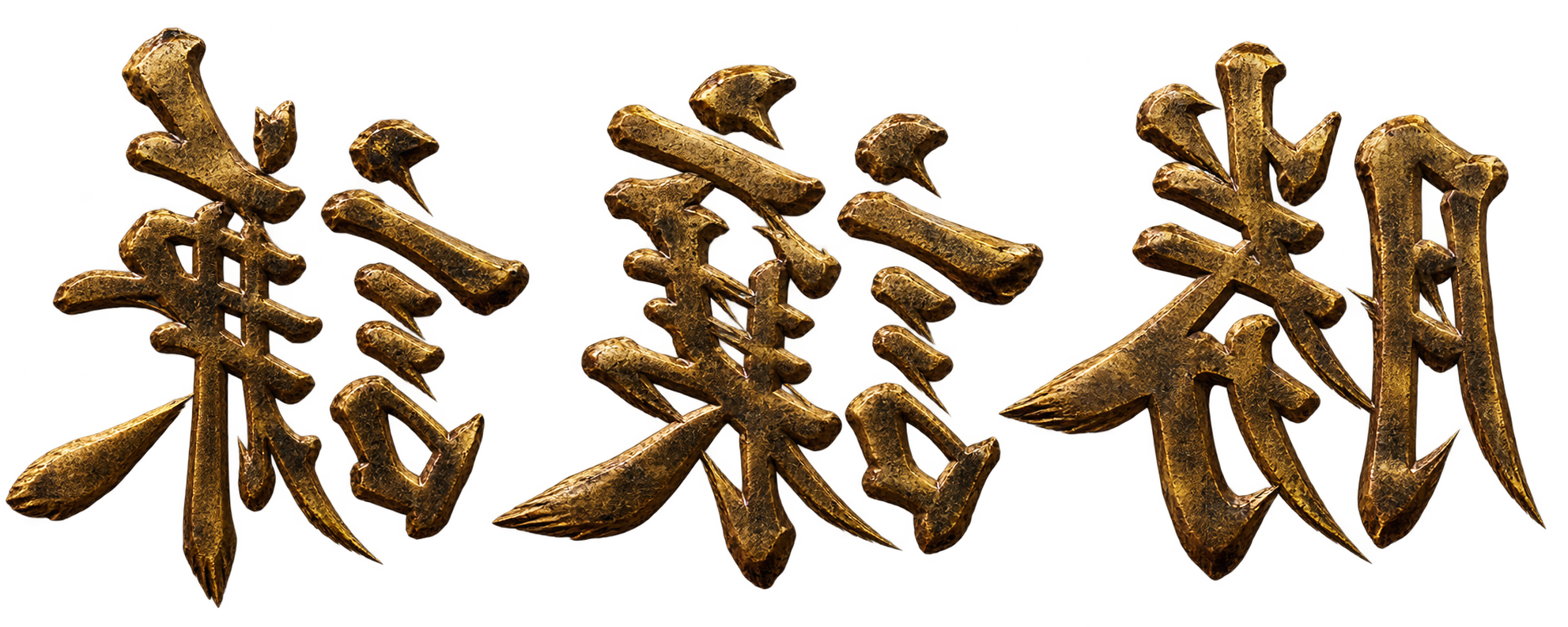
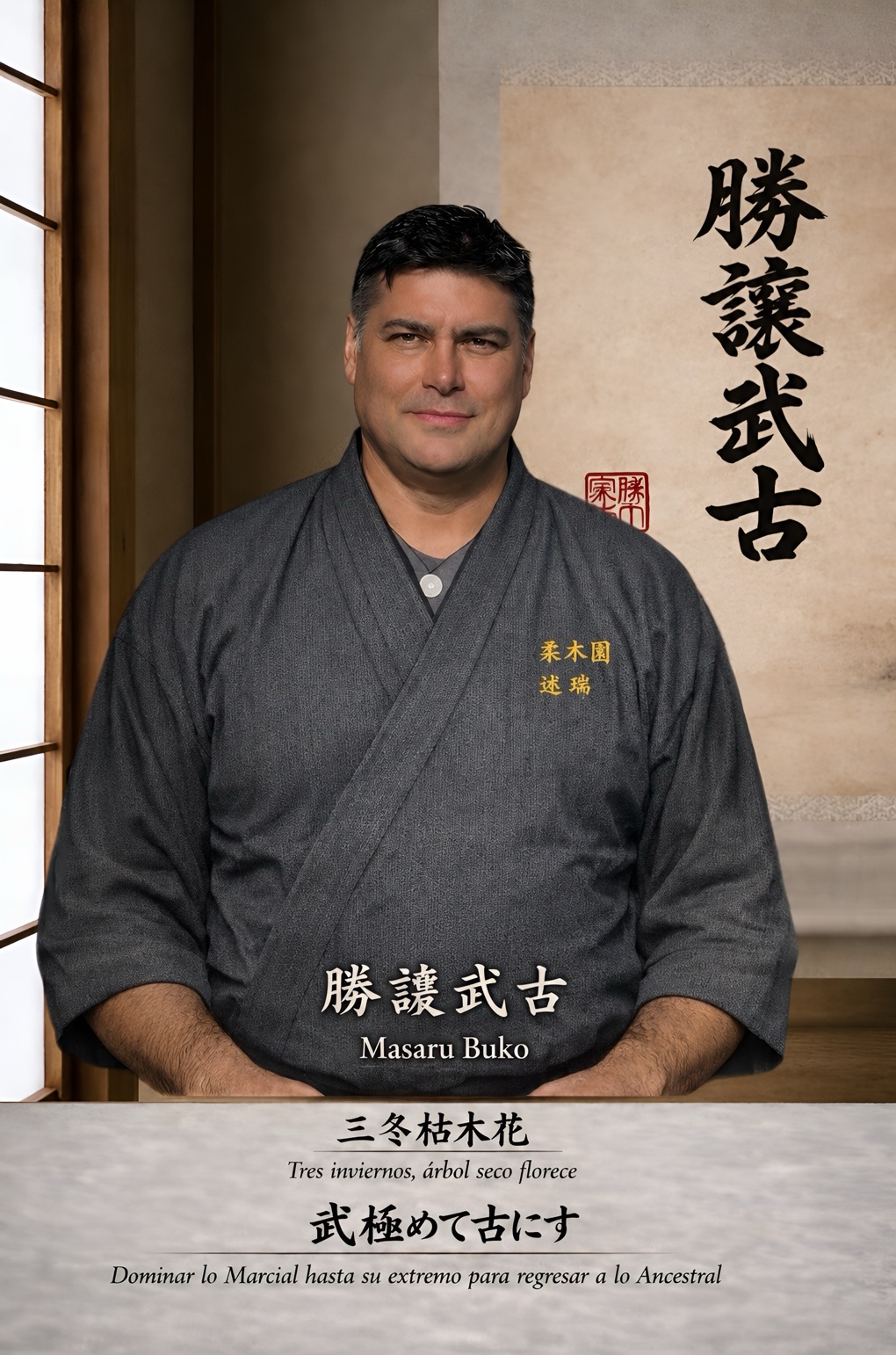
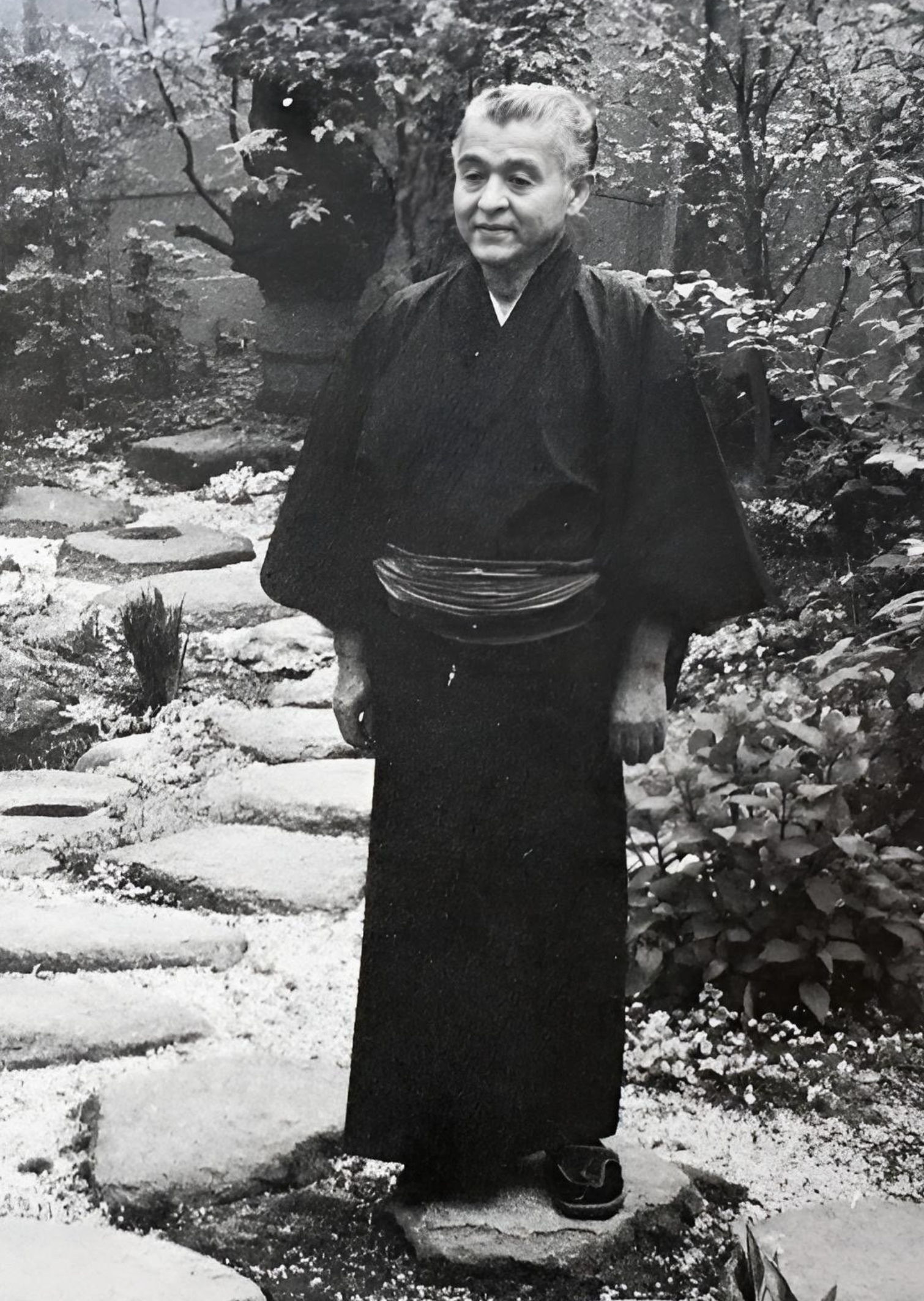
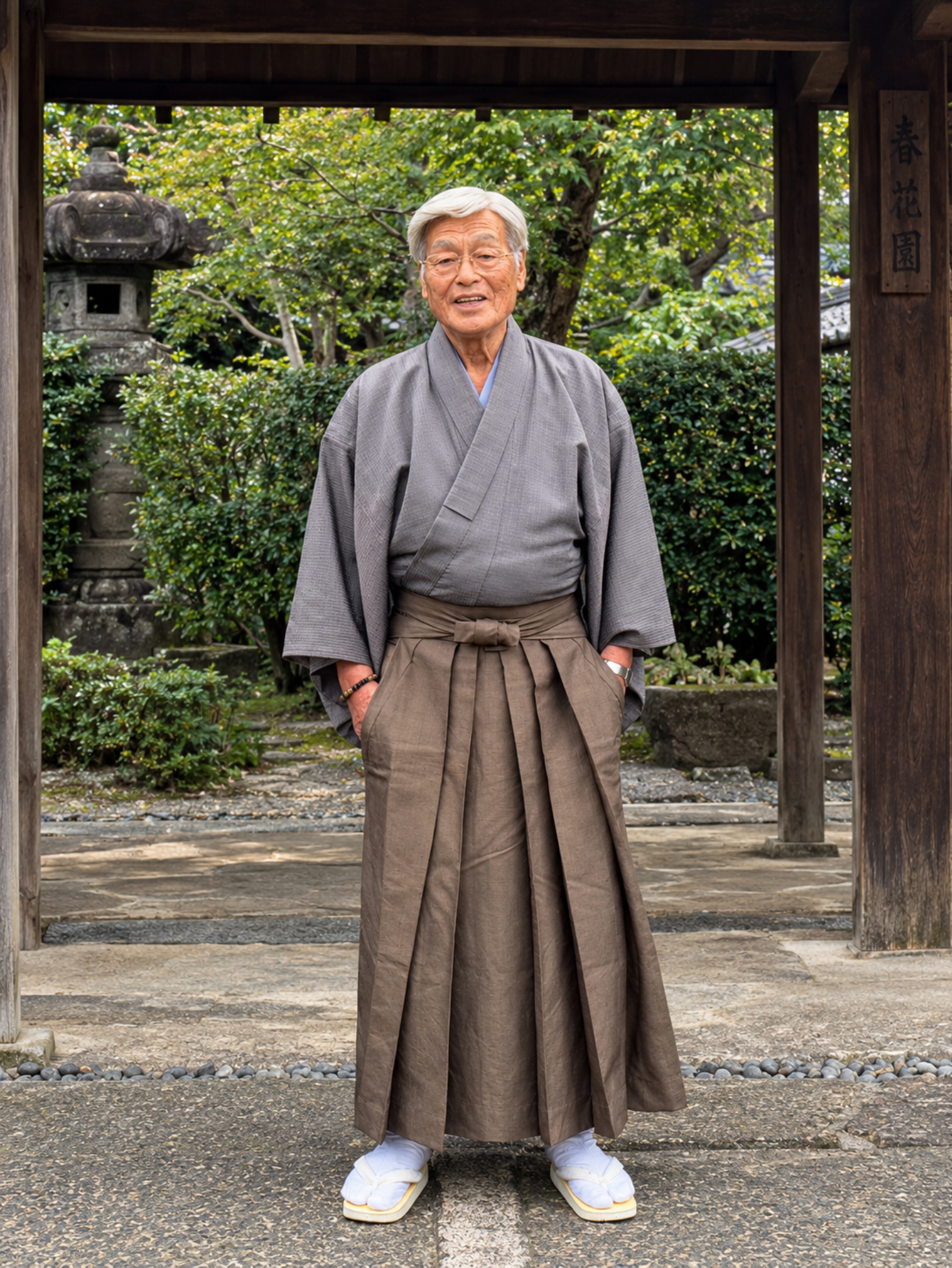
My name is Marcial Yuste Blasco, though within the path of bonsai and suiseki I am known by my Japanese artistic name, Masaru Ken (勝讓謙). Until September 2026 I was known as Masaru Buko (勝讓武古), a gō or “path name” received on setting out on the way in the Keidō Katayama-ryū; today, as an official disciple with an artistic name, I am Masaru Ken.
My journey did not begin in a pot or an exhibition hall. It began much earlier, in the study and observation of landscape. Trained in Physical Geography and deeply connected to the natural world, I have devoted much of my life to roaming mountains, wetlands, and natural spaces, learning to interpret the forms, processes, and silences that give a territory its character.
That way of looking at the landscape naturally led me to bonsai and suiseki. Not as isolated hobbies, but as cultural expressions capable of distilling the essence of nature into a human scale. Since then, I have devoted decades to the study of these disciplines, delving into both their technical practice and their historical, philosophical, and aesthetic foundations.
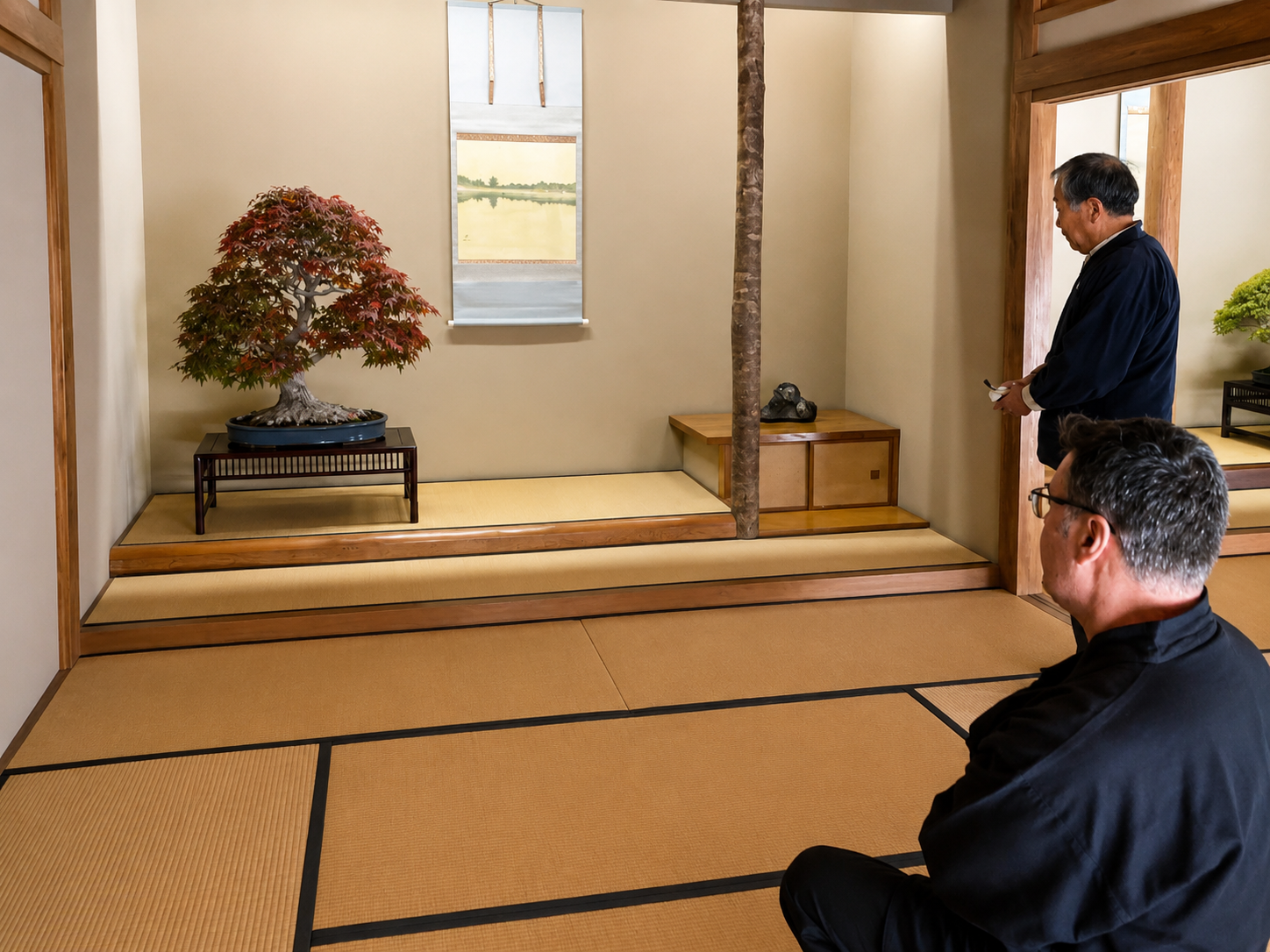
My training has been closely tied to Japanese tradition, especially through learning alongside masters and professionals who have helped shape my understanding of this art. However, my goal has never been to reproduce models mechanically, but to understand the principles that underpin them in order to transmit them authentically within our own cultural context.
The concept of Keidō—the Way of the Landscape—encapsulates much of that search. A way of understanding bonsai, suiseki, and their related arts not as isolated objects, but as tools for contemplating, interpreting, and expressing the natural environment.
This space was created as a place of rigorous study, documentation, and transmission. A place to share the experiences, research, and work accumulated over the past decades. Teaching and practicing bonsai and suiseki are understood here as a path of exchange, learning, and cultural preservation. If you have arrived here moved by the same curiosity, perhaps we share part of the same path.
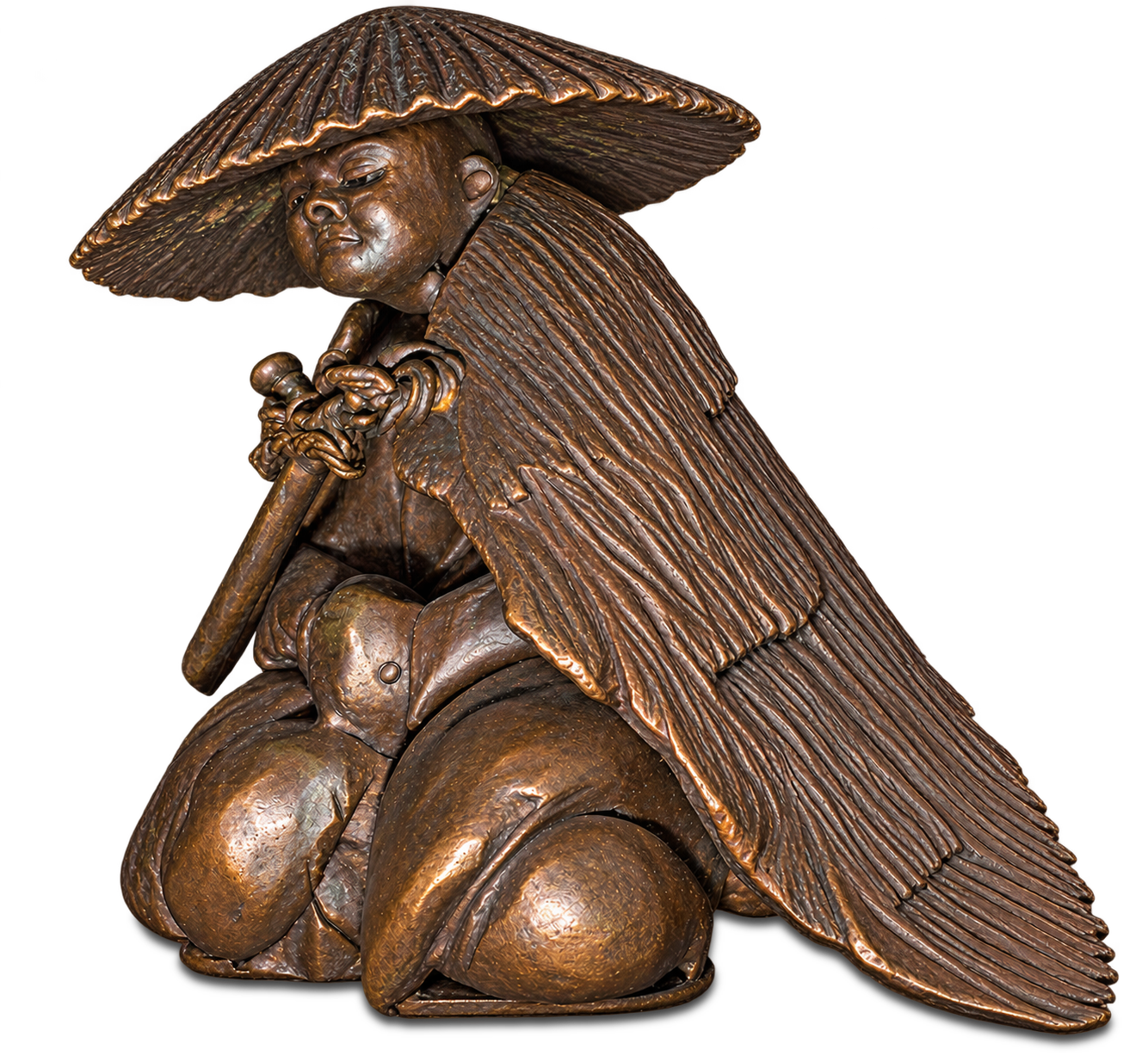
Only much later did I understand that my love for nature had begun long before I could put a name to it. This video is a journey back to that origin.
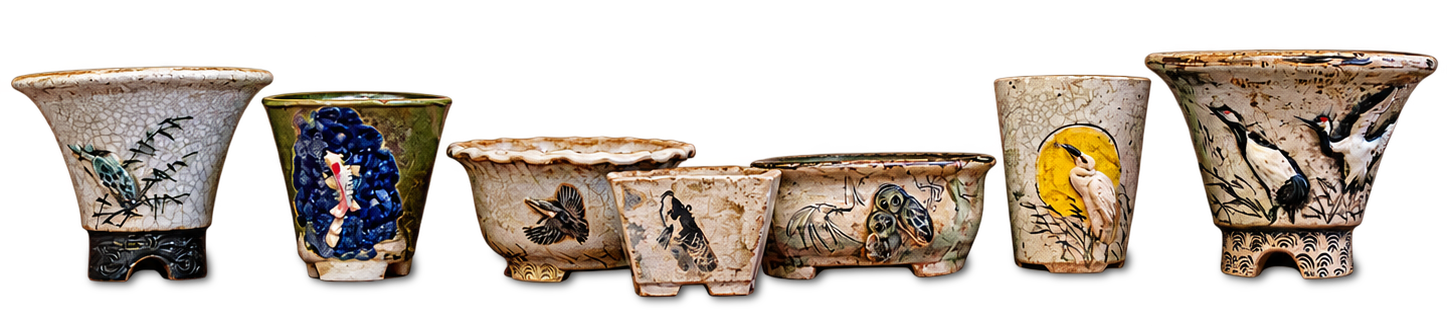
Before the Path

Long before bonsai and suiseki became part of my life, another question had already accompanied me for years: how human beings related to the natural world before we stopped considering ourselves part of it.
My interest in nature was never limited to observing it. I was also deeply interested in understanding human beings within it. For that reason, prehistory and human evolution occupied an essential place in my studies and preoccupations for many years. I was especially drawn to societies that predated agriculture, when survival depended directly on knowledge of the land, its cycles, its animals, its plants, its water, and its seasons.
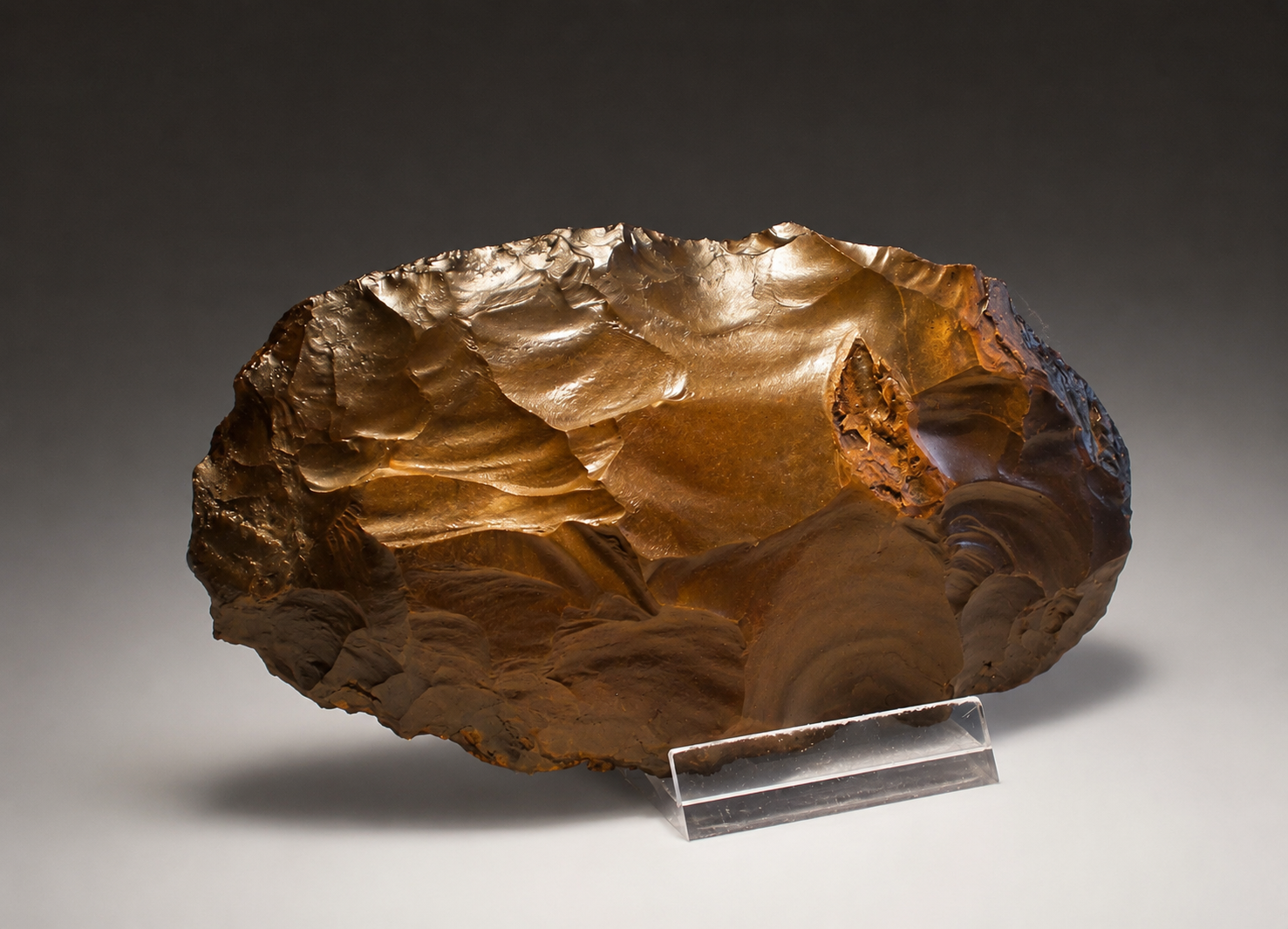
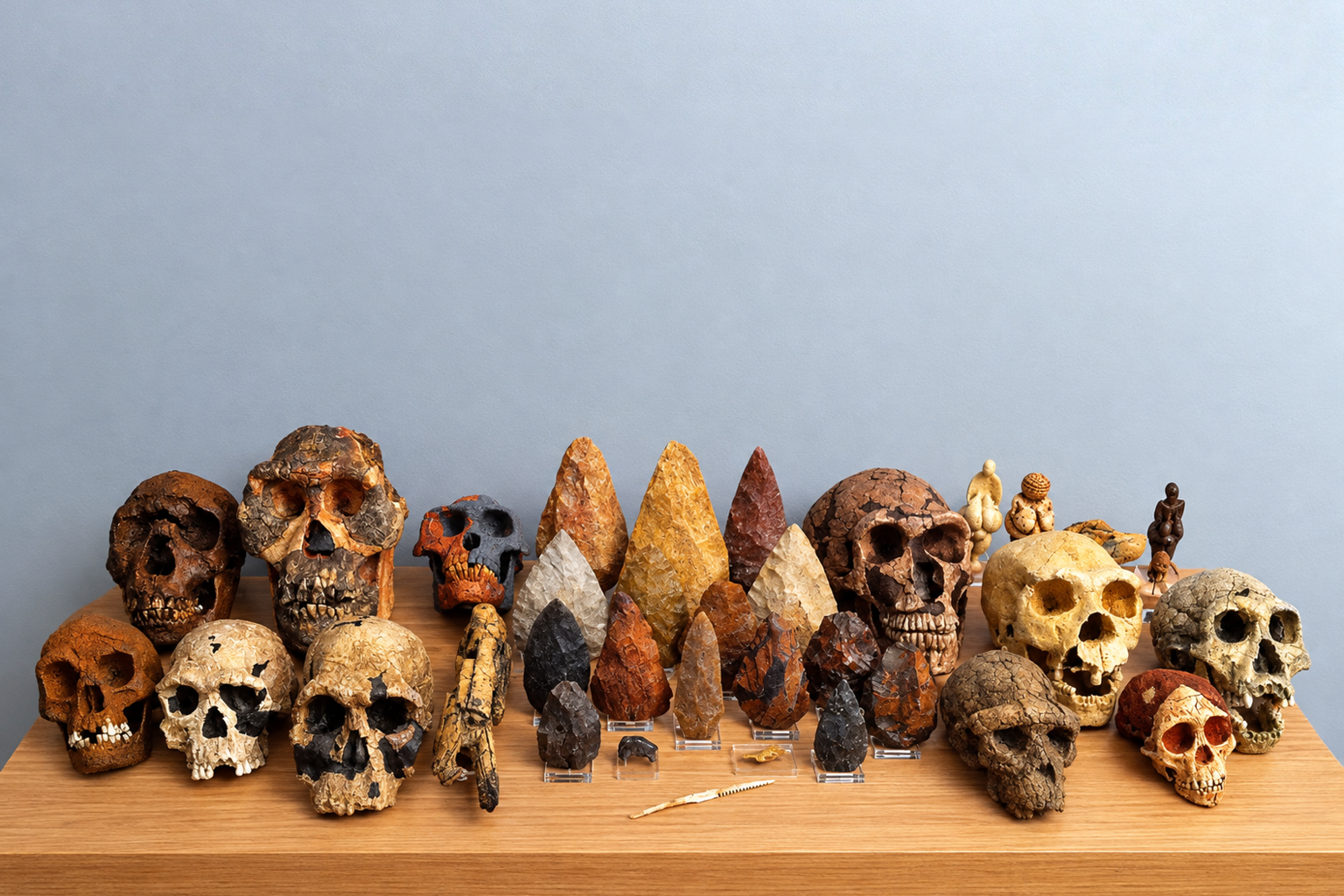
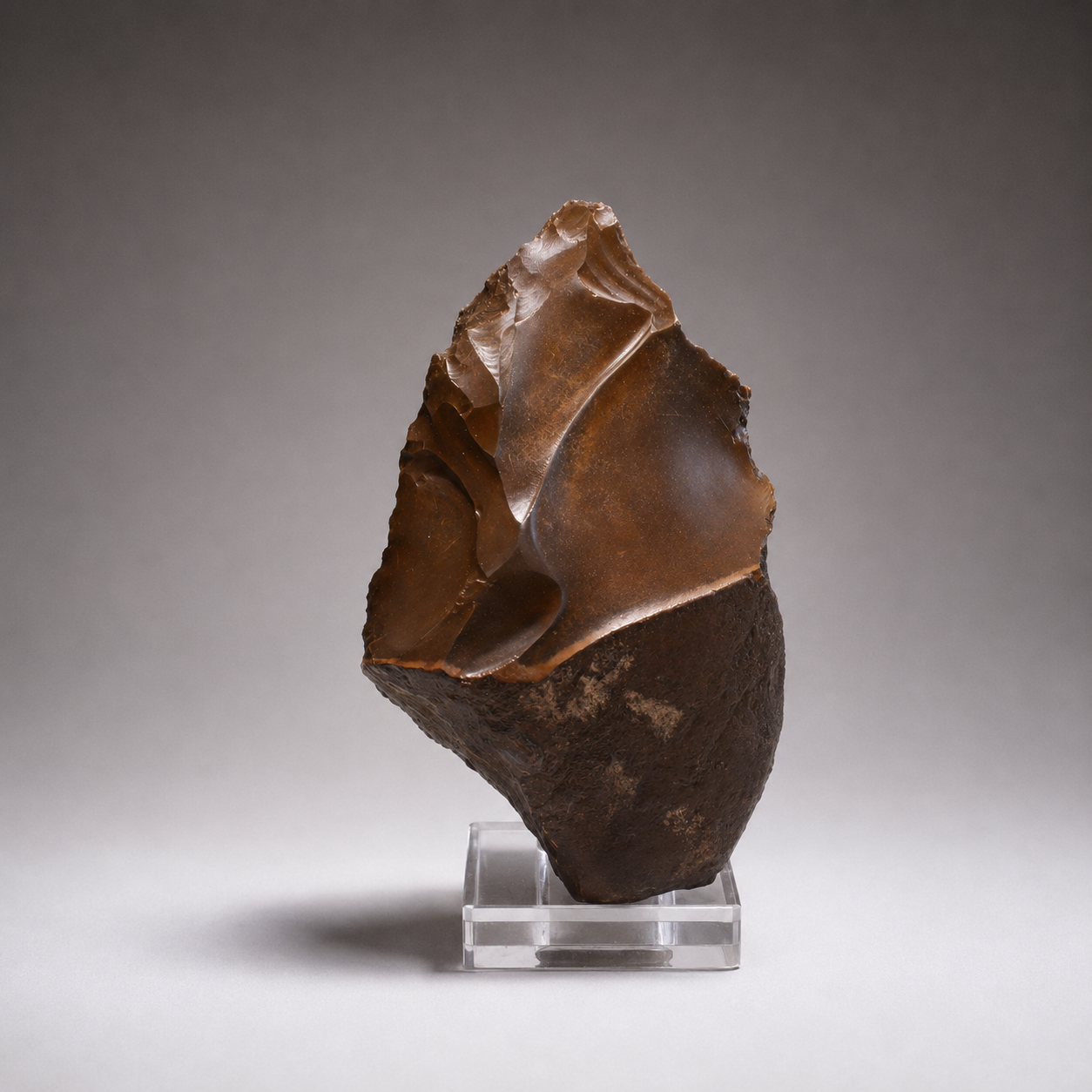
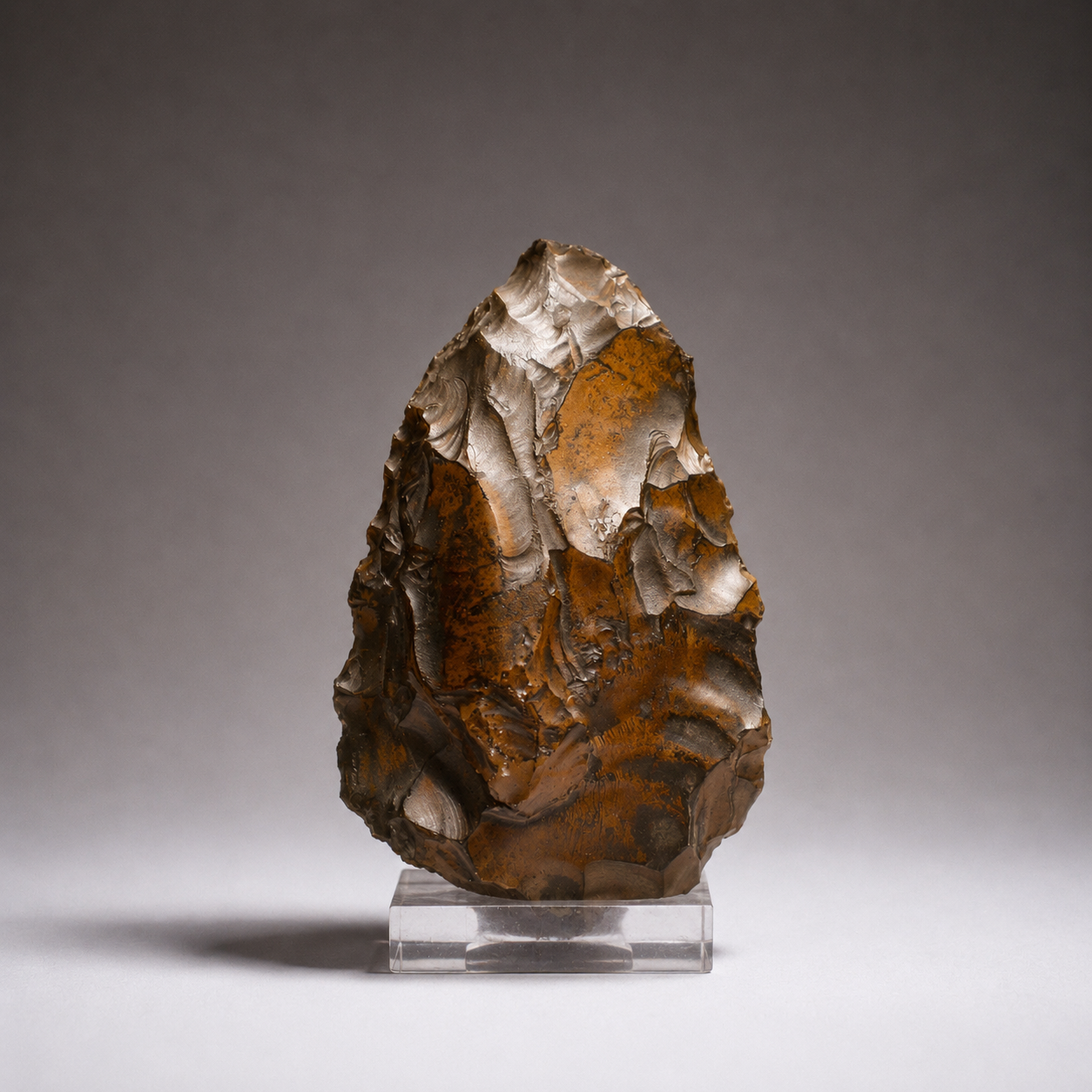
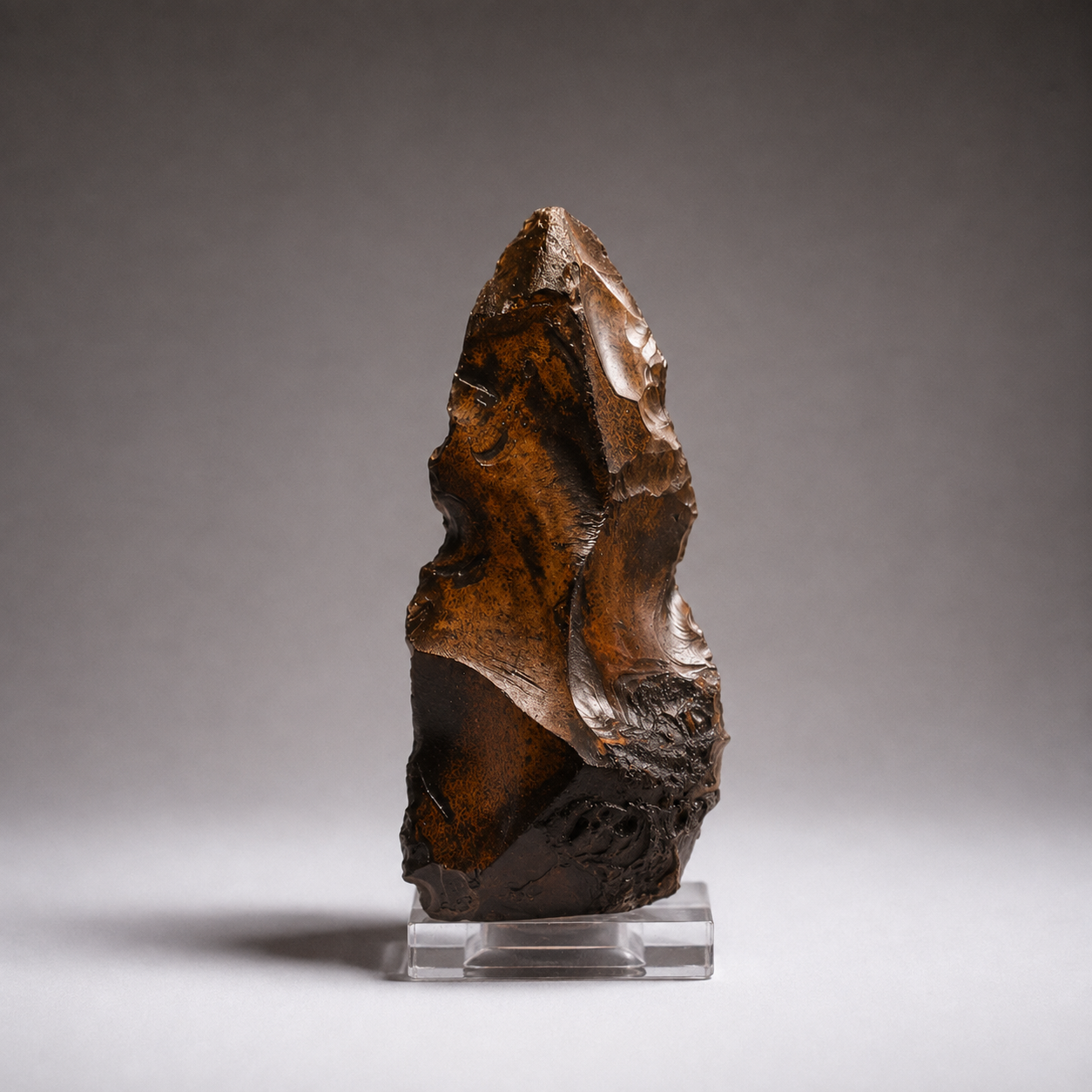
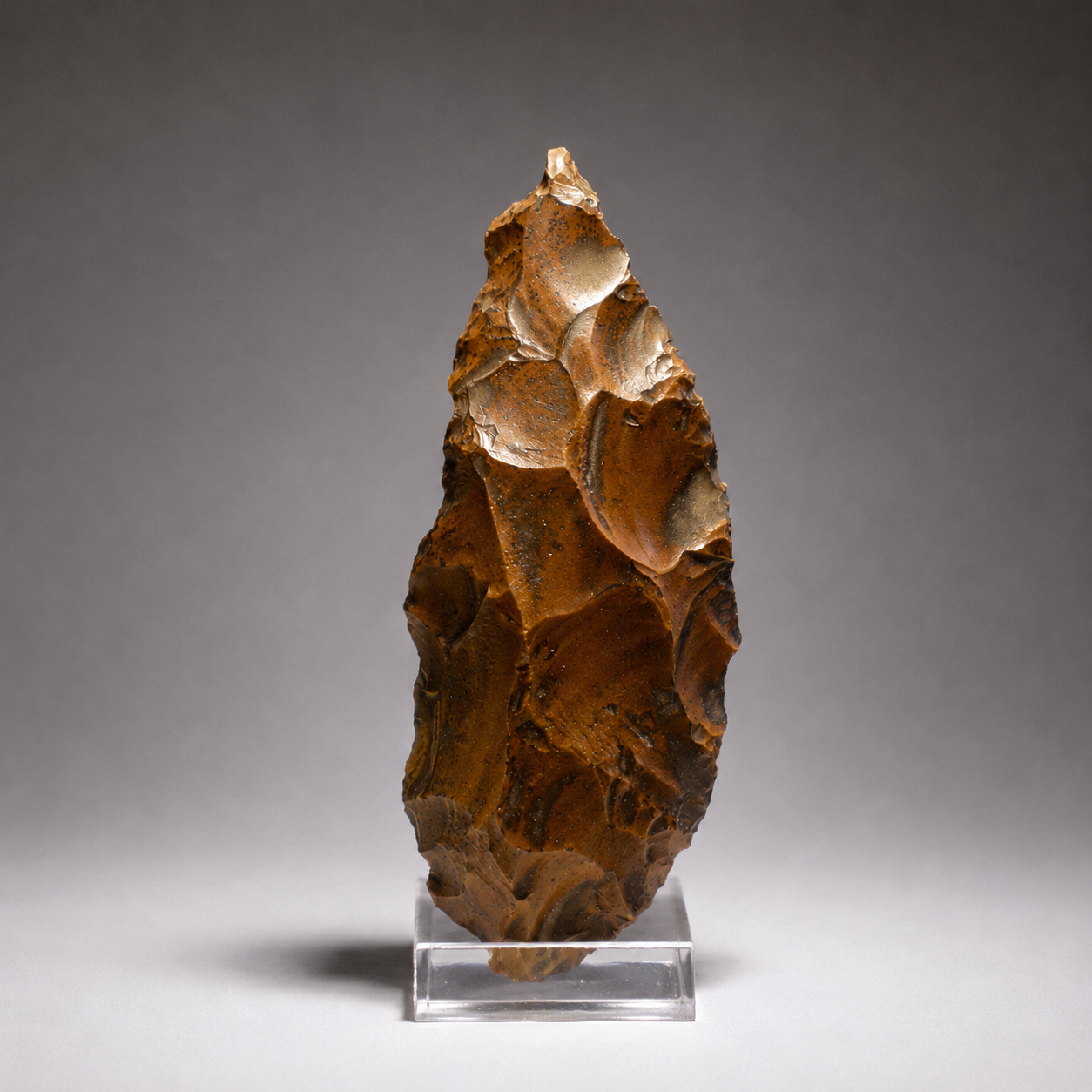
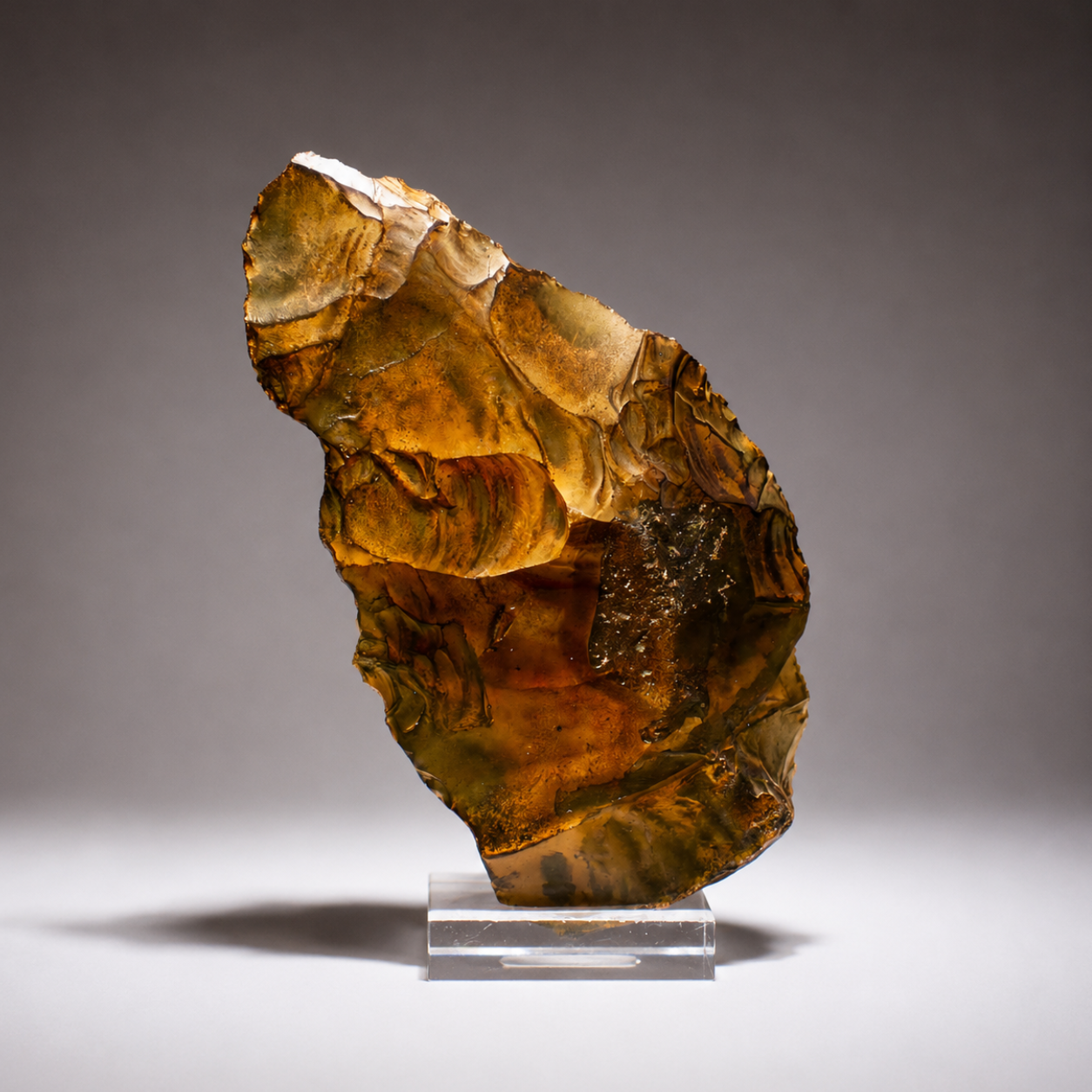
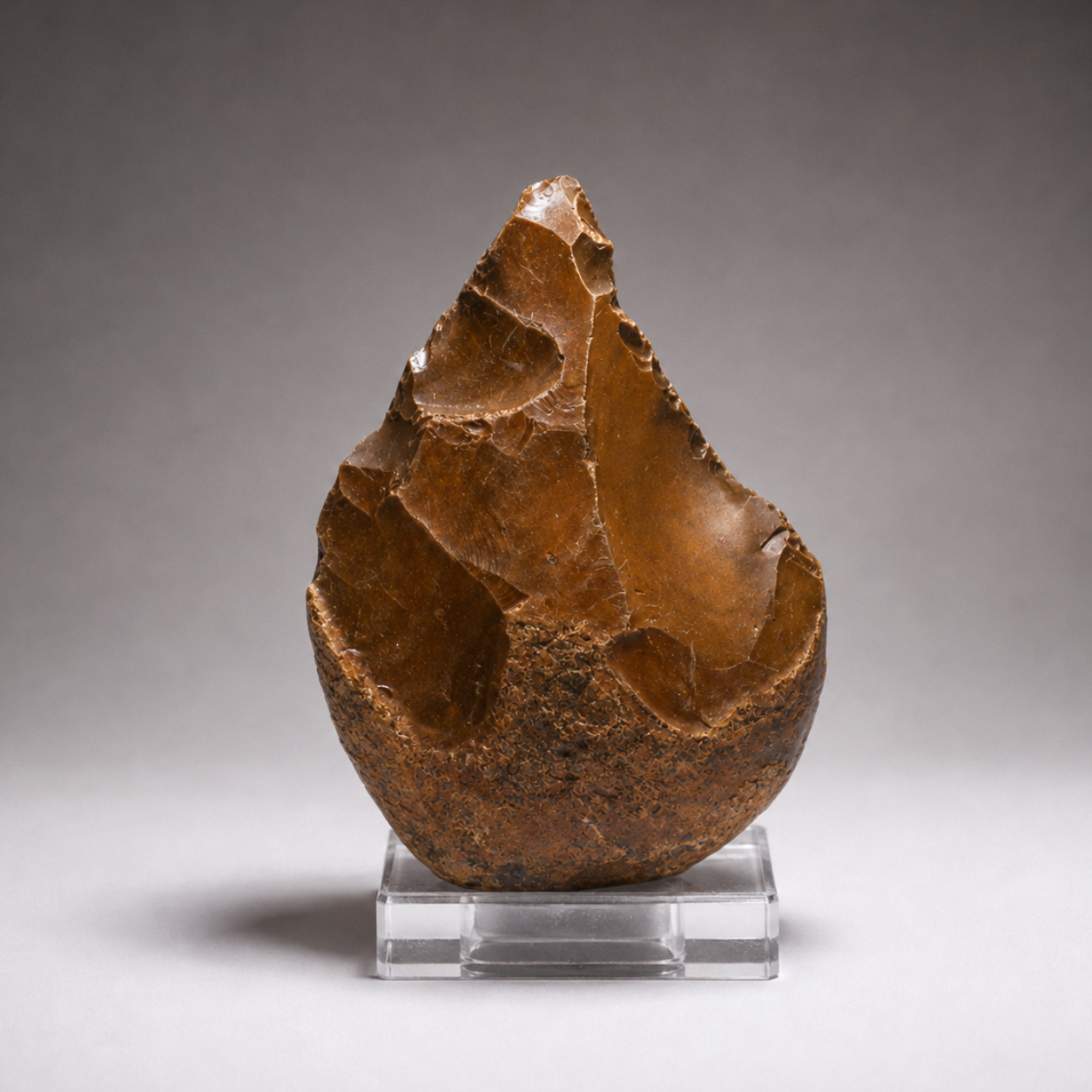
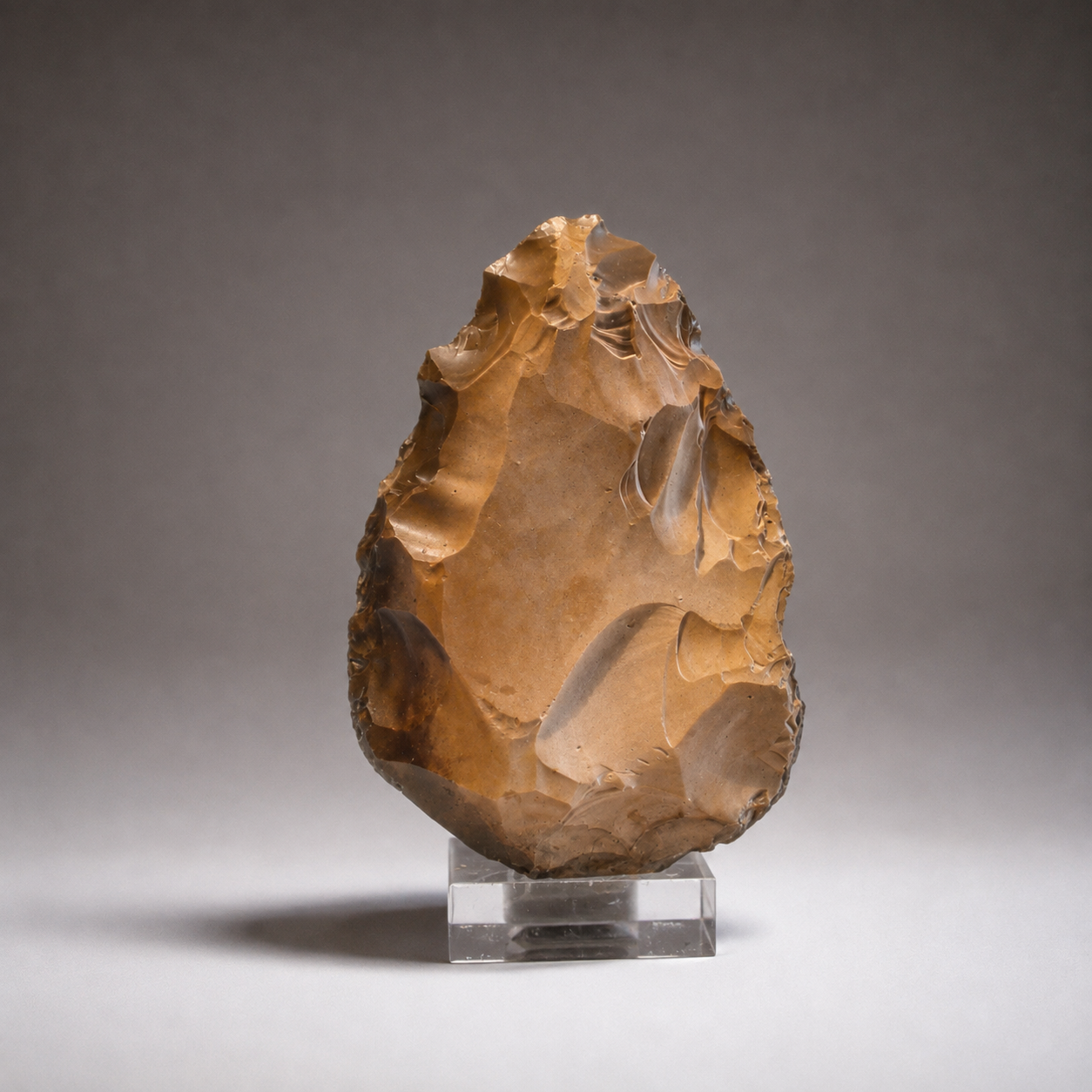
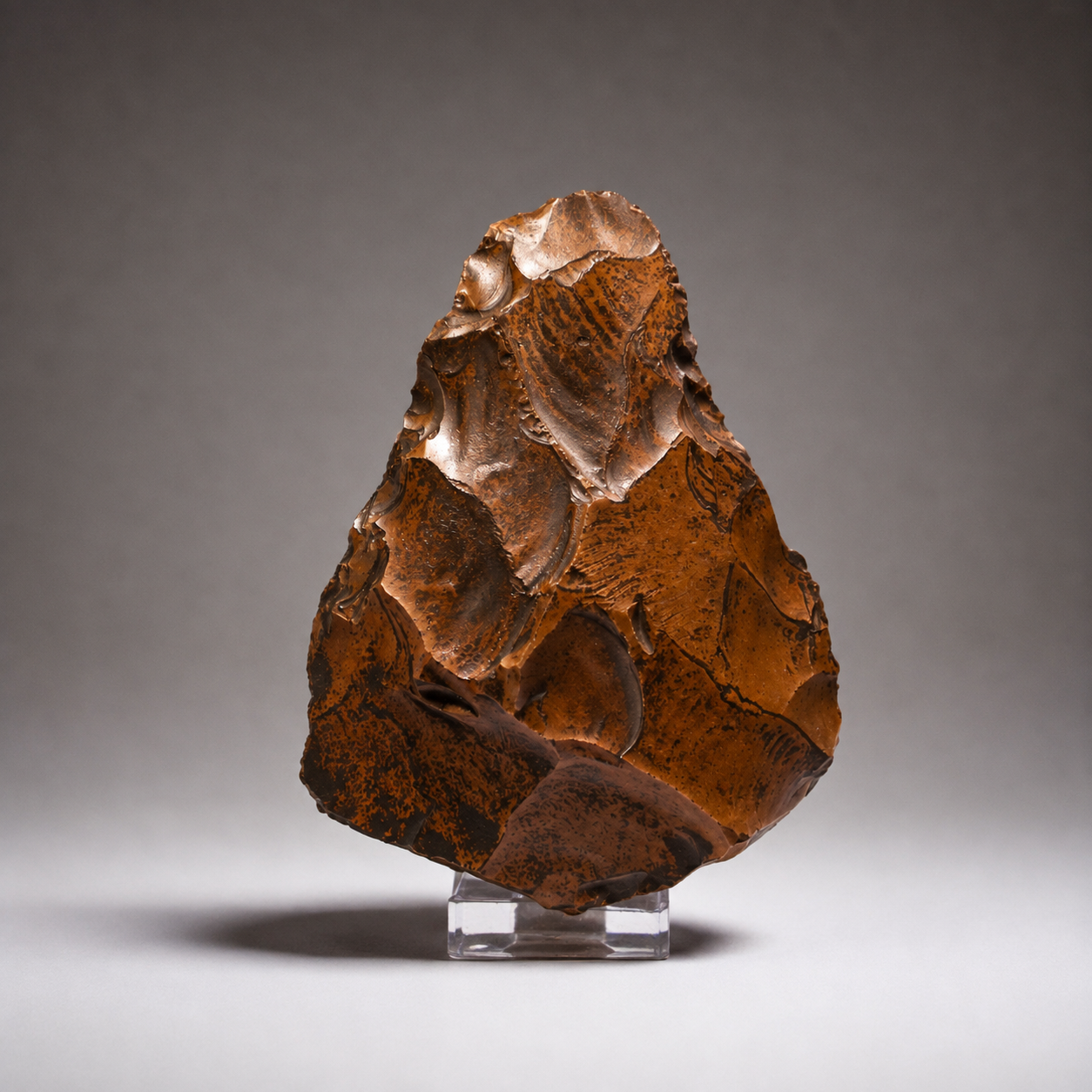
Over the years I have gathered pieces and reproductions related to that history: African bifaces, stone tools, and museum-quality replicas of skulls belonging to different stages of human evolution. I have never understood them merely as archaeological objects. To me they represent the testimony of a human being who still lived immersed in the landscape and whose existence depended on understanding it.
Over time, that interest extended to other cultures and ways of thinking in which nature does not appear as a setting separate from human beings, but as part of a reality of which they themselves are part.
I found a particular affinity with the Indigenous cultures of North America and their profound relationship with the land. Beyond the differences among peoples and traditions, I was drawn to a worldview in which the earth, water, animals, plants, and places hold meaning beyond their immediate use — a way of understanding the world grounded, in many cases, in belonging, reciprocity, and respect for that which makes life possible.
Among the readings that left a particular mark on my thinking was the well-known speech attributed to Chief Seattle. Regardless of the historical controversies surrounding the various versions that have come down to us, those words expressed an idea I recognized as deeply close to my own: the impossibility of separating human beings from the land that sustains them.
My words are like the stars: they never go out.
That intuition has stayed with me ever since.
That is also why, when I later discovered certain Japanese traditions, I did not feel I was encountering an entirely new idea. Rather, I found another way of expressing a relationship with nature that human beings have sought and developed in many different ways throughout their history.
Shinto, Buddhism, the art of landscape, the contemplation of the seasons, and, later, the traditions associated with bonsai, suiseki, and the Japanese contemplative space offered me a particularly precise language for expressing something I had long been seeking.
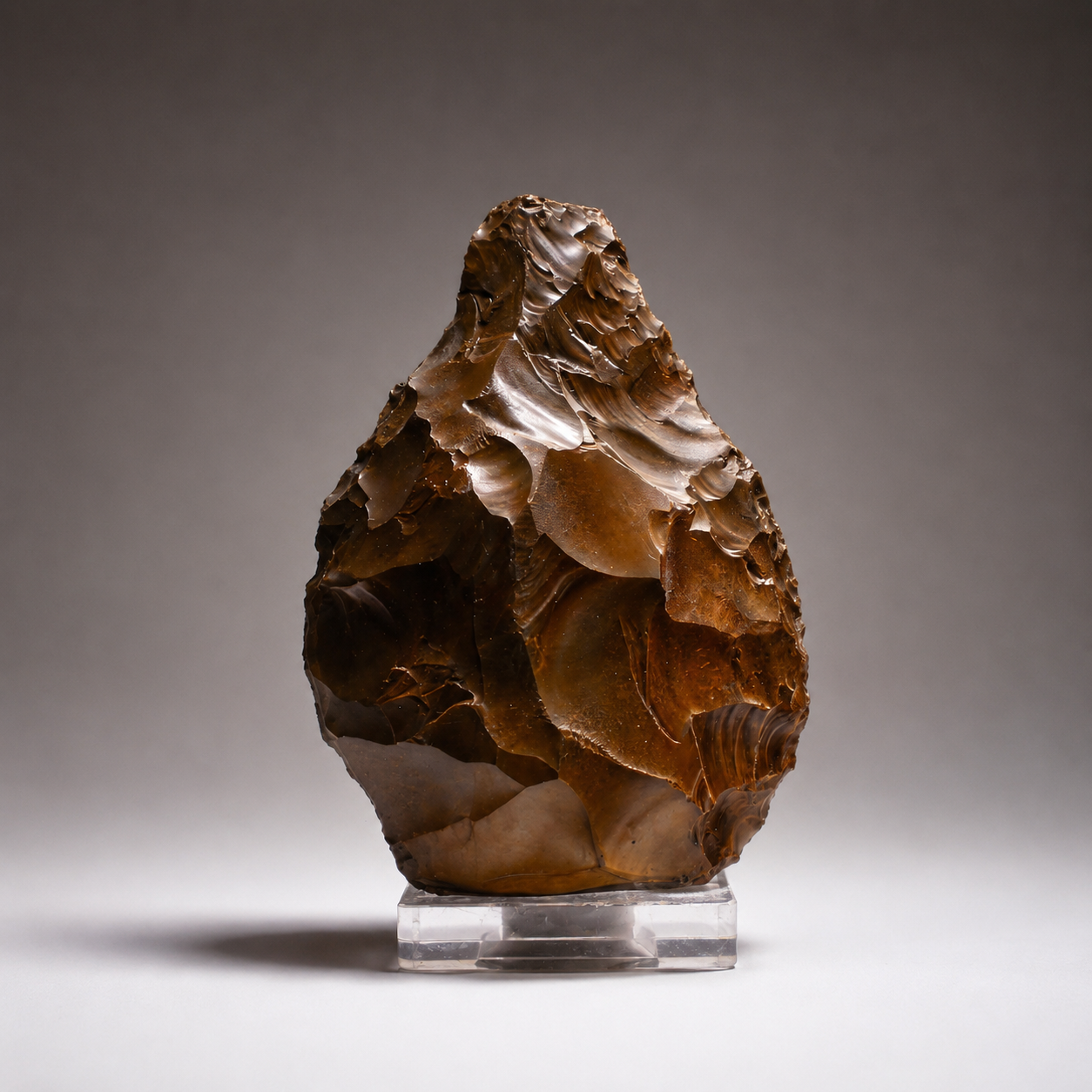
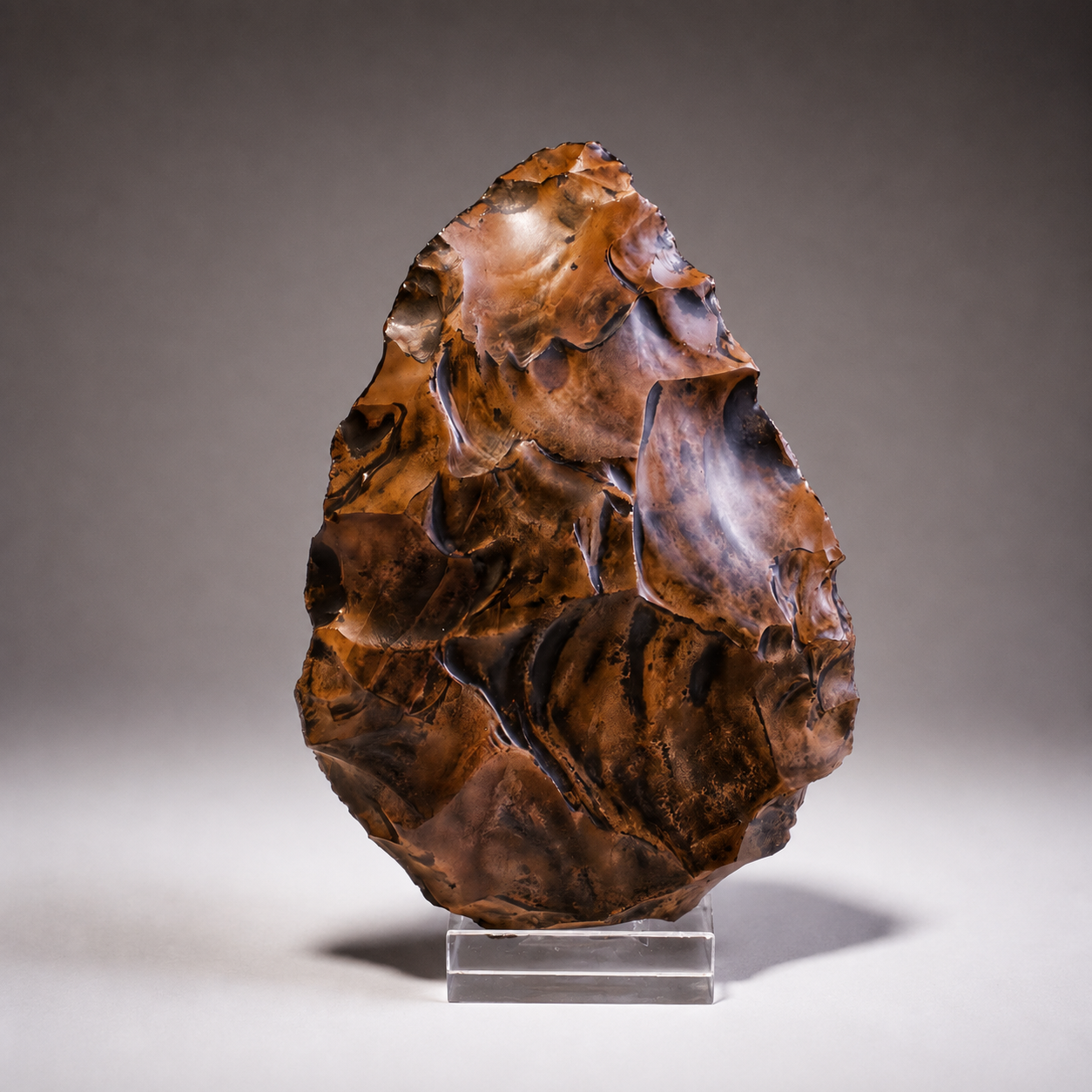
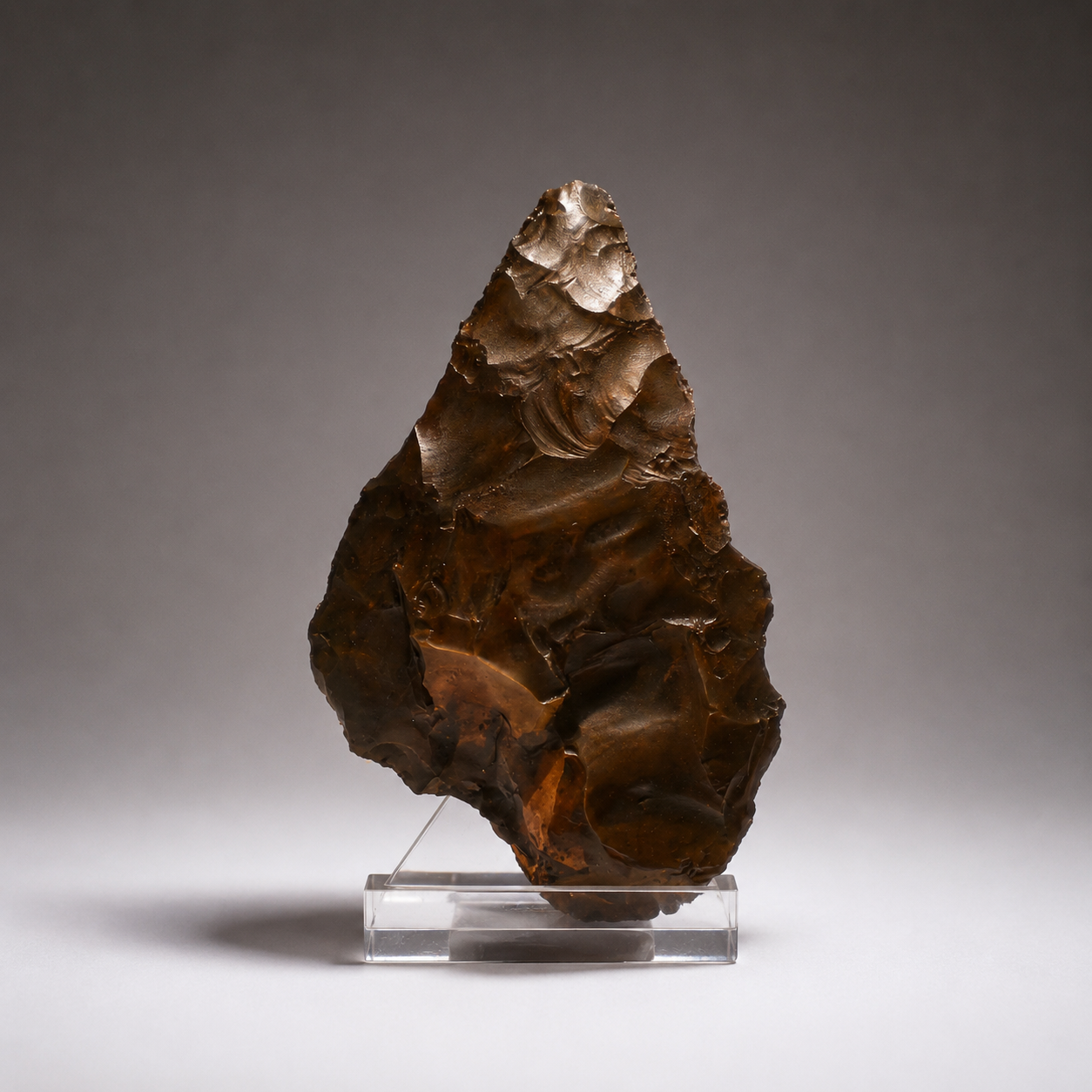
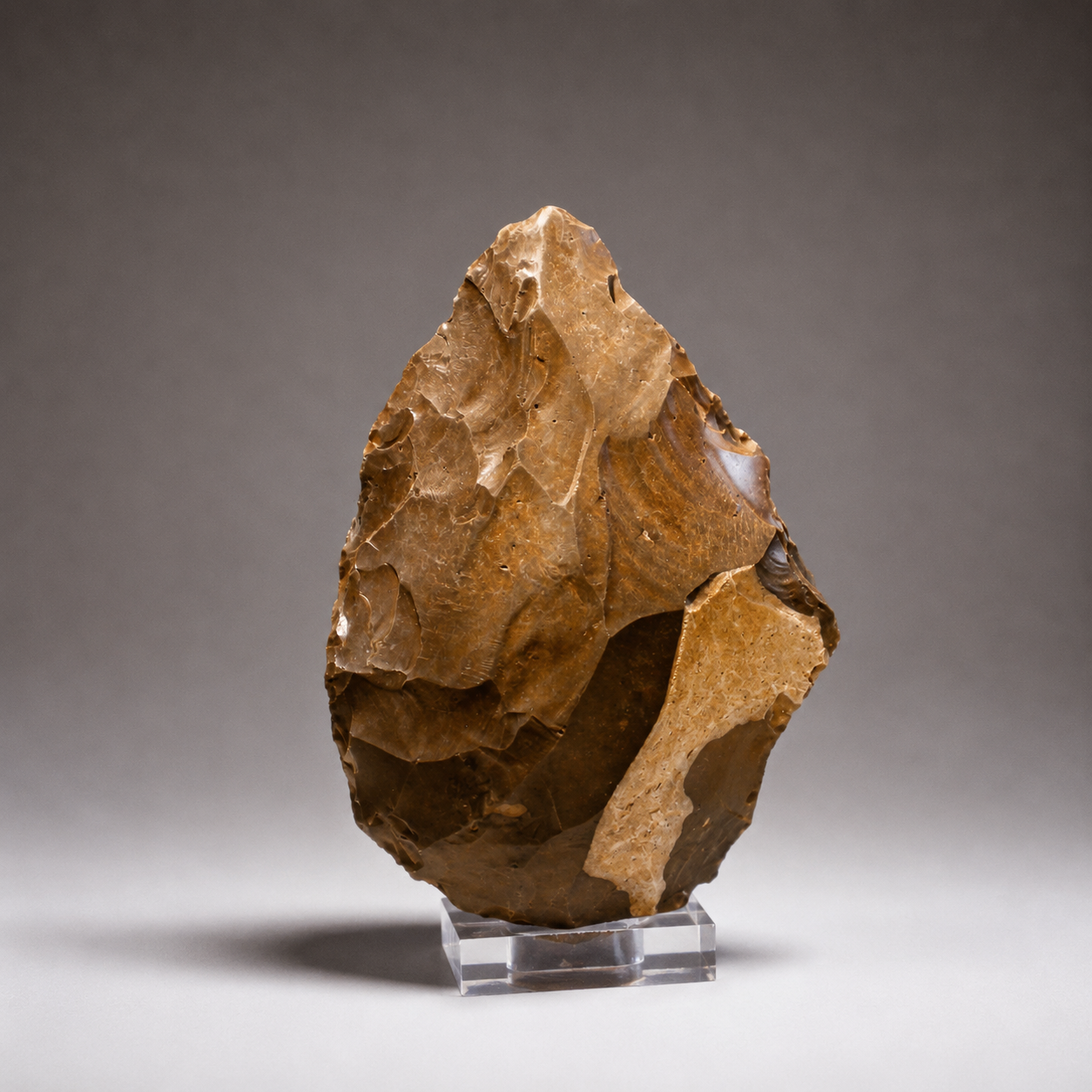
The pieces shown below are part of my personal collection —just a small sample of it— and are Acheulean bifaces from the Sahara (Algeria, Libya, and Niger). Based on their workmanship, the knapping corresponds to the Upper Acheulean of the Middle Pleistocene, with an estimated range of between 350,000 and 500,000 years, attributed to the technical repertoire of Homo erectus / Homo heidelbergensis. No field documentation naming an expedition survives; the most rigorous provenance that can be established traces back to specialized private trade in the 2000s, through biface.de, from a German collection assembled over the course of the twentieth century.
And perhaps that is precisely why bonsai, suiseki, and Keidō came to hold, for me, a meaning that goes far beyond technique or aesthetics. In them I found a way of once again situating human beings before the landscape — not as owners, but as observers, interpreters, and part of it.
The path I walk today began long before I could give it a name.
Japan was not the origin of my way of looking at nature.
It was one of the places where that way of looking found a language.
Technical vocabulary for this section
- Acheulean
- The lithic industry to which these pieces belong, developed by Homo erectus and Homo heidelbergensis during the Lower and Middle Palaeolithic, and characterized by the biface as its emblematic tool.
- Biface
- A stone tool knapped on both faces by percussion —hence the name— the emblematic piece of the Lower and Middle Palaeolithic.
- Cleaver
- A variant of the biface with a straight, transverse distal edge rather than a pointed one, suited to heavier cutting tasks.
- Middle Pleistocene
- The geological epoch —within the Ice Age— in which these tools were made, with an estimated range of between 350,000 and 500,000 years ago.
- Flint
- A siliceous sedimentary rock with conchoidal fracture, one of the lithic materials most commonly used for knapping bifaces because it allows a controlled edge.
- Quartzite
- A very hard metamorphic rock, used alongside flint as a raw material for knapping bifaces.
- Bifacial retouch
- A knapping technique consisting of removing flakes from both faces of the stone to shape the piece and give it an edge.
- Cortex
- The natural, unworked outer surface of the original stone nodule; its partial survival on a piece indicates the degree of knapping it underwent.
- Amygdaloid
- A biface typology with an almond-shaped outline, one of the classic silhouettes in the archaeological classification of these pieces.
- Cordiform
- A biface typology with a heart-shaped outline, a pointed apex, and a rounded base.
- Ficron
- An elongated, lanceolate biface typology, thick in section, with edges converging toward a very sharp point.
- Desert varnish (wind patina)
- The tone and sheen the stone's surface acquires after millennia of exposure to wind and heat in arid climates.
- Homo erectus / Homo heidelbergensis
- Fossil human species credited with making Acheulean bifaces.
- Knapping
- The technique of working stone by percussion and/or pressure to produce tools; the body of knowledge and gestures that gave shape to these pieces.
The Call
I was born in 1972. Before the naturalist, before the ornithologist, there was an eight, nine, ten-year-old boy, sitting at just the right distance from a glass screen, waiting for something important to happen. In those eighties, television still held something of the miraculous: a window capable of carrying you to another world, of turning any living room into the savannah, the tundra, the floor of an ocean he would never set foot in. To a boy that age, it wasn't a programme — it was science fiction made of real animals. It was through that window that I discovered Félix Rodríguez de la Fuente — a doctor by training, a self-taught naturalist, a pioneer of conservation at a time when almost no one in Spain spoke of conserving anything.

His series El Hombre y la Tierra was my favourite programme, and favourite is putting it mildly: it was an appointment that admitted no excuses. I never missed a single episode. Everything else —homework, plans, anything else I had to do— could wait until the credits rolled. There was a sincerity in Félix that came through even in his voice, a way of kneeling beside a wolf or speaking to a bird of prey that made it impossible not to be drawn into that universe, if you had even the slightest sensitivity to begin with.
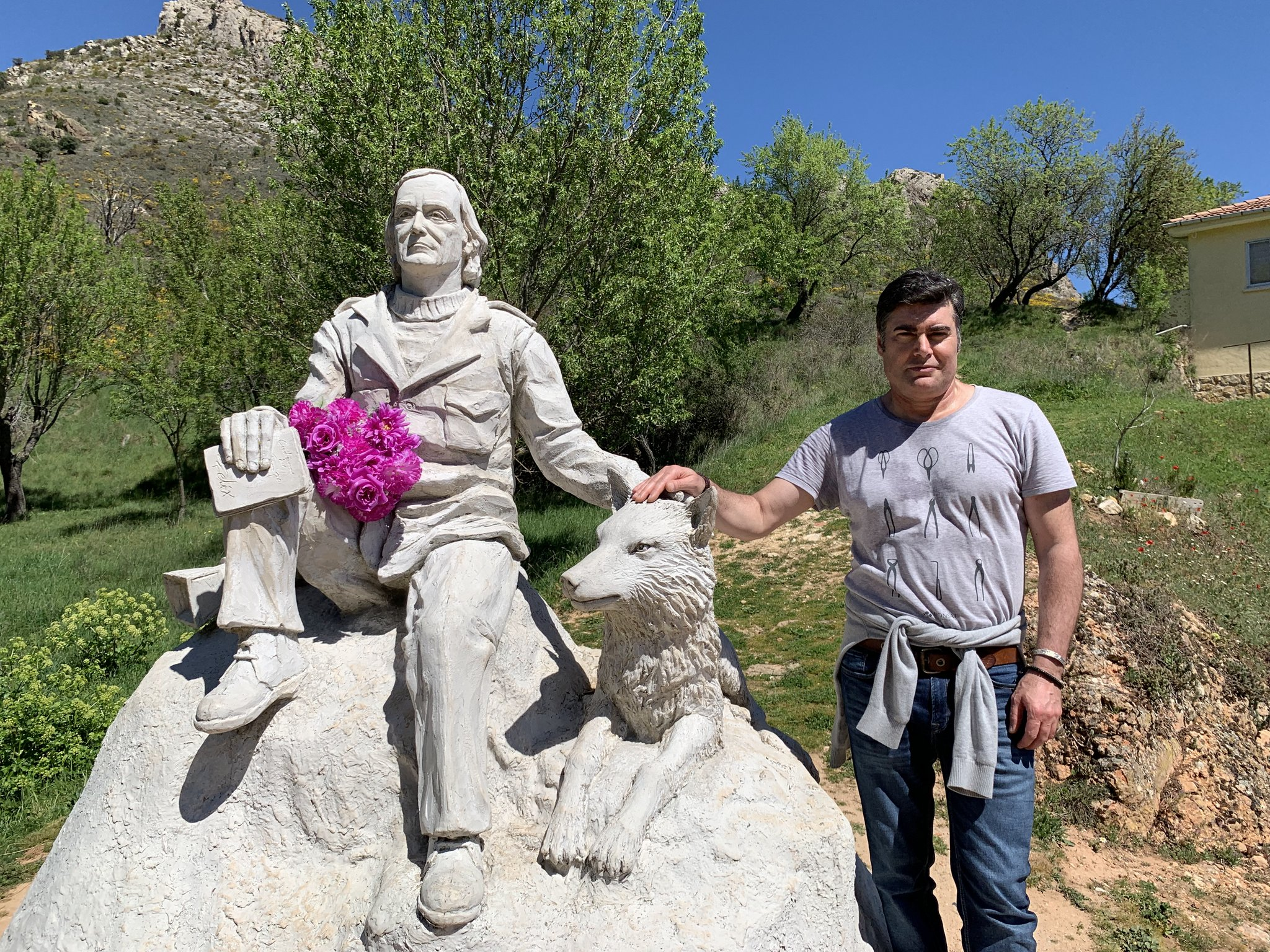
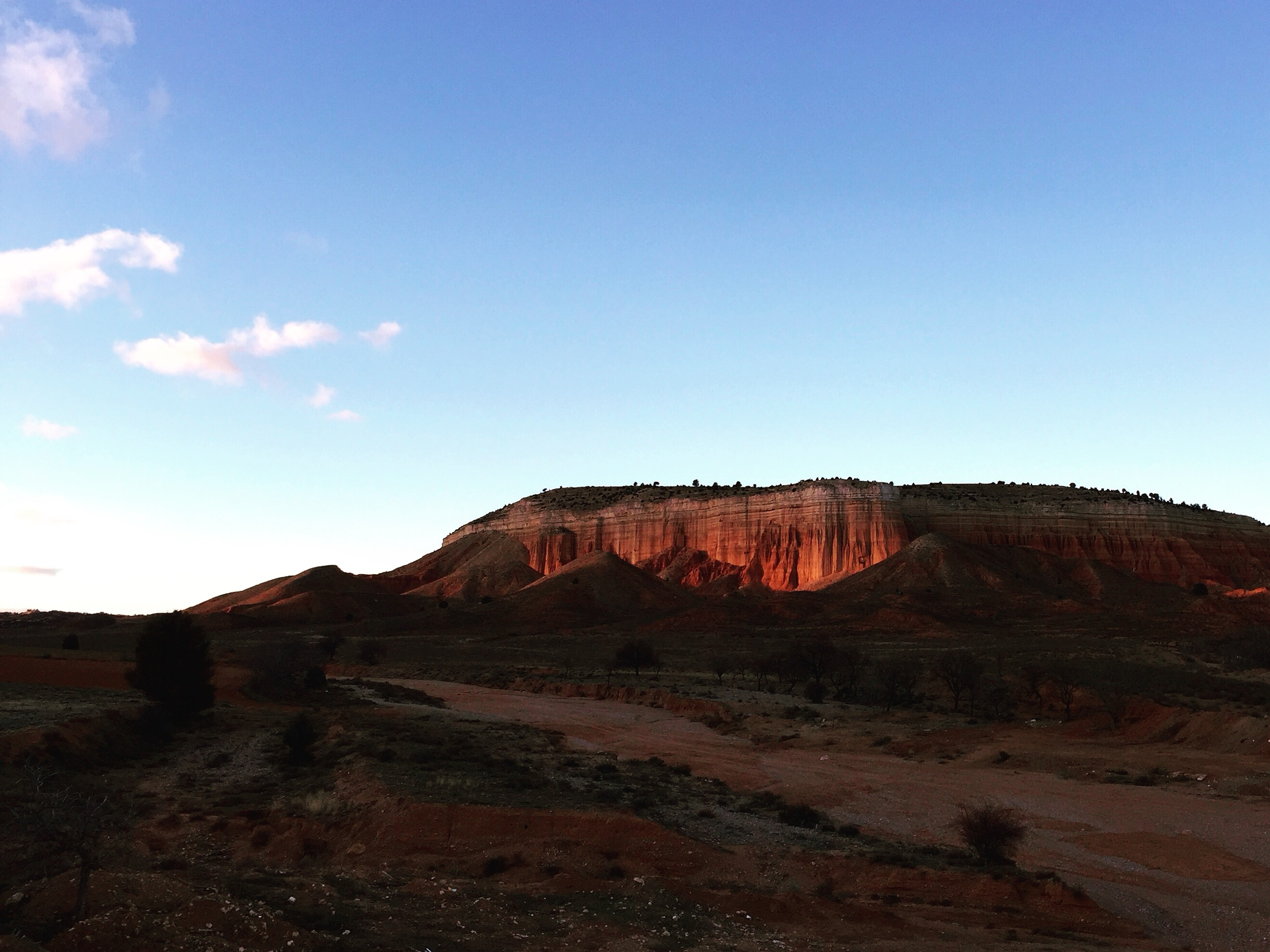
Every summer, for as long as I can remember and until, as a teenager, I stopped following my parents everywhere, we travelled to Val de la Sabina, a hamlet in the Rincón de Ademuz tucked into a kind of mountain amphitheatre, as if the whole valley had deliberately hidden itself from the rest of the world. The house had belonged to my grandparents; in time it passed to my father, simply because he was the only one of the siblings willing to pay for its upkeep and maintenance — a legacy nobody else wanted, which he accepted almost by default.
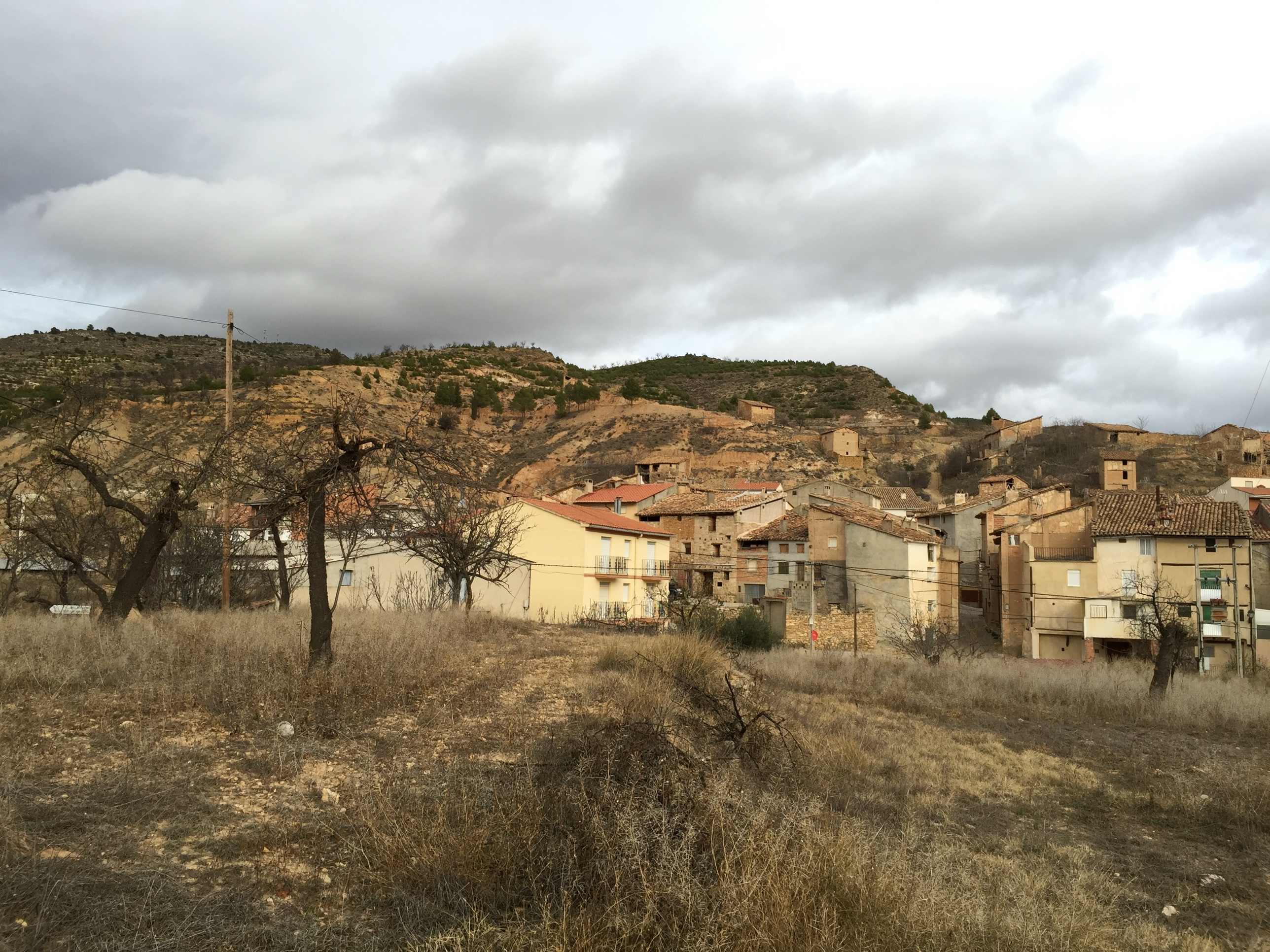
The Rincón de Ademuz is an administrative island: it belongs to the Valencian Community, but to reach it you have to cross into Aragón and back out again by road, as if the geography itself wanted to test anyone trying to get there. That stone house had no electricity or running water. We lit it with oil lamps that smelled of paraffin, heated water in the sun by the front door, walked to the fountain with the pitcher on our shoulder. At night, without a single streetlamp for kilometres around, the sky filled with more stars than I have seen anywhere since. Living there was, in a way, like stepping two hundred years back in time — and to a city boy, that didn't frighten him: it fascinated him.
In winter barely three or four families still lived there year-round; the rest of the hamlet, like us, only came back in summer. Many were the children or grandchildren of people who had emigrated decades before —to Catalonia, to Andalusia, to Valencia itself— and who returned every August to their parents' or grandparents' house, like someone touching again a root that had never quite been severed. That month turned the hamlet, nearly empty the rest of the year, into the one place in the world where I truly felt I belonged.
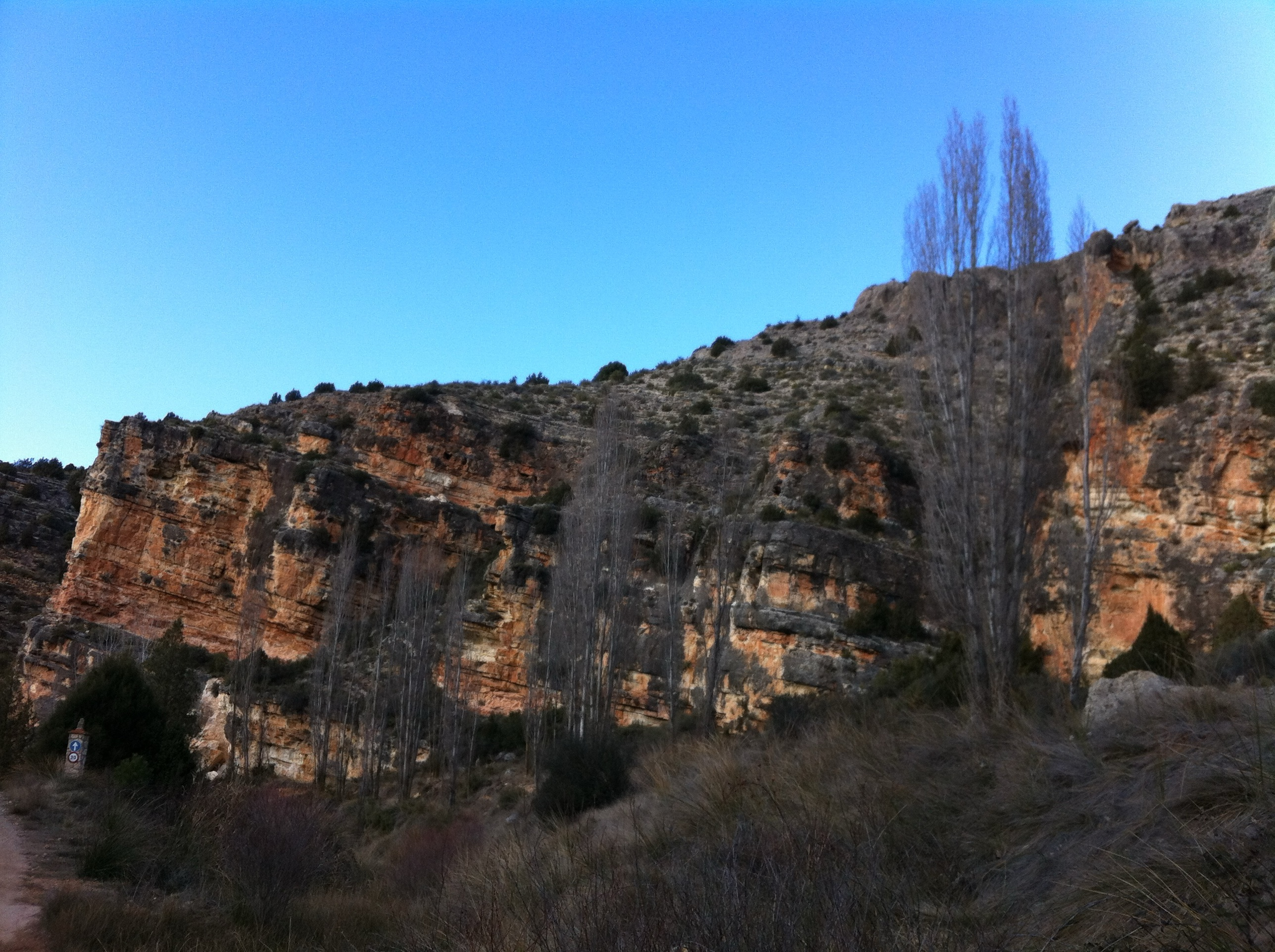
Every afternoon I went out into the countryside to observe nature with my own eyes. But at eight o'clock, when the programme's hour arrived, I ran back to the hamlet, my heart still racing from the afternoon. Only one of those three or four families had a television set, and thanks to their generosity I sat in their house every August evening to watch, once again, the world Félix uncovered before the camera —this time in black and white, flickering, with a touch of snow in the picture. A double life each summer: nature lived by day, nature narrated at nightfall. One fed the other, and to this day I couldn't say which of the two shaped me more.
The path I walk today did
not begin the day I decided to call it a path.
It began that evening, in front of a screen of snow and voices,
in a hamlet with no light.
The Path
From observing nature in the wild to the formal study of the Japanese art of display. A single calling sustained for more than four decades.
From this point onward, the journey is presented in a documentary, chronological format, with the aim of preserving the historical accuracy of events, research carried out and institutional milestones reached over the years.
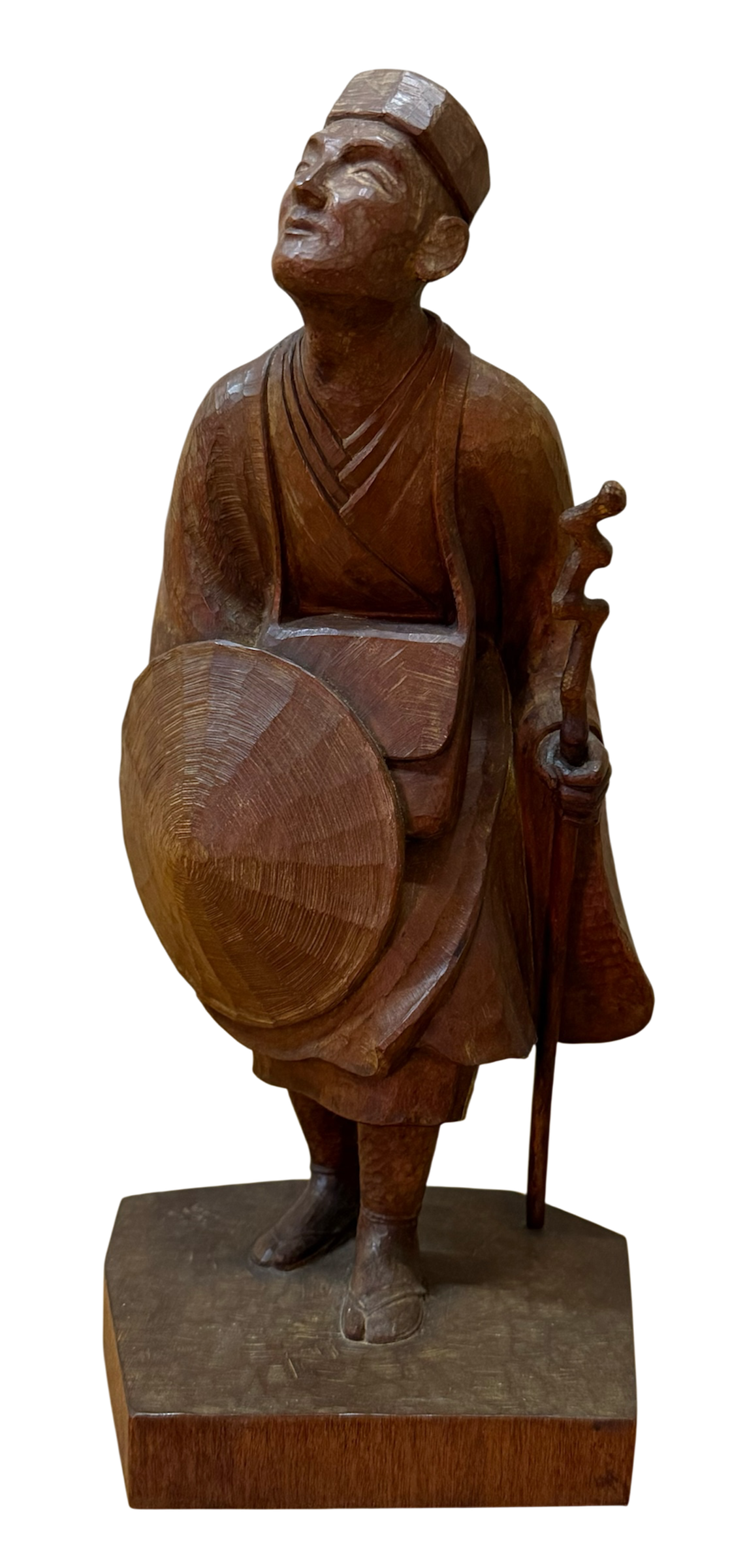
Naturalist, ornithologist, and nature conservationist
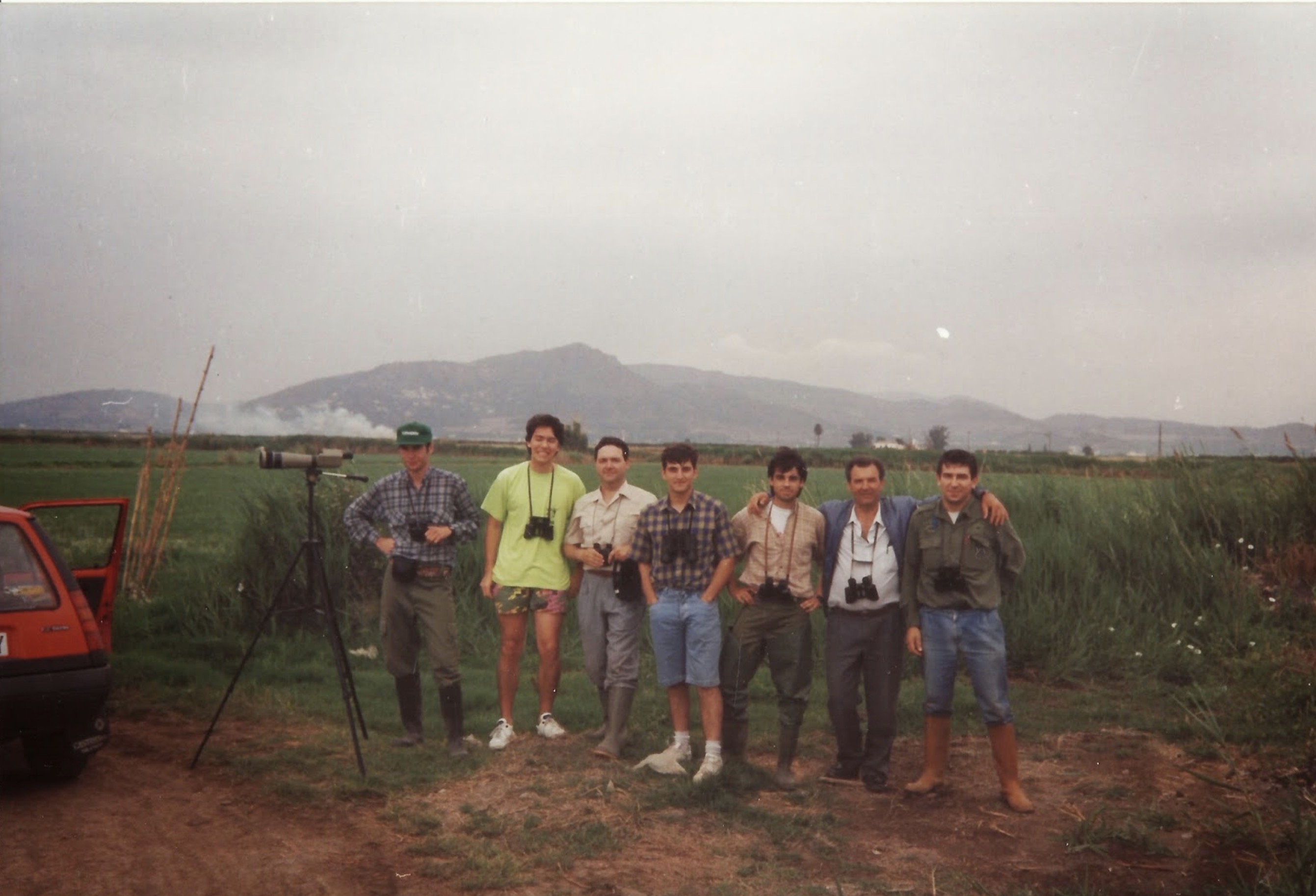
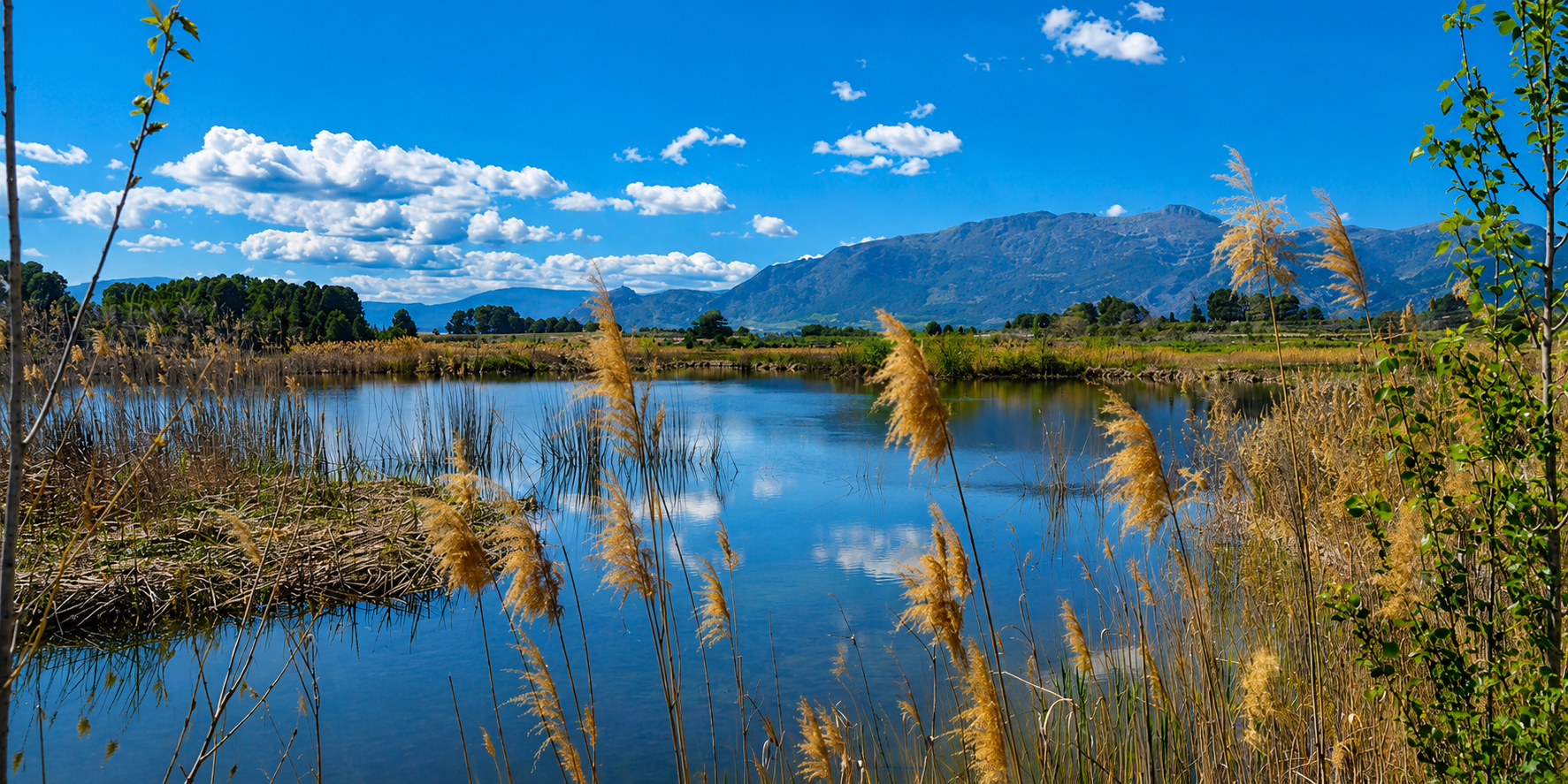
He began his work as a naturalist at the age of thirteen at the Wildlife Refuge of La Marjal dels Moros, a wetland of international importance. There he began the systematic monitoring of birdlife, collaborating with SEO/BirdLife on the study and monitoring of bird populations.
Studies in Physical Geography
He studied Physical Geography at the Universitat de València, focusing on Geomorphology and Analytical Climatology. This training deepened his understanding of the natural environment, natural processes, and the interpretation of the landscape—a foundation that later directly influenced his approach to bonsai and suiseki as arts that evoke the natural landscape.
Bonsai as a discipline
His passion for nature merged with an interest in traditional Japanese culture. This marked the beginning of a full-time professional dedication to bonsai that, over the years, would extend to suiseki, as well as to Kazari and Keidō, disciplines in which these arts attain their fullest artistic expression.
Distance study with Kobayashi Ippū
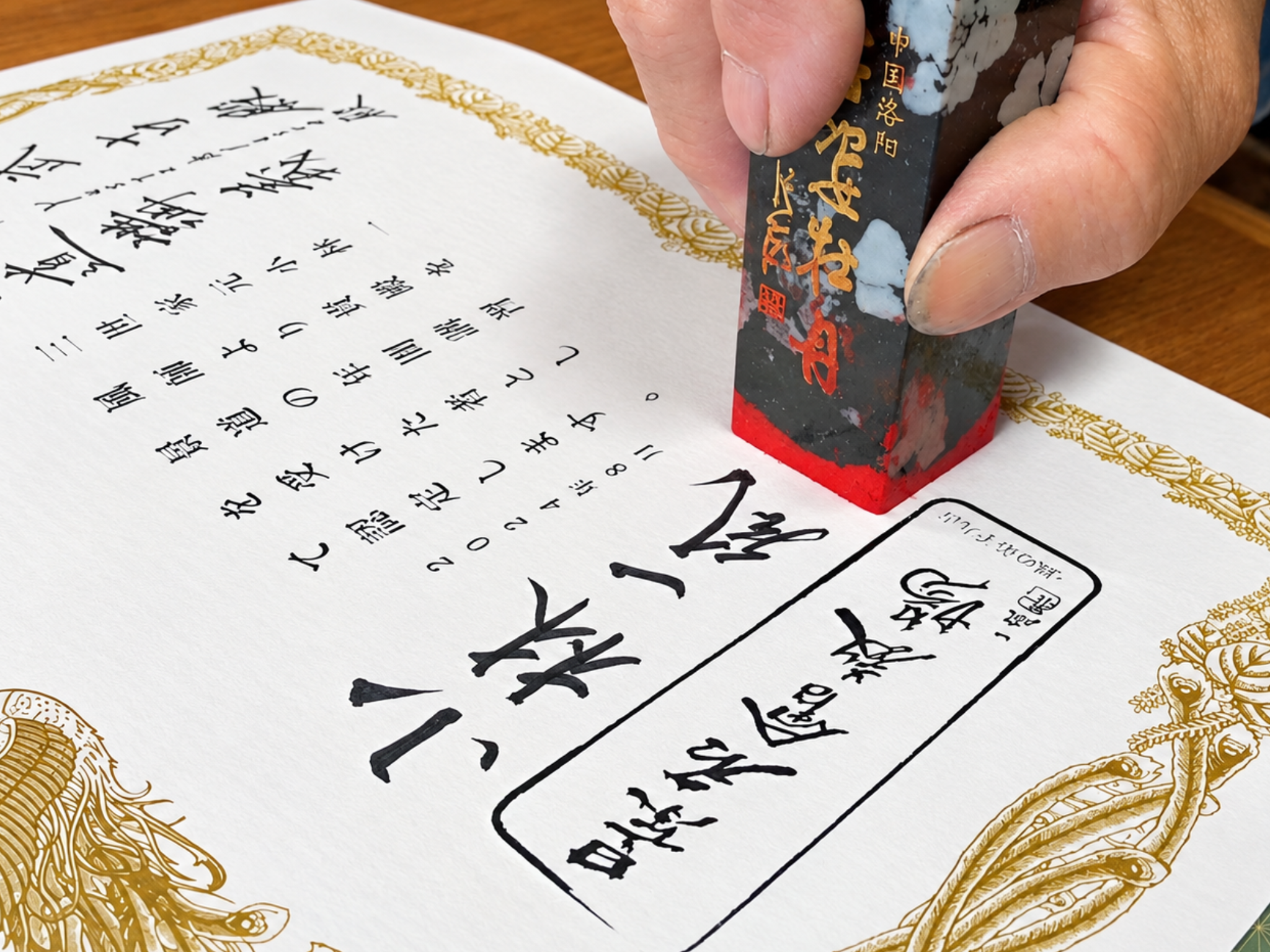
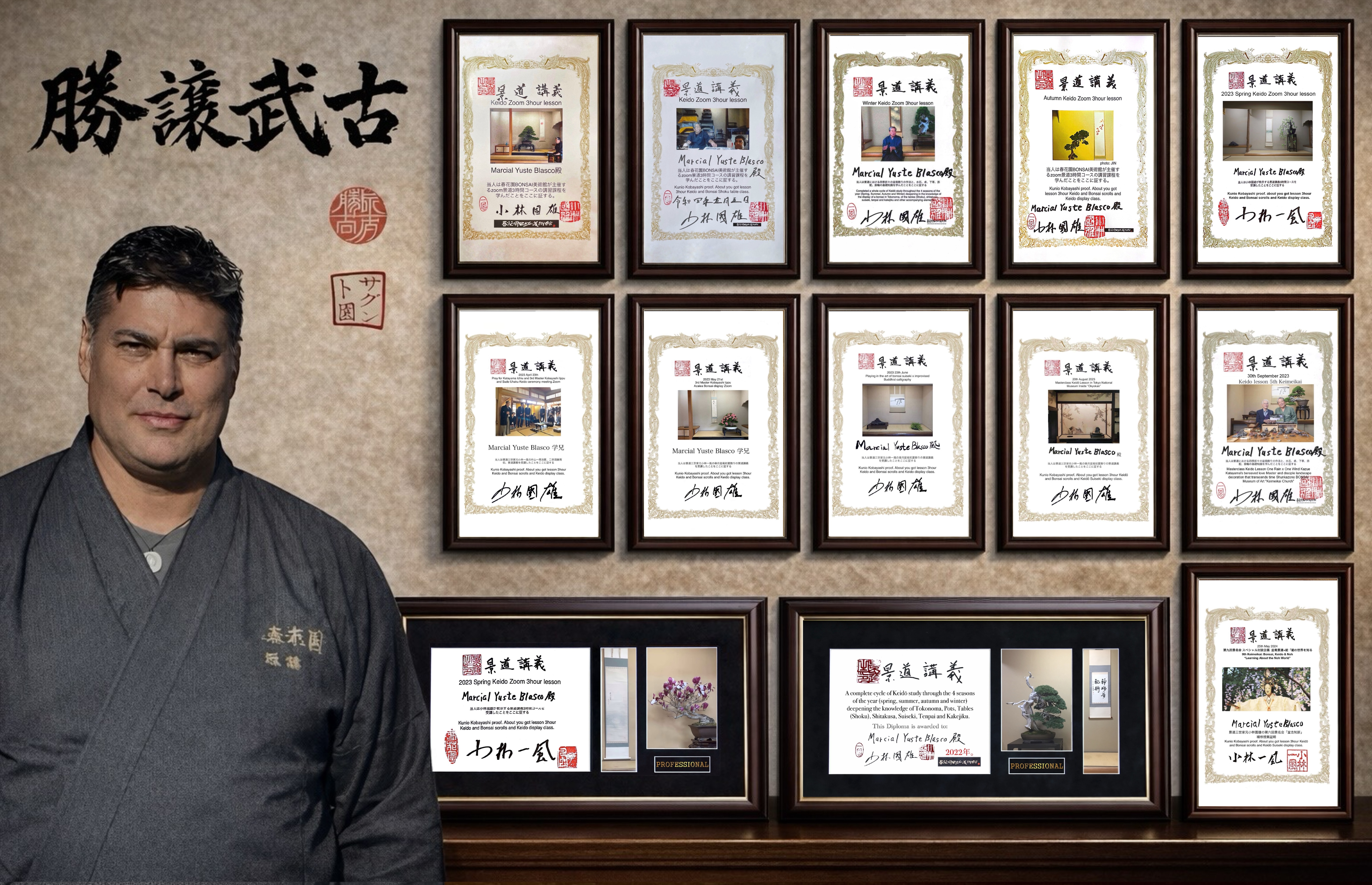
He began a personalized course of direct study in Keidō under the guidance of the III iemoto of the Katayama School, an unprecedented form of study within the school. In August 2024 he received the Keidō Kōgi (景道講義) diploma—an A4 sheet partly printed and partly calligraphed in brush and black ink—and with it his Japanese name, a Gō (号) or “path name”: 勝讓武古 (Masaru Buko), personally calligraphed by the master, in recognition of his natori. It was not yet an artistic name—that would come two years later—but the name by which the path began to call him, and he carried it until September 2026.
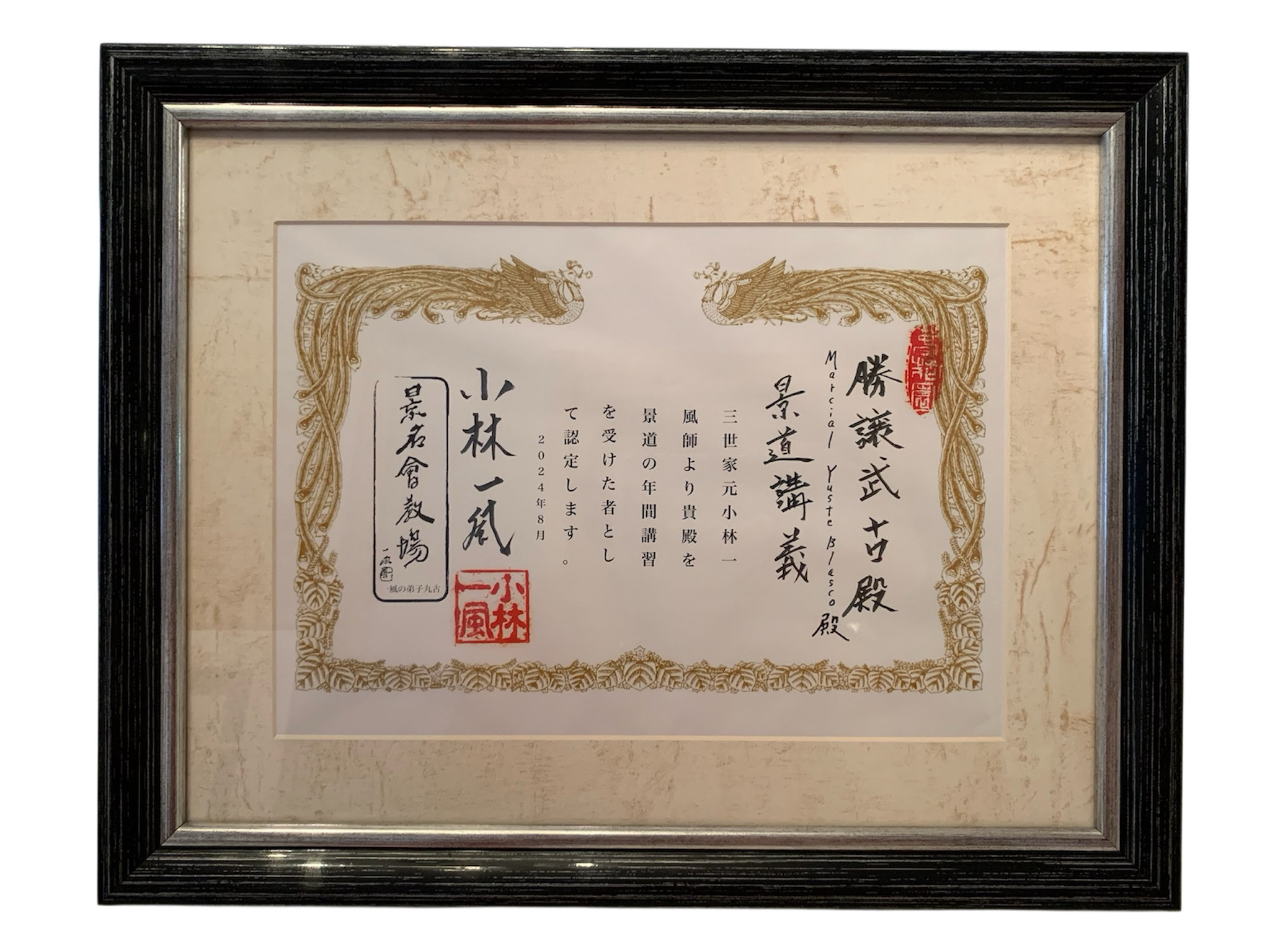
First stay at Shunkaen
He officially completed his studies in Keidō at the Shunkaen Museum, after successfully completing the master’s formal evaluation. He received Completion Certificate No. 1, bearing more than sixty kanji and four hanko, entirely calligraphed by hand by Kobayashi Ippū, and was publicly presented at the Taikanten as his Spanish student.
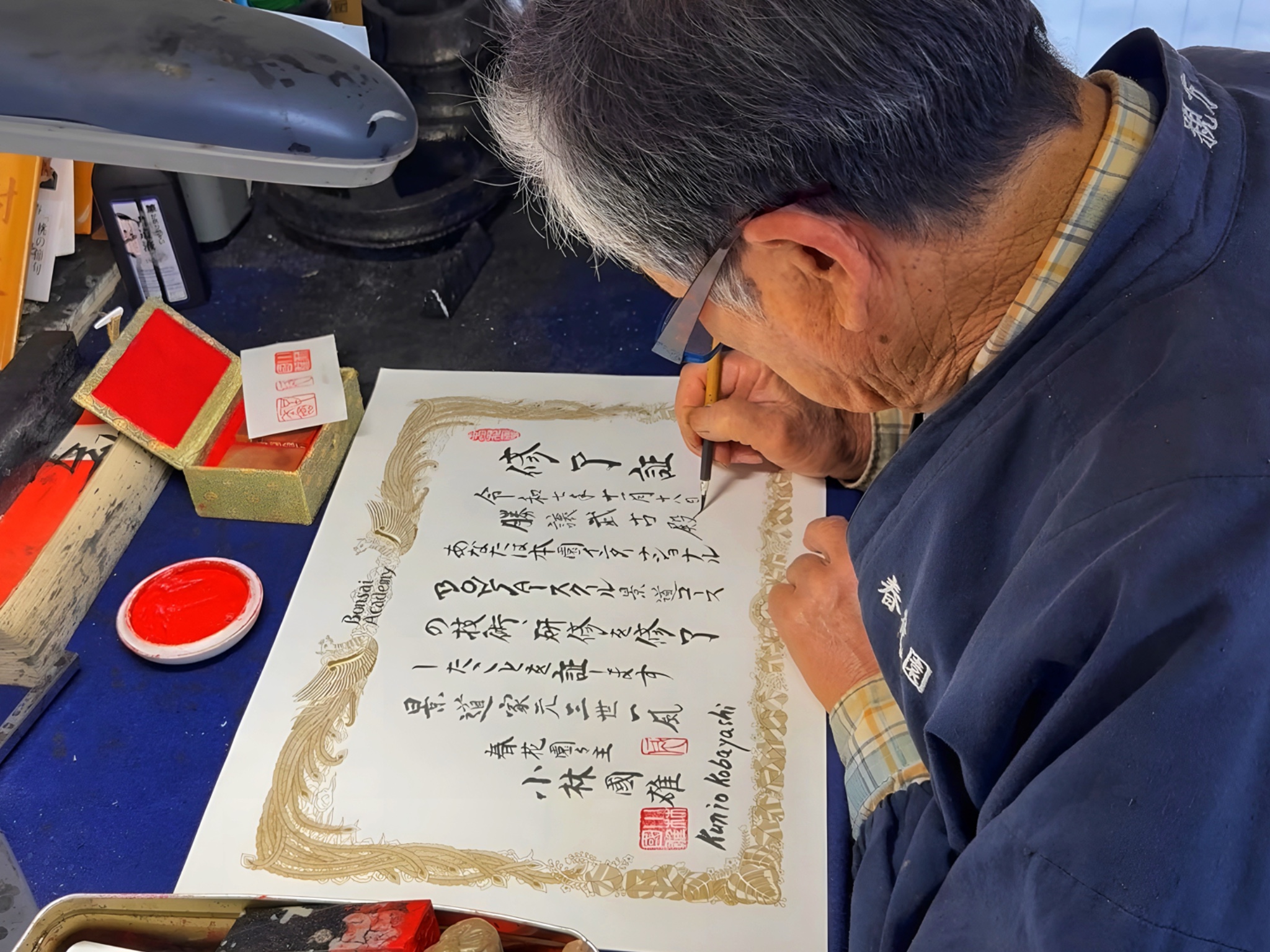
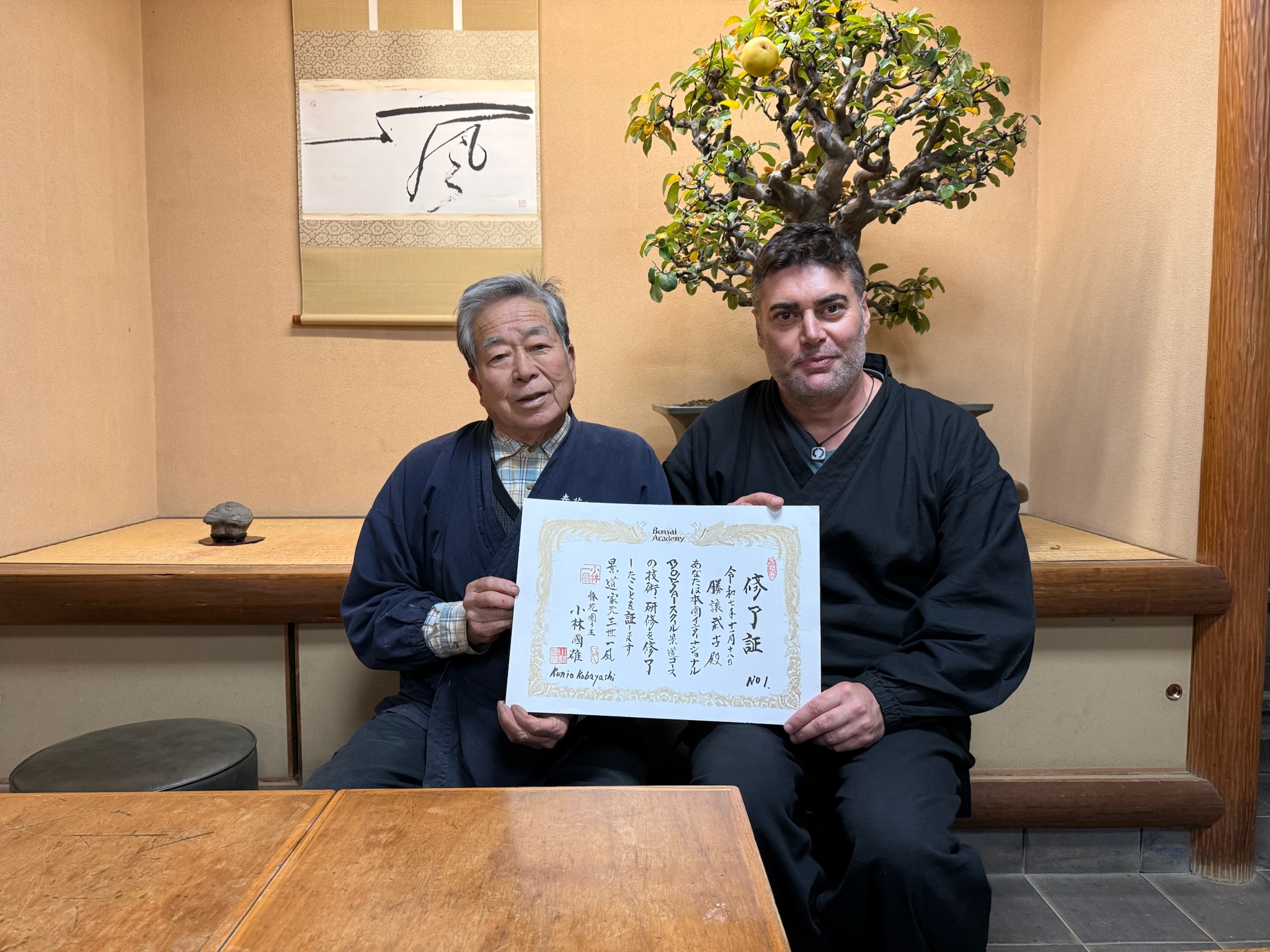
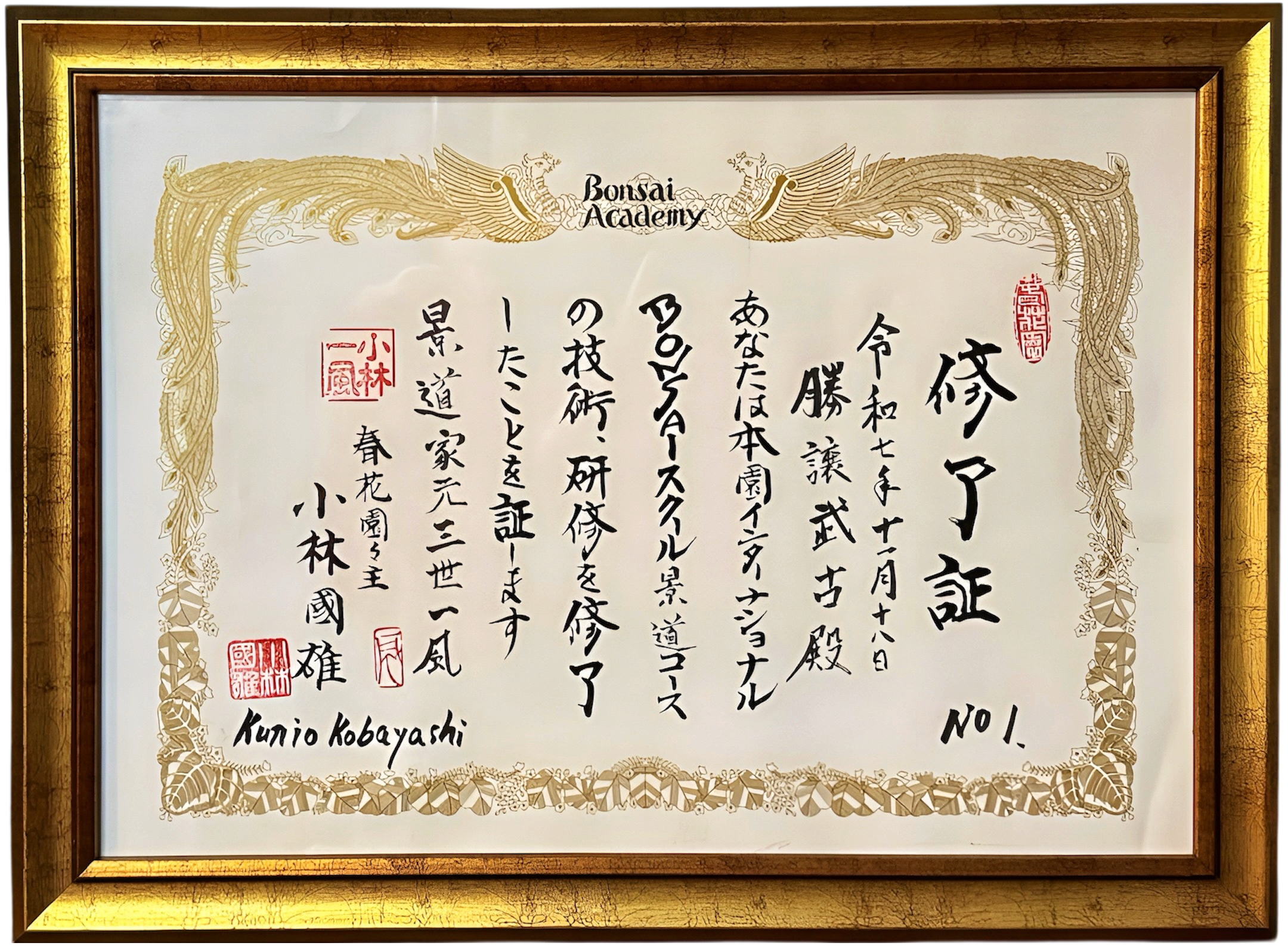
Transmission at the Shunkaen Museum
His second in-person study stay at the Shunkaen Bonsai Museum in Tokyo took place.
The artistic name 謙 (Ken) was conferred—with the kakejiku 勝讓謙 and the transmission document 伝授之書—together with the school’s genealogy document.
This milestone marked the first documented and certified journey of its kind completed by a Western specialist in bonsai and suiseki.
The Lineage
This transmission is not an isolated act: it is part of a precise system of rules and meanings that has, generation after generation, governed the way a master recognizes a disciple.
Keidō is the Japanese art of composing the traditional display space within the Katayama-ryū lineage, in which bonsai, suiseki, kakejiku, and accompanying elements are arranged in relation to the tokonoma, the contemplative alcove of sukiya-style Japanese architecture.
The tokonoma, developed within the Japanese architectural tradition and especially established since the Muromachi period (室町時代, 1336–1573), is the space in which nature is presented as an object of contemplation.
Founded in 1986 by Katayama Teiichi (片山貞一, 1908–1996), this system transcends any purely ornamental or horticultural function, understanding each composition as an evocation of the seasons and a means of contemplating nature.
Inspired by the principles of Sen no Rikyū’s tea ceremony (千利休, 1522–1591), Katayama developed an interpretation of wabi-sabi (侘寂) applied to the display space, where simplicity and imperfection take on a spiritual dimension.
The gō 勝讓武古 (Masaru Buko), my path name until September 2026, was not a phonetic transcription. It was created by Jin Yasufumi, guardian of the lineage, as an ethico-semantic transliteration of the name Marcial Yuste Blasco, with each kanji chosen both for its phonetic value and for its ethical meaning:
| Kanji | Meaning |
|---|---|
| 勝Masaru | To win, to overcome—victory without force. |
| 讓no phonetic function | To yield, humility—contributes no sound; incorporated solely for its symbolic weight. |
| 武Bu | Martial; inner peace—a kanji of mission: transforming bonsai from an ornamental art into a path of integrity. |
| 古Ko | Ancient, venerable—the depth gained with time. |
The genealogy document records the school’s succession: Katayama Ichiu (founder), Sudō Uhaku (II Iemoto) and Kobayashi Ippū (III Iemoto). Together with it came the 伝授之書 document and the kakejiku bearing the artistic name 勝讓謙, with the character 謙 (Ken), "humility", in October 2026, during the second in-person stay at the Shunkaen Bonsai Museum in Tokyo.
Formal membership in the Keidō Katayama-ryū lineage with full ceremonial legitimacy. This affiliation does not imply succession rights to the position of iemoto, nor institutional authority within the school’s Japanese structure. Sagunt-En carries out its bonsai and suiseki teaching activity independently, inspired by the principles and teachings transmitted by this lineage.


The path name: 勝讓武古
In August 2024, together with the first diploma, the III Iemoto gave me my first name within the school: the gō 勝讓武古, Masaru Buko. It was the name of the student who sets out on the way, and I carried it until September 2026: through the remote study, the in-person stay and the years of waiting.
Until September 2026 I was Masaru Buko. In October 2026, during my stay at the Shunkaen, that chapter closed. Masaru Buko does not disappear: it remains as a memory of where the path began. From October 2026 my name is 勝讓謙, Masaru Ken, the artistic name that the Keidō Katayama-ryū recognises in me as a formal disciple.
Go conferred in August 2024, together with the issuing of the first diploma—certifying a year and a half of remote theoretical study of Keidō.
Why is 勝讓武古 read Masaru Buko?
At first glance, the writing 勝讓武古 raises an inevitable question: how do these four kanji arrive at Masaru Buko, if the name’s pronunciation isn’t simply obtained by applying the characters’ usual readings? The answer lies in the very process by which the name was created.
As Jin Yasufumi, guardian of the lineage, explained, the starting point was my name, Marcial Blasco, whose pronunciation was adapted into Japanese as まさるぶこ (Masaru Buko). Japanese characters were then assigned to this pronunciation, giving written form to a pronunciation of alphabetic origin. First the sound was established; only then was a script sought that could give it meaning.
But the choice of characters didn’t respond only to a phonetic question. 勝讓武古 was also constructed for the meaning its four kanji were meant to express together: yielding victory and carrying the spirit of 武 to its fullest maturity, through time and tradition.
勝ちを讓り、武を古くなるまで極める。 — Jin Yasufumi
Here lies the name’s particularity: pronunciation and writing follow different paths. Masaru Buko is the established pronunciation; 勝讓武古 is the written form conferred upon it and, at the same time, the conceptual construction that expresses its meaning. The sound identifies the name; the kanji add what the name is meant to express. The pronunciation says what one is called; the writing, in turn, makes it possible to express why one is called that.
The four characters don’t function as a simple phonetic transcription. 勝 contributes Masaru, 武 contributes Bu, and 古 contributes Ko, while 讓 carries no phonetic function and is incorporated for its meaning: to yield, to renounce victory, to act with humility. Its phonetic silence doesn’t make it secondary—it is precisely the character that introduces one of the composition’s fundamental concepts.
The result is a deliberate construction in which spelling, pronunciation, and meaning don’t maintain a mechanical correspondence. The pronunciation comes from the Japanese adaptation of the name; the kanji, in turn, give it a second dimension: an idea that couldn’t be expressed by writing the sound alone. It isn’t a matter of finding kanji that say how a name sounds, but of finding kanji also capable of saying what it means.
phonetic adaptation into Japanese
characters assigned for their meaning
A pronunciation turned into a name; a name turned into meaning.

The Path of the Lineage
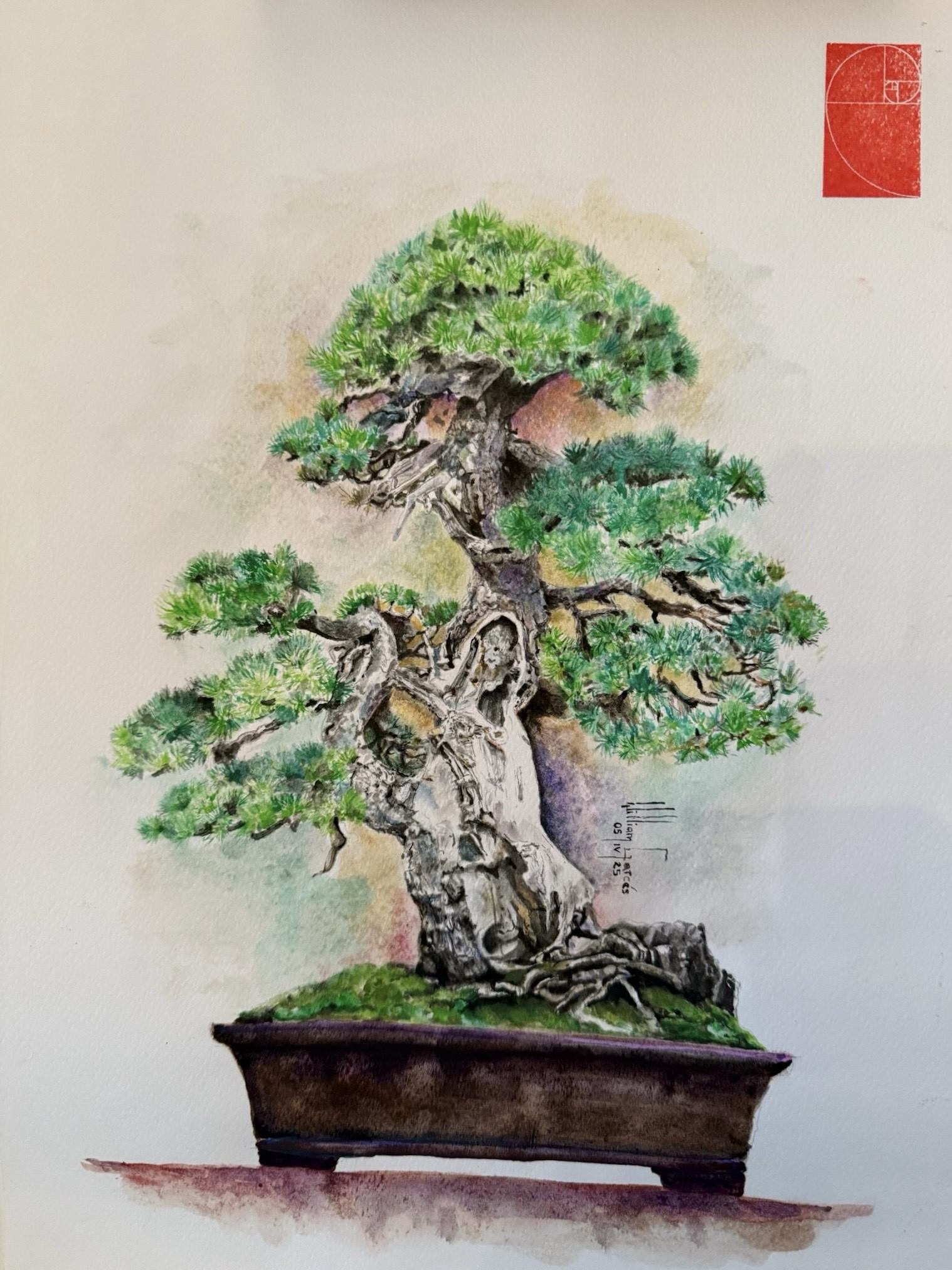
Some encounters shape a path. My master, Kobayashi Ippū, while contemplating the Japanese white pine Oku no Kyomatsu (奥の巨松), felt the calling that would lead him to devote his entire life to bonsai. That tree became his silent guide—a presence that still speaks with the patience of time and the stillness of centuries.
I had the privilege of being accepted as a disciple under Kobayashi Ippū’s guidance. I learned to listen to the whisper of each branch, to feel the patience in each cut, to recognize humility in each shoot and impermanence in each form. His teaching opened a world of sensitivity and spirituality to me: a space where what I saw transformed into what I am.
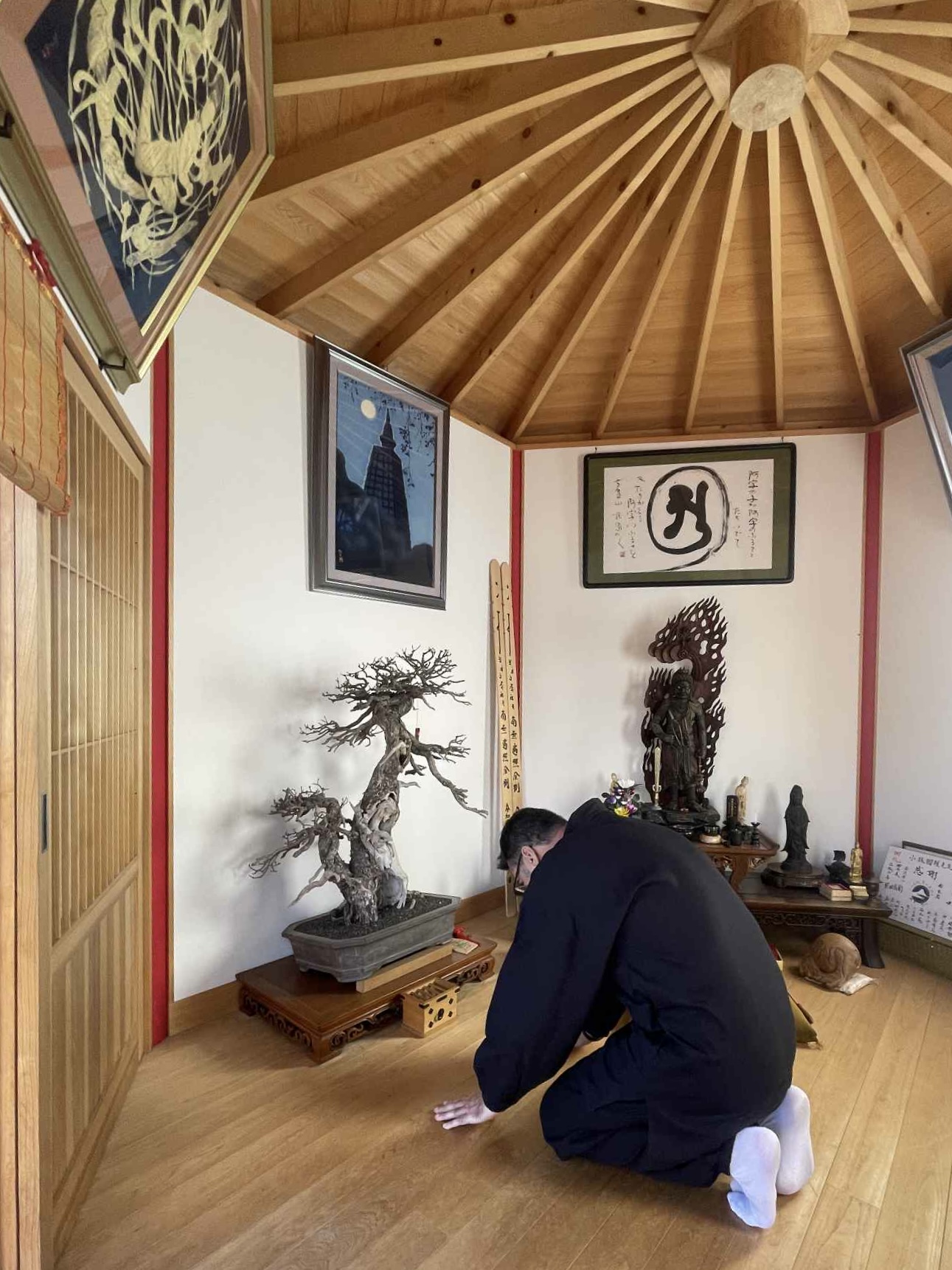
The Oku no Kyomatsu no longer lives. The master keeps it in his personal shrine at Shunkaen, where he pays it respect and offers incense—not as a relic, but as the totemic presence of the tree with which he felt the deepest connection, the tree that led him to reconsider the course of his entire life.
The Return
A pilgrimage toward the lineageTwenty-one days across Tokyo, Kyoto, Nikkō, and Kamakura, with a single center of gravity: the Shunkaen Museum, where I formally received the transmission of the Keidō Katayama-ryū lineage.
The heart, before the technique
"After three winters, the withered tree blooms." The transmission of the lineage did not depend on my wish for it or on my impatience: it would come only when the school judged that its moment had arrived. And so it did, in the early months of 2026.
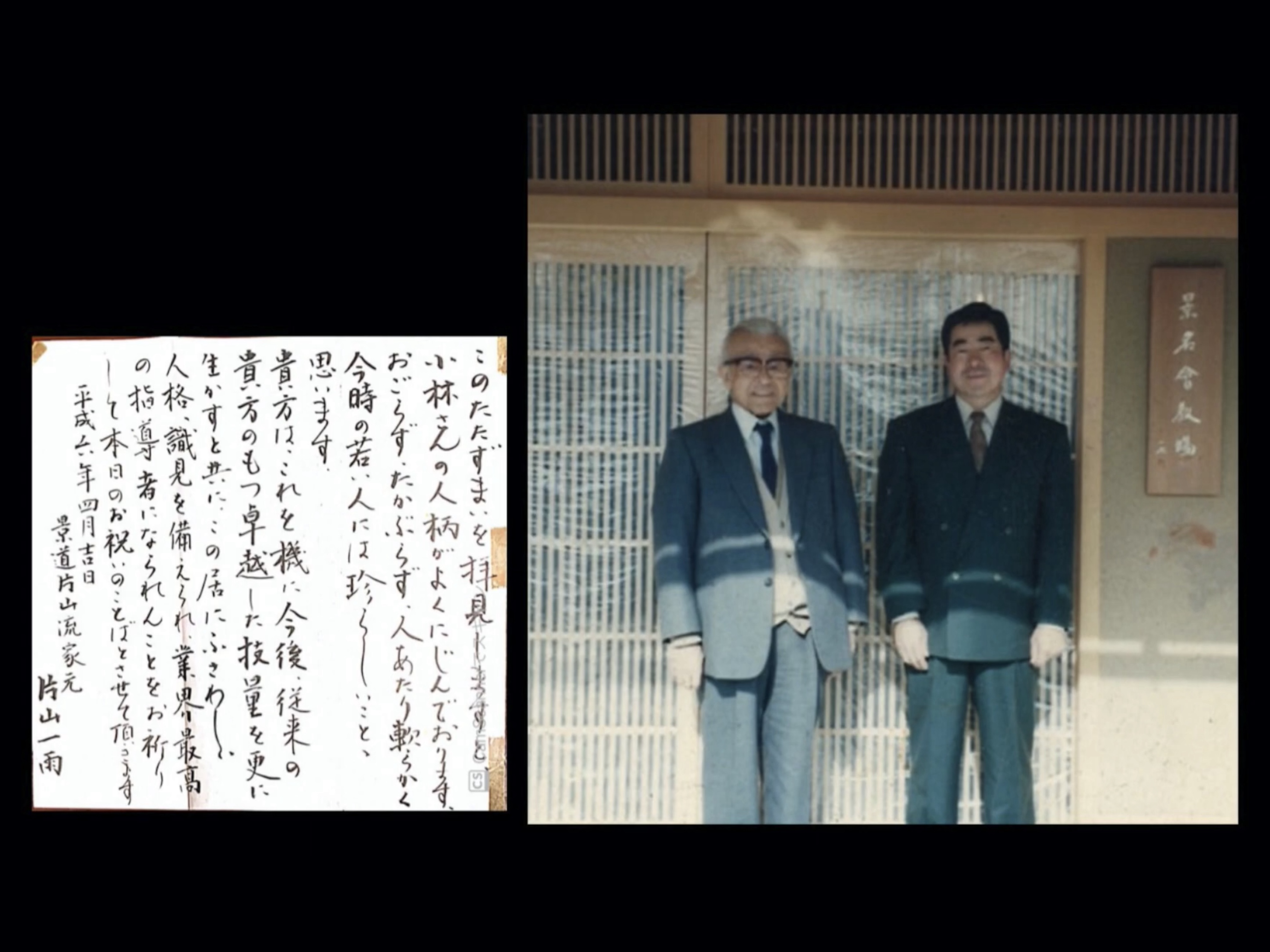
Observing this bearing, Kobayashi-san's character comes through clearly: without arrogance, without haughtiness, gentle in manner with people — a rare thing among young people today, I think. Taking this as a foundation, I ask that, in addition to making even further use of the outstanding skill he already possesses, he acquire the character and discernment befitting this house, and come to be the finest guide in the trade; with this I offer my words of congratulation for today.
Heisei 6, April, an auspicious day (平成六年四月吉日)
Iemoto of Keidō Katayama-ryū
Katayama Ichiu (片山一雨)
Kokoro (心), a word hard to translate with a single term: it can mean heart, mind, or spirit, but above all it expresses the unity of all three. Technique can be taught; kokoro can only be revealed over time.
The path toward the lineage
My previous trip, in the fall of 2025, had brought the first great stretch of the training to a close: a year and a half of remote study followed by the in-person experience at the Shunkaen Museum. That stay let my learning stop being purely virtual and become a daily life shared with the school, its methods, and its way of understanding the art. The evaluation of that stage confirmed that I had reached the technical and aesthetic foundation the school expected of me.
Yet the essential part had still to come.
What awaited me on this second trip was no longer just about gaining new knowledge, but about bringing to completion a process of transmission begun years before. I was not returning only to keep learning; I was returning to take up, if the school judged the moment had come, a place within a chain of transmission that for several generations has preserved a particular way of understanding bonsai, suiseki, and Japanese aesthetics.
The stay at Shunkaen
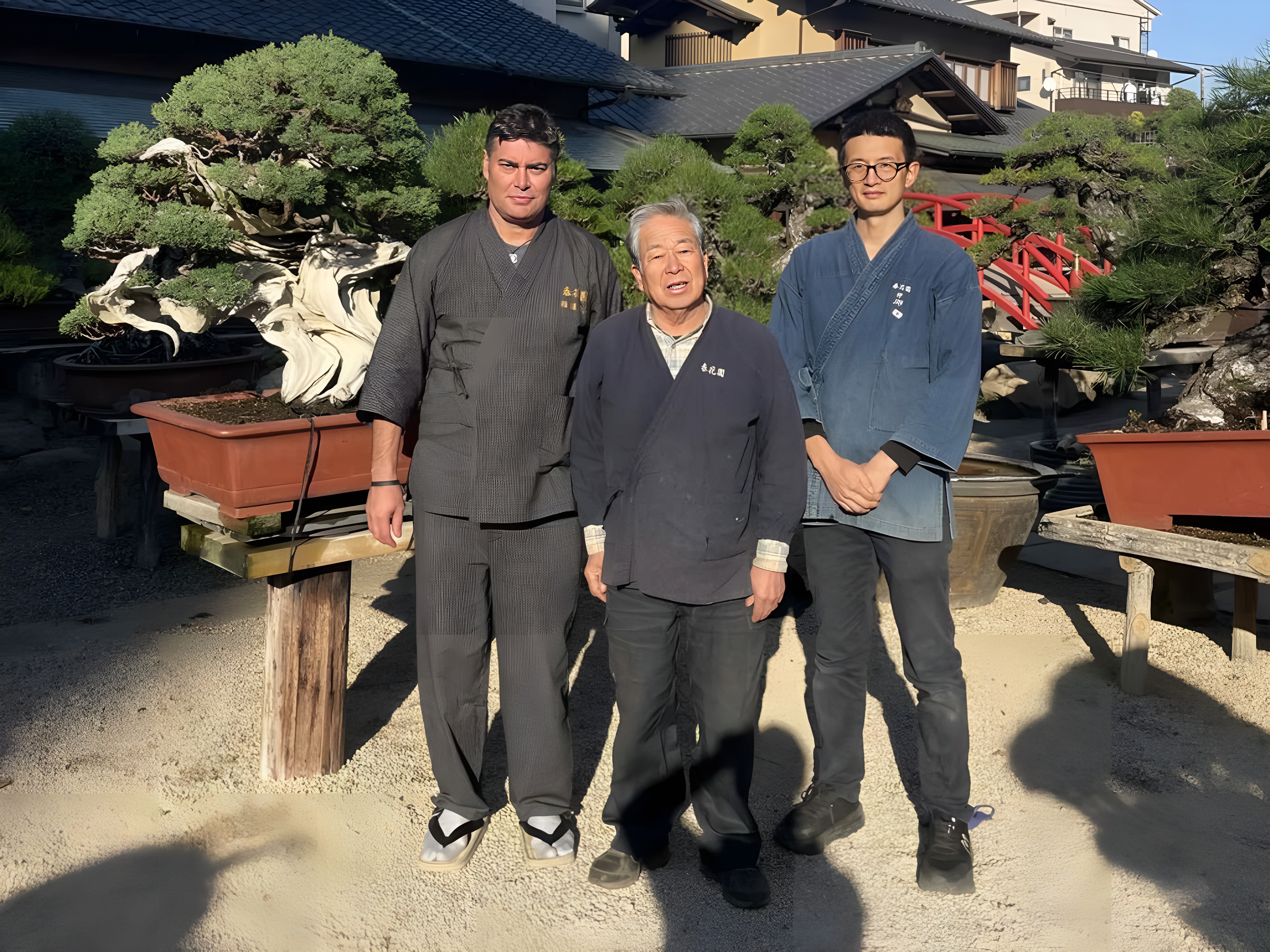
From 2 to 7 October 2026 I lived alongside the III Iemoto, Kobayashi Kunio (Ippū), at the Shunkaen Museum. They were the days that have most transformed my path in Keidō. During the stay, my senpai Jin Yasufumi told me that he considers it very likely that, on my next study stay, the master will give me the ichiji—the character from his own name that an Iemoto grants a disciple. I record it as he said it, as his opinion; the decision always rests with the Iemoto. Jin even wrote down for me on paper how it would look: the character 一 between Masaru and Ken, Masaru Ichiken (勝讓一謙).
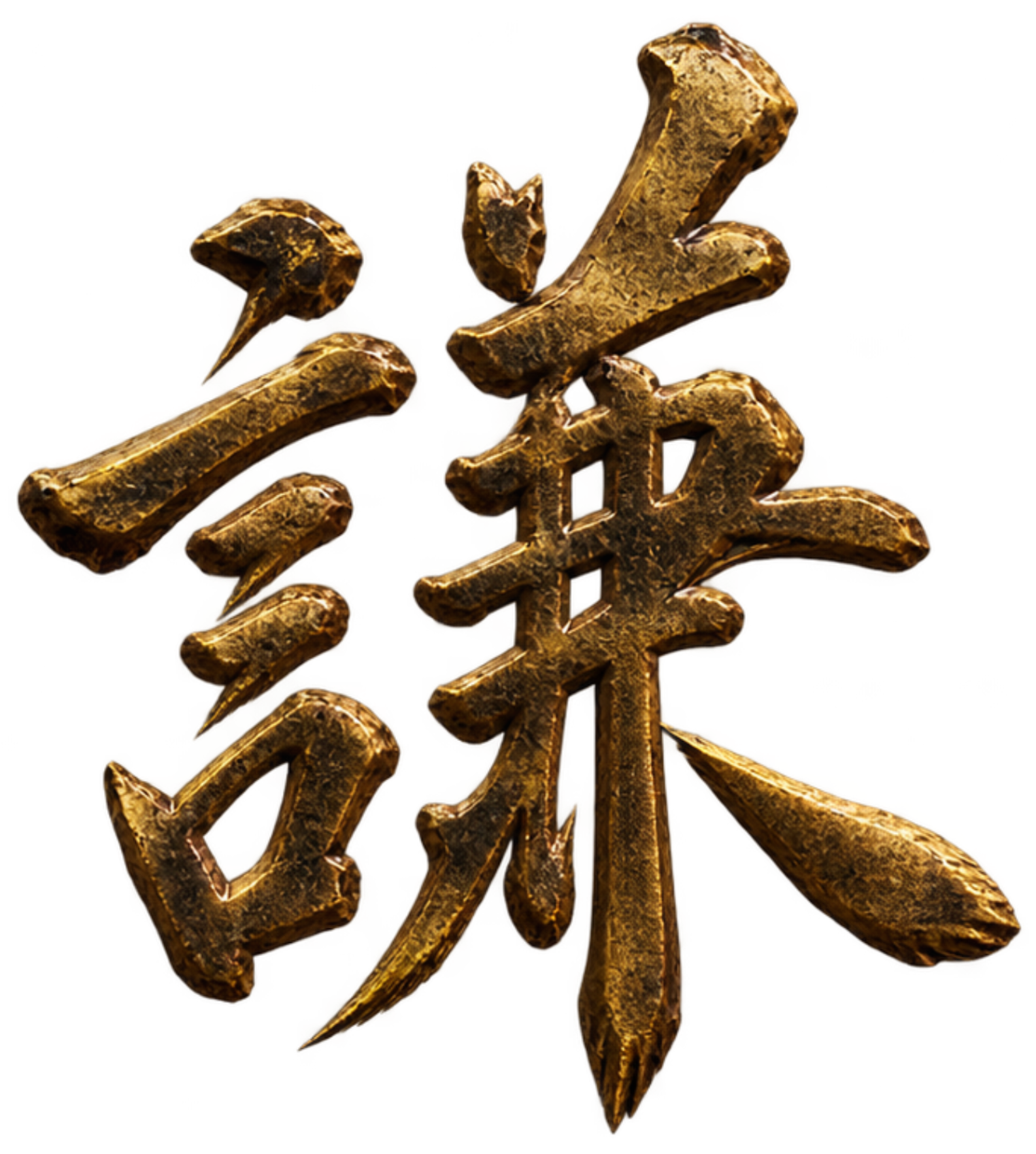
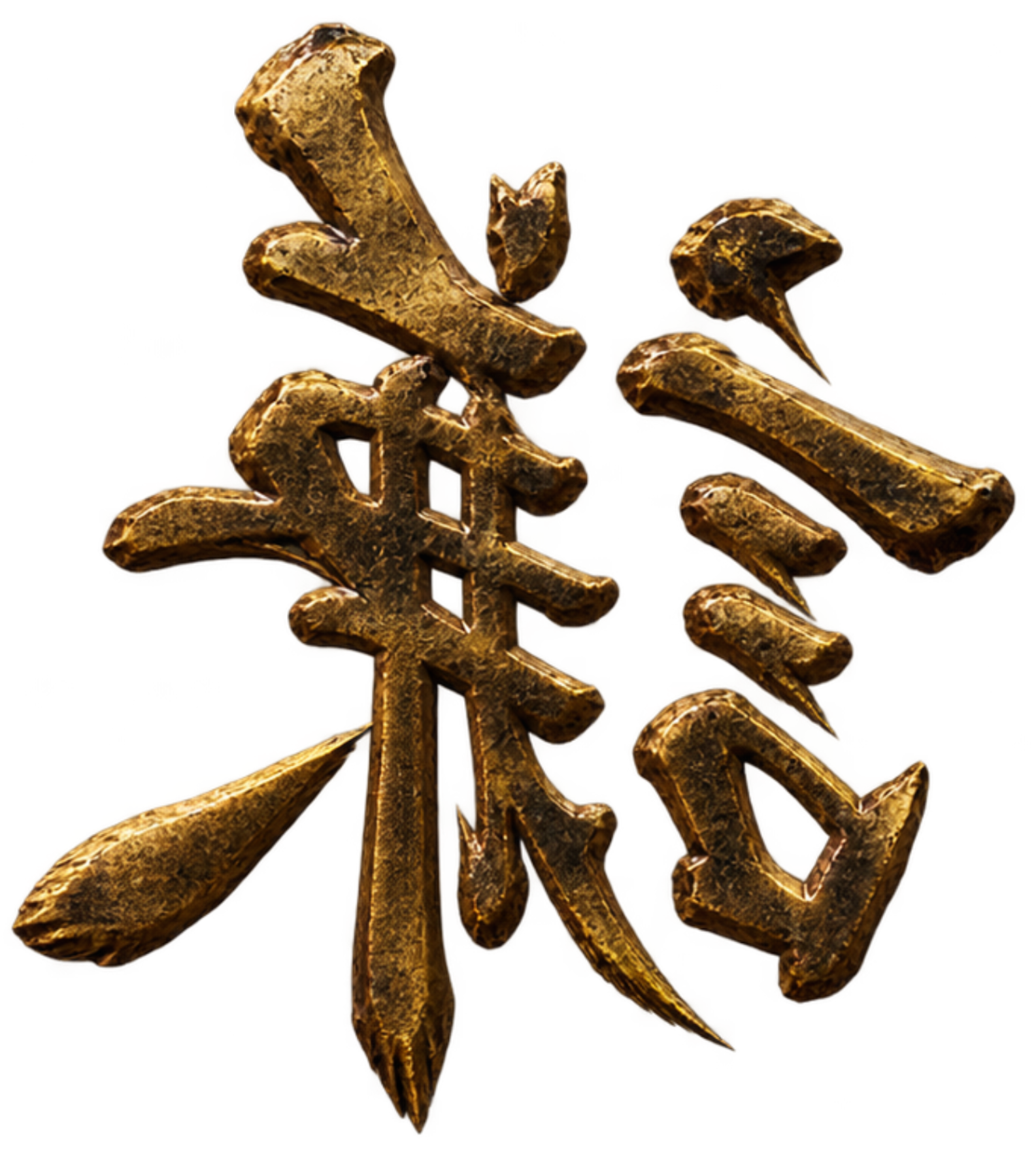
What I did receive, by the Iemoto's decision, I consider just as important: an artistic name. Until now I carried a gō (号), the "path name" given to a student who sets out on the way: 勝讓武古, four kanji. Now the master, together with my senpai Jin, has conceived for me a name of a single character: 謙 (Ken), "humility", one of the deepest kanji in the traditional Japanese arts. Four kanji have been distilled into one, and this name no longer designates the student who begins, but one whom the school recognises as an artist of Keidō. From now on I am inscribed as belonging to the Keidō Katayama-ryū, with the documents that attest to it. My name is 勝讓謙, Masaru Ken (Shōjō Ken in the Sino-Japanese reading).
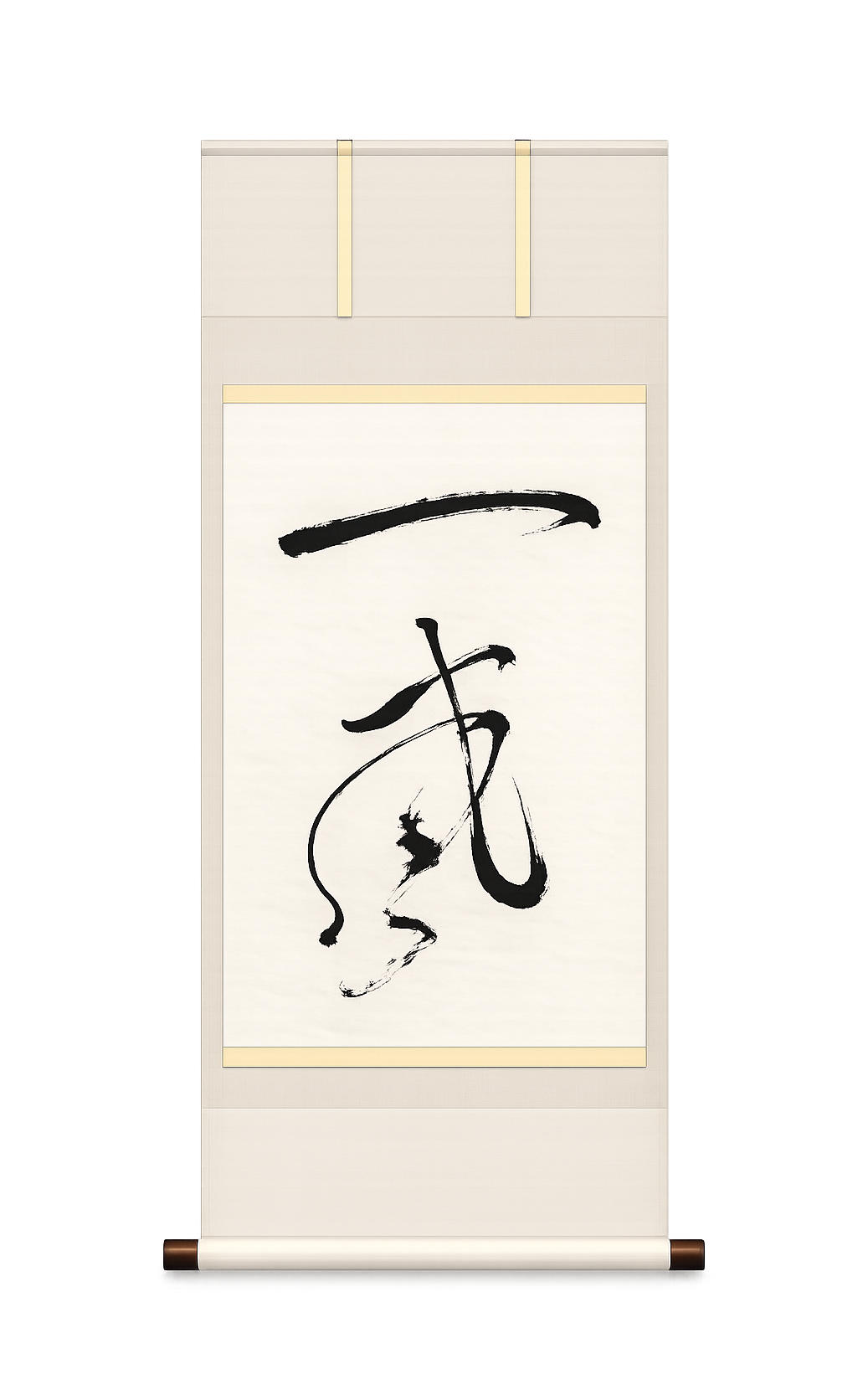
Calligraphed by the Iemoto himself, with his title and name—景道家元三世 小林一風—and his seal. We held it together in the museum courtyard, among the pines.
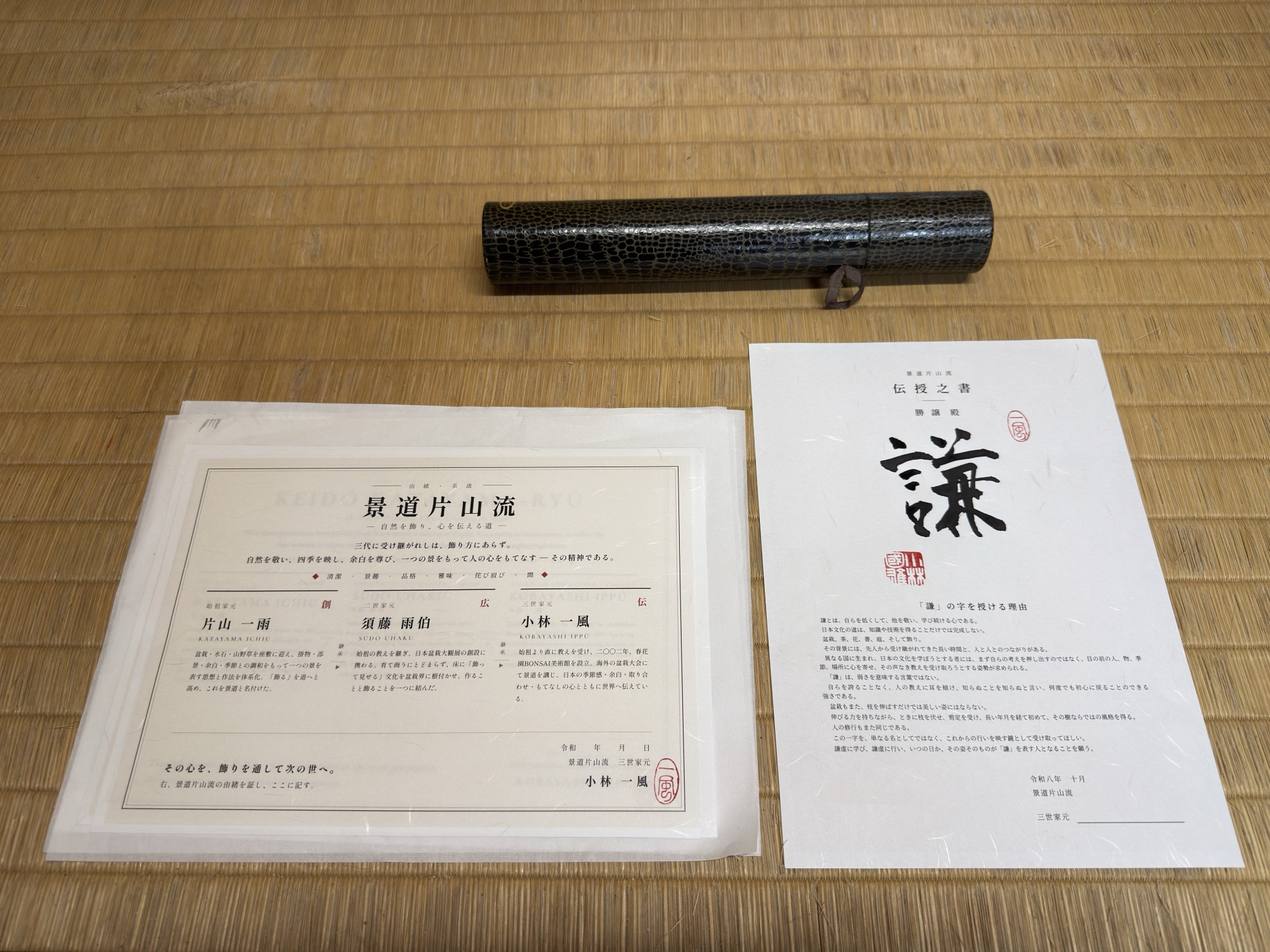
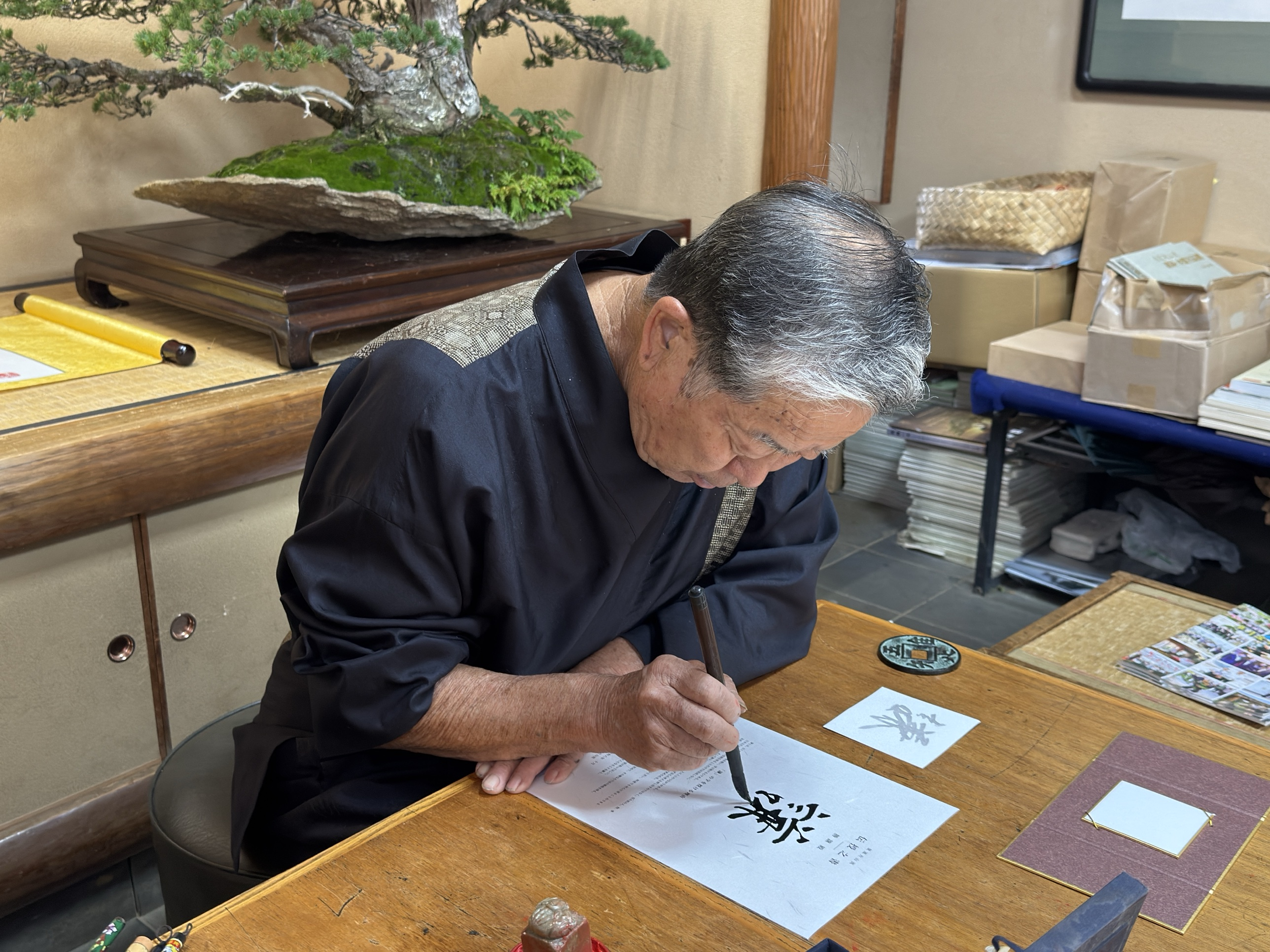
The transmission document, addressed to 勝讓殿 and dated October of Reiwa 8. It bears the title 三世家元 (Third Iemoto) and the school’s two hanko, which make it an official document; the lines framing it, above and below, are purely decorative. It shows the character 謙 in large format with the reasons for which it is granted.
The document recording the succession of Katayama Ichiu, Sudō Uhaku and Kobayashi Ippū. I do not appear in it, because I am not an Iemoto; receiving it together with the document of the name, bearing the same seals, is a sign of the school’s trust.
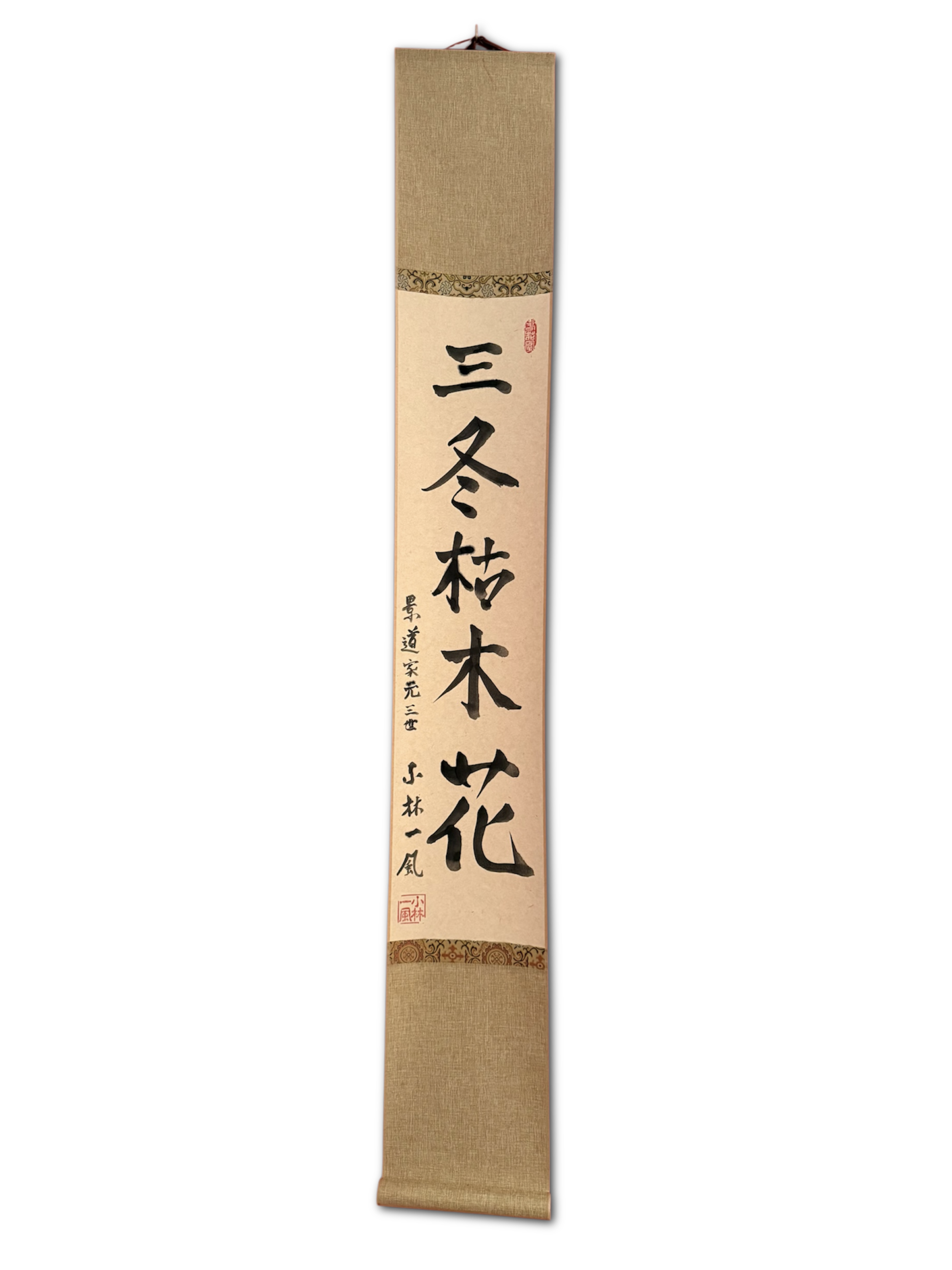
Brushed by the master on a kakejiku: "three winters, the withered tree, the flower". It reached me before I decided on this stay, as an announcement that I was going to bloom. And I have bloomed: with an artistic name.
On green paper: mui shizen, do not force, let nature be. A phrase the master gave me so that it may keep marking my path.
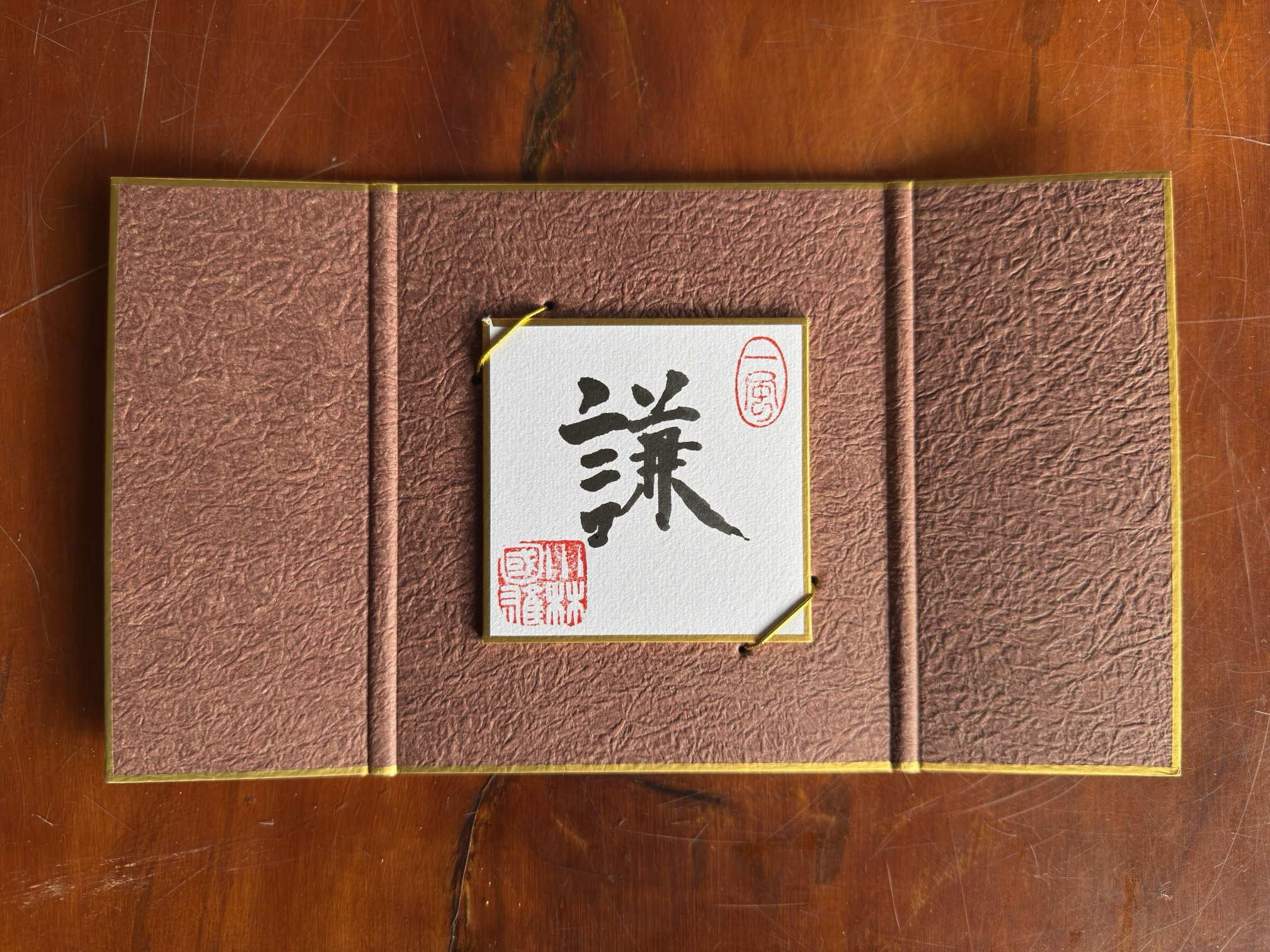
The character 謙 calligraphed on shikishi, in a folding washi case, with the Iemoto’s seals.
The document that accompanies the name explains why it is granted. I summarise it faithfully, because it deserves to be read slowly. 謙 is the heart that makes itself small in order to respect others and keep learning. The ways of Japanese culture—bonsai, tea, flowers, calligraphy, garden, ornament—are not completed by knowledge or technique: behind them lies a long time received from those before, and a web of people. One born in another country who wishes to learn this culture is asked not to impose his own ideas, but to turn his heart to what stands before him—the person, the object, the season, the place—and receive its silent teaching. Humility is not weakness: it is the strength of not boasting, of listening, of saying "I do not know", and of returning to the beginning as often as needed. Like bonsai, which does not reach beauty merely by lengthening its branches, but by bending them and accepting the pruning over years until it gains the bearing proper to that tree. The master asks that the character be received not as a mere name but as a mirror of future conduct, and expresses the wish that one day the bearer's very figure may be the expression of 謙.
The act of naming
The name did not arrive automatically. The school wanted to know my path thoroughly before granting it, and the man who was to write it is seventy-nine years old, presides over the Nippon Bonsai Association and the Japanese suiseki association, runs its museum, and receives thousands of visitors. That such a master should set aside time in a schedule like his to write, with his own brush and in his own hand, the name of a foreign disciple is not a formality: it is a gift.
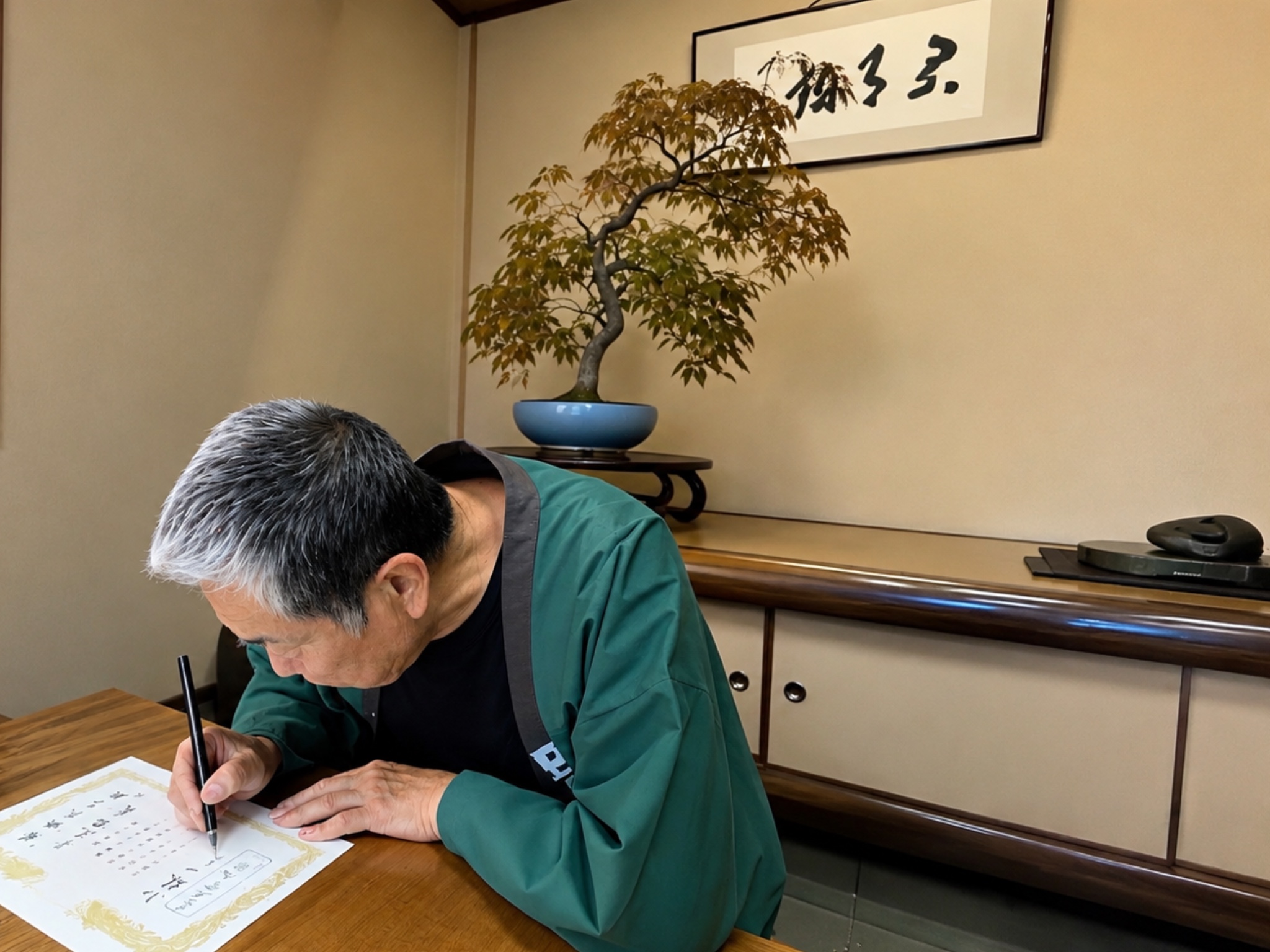
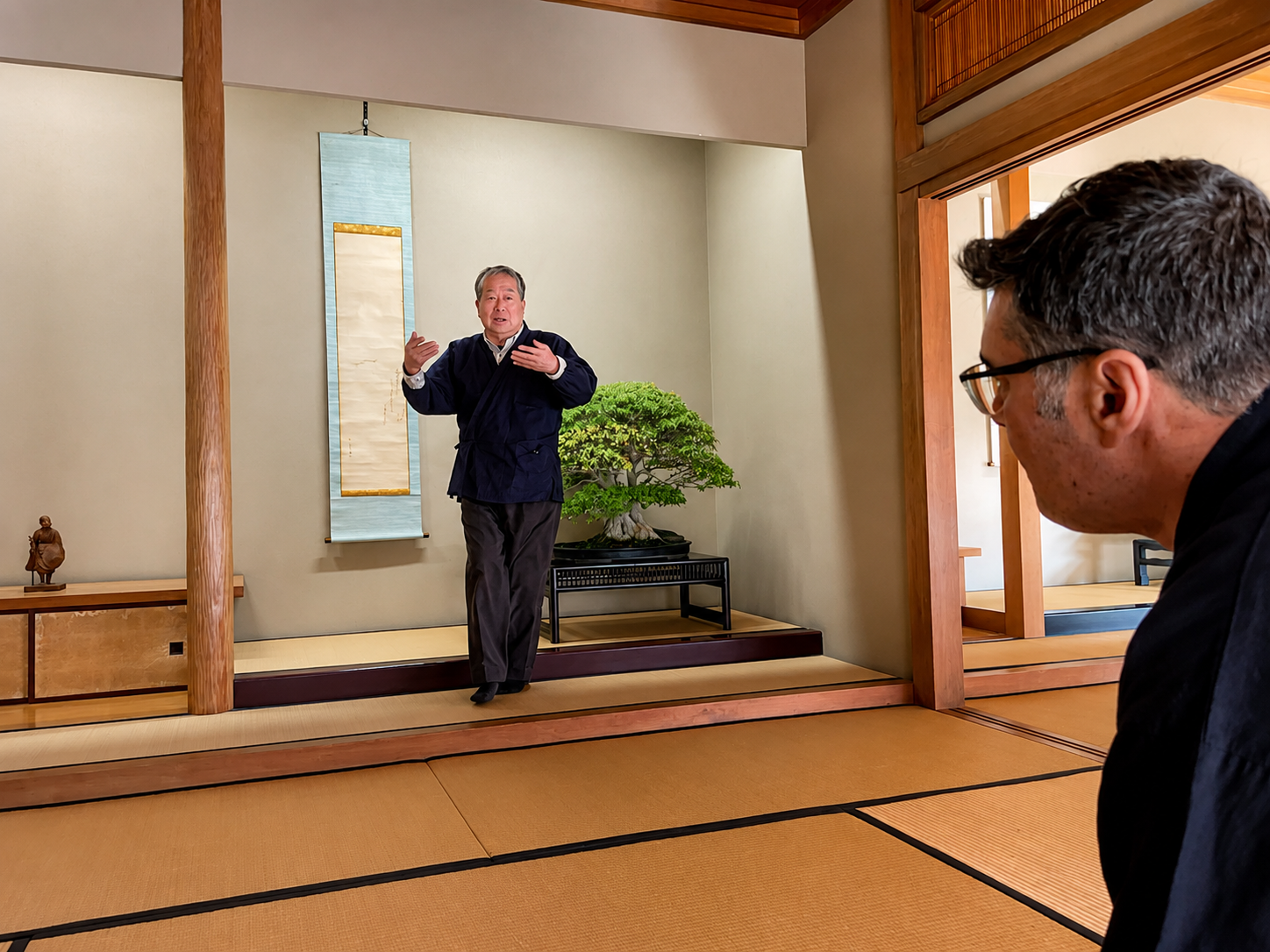
There was no ceremonial hall and no added solemnity. It happened inside his home, in the space the master uses as both office and living room, with a tokonoma at the back: where we eat, where Jin does his work, where he receives visitors and guests, where a good part of his life unfolds. On the table he laid out a large kakejiku, the brushes and the bowl of water. He ground the ink stick himself, sliding it patiently until he had the ink he wanted. Before writing he tested several times on other sheets of paper, gauging the size and the stroke. And then, on the kakejiku, he wrote 勝讓謙.
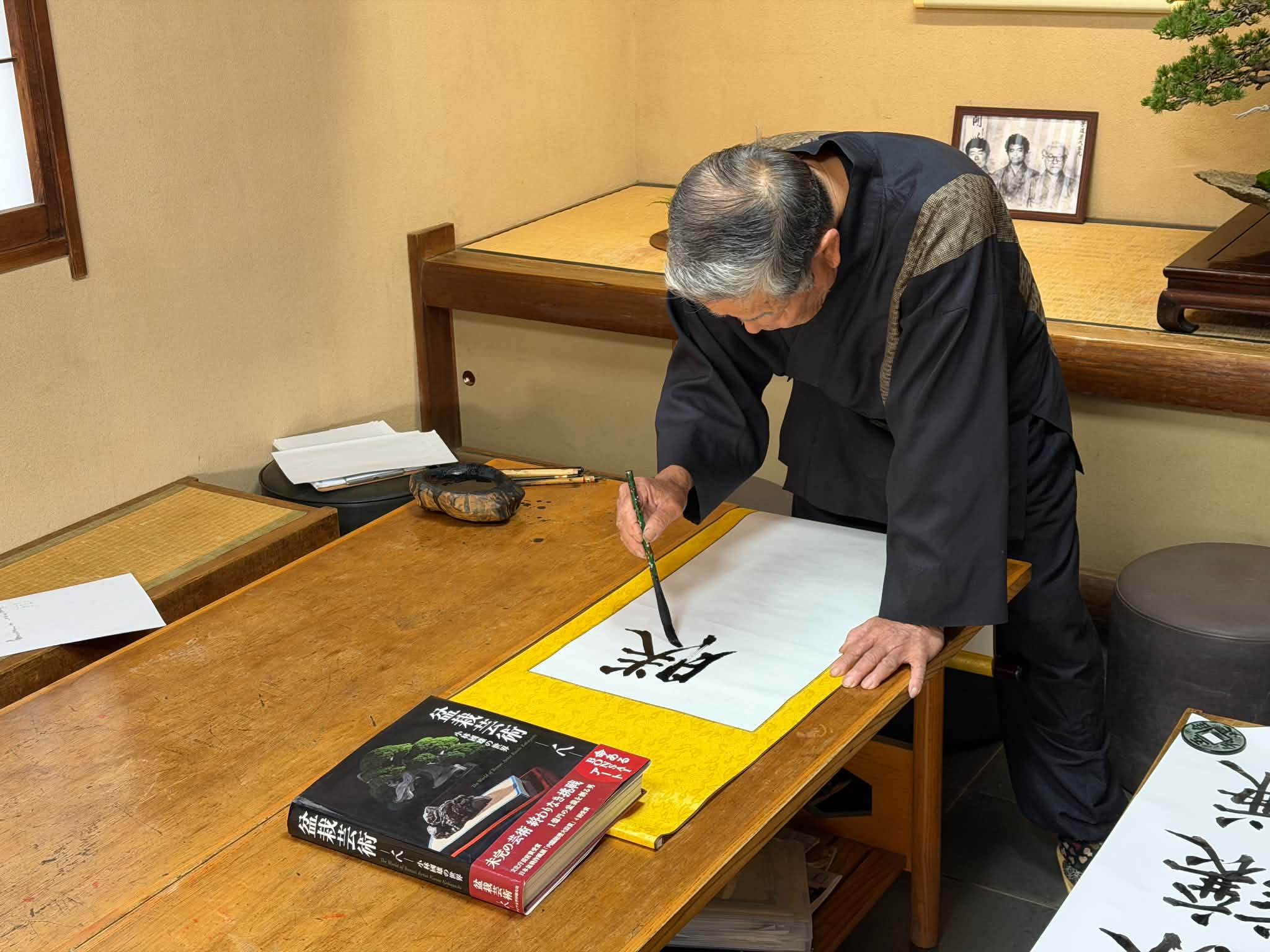
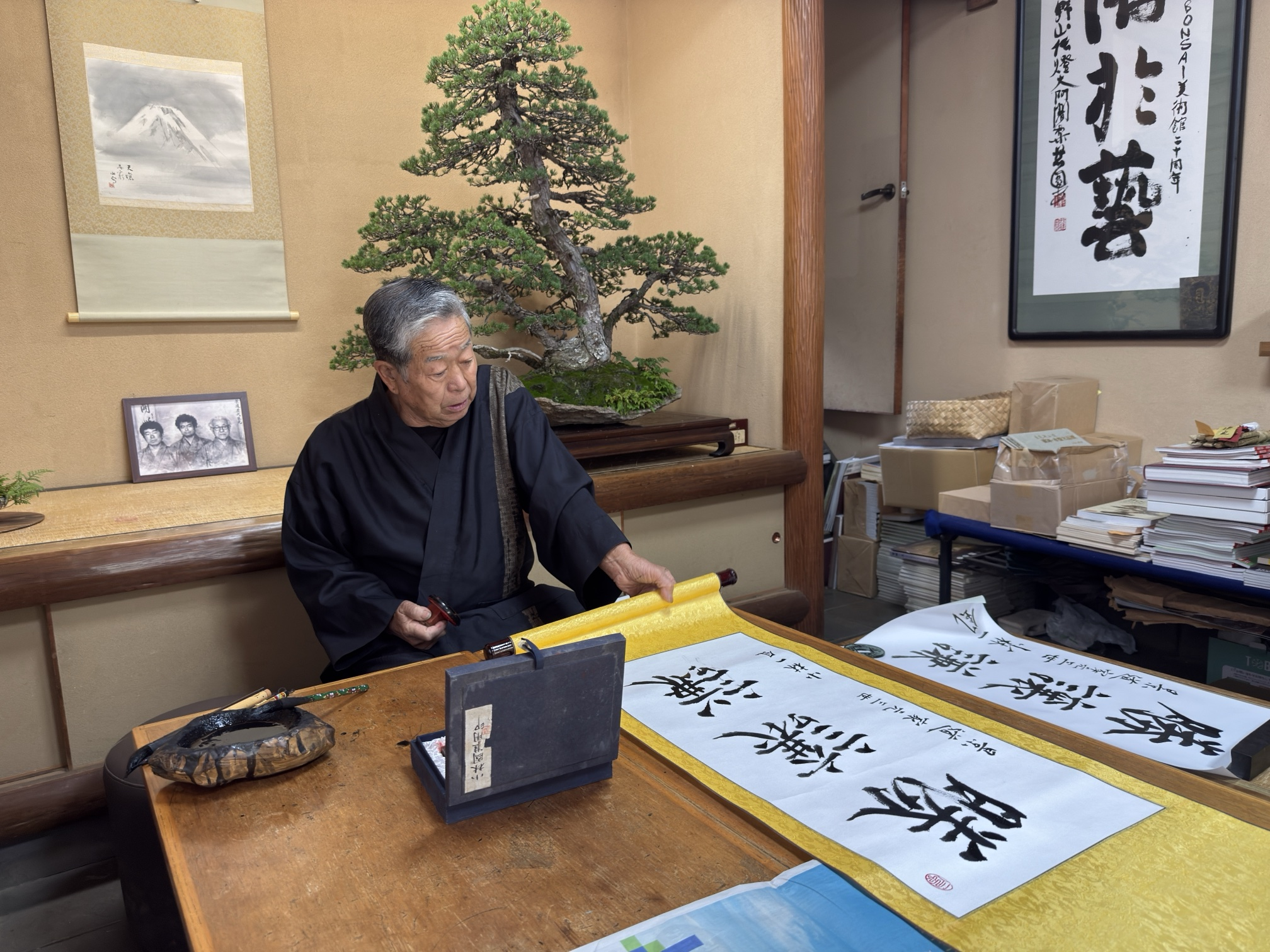
After the kakejiku came the documents. With the same brush, the master traced the character 謙 in large format on the 伝授之書 and then, on a small shikishi, the name in its briefest form—the single kanji 謙. He set the shikishi in a folding three-panel case of embossed cardboard, where it is held by two gold bands, and sealed it with the school’s hanko and his own.
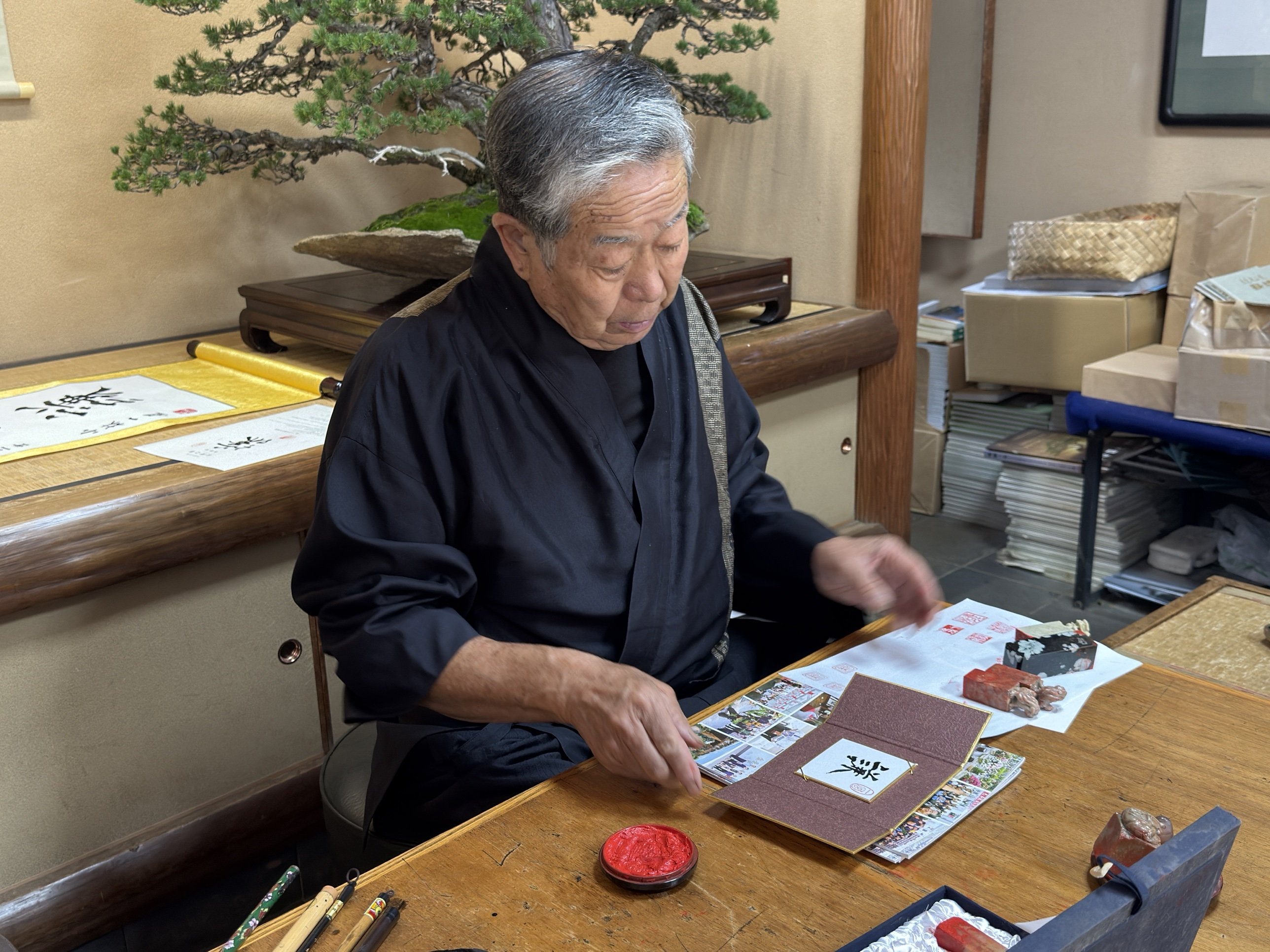
The same hand also wrote, on another kakejiku, the zengo 三冬枯木花: “after three winters, the withered tree blooms.” Months earlier it had reached me in Jin's calligraphy, on a phrase of the master's; now I had it traced by the Iemoto himself. Both kakejiku hang together in the tokonoma of the Shunkaen, beside a pine and the shikishi 無為自然: the announcement and its fulfilment.
From that moment my name is 勝讓謙, Masaru Ken. The gō 勝讓武古 (Masaru Buko), received on setting out along the path, was the path name of the student; Ken is the artistic name of the official disciple of the Keidō Katayama-ryū.
There were no speeches and no show: we are Zen. It was enough to watch a master of seventy-nine prepare his ink, test the brush, and write my name. I understood then that 謙 was already a lesson before it was a name.
Displaying at the Shunkaen
During the stay I did not only receive; I also worked. The master entrusted me with several compositions in different rooms of the museum, and creating them in his home, with his pieces and under his gaze, was one more privilege. A sekikazari (席飾り) is not a collection of beautiful objects. It is a small landscape composed of a season, an idea, and a place, in which each element—the tree or the stone, the kakejiku, the accompaniment—answers to the others.
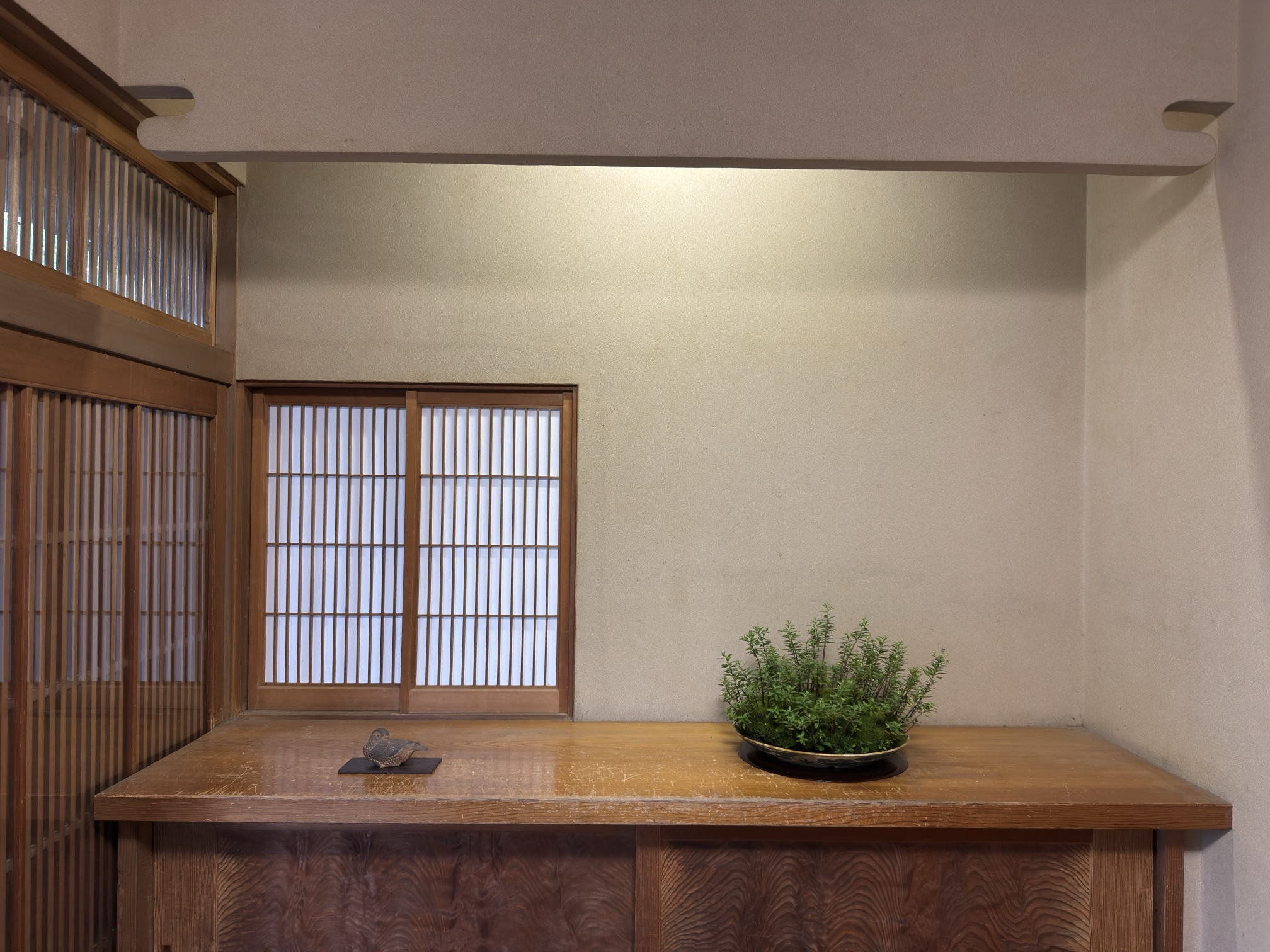
On the last day I had the privilege of working with a very special piece: a wooden carving of a female mandarin duck (oshidori, 鴛鴦) that belonged to the founder, Katayama Ichiu. My master keeps it with great affection, because it was his own master’s.
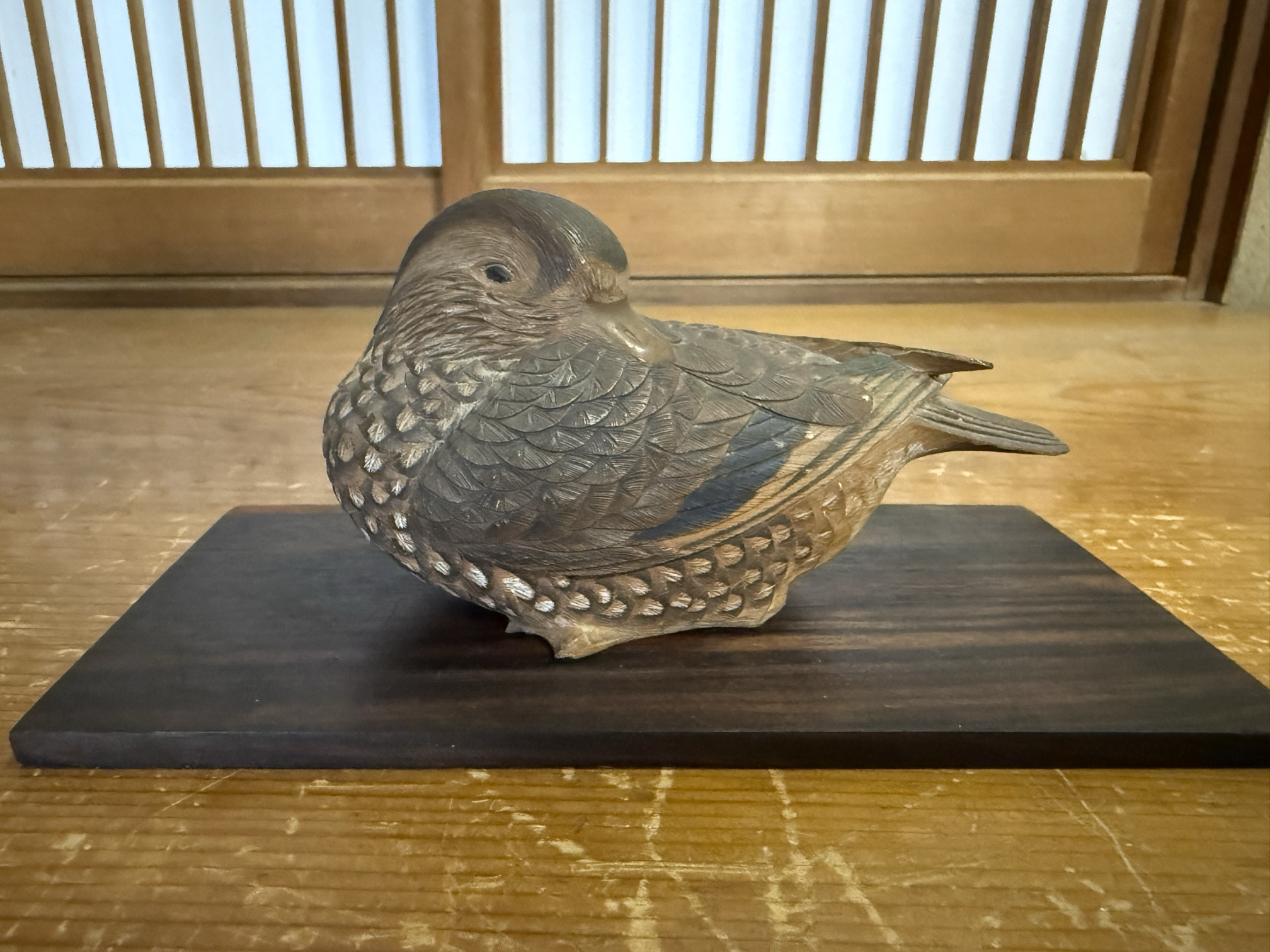
With it I composed a sekikazari in the entrance hall leading to the tokonoma: the carving on its ita (板), a kusamono (草物) beside it, on the wooden display counter beneath a shōji (障子) window.
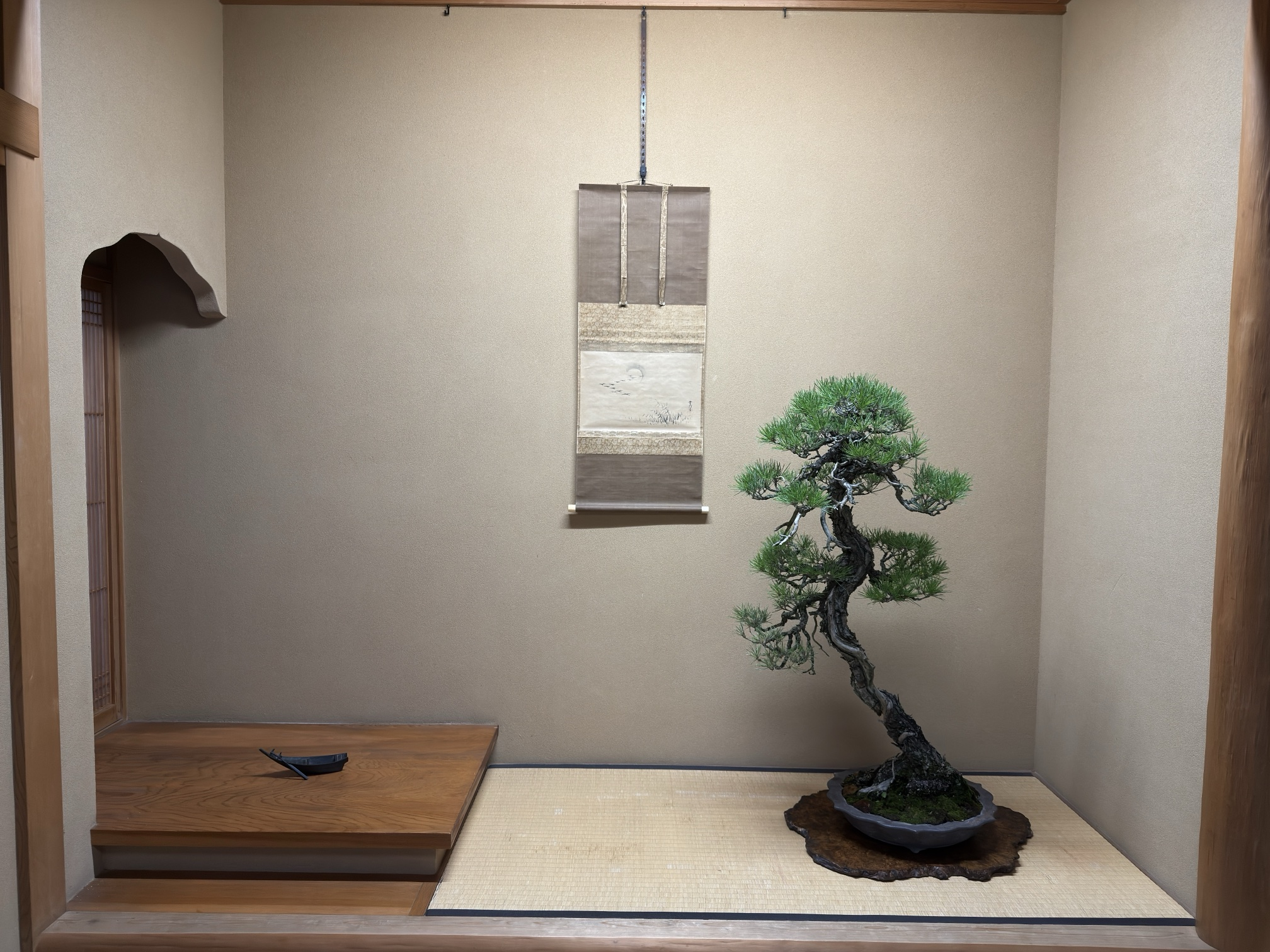
That same day I also had the privilege of composing, in a tokonoma, a fairly large kuromatsu (黒松, Japanese black pine) in the bunjin (文人木, literati) style on a wooden ita. The kakejiku shows a flock of wild geese (雁, kari) descending through the mist, the sun veiled behind it. They are the birds arriving in Japan to spend the winter, a thoroughly autumnal image. As accompaniment, a copper tenkei in the shape of a boat.
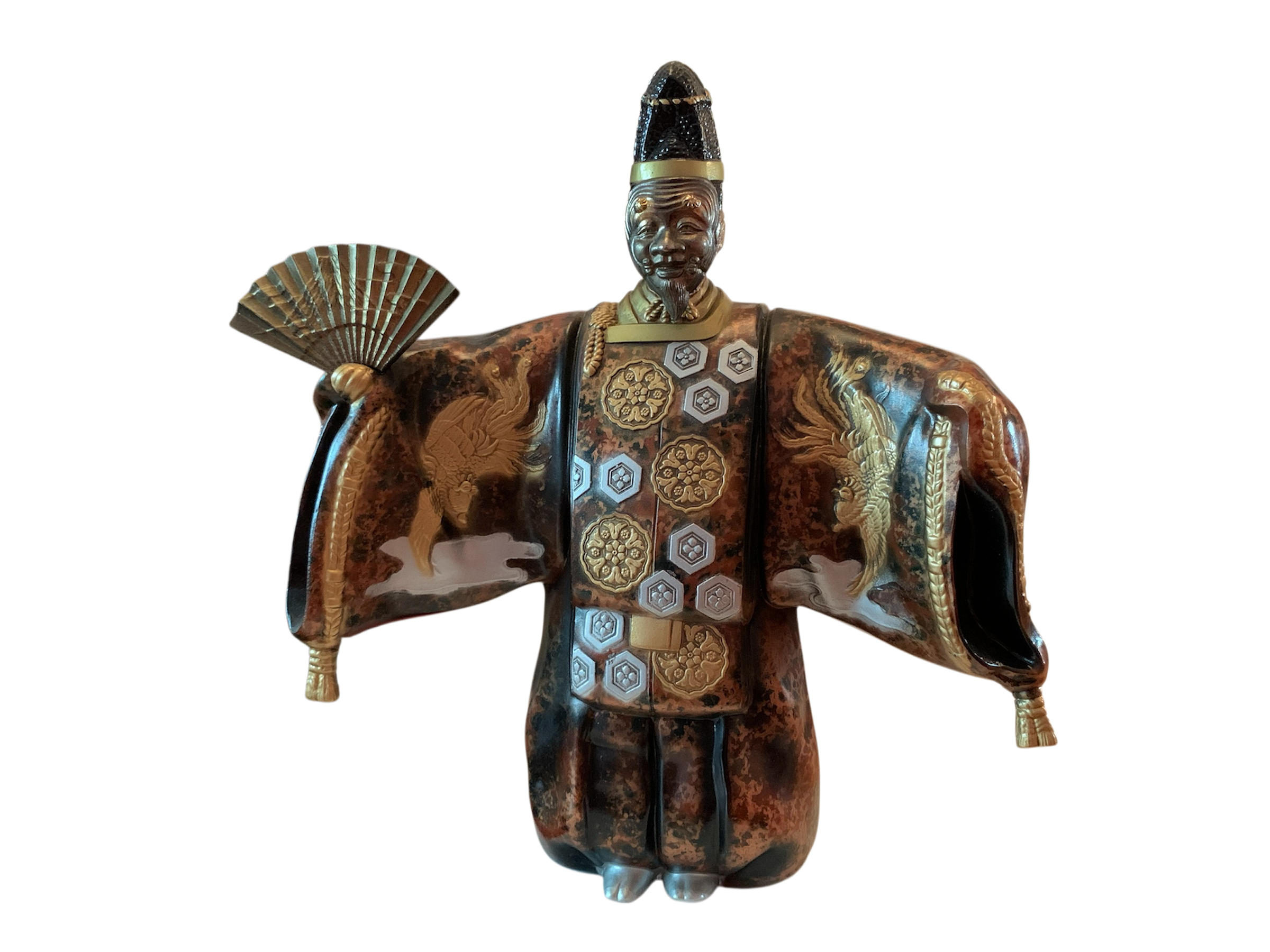
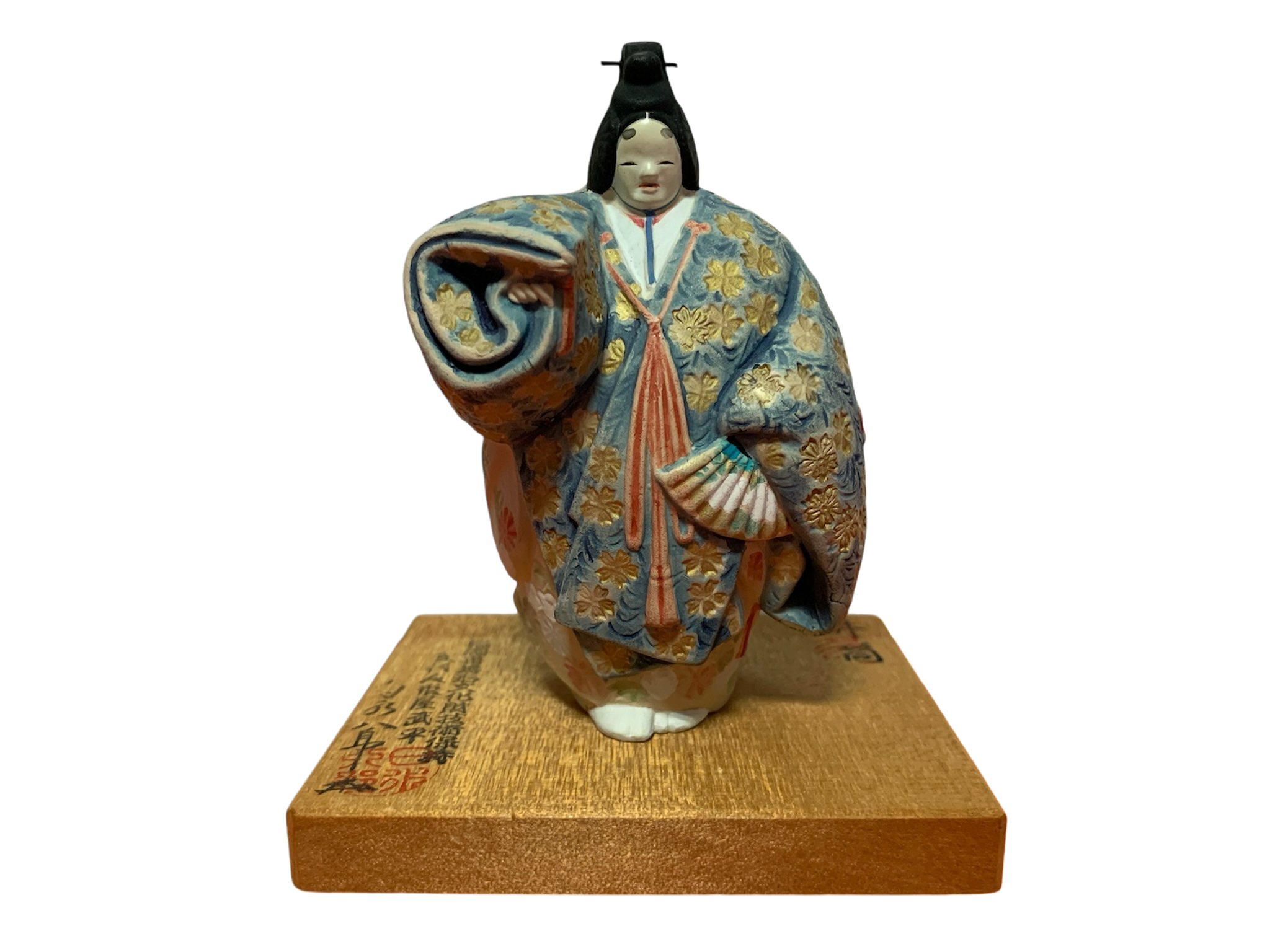
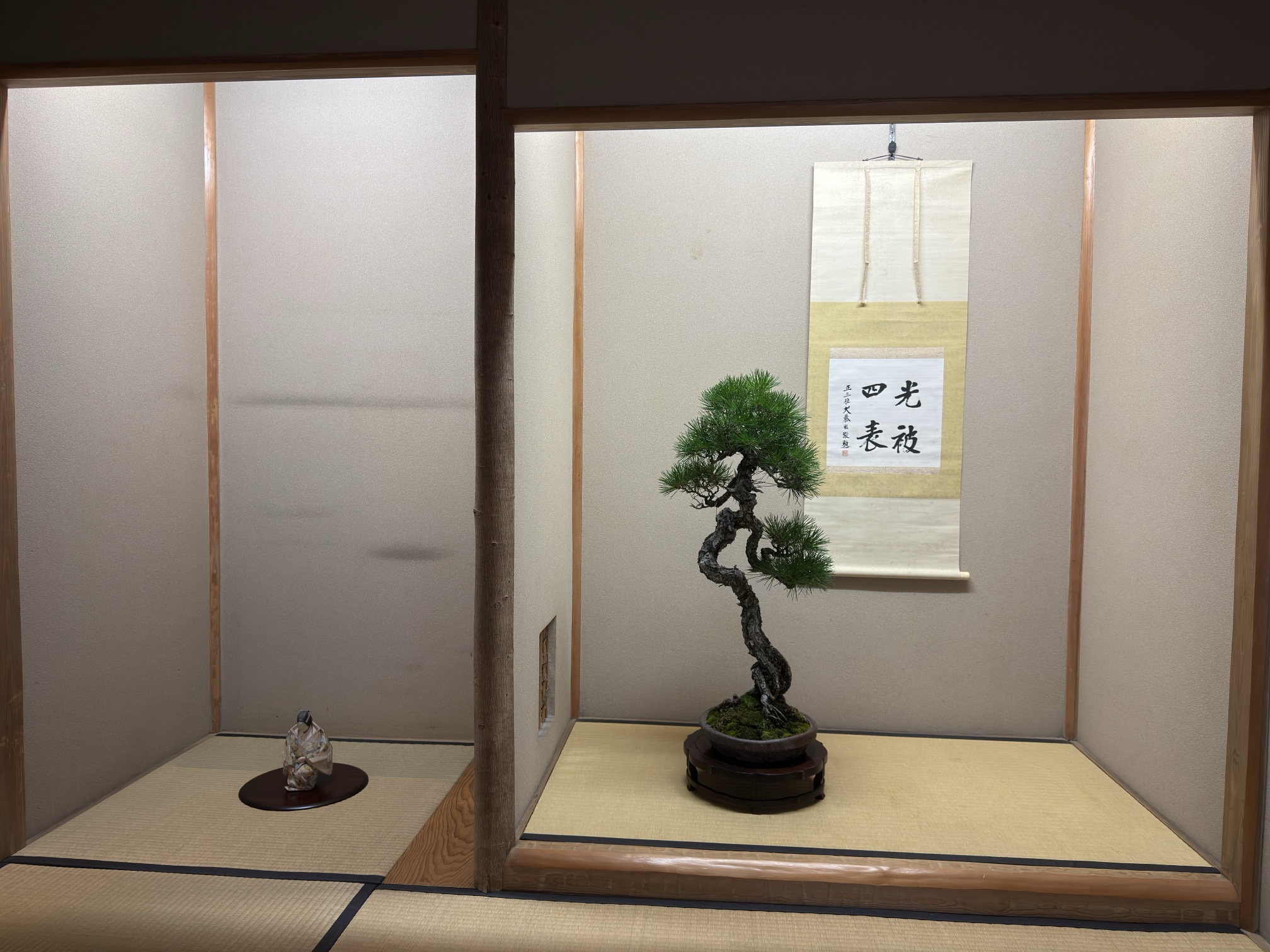
In one of the museum’s tea rooms, at my master’s request, I composed another kuromatsu, smaller, in a nanban pot (南蛮鉢). The kakejiku carries the calligraphy 光被四表 (kōhi shihyō), “light reaches the four quarters,” a phrase of deep symbolism, well suited to a tea gathering. Beside the pine stands a carved wooden figure of a woman of the Noh theater. The pairing is no accident: the pine is the tree of Noh, painted at the back of its stage, and kabuki adopted it as well.
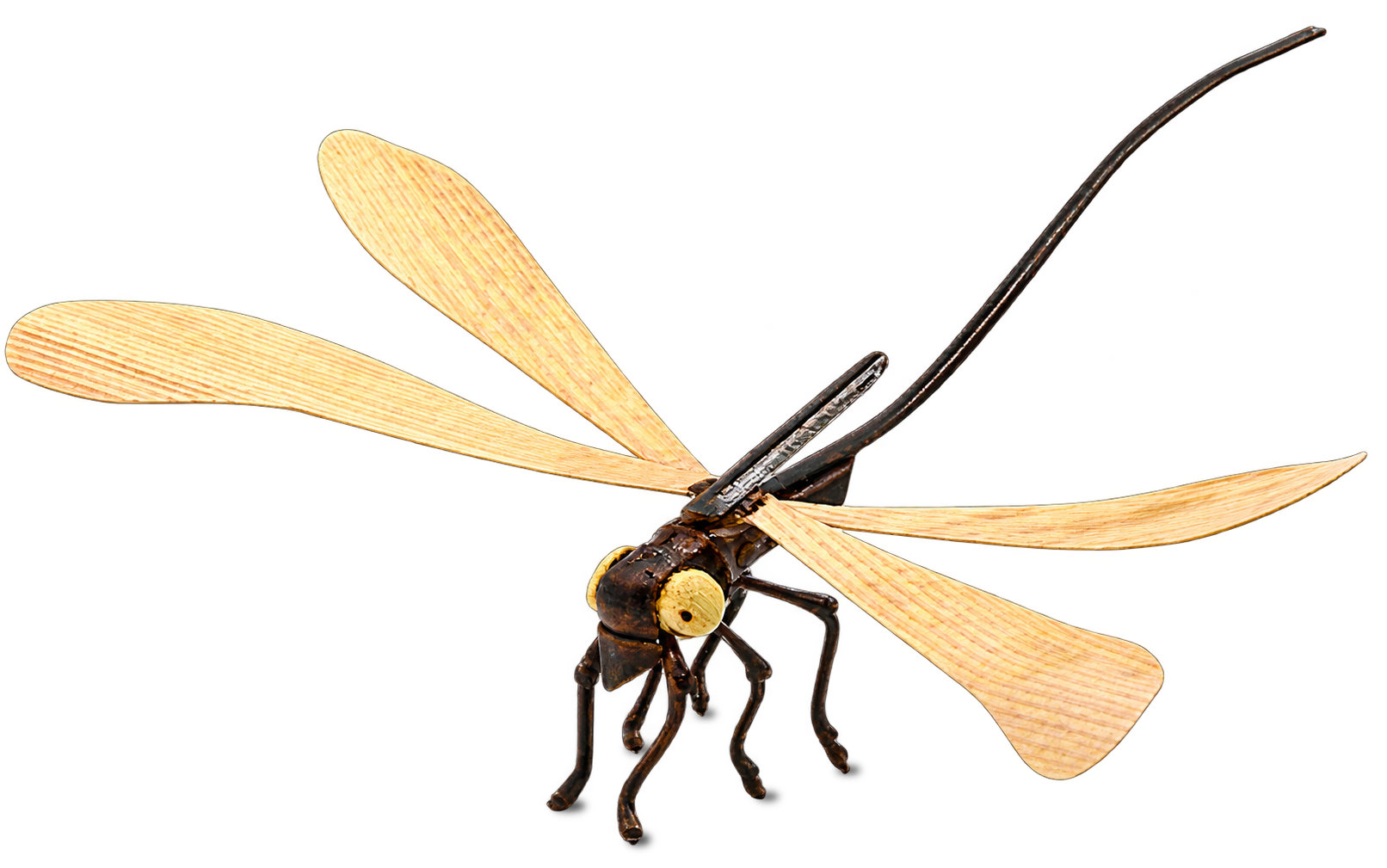
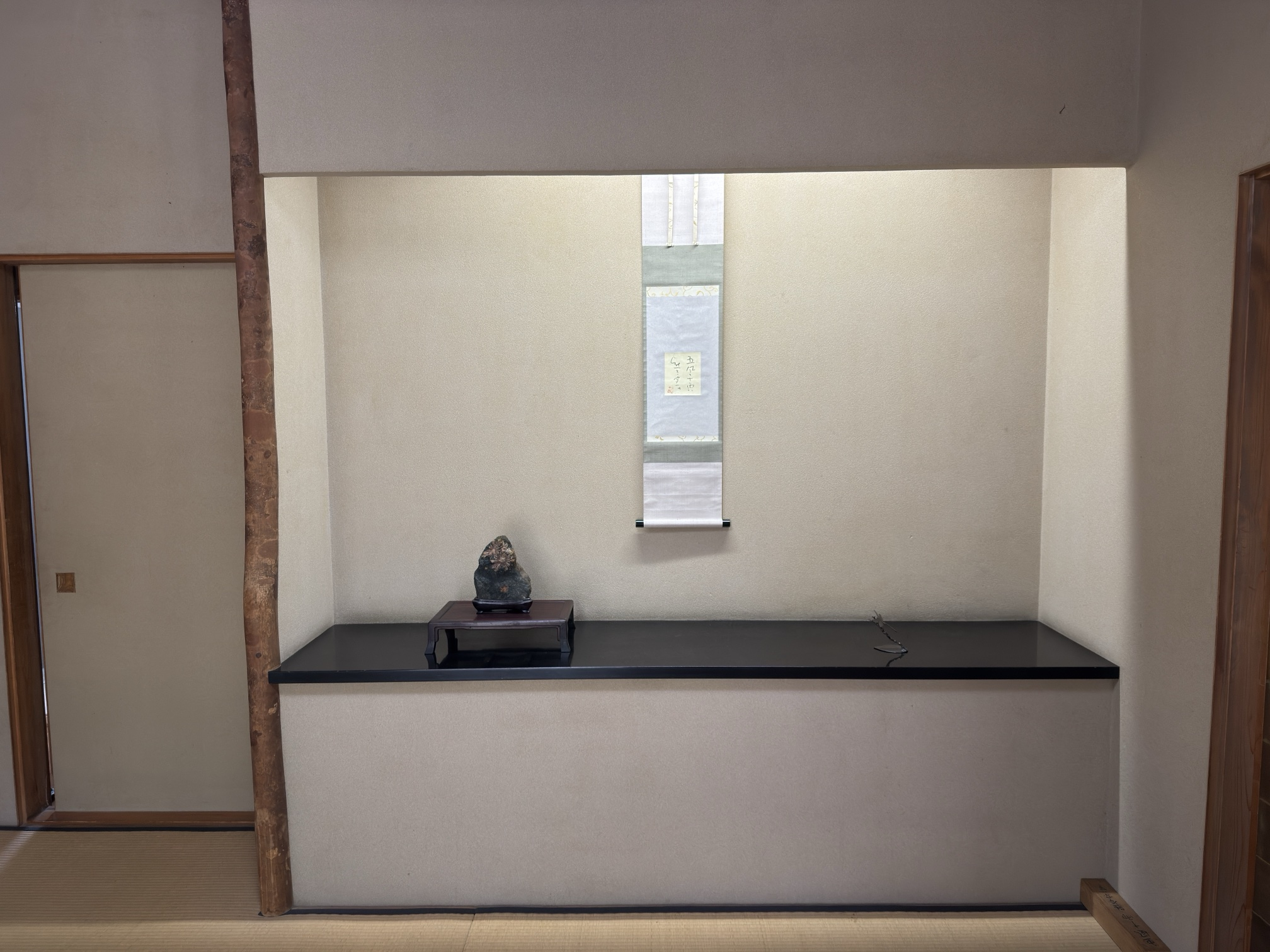
The master also asked me for a sekikazari in the entrance hall: a kikka-seki (菊花石), the “chrysanthemum stone,” named for a flower that is itself an emblem of autumn. The kakejiku evokes clouds encircling the rock, as autumn mist wraps the mountains. As accompaniment, a copper tenkei of a dragonfly, again well suited to the season.
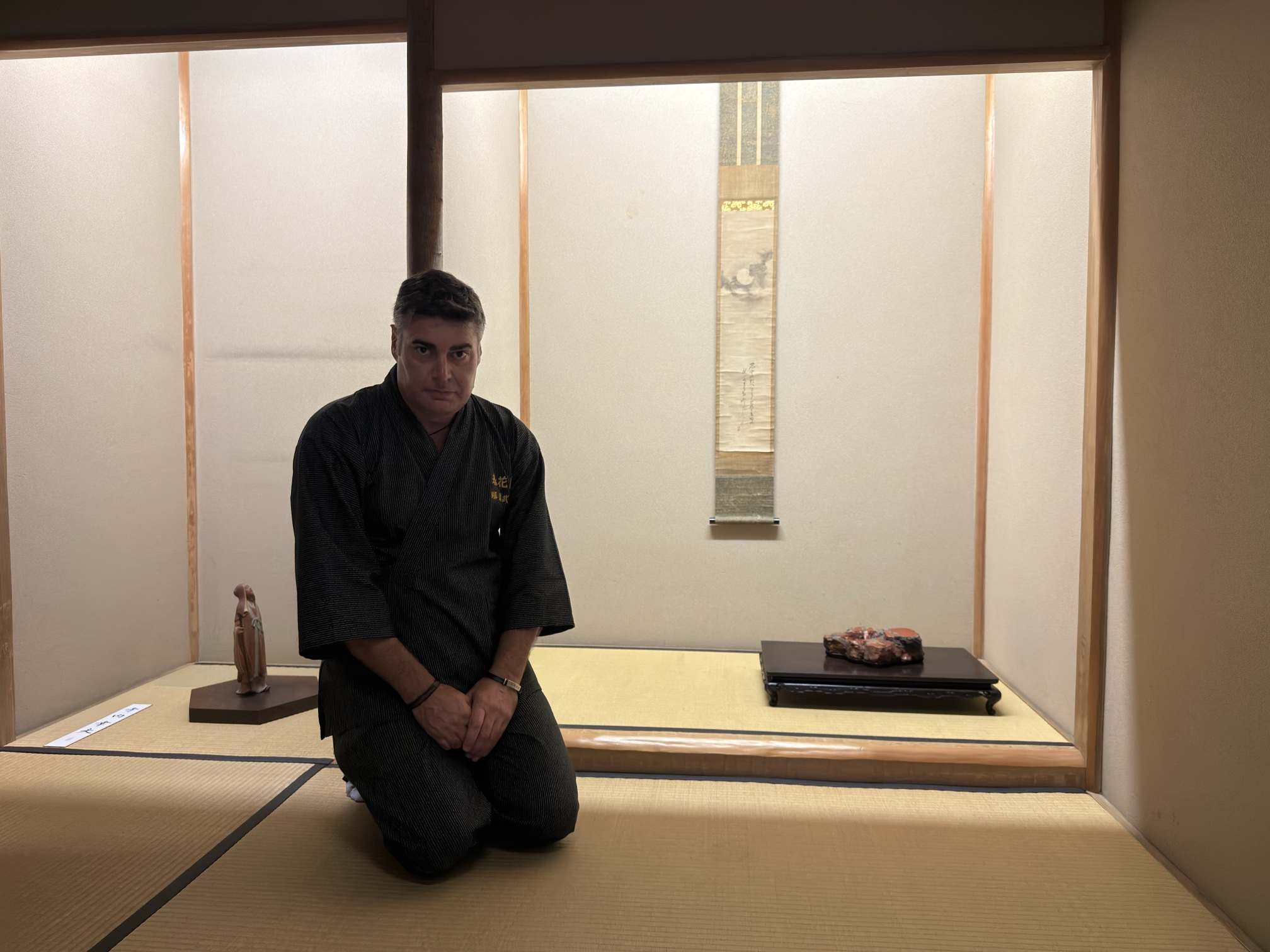
During the stay I also coincided with the Genkōkai, an exhibition held in recent years at the Shunkaen Museum. Its exhibitors are deeply versed in the art of display, and the pieces they handle are sometimes even National Treasures.
A page in the master’s book
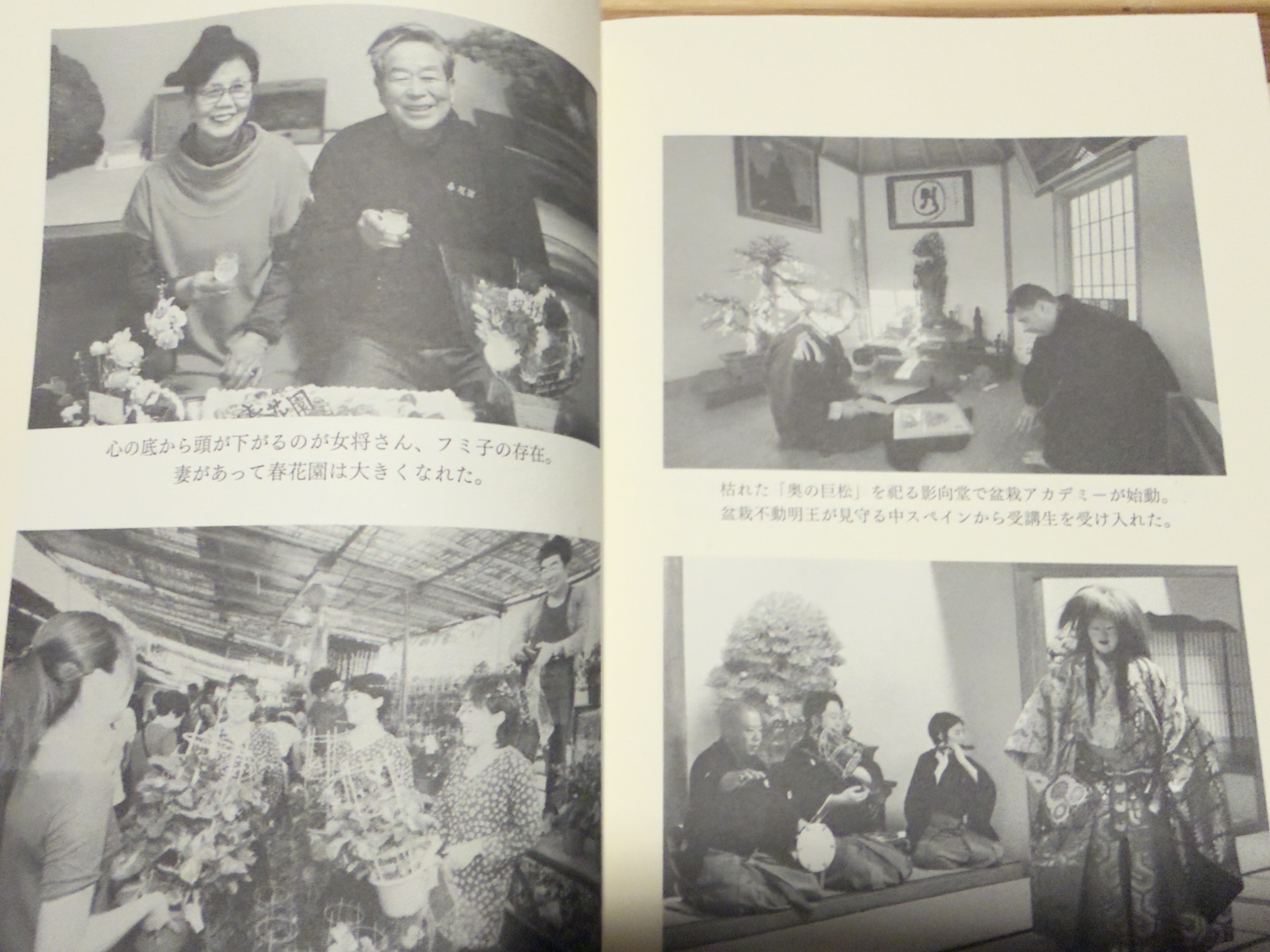
Near the end of my master’s latest book—more personal and intimate, in which he tells the story of his life and experiences—there is a photograph in which I appear. It astonished me to find myself in the pages of one of the most respected masters in Japan.
The scene is the presentation of a watercolor of Oku no Kyomatsu (奥の巨松), the Japanese white pine whose sight led the master to devote his life to bonsai. The tree no longer lives; the watercolor, by my friend William Garcés, shows it in all its splendor. I presented it in autumn 2025, in the master’s personal shrine, the Yōgōdō (影向堂), and the book records that moment. Its caption recalls that there, where the withered Oku no Kyomatsu is honored, the Bonsai Academy got under way and, under the gaze of Bonsai Fudō Myōō (盆栽不動明王), students from Spain were welcomed.
Sudō Uhaku and the empty space
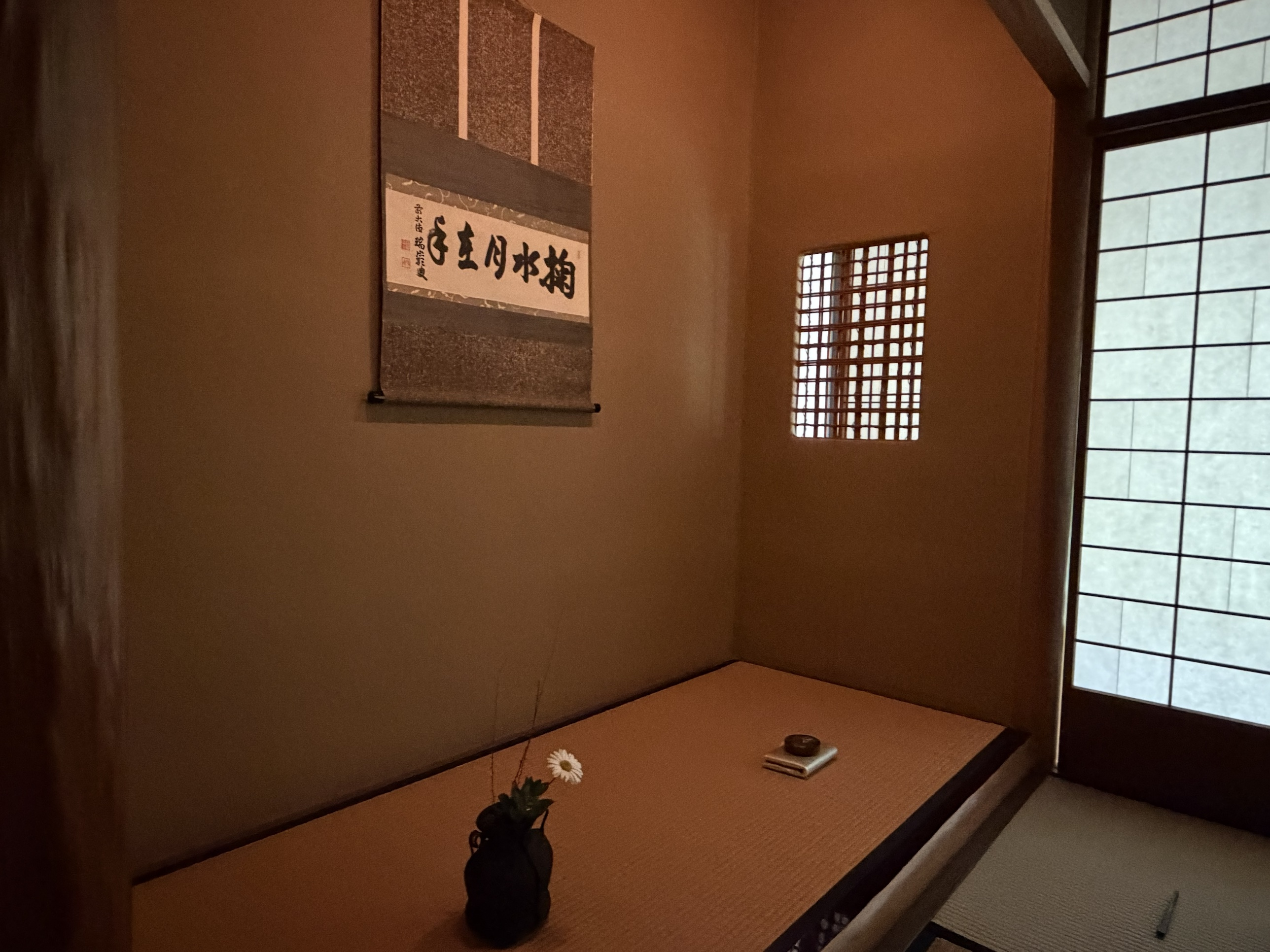
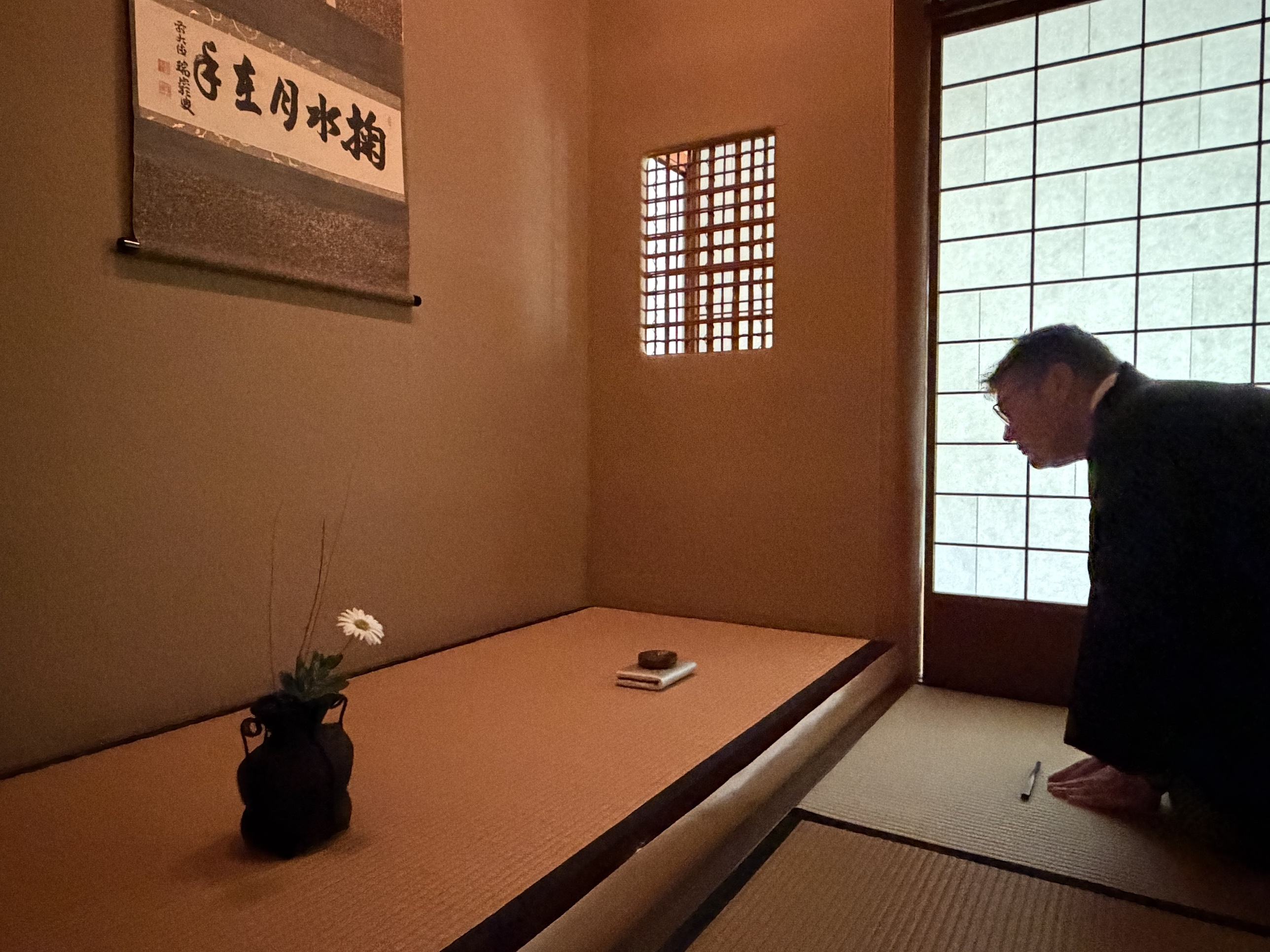
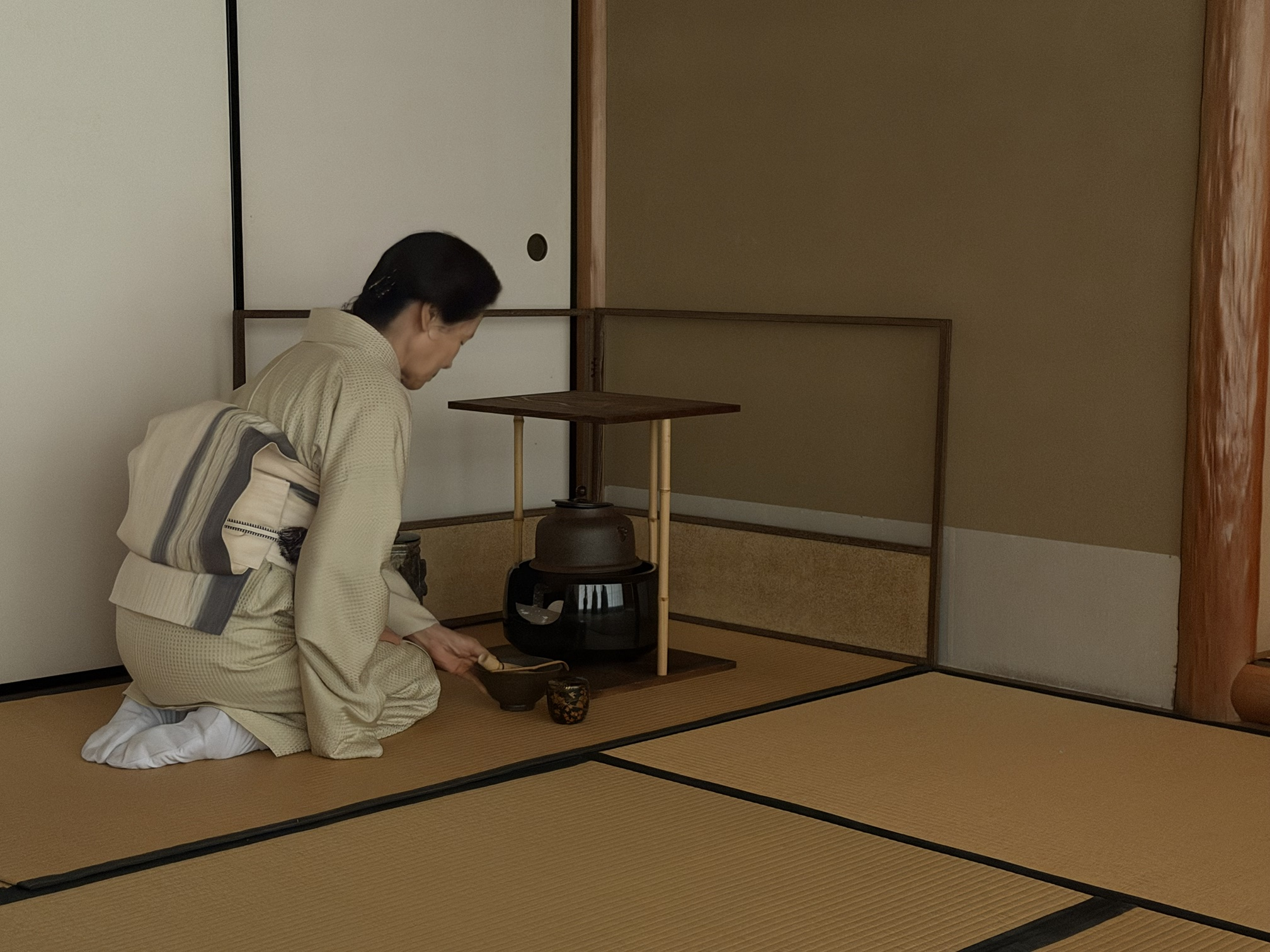
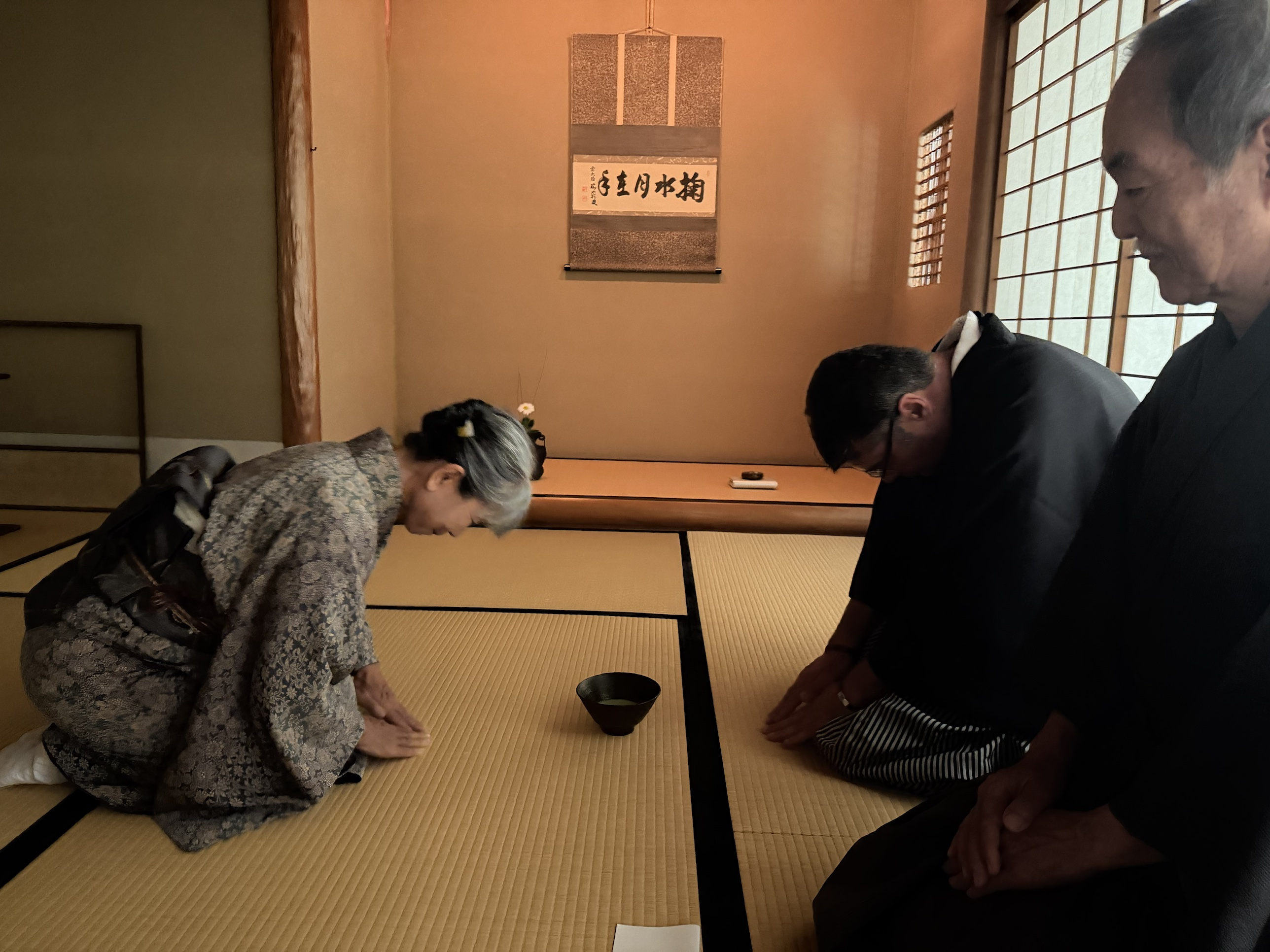
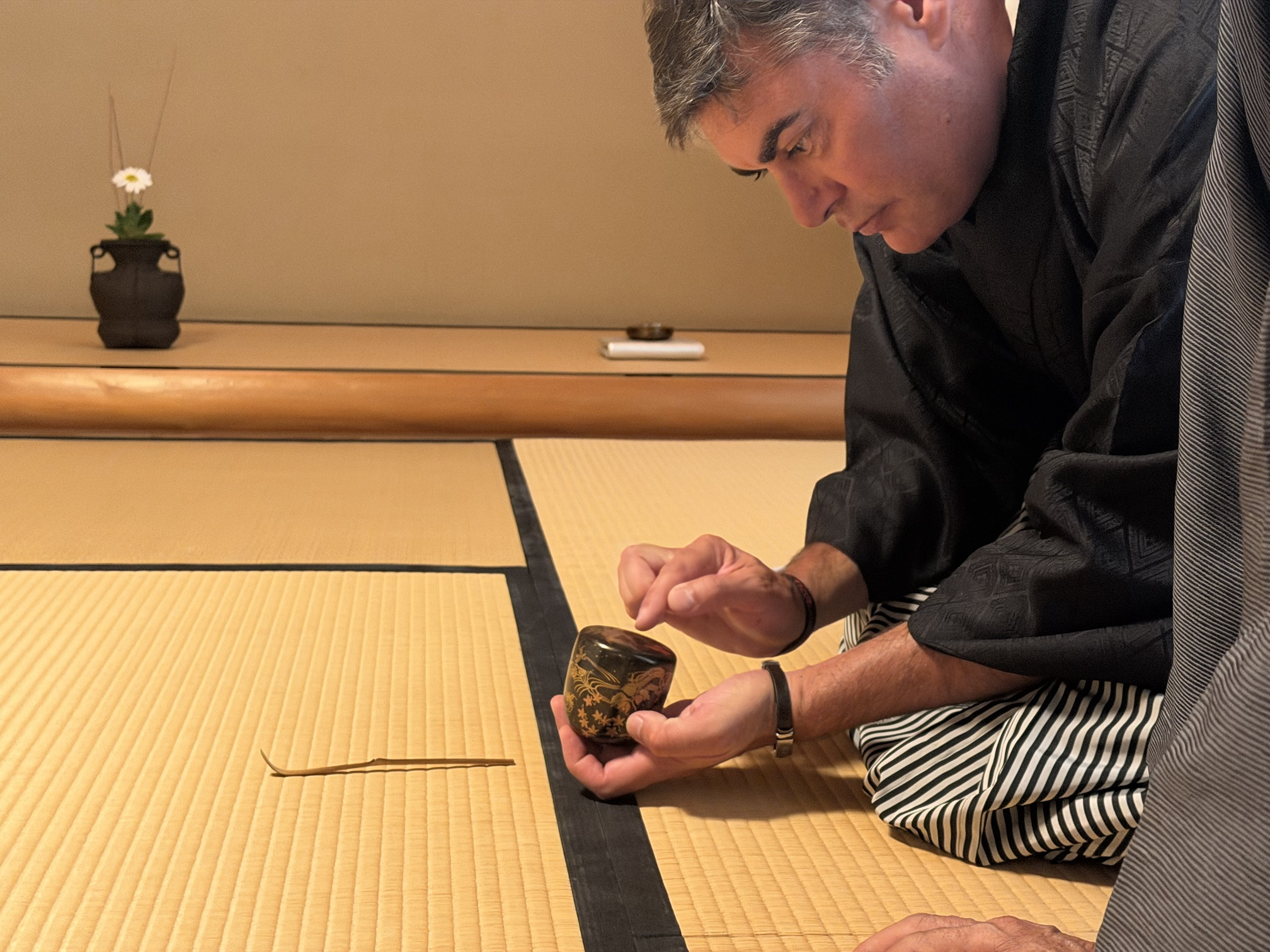
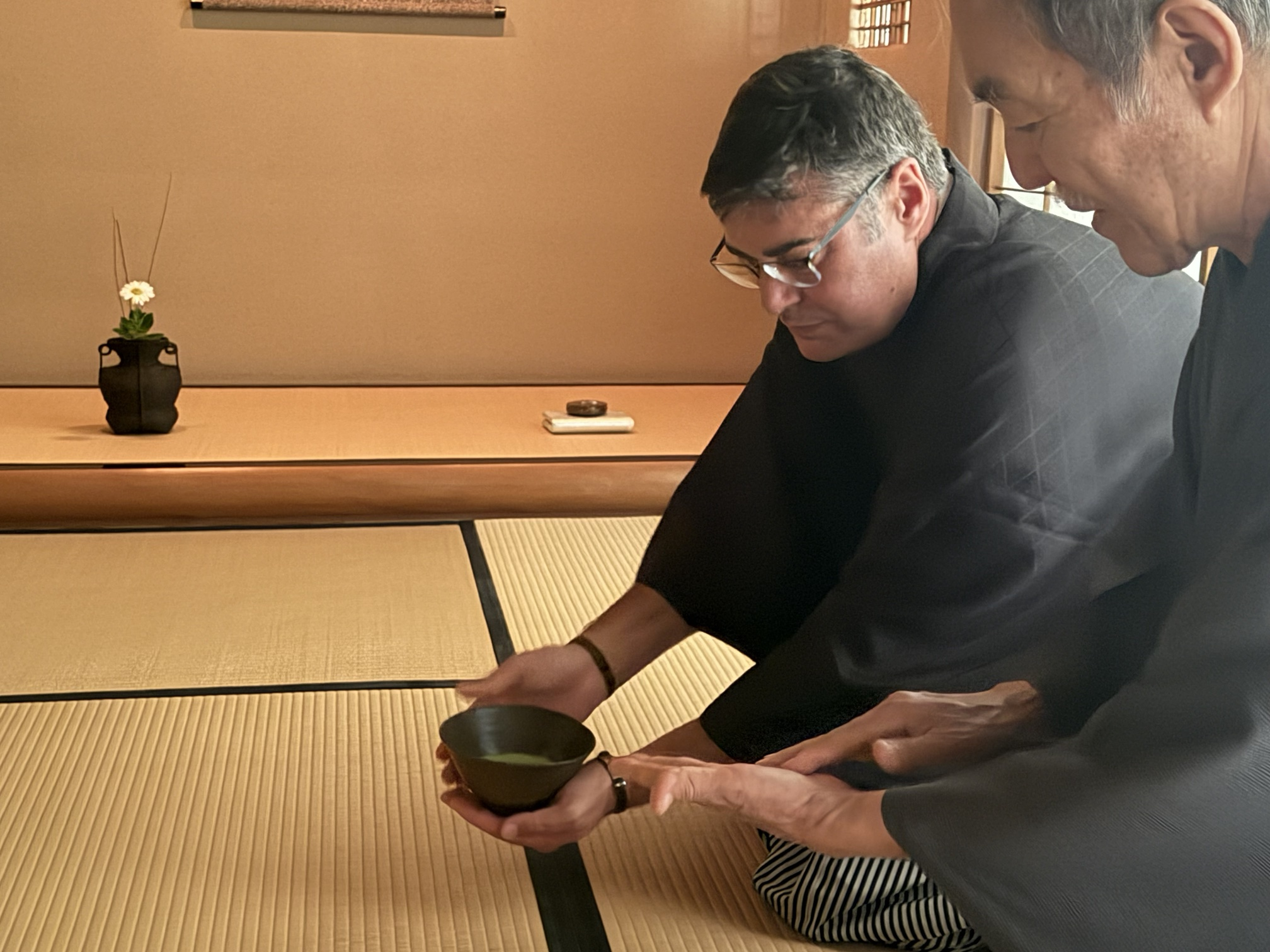
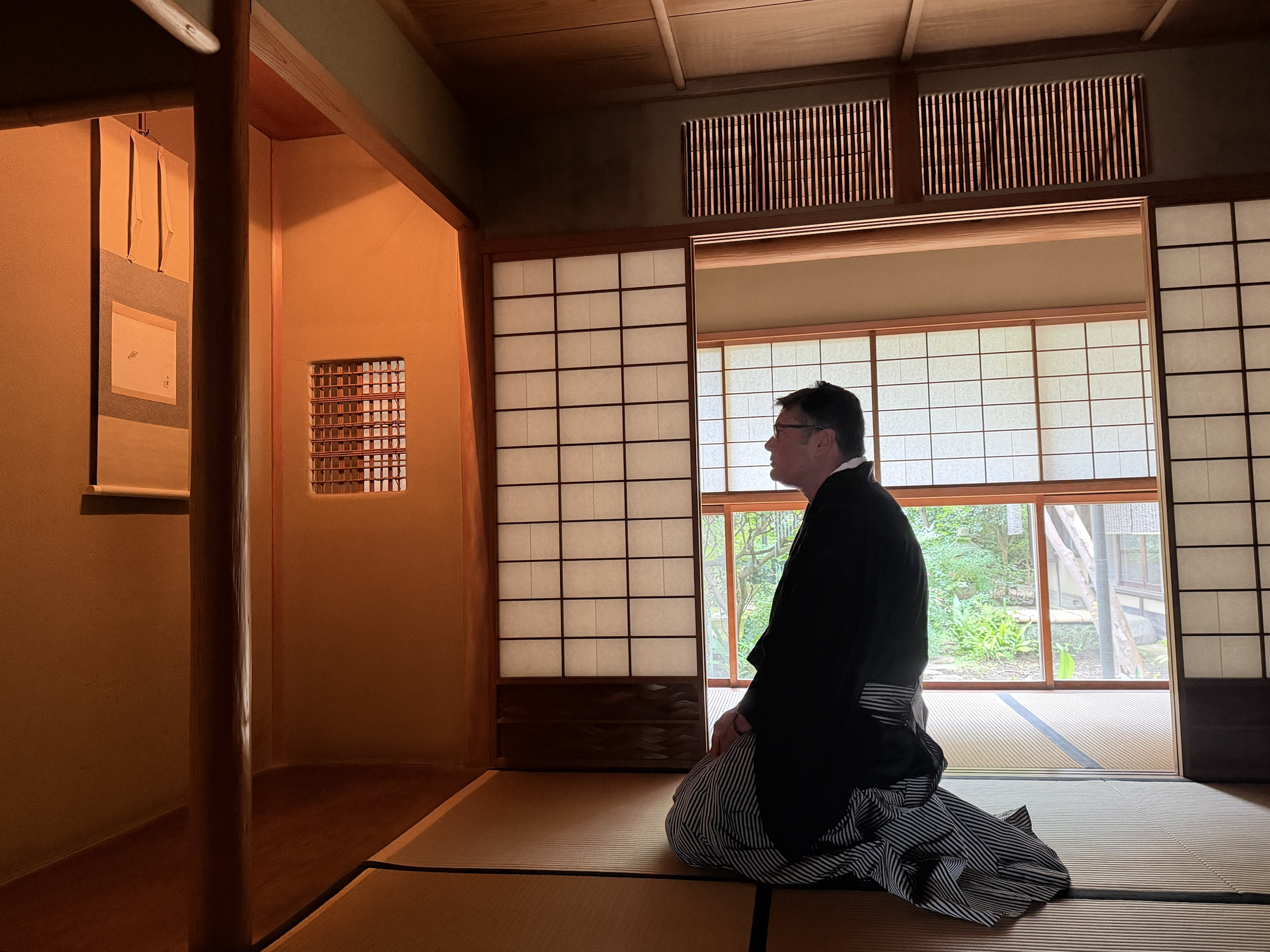
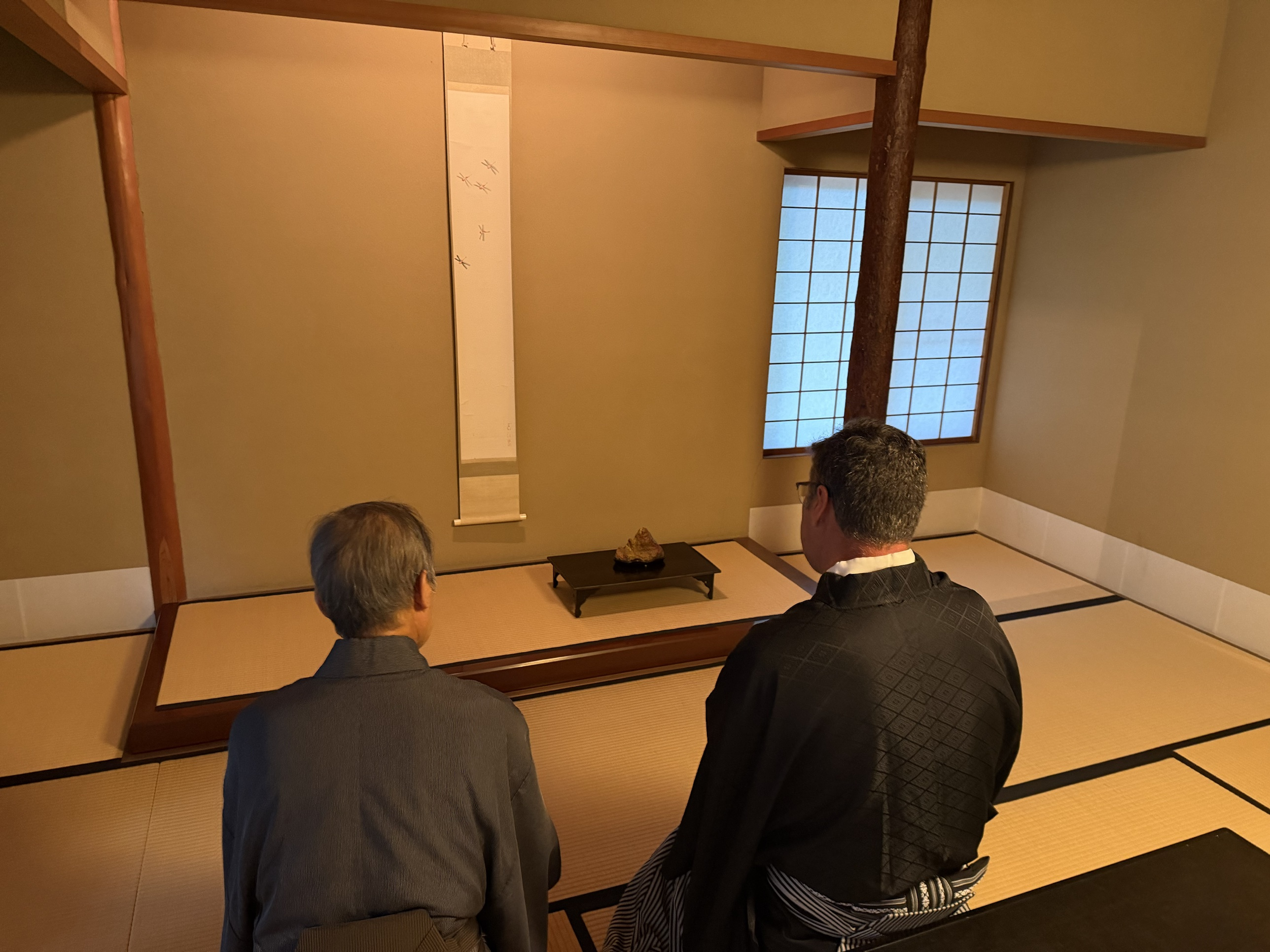
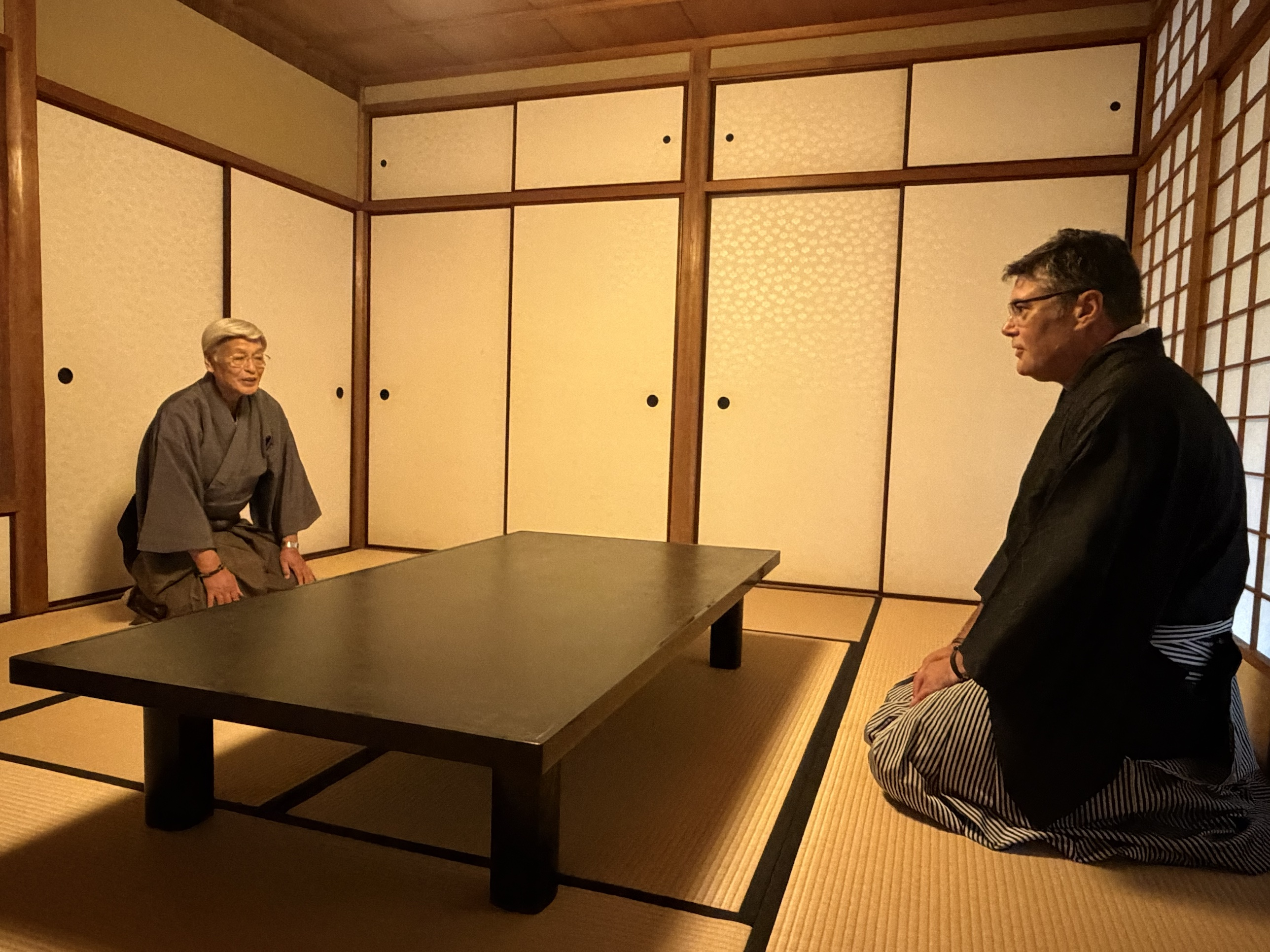
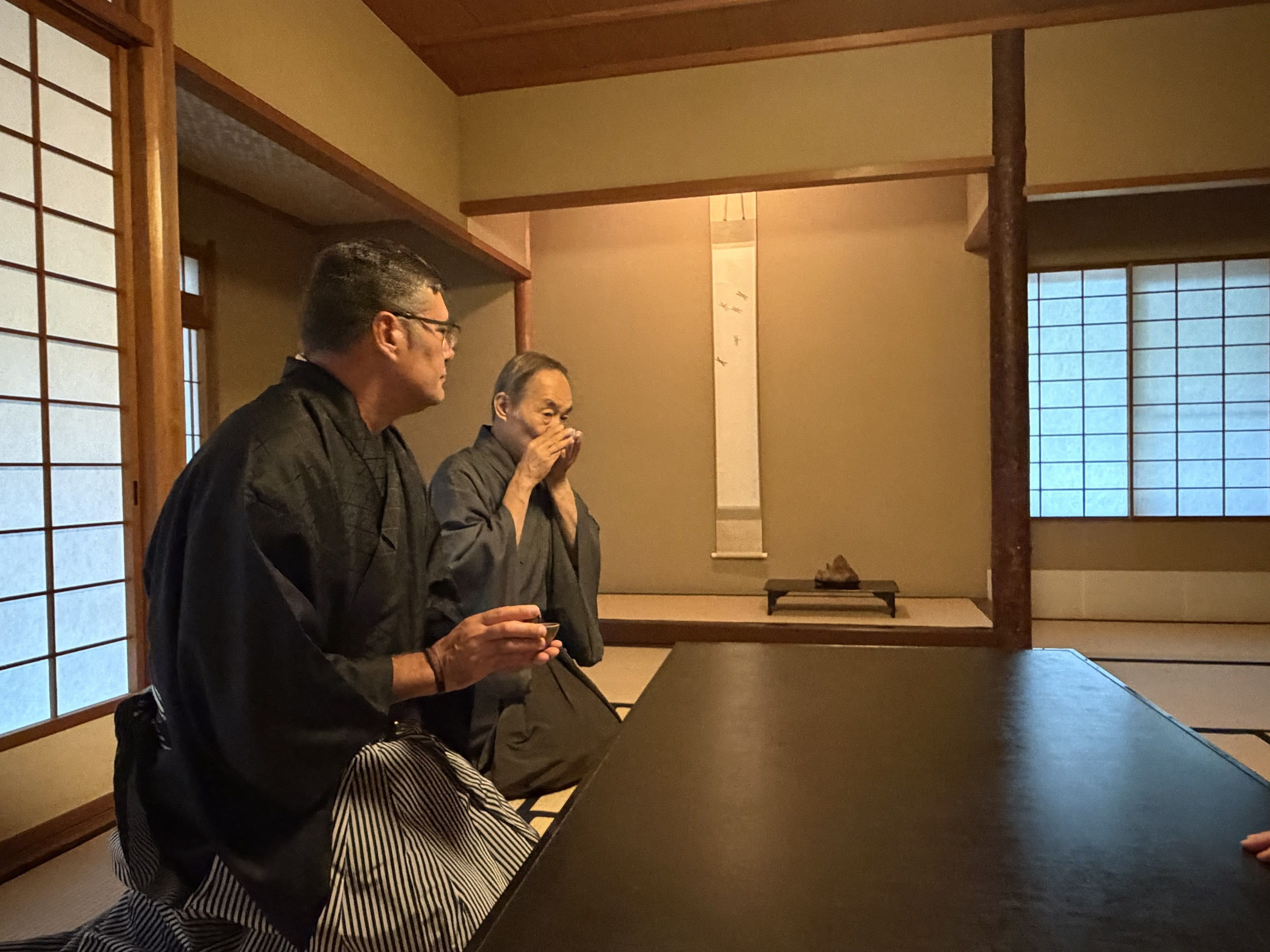
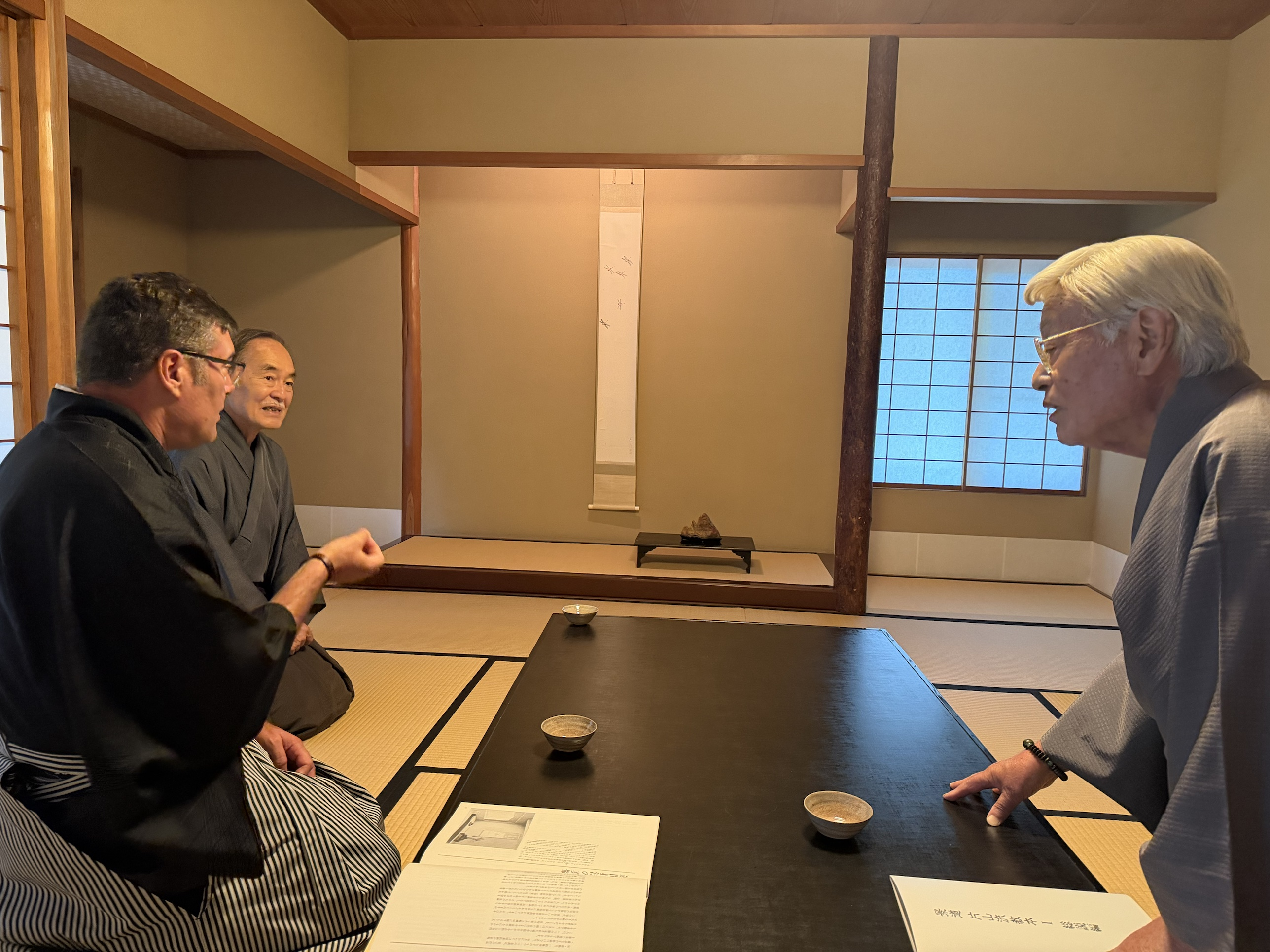
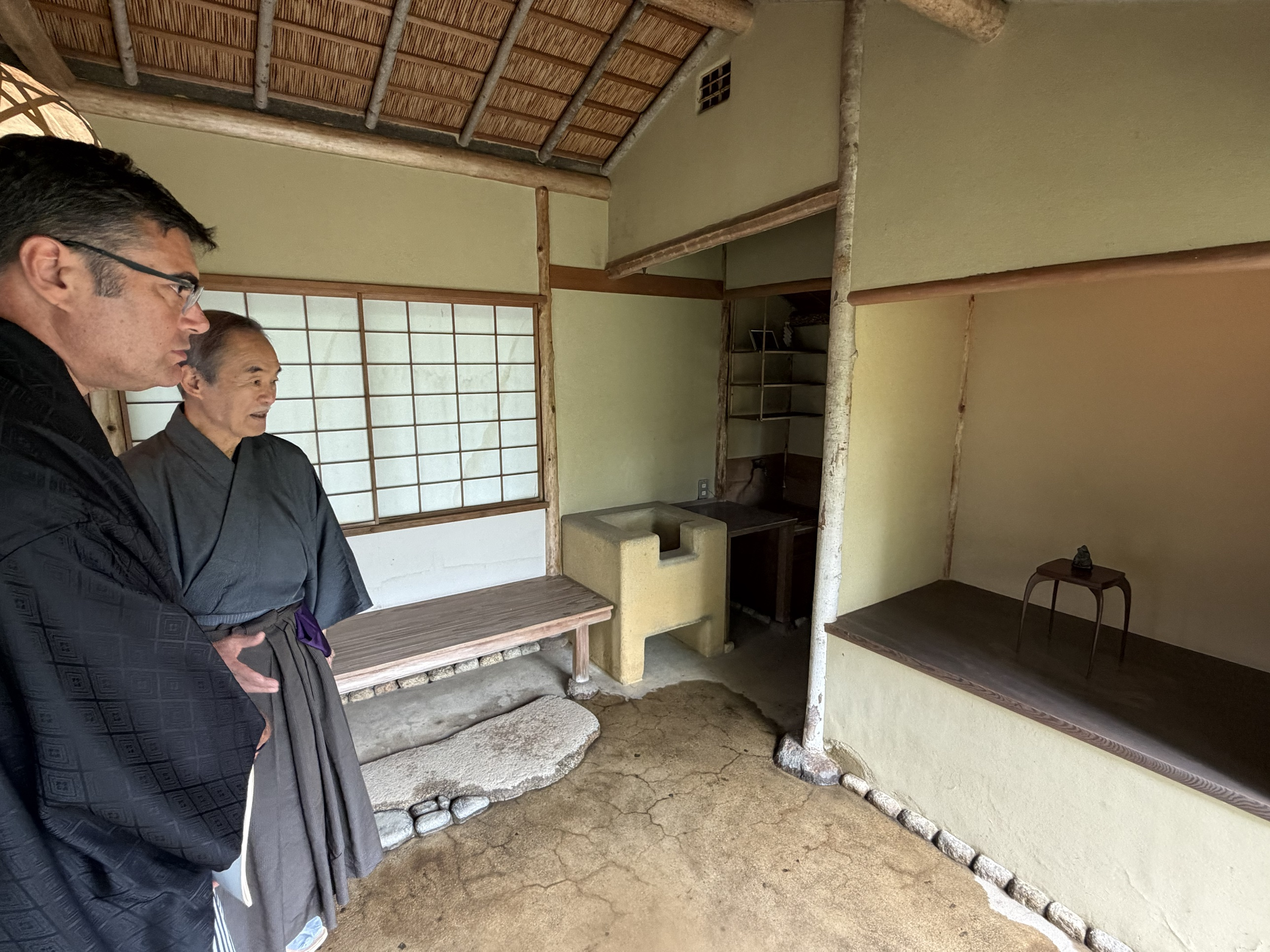
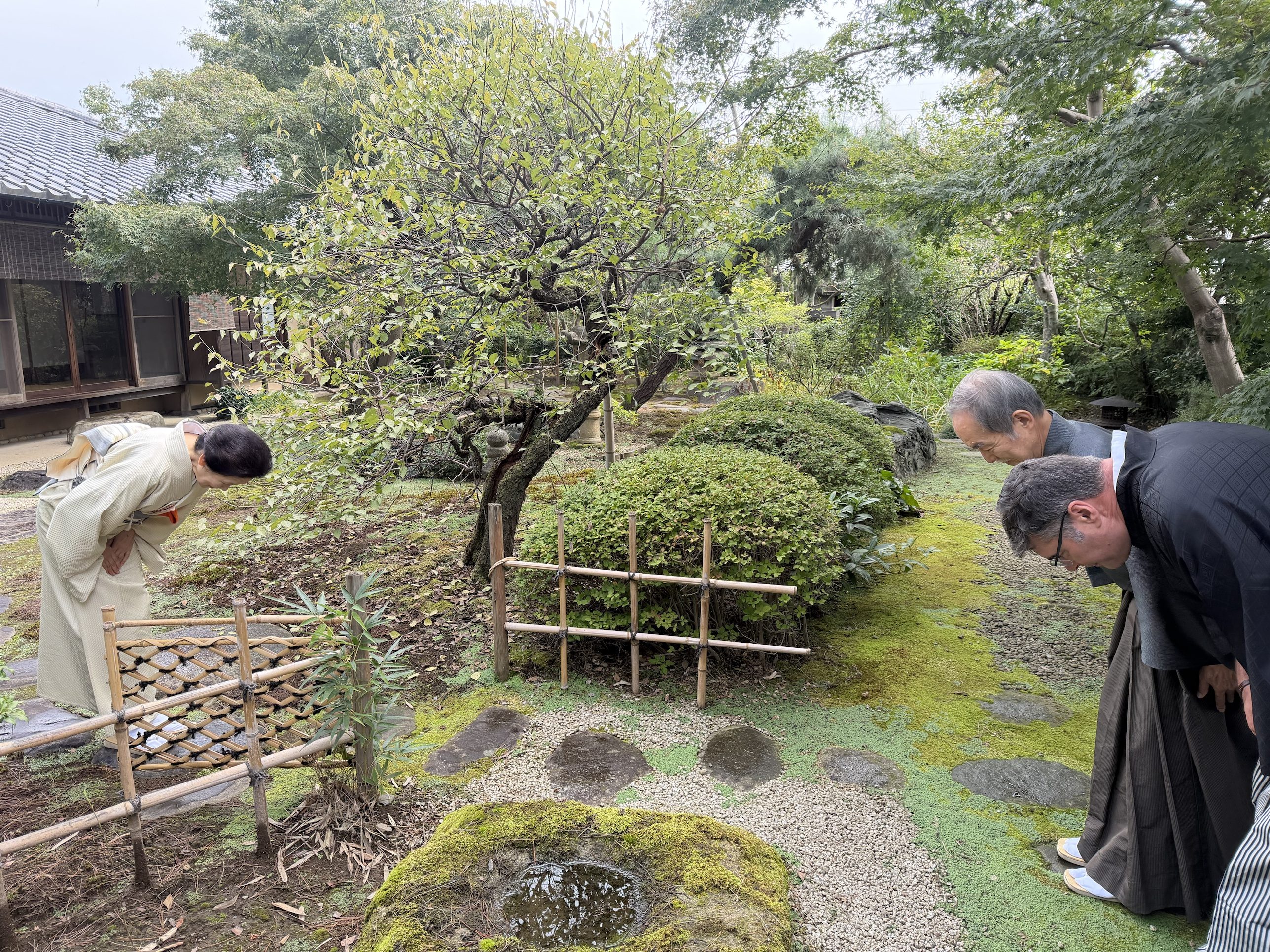
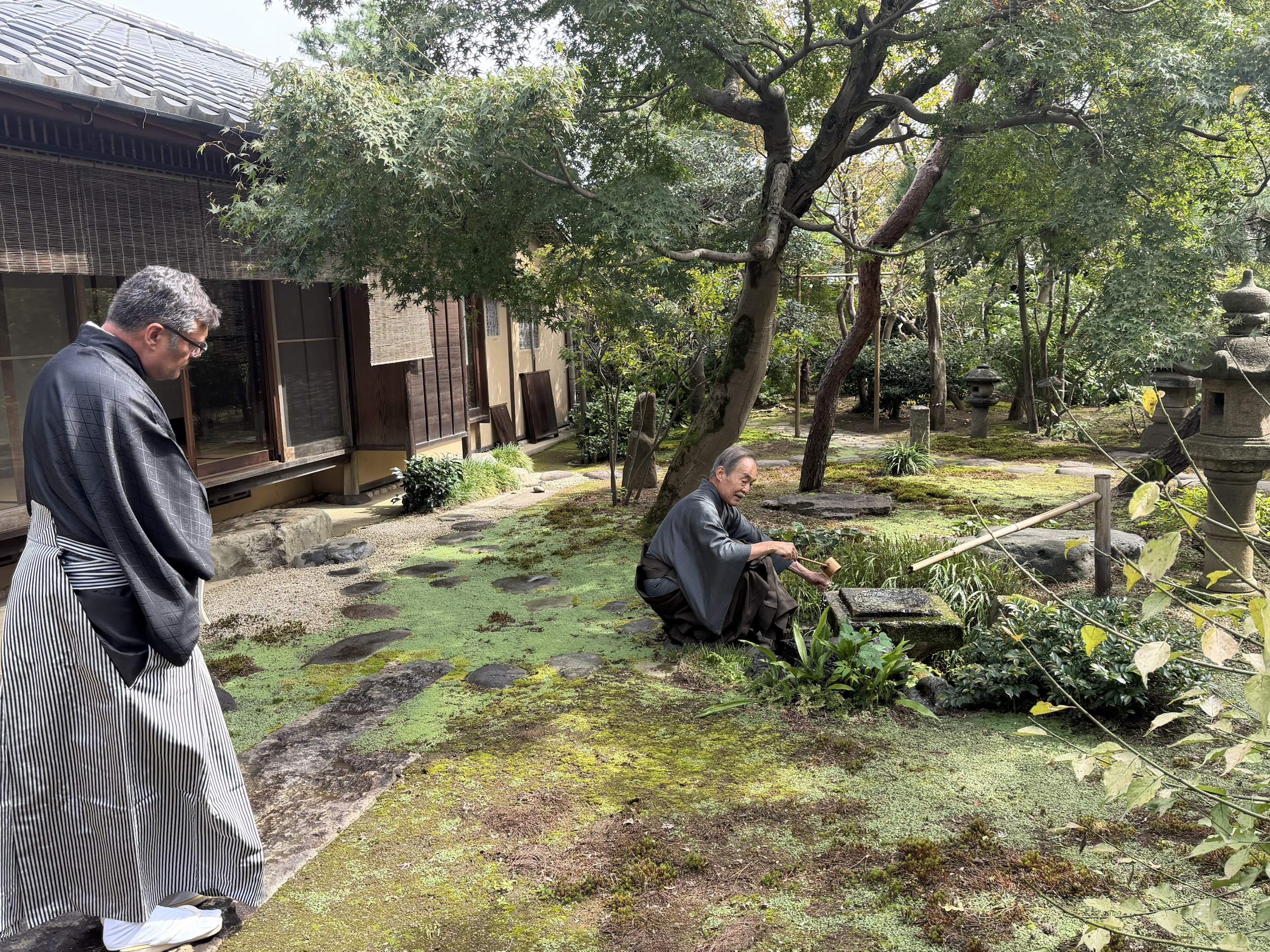
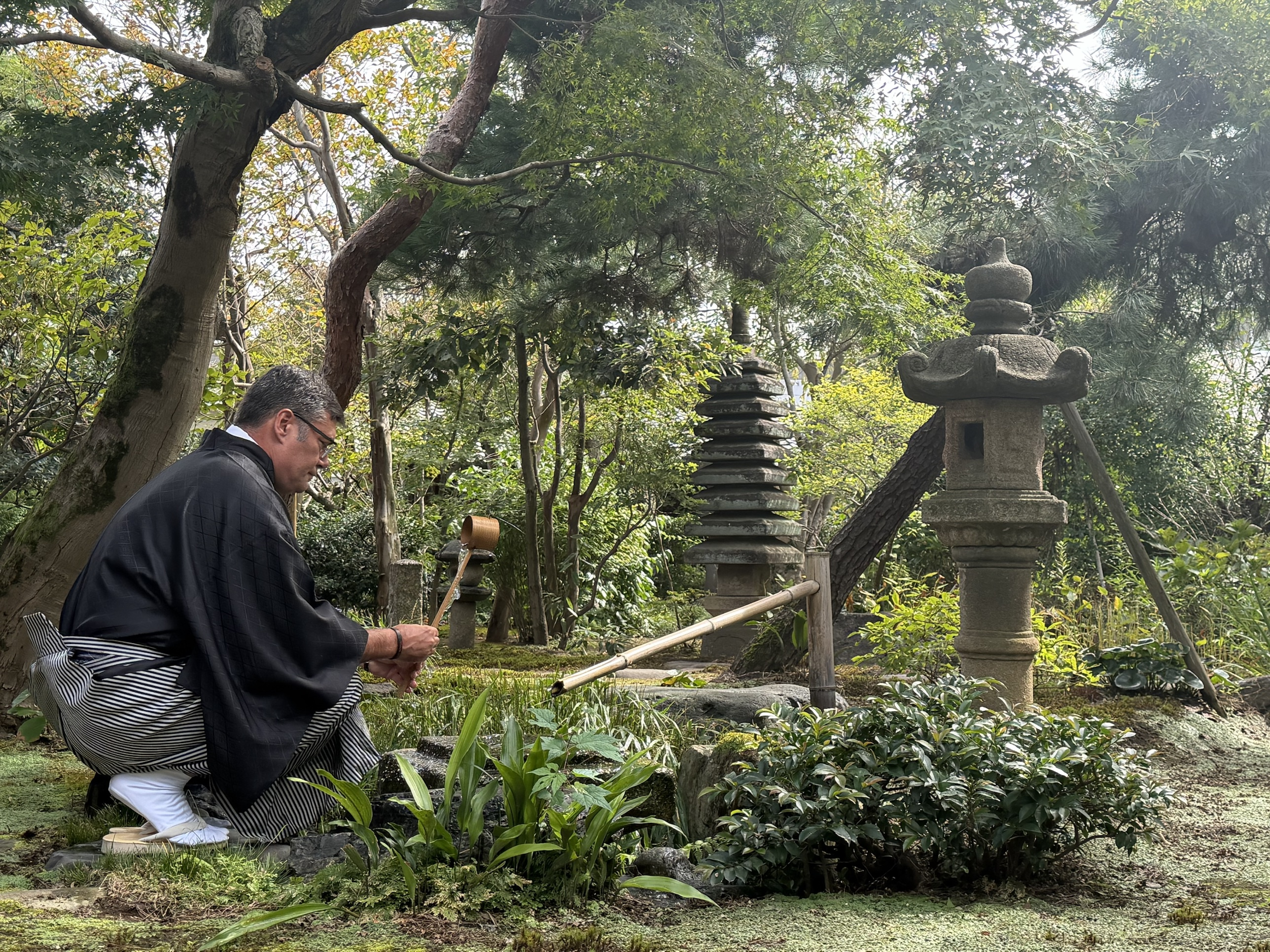
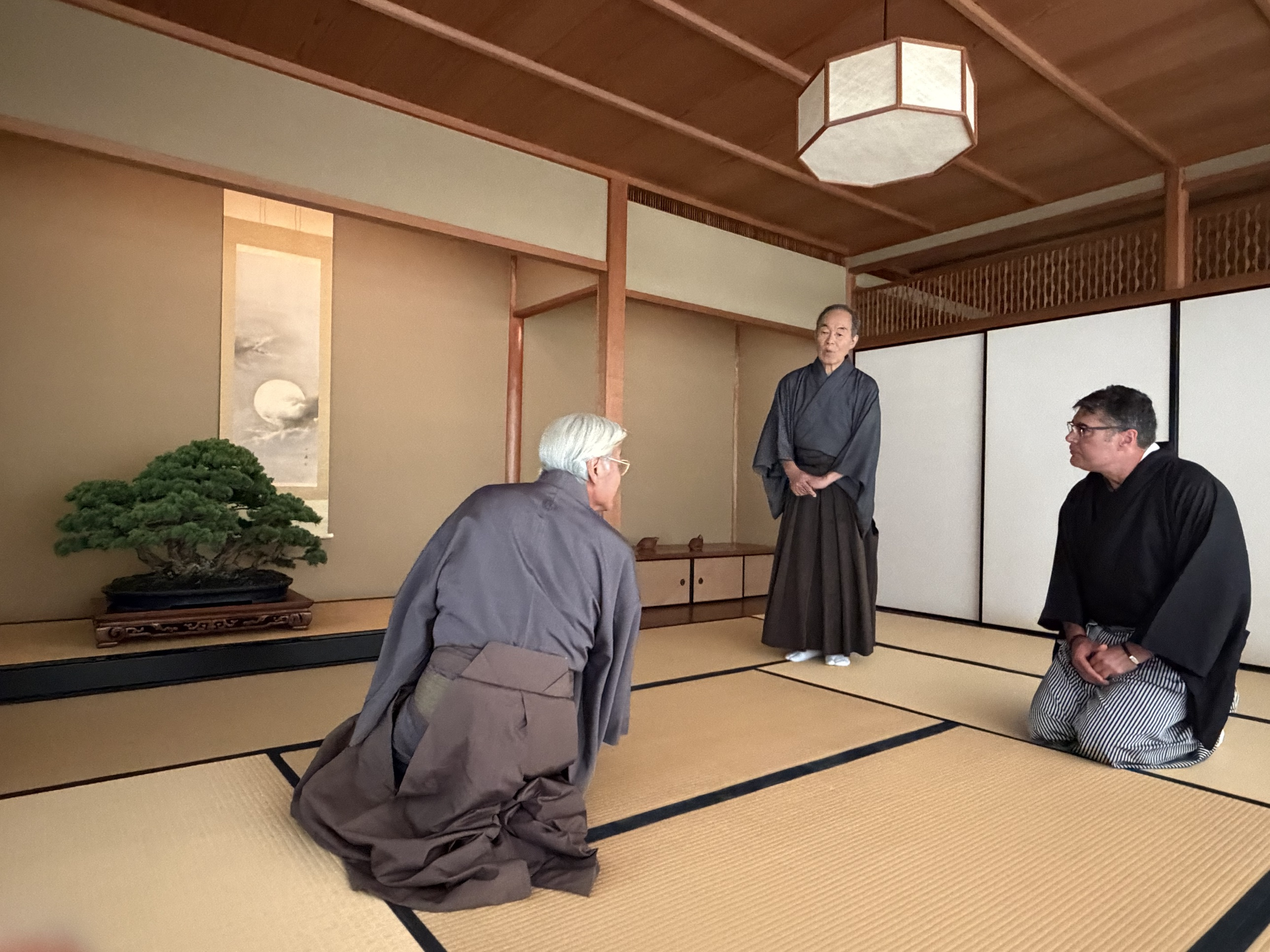
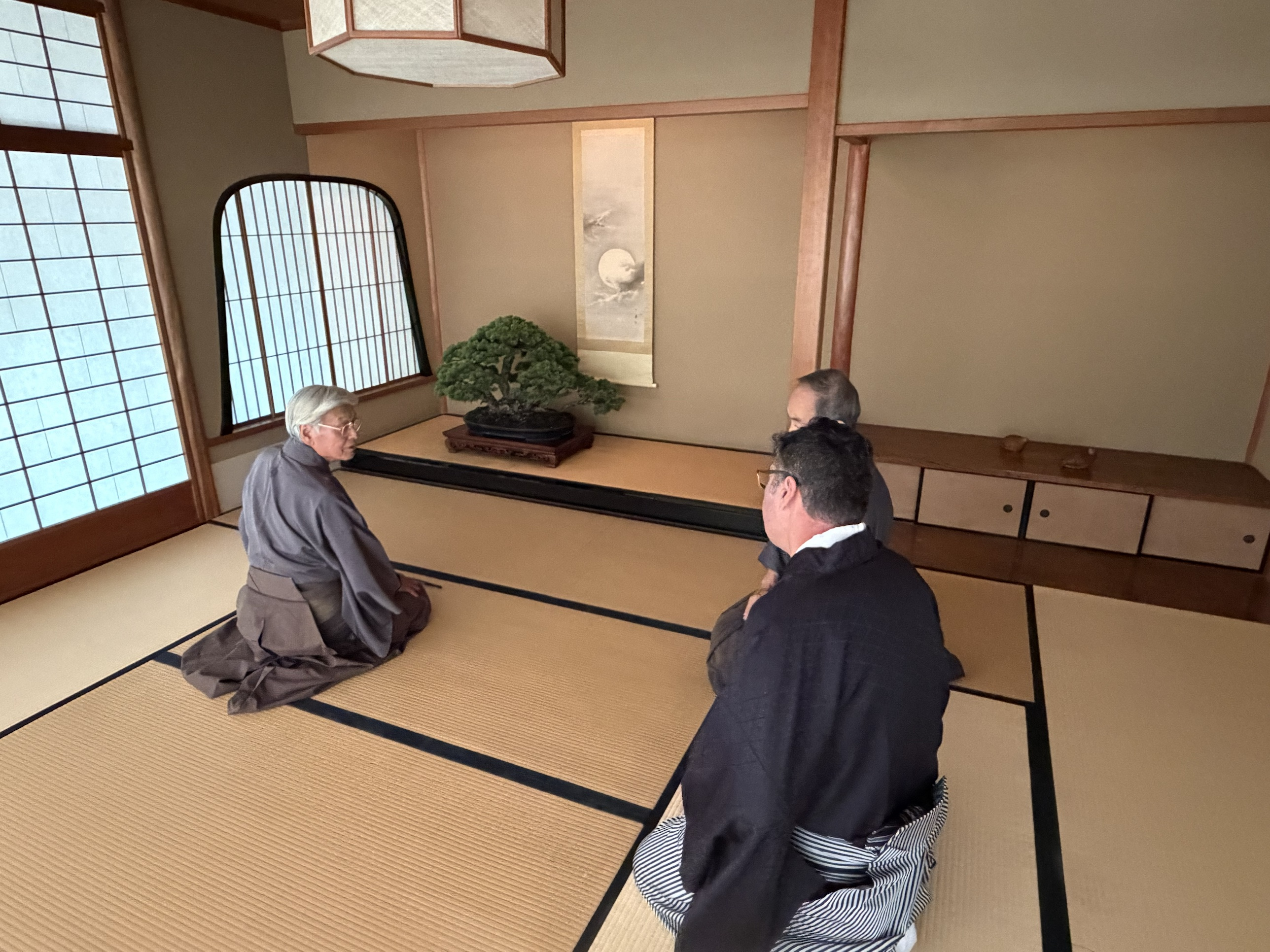
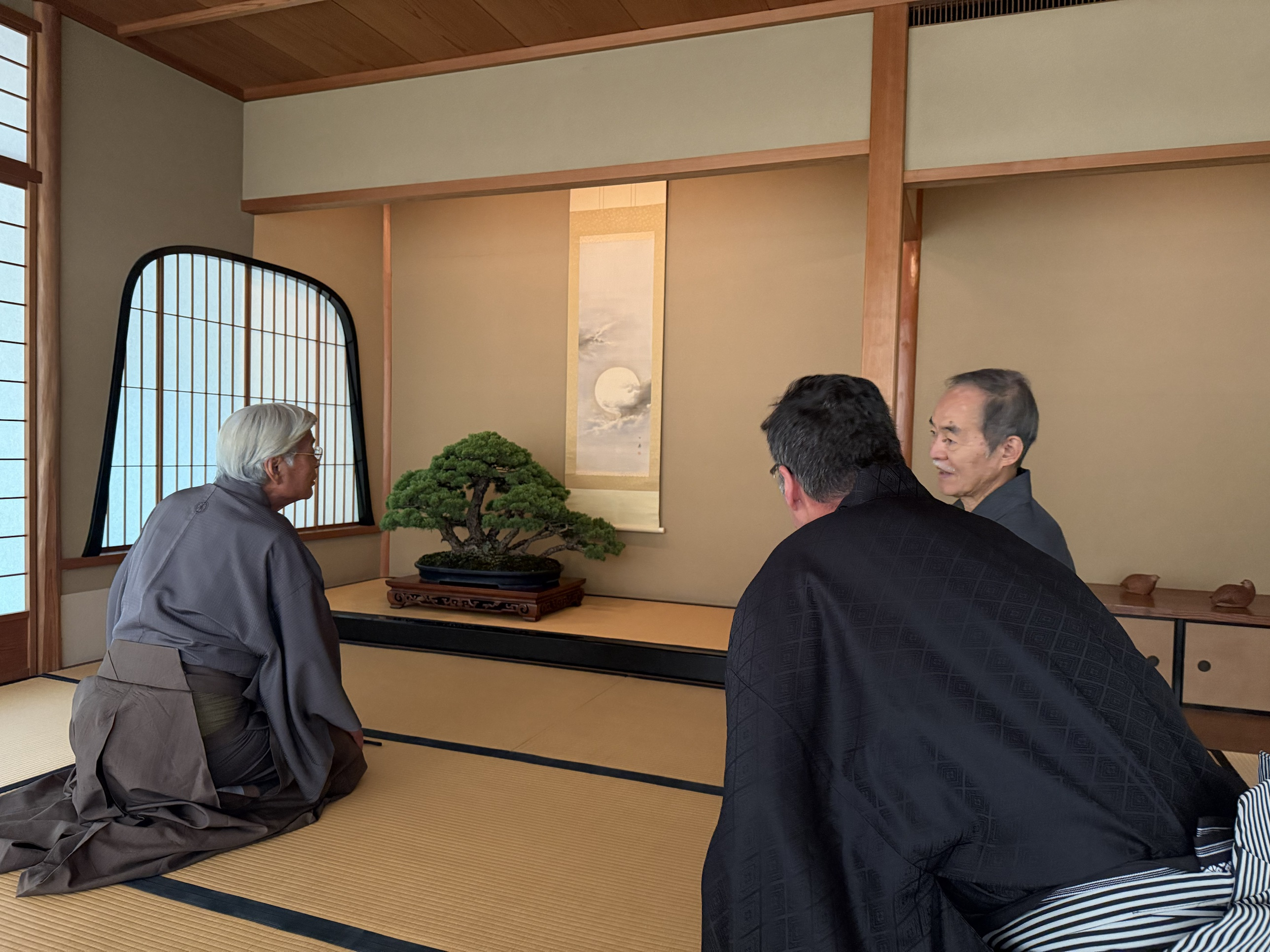
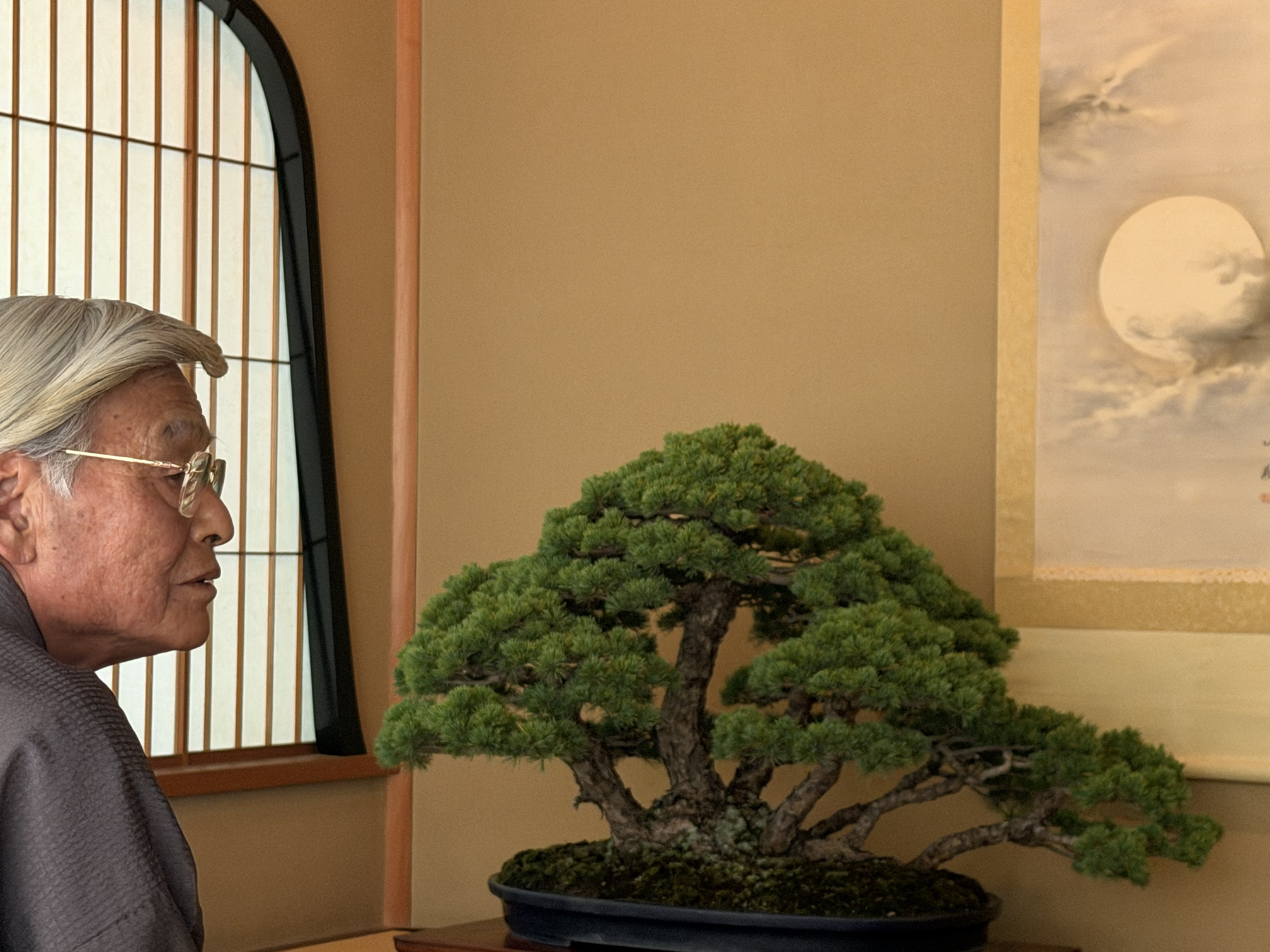
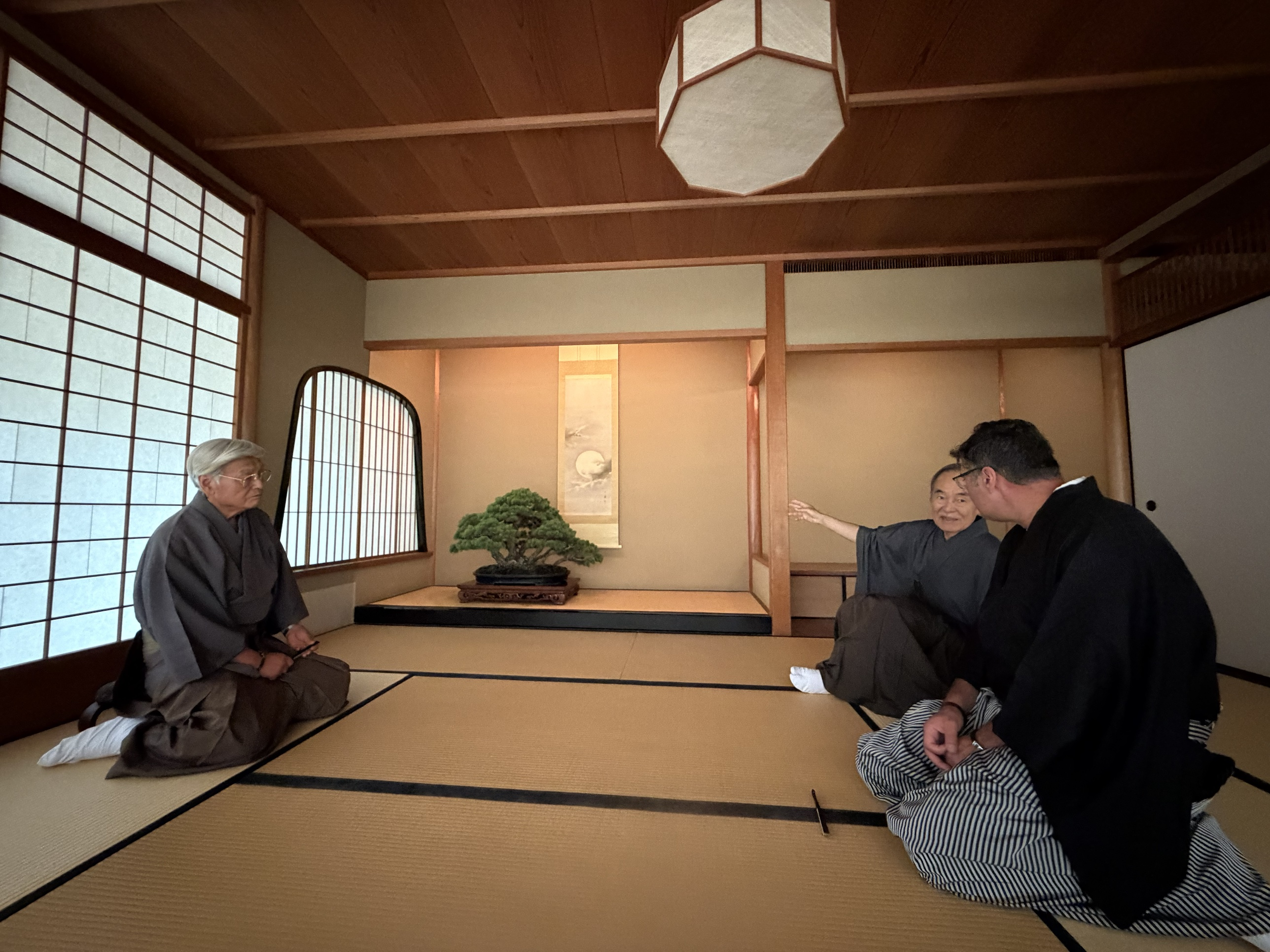
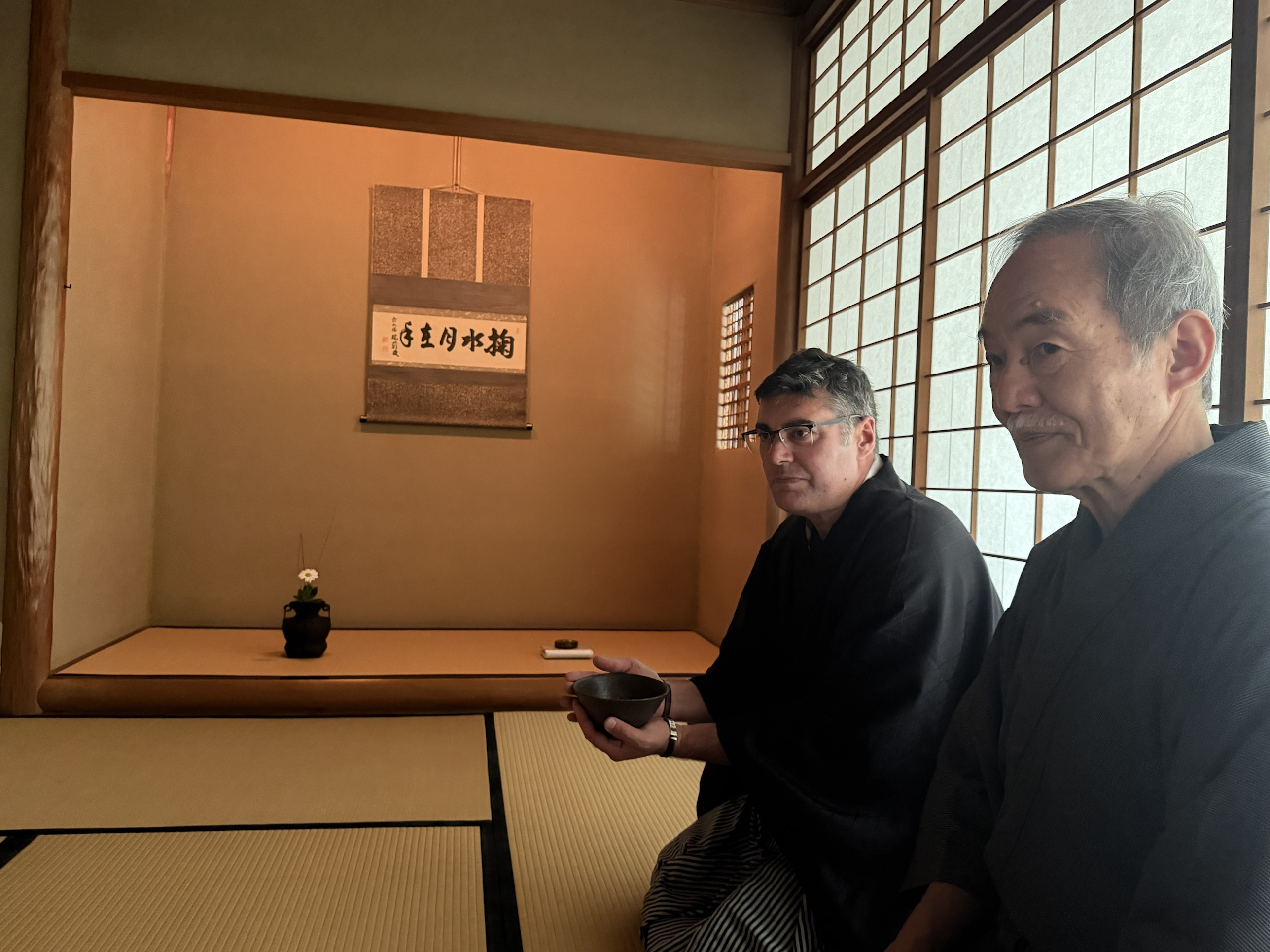
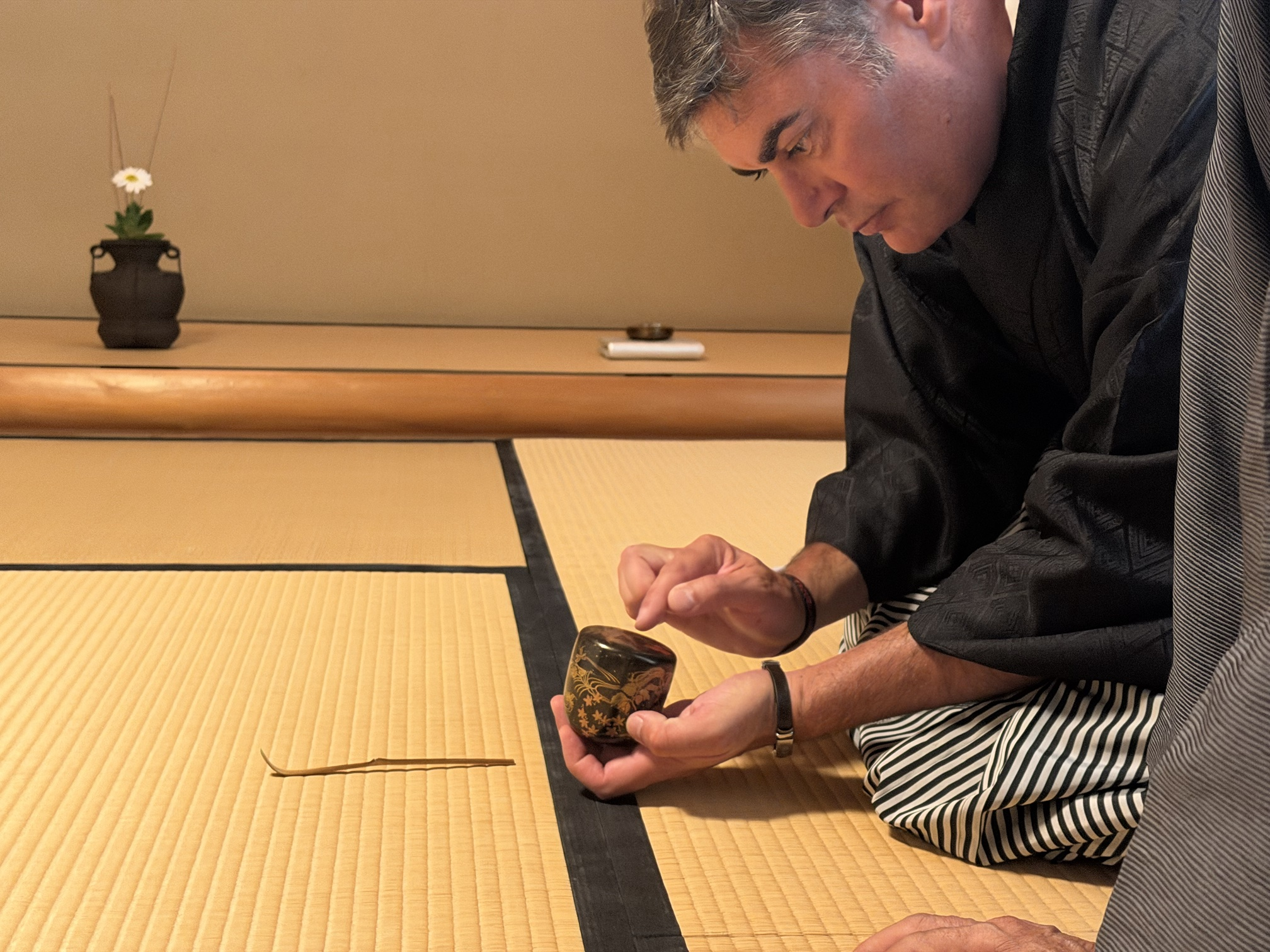
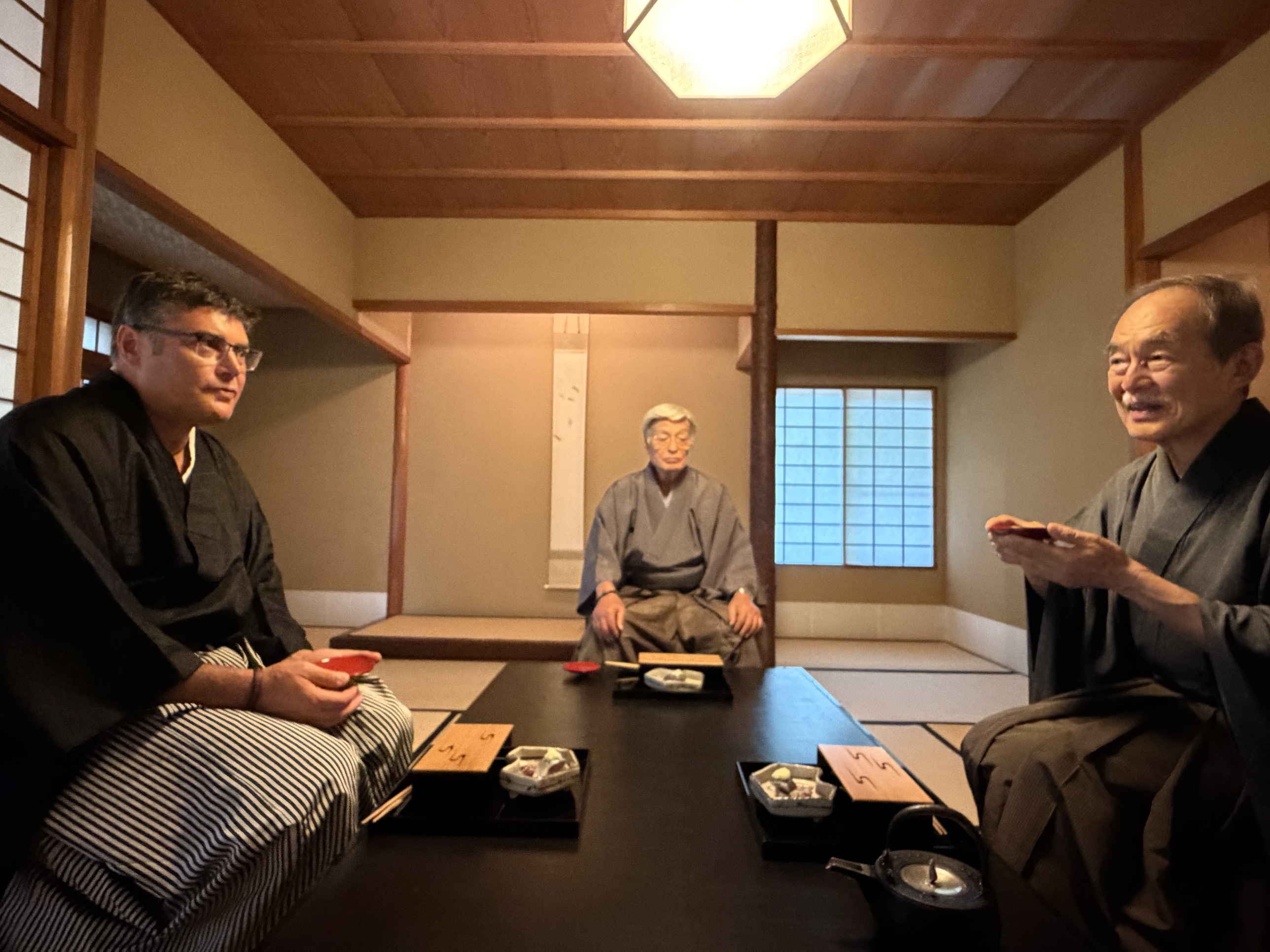
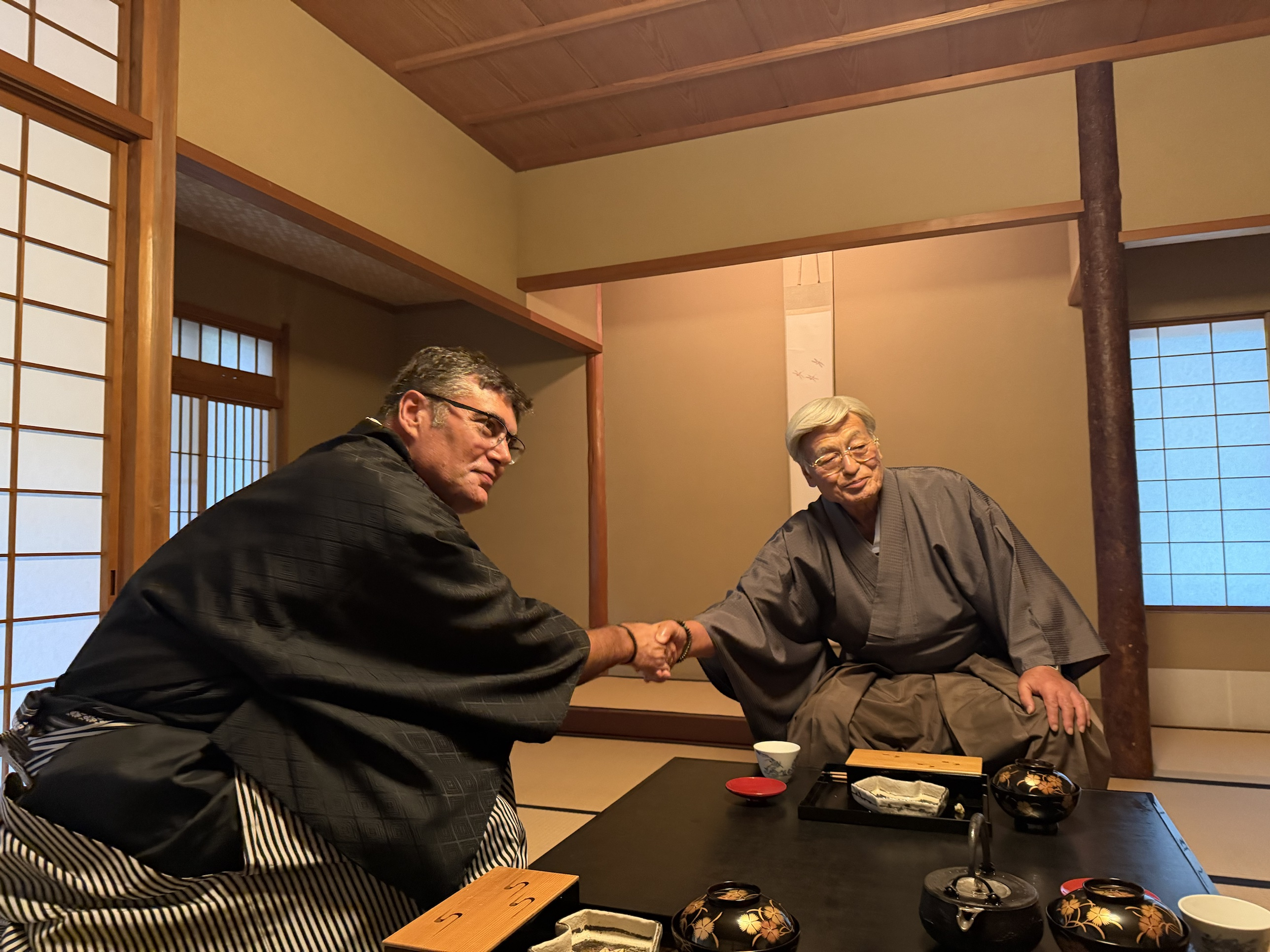
After the master presented me with the artistic name, I was received by the II Iemoto, Sudō Uhaku, at his house and garden of Chikufu-en, in Tochigi Prefecture: the same house where, in 2022, he handed over to the present Iemoto. The II Iemoto does not receive just anyone. And to receive me he prepared his house in advance: his garden and four tokonoma, arranged expressly for me.
He himself called me Ken. The name given to me by the III Iemoto was used by the second, and from one in his position this means he recognises me by that name within the Keidō Katayama-ryū. He told me he knew I had learned a great deal, because the III Iemoto had taught me a great deal, and that he would devote himself above all to making me feel, with the heart, the aesthetics of empty space. He designed and built his house precisely to perfect that understanding of space, and it was supervised by the first Iemoto.
It was, in effect, a masterclass: we walked through the house and garden, he explained all that was in it, and he explained one by one the four tokonoma he had prepared to receive me. Afterwards I took part in a tea ceremony he held in my honour, in the chanoyu of his home, and I ate with him. He seemed proud and happy. On parting he shook my hand, a gesture not at all usual for a Japanese. It was a privilege and an honour I will not forget.
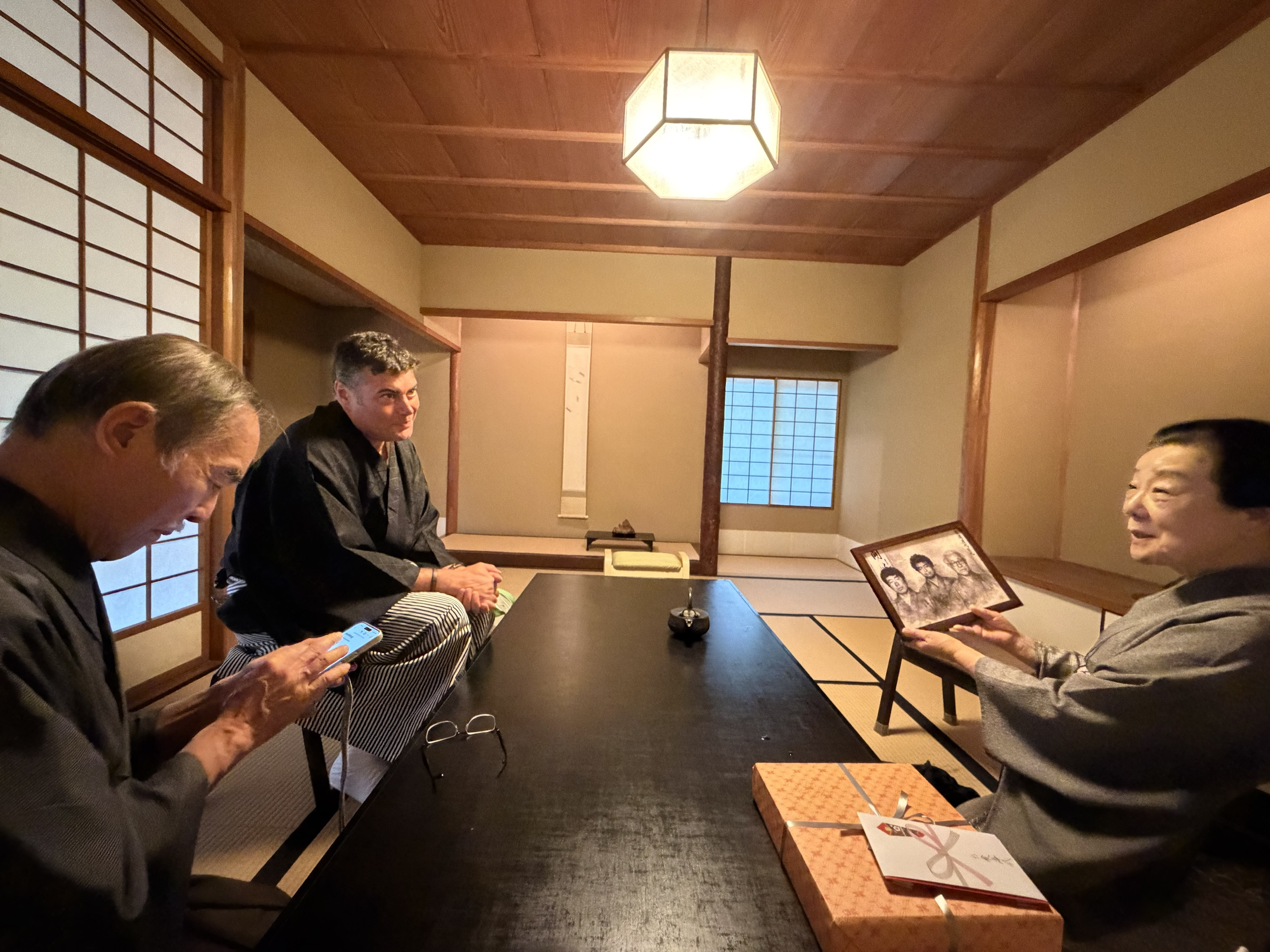
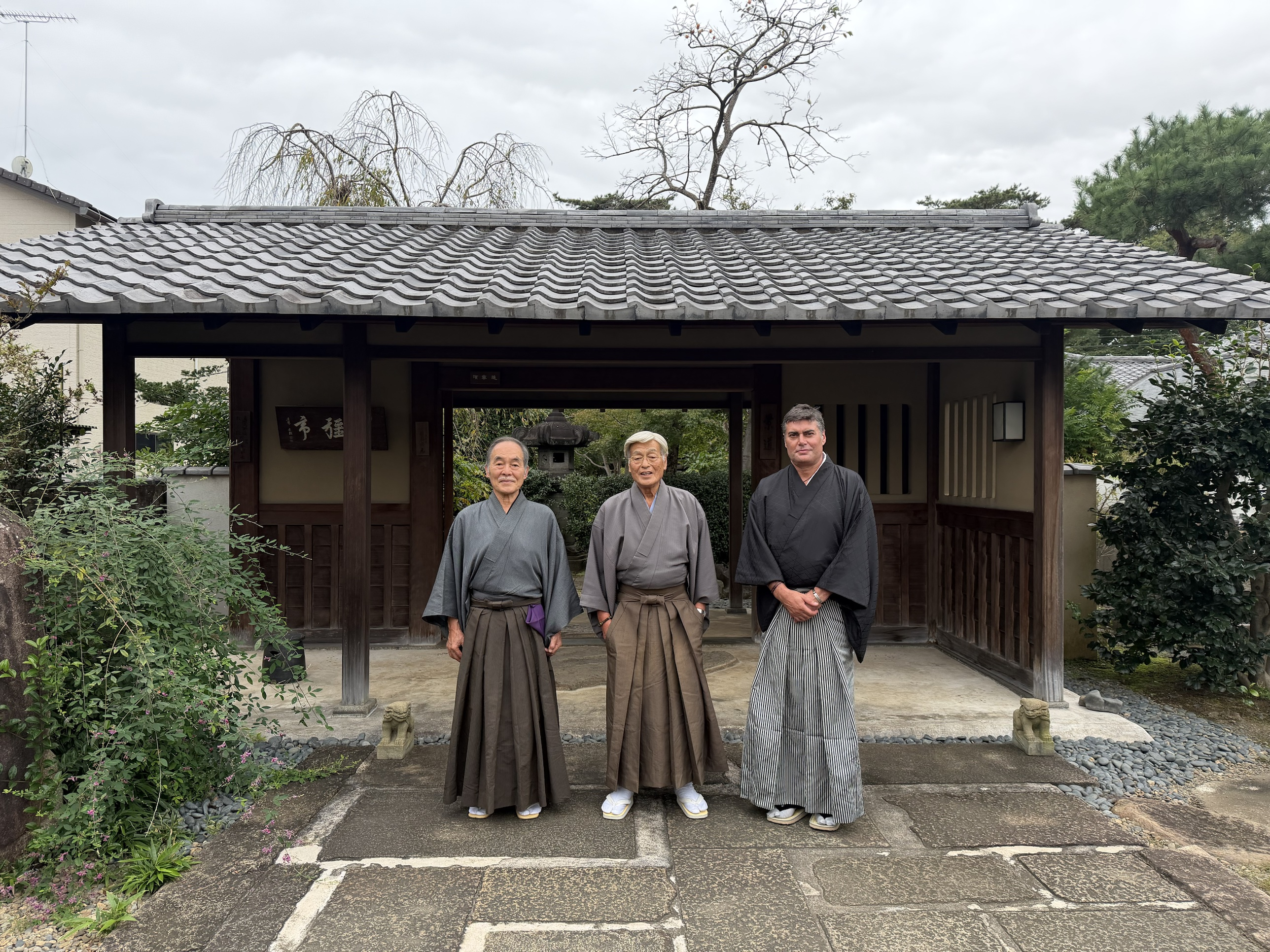
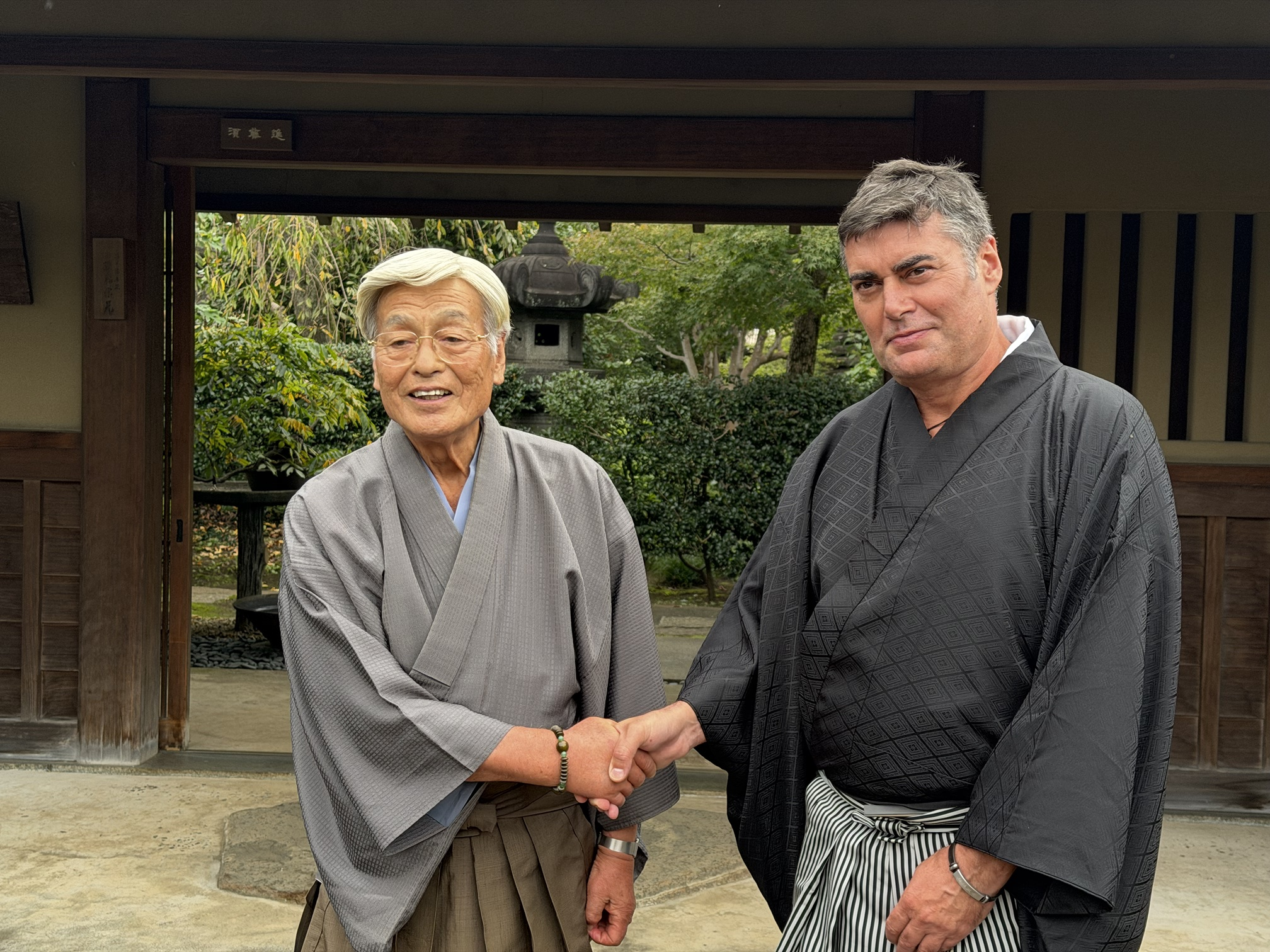
The farewell
On the last day the master wished to have a photograph taken with me at the entrance to his house, beside the door leading to the tokonoma, before the carved wooden sign bearing the name of the school. It was his request: he wished to leave a record of that moment.
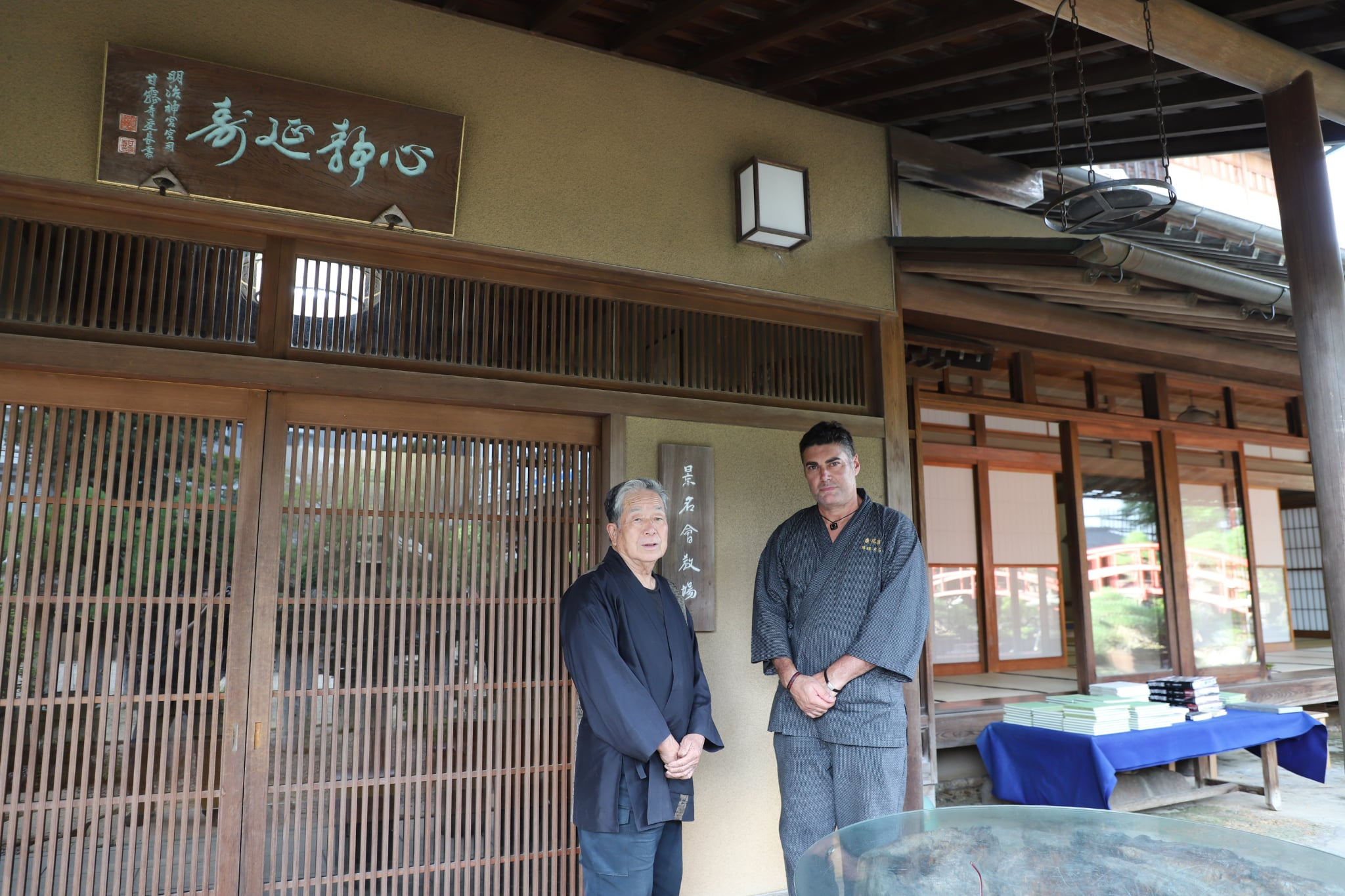
The meaning of a lineage
That, in truth, was my real return. Not the return from Japan, but the return of someone who came back the same person and, at the same time, profoundly changed.
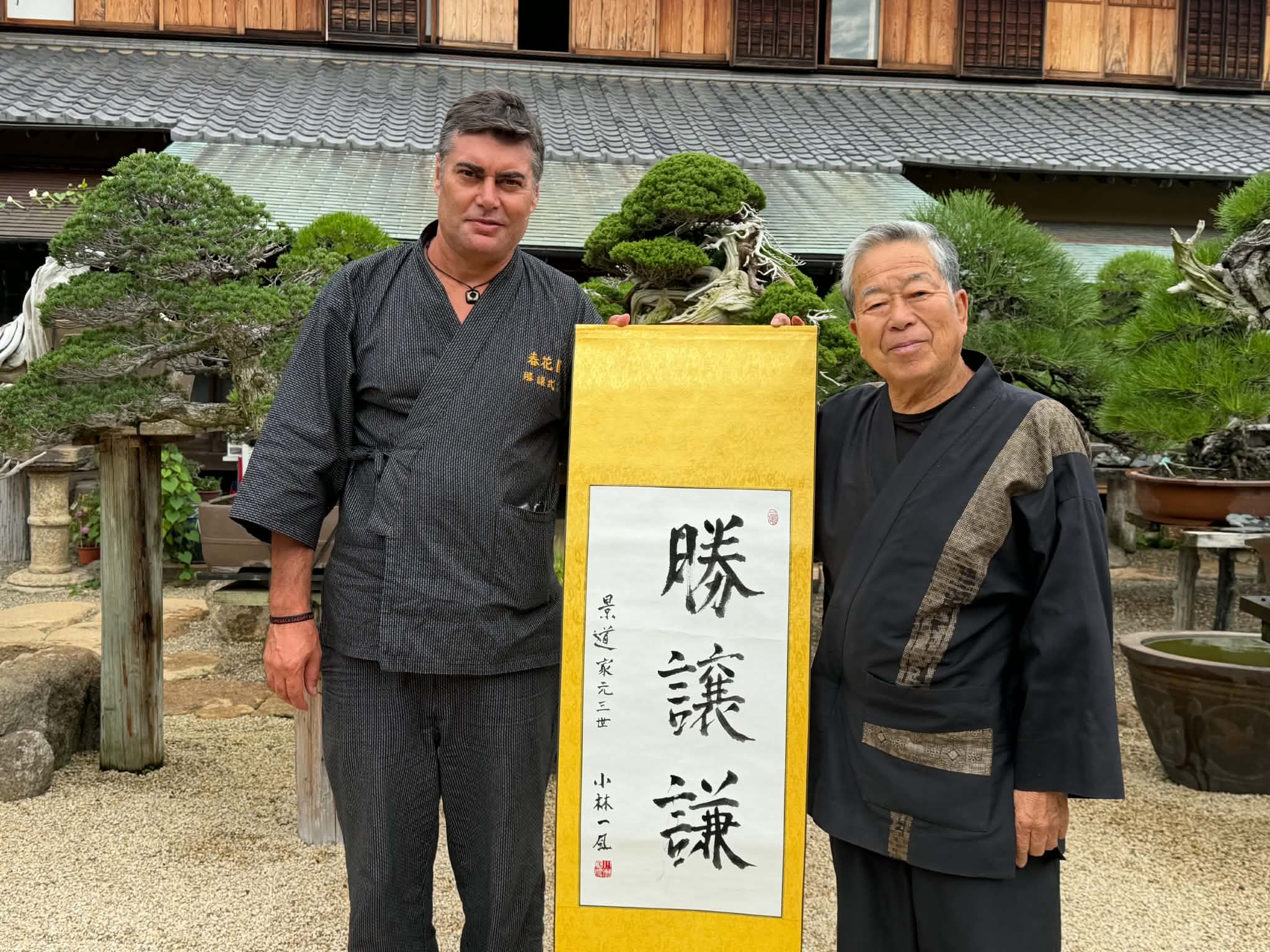
Four documents, one path
An unsteady stroke betrays doubt. A resolved stroke shows decision.
That is why there are four documents. And yet, one and the same path.
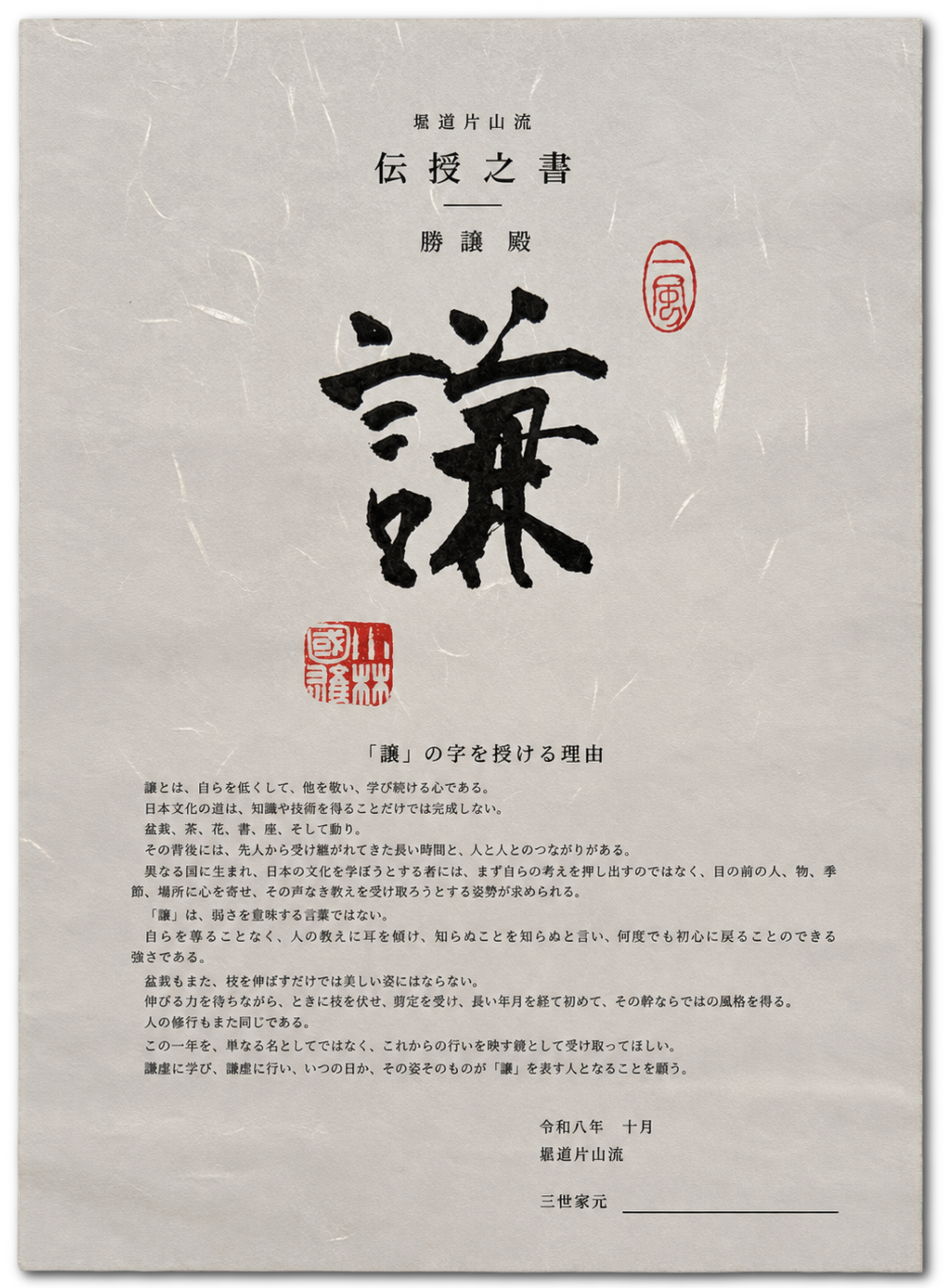
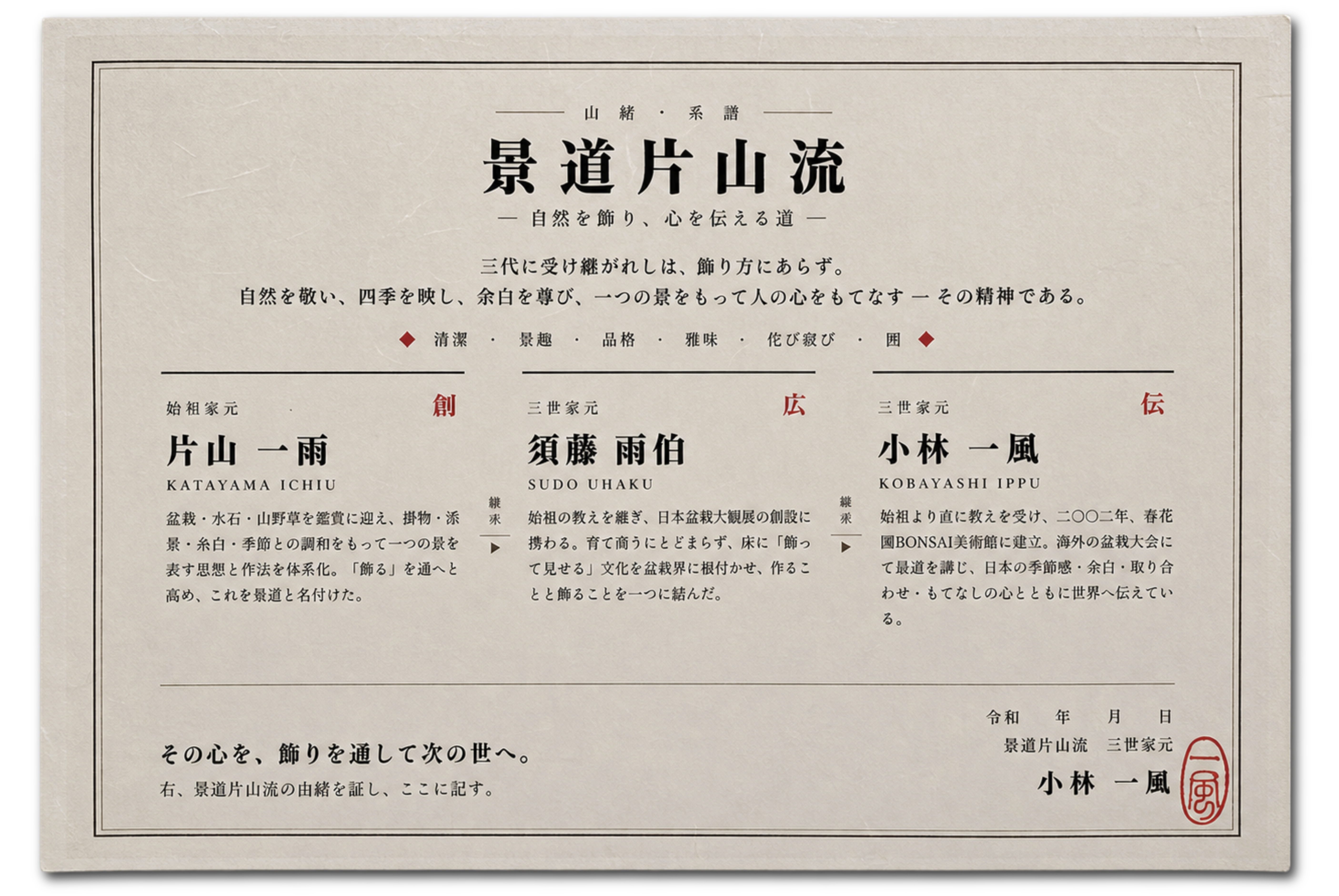
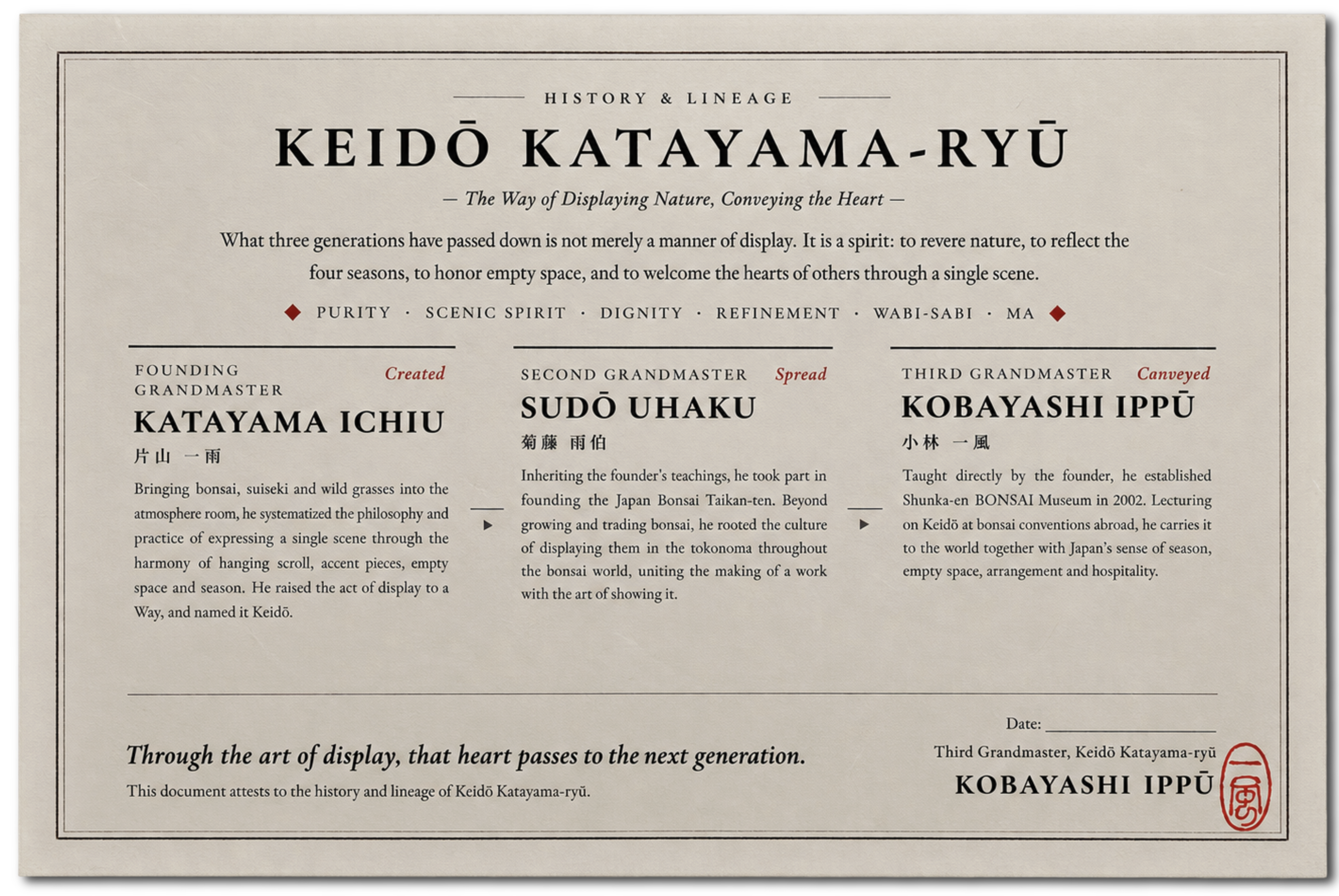
無為自然: the path that continues
The last of the documents the master gave me is not a diploma but a shikishi on green paper, with a zengo (禅語) traced in brush: 無為自然, mui shizen. A zengo is a brief expression from the Zen tradition that condenses a whole teaching into a few characters; it is not explained but contemplated, and in the traditional Japanese arts it is hung in the tokonoma to set the tone of the place. These four characters have roots in Taoist thought, which Zen inherited: 無為 means not forcing, acting without artifice or the urge to dominate; 自然, what is so of itself, nature as it simply is. Together they ask us to let things be what they are and to accompany them rather than impose a form upon them. I receive it as my master’s wish for where I must keep walking: the same thing the transmission document asks—not to impose my own ideas, but to turn my heart toward the person, the object, the season and the place before me—and the same thing the bonsai teaches, which is worked in favor of the tree’s nature and not against it: it is listened to, accompanied and given time. It does not speak of the future, but of the path I must keep walking.
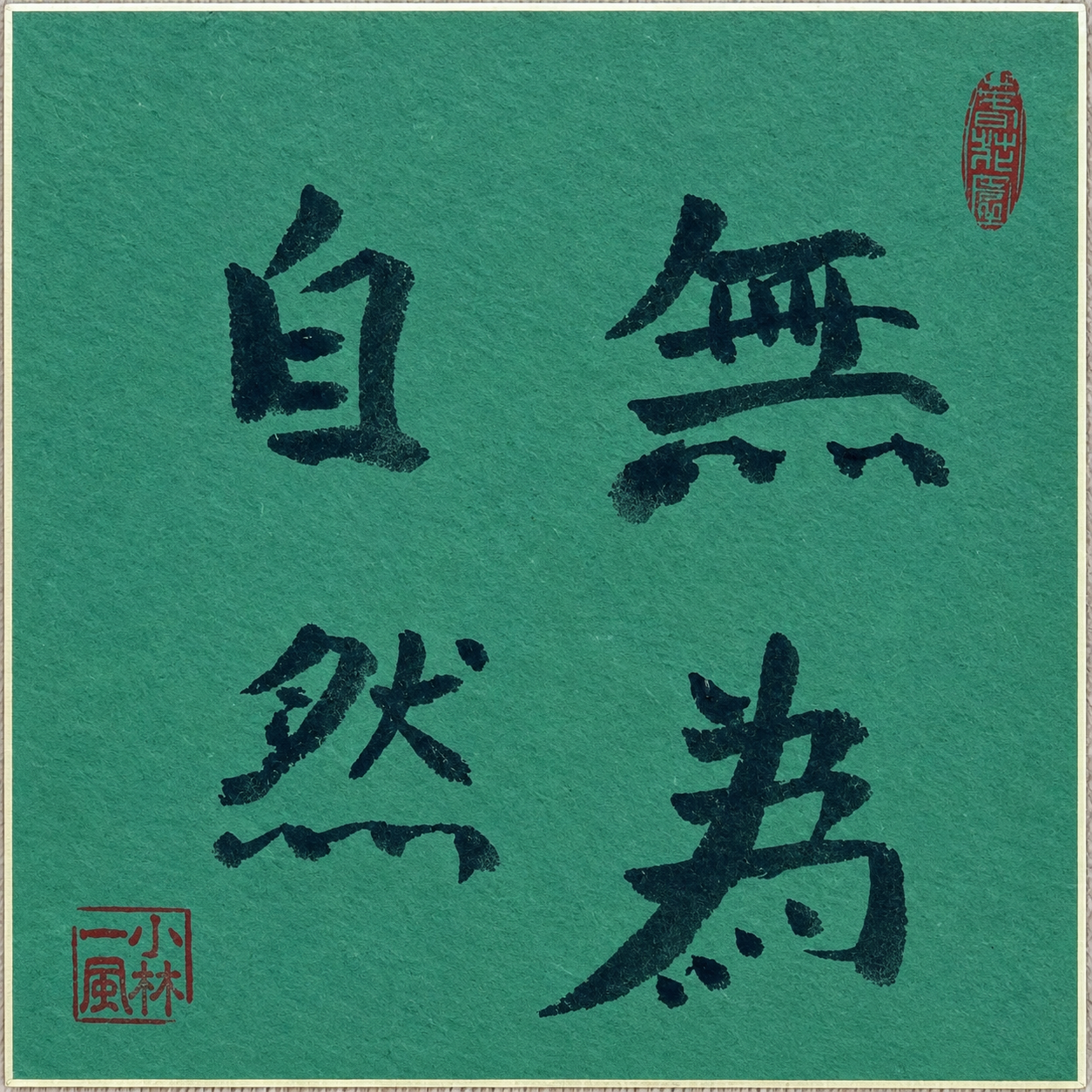
Shodō calligraphy by my master
Twenty-one days, eight stops
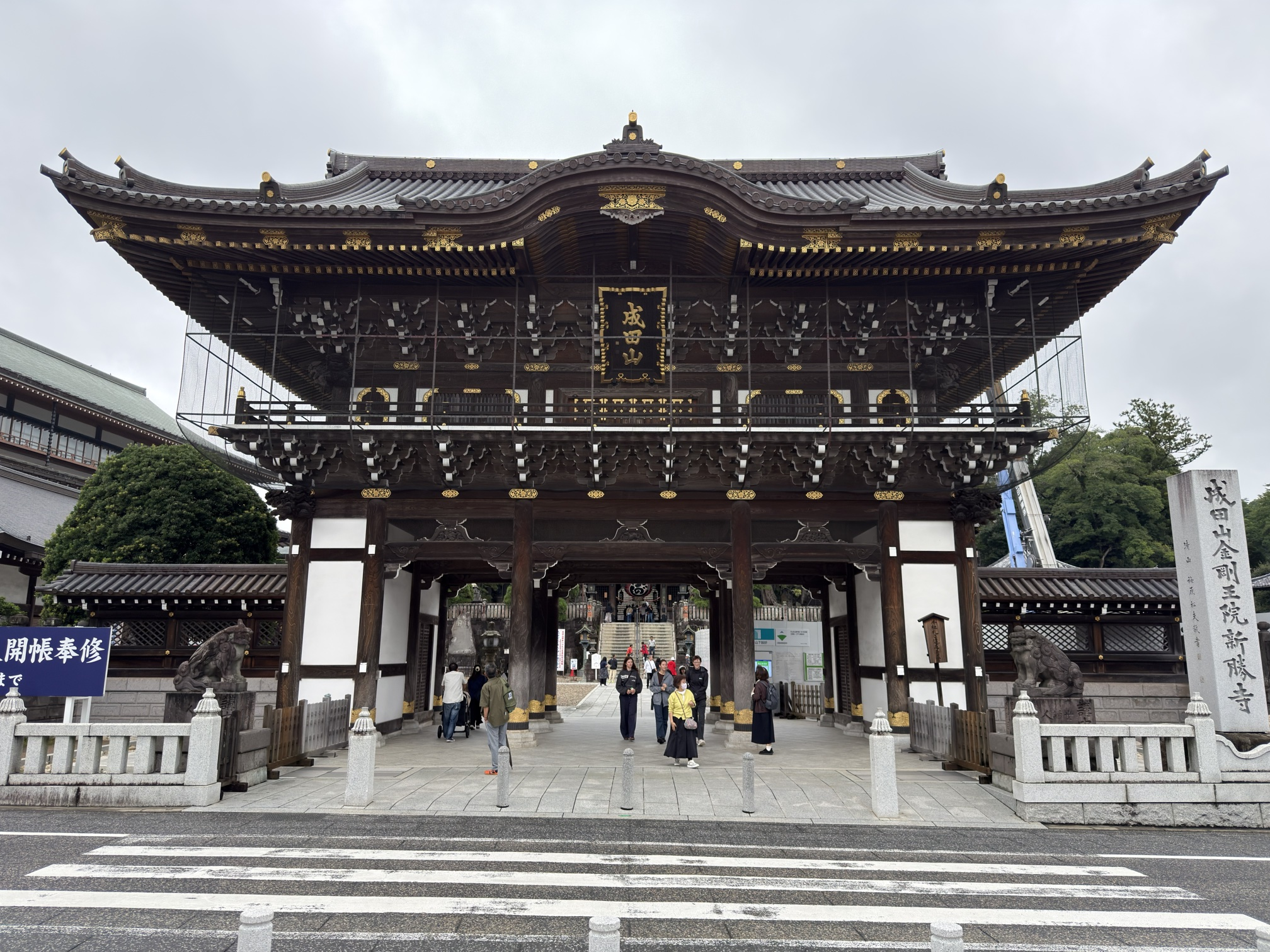
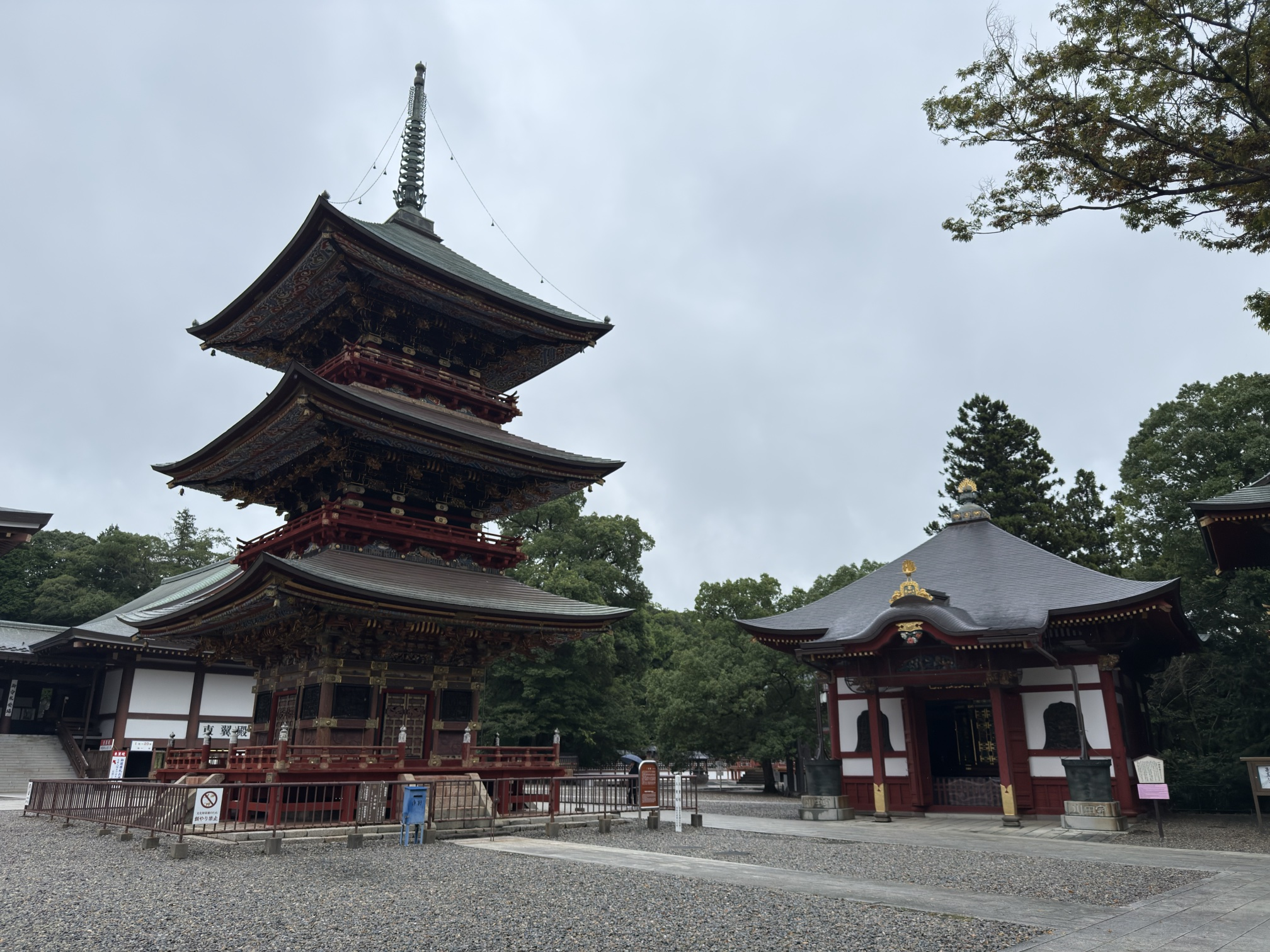
Narita
First contact with Japan barely ten minutes from the airport: the temple of Naritasan Shinshōji, its lakes and gardens, the night lighting after the flight from Madrid.
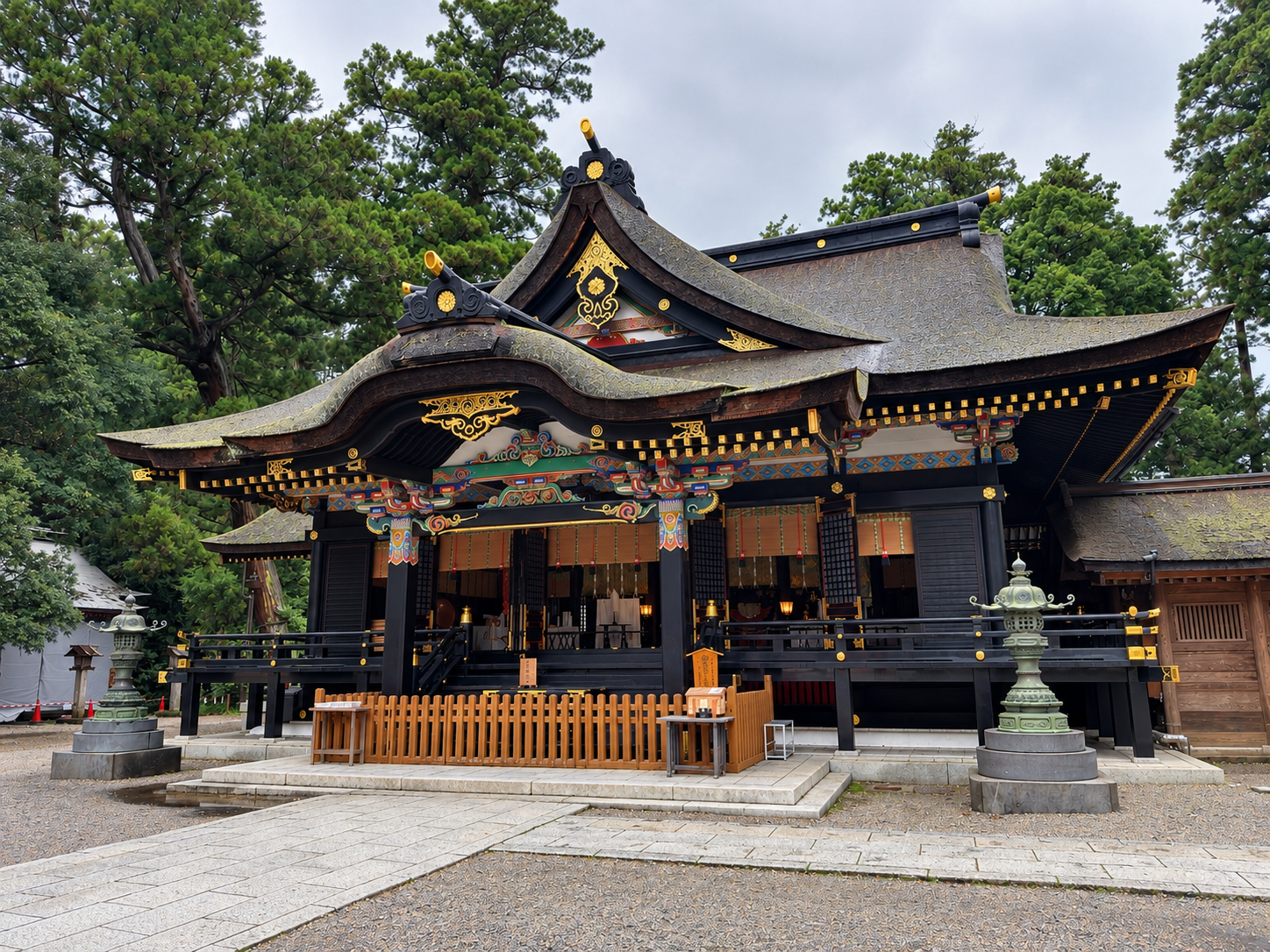
Sawara · Katori Jingū
One of Japan's oldest Shinto shrines, among centuries-old cedars. A walk back through the forest and the rice paddies to the canals of Sawara.
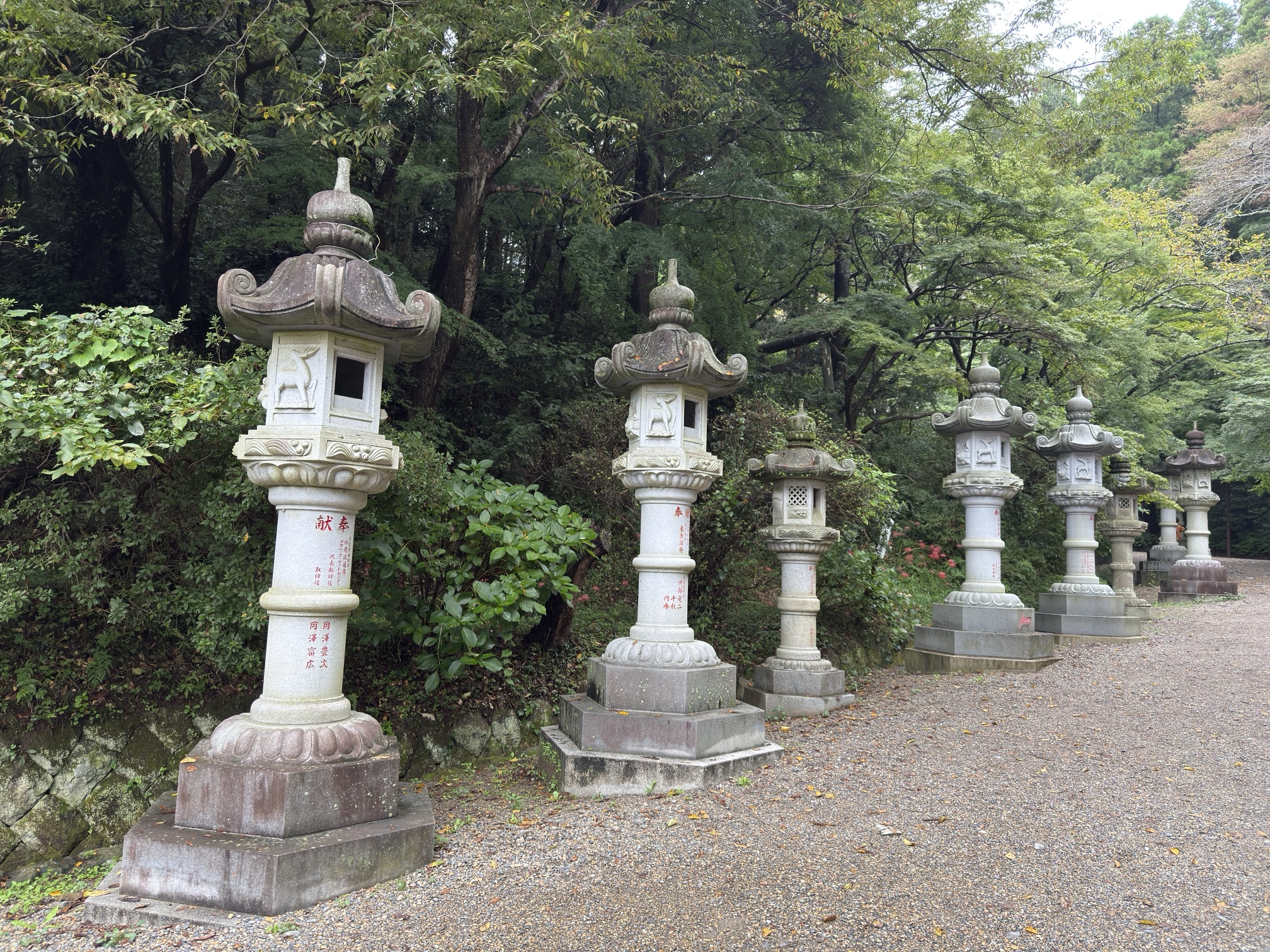
Kyoto
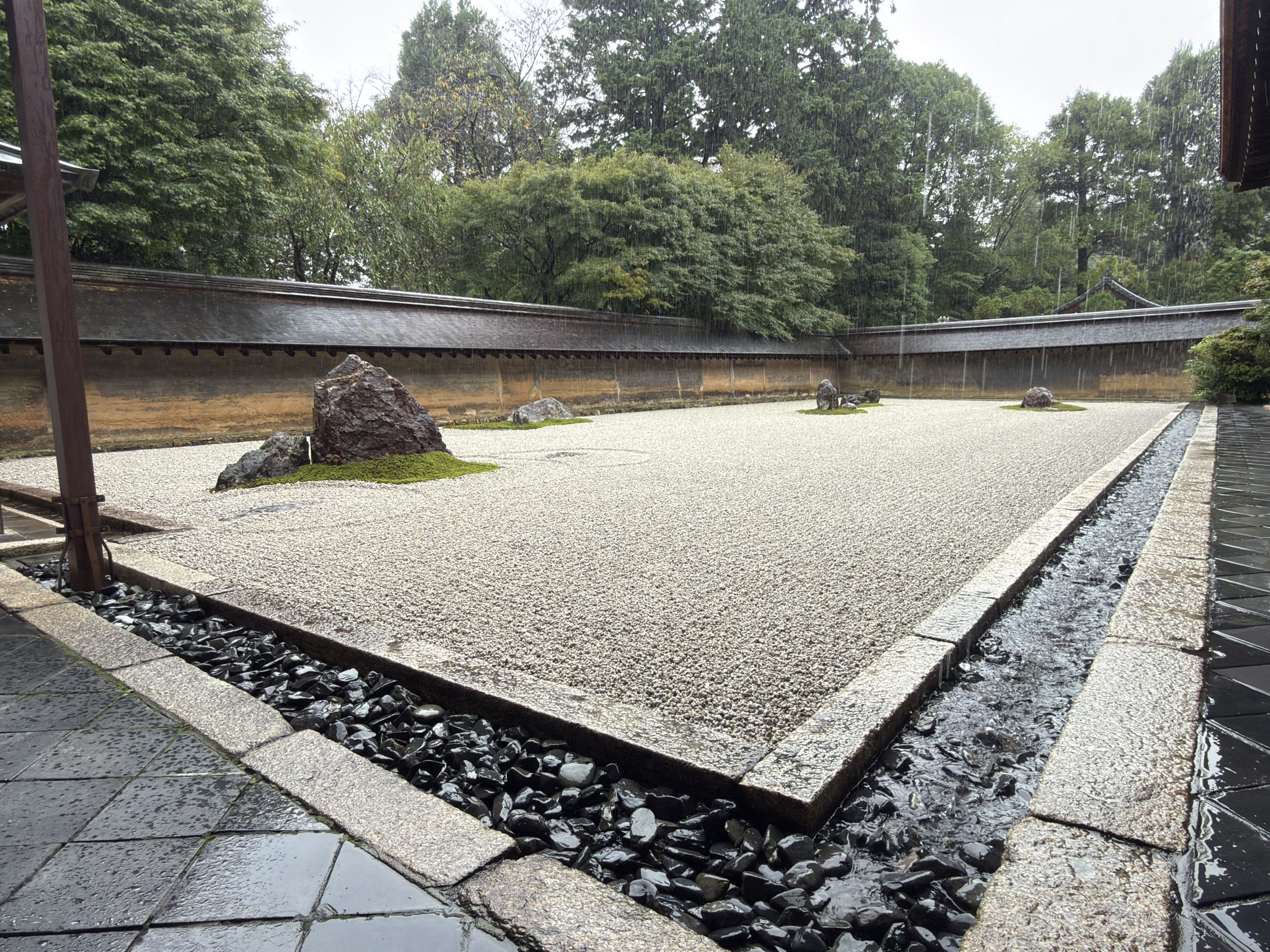
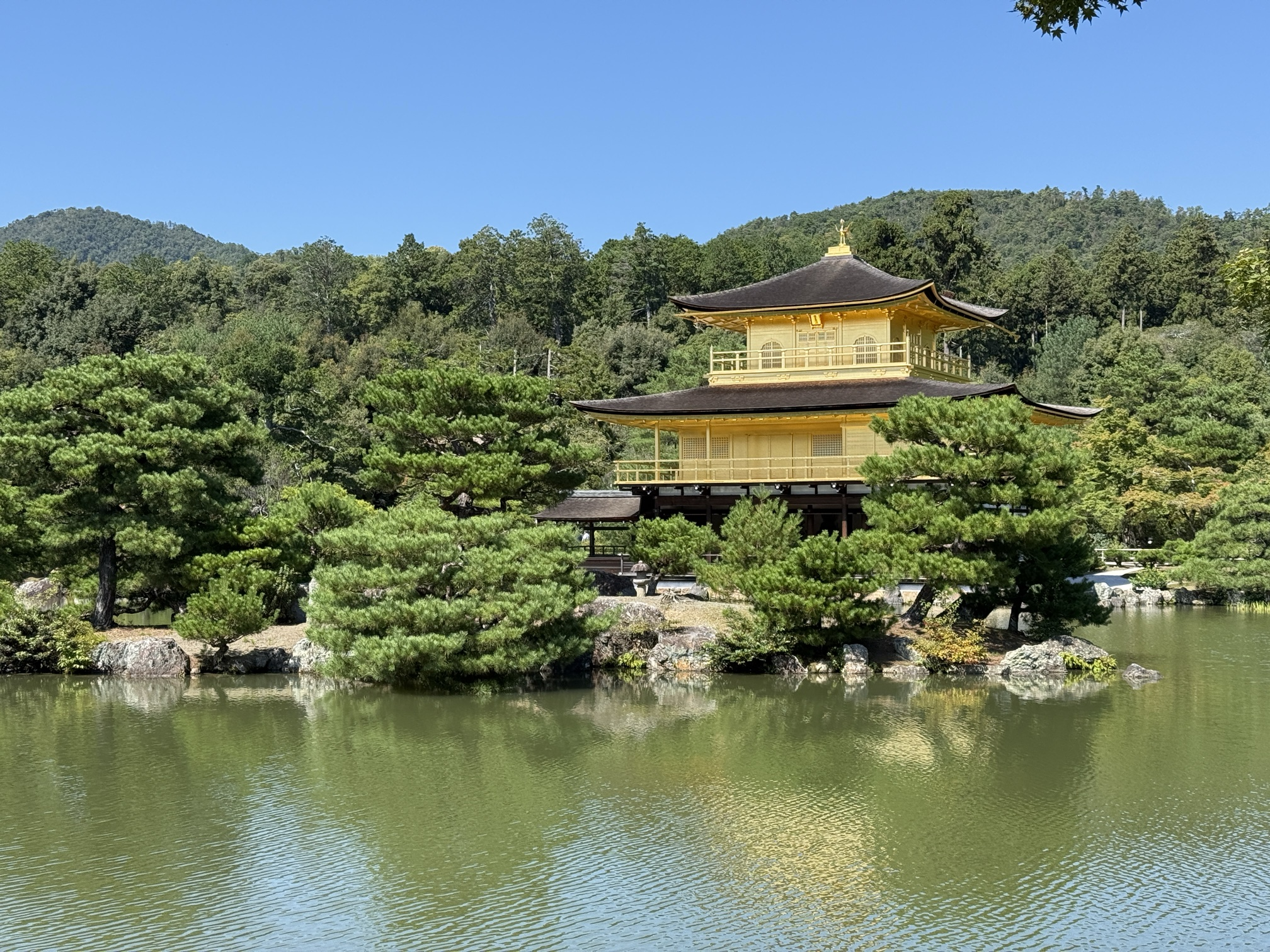
Four days of contemplative preparation: Higashiyama, the Arashiyama bamboo grove, the dry gardens of Daitoku-ji, the torii of Fushimi Inari, and Ryōan-ji—the world's most celebrated Zen garden—visited right at opening.
Tokyo · night excursions
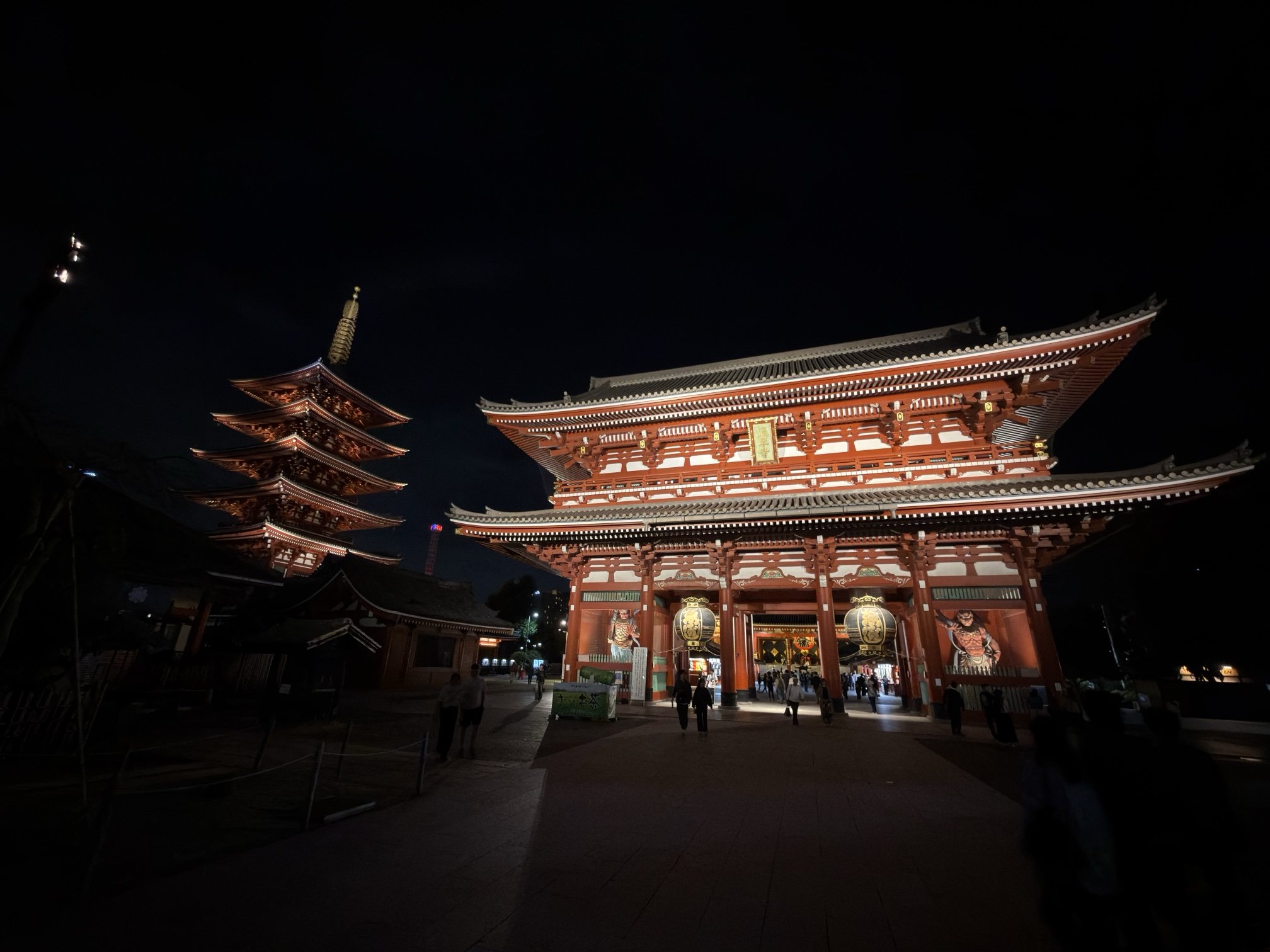
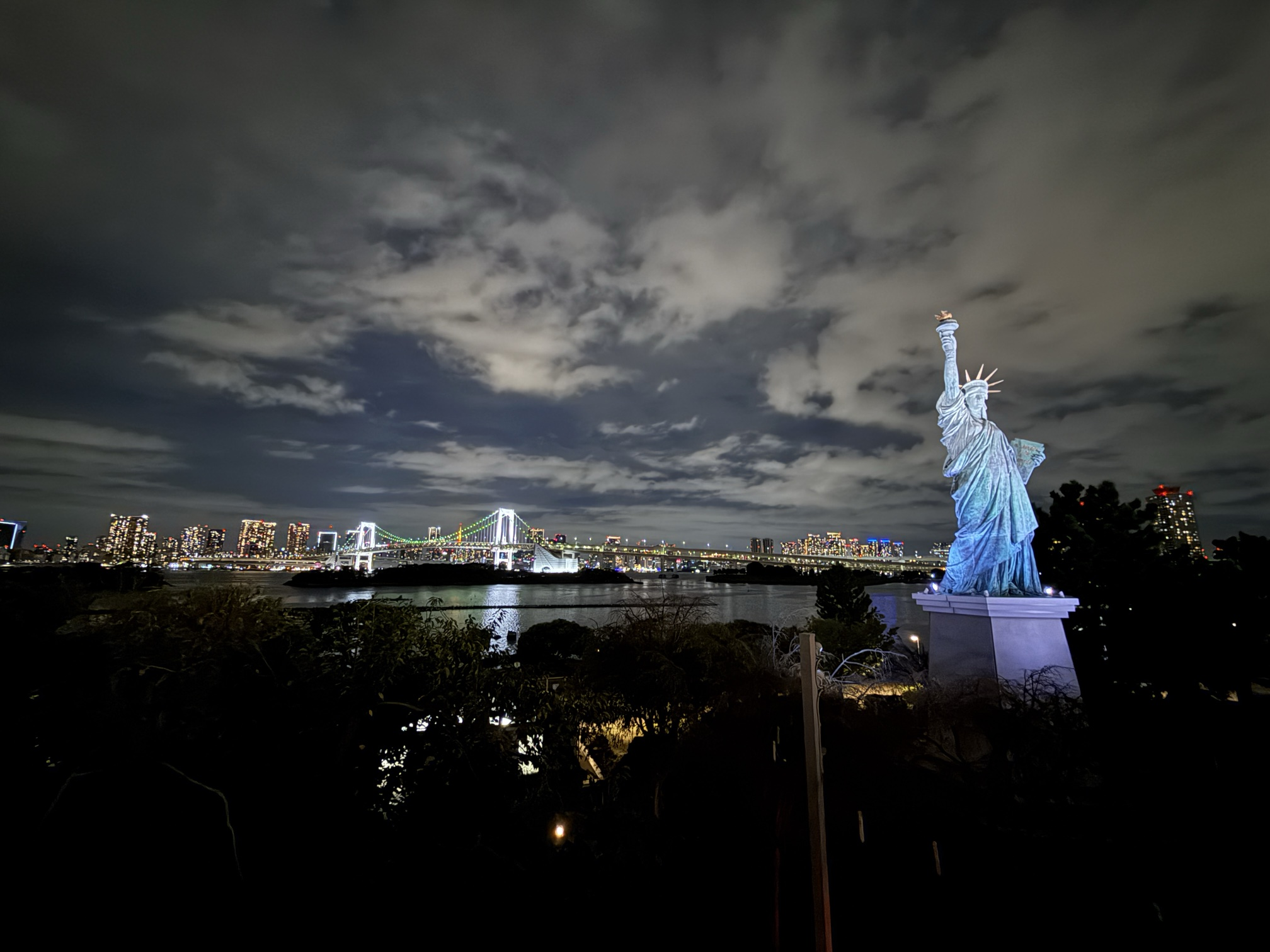
Between study days at the Shunkaen, the city is explored by night: Sensō-ji lit up in Asakusa, the Rainbow Bridge over the bay, Zōjō-ji with Tokyo Tower behind it.
Fuji
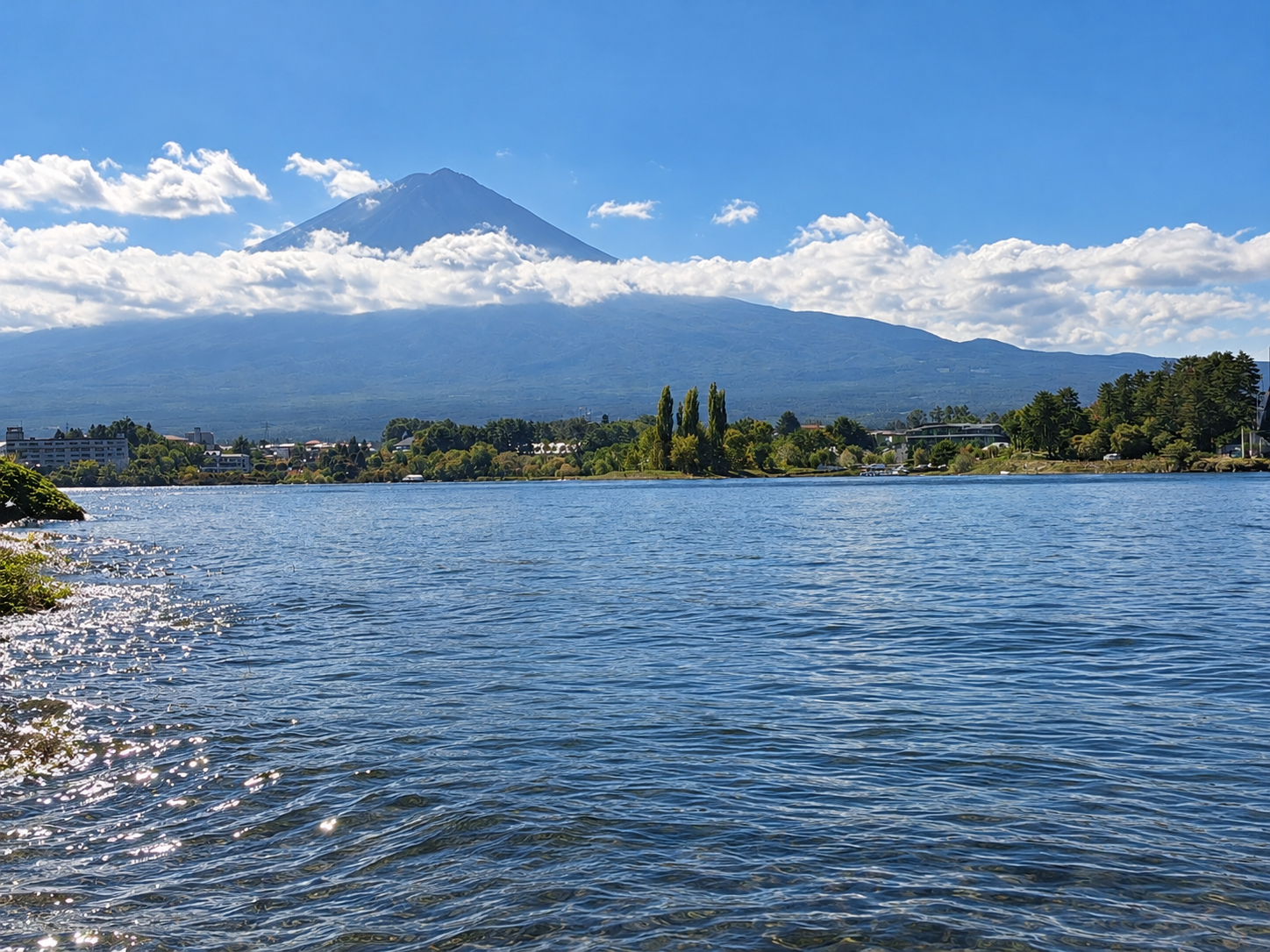
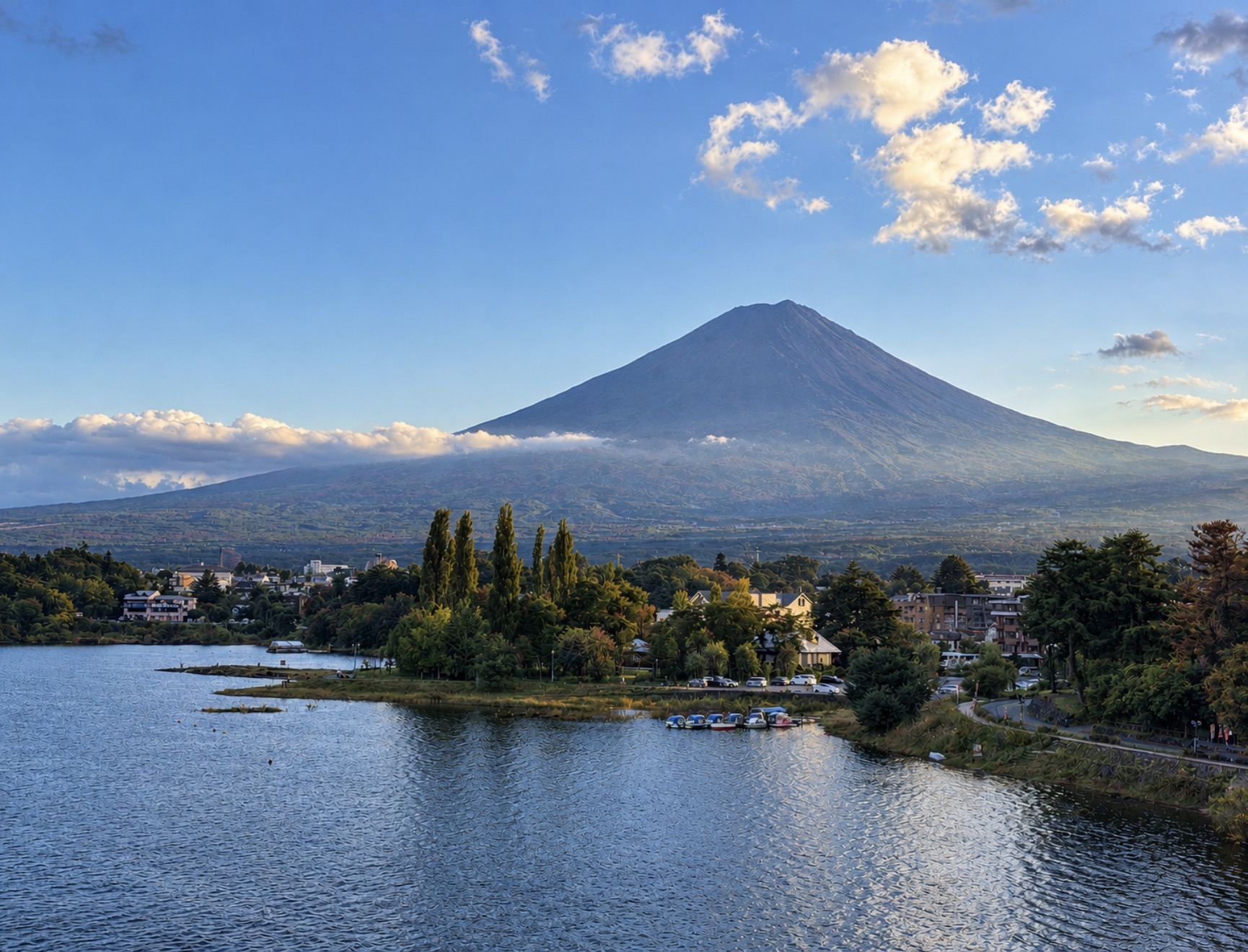
Mount Fuji reflected in Lake Kawaguchiko, framed by autumn maples from the Momiji Tunnel.
Omiya Bonsai Village
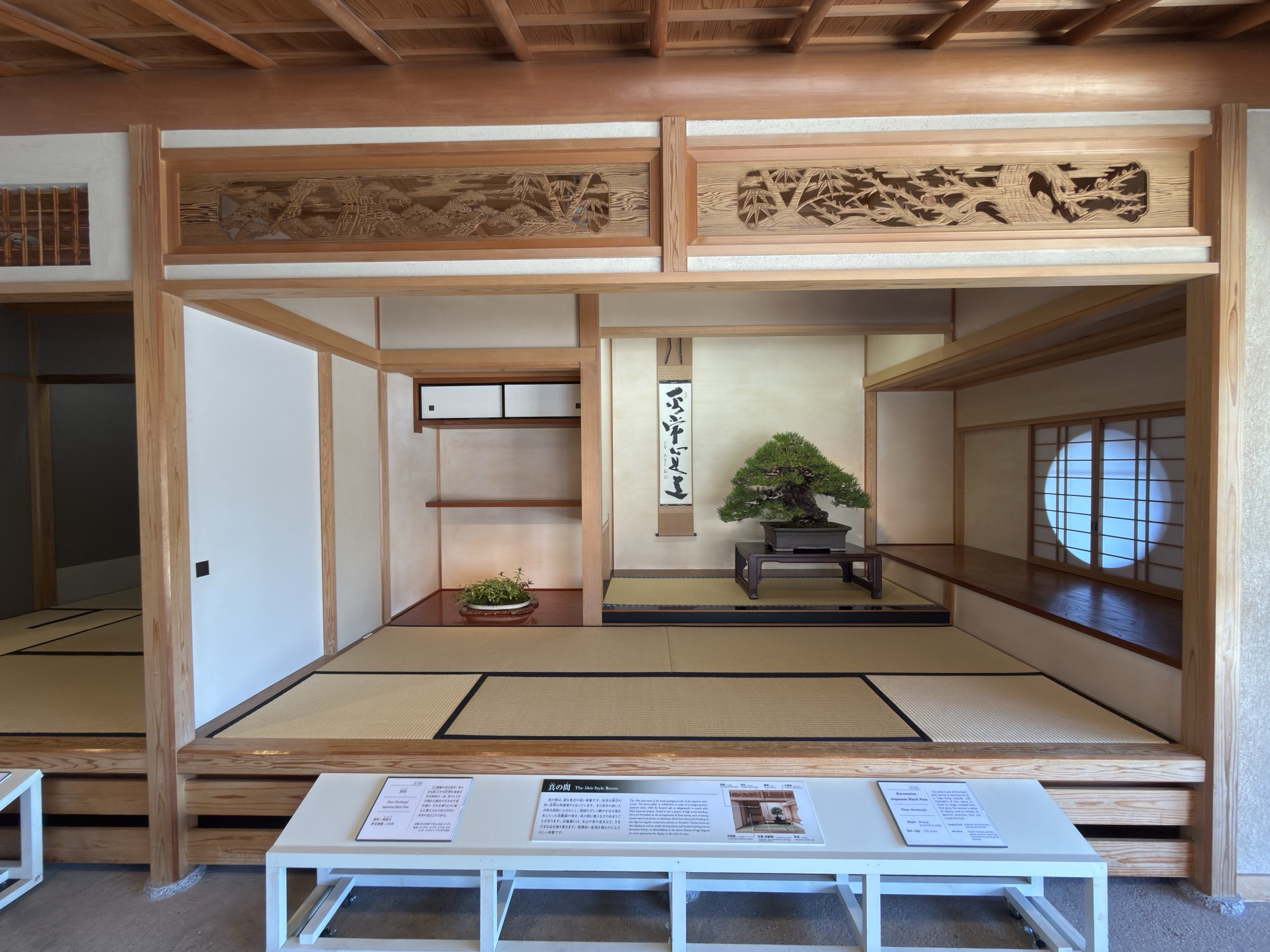
The five museums of Omiya Bonsai Village.
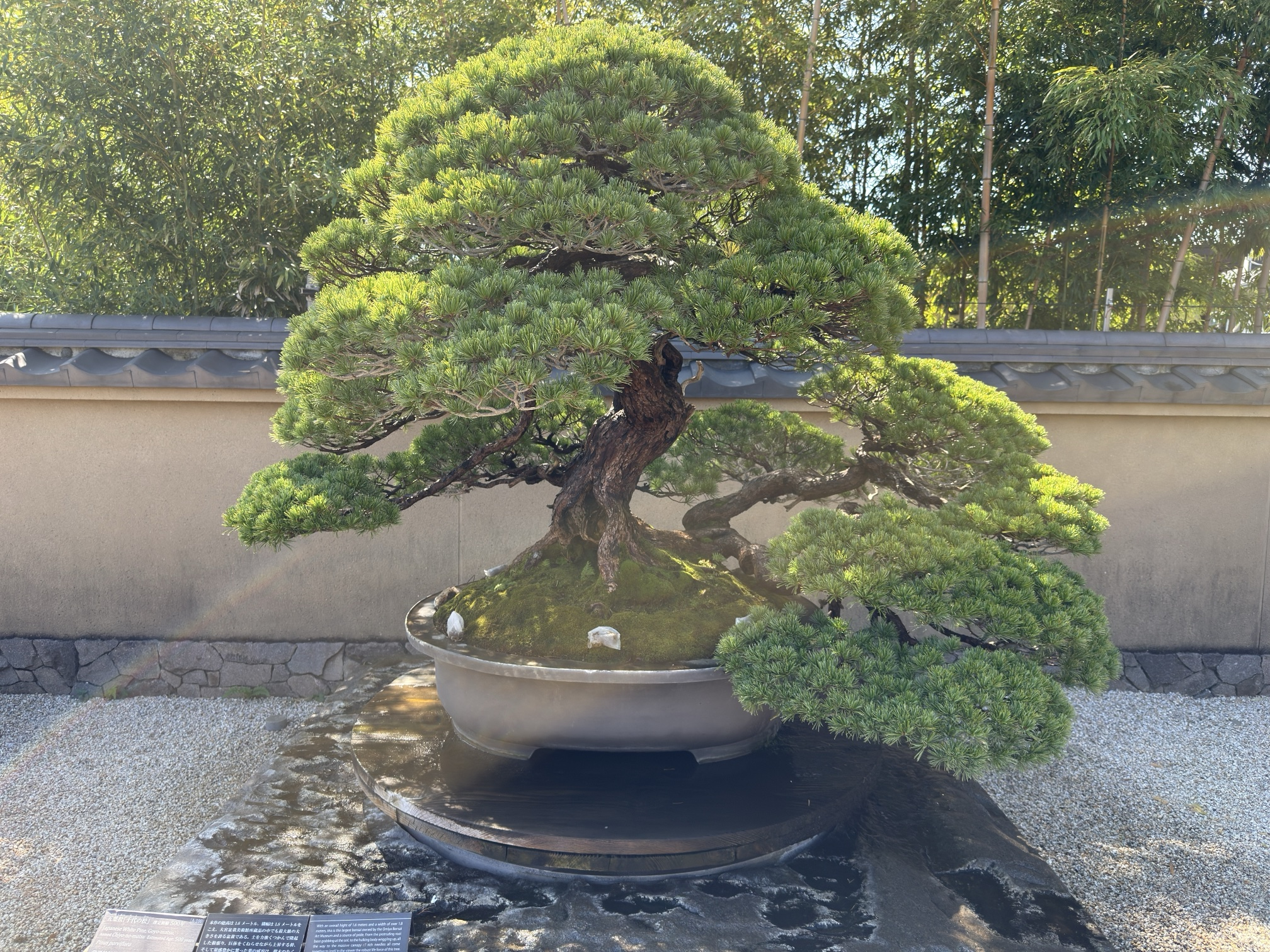
Nikkō
The National Park in autumn: Tōshōgū and Taiyūin-byō, Kegon Falls, Lake Chūzenji, the stillness of Rinnōji and Futarasan on a holiday.
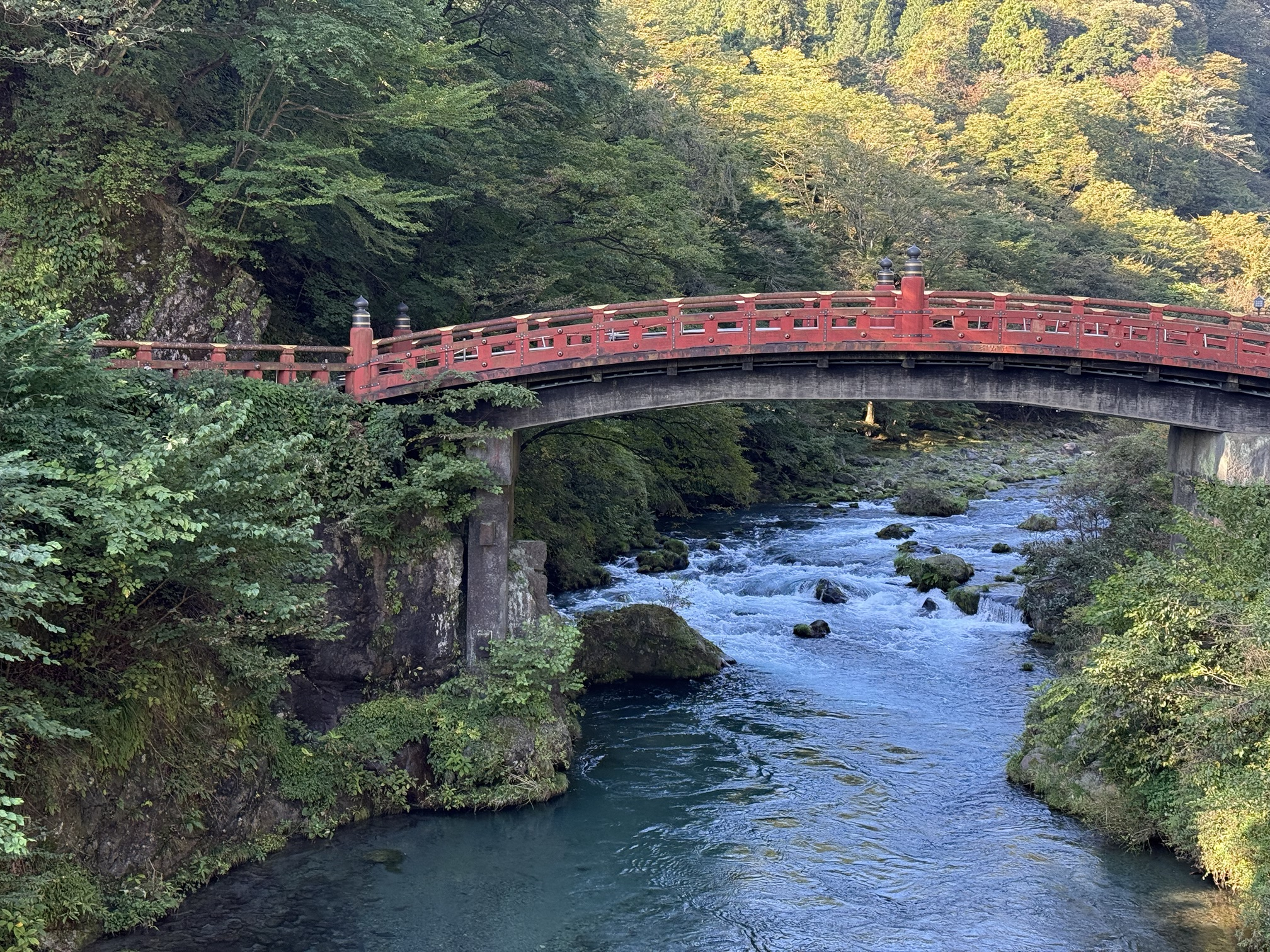
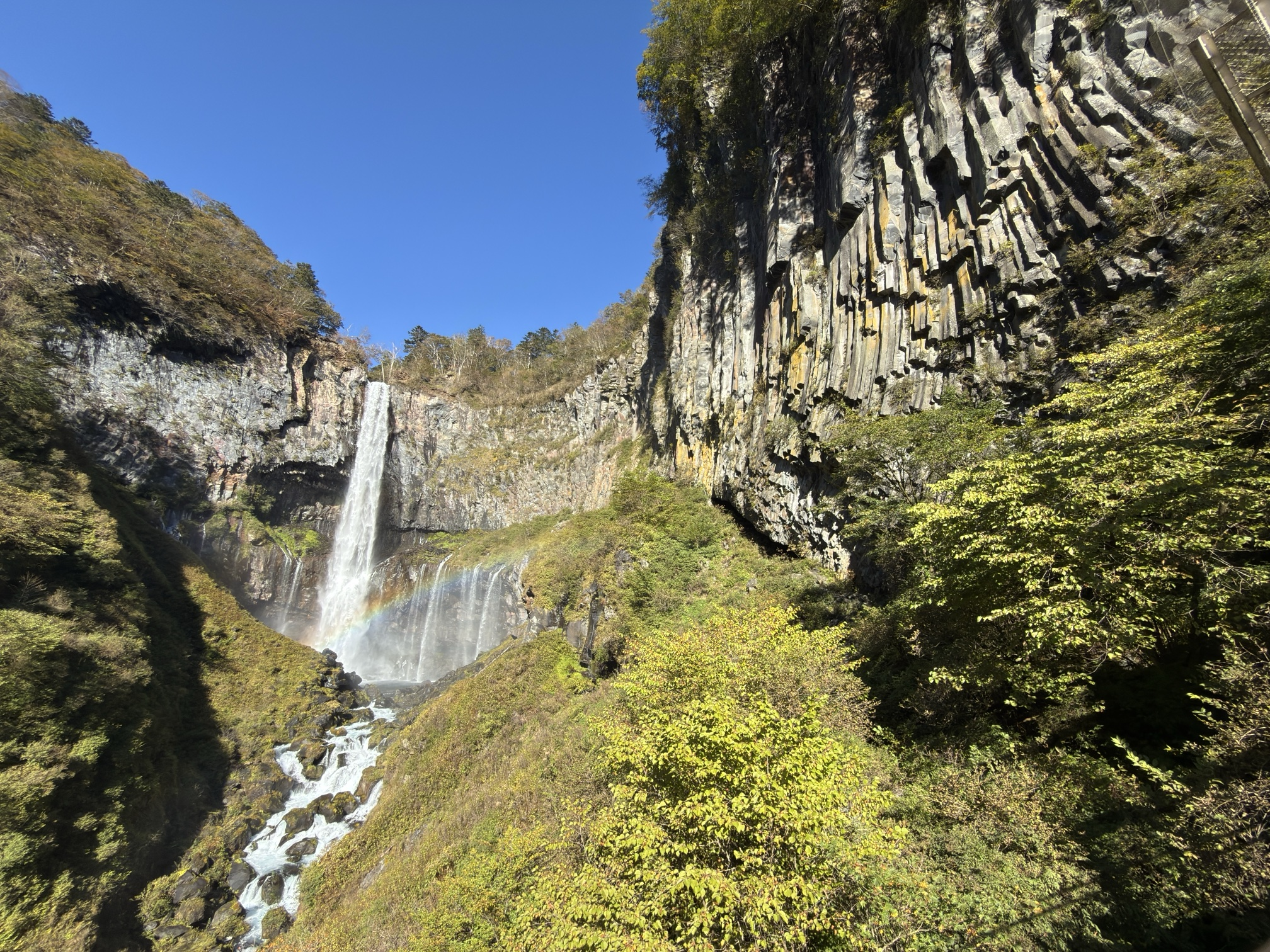
Kamakura
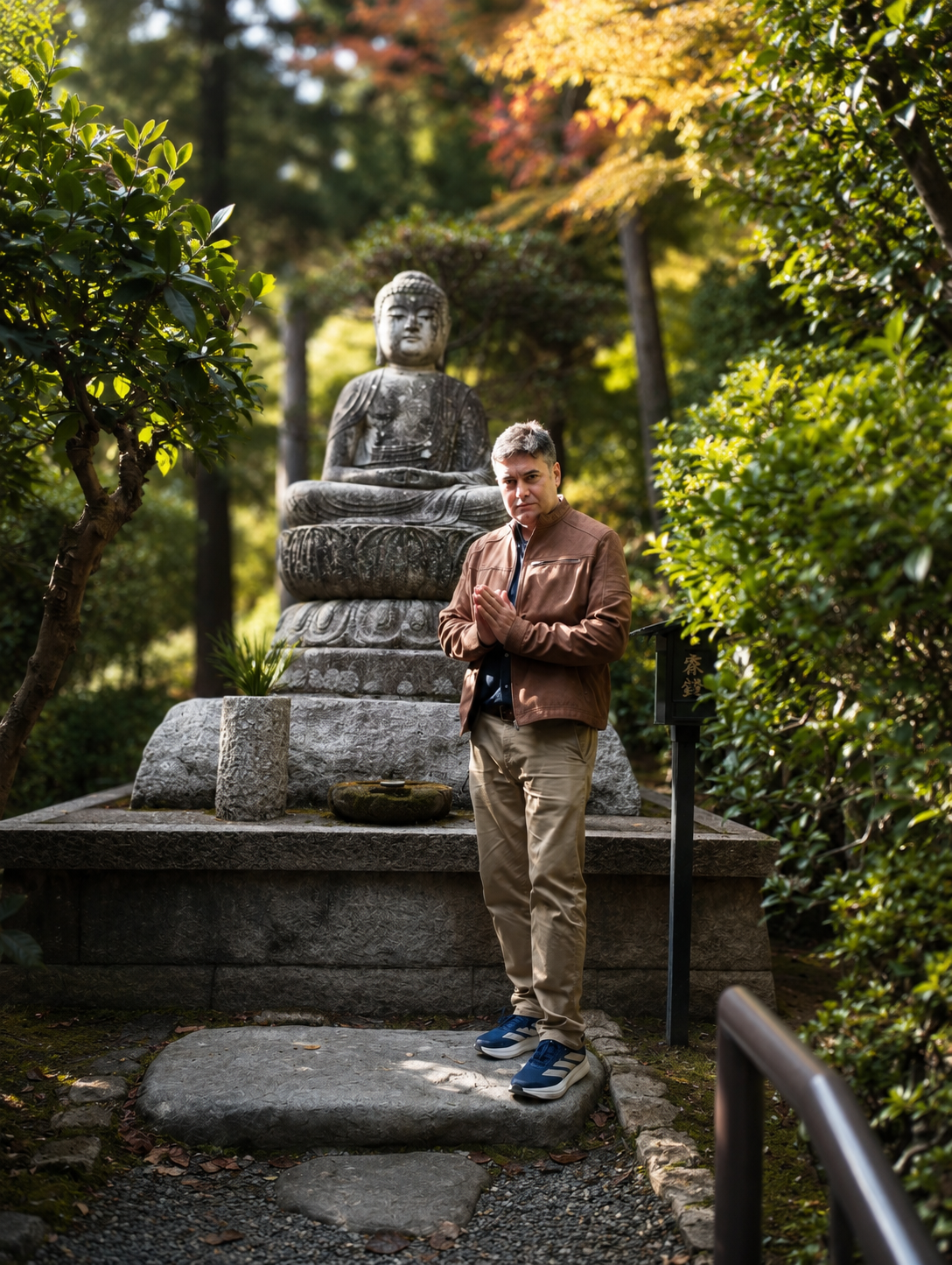
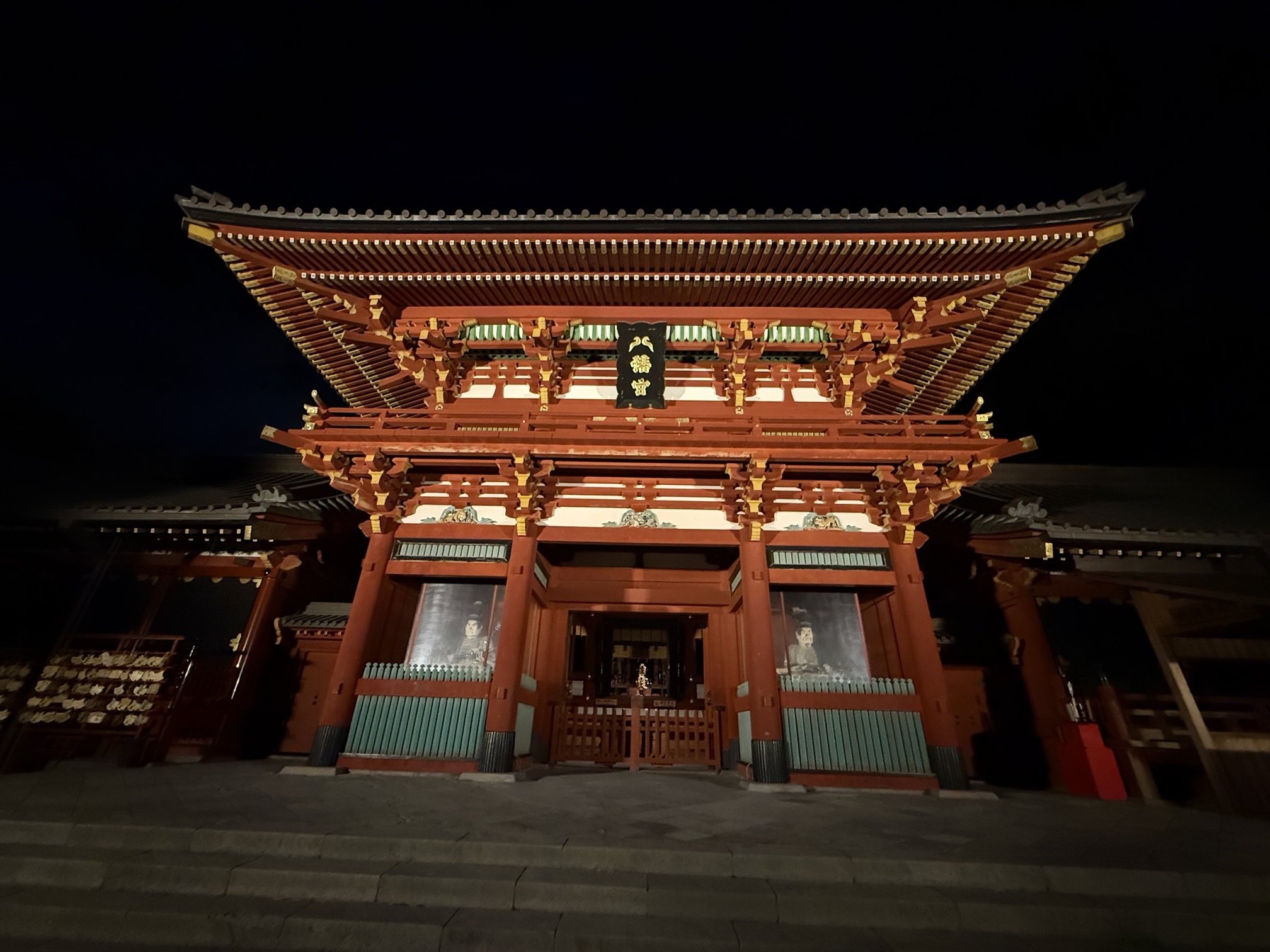
The samurai axis of Tsurugaoka Hachimangū, the moss of Sugimoto-dera, the rock garden of Zuisen-ji carved into living stone, and the Daibutsu Trail to the Great Buddha.
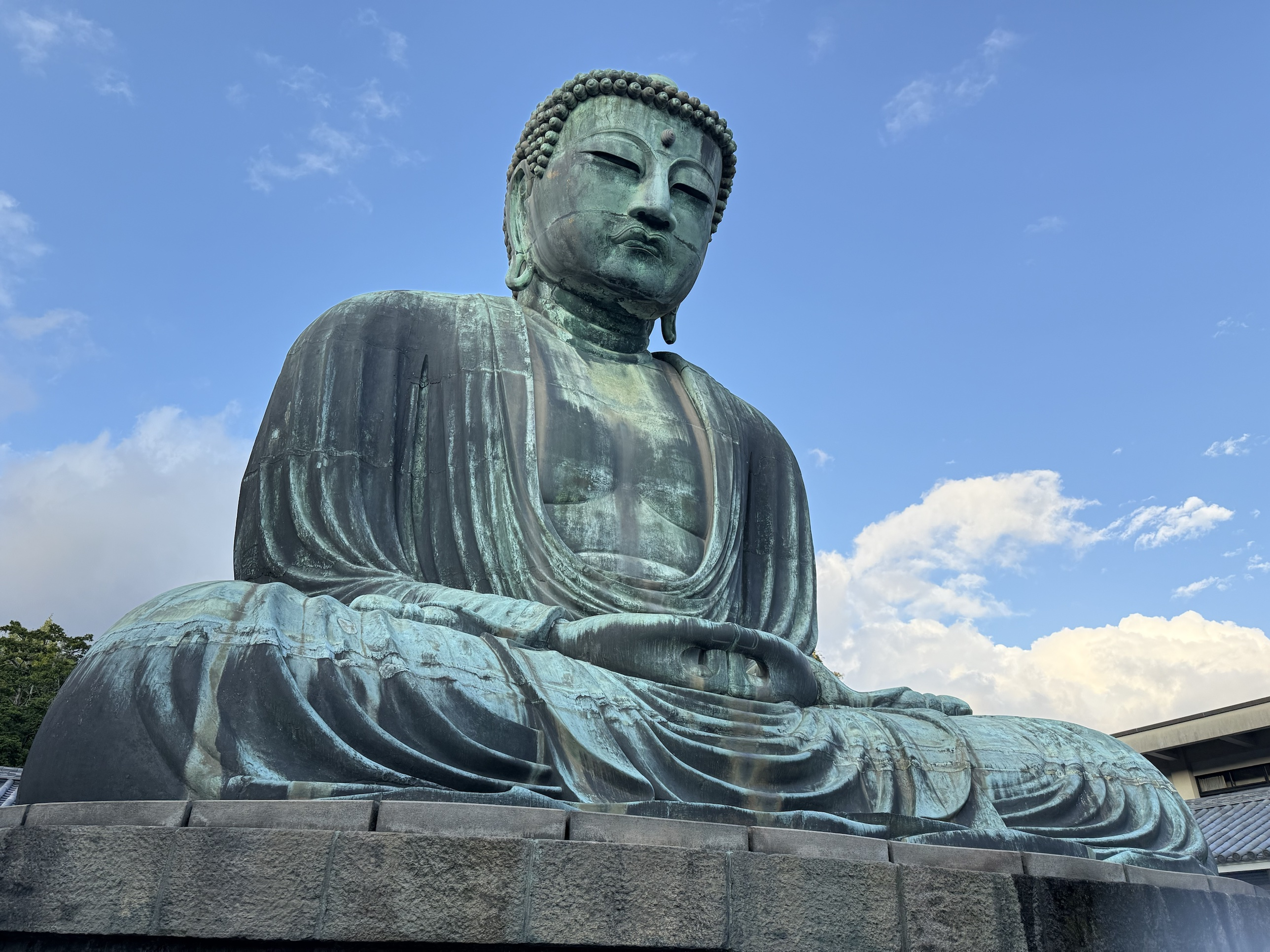
Philosophy
If Bonsaidō and Suisekidō represent the path of self-cultivation through the tree and the stone, Keidō is the natural culmination of that process. Within Keidō, bonsai, suiseki, and the other elements that traditionally accompany them are no longer seen as isolated objects, but are integrated into a harmonious composition imbued with meaning, emotion, and aesthetic depth.
Bonsai and suiseki, understood through Japanese tradition, are neither decorative horticulture nor a collection of stylistic techniques. They constitute a path of contemplation: the evocation of landscape and the seasons as a way toward inner stillness.
Through the correct arrangement of the main elements, complemented by the kakejiku (掛軸), accent plants or shitakusa (下草), and the various accompanying objects such as tenpai (添配), a space of contemplation is created in which each element enters into dialogue with the others. What until then might be perceived as an outstanding example of specialized horticulture or a valuable collector’s piece acquires a higher dimension, becoming a true artistic expression.
Keidō does not seek merely to display beautiful objects, but to reveal the atmosphere, the season, the landscape, the passage of time, and the quiet emotion contained within each composition: the art of harmonizing elements to express, through them, the deep relationship between human beings and nature.
Much of contemporary bonsai practice in the West has drifted toward commercialism and competition, moving away from that foundation. This is not to deny the value of that path—many fine trees emerge from that tradition as well—but to point out that another path exists, older and more demanding, which the Sagunt-En School seeks to uphold: that of bonsai and suiseki as the art of space, faithful to classical Japanese principles.
That is the underlying vocation of this work: not to compete within an industry, but to preserve and pass on a way of understanding the tree, the stone and the space as close as possible to its origins.
The Path of Suiseki
A landscape held in stillness.
The stone does not change before us. It is we who, by sitting beside it long enough, learn to stay still.
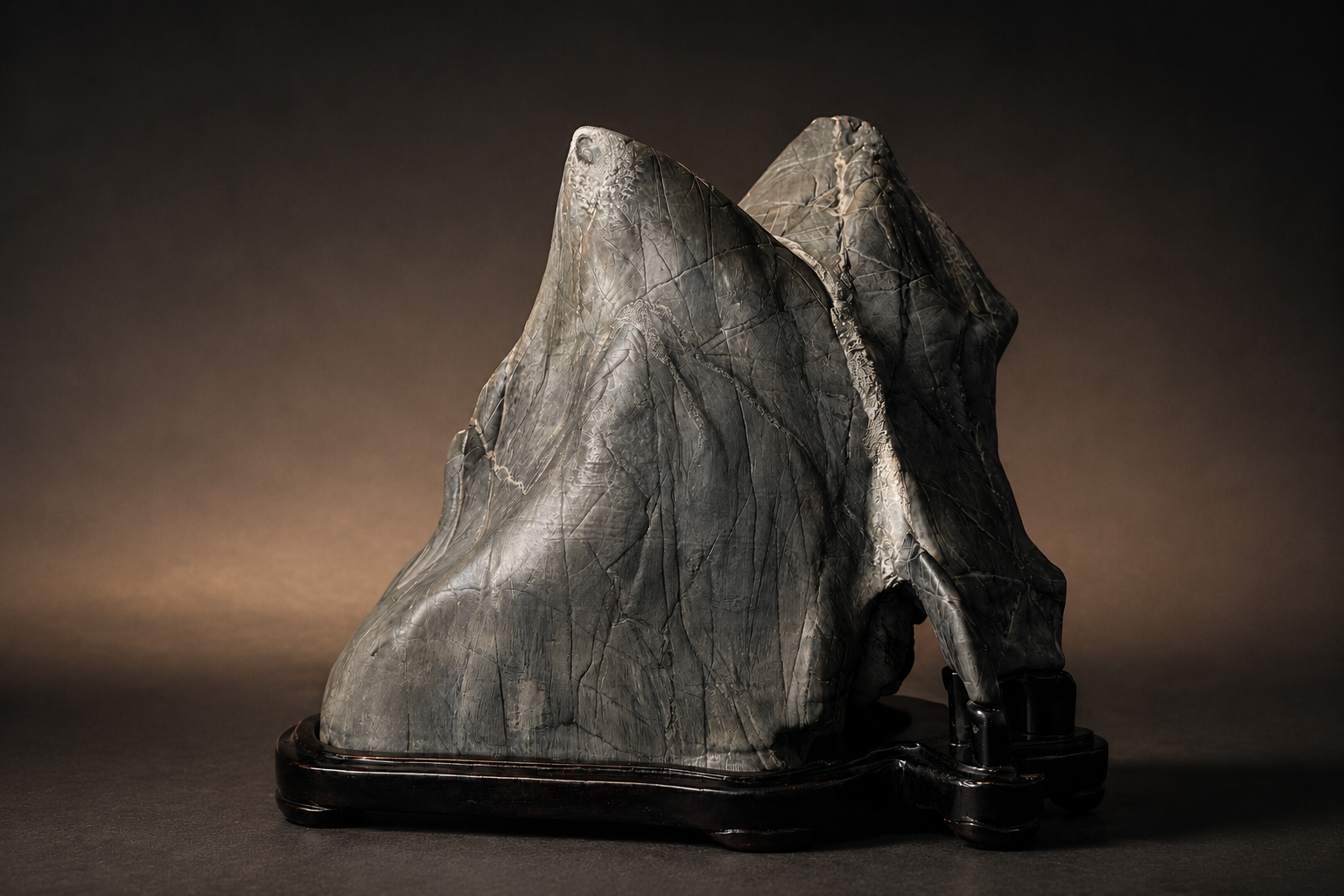
Among the traditional Japanese arts, perhaps none is as silent as suiseki.
At first glance, nothing seems to happen. There are no branches growing, no flowers appearing with the arrival of spring, nor leaves announcing autumn.
The stone remains motionless, indifferent to the haste of the world. Yet the longer one remains beside it, the more evident it becomes that this silence is full of meaning.
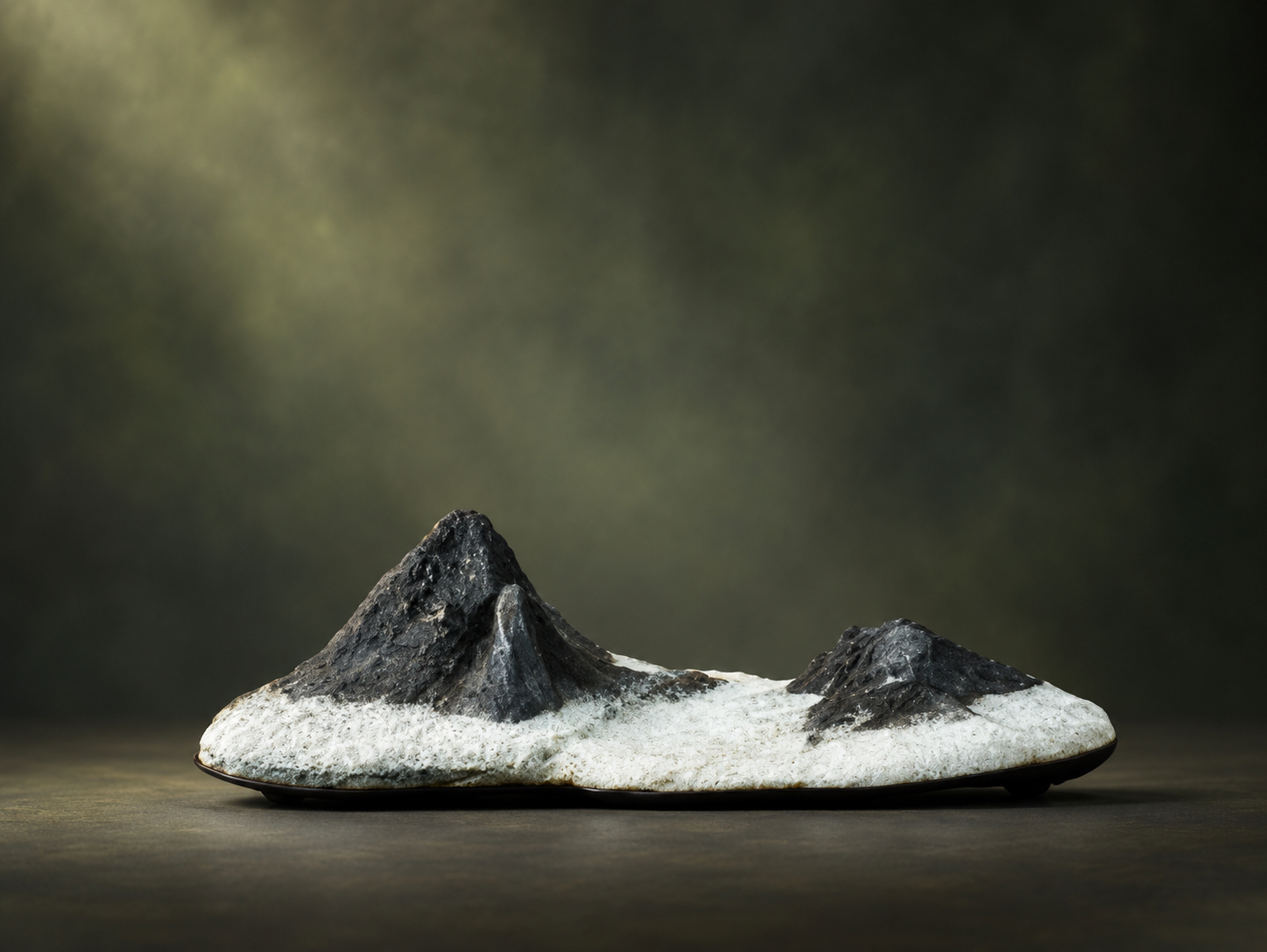
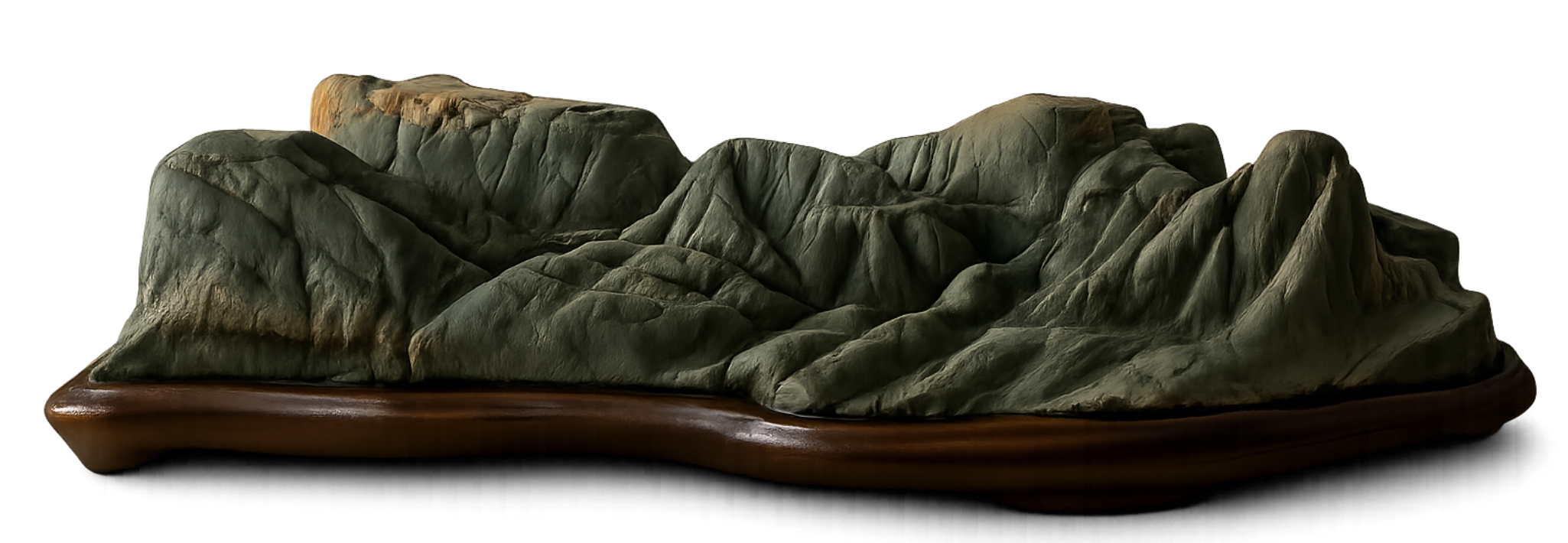
Suiseki is usually defined as the art of appreciating natural stones capable of evoking landscapes, mountains, islands, waterfalls, or other forms suggested by nature.
The definition is correct, but it barely manages to express what suiseki truly represents. To define it is to limit it, and suiseki, by its very nature, resists any boundary that tries to enclose it completely.
A suiseki stone is not created.
It is not carved.
It is not modified.
It is not corrected.
It is found.
And that distinction changes everything.
While many artistic disciplines begin with a creative gesture, suiseki begins with an act of recognition. The work already exists.
No landscape is painted onto the stone.
One learns to see it within.
The artist’s hand does not intervene.
Only the eye intervenes.
Nothing is added.
Nothing is taken away.
Nothing is invented.
Only recognized.
Only accepted.
It has been shaped over millions of years by water, wind, ice, and the slow passing of geological time. Every crack, every fold, is the trace of forces that no longer exist. Human beings add no beauty to the stone; they learn to discover the beauty that was always there.
That is why searching for a suiseki has never been simply a matter of searching for stones.
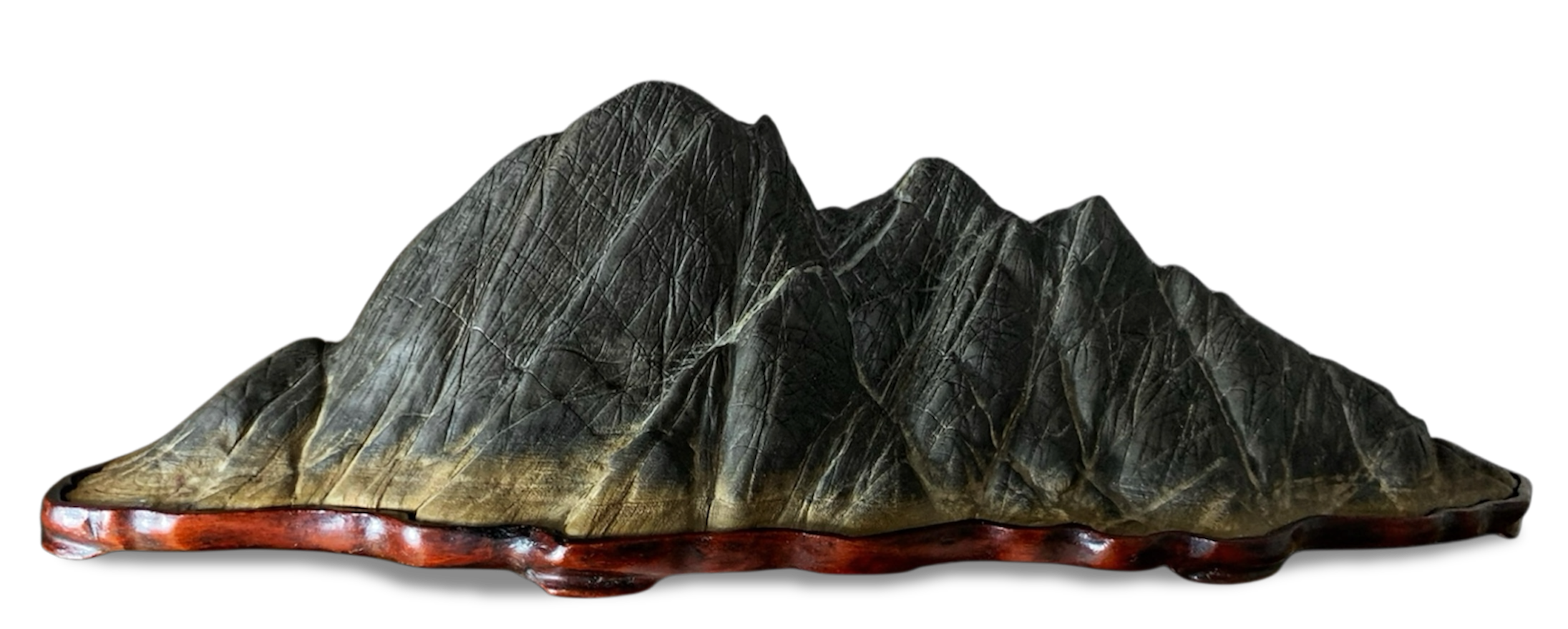
One searches for landscapes.
One searches for horizons.
One searches for mountains that fit between two hands.
Every river, every coast, and every path holds countless stones. Only a few awaken an image without imposing it.
The collector does not decide what the stone represents. It is the stone itself that, slowly and patiently, reveals what it had always kept hidden for centuries.
In the Japanese tradition there is a specific word for this particular discovery: mitate (見立て). It does not mean imagining something arbitrarily, but rather learning to recognize a reality that was already suggested by another.
Mitate does not invent the landscape.
It reveals it.
It does not impose a form.
It discovers it.
It adds nothing foreign.
It invents no story.
It only names what was already there.
A stone stops being merely a stone when it also becomes a mountain wrapped in mist, or a waterfall suspended just before touching the water.
What is truly fascinating is that nothing has changed.
The stone remains exactly the same.
What has changed is the gaze.
There are stones that spend years on a shelf saying nothing. One day, under a different light or after long contemplation, they reveal a landscape that was always present.
It did not appear suddenly; our sensitivity simply learned to recognize it. That inner transformation is one of the deepest teachings of suiseki.
The mountain does not impose itself.
It offers itself to those who know how to look.
It does not seek to be seen.
Nor does it avoid it.
It waits,
unhurried,
for its own recognition.
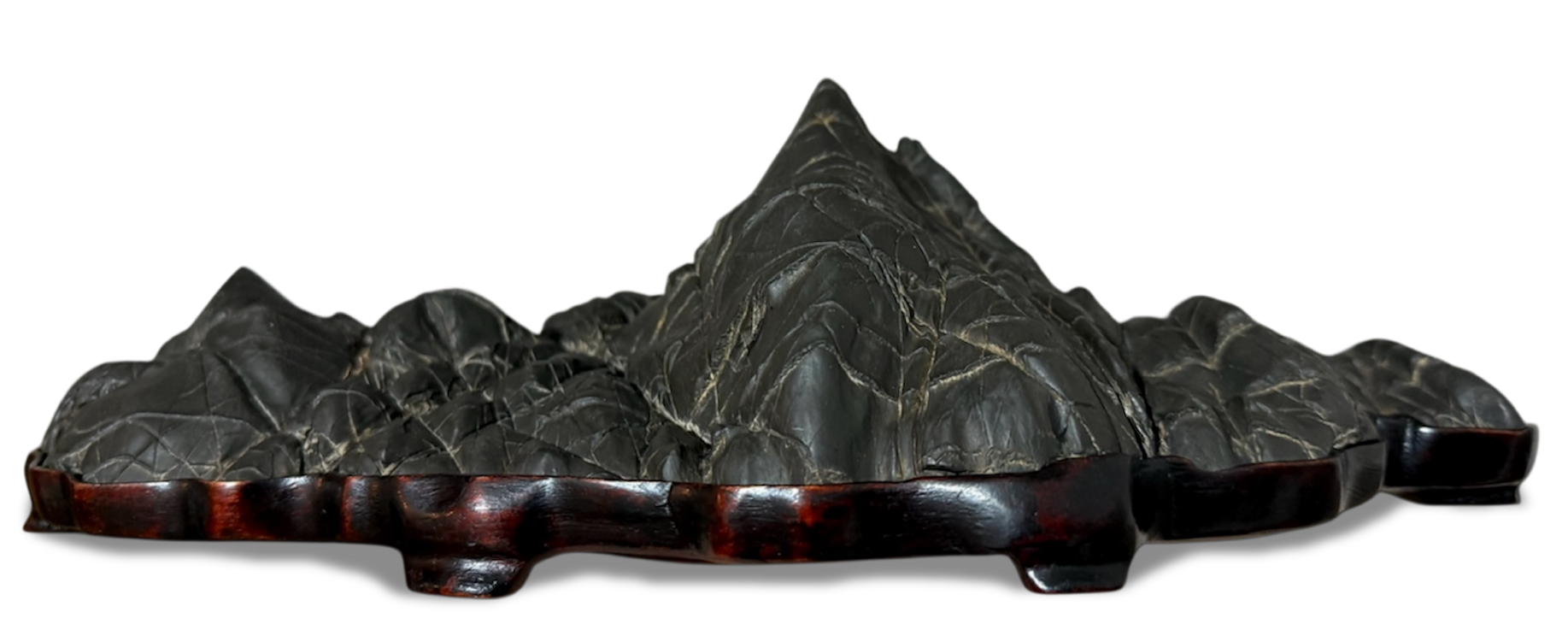
Contemplation does not change what we observe.
It changes us.
Standing before a bonsai, we come to perceive the time of living beings. Before a suiseki, we perceive the time of the Earth itself.
The tree grows slowly.
The stone, by contrast, seems motionless.
One breathes in years.
The other, in ages.
One changes before our eyes.
The other changes without our ever seeing it.
But that stillness is only apparent. Each of its forms is the result of processes so prolonged that they overflow the scale of a human life.
Where we count years, the stone has known millennia. Where we speak of generations, it remembers vanished mountains and seas that no longer exist. What for us is history is, for the stone, barely an instant; what for us is memory, for it is an ongoing present; what for us is ancient, for it is still young.
What for us is history,
for the stone is barely an instant.
What for us is memory,
for it is an ongoing present.
What for us is ancient,
for it is still young.
To contemplate a suiseki is to accept, with serenity and without resistance, the quiet, fleeting smallness of human time before the eternal stone.
And far from being unsettling, that awareness produces a strange peace.
We understand that not everything needs to happen quickly.
That there are rhythms far older than our worries.
That nature has never felt urgency to reach its fullness.
Perhaps that is why suiseki holds such a close bond with Zen: not because it represents a religious doctrine, but because it invites an attention free of haste. To remain before a stone may look like stillness; inwardly, something quite different happens. No technique teaches how to reach it, only time and disposition. Whoever sits before a stone without hurry ends up, sooner or later, listening to their own silence.
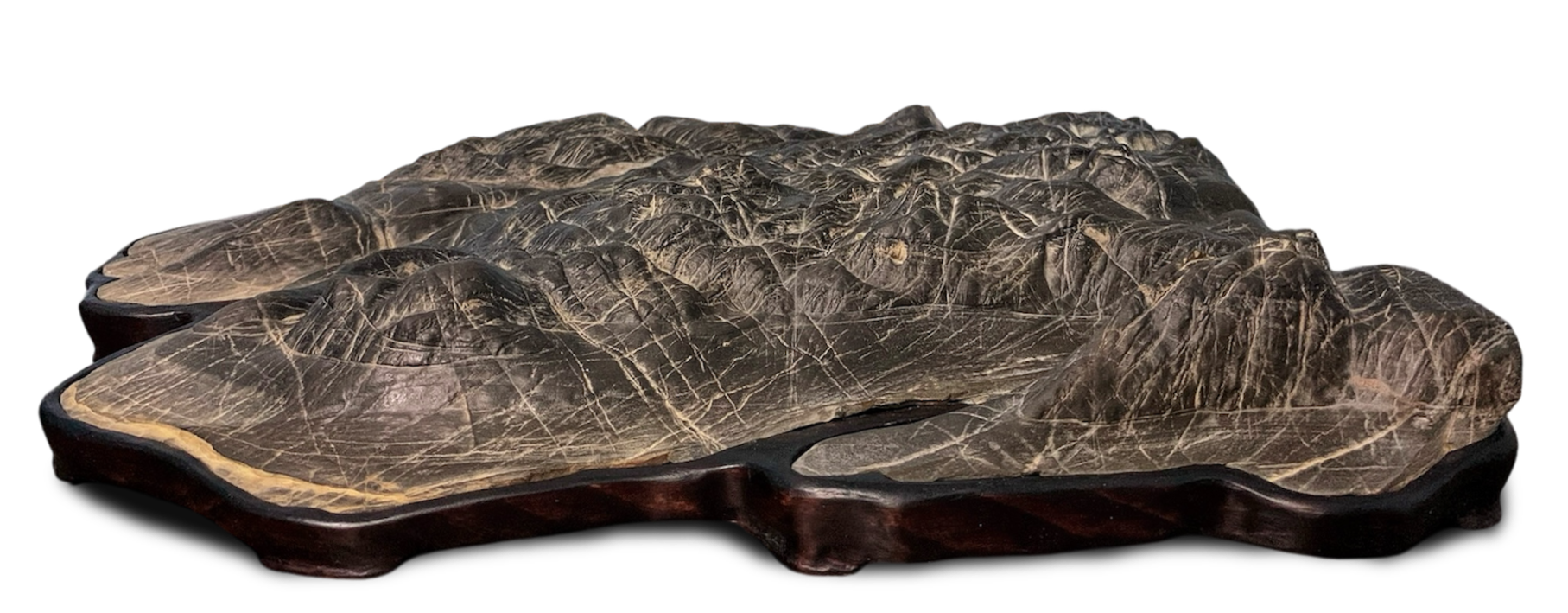
The mind begins to settle.
Thoughts lose their intensity.
The body, without meaning to, slows its pace.
The constant need to interpret and name things gives way to a simpler contemplation.
Little by little, the silence of the stone finds an echo in the silence of the observer.
At that moment there is no longer a clear distance between the one who contemplates and that which is contemplated. Only the experience of being present remains.
That state of stillness does not stay confined to the observer: it naturally seeks a place to manifest itself.
This contemplation finds a privileged place in the tokonoma, where a suiseki converses with a bonsai or a kakemono. None seeks to impose itself over the others.
Nothing competes to be seen.
Each object awaits its turn in the silence.
Each element yields space to the next.
Nothing claims the centre for itself.
Everything needs the space that surrounds it.
That space is a manifestation of ma (間). In the Japanese tradition, emptiness never represents a lack. It is the place where beauty can breathe.
The distance between the stone and the hanging scroll, or the serene silence that fully envelops a room of contemplation, holds as much importance as the objects themselves. Without that subtle, necessary margin of air, neither the stone nor the scroll could breathe.
When everything is full,
nothing can truly be seen.
Emptiness does not interrupt the landscape.
It completes it.
It does not impoverish it.
It sustains it.
It makes it possible.
It imposes nothing.
It simply allows.
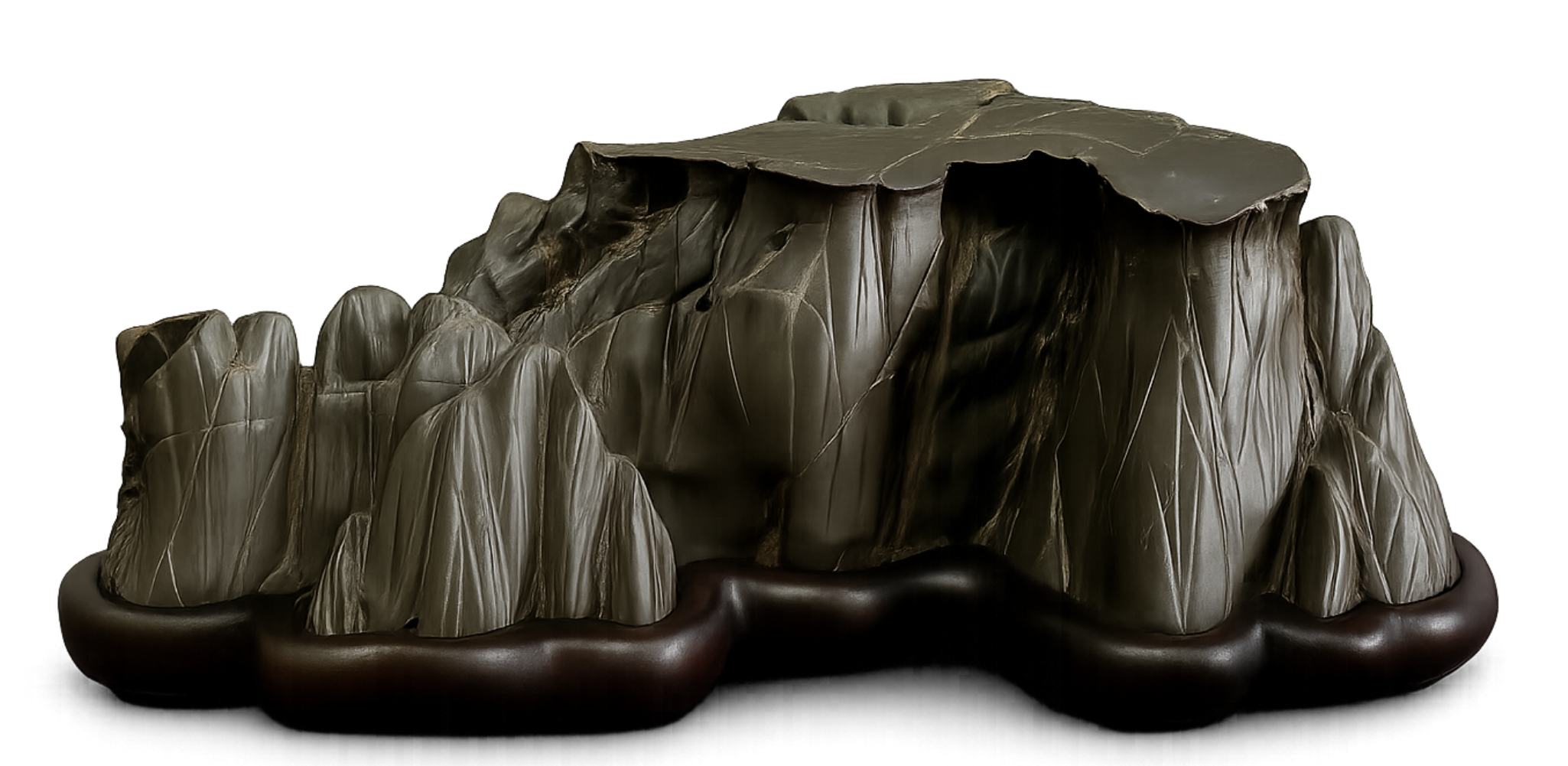
In the same way, suiseki partakes of the ancient principle of shakkei (借景), "borrowed scenery." A carefully presented stone does not enclose a landscape; it opens it. It allows a room to extend, imaginatively, toward distant mountain ranges, solitary coasts, or valleys wrapped in mist. The small ceases to be a limit and begins to suggest the immense.
That capacity for suggestion also belongs to the realm of yūgen (幽玄), what is intuited but never exhausted by the gaze.
What is truly profound never shows itself completely.
An excellent stone always keeps part of its mystery.
It does not answer every question.
It does not immediately reveal everything it holds.
It invites the observer to return again and again, discovering new landscapes as the light, the season, or the observer’s own inner state changes. No visit exhausts what the stone has to show.
With time we come to understand that suiseki does not teach us to look at stones.
It teaches us to look at the world.
After many years of practice, a mountain ceases to be only a mountain.
A river ceases to be only a river.
Even a rock forgotten at the edge of a path may hold a beauty that once went unnoticed.
Contemplation changes the way we inhabit nature.
It makes us more attentive.
More patient.
More receptive.
More humble.
Perhaps that is why suiseki needs so few words: its language is another one, made of time and of silence.
The stone does not try to convince.
It proves nothing.
It demands no attention.
It simply remains.
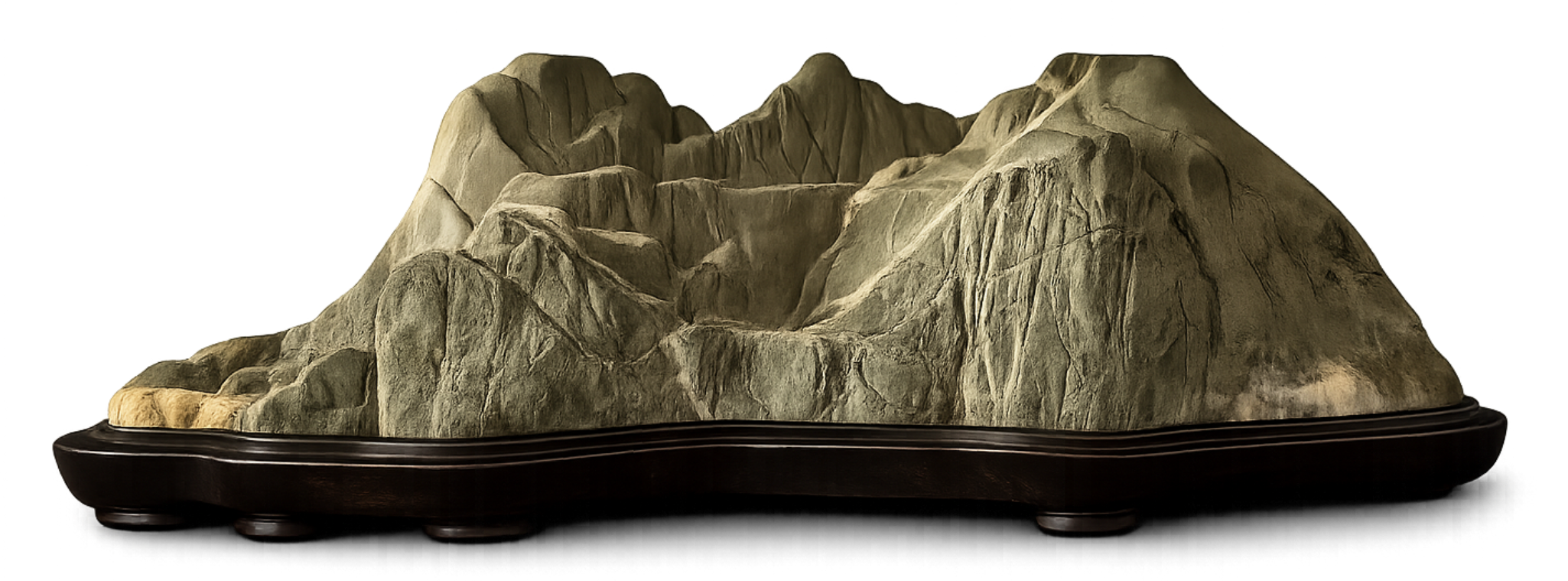
And in an age dominated by a vertiginous way of life, immediacy, and noise, that permanence stands as a teaching of extraordinary relevance.
Perhaps that is precisely why more and more people today seek in suiseki something that everyday life no longer seems to offer: a fixed point from which to look at the world.
We live surrounded by objects designed to be replaced.
The stone proposes exactly the opposite.
To remain.
To wait.
To accept the passage of time without resistance.
To remember that true depth never arises from haste.
When bonsai and suiseki are presented together, side by side, in the same tokonoma, they establish a silent and profound dialogue between two very different ways of understanding and inhabiting nature, between life and permanence.
That dialogue seeks no victor: it seeks, simply, a balance. It is not about choosing between the tree and the stone, but about learning to hold both presences without either eclipsing the other. In that coexistence, perhaps, the deepest meaning of the tokonoma reveals itself.
The tree speaks of growth, and of life that changes.
The stone speaks of permanence, and of time that transcends generations.
One represents movement.
The other, stillness.
One slowly transforms living matter.
The other preserves the memory of a transformation already past.
Both speak, in the end, of the same silence.
And yet, both lead toward the same teaching.
To contemplate without desiring to possess.
To accompany nature without imposing our will upon it.
The stone never asks us to understand it.
It only invites us to sit beside it long enough.
We are the ones who, in the end, have changed.
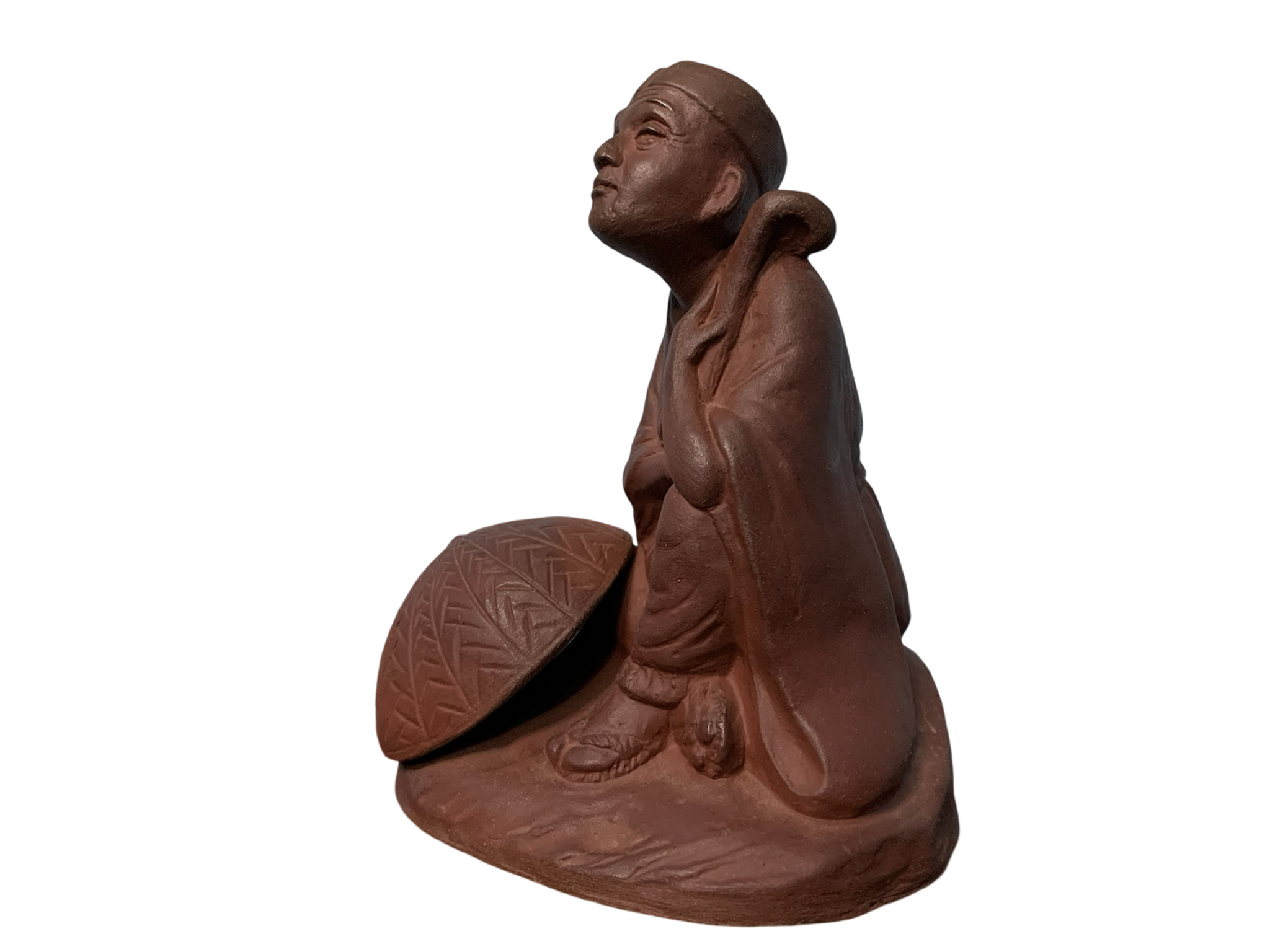
Matsuo Bashō 松尾芭蕉
No figure is more frequently cited by practitioners of Keidō than Matsuo Bashō (松尾芭蕉, 1644–1694). He was neither a gardener nor a bonsai artist, but his travel haiku (俳句)—a concise poetic form devoted to the contemplation of landscape and the changing seasons—is, for this school, the purest literary expression of the same spirit that Keidō seeks to express through the tree, the stone, and the display space.
Bashō left the city to journey through the landscape, paring his gaze down until only the essence of the landscape remained. That same rejection of the superfluous lies at the heart of composition in Keidō.
松尾芭蕉, c. 1686—a constant source of inspiration for those who follow the Way of the Landscape.

Bonsai Clubs International’s International Instructor Program
International Accreditation · July 2026
Recognition of a Lifetime of Teaching

Bonsai Clubs International (BCI) is one of the leading organizations for the promotion, preservation, and development of bonsai and suiseki worldwide. Founded in 1960, it brings together clubs, associations, professionals, and researchers from numerous countries with the mission of promoting study, education, and the exchange of knowledge in both disciplines.
For more than six decades, BCI has driven the international development of bonsai and suiseki through congresses, specialized publications, educational programs, and an extensive collaborative network that has helped strengthen dialogue among professionals and institutions worldwide.
As part of this mission, the International Instructor Program recognizes professionals whose careers demonstrate a sustained commitment to teaching, research, outreach, and the preservation of these arts, acknowledging their contribution to the transmission of knowledge with rigor, responsibility, and respect for tradition.
Admission to the International Instructor Program
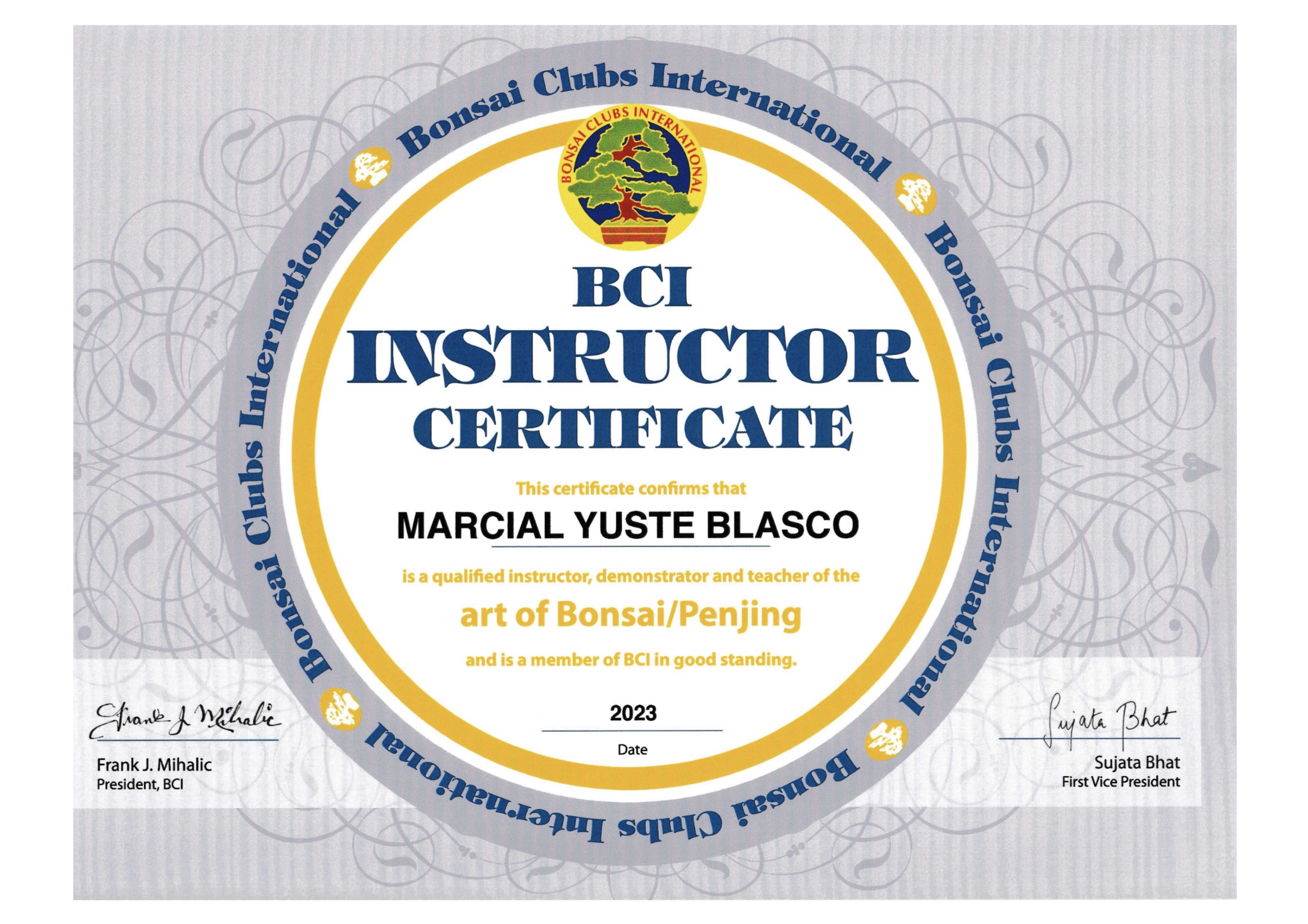
Admission to Bonsai Clubs International’s International Instructor Program was formalized through the awarding of the International Bonsai Instructor accreditation.
This accreditation recognizes more than two decades dedicated to the study, practice, research, and teaching of bonsai, as well as an ongoing commitment to outreach through lectures, specialized publications, exhibitions, educational activities, and cultural projects undertaken both in Spain and internationally.
International Bonsai Instructor
The International Bonsai Instructor accreditation recognizes contributions to the teaching and promotion of bonsai, as well as a commitment to preserving its technical, artistic, and cultural foundations in accordance with the principles of Japanese tradition.
An Enduring Commitment
Participation in the International Instructor Program of Bonsai Clubs International reflects an ongoing commitment to the preservation, study, and transmission of bonsai as an expression of Japanese artistic and cultural heritage.
Teaching, research, and outreach form the core of this commitment, aimed at fostering the exchange of knowledge across generations, schools, and cultures, while preserving the authenticity of the art of bonsai and supporting its continued development throughout the international community.
Instructor at World Bonsai University
International bonsai training platform · Instructor since 2021
Teaching as part of the path itself

World Bonsai University (WBU) is a private online training platform devoted entirely to bonsai. It emerged to fill a gap that, for years, existed in the Spanish-speaking bonsai world: the absence of a structured, progressive, and accessible distance-learning offer, in a field where knowledge had mostly been passed on in person and in fragmented ways. It is worth stating this plainly: WBU is not a university in the academic or official sense of the word, nor does it hold government or institutional recognition comparable to that of a regulated institution of higher education. It is a private entity, and, at present, the only one offering a catalogue of this breadth and continuity devoted entirely to teaching bonsai.
The platform brings together a small group of internationally recognized instructors, each responsible for their own catalogue of courses. Training is organized through recorded video lessons and PDF materials, structured by level—from beginner to advanced design—with exams and completion diplomas for the courses that include them. Alongside this recorded content, the platform offers live videoconference classes and, occasionally, in-person workshops, combining independent study with real-time guidance.
Teaching on the Platform
I have been part of WBU’s instructor team since 2021, with a catalogue centered on bonsai design and aesthetics—the area where I identified the greatest gap in Spanish-language training—and on Keidō and Kazari, the art of correctly displaying a bonsai or suiseki. Over these years, that dedication has resulted in one of the most extensive course catalogues among the instructors who take part in the platform, something I mention not as an achievement in itself, but as a reflection of the time and study behind each course.
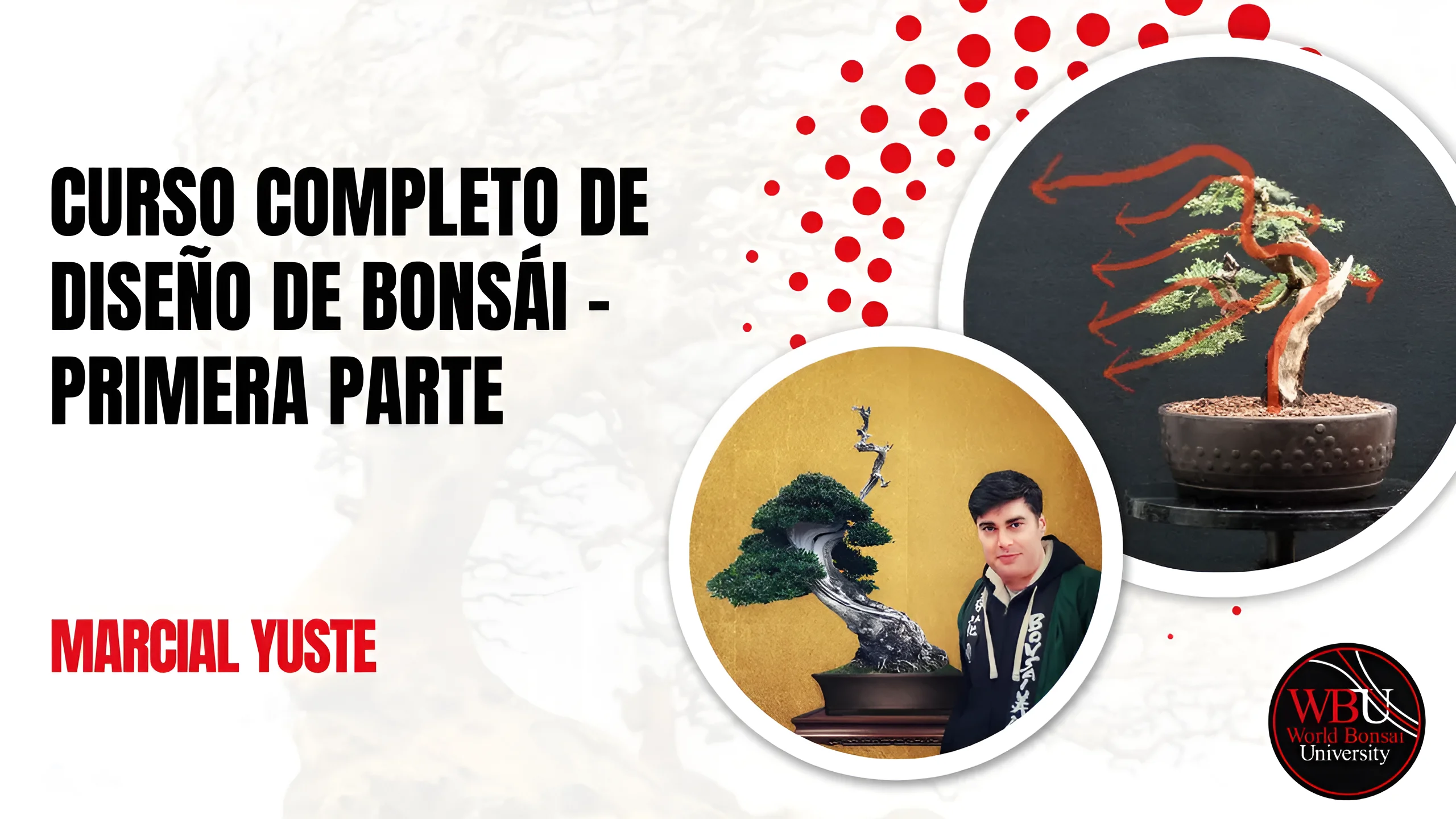
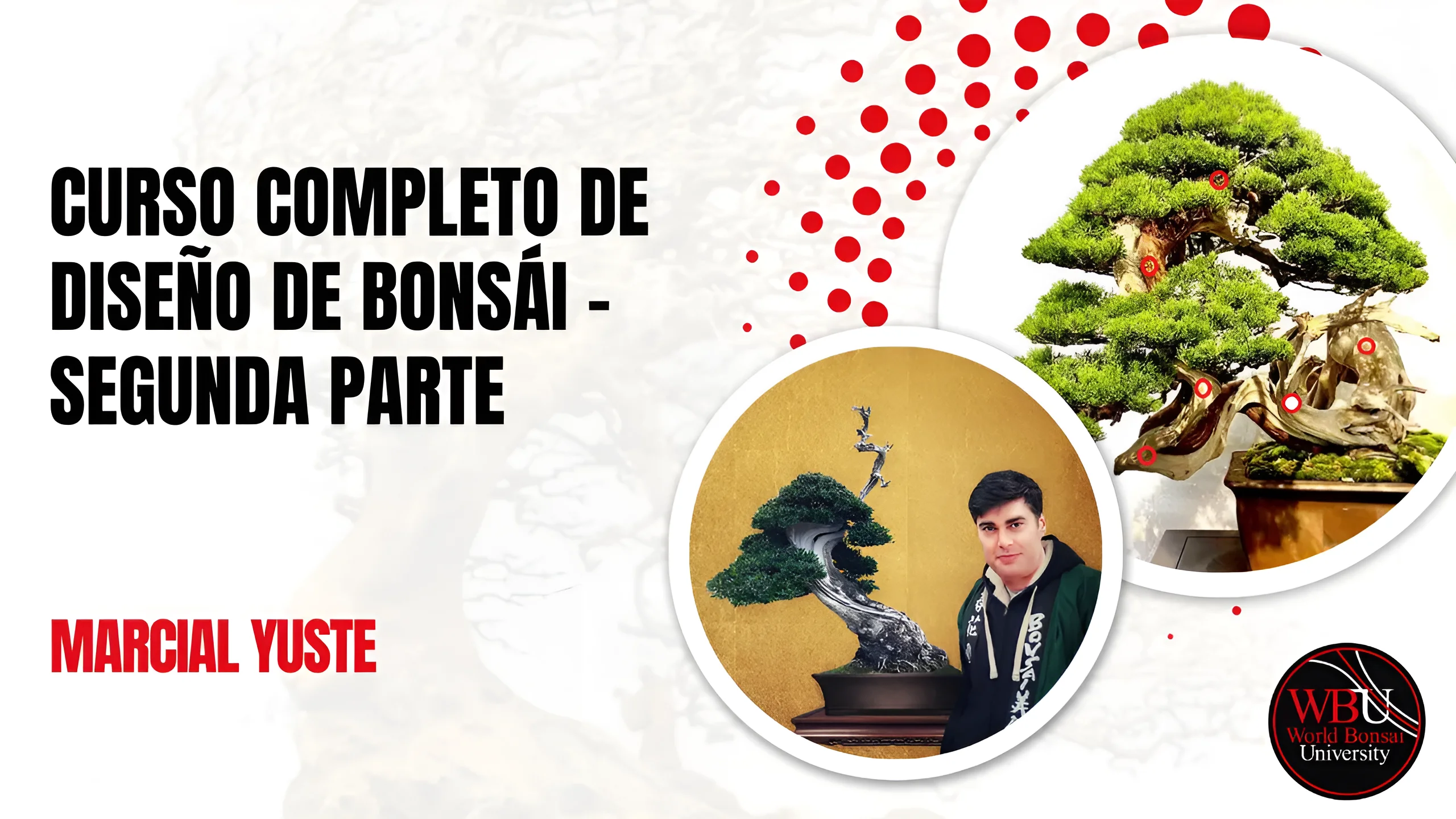
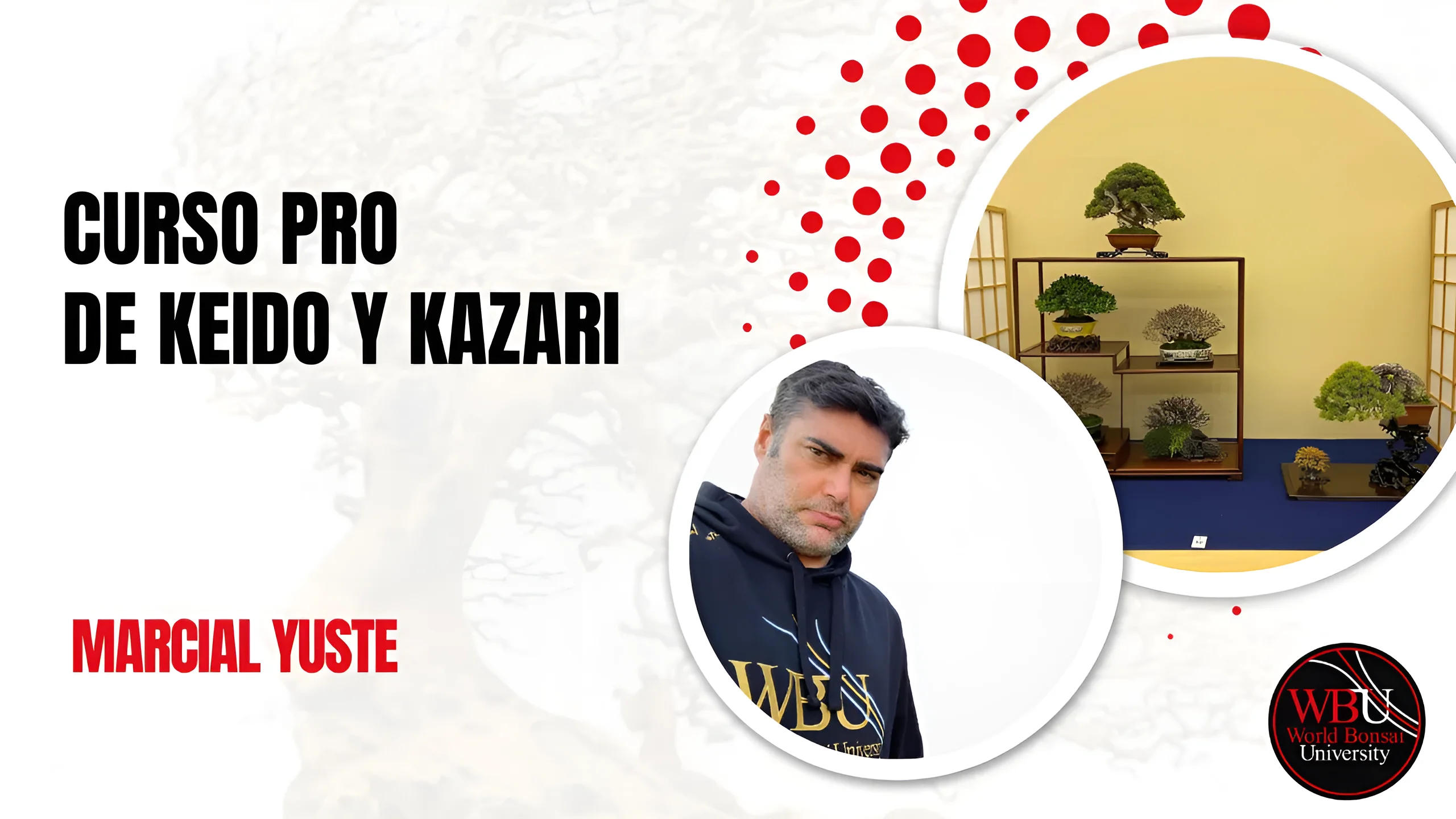
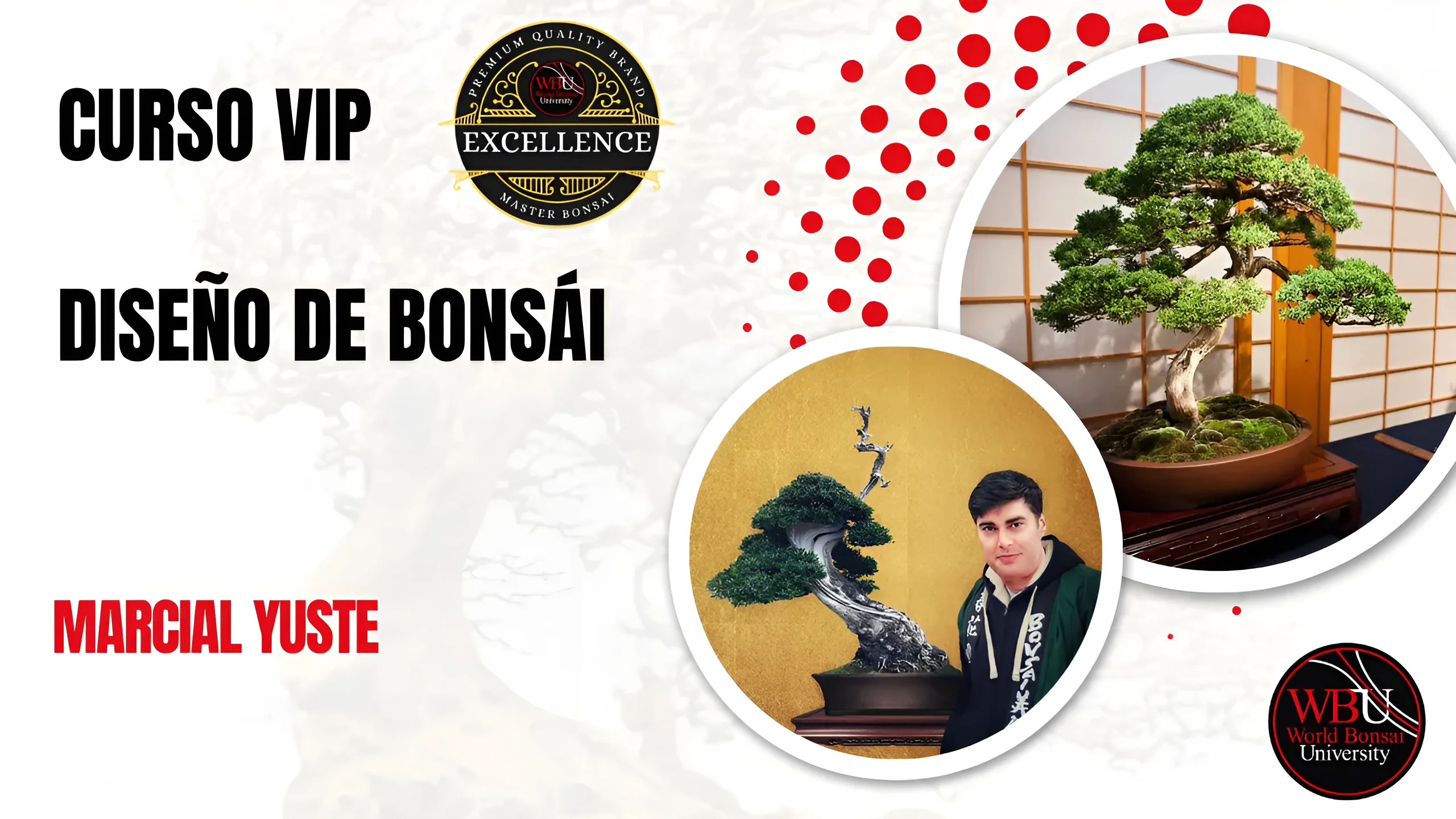
Courses I Teach at WBU
-
The first module of the design trilogy, built to establish the classical rules of composition, the vocabulary of the craft, and how to read the fundamental forms of bonsai. It lays the theoretical foundation the following two modules build on.
-
A natural continuation of Module 1, going deeper into compositional balance, the rhythm between mass and empty space, and the dynamism of the apex as the element that guides the tree’s visual reading.
-
An expanded version of the previous modules, with monthly live tutorials to work through questions on students’ own trees. It adds a detailed study of the classical styles and the particularities of design in juniper and Sabina.
-
The most complete of the design courses, with dozens of hours of content that integrate and expand on everything covered in the previous levels into a single, unified body of design theory.
-
The largest existing compendium on the correct display of bonsai according to Japanese tradition: single-element compositions, three-element compositions, and those of five or more, along with the terminology and criteria governing each.
-
A live session focused on branch formation and refinement in deciduous species: pruning, pinching, and defoliation applied with judgment, beyond the mechanical technique itself.
-
A second live session, this time devoted to the Pinus genus: how to develop branching according to each pine group’s behavior, how to trigger back-budding, and how to balance vigor using mekiri, metsumi, and other specific techniques.
-
A live session on the physiological fundamentals behind every intervention on the tree: photosynthesis, carbohydrate reserves, and vigor cycles across the year. It explains how to design a fertilizing program consistent with each species’ phenology, rather than following generic schedules that ignore the tree’s actual energy state. The goal is for the student to decide when to intervene and when to wait, based on physiology rather than the calendar.
-
A class focused on species prized for their flowers and fruit, a group that requires adjusting pruning, pinching, and defoliation so as not to compromise those phases. It covers the right timing for intervention according to each species’ flowering cycle, and the fertilizing strategies that favor flower and fruit without weakening the tree. It also includes design criteria for not sacrificing bloom for the sake of silhouette.
-
A monograph on the wild olive (Olea europaea var. sylvestris), one of the most widely collected Mediterranean yamadori species in Spain, with behavior of its own that is rarely explained in detail. It covers its particular cultivation, repotting, and healing requirements, along with the design criteria best suited to its character. Aimed at those working, or wanting to work, with native Mediterranean material.
-
A session devoted to the highest-risk techniques in the craft: major limb removal, forced bends, complex approach grafts, and other interventions that seriously threaten the tree’s survival if carried out without judgment. It explains the protocols that let material be pushed to its limit without losing it, and when taking that risk is justified. Intended for those who already master the basic technique and want to expand their range of action.
-
A class that treats cultivation not as an end in itself but as a design tool: how sound agronomic management directly determines which stylistic transformations are possible and which are not. It explains the relationship between vigor, branch density, and the tree’s capacity to respond to design interventions. A perspective that integrates agronomy and aesthetics into a single working criterion.
-
A session on the two fundamental techniques for modifying a tree’s structure when pruning alone is not enough: layering, to obtain nebari or new material, and grafting, to introduce branches or correct design shortcomings. It details the different types of each technique, the optimal timing by species, and the aftercare required to ensure success.
-
A class devoted to correctly collecting material from the wild: how to assess a specimen before collection, which root and substrate protocols increase the odds of survival, and how to manage the first months of aftercare following collection. It also covers the ethical and legal criteria that must be respected in this practice.
-
A live session in the personalized mentoring program, in which students present their own trees for a real-time design assessment. It covers structural decisions, choice of front, branch management, and stylistic coherence on a case-by-case basis. The format lets the theoretical criteria from the courses be applied to concrete, real design problems.
-
A continuation of the personalized mentoring program, once again focused on individual reviews of trees brought in by students. It builds on themes already introduced in the previous session—choice of front, mass balance, apex management—applying them to new material and to more complex cases. It serves as a natural continuation of the live mentoring cycle.
-
A session devoted to the classical styles of Japanese tradition—chokkan, moyogi, shakan, kengai, among others—and the formal criteria that define each one beyond its name. It explains how to identify the style best suited to a given piece of material and how to avoid the most common compositional mistakes when forcing a tree into a style that does not fit it.
A Path That Never Ends
Holding an extensive catalogue on the platform is not, for me, an end in itself. 道—Dō, the path—is precisely that: a path that is never fully walked, however far one has already come. Teaching does not exempt me from continuing to study; if anything, it demands more rigor from me. That is why I have taken, almost in their entirety, the courses published by WBU’s other instructors, not as a symbolic gesture but as one more way of remaining a student, even while my role there is that of an instructor. In October 2021, WBU itself recognized that path with a Certificate of Honor and Excellence, after the completion of fifty courses by other instructors, each passed with the highest grade.
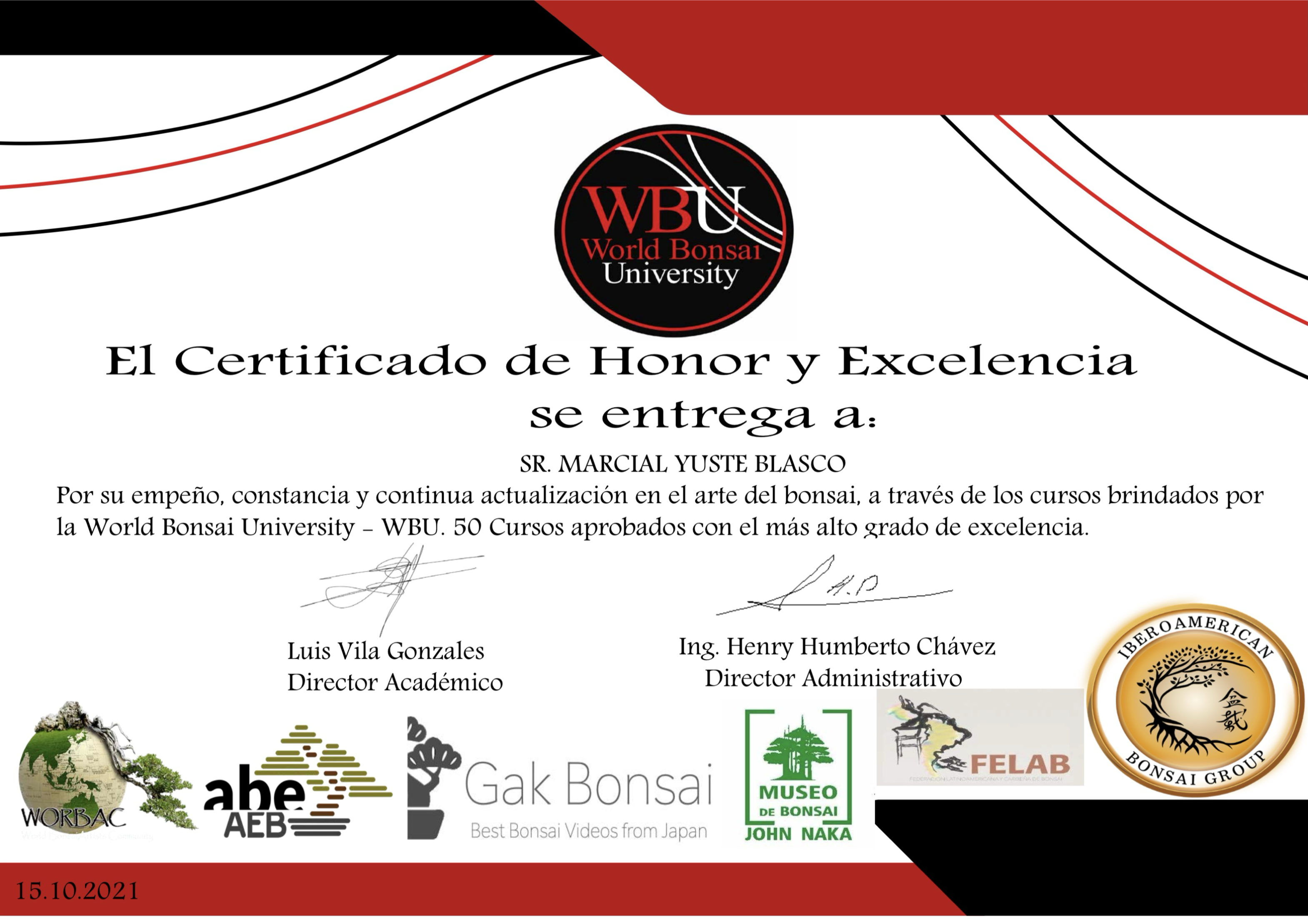
That double condition—student and instructor at once—was acknowledged separately a few months later. In June 2022, WBU issued a distinct Certificate of Recognition, this time for my work on the other side of the classroom: for the collaboration and dedication behind teaching bonsai of high quality within the platform. Read together, the two certificates trace the same movement described above—continuing to learn while already teaching—recognized first as a student, then as an instructor.

Traditional School of Bonsai and Suiseki
 技に始まり、美に至る
空間有美
形相大小
技に始まり、美に至る
空間有美
形相大小
At the Sagunt-En School, we understand bonsai and suiseki as artistic and cultural expressions deeply rooted in the contemplation of nature, Japanese aesthetic sensibility, and a tradition passed down across generations.
Technical knowledge is part of the path, but not its destination. The true purpose of bonsai and suiseki transcends technique to enter the realm of artistic expression, observation, harmony, and the cultivation of an eye capable of recognizing the essential beauty of the landscape.
Our teaching is grounded in the rigorous study of traditional Japanese sources and in continued study within the classical systems of Japanese cultural transmission. For this reason, learning is not limited to the care of a tree or the appreciation of a stone; it also embraces an understanding of the aesthetic, philosophical, and cultural principles that gave rise to these arts.
The Sagunt-En School is a place for those who wish to deepen their knowledge, pursue research, and gain a fuller understanding of bonsai and suiseki from a broader and more authentic perspective. A place to cultivate patience, sharpen observation, develop one’s own aesthetic judgment and walk with respect within a living tradition.
We believe that bonsai and suiseki are not merely objects of contemplation, but vehicles through which we come to understand nature, time, the landscape, and our place within it.
This is the path we have chosen. This is the spirit we seek to pass on.
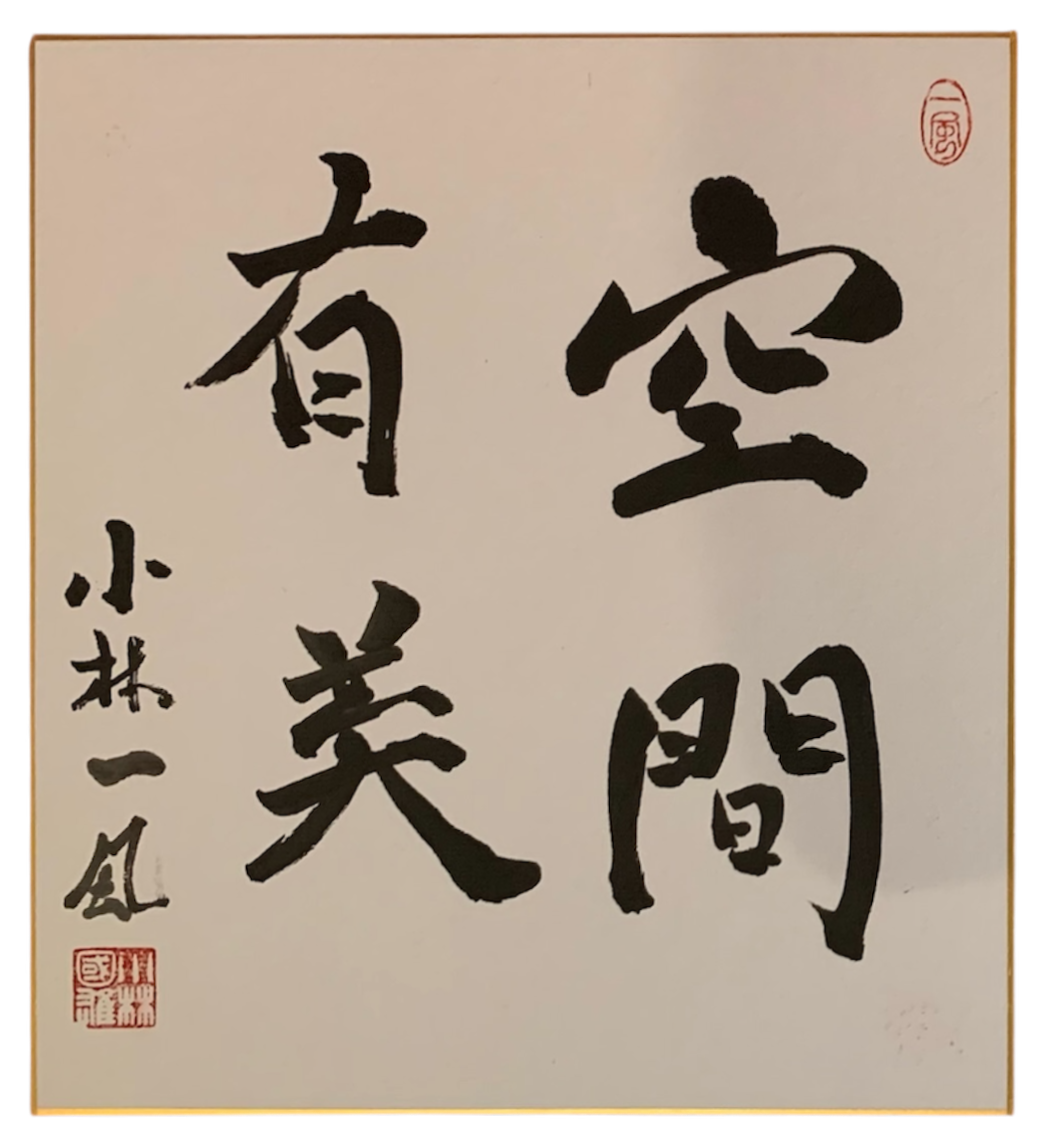
Shodō calligraphy by my master
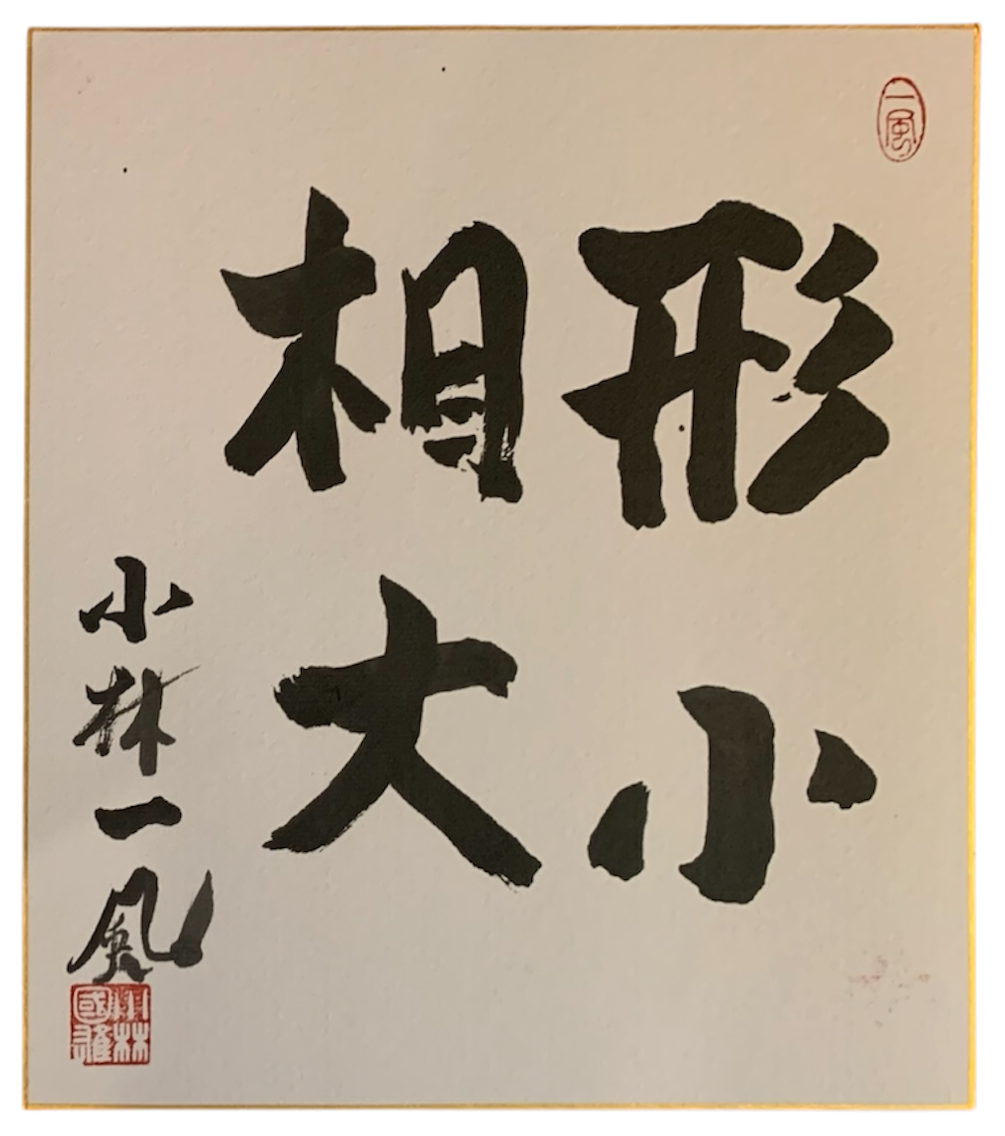
Shodō calligraphy by my master

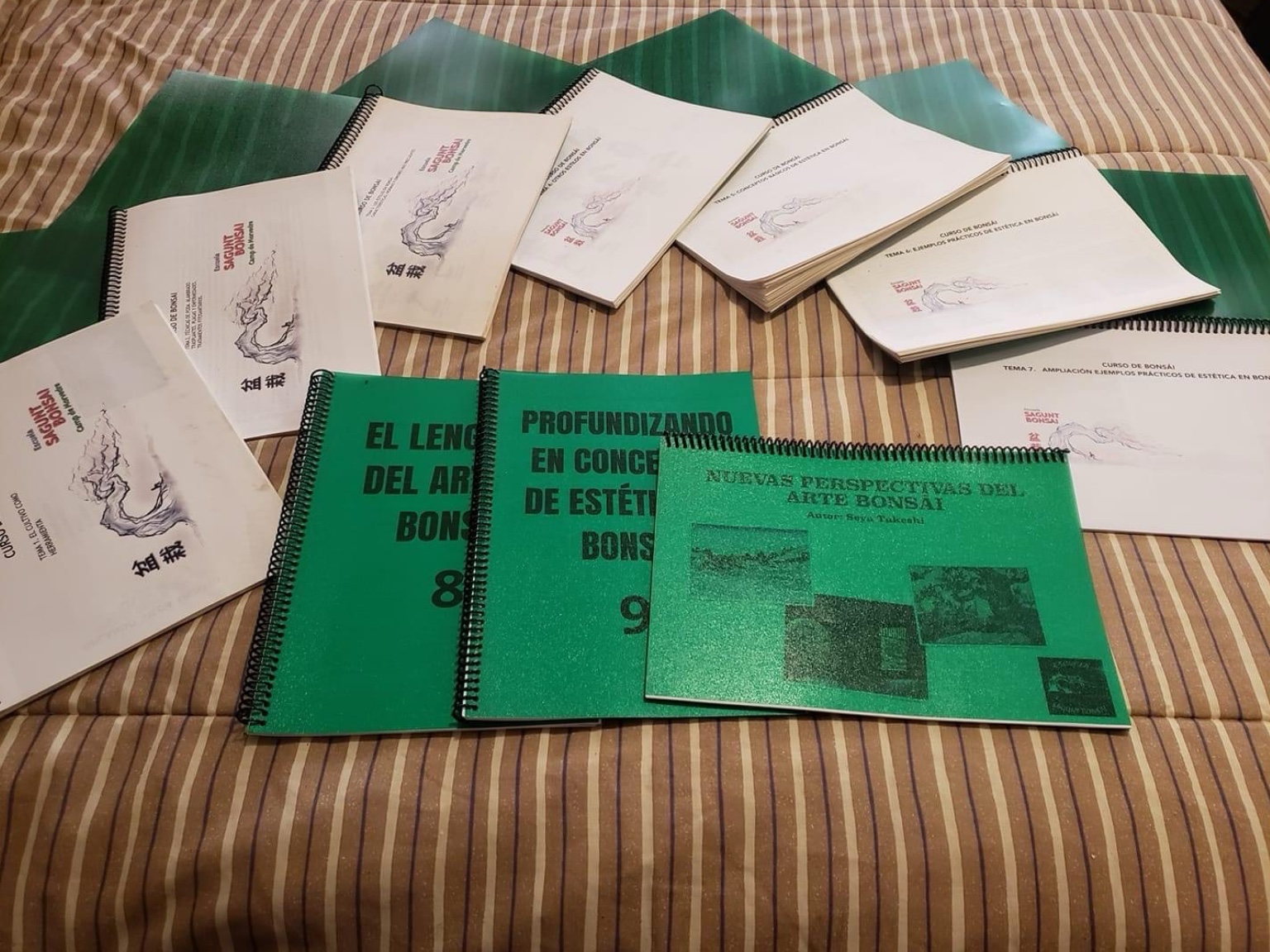
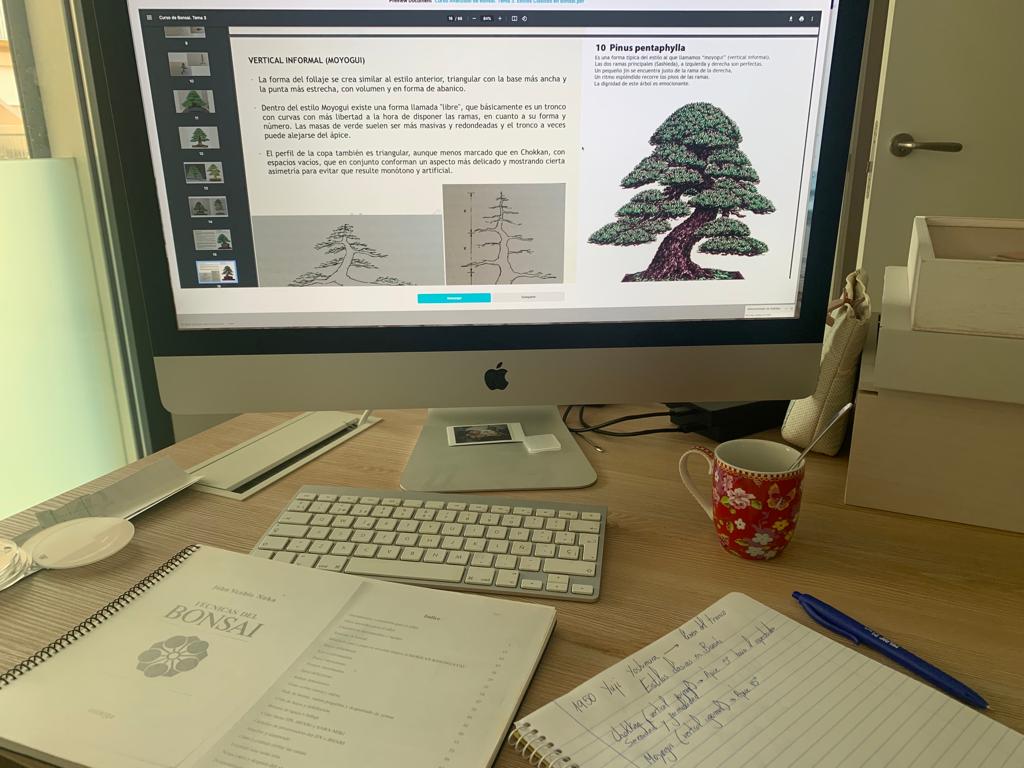
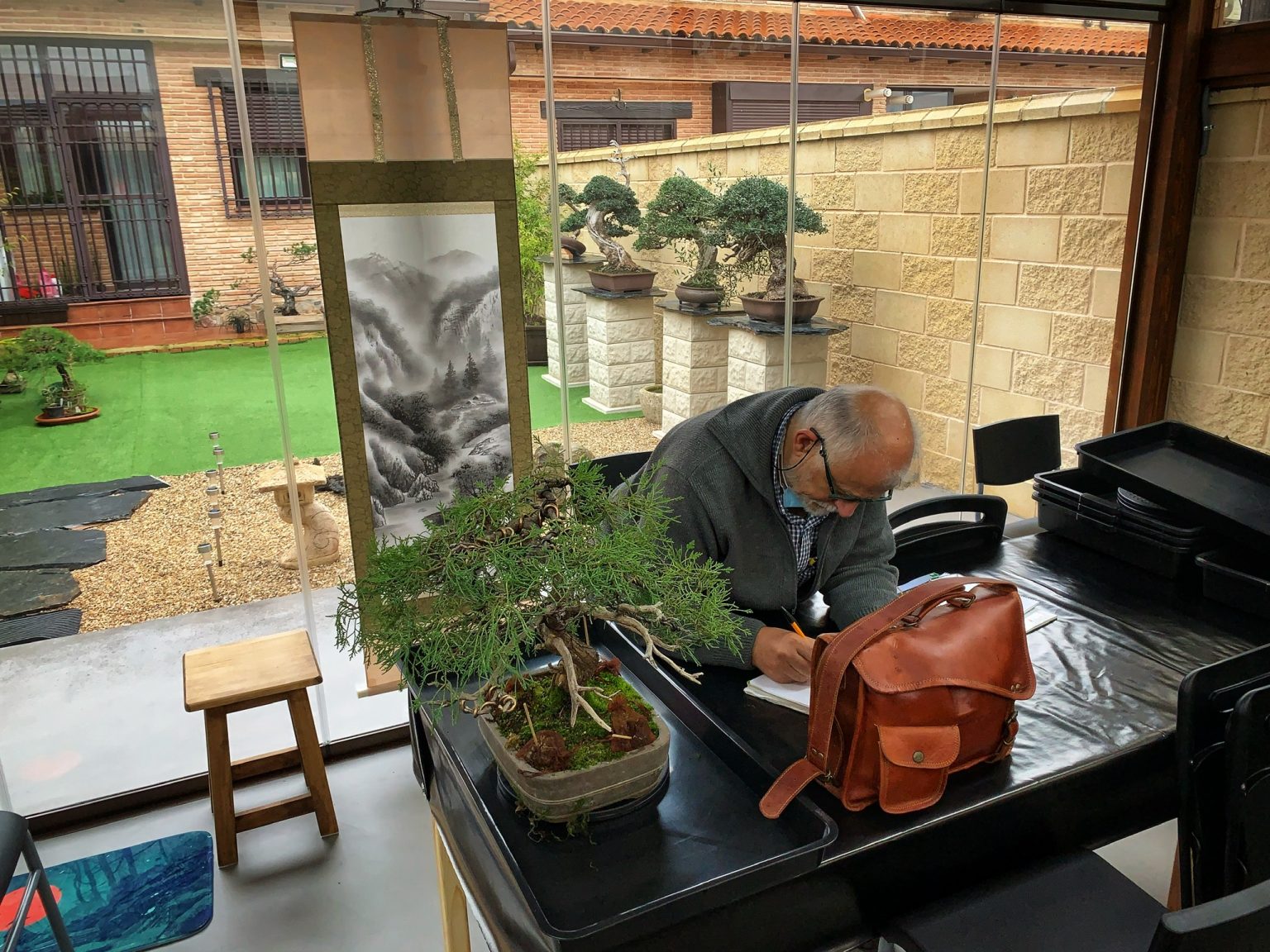
A Place of Learning
Spain and International · In Person and OnlineA place for those who wish to deepen their understanding of bonsai and suiseki from an artistic, cultural, and traditional perspective.
Beyond technical instruction, the school offers a way of observing and understanding nature through traditional Japanese arts, cultivating a deeper awareness of landscape, time, and the expression of nature.
Instruction is provided through in-person sessions and online study programs, open to students from Spain as well as other countries.
The program is grounded in observation, sustained practice, and the gradual understanding of the aesthetic principles that underlie bonsai and suiseki, while always respecting their cultural and historical context.
Nature · Study · Transmission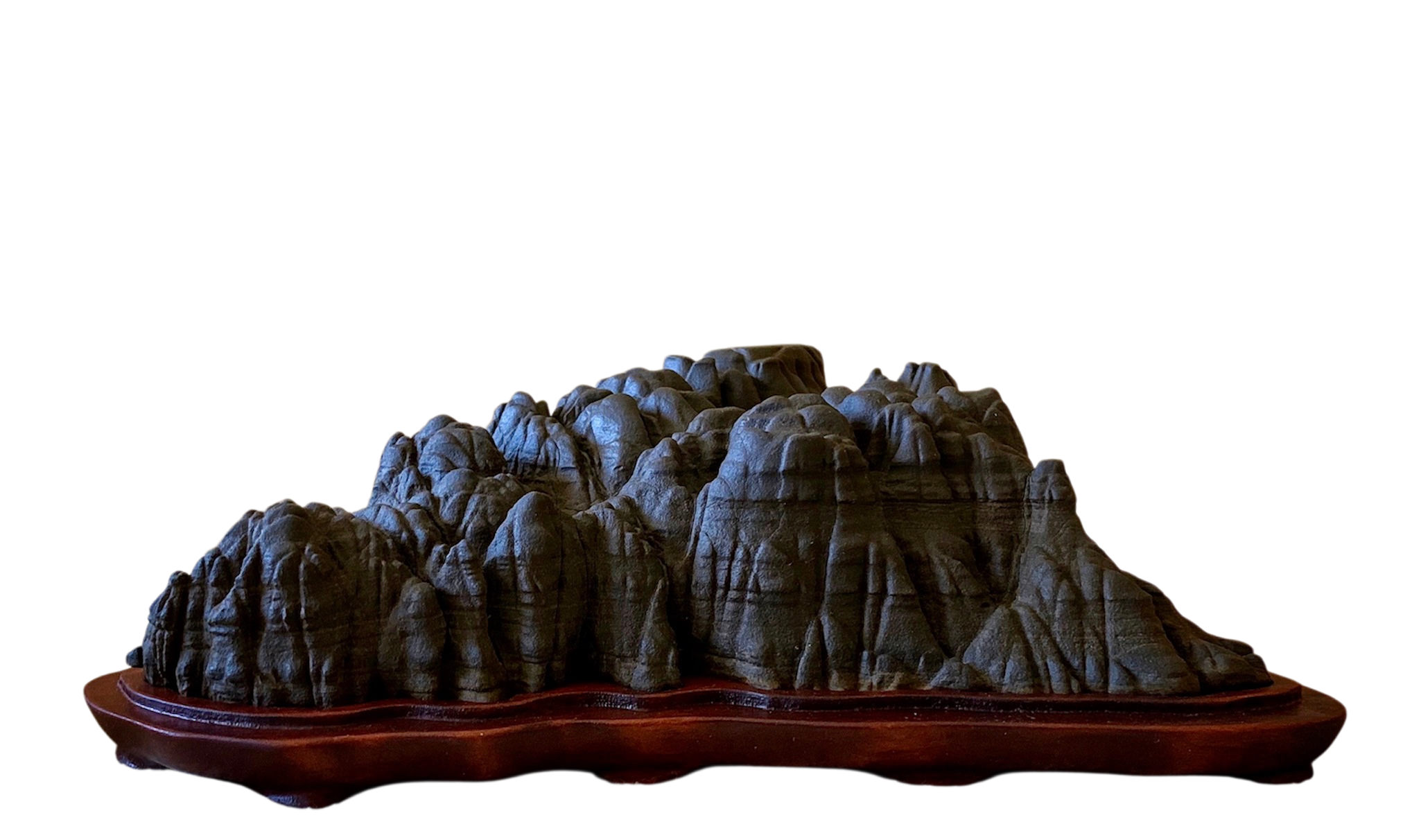
Two Paths, One Journey
Two training programs designed for those who wish to deepen their understanding of the art of bonsai from an artistic, cultural, and traditional perspective, integrating technique, aesthetics, and Japanese thought into a unified course of study. Programs are offered both in person and online, welcoming students from Spain and throughout Europe and the Americas.
In-person study in Spain is intended for those who aspire to the artistic standards represented by the Kokufu-Ten, through a rigorous aesthetic approach deeply rooted in Japanese tradition.
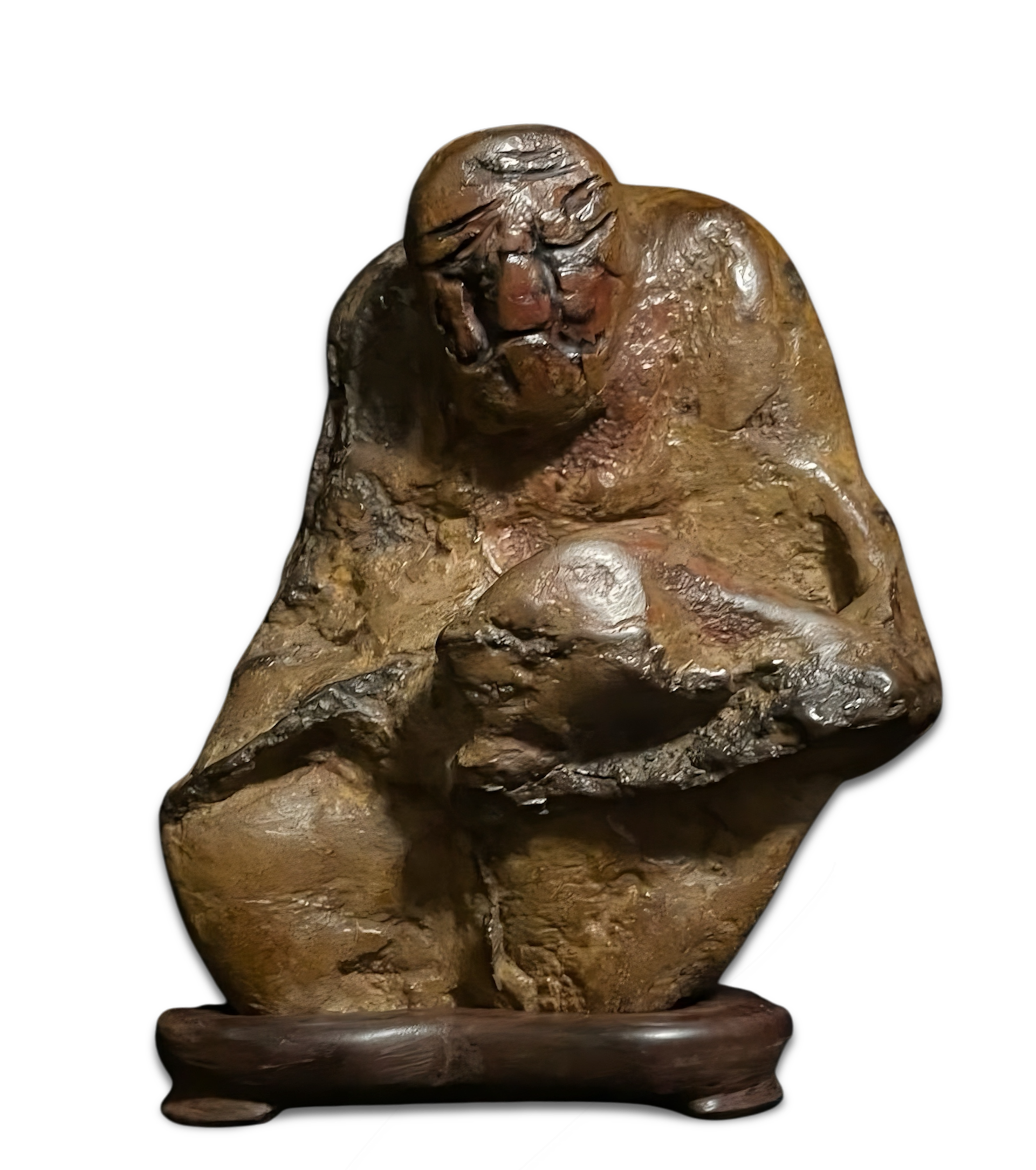
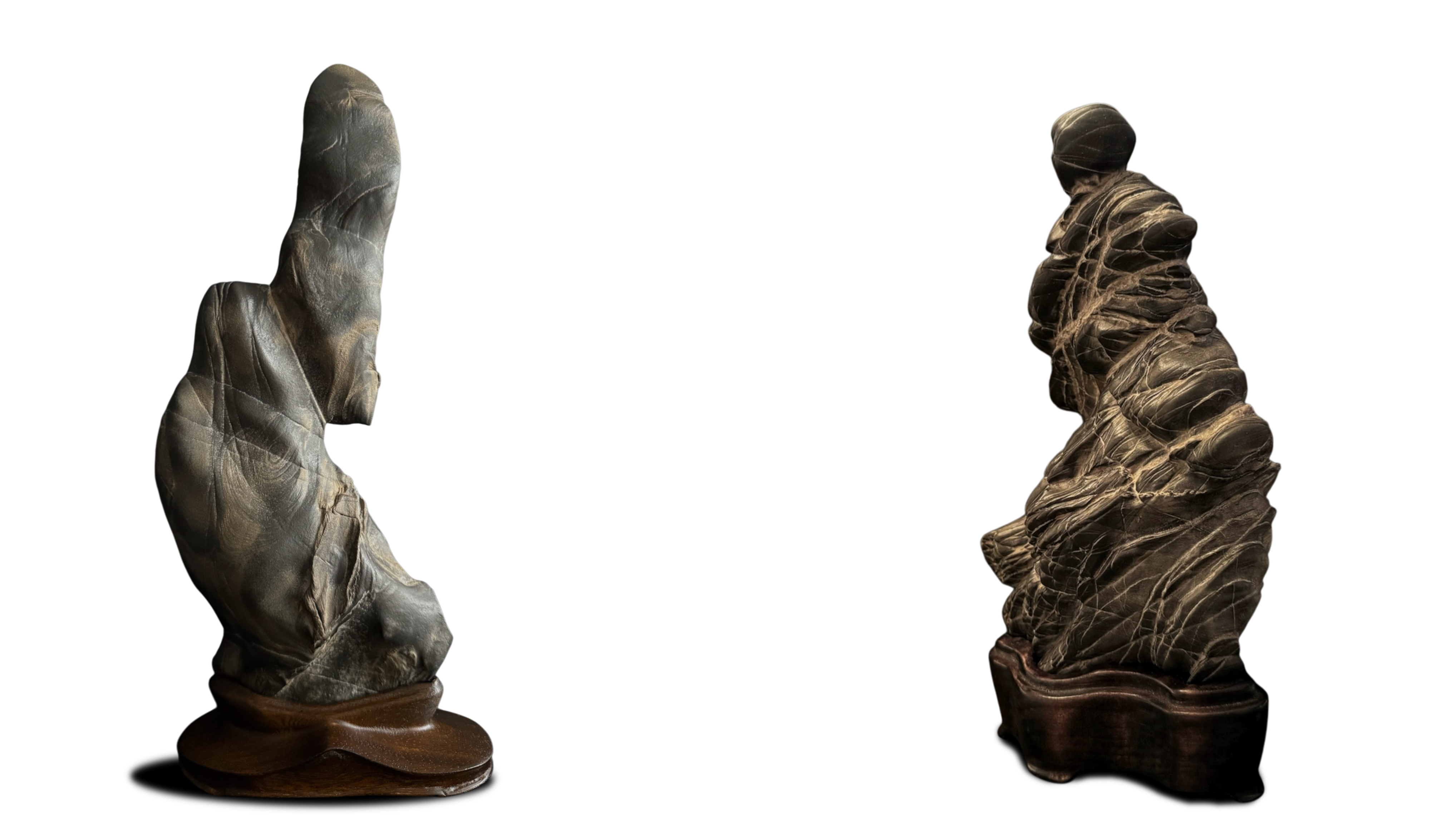
-
Container cultivation imposes physiological constraints that have nothing to do with garden or ornamental plant growing: limited root volume, precise water management and constant vigor control. The topic covers the specific needs of the tree in a pot—reading water demand by species, vegetative state and environmental conditions; water quality and pH; physical-chemical properties of bonsai substrates; correcting nutritional deficiencies; fertilizing programs using solid organic, liquid organic and chemical fertilizers—as well as proper placement of specimens, species selection suited to each climate and arrangement on display benches. The aim is to master the three or four fundamental guidelines that determine 95% of cultivation success, with special attention to managing residual moisture, the main cause of bonsai pathologies.
-
Direct intervention techniques applied to the tree, studied from both agronomic and artistic standpoints. Structural and refinement pruning; selective pinching for growth control; partial and full defoliation—purpose, timing, and candidate species. Wiring with copper and aluminum: theoretical application model, execution, correct tension by branch thickness, timing, and precautions to avoid marks. Repotting: optimum timing by species, root treatment and pruning, substrate reduction or replacement, correct anchoring of the tree in the pot and post-repotting care. Identification of the main bonsai pests and diseases; types of plant protection products (systemic and contact); preventive and curative treatment strategies, with examples of common pathologies and action protocols.
-
The five classical styles—classified according to the degree of trunk inclination from vertical—are not taxonomic categories but formal models reproducing at reduced scale the shapes trees take in nature in response to their growing conditions: climate, exposure, altitude, species. This topic explores in depth the design principles of each style: reading trunk movement, branch distribution, nebari construction and apex projection. Understanding the basis of each form is the first step toward designing a bonsai with visual and botanical coherence.
-
Applying the same criteria as the previous topic, this unit explores in depth the remaining styles recognized by Japanese tradition—those which, though less common in exhibition contexts, are often the most appropriate expression for a starting material with distinctive morphological characteristics. Knowing them and being able to read when the tree calls for them is as important as mastering the canonical styles. The choice of style is not a personal preference, but a response to the form latent within the tree’s own structure.
-
Reproducing the forms of natural trees to scale is a necessary condition, but not a sufficient one: a tree may be correctly designed and still lack aesthetic power. Elevating a bonsai to the artistic dimension requires mastering a set of concepts that act directly on the viewer’s visual perception. In this topic—the most dense and fundamental of the five aesthetic topics in the course—the principles that make a bonsai visually powerful are studied: dynamic balance, management of negative space, and asymmetry as a tool for naturalness and age. The difference between specialized horticulture and bonsai art lies precisely in mastering these elements.
-
This topic expands on theoretical concepts that, due to their complexity, could not be incorporated in the previous topic without compromising its density. It also includes an extensive practical section of visual analysis of specific specimens: the student learns to read how aesthetic elements articulate, interrelate, and reinforce one another in a real tree. Visual understanding of aesthetics—seeing in the tree what was previously only understood theoretically—is the qualitative leap this topic aims to consolidate.
-
Development of aesthetic concepts at a higher degree of abstraction which, precisely because of this, are capable of refining design to levels that more obvious principles cannot reach. This topic continues and deepens the line of the previous one: new ideas, new analytical angles and new specimens to consolidate an increasingly refined and autonomous aesthetic vision. The aim is for the student to begin developing their own personal standard, derived not from imitation but from genuine understanding.
-
A monographic topic on Seya Takeshi, one of the great Japanese masters—and one of the least known outside Japan—who conducted an exhaustive, systematic, and descriptive analysis of the factors that determine the beauty of a bonsai. His research led him to identify three fundamental axes: dynamic balance, which in trees that possess it generates greater visual attraction; the management of negative space, understood not as absence but as an active element of the composition; and asymmetry as an instrument for conveying naturalness and age, qualities that trees acquire in nature under the influence of the elements and adversity. Mastery of these three principles defines the difference between a well-formed tree and a bonsai that speaks.
-
Consolidation and extension of the concepts developed in previous topics through comparative visual analysis of a wide selection of trees. The student trains their eye to identify with precision the elements that raise—or limit—the aesthetic dimension of each specimen, developing their own critical vocabulary that allows them to analyze, correct, and project their own designs from understanding rather than intuition.
-
Development of the highest-abstraction aesthetic concepts: those which, precisely because they are not immediately visible or easily codified, have the power to elevate design to levels that more direct principles cannot reach. New ideas, new analytical angles and new reference specimens to continue refining the eye and consolidating an increasingly autonomous aesthetic vision. The aim is for the student to be able to perceive, name, and apply elements of beauty that they previously only felt without knowing how to articulate.
-
A complete treatise on the art of kazari at every level: tokonoma composition principles, hierarchy, and relationship between elements (bonsai, suiseki, kakejiku, shitakusa, tenpai), seasonal reading, compositional formality according to the shin-gyō-sō system and the aesthetic criteria at the foundations of Kazari. Kazari is not decoration: it is the art of creating a space that invites contemplation and conveys the spirit of a season and a moment.
-
Expansion of the concepts and ideas from the previous topic, with detailed analysis of real kazari compositions. The student studies how the various elements articulate in specific situations, what decisions make them more or less successful, and what formal, chromatic, and seasonal relationships between them determine the quality of the composition. The aim is to develop the ability to read and build a kazari composition with autonomy and sound judgment.
-
The Kokufu-Ten is the highest reference in Japanese bonsai. This topic works on the practical application of all the concepts learned—in the two style design topics and the five aesthetics topics—through detailed analysis of exhibition specimens. The student learns to read a Kokufu-Ten bonsai by precisely identifying the elements that determine its artistic level: design, proportion, nebari, branching, species character and aesthetic dimension. This practice of analysis is the most direct route to consolidating and refining everything learned.
-
Continuation of Kokufu-Ten specimen analysis with new trees and compositions. The work of topics 13 and 14 on the Kokufu-Ten is the equivalent of what in classical Japanese arts is called kata: the repeated and intentional practice on reference models to internalize principles until they become one’s own. Both topics together form the closing stage of the course and direct preparation for the final evaluation session.
-
A two-hour online session with the teacher, both evaluative and formative in character. The student is presented with photographs of Kokufu-Ten bonsai and kazari compositions to analyze orally at the level of design and aesthetics. The teacher evaluates not to grade, but to identify what has been solidly absorbed, what is mastered but not yet precisely articulated and what points require reinforcement. Based on that reading, they correct, refine, expand, and work with the student on what is still unseen or unclearly expressed. It is a guided review class, a synthesis and consolidation of the entire course.
Would you like to begin this path of study? Each student follows an individual path. The program adapts to each student’s level, goals, and prior experience, while always maintaining the same guiding principle: understanding bonsai as an artistic and cultural discipline, rather than merely a cultivation technique.
-
It is not possible to work on a tree without understanding how it functions. This topic begins with plant physiology as applied to bonsai: tree anatomy, how the vascular system works, seasonal cycles and the response to water and mechanical stress. The concept of energy occupies a central place: where and how the tree produces it, how it moves it and how it manages it. Without that knowledge, any pruning, pinching or defoliation is blind, because all of them directly affect the tree’s ability to generate and manage its reserves. Fertilizing is studied as a precision tool in the service of controlled vigor: types of fertilizers (solid organic, liquid, and mineral), dosage, schedule, and adaptation according to species, vegetative state and cultivation goal.
-
At master’s level, the study of pests, diseases, and plant-protection products goes beyond basic identification. The topic delves into the classification of the main pathogens and vectors affecting bonsai, their life cycles, favorable development conditions and differential diagnostic symptoms. It covers the different types of plant-protection products—systemic, contact, preventive, and curative—their mechanisms of action, compatibilities, and limitations, as well as the criteria for designing an integrated protection program that preserves the health of the tree, the quality of the substrate and the surrounding growing environment.
-
A complete monograph on the most highly valued and demanding plant group in Japanese tradition. It examines in depth the specific physiology of potted conifers, their cultivation needs, repotting timing and criteria, fertilizing programs and particular shaping and refinement techniques: metsumi, mekiri, mekaki, hagari, and their variants by species. It also covers branch construction in pines, junipers, and cypresses, with specific criteria for each group, and the aesthetic reading of their distinctive formal qualities. Conifers have their own language: learning it is a condition for being able to work them with rigor.
-
Deciduous trees demand very precise technical mastery because their four seasons are always on display: the nebari and trunk in winter, the unfolding of foliage in spring, the canopy in summer and the autumn color. The topic thoroughly covers pruning, wiring, pinching, and defoliation techniques, with special attention to developing and refining ramification according to the vigor of each species: differentiated techniques for species of strong and moderate vigor, alternate-leaved and opposite-leaved species, and specific criteria for the deciduous trees most referenced in Japanese tradition—maple, elm, hornbeam, zelkova, among others. Building a fine, balanced, and aesthetically coherent branch structure is the central goal of this topic.
-
Evergreen and tropical species display physiological behavior different from that of deciduous trees and temperate-climate conifers, which requires adapting all cultivation criteria and working techniques. The topic examines how to modify repotting, fertilizing, watering, and vigor-management programs for this group of species, and how to coherently apply shaping and refinement techniques to material that has no marked winter dormancy or that responds differently to pruning stress. The aim is to broaden the student’s technical repertoire beyond the classical Japanese groups and equip them with the criteria needed to work rigorously on any species.
-
Flowering and fruiting species are enjoyed precisely for their blossoms and fruit, which imposes a particular technical logic: many of the usual pruning, pinching, and defoliation operations must be adjusted or reoriented so as not to compromise those physiological phases. The topic covers the specific cultivation and management criteria for this group, the appropriate timing of intervention according to each species’ flowering cycle, and the shaping strategies that allow a strong aesthetic design to be built without sacrificing flowering or fruit set. Flowering and fruiting bonsai are also among the most direct expressions of the passing of the seasons.
-
Two long-form video modules—around three hours each—devoted entirely to the aesthetic analysis of Kokufu-Ten trees. The teacher analyzes in depth a selection of reference specimens, identifying and explaining how the aesthetic principles studied throughout the course manifest in each tree: design, proportion, species character, dynamic balance, management of space and the qualities of the nebari and branching. This sustained visual analysis is the most effective way to internalize aesthetic concepts and begin seeing them in one’s own trees.
-
Two video modules of between two and three hours devoted to the analysis of kazari compositions. The teacher breaks down real compositions—from the Kokufu-Ten and other benchmark exhibition contexts—explaining in detail the decisions that shape them: the relationship between the main bonsai and the accompanying elements, seasonal reading, the formality of the composition, the visual dialogue between objects and the selection criteria specific to Kazari. The aim is for the student to understand how a high-level kazari composition is built and to begin developing their own with independent judgment.
-
The pot is not a container—it is part of the work. This monograph covers everything needed to choose the right pot for each bonsai: shapes—rectangular, oval, round, hexagonal—glazed and unglazed finishes, colors, textures, proportions, foot and rim details, and the characteristics that define the character and formality of each piece. It also examines the criteria for the formal relationship between tree and pot—shibui—that allow the choice of container to enhance the tree’s beauty rather than compete with it. The student learns to read a pot and to decide with well-founded aesthetic judgment.
-
A monograph on the most demanding and visually striking techniques in Japanese tradition: jin, shari, sabamiki, tanuki, and other interventions of high technical and aesthetic complexity. Each one is studied in depth: rationale, criteria for application, execution, aftercare, and aesthetic reading. These techniques are not decorative devices: they are tools for expressing the passage of time, the tree’s struggle with the elements, the memory of the landscape. Applied without judgment they look artificial; applied with rigor, they give a compromised or difficult tree an artistic dimension that no other technique can achieve.
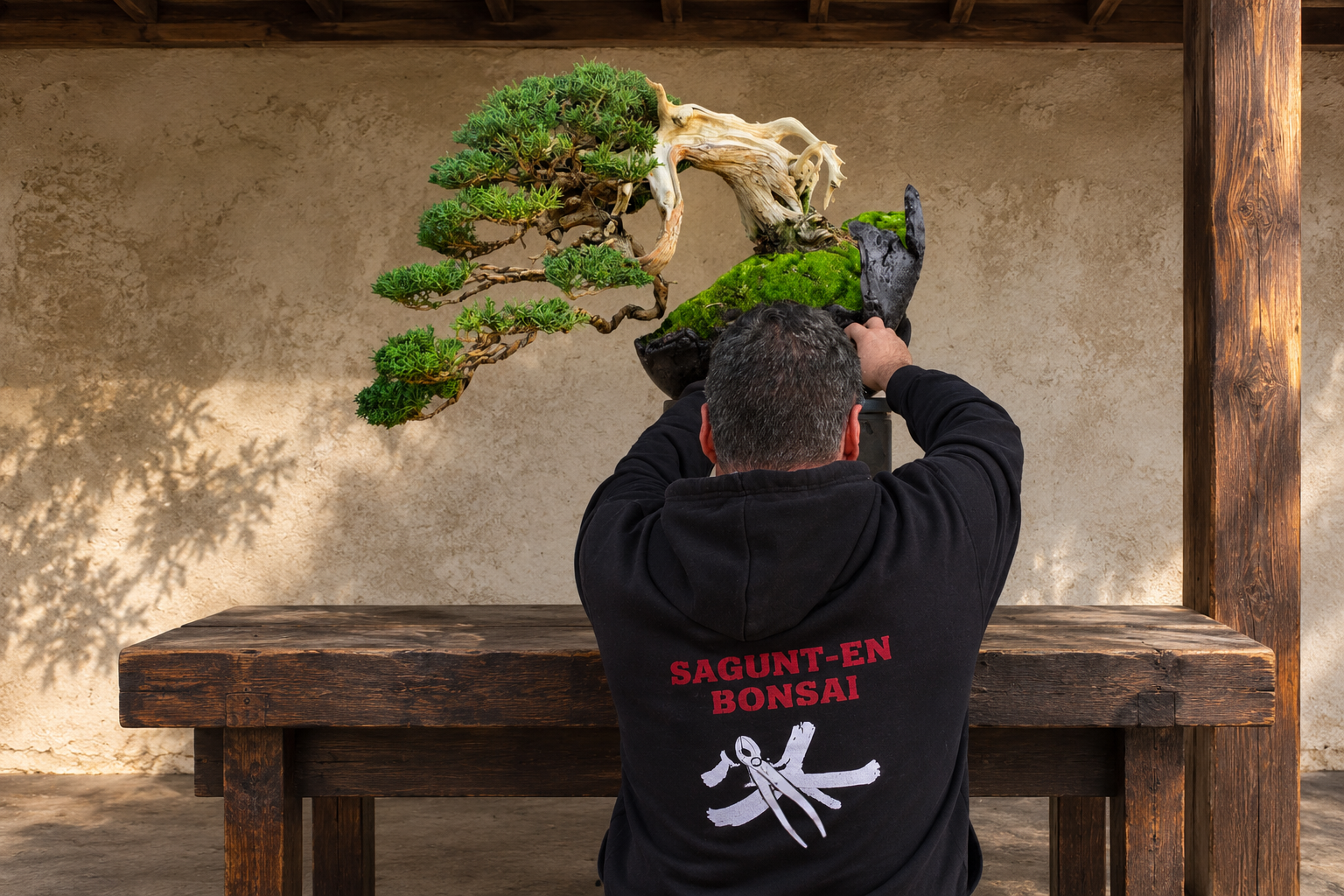
Teaching and Professional Career
Director and master of the Sagunt-En School, dedicated exclusively and full-time to the teaching of bonsai and suiseki for more than a decade. Students from Spain, Portugal, Italy, and virtually every country in Central and South America.
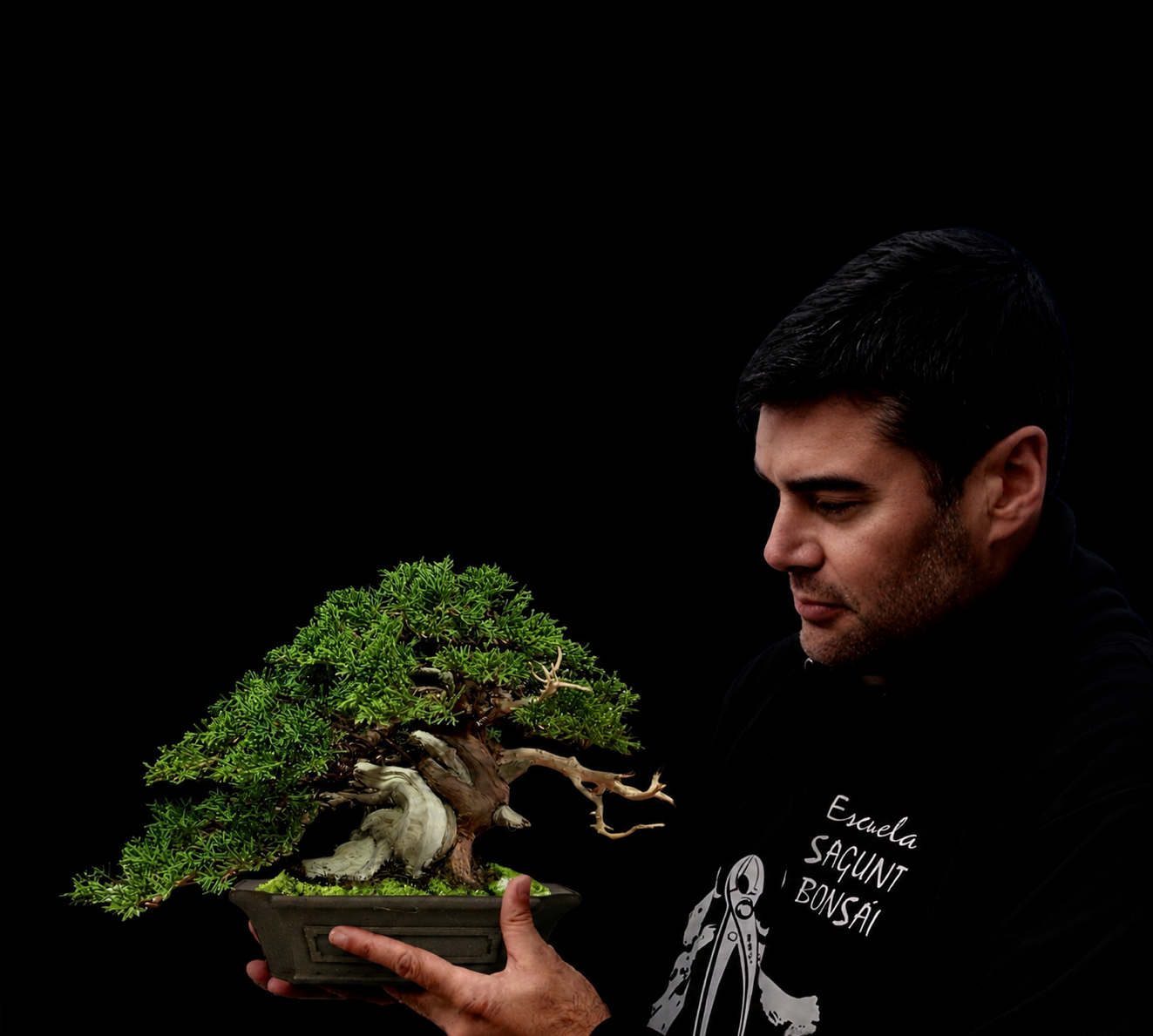
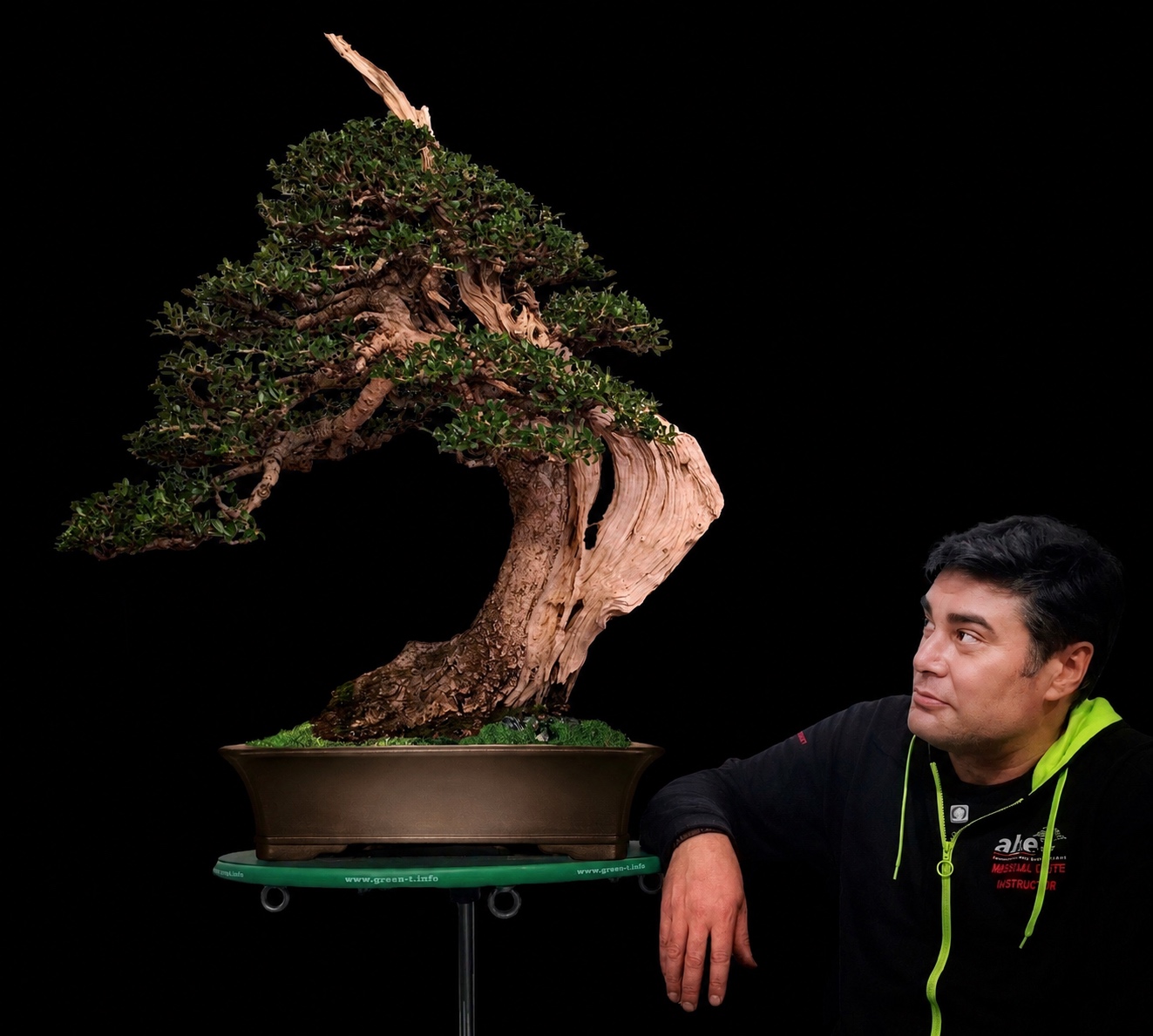
Years of bonsai
More than two decades dedicated to the practice and refinement of bonsai specimens.
Years of suiseki
A personal collection of more than one hundred pieces, including several of exceptional quality.
Years of distance study
First graduate of the Bonsai Academy: personalized, direct study under the guidance of the III Iemoto since 2022.
Shunkaen Diploma
International course completion certificate, hand-calligraphed by the III Iemoto.
一
Instructor
Asociación del Bonsái Español (ABE-AEB)

Professional Accreditation in Spain
I have been recognized as an Accredited Bonsai Instructor by the Asociación del Bonsái Español (ABE-AEB), a distinction awarded to professionals who demonstrate technical expertise, teaching experience, and a sustained commitment to bonsai education and outreach.
The Asociación del Bonsái Español (ABE-AEB) is one of Spain’s leading bonsai associations. Formed through the integration of the historic Asociación Española del Bonsái and the Asociación del Bonsái Español, it is currently the country’s largest bonsai organization by membership and one of the principal driving forces behind national conventions, exhibitions, and educational activities.
二
Instructor
Bonsai Clubs International (BCI)

Official Recognition within the International Instructor Program
I have been recognized as an International Bonsai Instructor by Bonsai Clubs International (BCI) through its Official Instructor Program, which recognizes professionals with established technical expertise, teaching ability, and a commitment to the advancement of bonsai education.
Founded in 1960, Bonsai Clubs International (BCI) is one of the world’s most respected organizations dedicated to bonsai and suiseki. For decades, it has promoted these arts internationally through conventions, specialized publications, educational programs, and collaboration among bonsai organizations across numerous countries.
三
Instructor
World Bonsai University (WBU)
Specialized Instruction at an International Private Institution
I am part of the international faculty of World Bonsai University, where I develop and teach specialized courses in some of the most advanced areas of bonsai, including design, aesthetics, Keidō, Kazari, advanced training techniques, refinement techniques, cultivation, and applied bonsai physiology.
As an instructor, I have developed comprehensive courses, specialized programs, and live masterclasses for students from different countries, presenting complex bonsai concepts through a structured, research-based, and technically rigorous methodology.
World Bonsai University is an international educational institution dedicated to advanced bonsai instruction, bringing together respected instructors and professionals to provide structured education based on Japanese tradition, technical excellence, and the worldwide dissemination of bonsai knowledge.
四
Artist
World Bonsai Artists Community (WORBAC)

Member of an International Collective of Contemporary Bonsai Artists
I have been recognized as an Artist within the World Bonsai Artists Community (WORBAC), an international organization founded by Robert Steven that brings together bonsai professionals and artists committed to a creative and artistic vision of bonsai.
The World Bonsai Artists Community (WORBAC) promotes international collaboration among bonsai artists, encouraging creativity, aesthetic sensitivity, and respect for the individual character of each tree. Through international events, exhibitions, and educational initiatives, it contributes to the worldwide development of bonsai as an artistic discipline.
五
Member
Nippon Bonsai Association (NBA)

Official Membership in Japan
I am a member of the Nippon Bonsai Association, one of Japan’s most respected organizations dedicated to the preservation and promotion of traditional bonsai.
The association plays a vital role in safeguarding Japan’s bonsai heritage by working closely with masters, professionals, and bonsai nurseries, while promoting activities that preserve and disseminate the technical, artistic, and cultural values of bonsai.
六
Editorial Contributor
Bonsái Actual

Editorial Collaboration in Technical Publishing
I was a member of the editorial team of Bonsái Actual, contributing to one of the most influential publications dedicated to bonsai education and outreach in the Spanish-speaking world.
For more than two decades, Bonsái Actual was the leading Spanish-language magazine devoted to bonsai. Its technical articles, feature reports, and in-depth studies helped educate several generations of enthusiasts and professionals. Although the magazine is no longer published, its historical archive remains one of the most valuable sources of bonsai knowledge ever produced in the Spanish language.
Conferences and Institutional Activities
Speaker at national and regional bonsai and suiseki congresses, with ongoing collaboration with associations, museums, and cultural institutions.
November 4–6, 2022 · Fuenlabrada (Madrid), National Congress of the Asociación del Bonsái Español (ABE-AEB) Kazari, the art of displaying bonsai +

Speaker at the National Congress of the Asociación del Bonsái Español (ABE-AEB), held in Fuenlabrada from November 4–6, 2022, presenting the lecture “Kazari, the Art of Displaying Bonsai,” within a program of conferences, bonsai exhibitions, and technical demonstrations. The lecture explored the aesthetic principles of traditional Japanese display, highlighting the relationship between bonsai, tokonoma, and accompanying elements within a balanced exhibition composition.
April 14–16, 2023 · Las Gabias (Granada), VIII Congreso Andaluz de Bonsái Hands-on bonsai workshop +

Guest master who conducted a hands-on bonsai workshop at the VIII Congreso Andaluz de Bonsái, held in Las Gabias (Granada) from April 14 to 16, 2023, organized by the Las Gabias Town Council and the Asociación Bonsái Alhambra. The workshop focused on the practical application of design principles, covering fundamental aspects of structure, balance, and aesthetic construction in bonsai through live demonstrations with attendees.
June 3, 2023 · Online, Liga Bonsái (Chile) Principles of design and aesthetics in the art of bonsai +

Online lecture on the principles of design and aesthetics in the art of bonsai, presented through Liga Bonsái, a Chilean organization dedicated to the promotion and teaching of bonsai through exhibitions, talks, and international seminars. The session brought together enthusiasts and practitioners from various Spanish-speaking countries, addressing compositional criteria, visual balance, and aesthetic language applicable to both the design and the appraisal of bonsai.
October 2023 · Bembibre, Val do Dubra (A Coruña), Congreso Galego de Bonsái Principles of design and aesthetics in the art of bonsai +

Speaker at the Congreso Galego de Bonsái, held in Bembibre (Val do Dubra, A Coruña) in October 2023, with the lecture “Principles of design and aesthetics in the art of bonsai,” within a leading national gathering featuring specialized lectures and live demonstrations. The lecture explored in depth the aesthetic foundations underlying bonsai design and their practical application in the creation and display of bonsai.
April 26–27, 2025 · Las Gabias (Granada), IX Congreso Andaluz de Bonsái y II Congreso Andaluz de Suiseki The Art of Displaying Suiseki +

Speaker at the IX Congreso Andaluz de Bonsái y II Congreso Andaluz de Suiseki, held in Las Gabias (Granada) on April 26 and 27, 2025, with the lecture “The Art of Displaying Suiseki,” organized by the Las Gabias Town Council and the Asociación Bonsái Alhambra. The lecture was devoted to the aesthetic and compositional principles of the traditional Japanese presentation of suiseki, examining the relationship between the stone, the daiza, the exhibition space, and accompanying elements.
March 2026 · CEART, Fuenlabrada (Madrid), Rokkon Shōjō(六根清浄)—International Meeting of Traditional Japanese Arts Guest master, official exhibition guide, and master of ceremonies for the official program +
Guest master, official guide for specialized tours of the bonsai and suiseki exhibition, and master of ceremonies for the official program, at a gathering that brought together bonsai, suiseki, ikebana, chadō, shodō, sumi-e, traditional music, and dance, without prizes or classifications. The program placed emphasis on the cultural and artistic dimension of the Japanese disciplines, fostering an experience of contemplation, cultural outreach, and exchange between practitioners and the public.

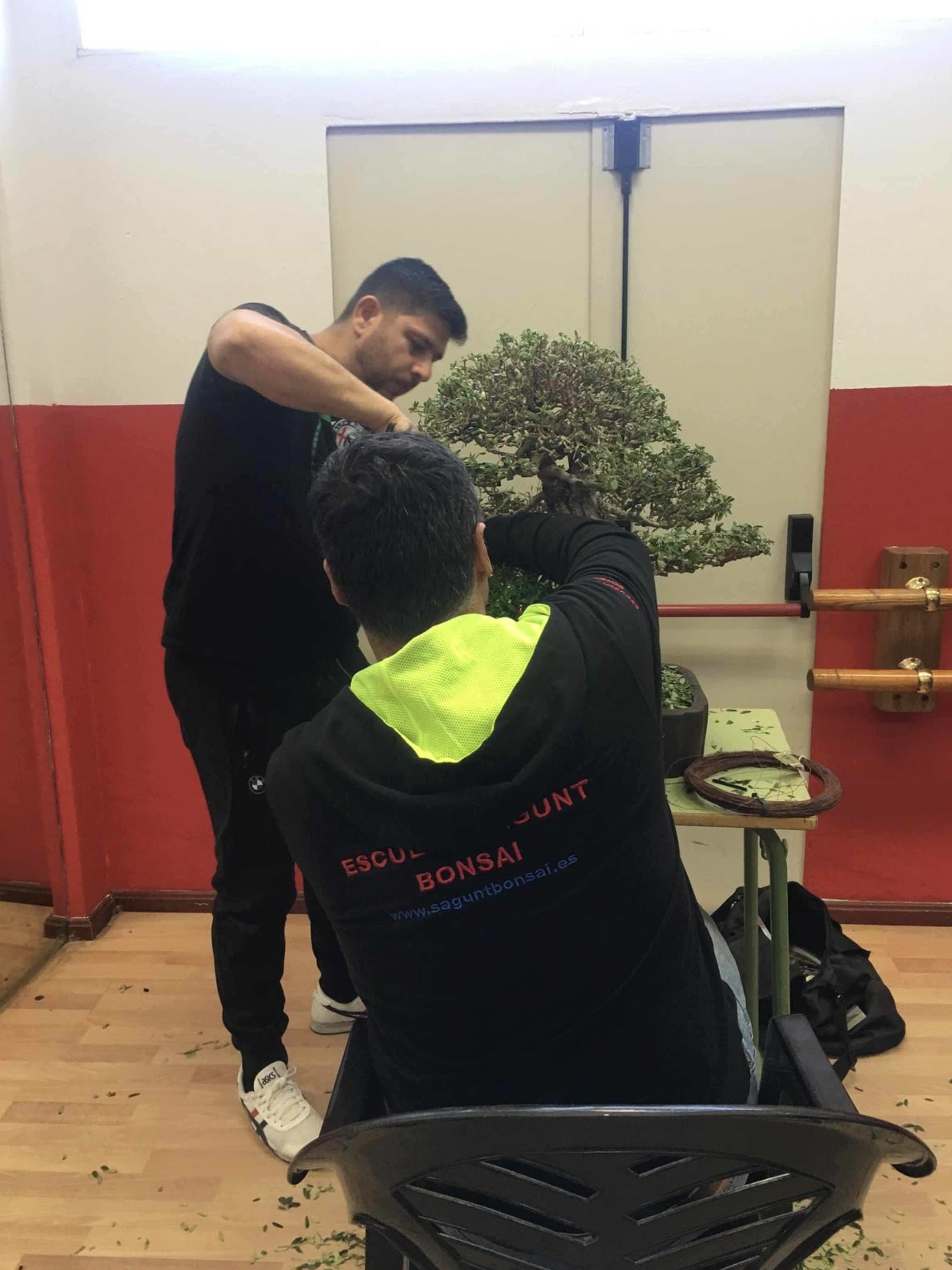
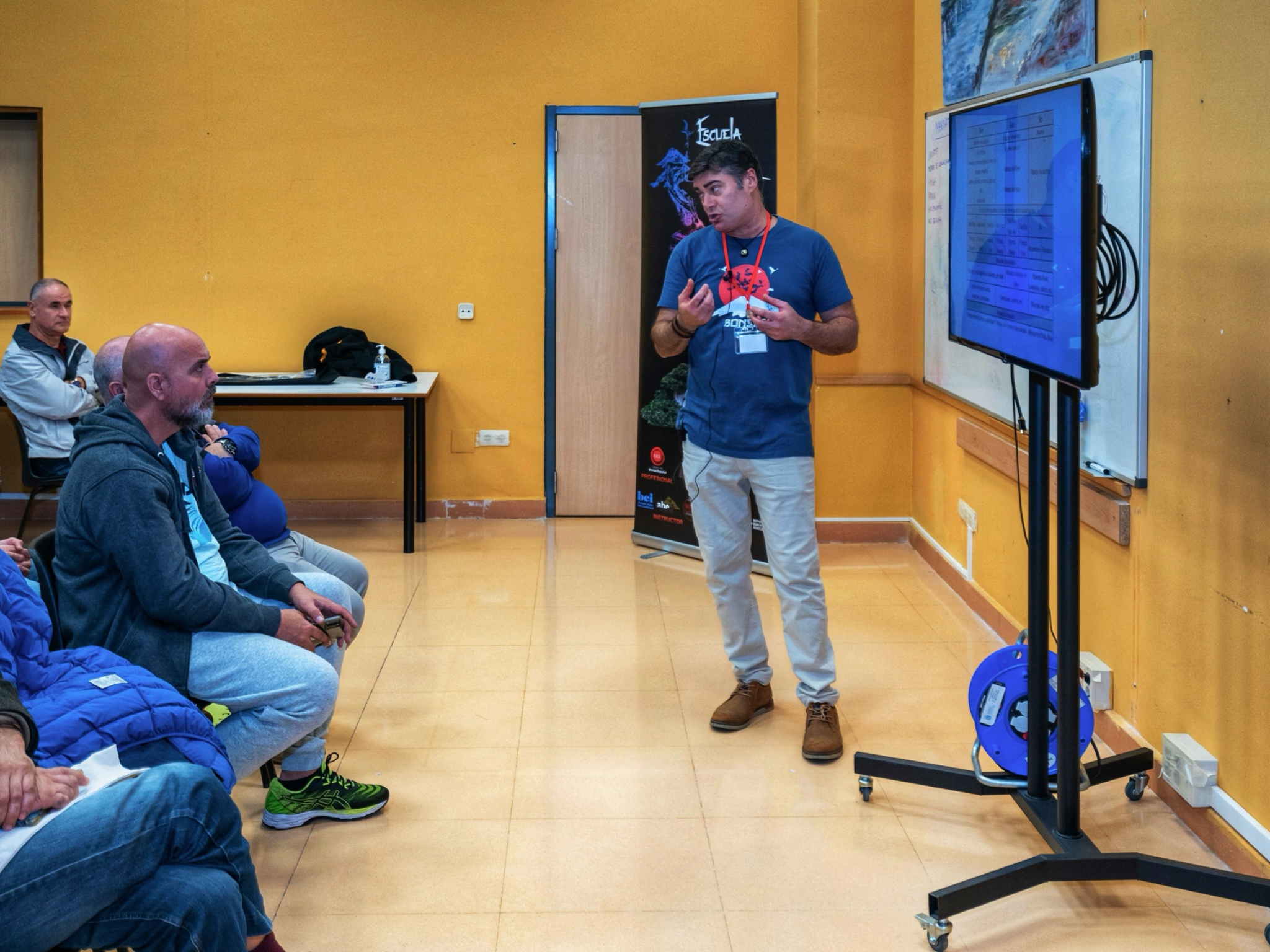
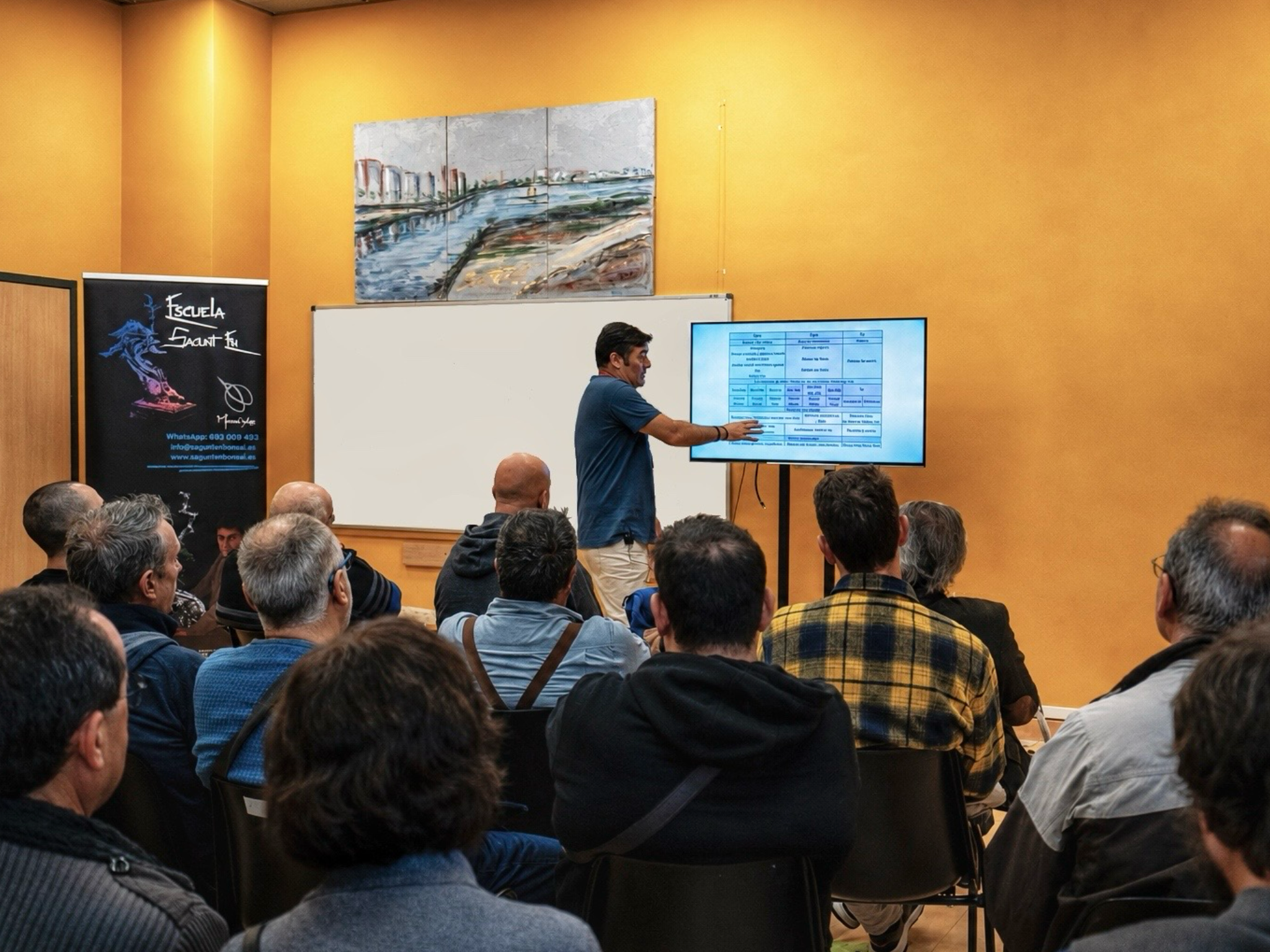
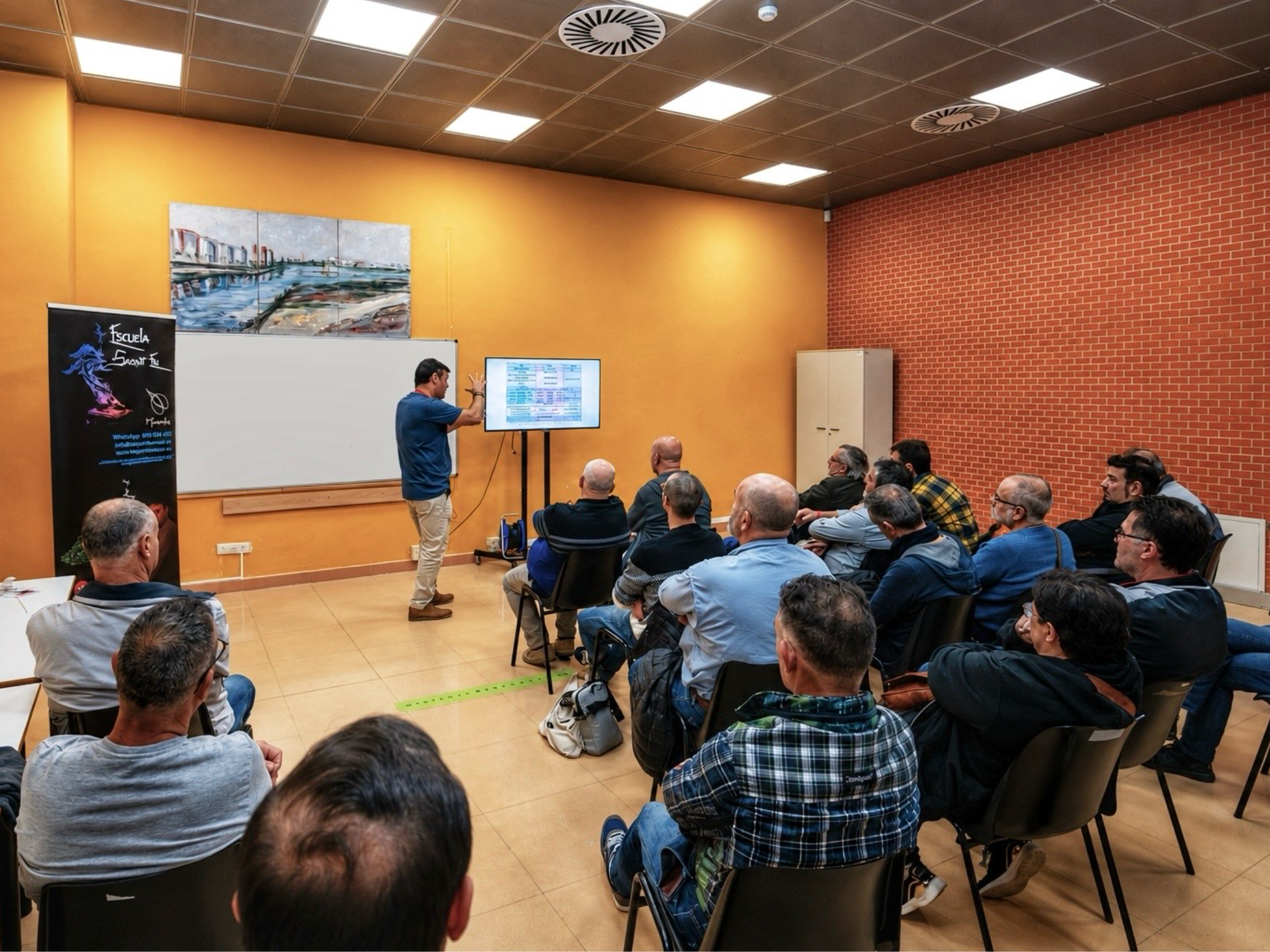
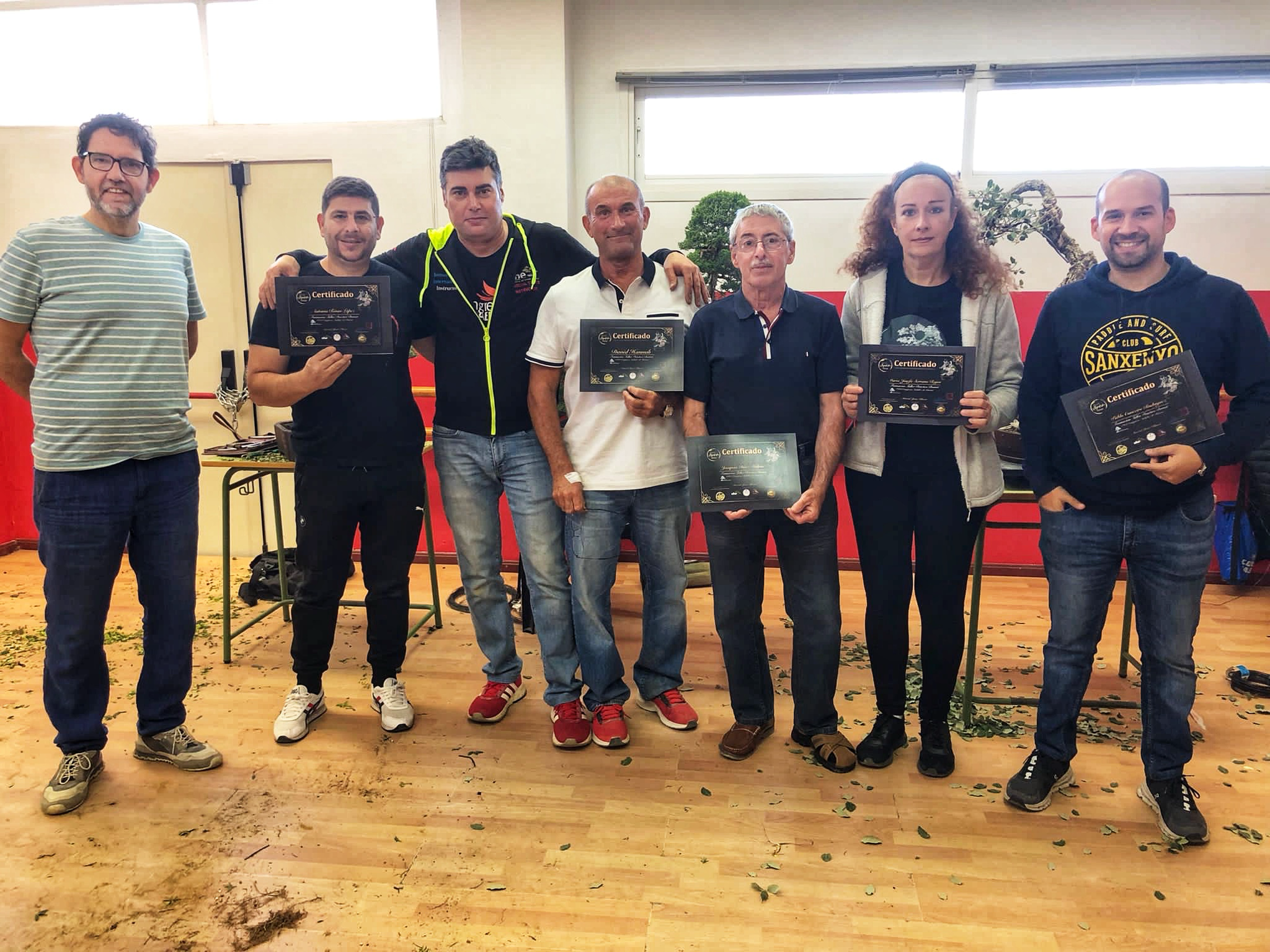
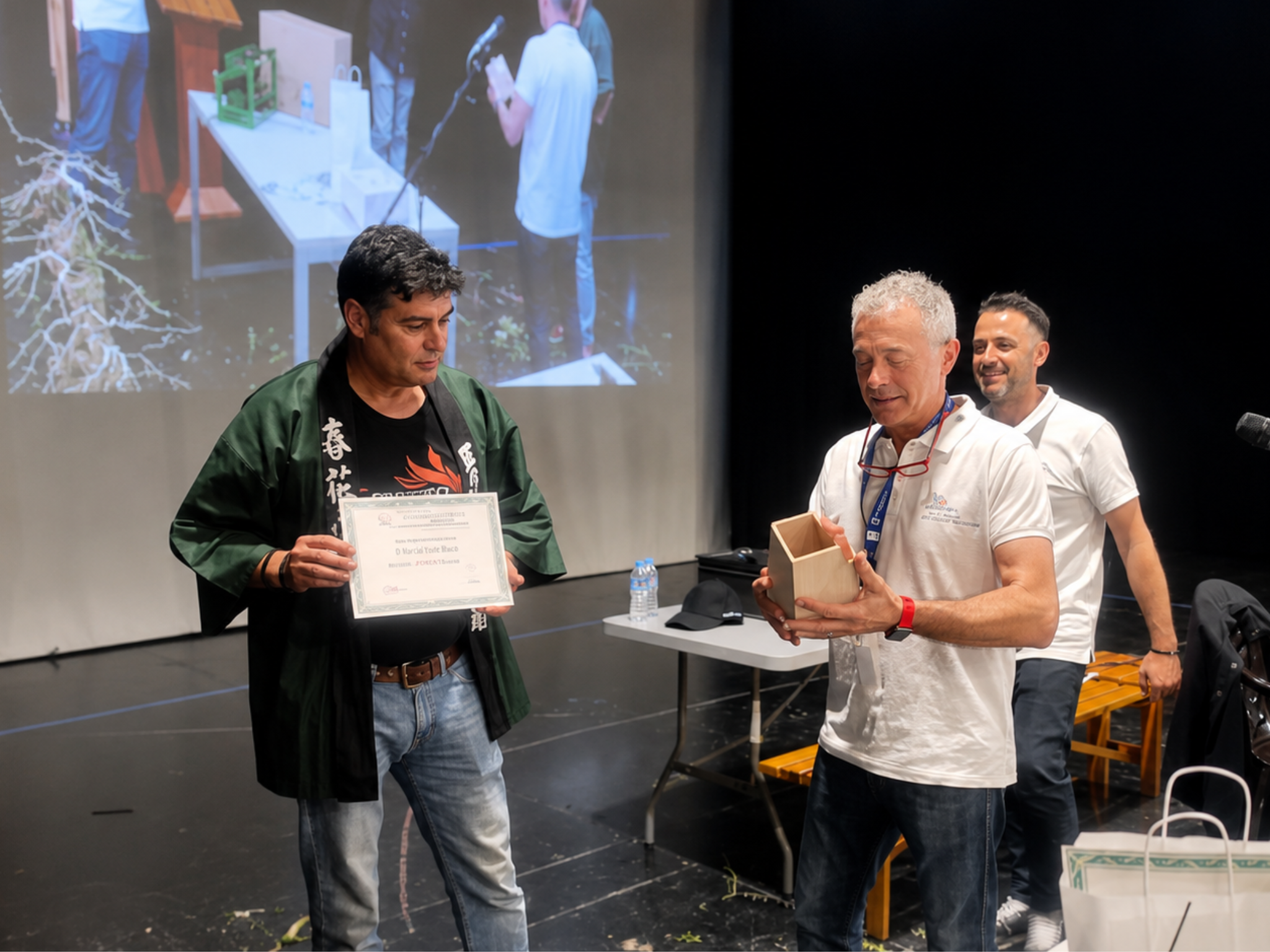

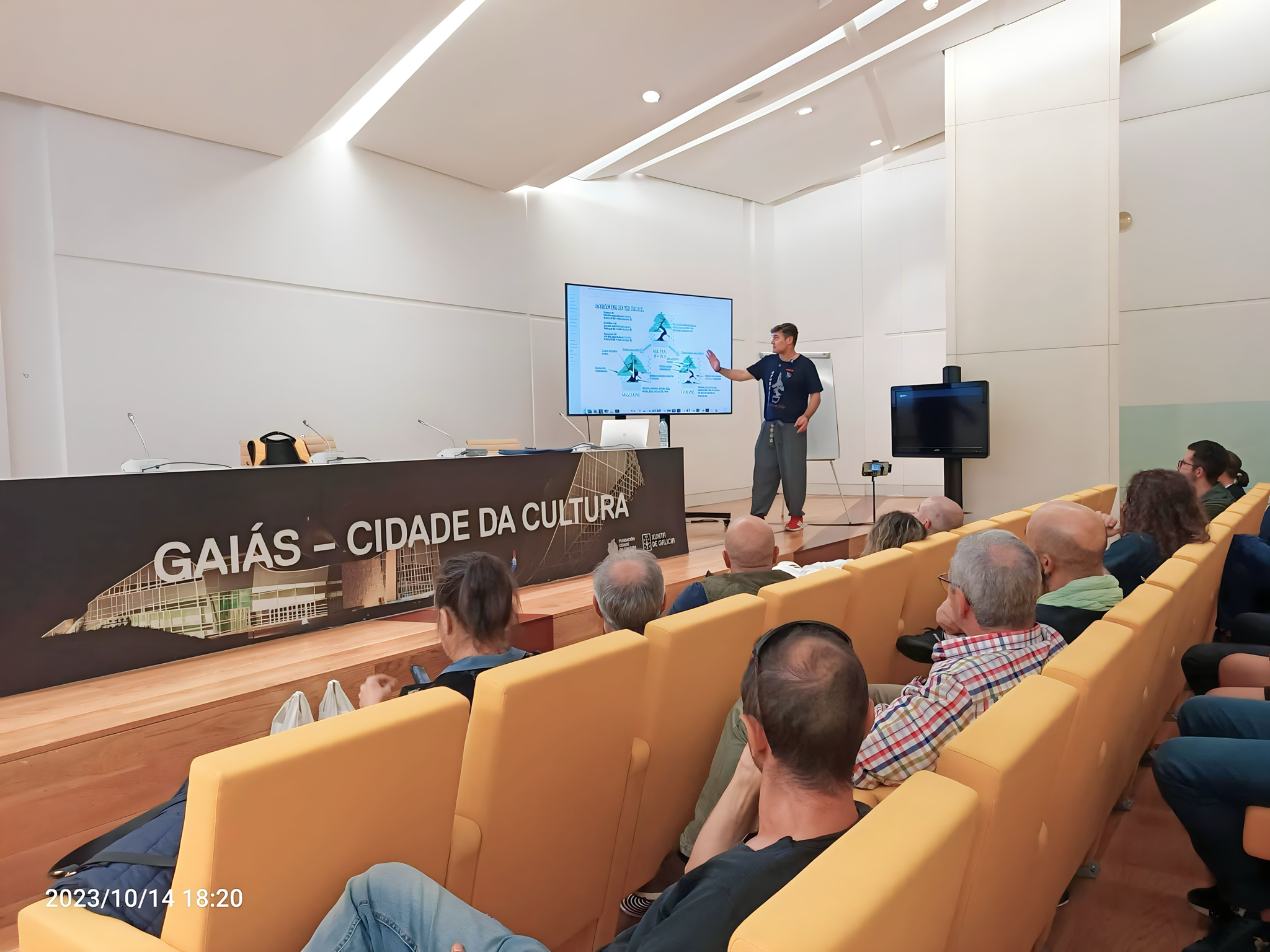
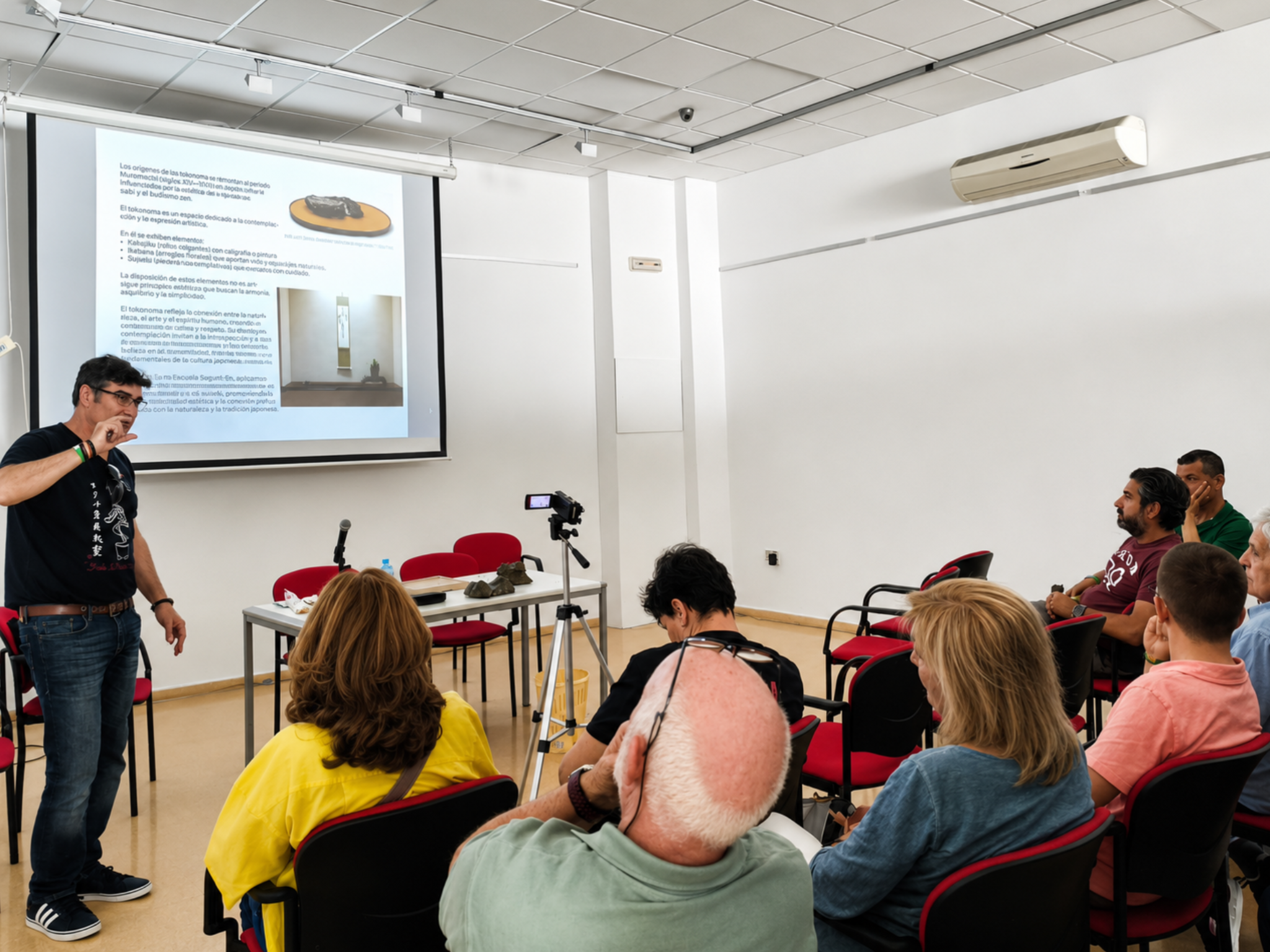
Rokkon Shōjō (六根清浄)
Speaker, exhibition guide, and master of ceremonies for the official program
Rokkon Shōjō—a Buddhist expression referring to the purification of the six senses—brought together bonsai, suiseki, ikebana, chadō, shodō, sumi-e, and traditional music and dance under a single program at CEART. Unlike the competitive exhibitions usual in bonsai, the gathering was conceived without prizes or classifications, as a unified showcase of traditional Japanese culture.
Participation
Invited by the organizers as a speaker for the official program, I led the guided visit to the bonsai and suiseki exhibition on the opening day, presenting to the public the historical, aesthetic, and philosophical foundations of both disciplines—empty space, wabi-sabi, and respect for nature.
I also served as master of ceremonies, presenting and conducting the program’s events, coordinating the panel discussions, and introducing the visiting Japanese artists.
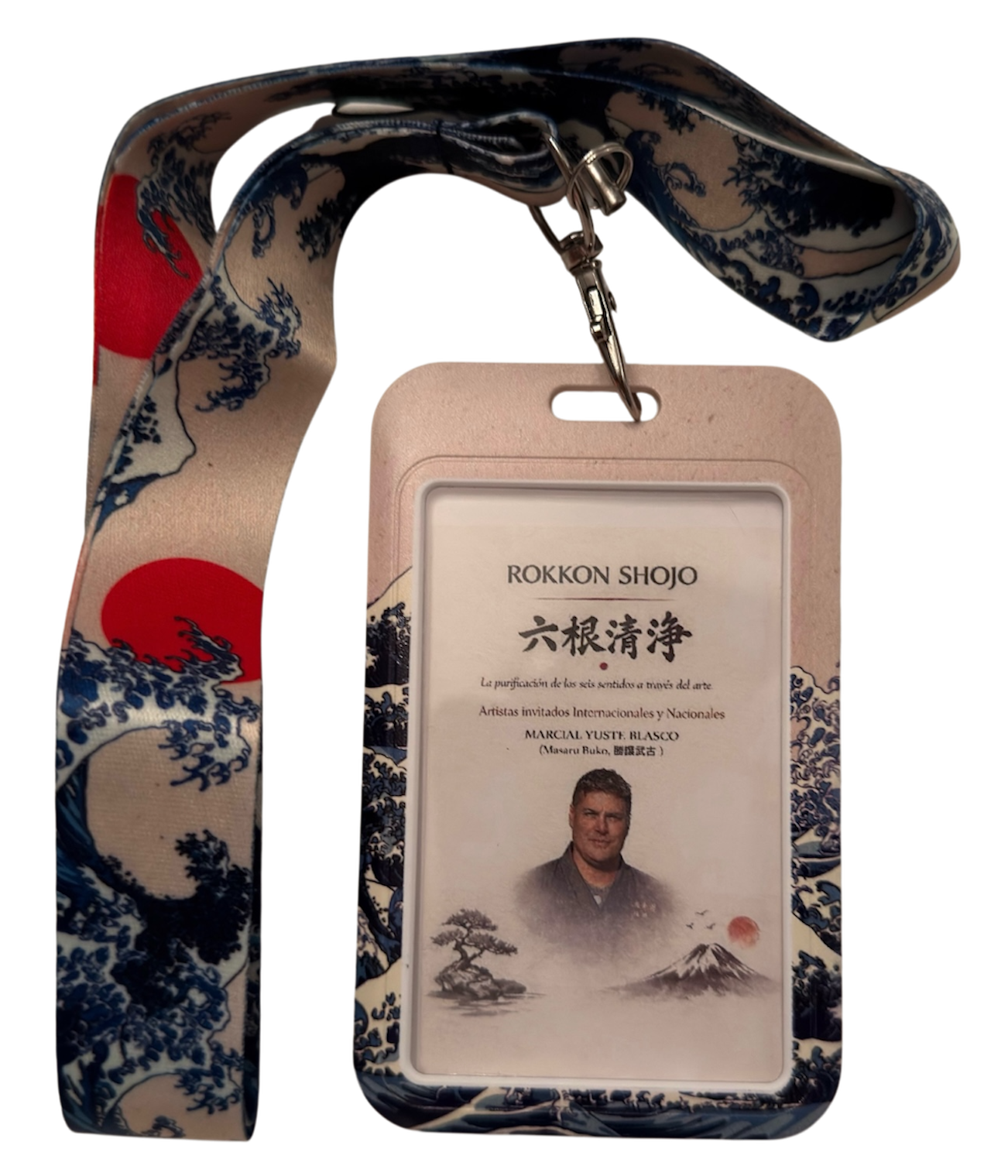
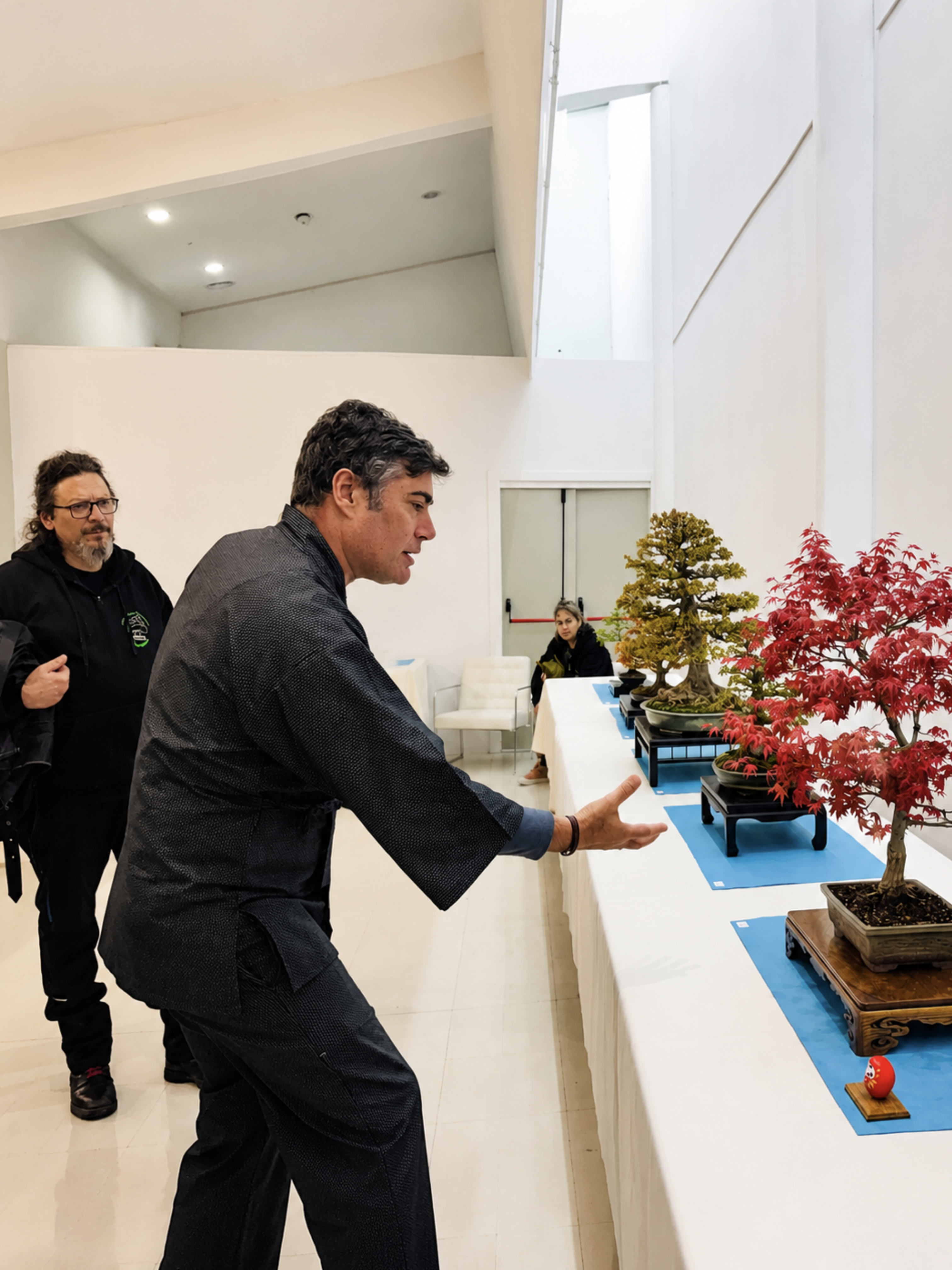
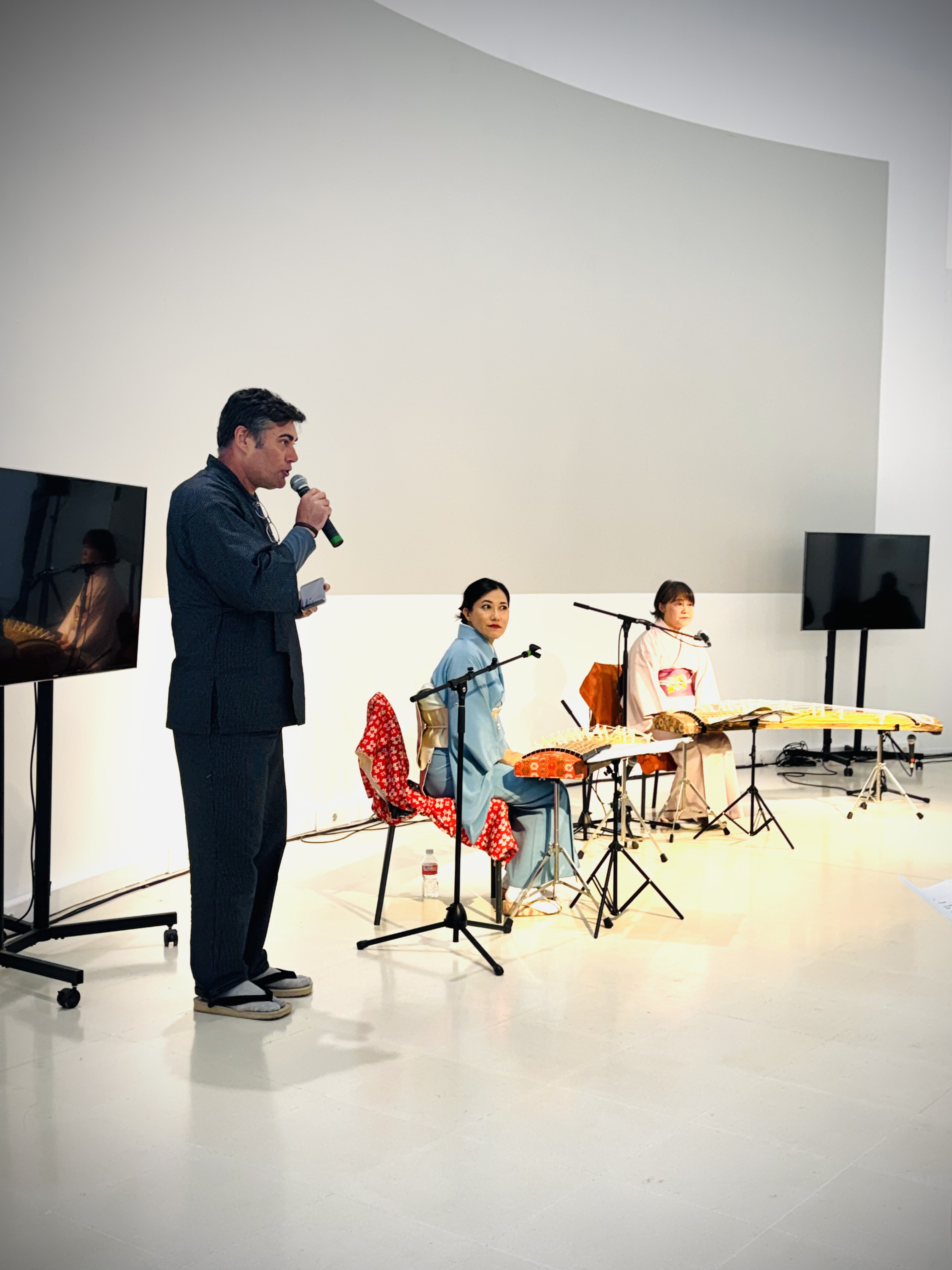
Participating masters and specialists
Official program of the gathering.
- Takashi NishiyamaUNESCO lecture
- Eiko KishiIkebana / Chadō
- Aldo MarcheseSuiseki
- Mar FernándezChadō
- Ana María CamposChadō
- Juan José BuenoSuiseki
- Rafael MonjeSuiseki
- José Manuel BlázquezZen philosophy
- María Dolores SerranoMeditation
- Madoka KubotaShodō
- Yoshie SakaiKoto
- Eva SakaiKoto
- Hiro OnoneNihon Buyō
- Sayako AntonaTaiko
- Yano YoroSumi-e
- Susana LlorenteSumi-e
- Mayumi KawamotoTsumami Zaiku
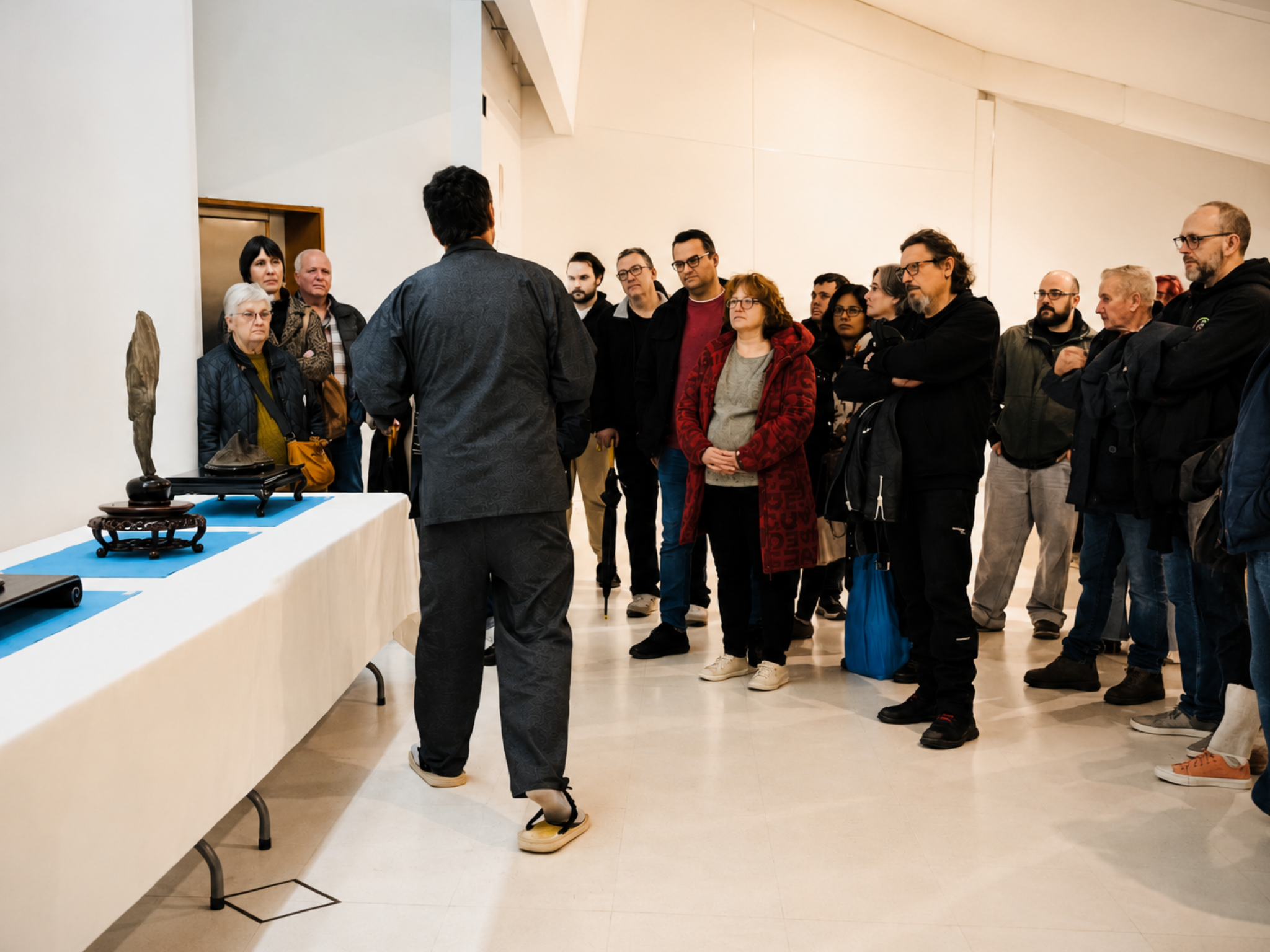
An Unrepeatable Spirit
I know of no other gathering in Spain that has brought together such a concentration of Japanese masters and traditional disciplines within a single program. It was precisely that breadth—bonsai, suiseki, ikebana, chadō, shodō, sumi-e, music, and dance sharing the same space without hierarchy among them—that made Rokkon Shōjō an exceptional gathering.
No prizes, no competitions, no classifications: throughout the weekend, Japan was experienced in its purest form, with the Zen spirit as the sole common thread. Rarely, outside Japan, have I felt so deeply connected with that spirit.
Continuing Collaborations
Fuenlabrada (Madrid) Club Amigos del Bonsái de Fuenlabrada +

The Club Amigos del Bonsái de Fuenlabrada is a non-profit association dedicated to promoting, practicing, and disseminating the art of bonsai. It is a meeting space for enthusiasts, where members share knowledge, support one another in the design and development of their trees, and organize educational activities.
Ongoing collaboration with the club, providing masterclasses and hands-on sessions for its members.
Onda (Castellón) Museo del Bonsái de Onda +

Collaboration in the maintenance of the collection of the Museo de Bonsáis de Onda (Castellón), founded by Pascual Costa, one of the pioneers of bonsai in Spain, and preserved after his death under the direction of Jorge Sansano, former editor of the now-defunct magazine Bonsái Actual. Together with Sansano, he conducted workshops for members of the Club de Bonsái de Segorbe.
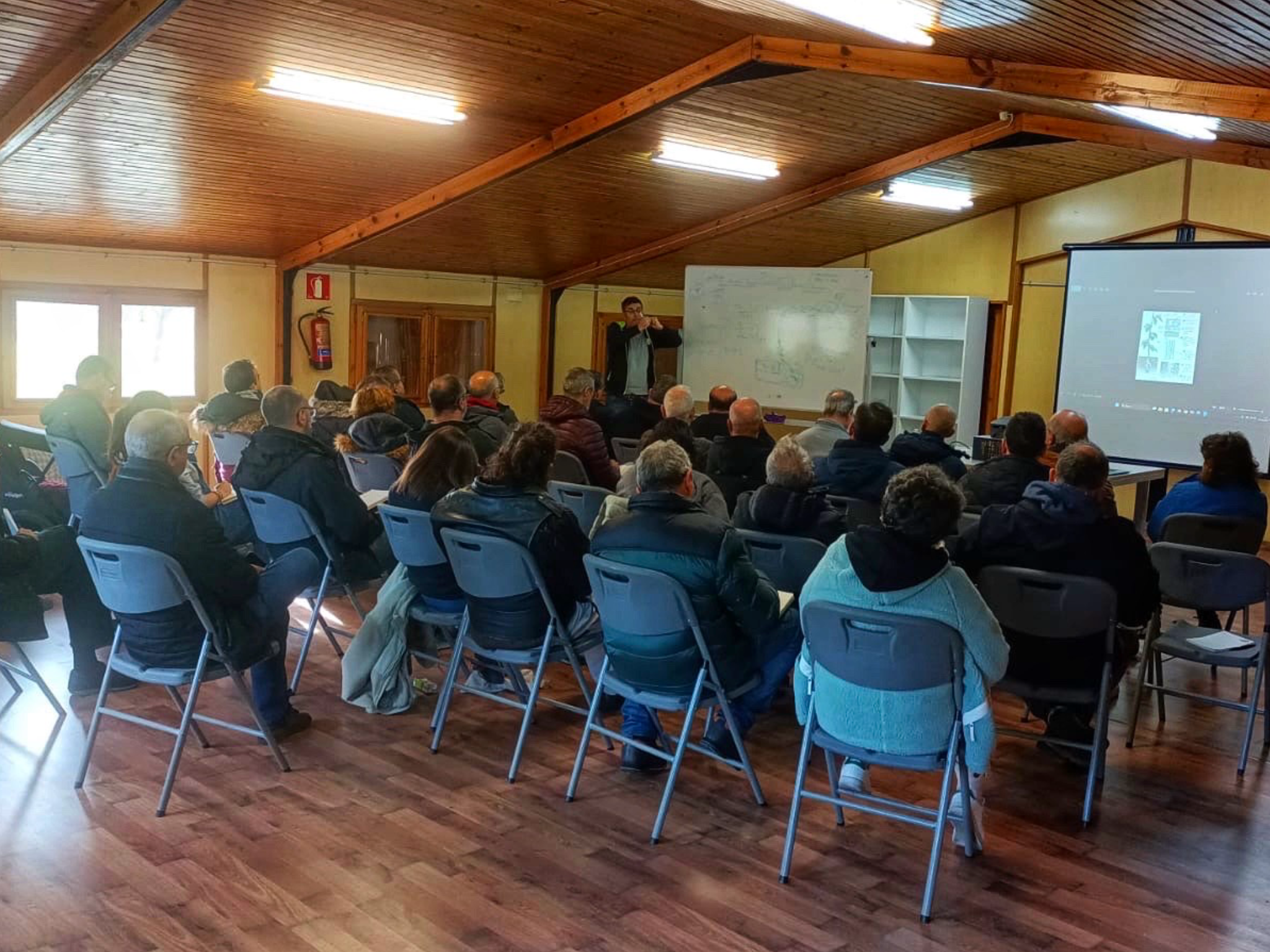
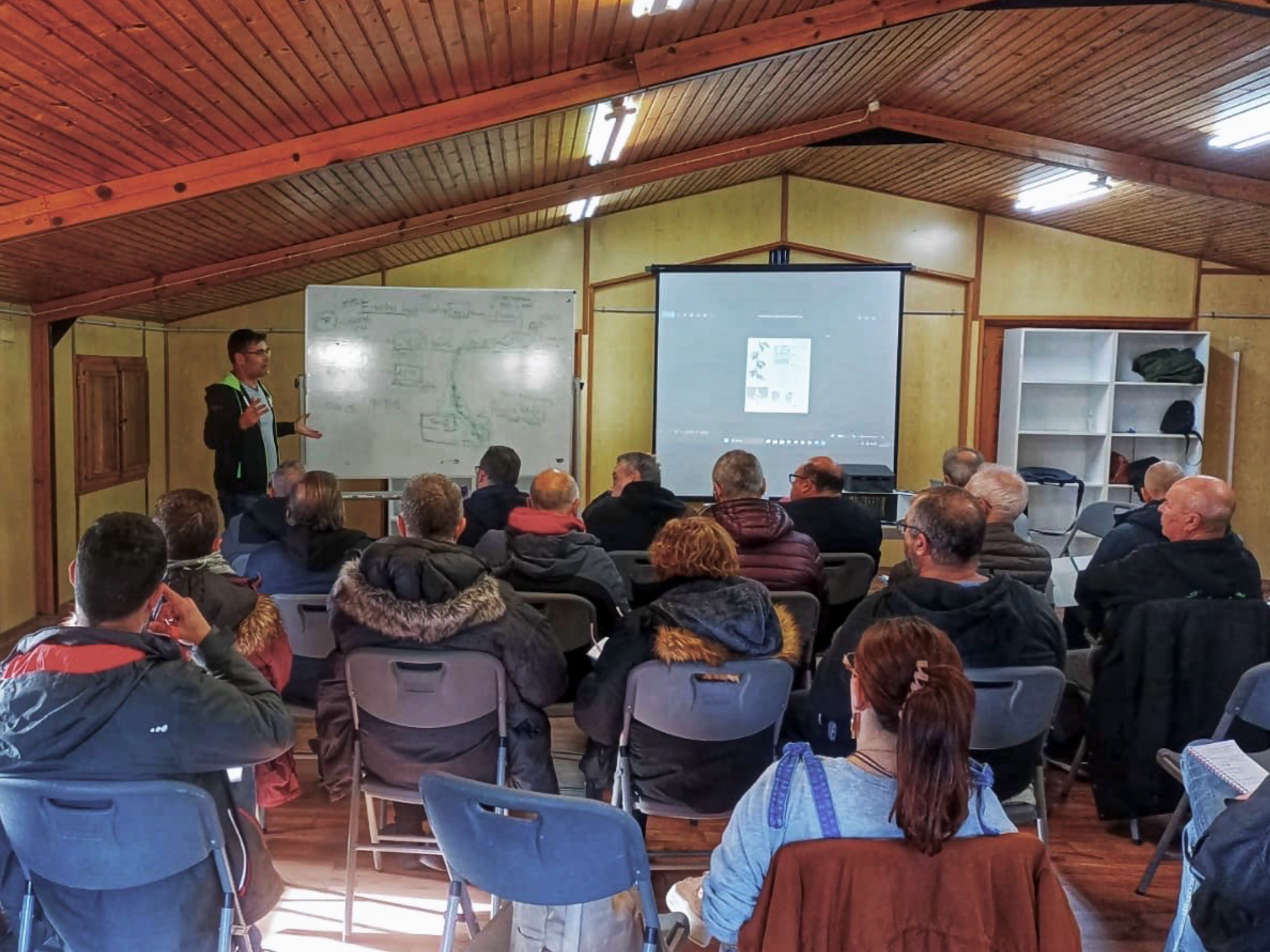
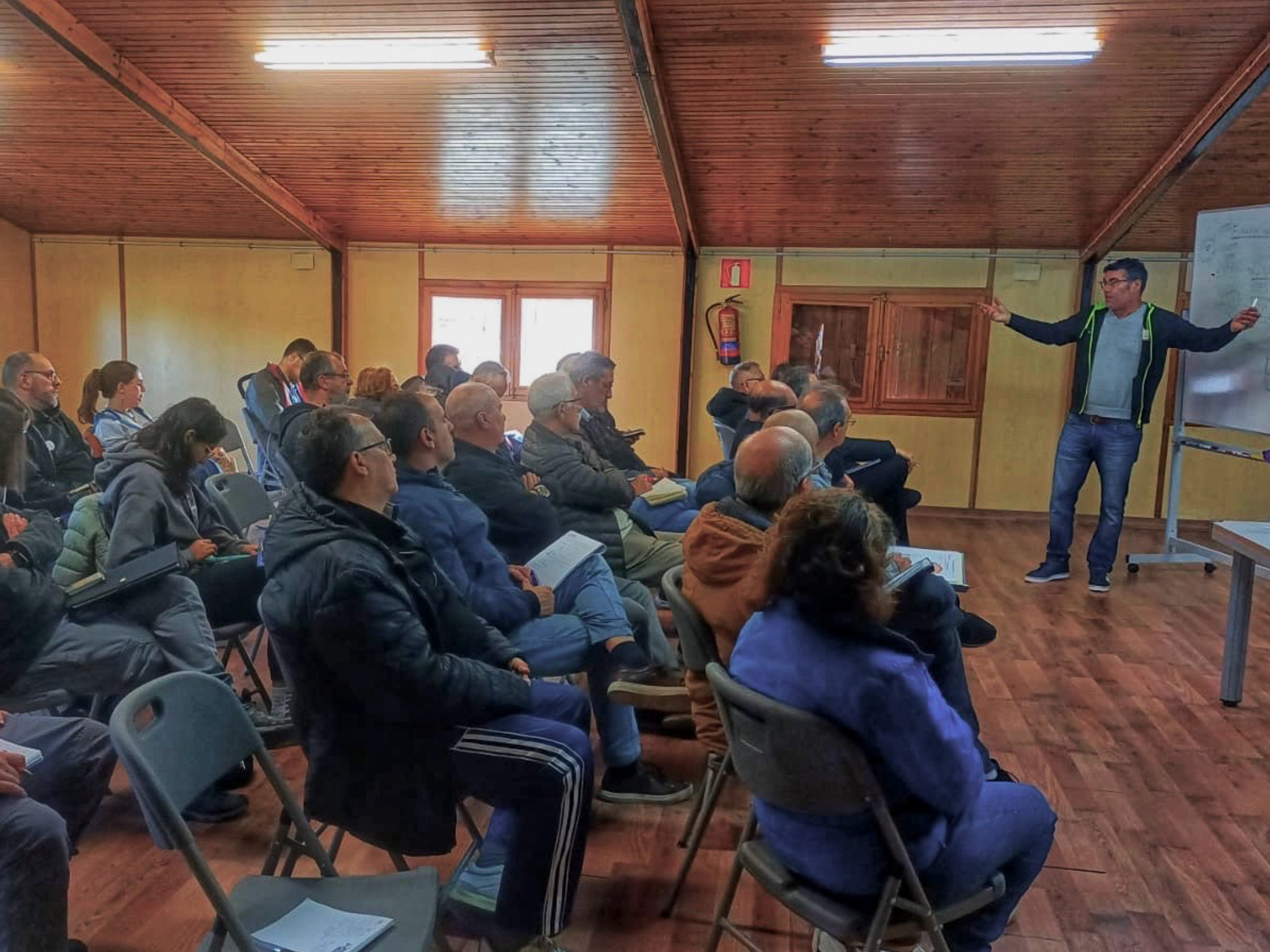
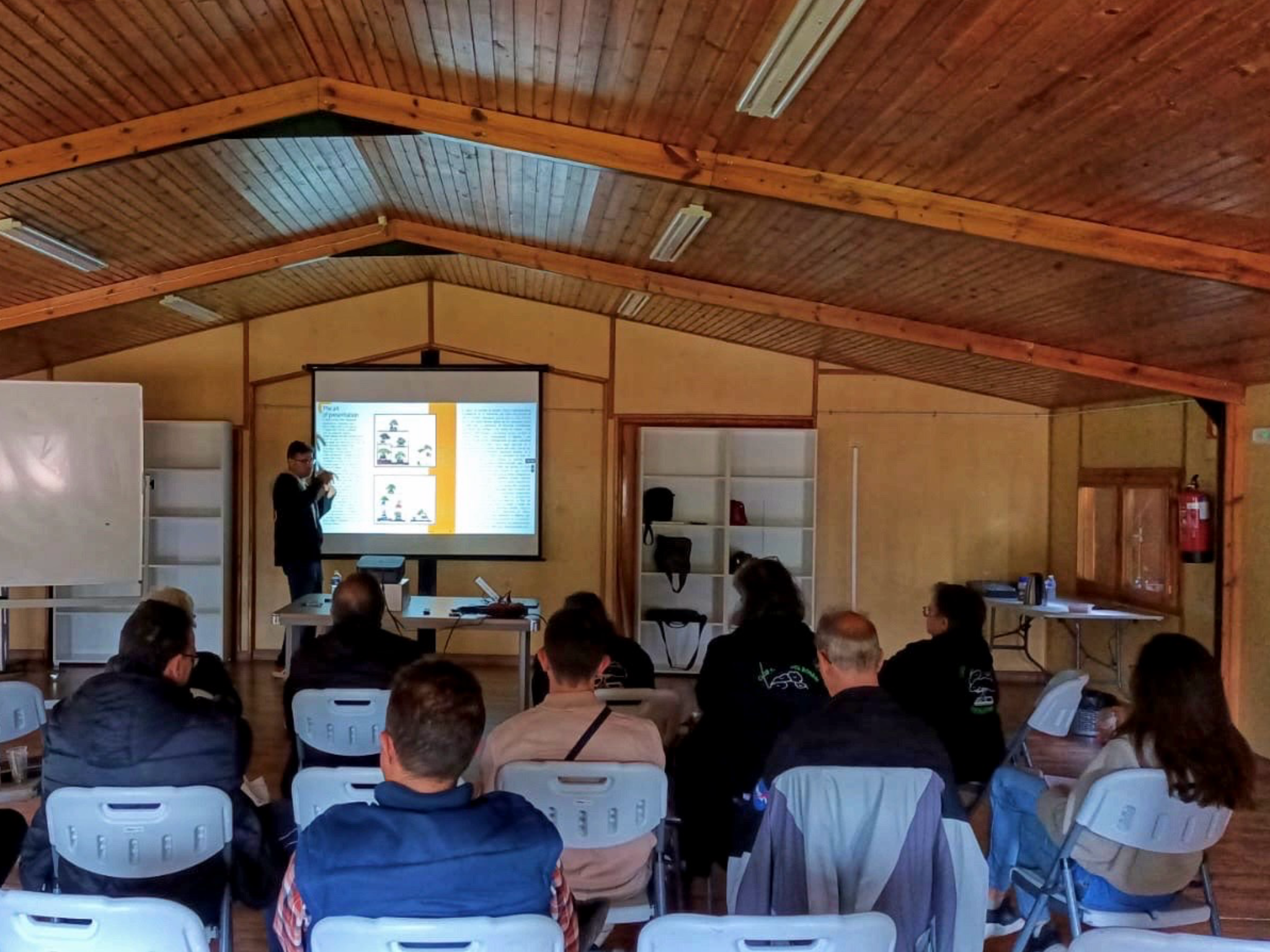
Bonsai Works and Suiseki Collection
Bonsai: specimens worked on and styled by me, belonging to students and clients. Suiseki: pieces from my personal collection, classified according to two classical categories of appreciation: Sansui Keijō-seki, landscape stones evoking mountains, waterfalls, and coastlines, and Sugata-ishi / Dōbutsu-seki, figure stones suggesting human, divine, or animal forms.
The bonsai works presented here represent only a selection of the total number of trees I have worked on and styled. The personal suiseki collection, by contrast, is presented almost in its entirety, although a few pieces are not included, particularly those belonging to the Mame size category. There is no predetermined route: each visitor decides how much time and attention to devote to each piece.
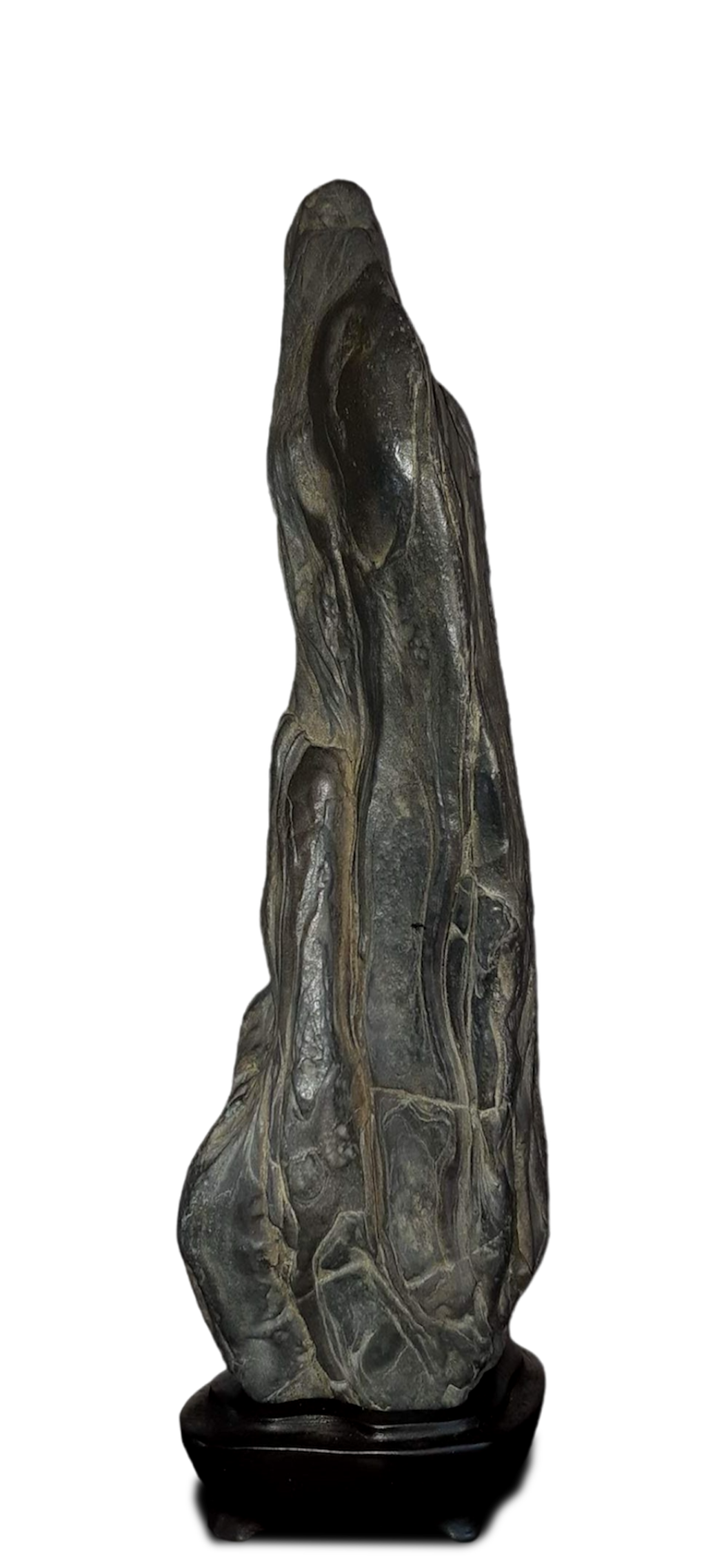
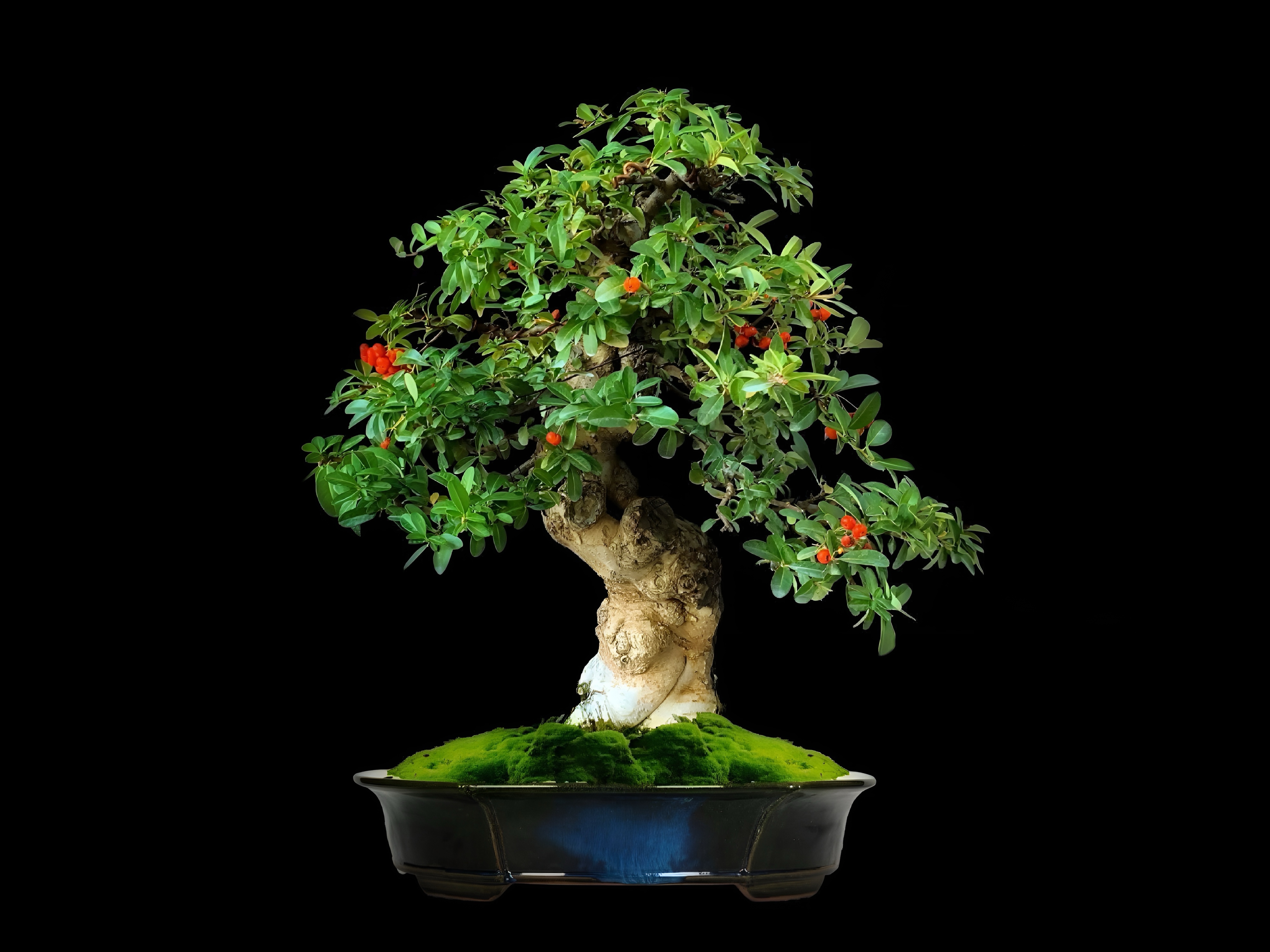 Firethorn / Tokiwa-sanzashi (常盤山査子) / Pyracantha coccinea
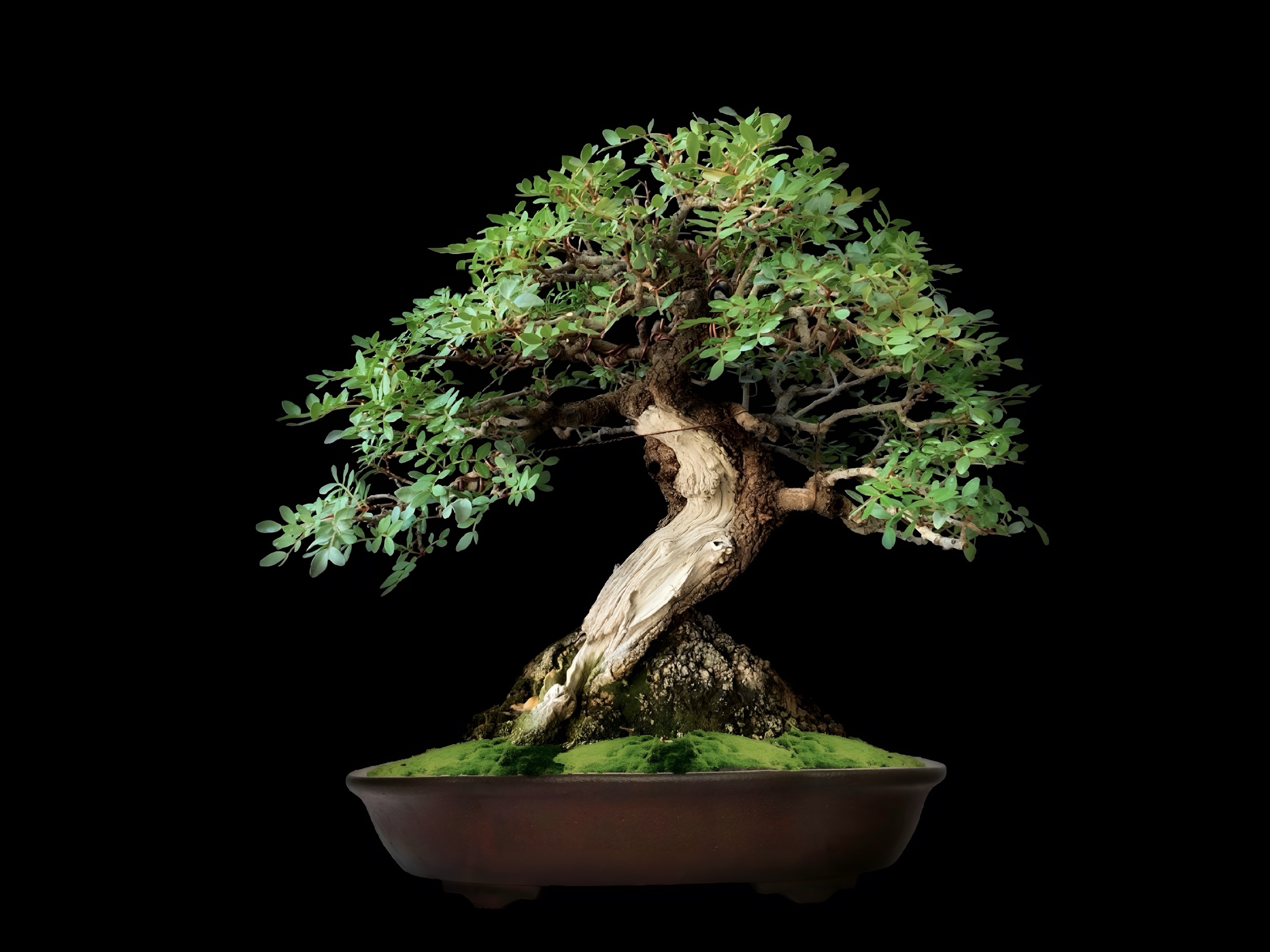 Mastic tree / Pistacia lentiscus
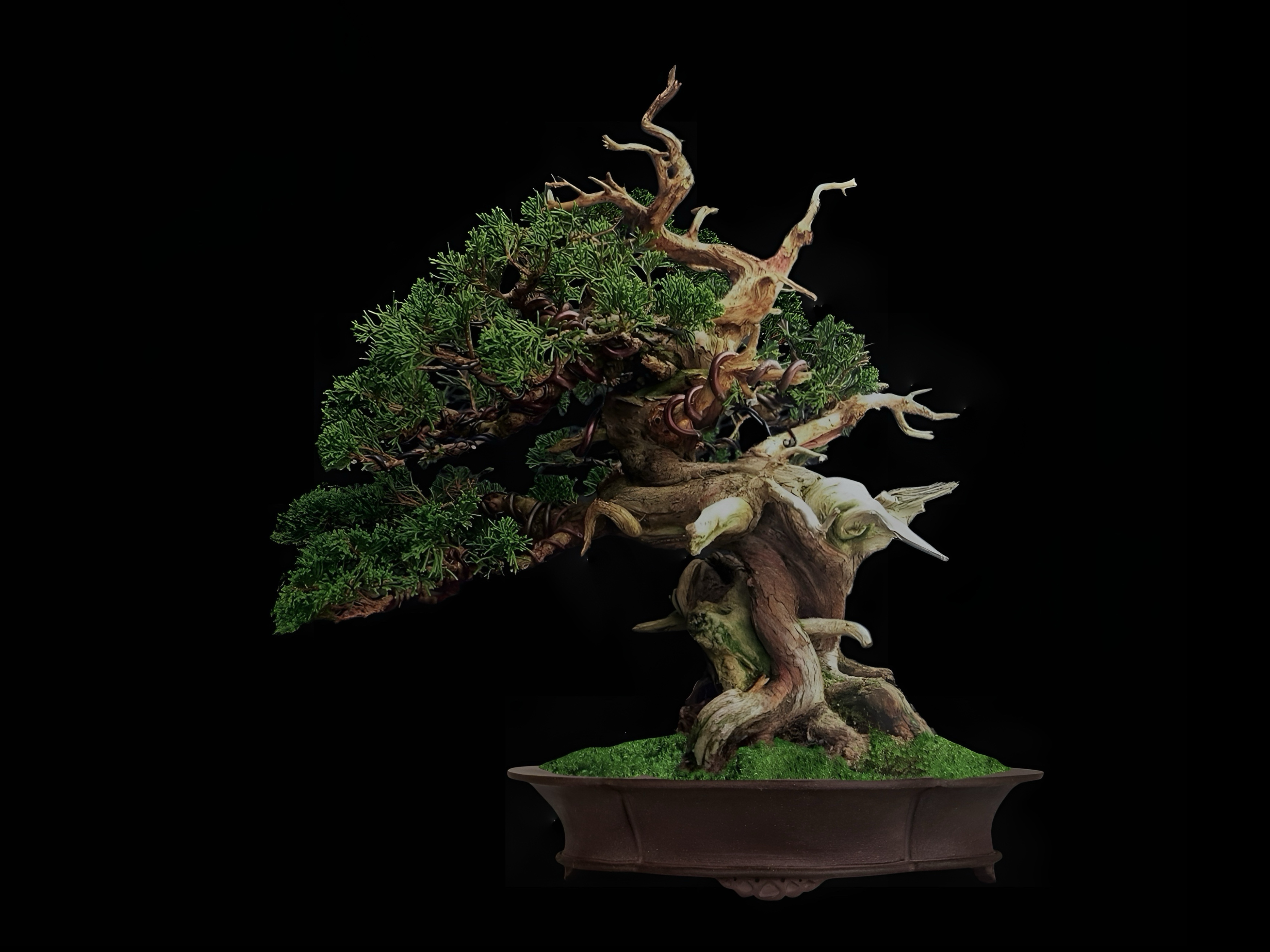 Itoigawa Chinese juniper / Itoigawa-shinpaku (糸魚川真柏) / Juniperus chinensis 'Itoigawa'
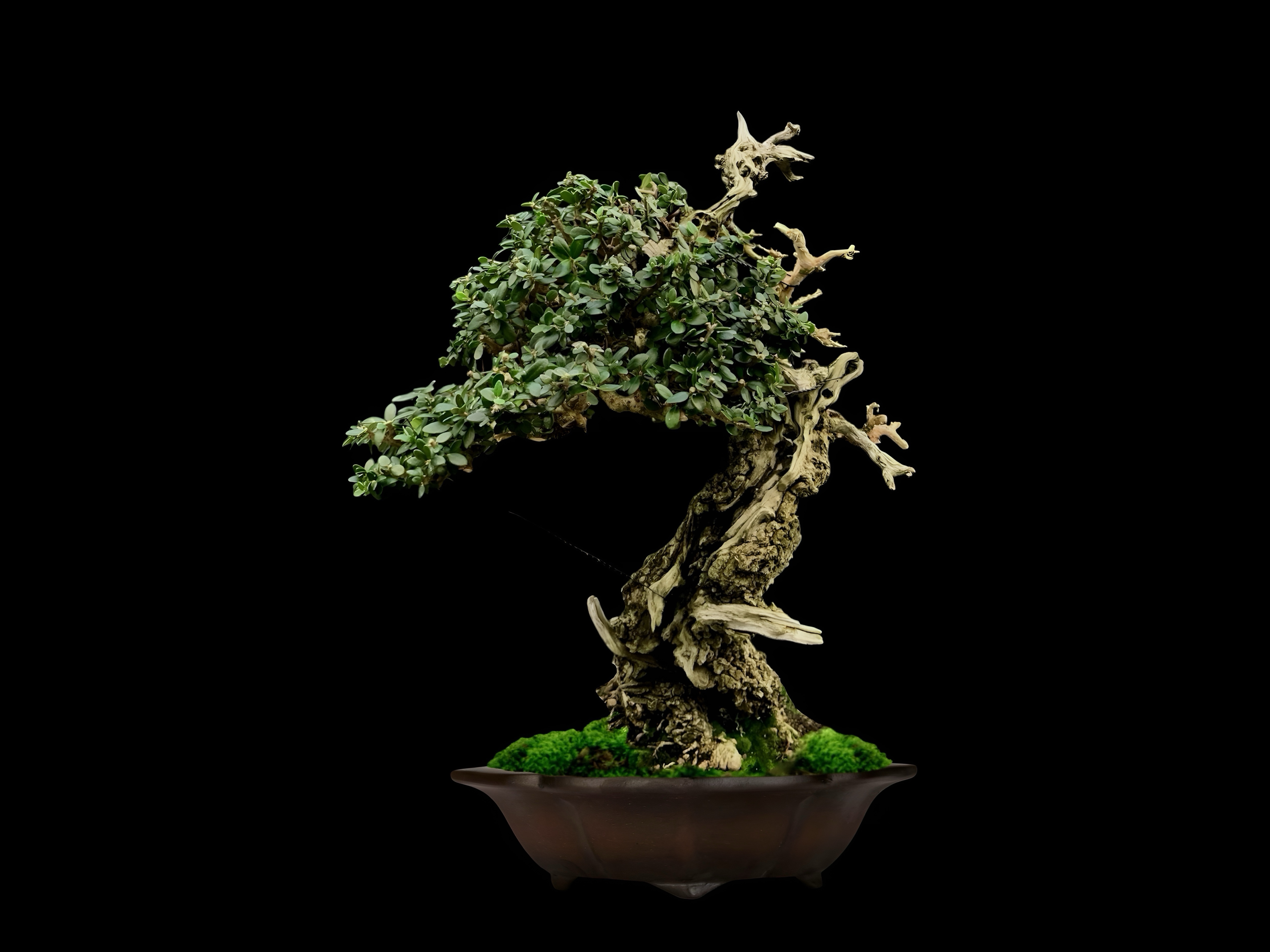 Wild olive / Olea europaea var. sylvestris
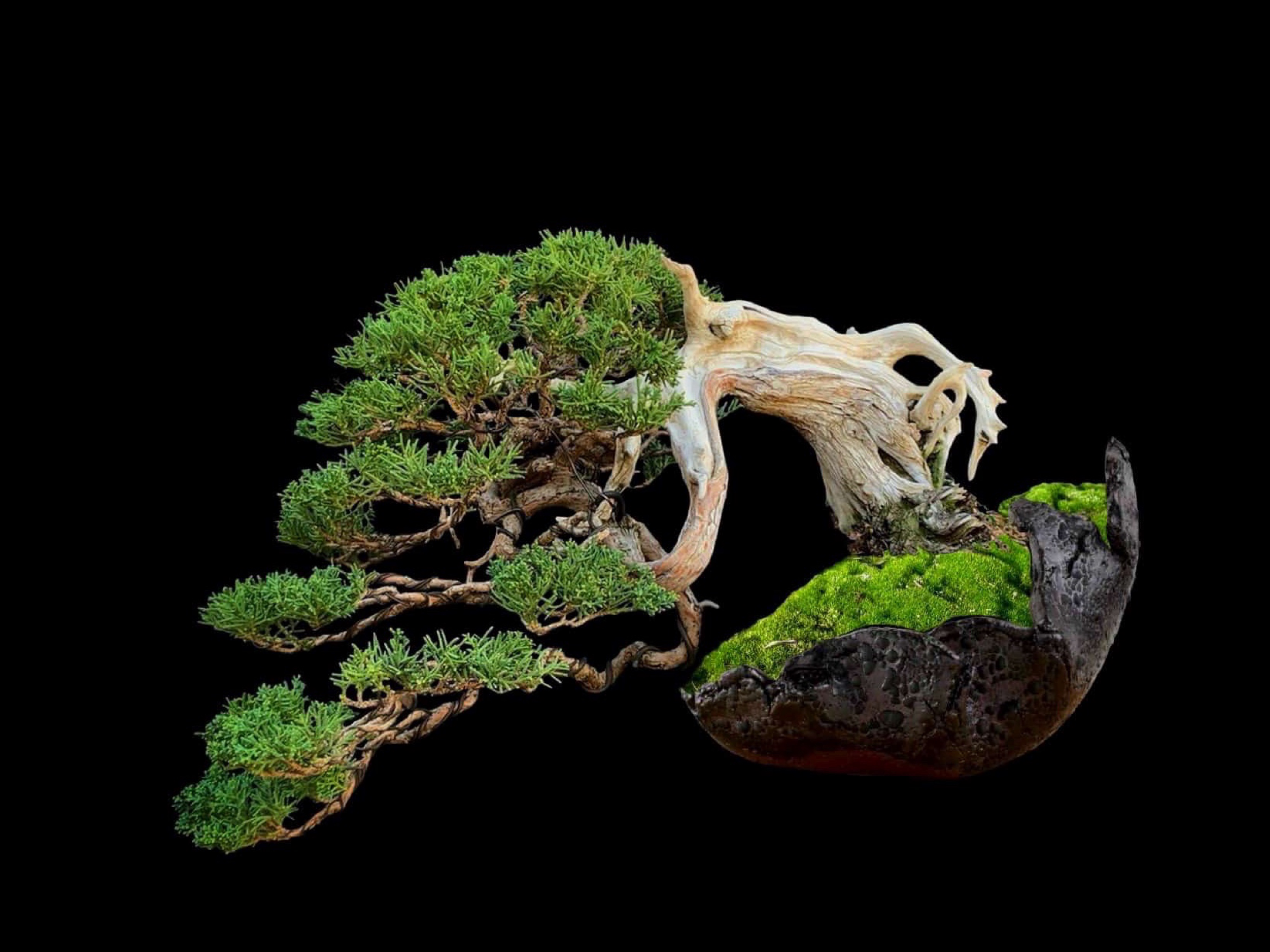 Chinese juniper / Shinpaku (真柏) / Juniperus chinensis
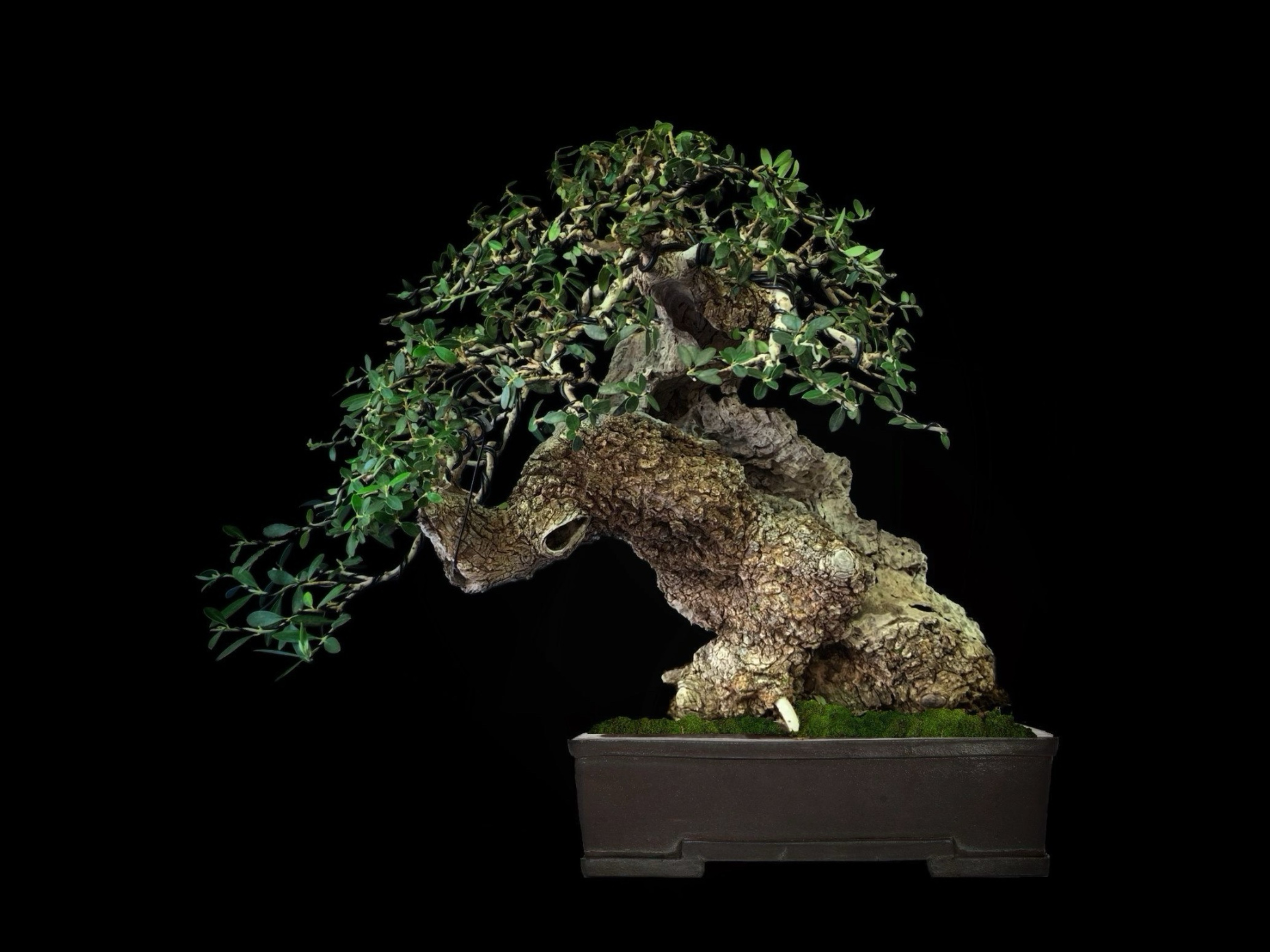 Wild olive / Olea europaea var. sylvestris
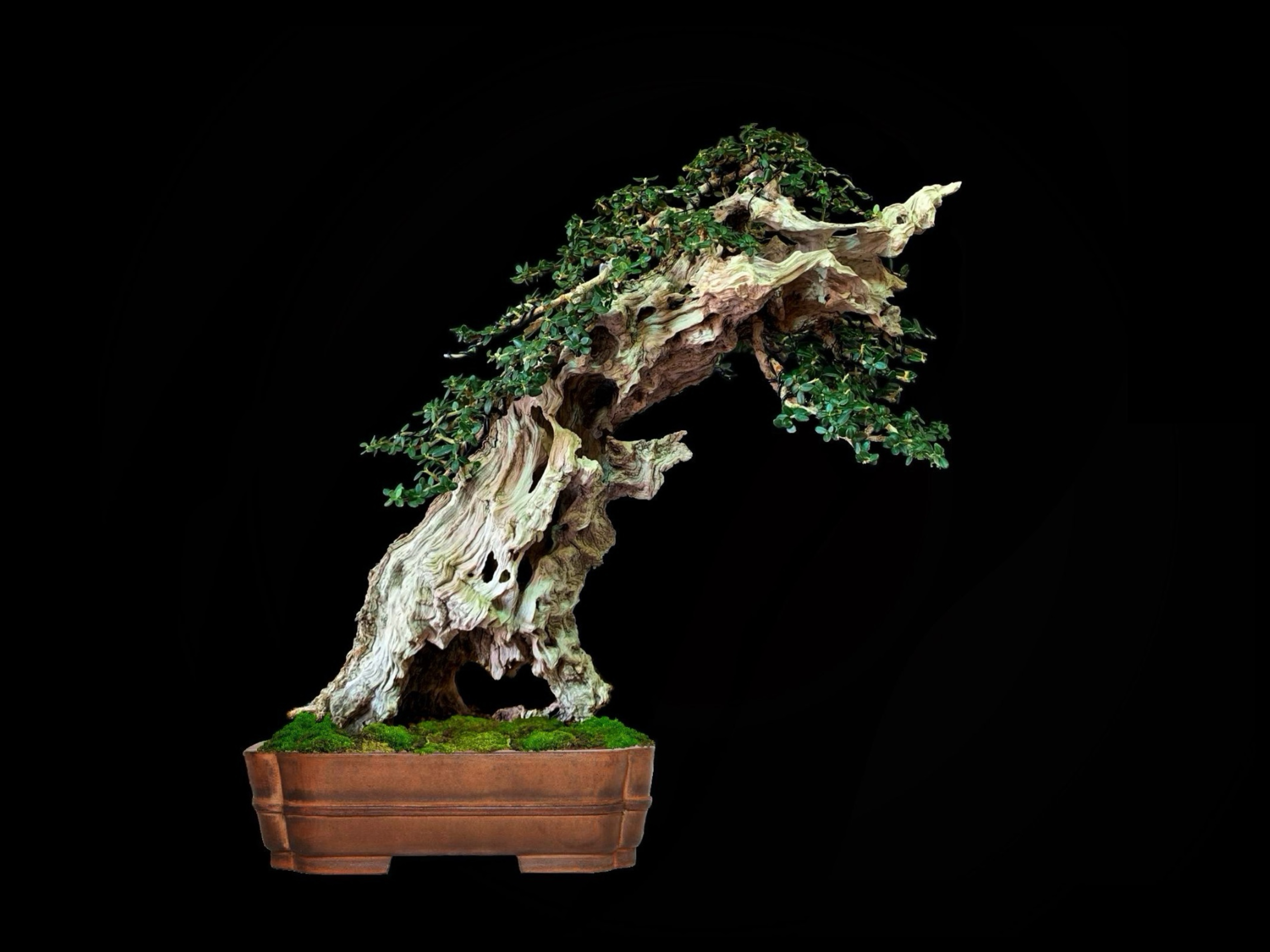 Wild olive / Olea europaea var. sylvestris
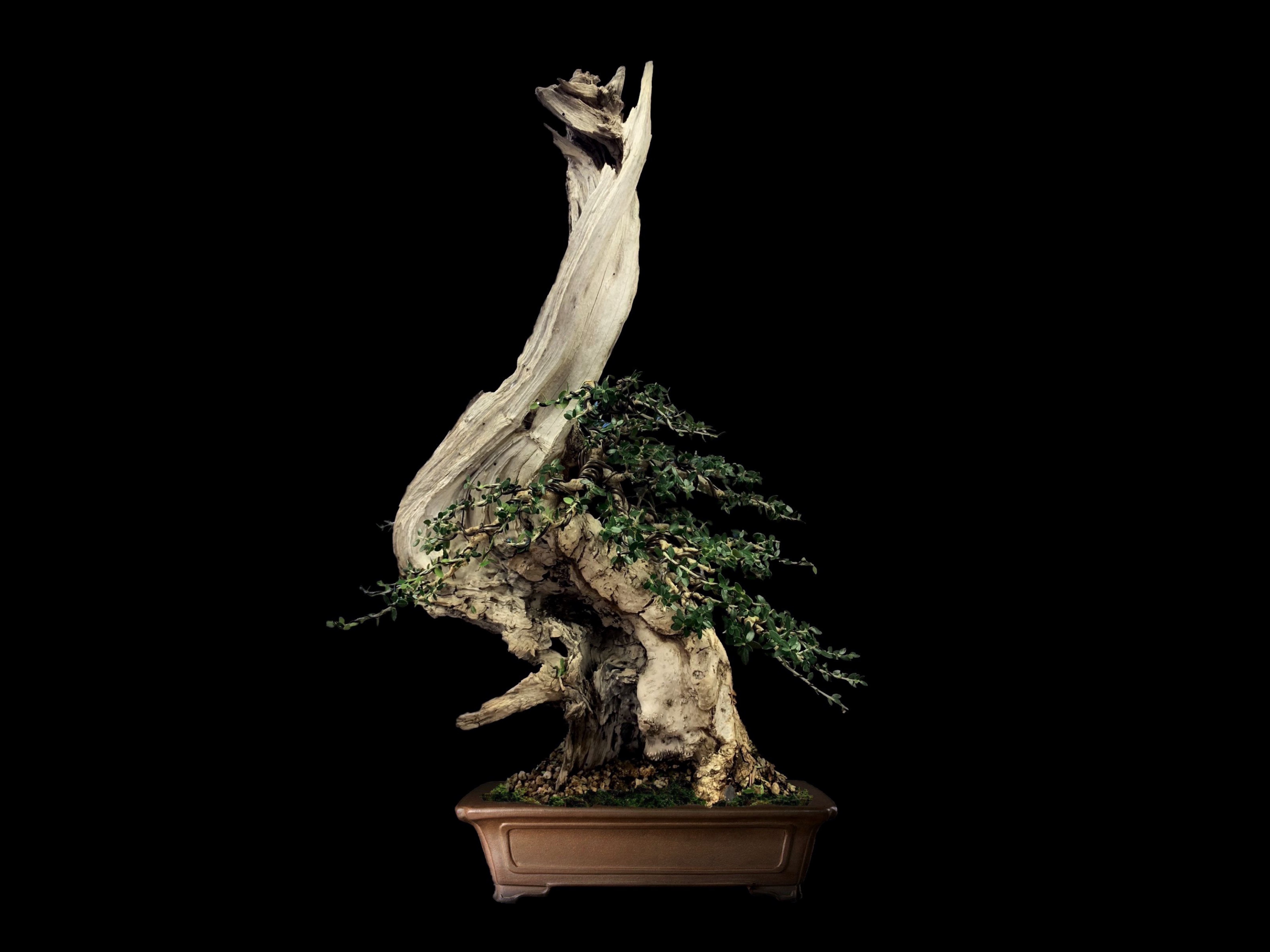 Wild olive / Olea europaea var. sylvestris
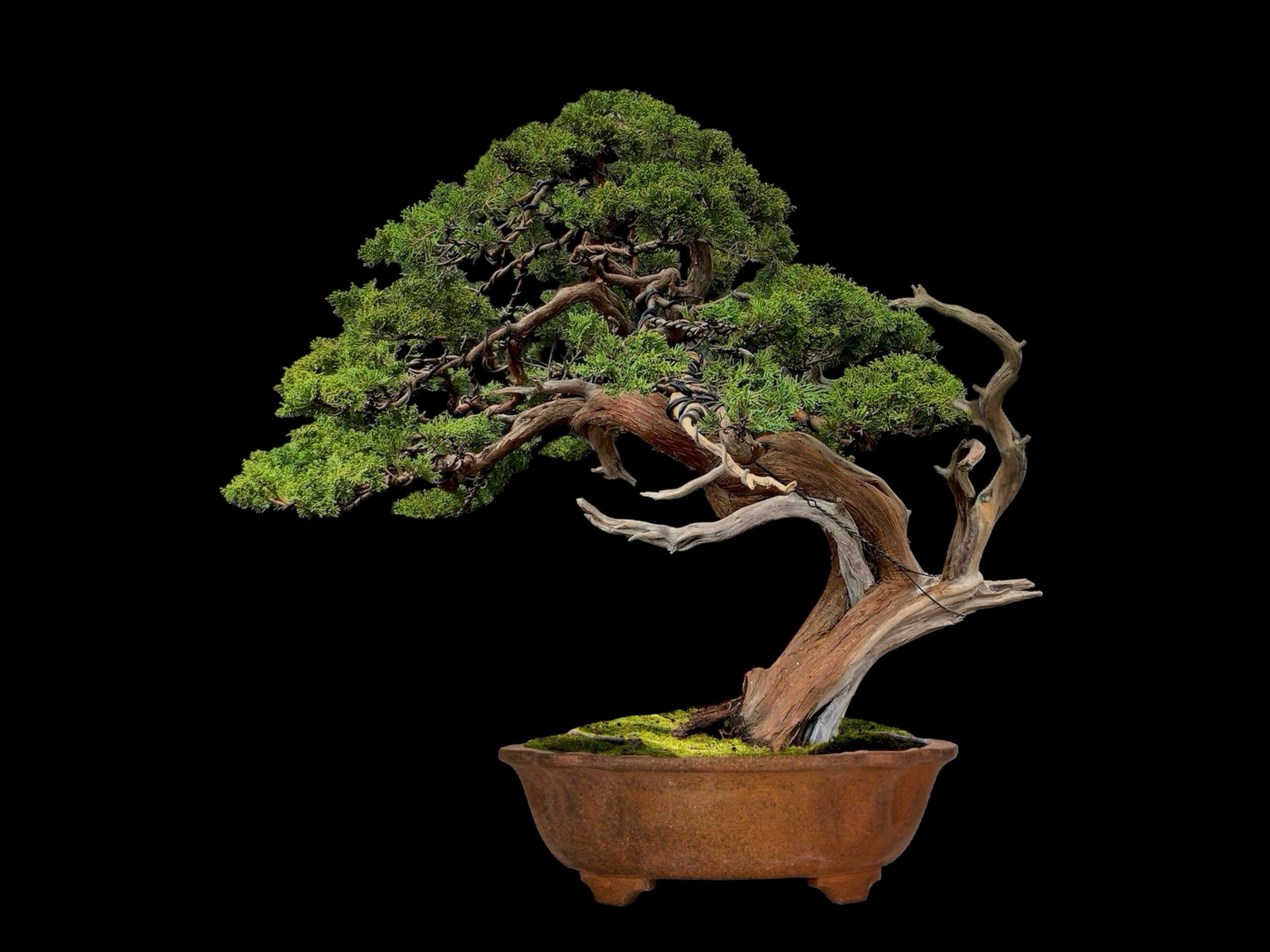 Savin juniper / Juniperus sabina
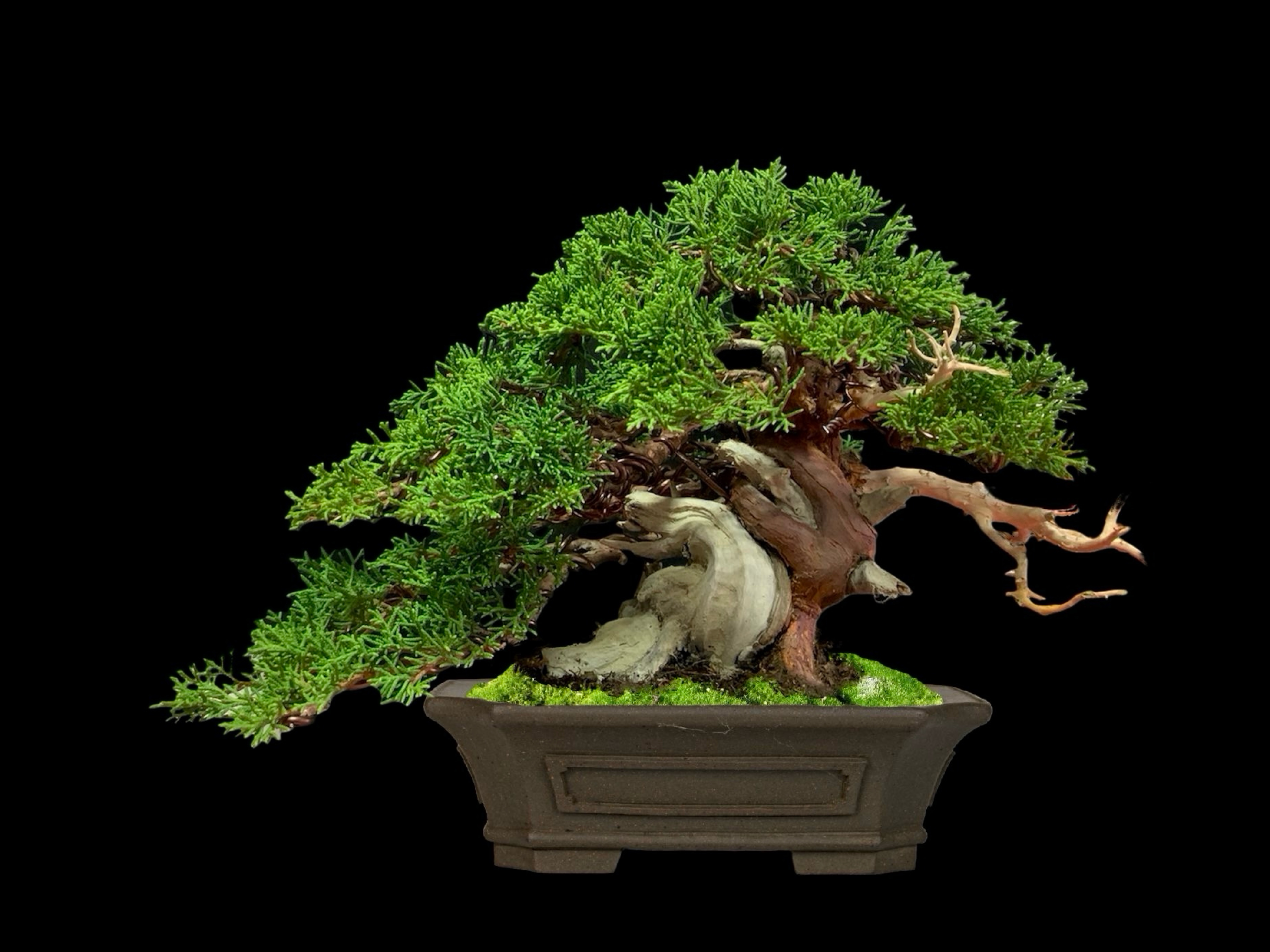 Itoigawa Chinese juniper / Itoigawa-shinpaku (糸魚川真柏) / Juniperus chinensis 'Itoigawa'
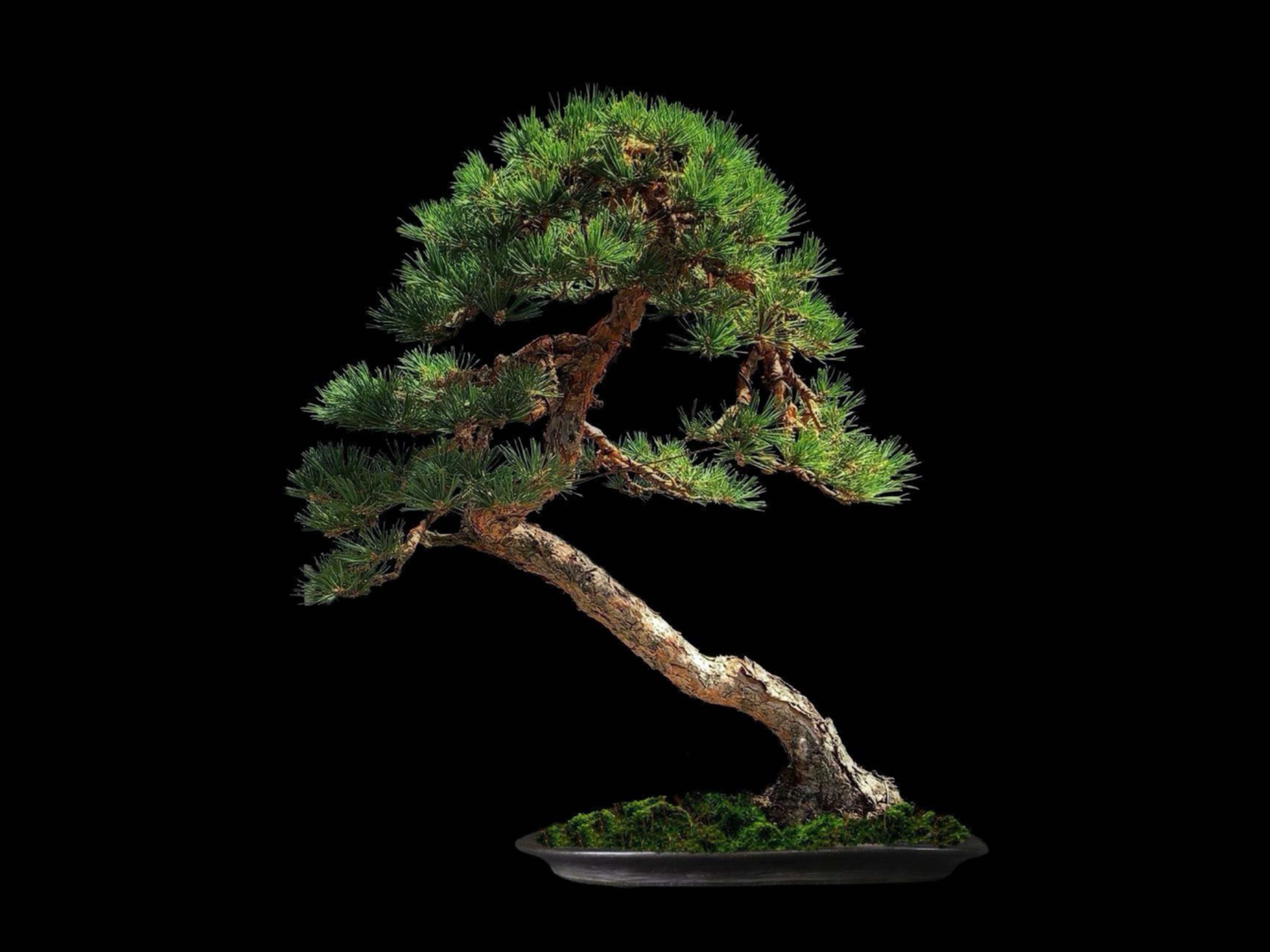 Scots pine / Yōroppa-akamatsu (ヨーロッパアカマツ) / Pinus sylvestris
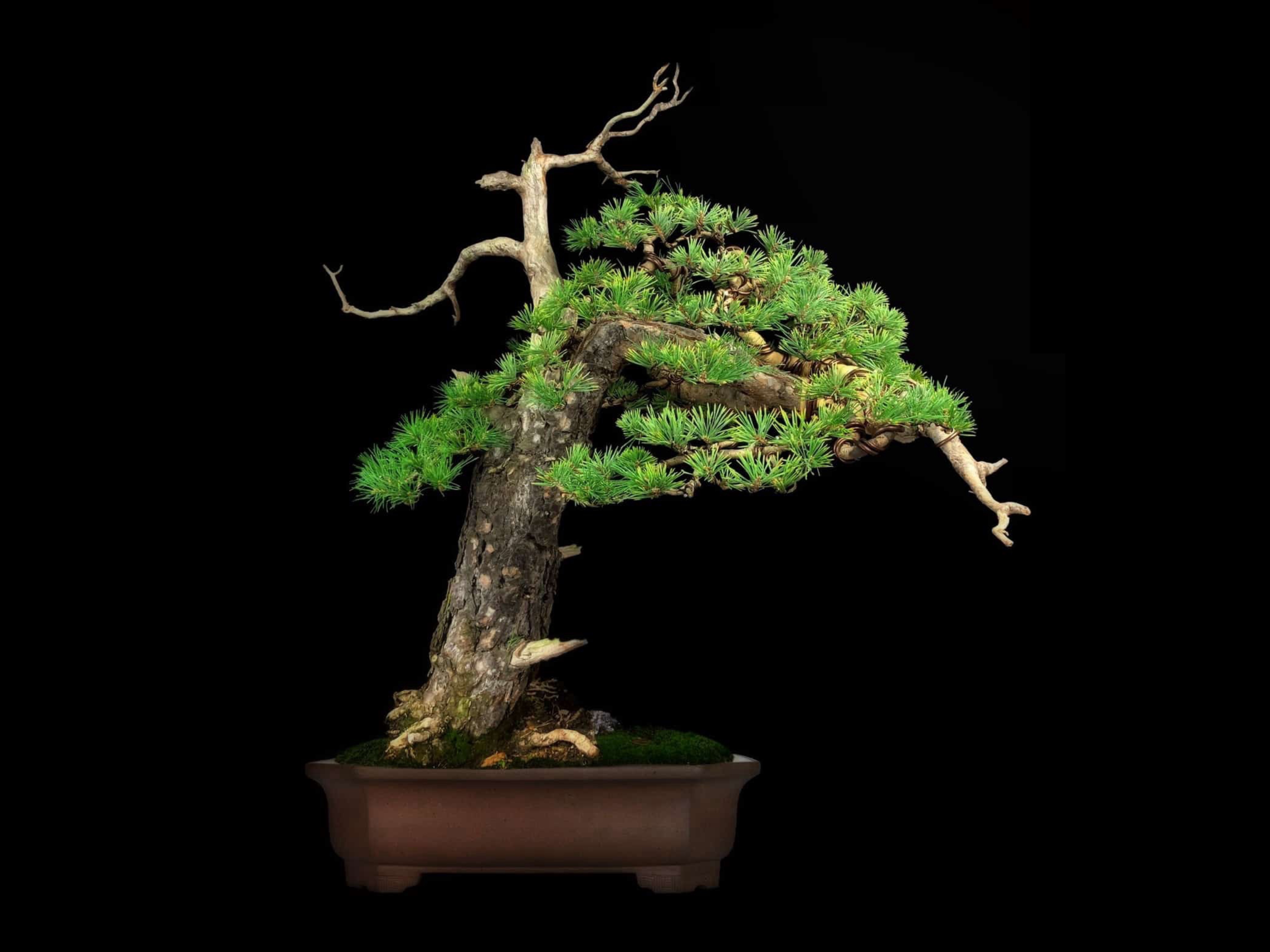 Austrian black pine / Pinus nigra
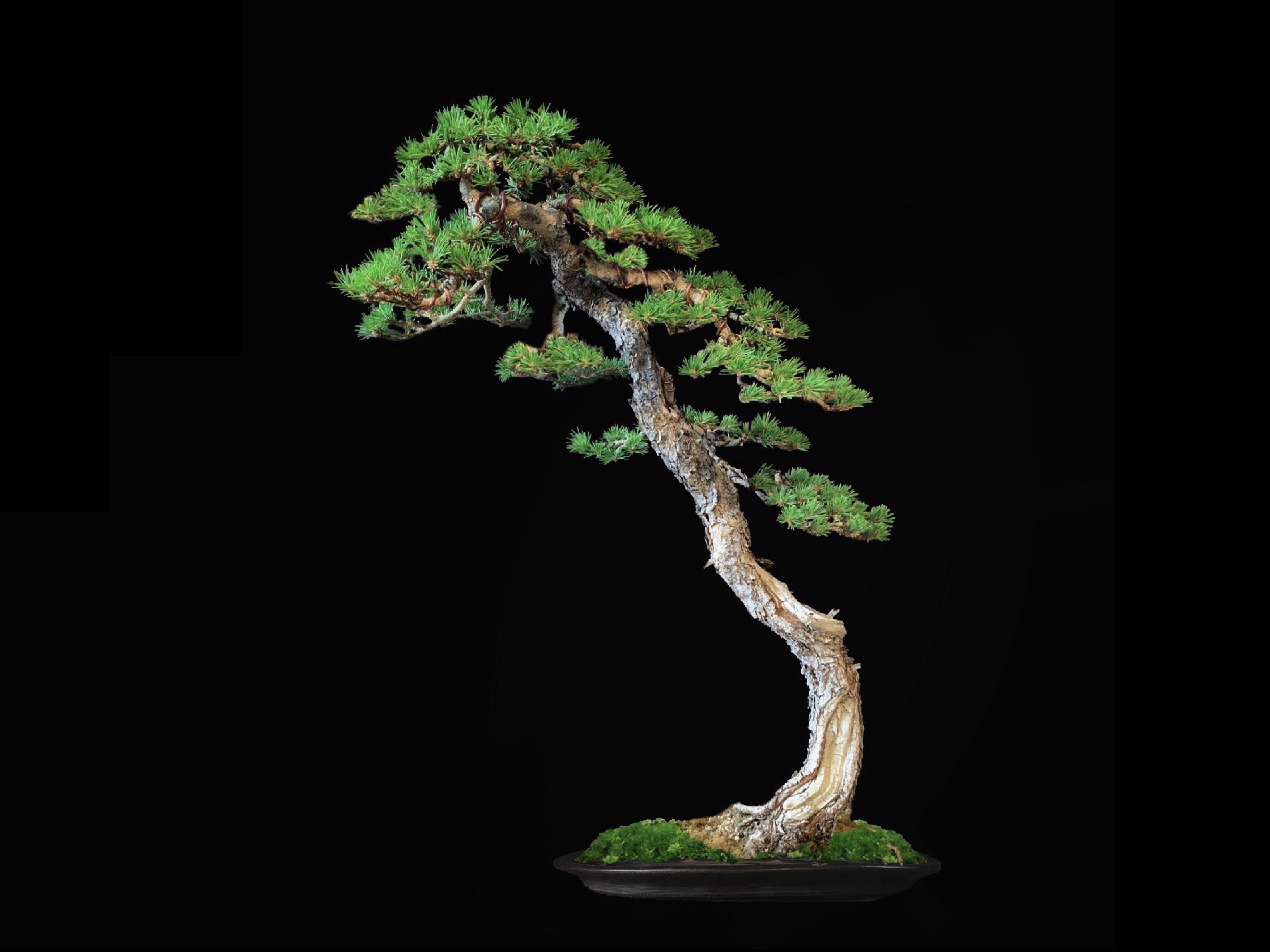 Scots pine / Yōroppa-akamatsu (ヨーロッパアカマツ) / Pinus sylvestris
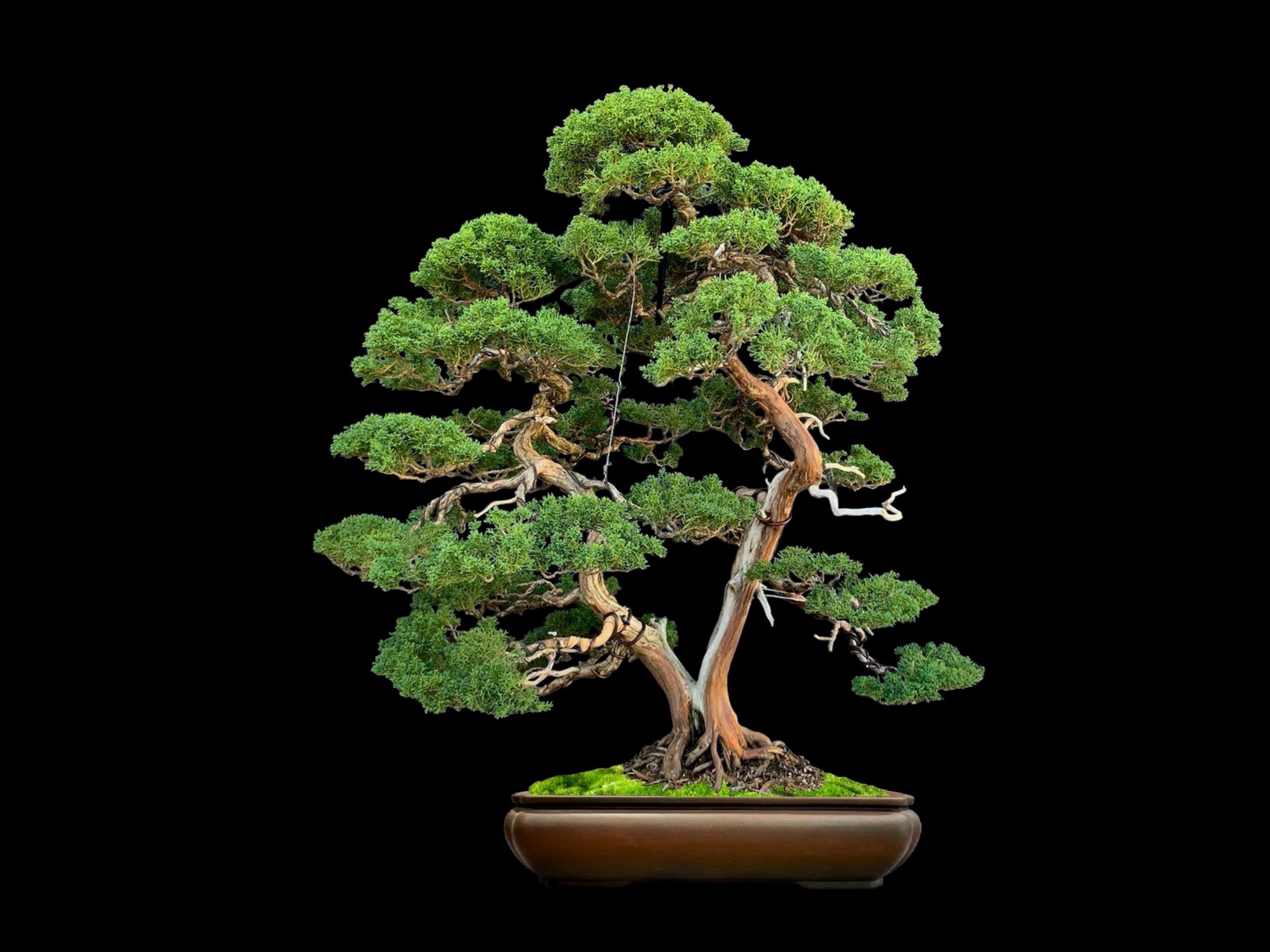 Chinese juniper / Shinpaku (真柏) / Juniperus chinensis
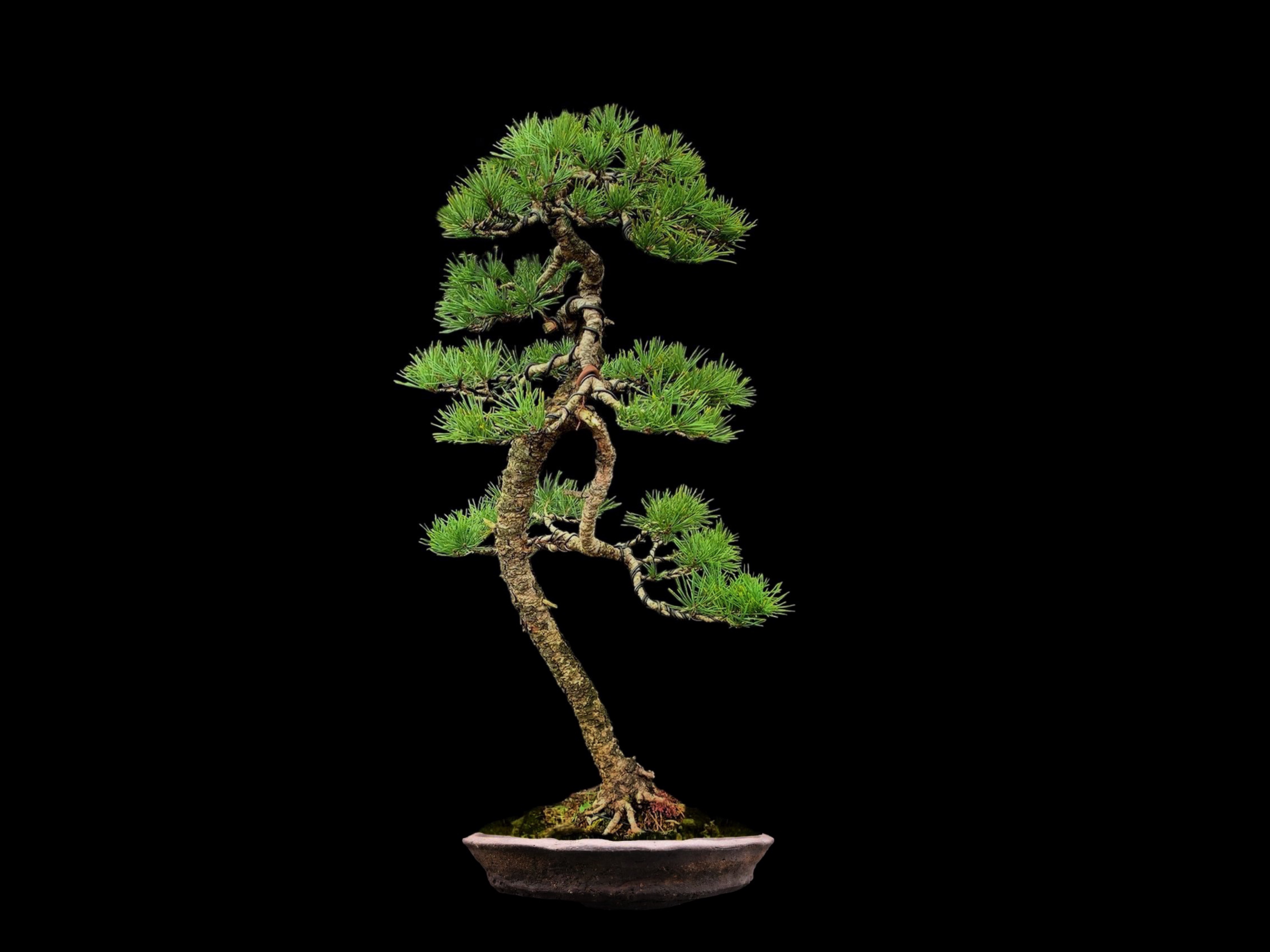 Scots pine / Yōroppa-akamatsu (ヨーロッパアカマツ) / Pinus sylvestris
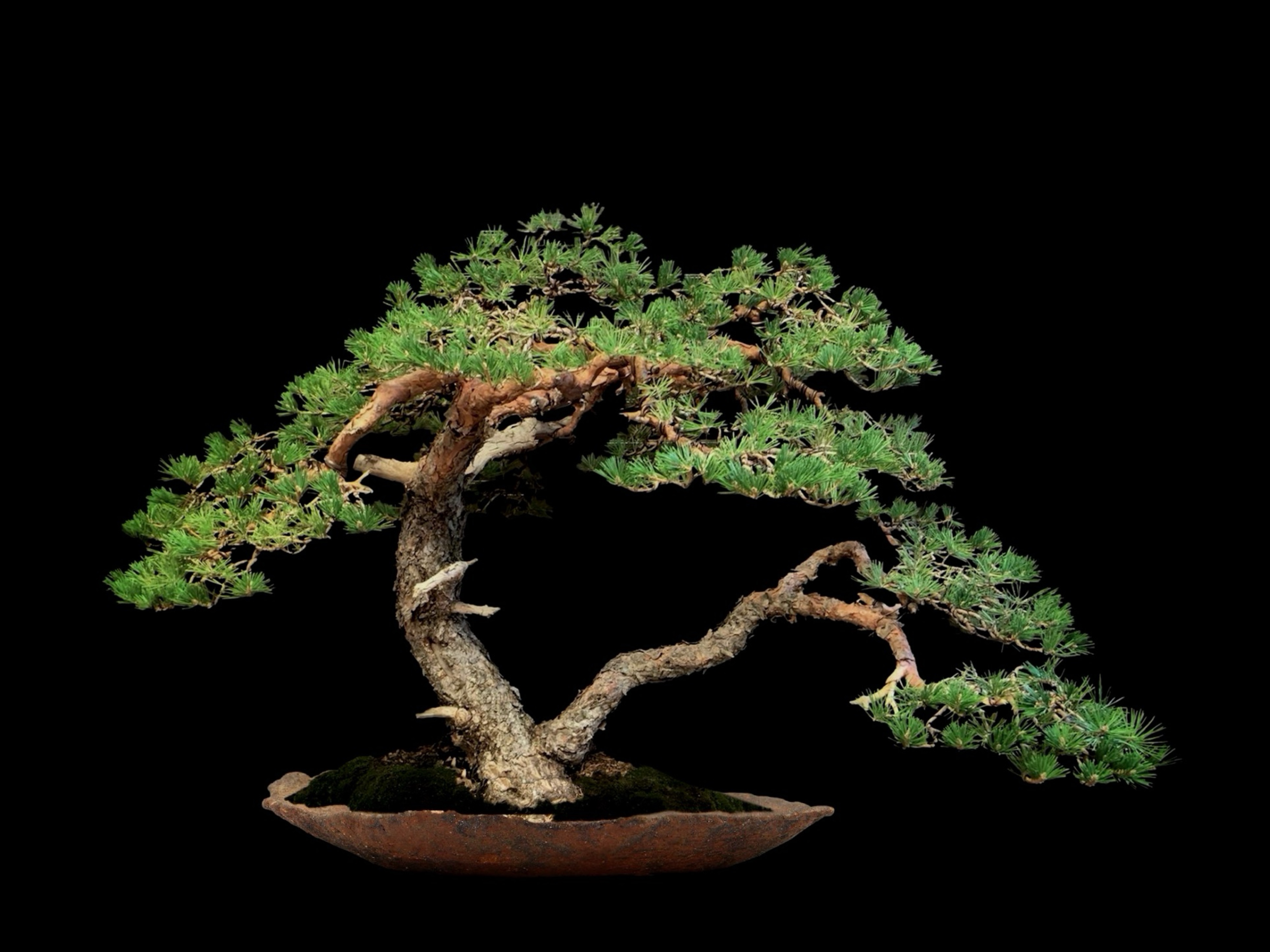 Scots pine / Yōroppa-akamatsu (ヨーロッパアカマツ) / Pinus sylvestris
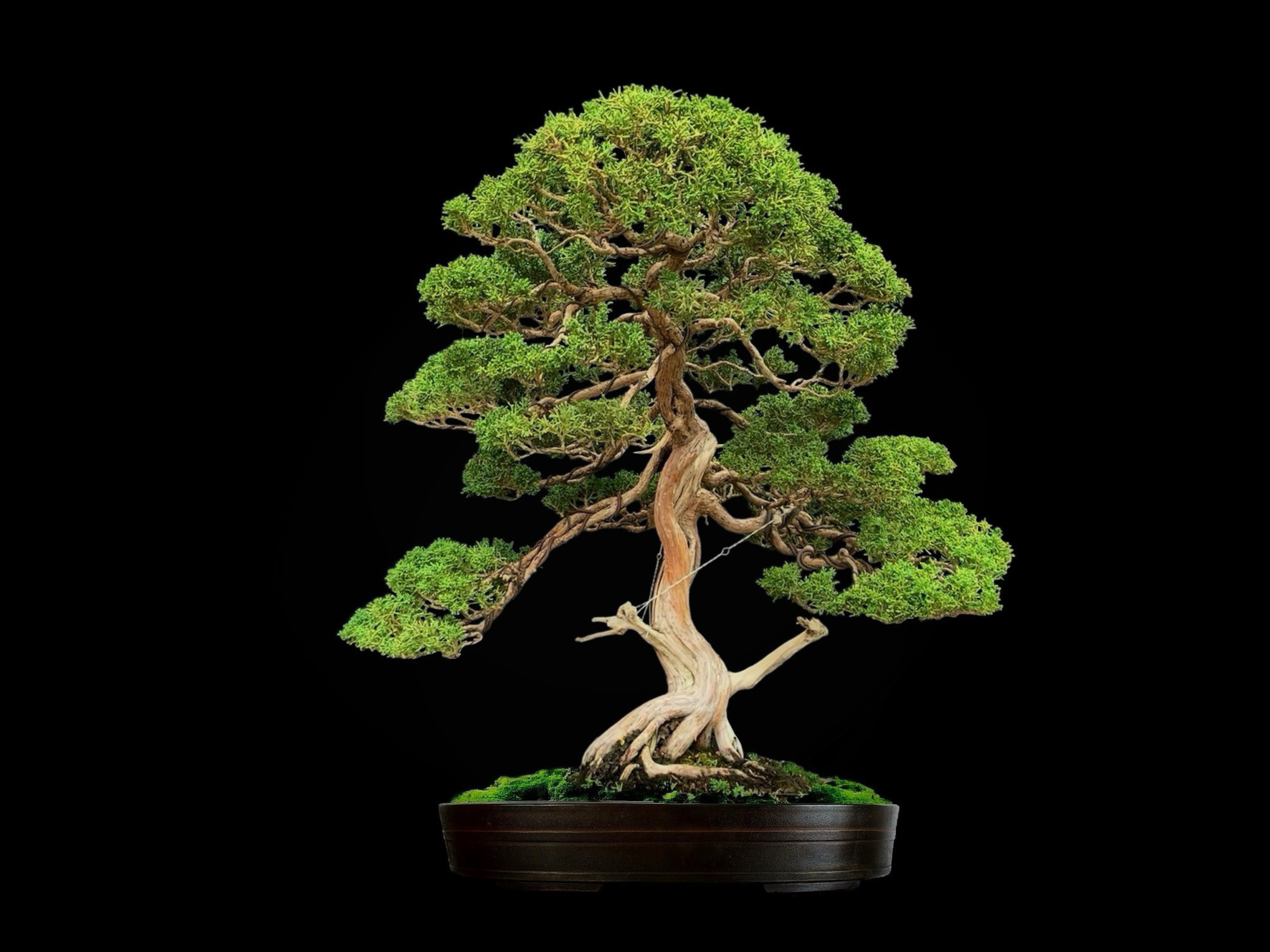 Chinese juniper / Shinpaku (真柏) / Juniperus chinensis
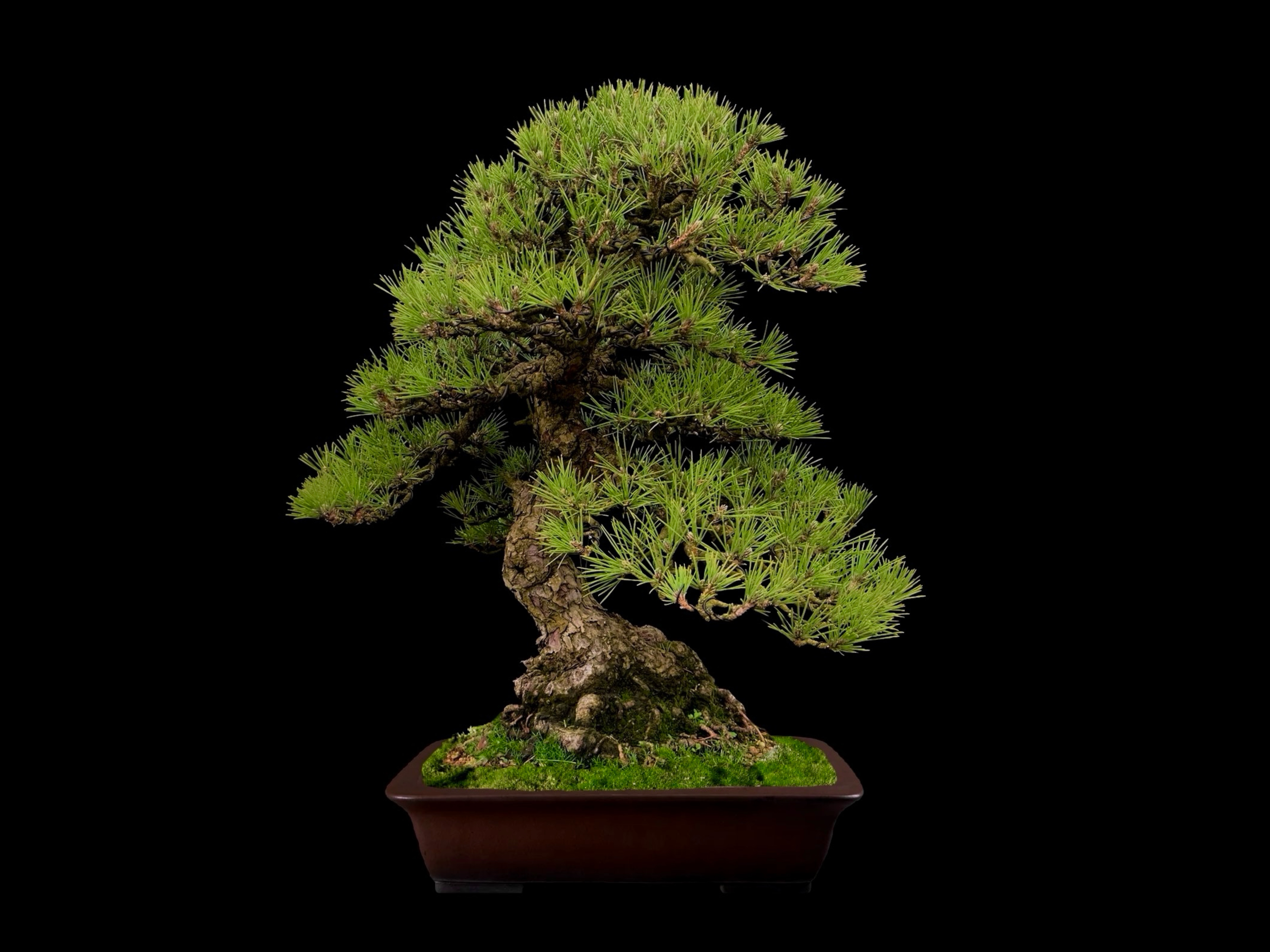 Japanese black pine / Kuromatsu (黒松) / Pinus thunbergii
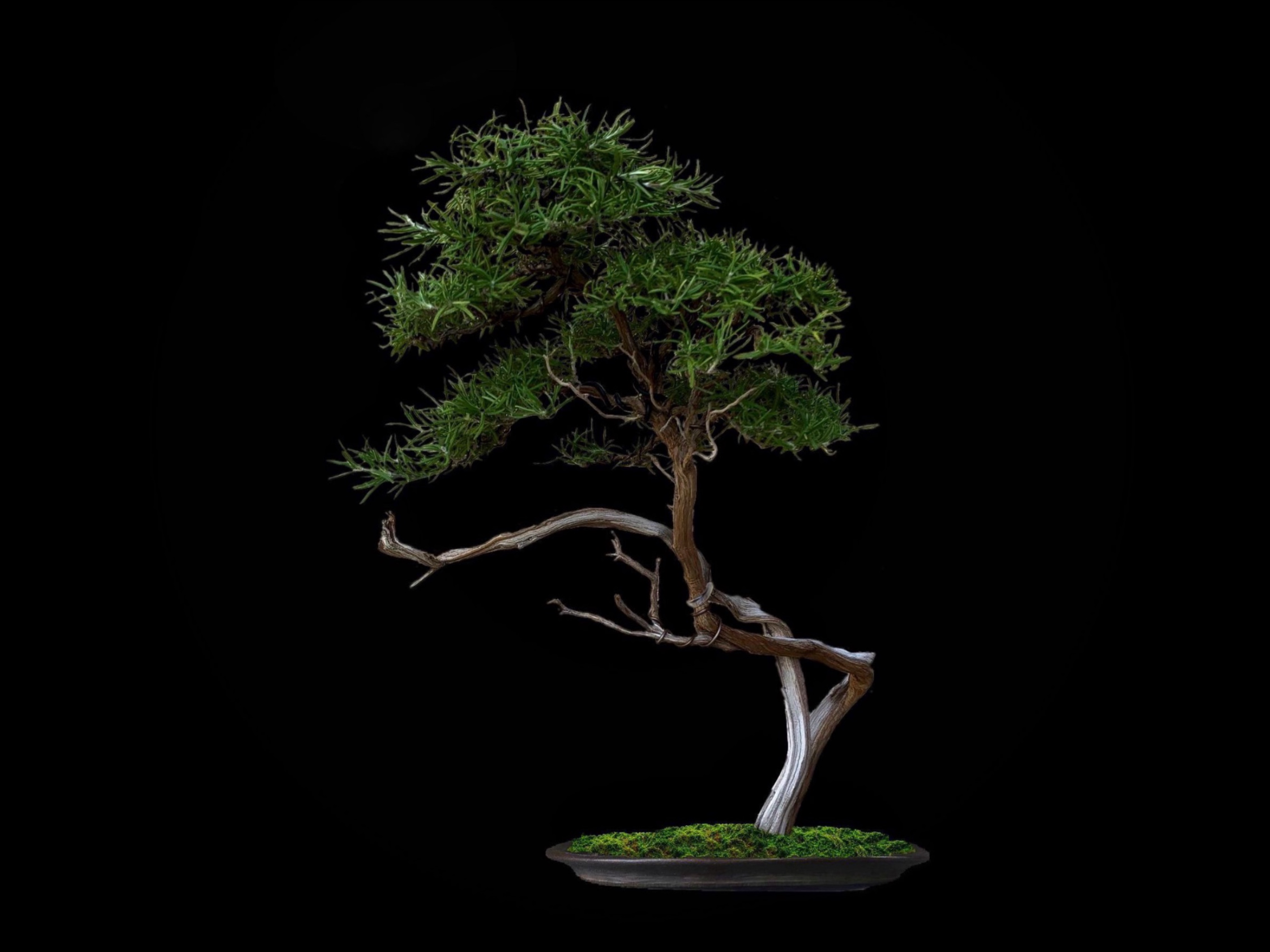 Rosemary / Salvia rosmarinus
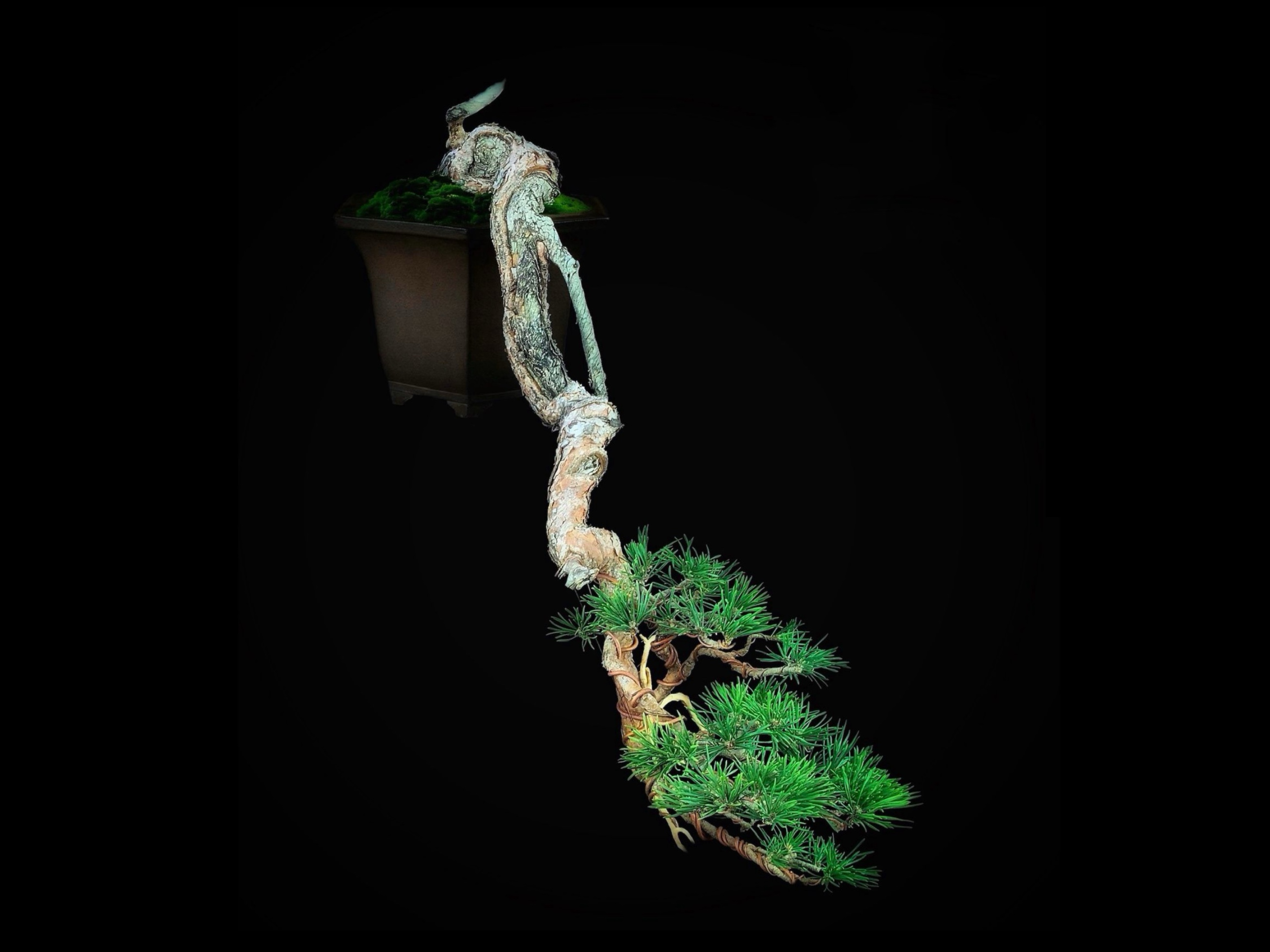 Scots pine / Yōroppa-akamatsu (ヨーロッパアカマツ) / Pinus sylvestris
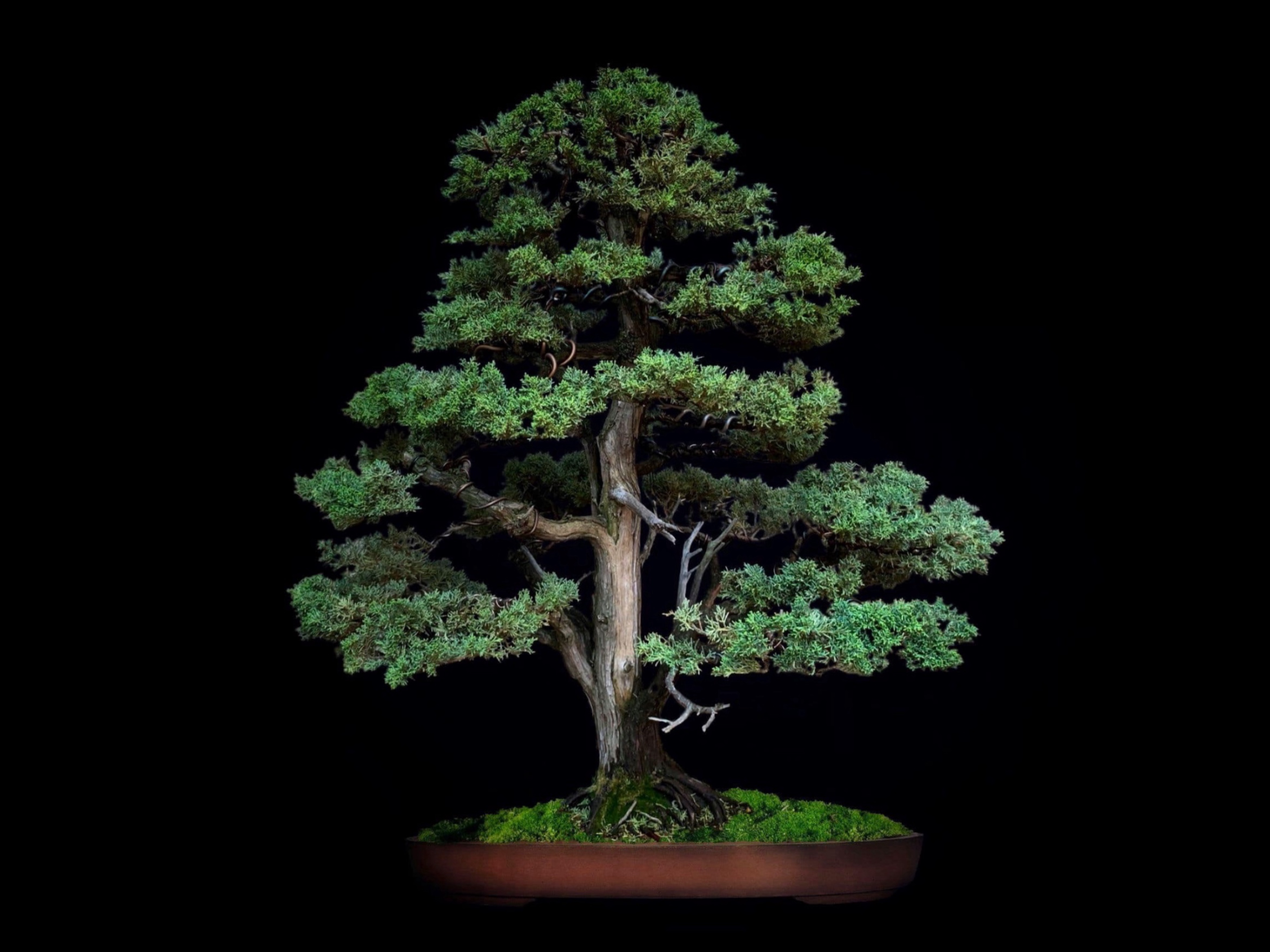 Rocky Mountain juniper / Juniperus scopulorum
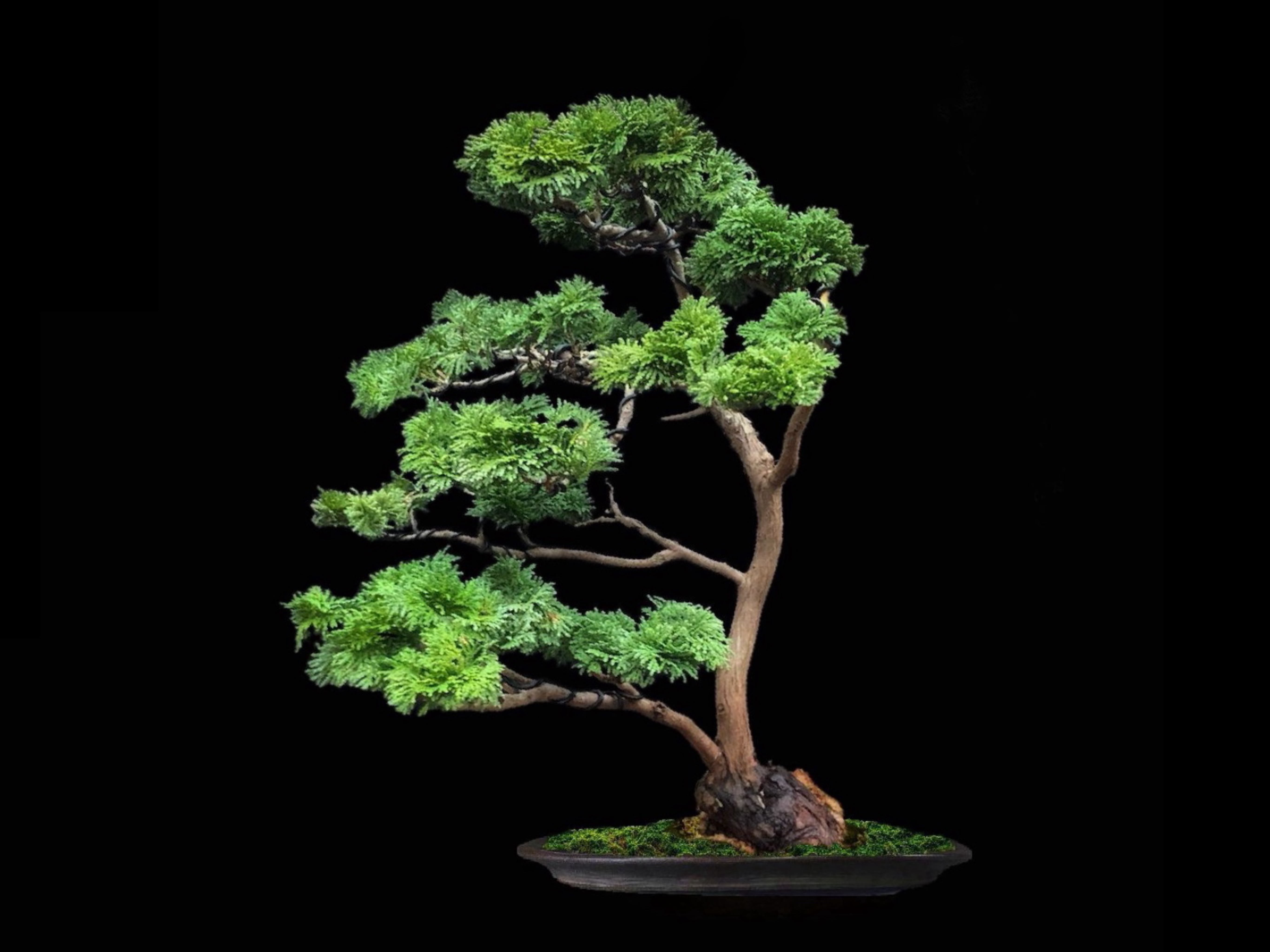 Japanese cedar / Sugi (杉) / Cryptomeria japonica
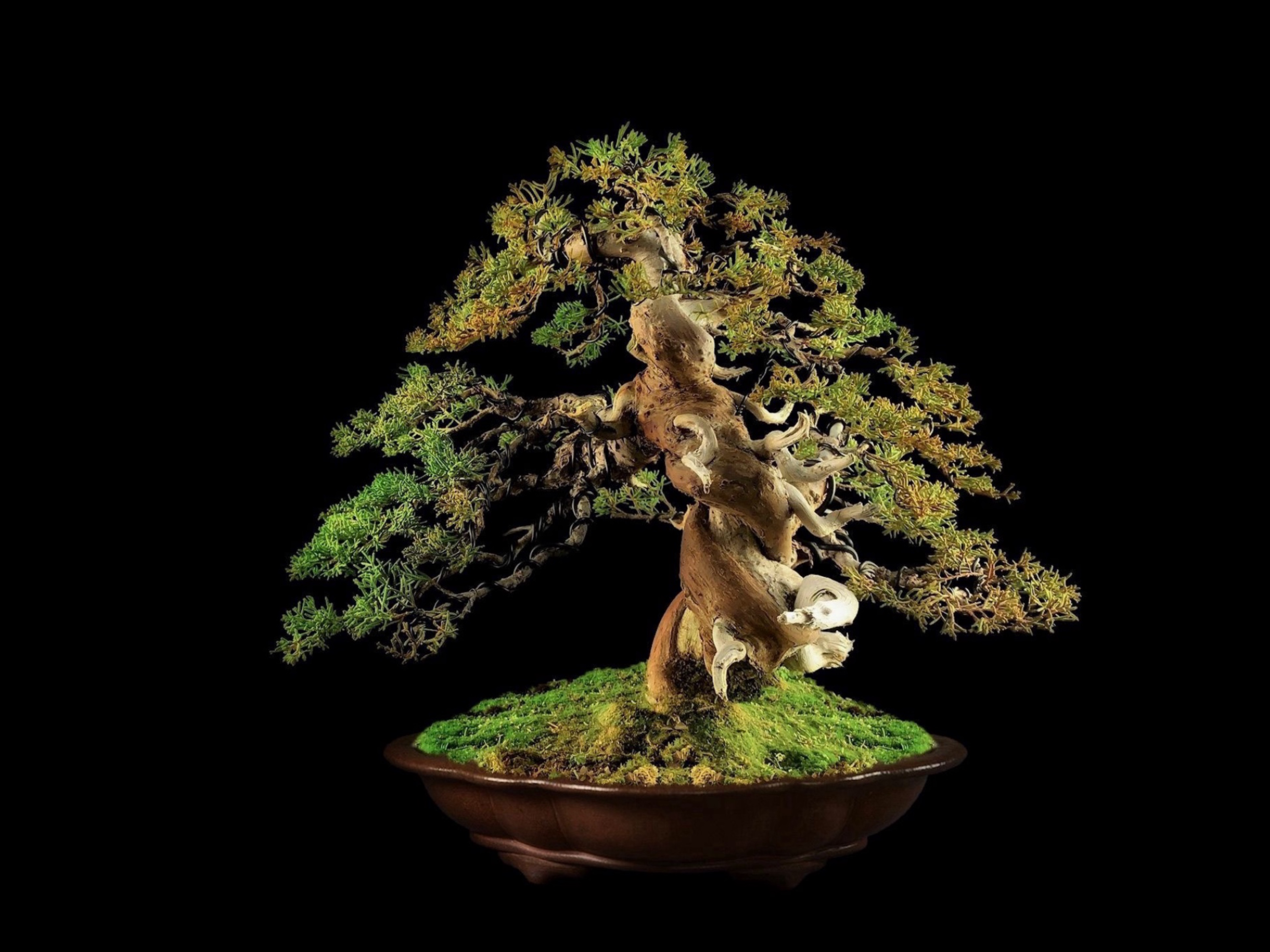 Itoigawa Chinese juniper / Itoigawa-shinpaku (糸魚川真柏) / Juniperus chinensis 'Itoigawa'
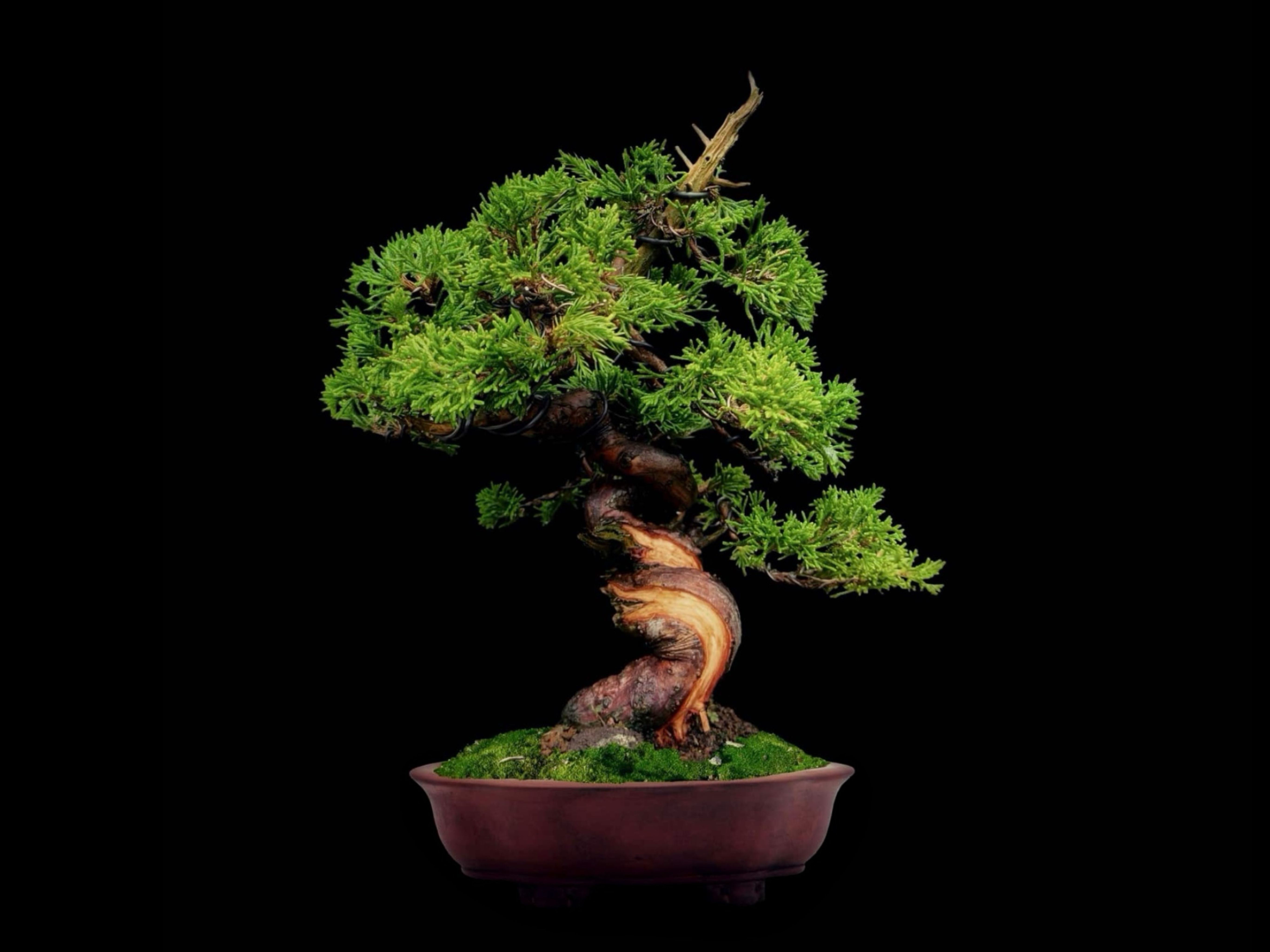 Itoigawa Chinese juniper / Itoigawa-shinpaku (糸魚川真柏) / Juniperus chinensis 'Itoigawa'
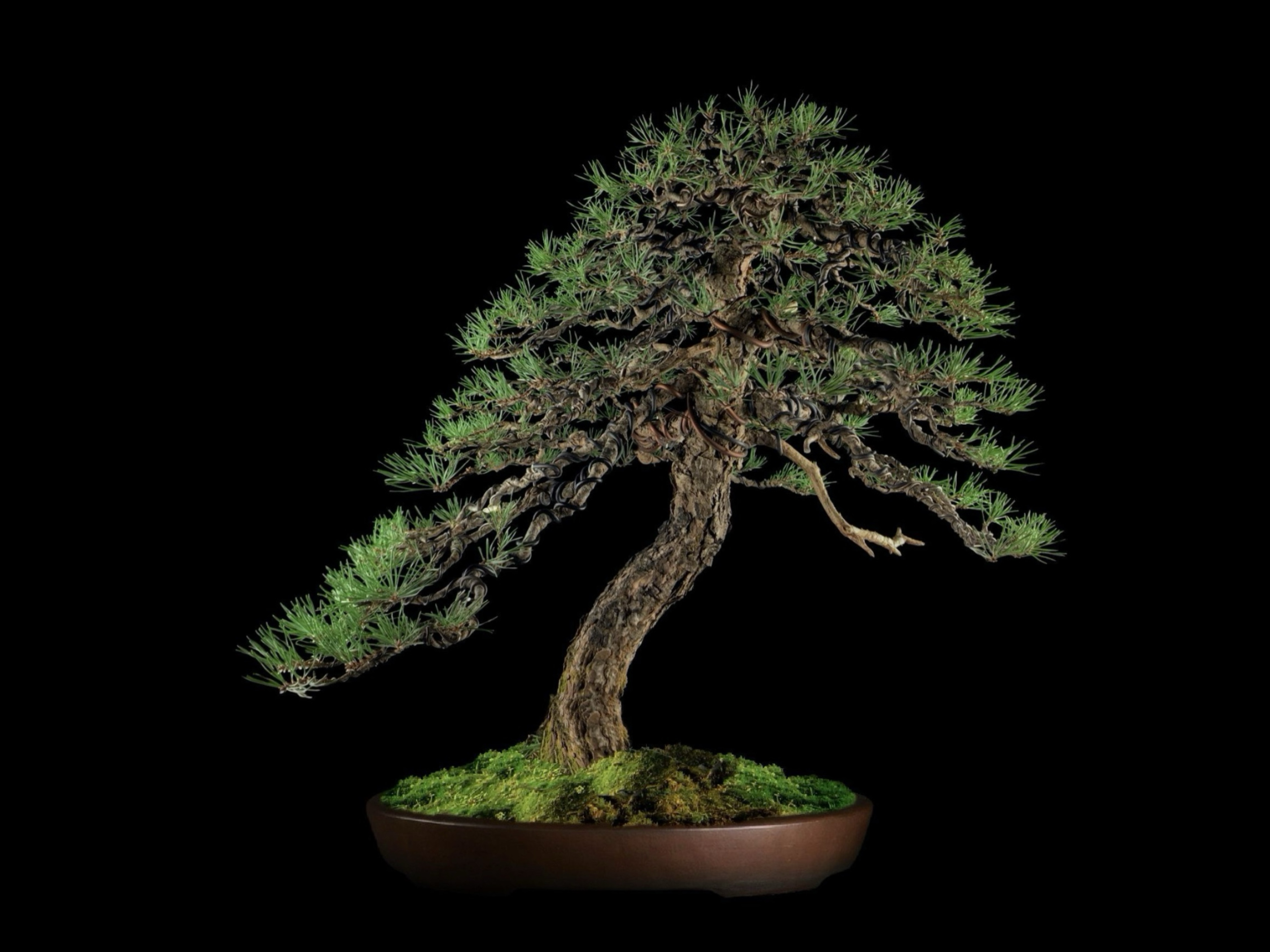 Austrian black pine / Pinus nigra
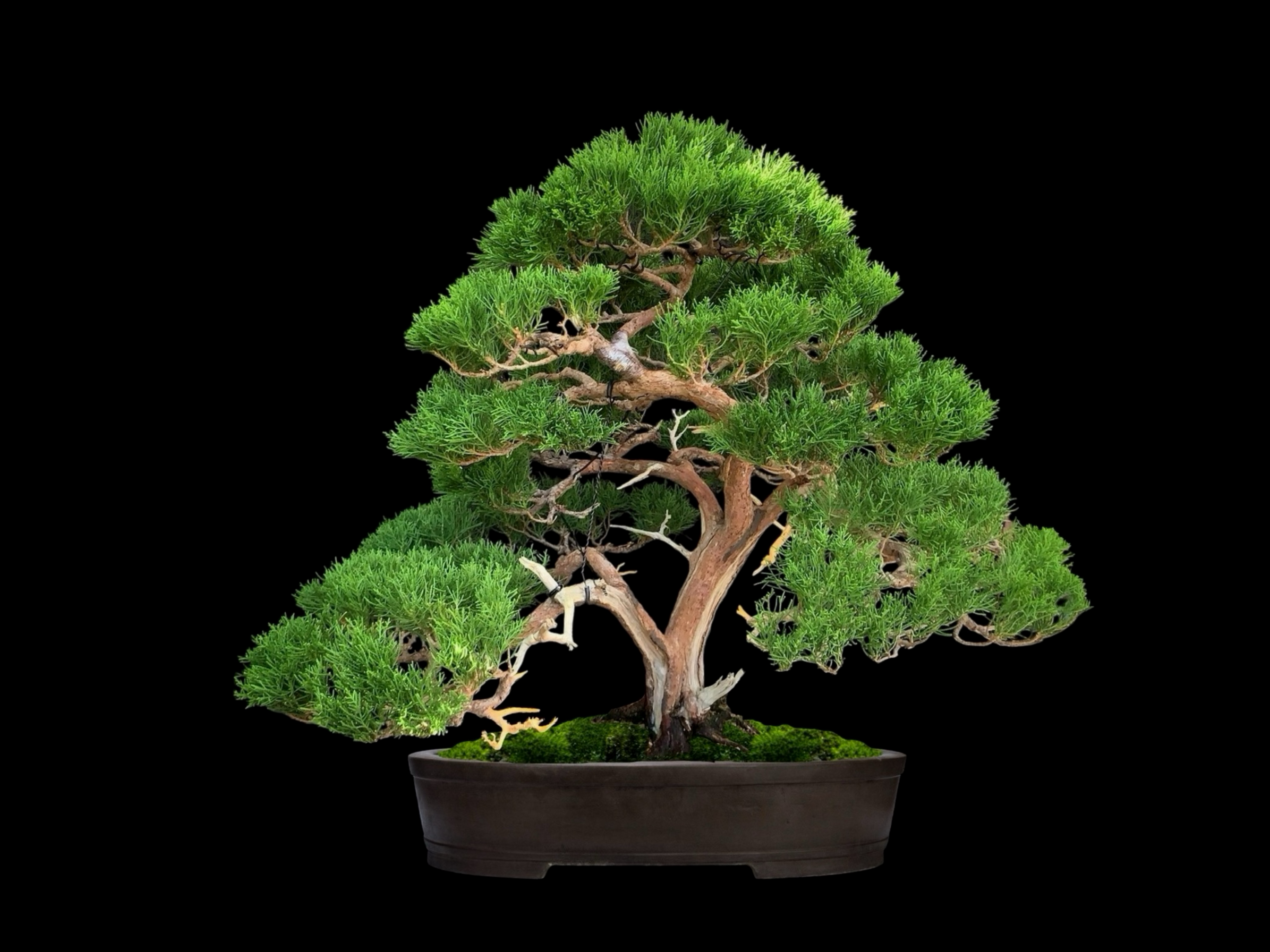 Rocky Mountain juniper / Juniperus scopulorum
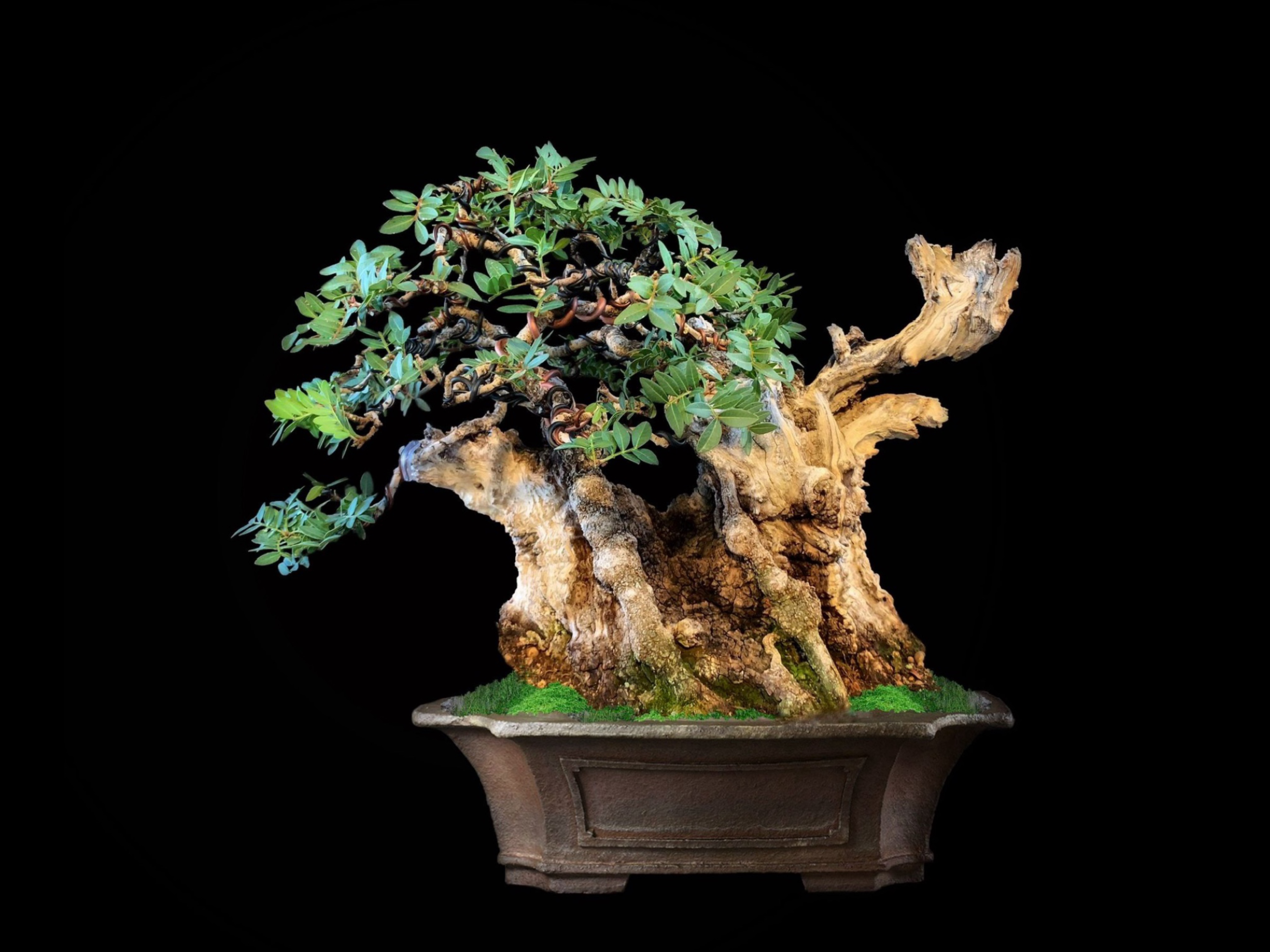 Mastic tree / Pistacia lentiscus
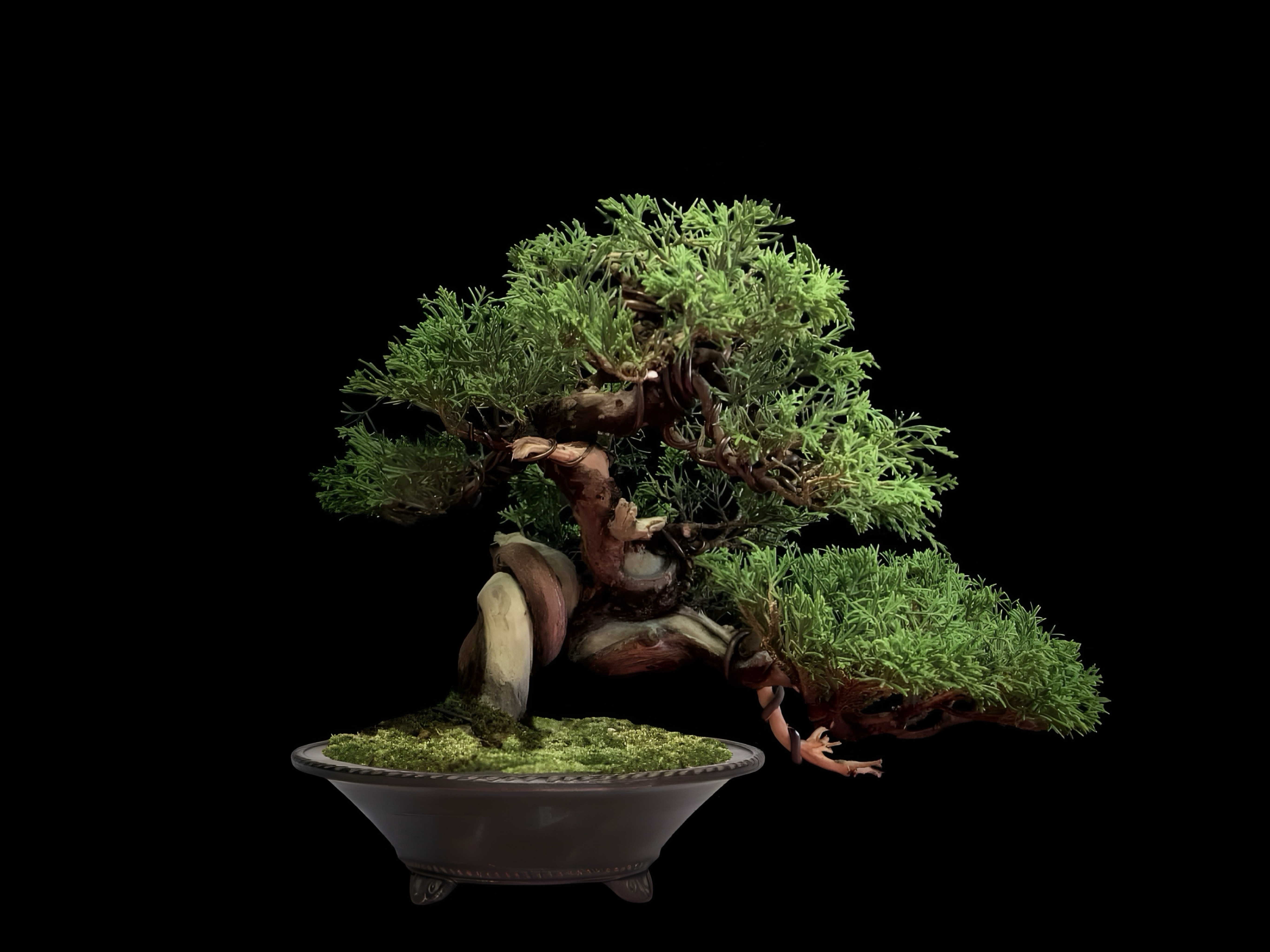 Itoigawa Chinese juniper / Itoigawa-shinpaku (糸魚川真柏) / Juniperus chinensis 'Itoigawa'
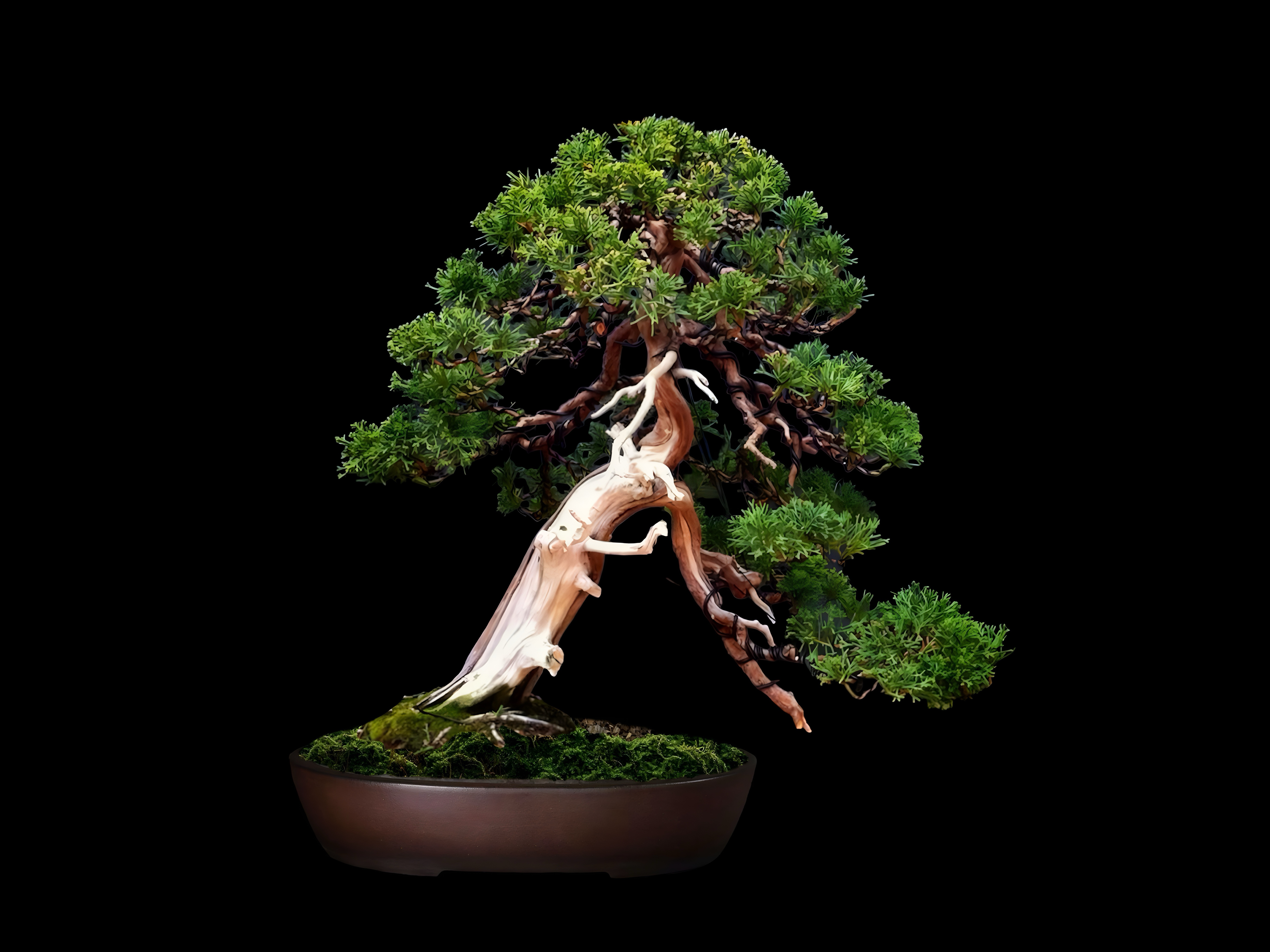 Itoigawa Chinese juniper / Itoigawa-shinpaku (糸魚川真柏) / Juniperus chinensis 'Itoigawa'
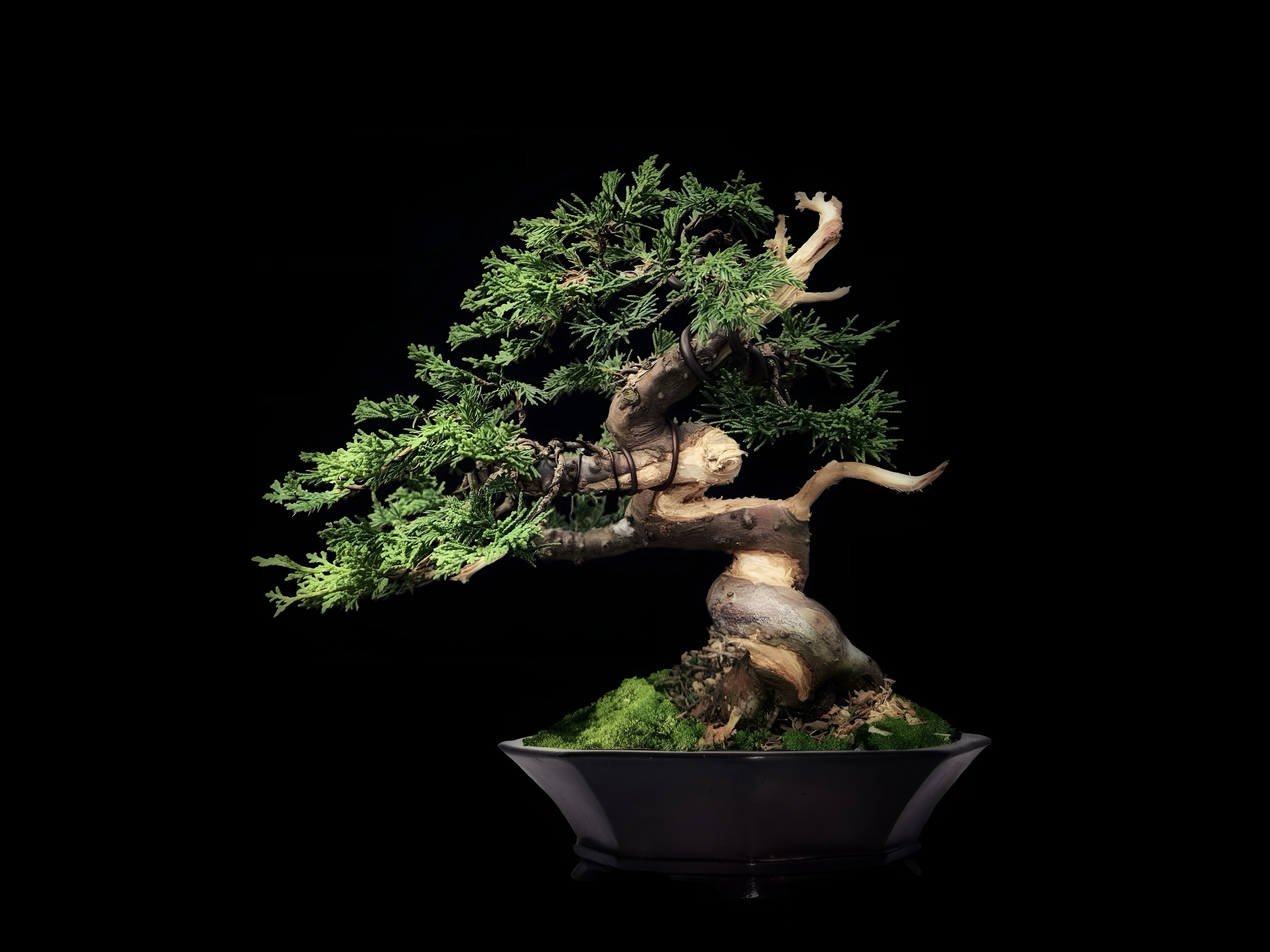 Itoigawa Chinese juniper / Itoigawa-shinpaku (糸魚川真柏) / Juniperus chinensis 'Itoigawa'
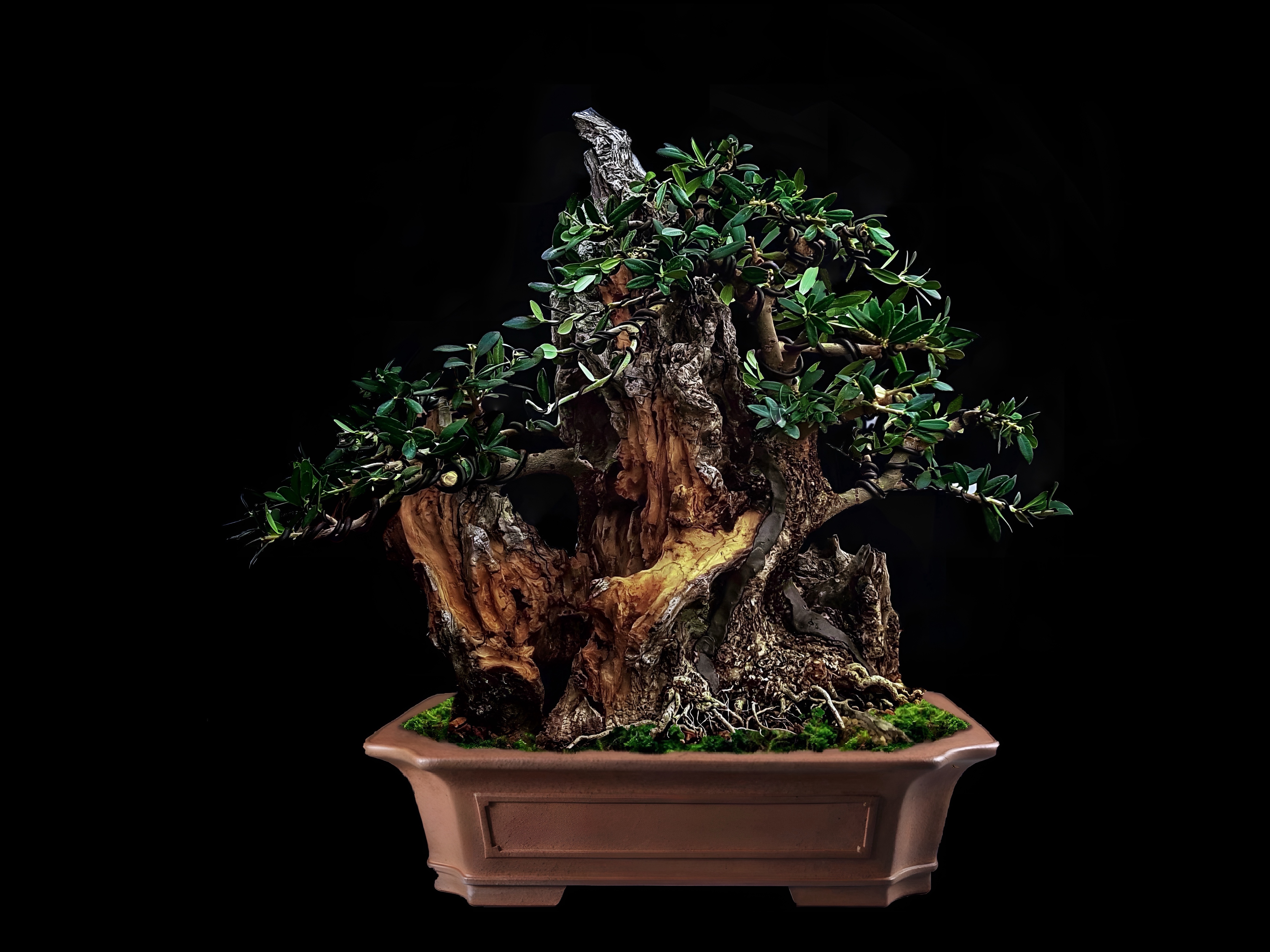 Olive tree / Olea europaea
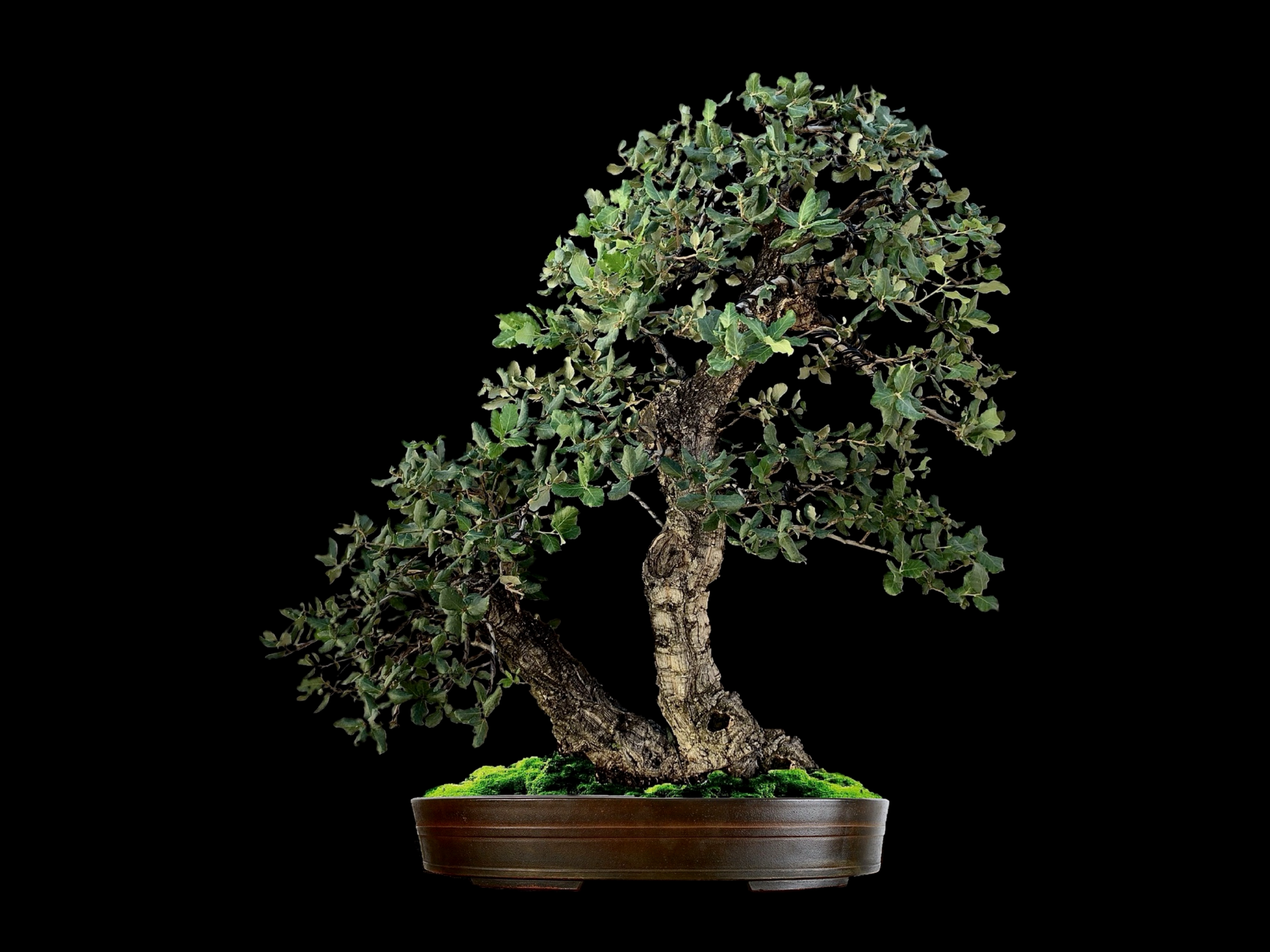 Cork oak / Quercus suber
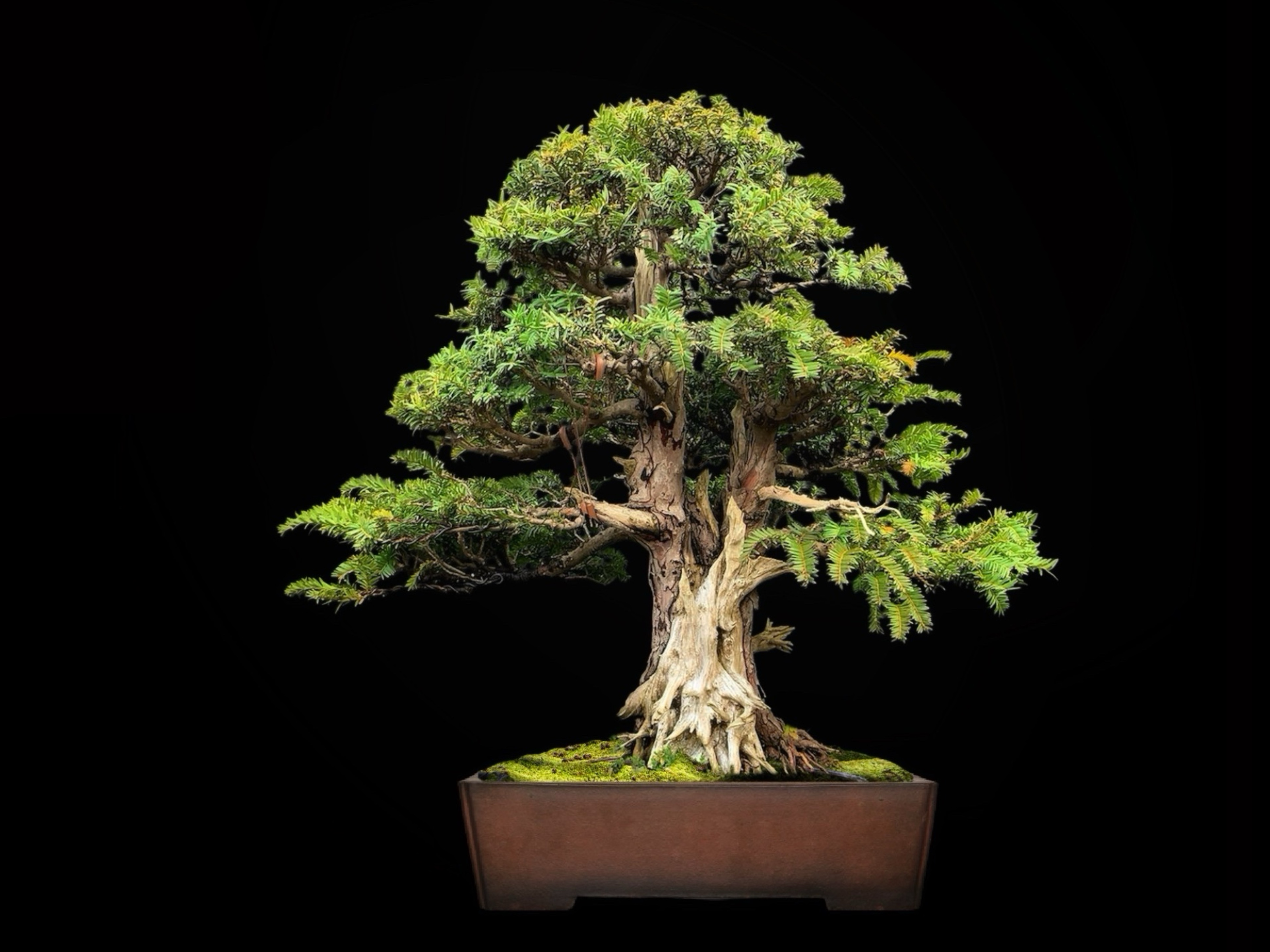 Yew / Taxus baccata
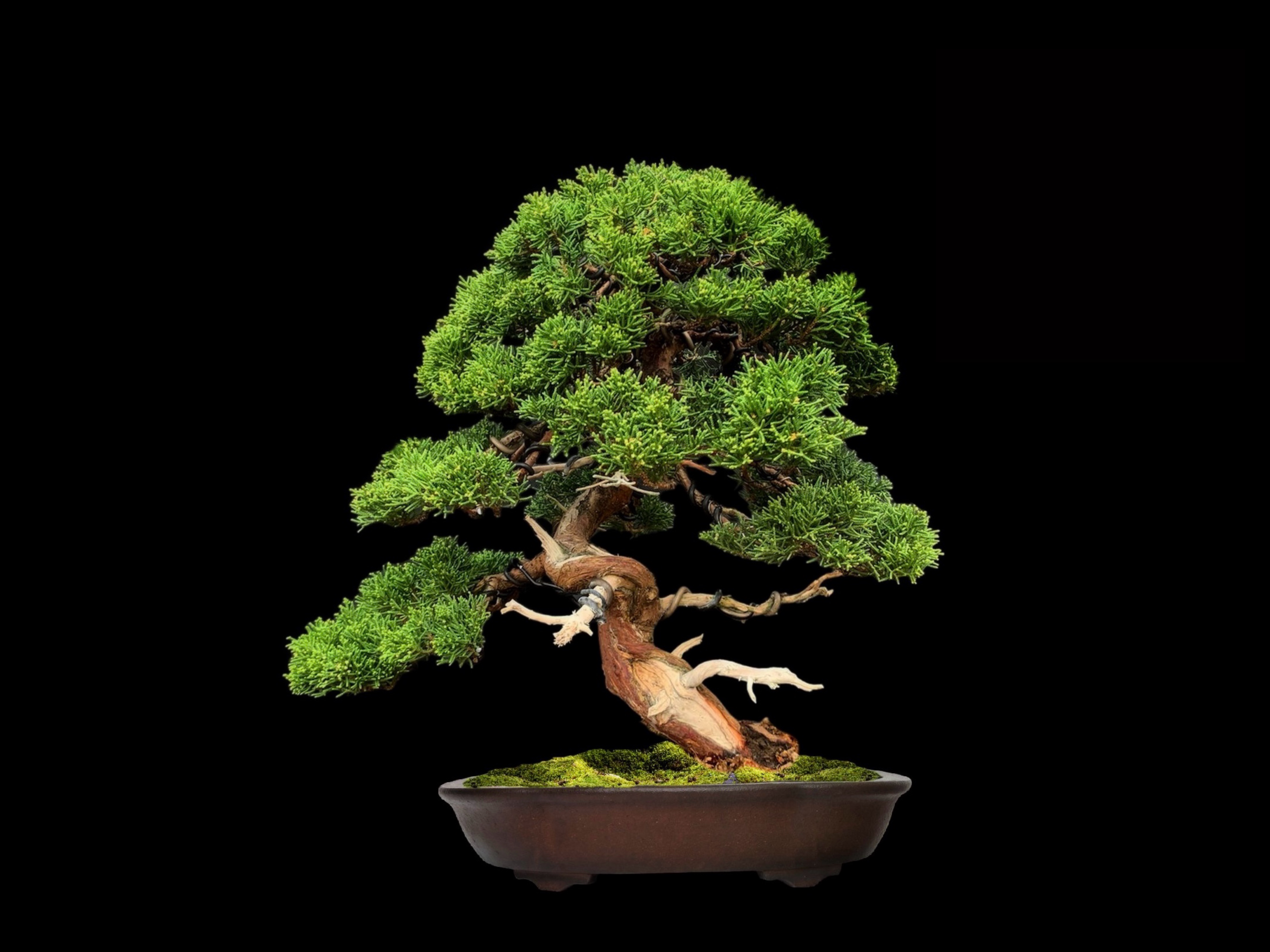 Itoigawa Chinese juniper / Itoigawa-shinpaku (糸魚川真柏) / Juniperus chinensis 'Itoigawa'
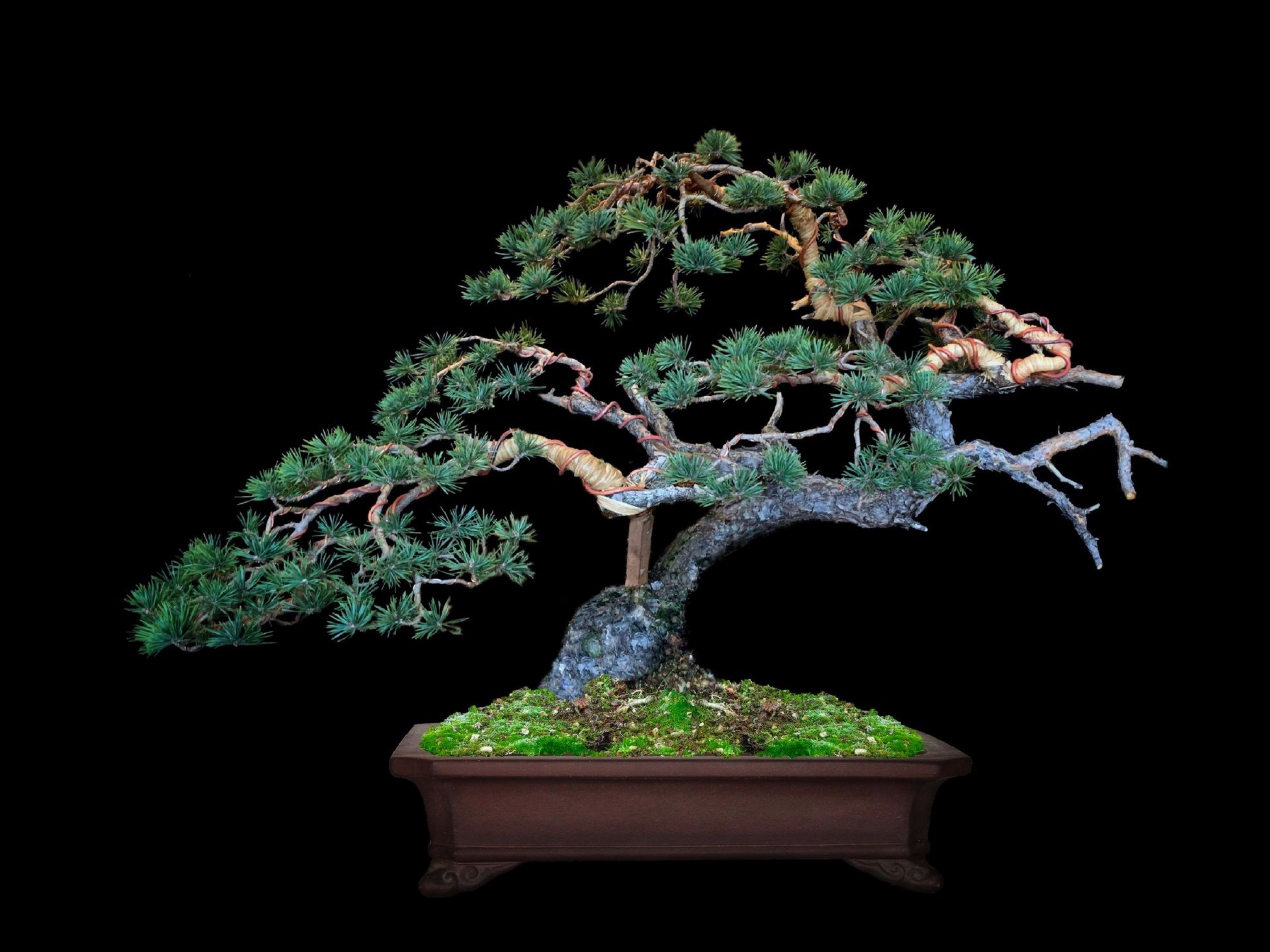 Scots pine / Yōroppa-akamatsu (ヨーロッパアカマツ) / Pinus sylvestris
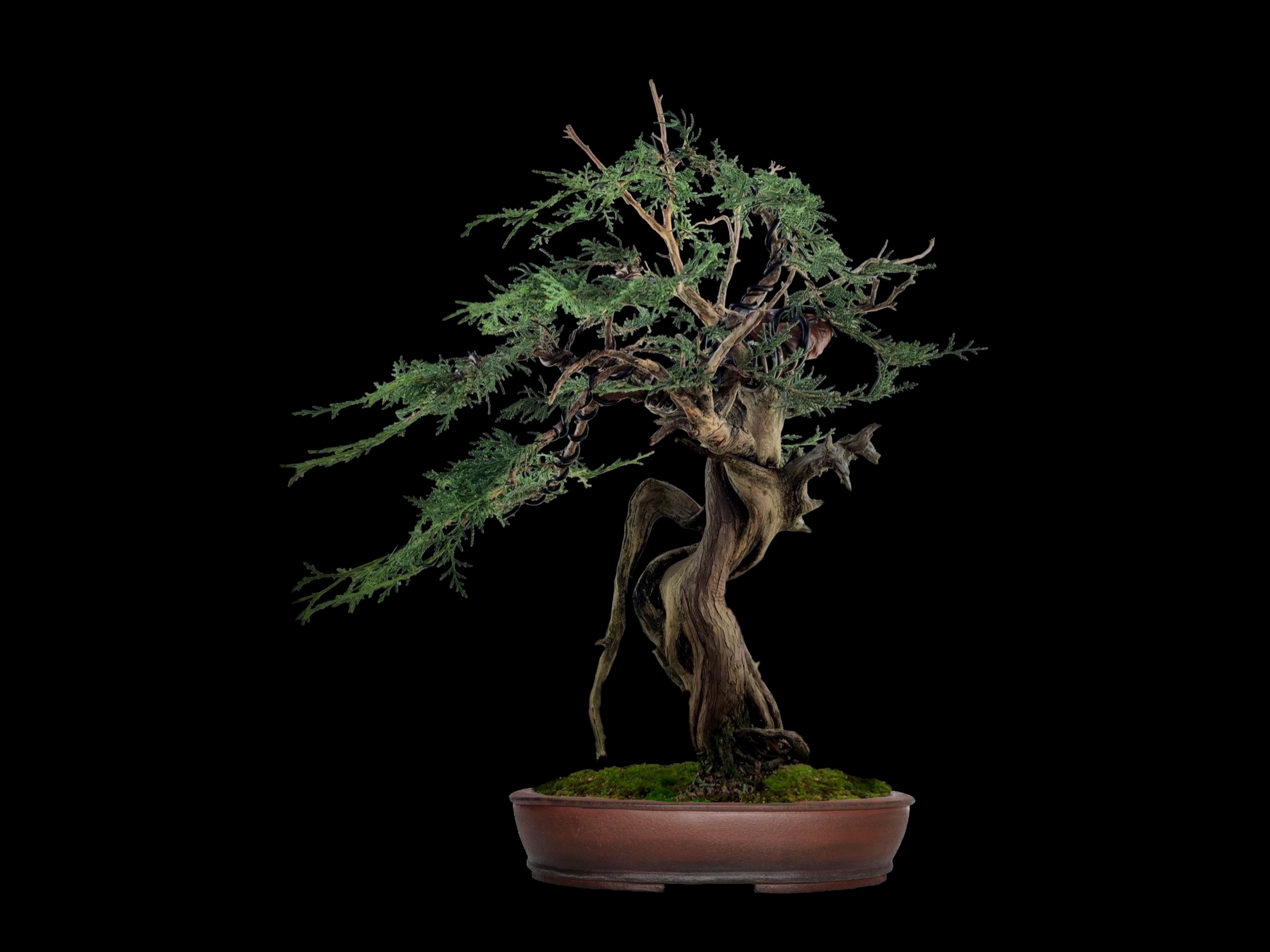 Spanish juniper / Juniperus thurifera
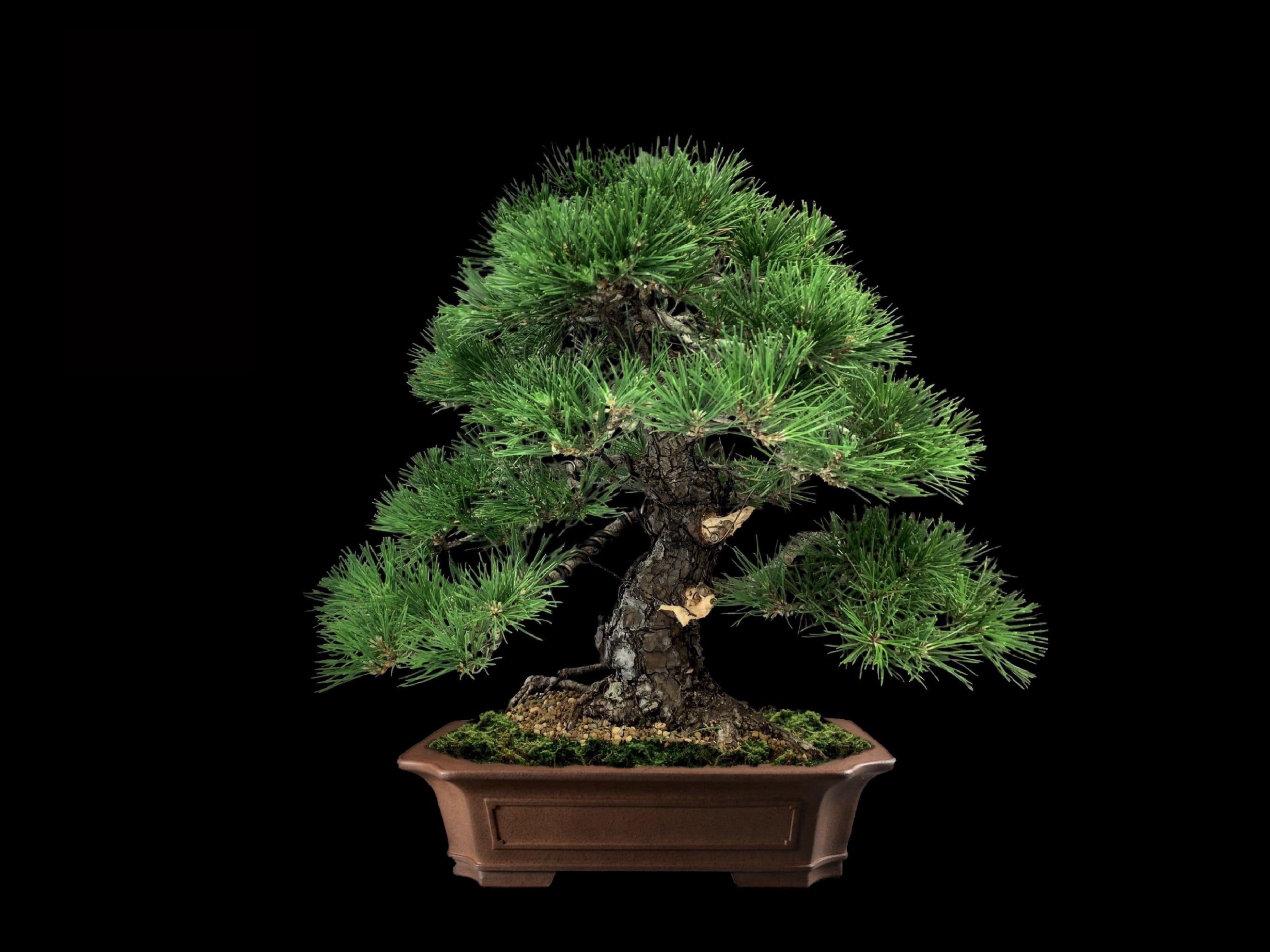 Japanese black pine / Kuromatsu (黒松) / Pinus thunbergii
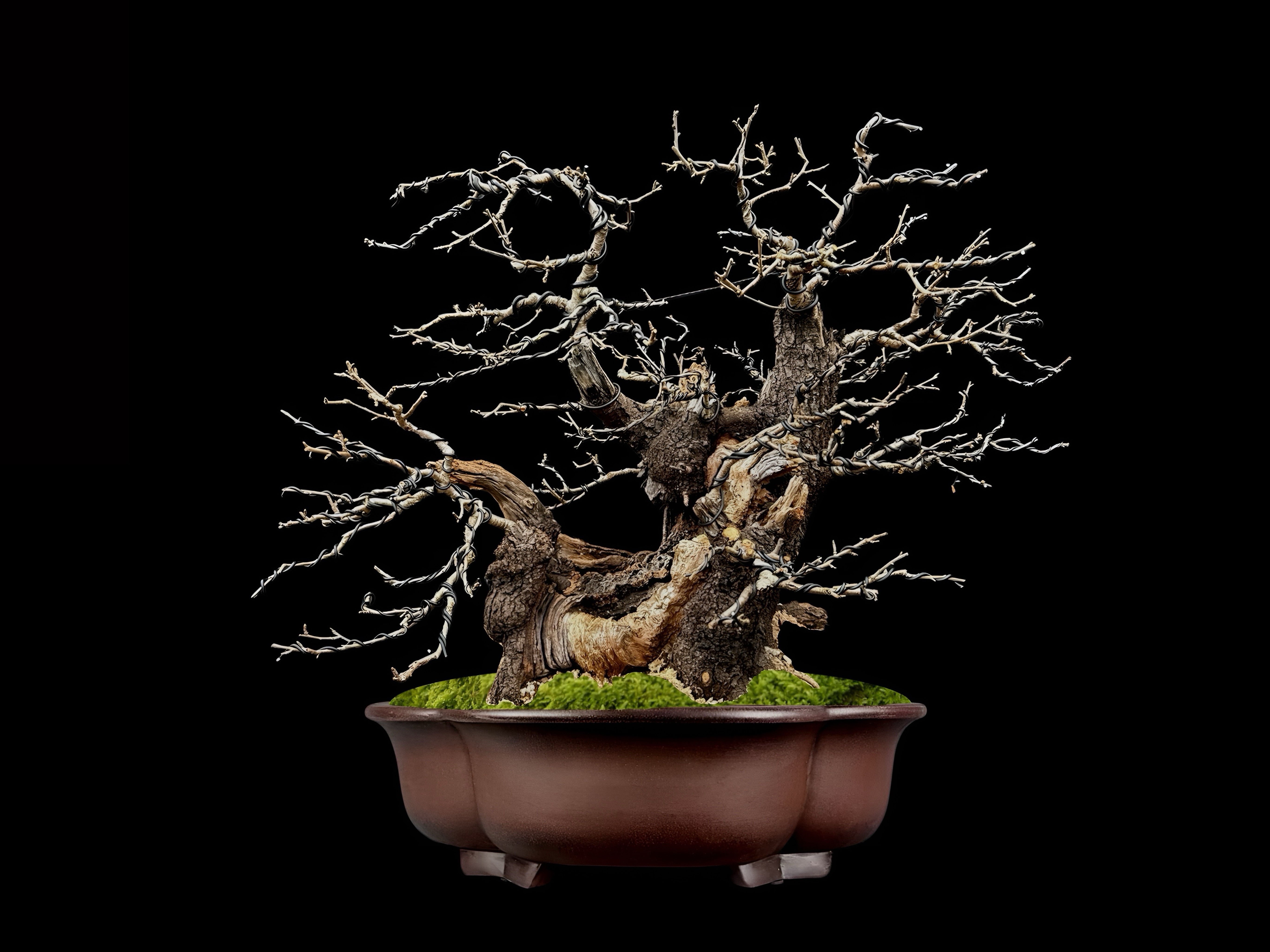 St Lucie cherry / Prunus mahaleb
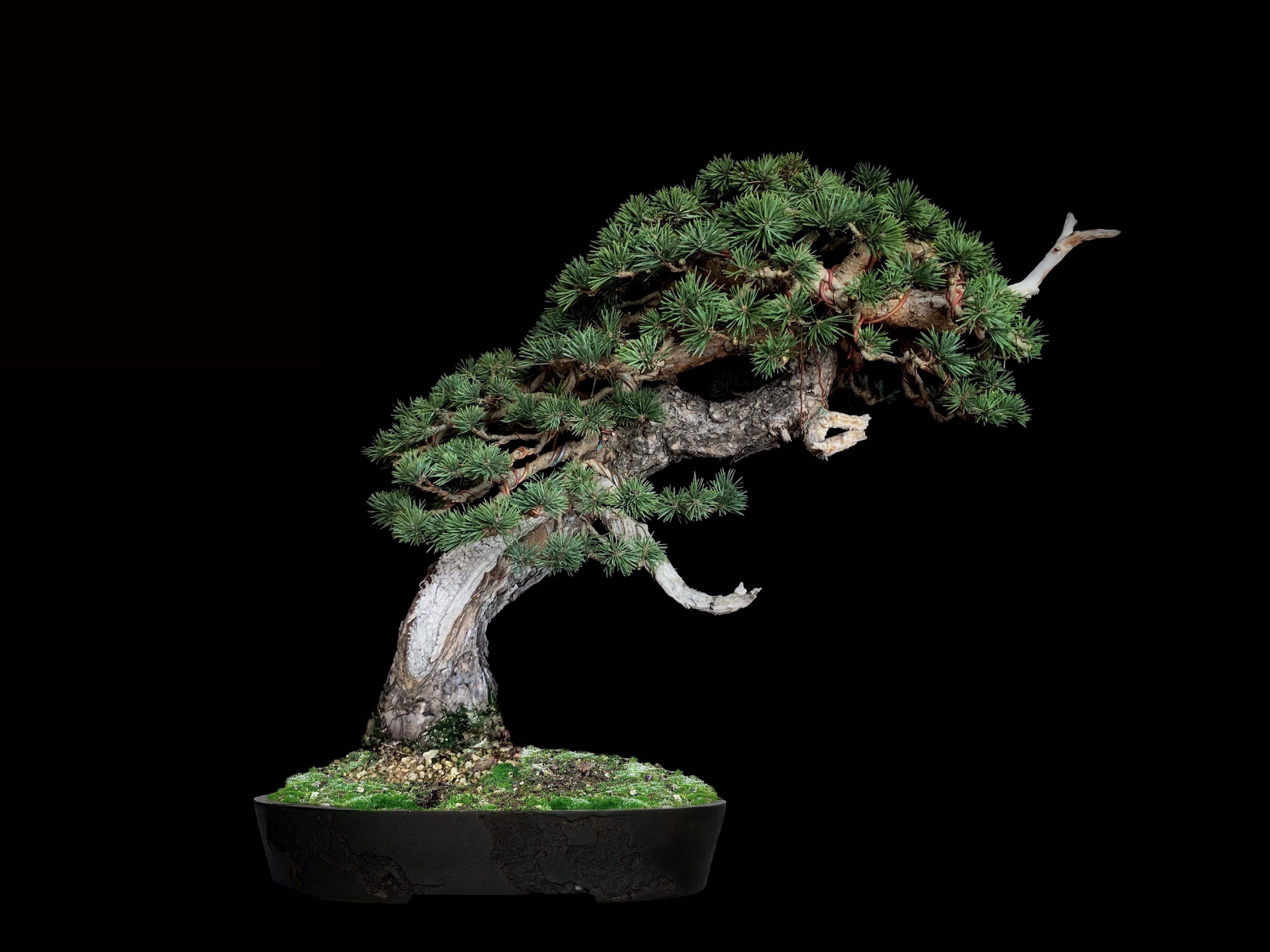 Scots pine / Yōroppa-akamatsu (ヨーロッパアカマツ) / Pinus sylvestris
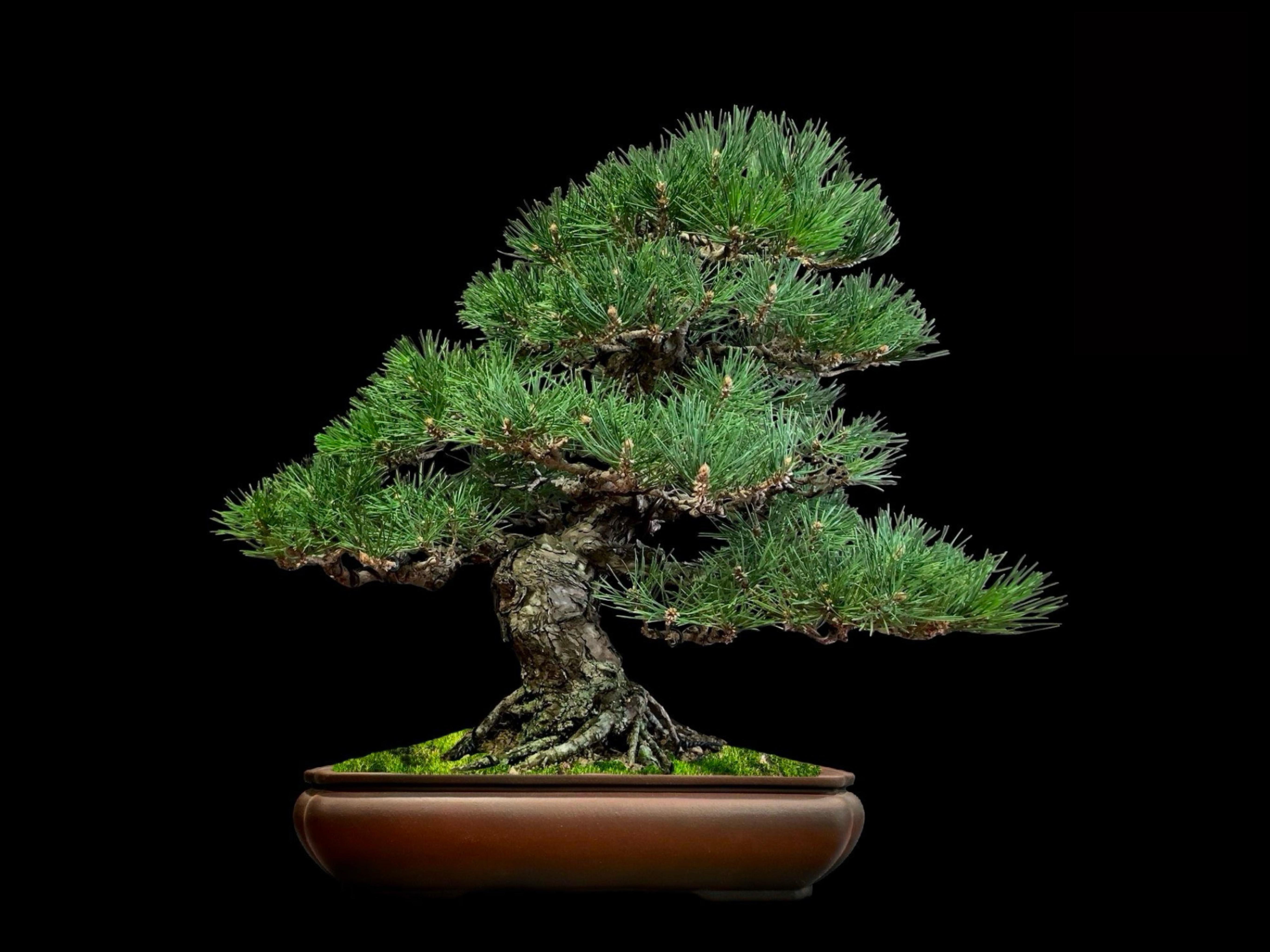 Japanese black pine / Kuromatsu (黒松) / Pinus thunbergii
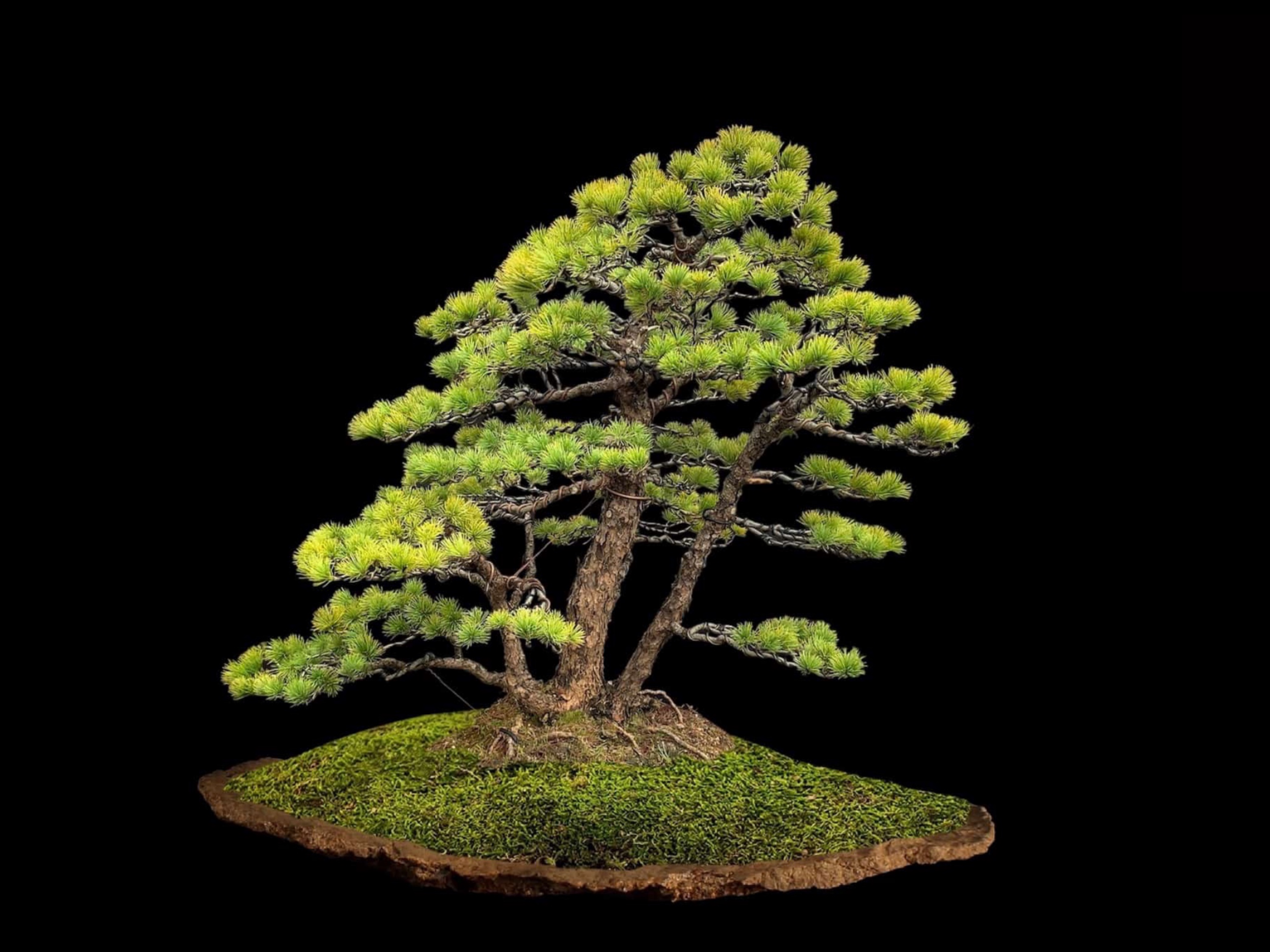 Japanese white pine / Goyōmatsu (五葉松) / Pinus pentaphylla
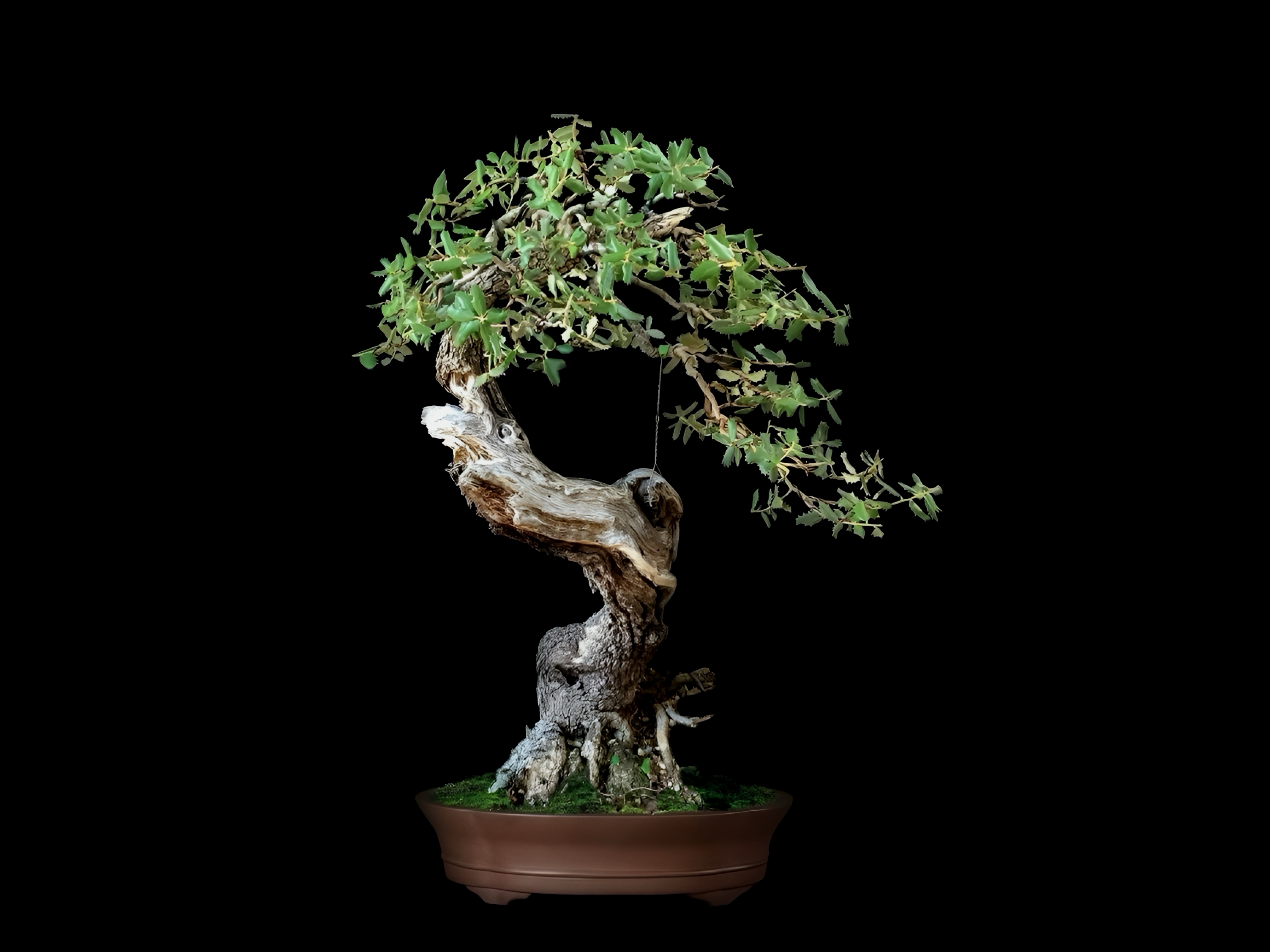 Holm oak / Quercus ilex
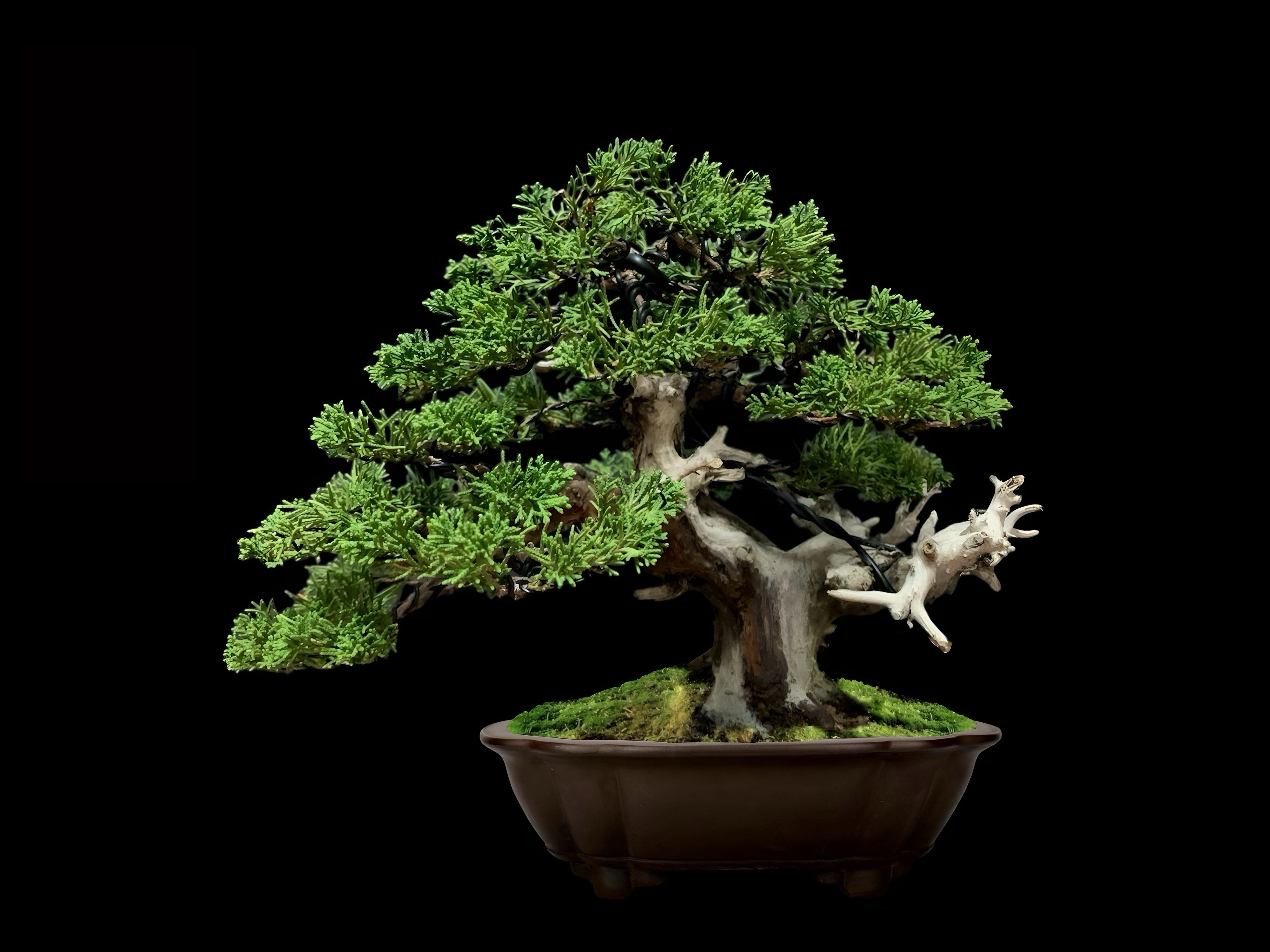 Itoigawa Chinese juniper / Itoigawa-shinpaku (糸魚川真柏) / Juniperus chinensis 'Itoigawa'
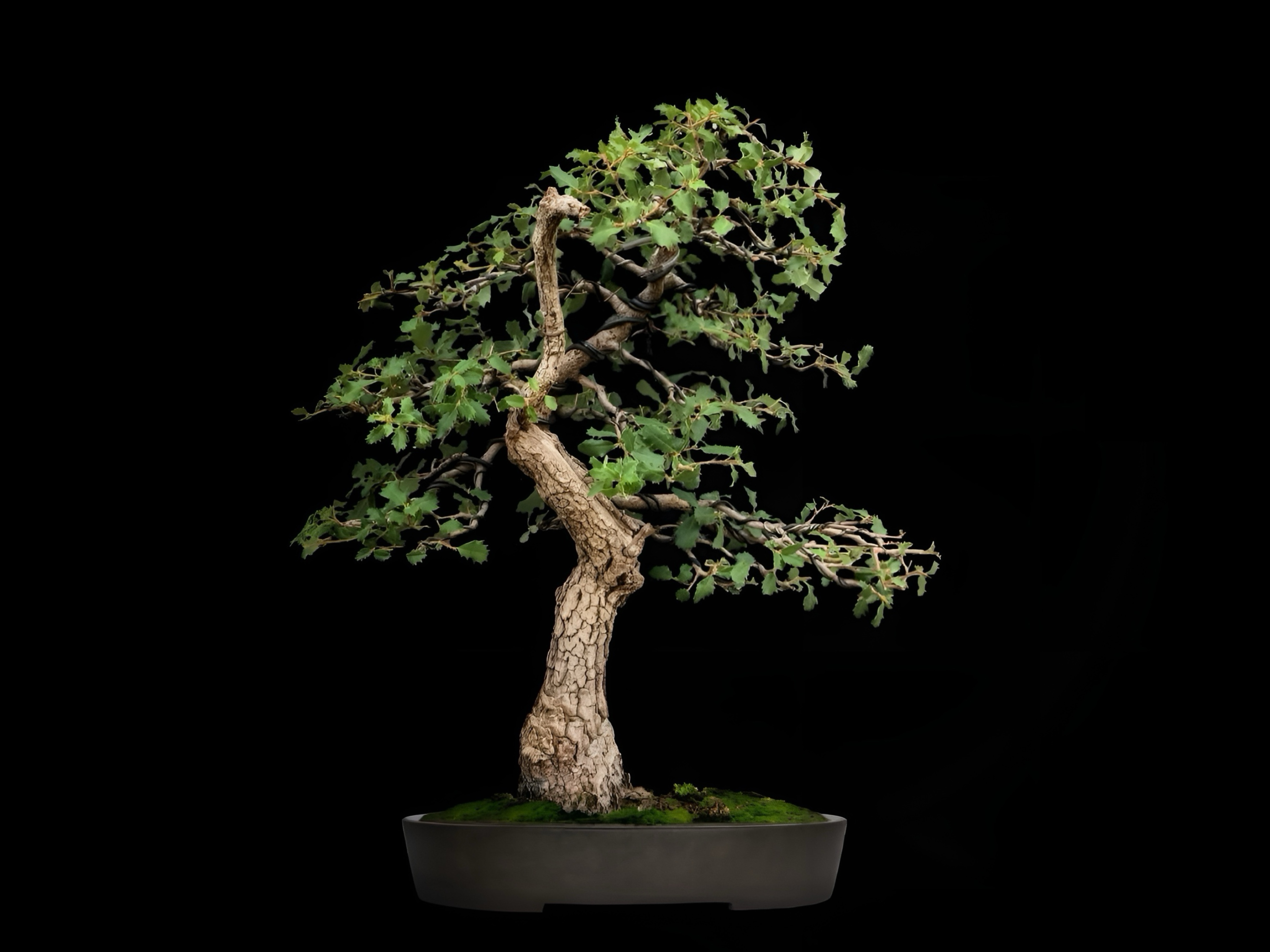 Portuguese oak / Quercus faginea
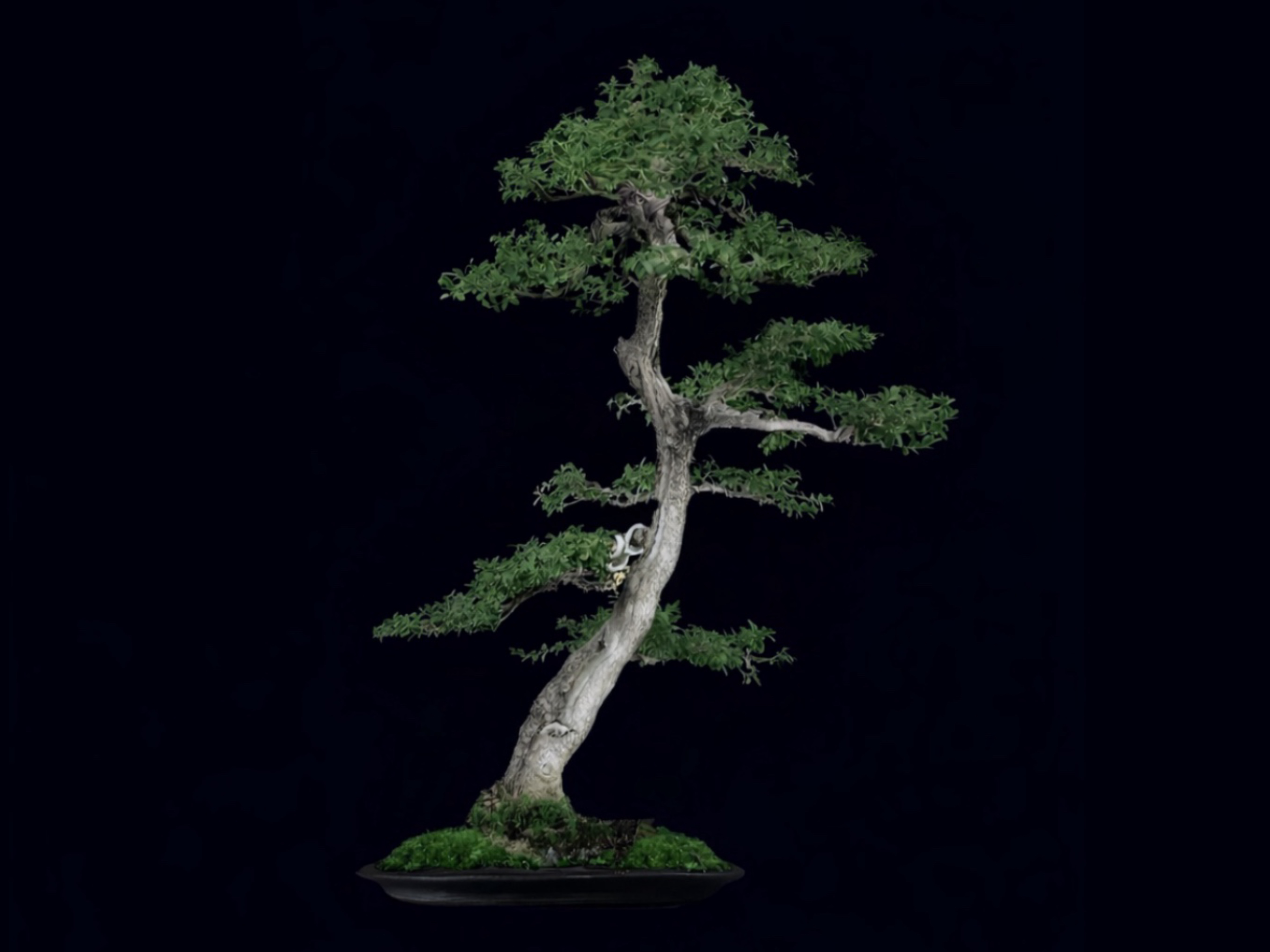 Boxwood / Buxus sempervirens
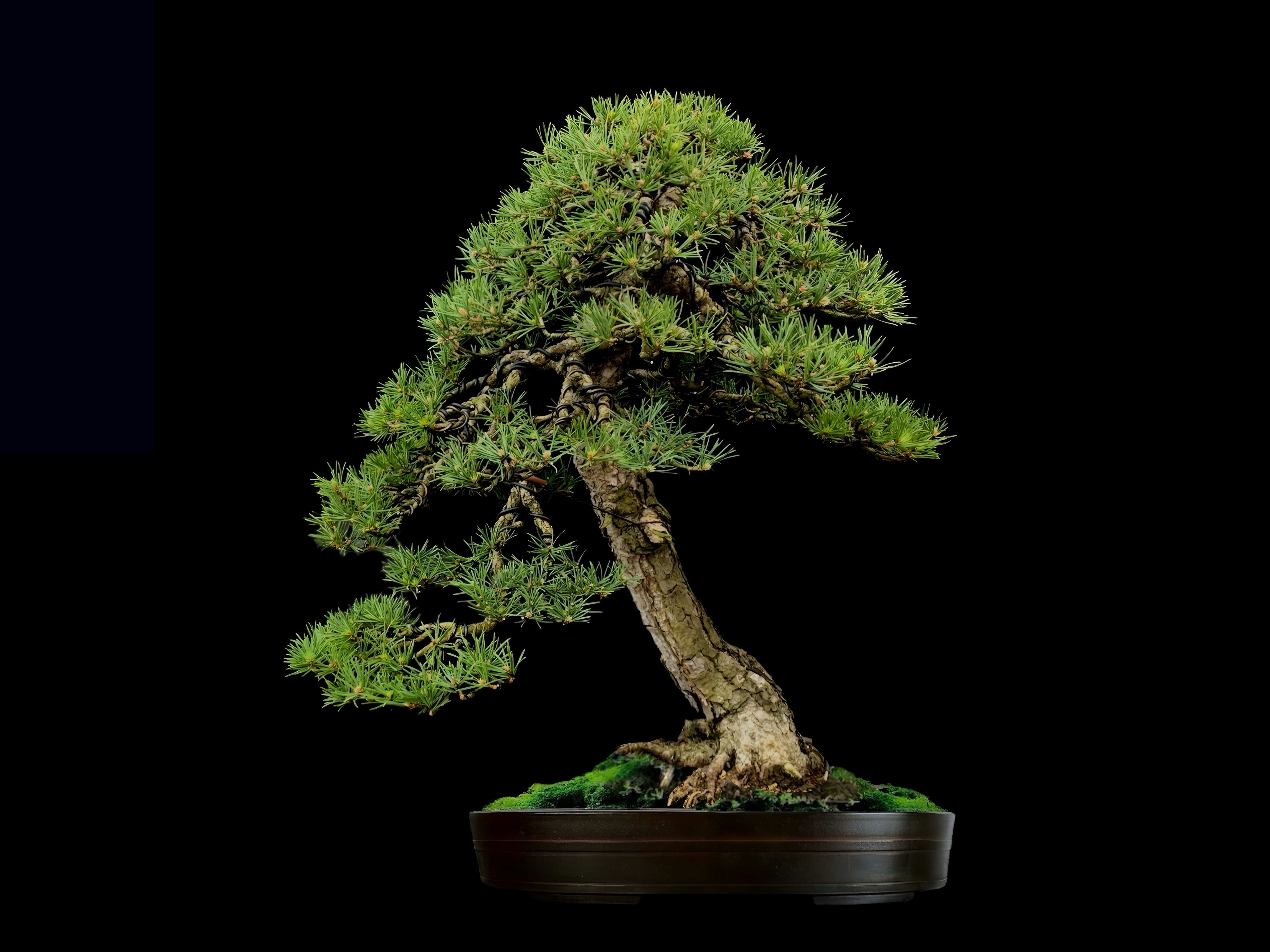 Scots pine / Yōroppa-akamatsu (ヨーロッパアカマツ) / Pinus sylvestris
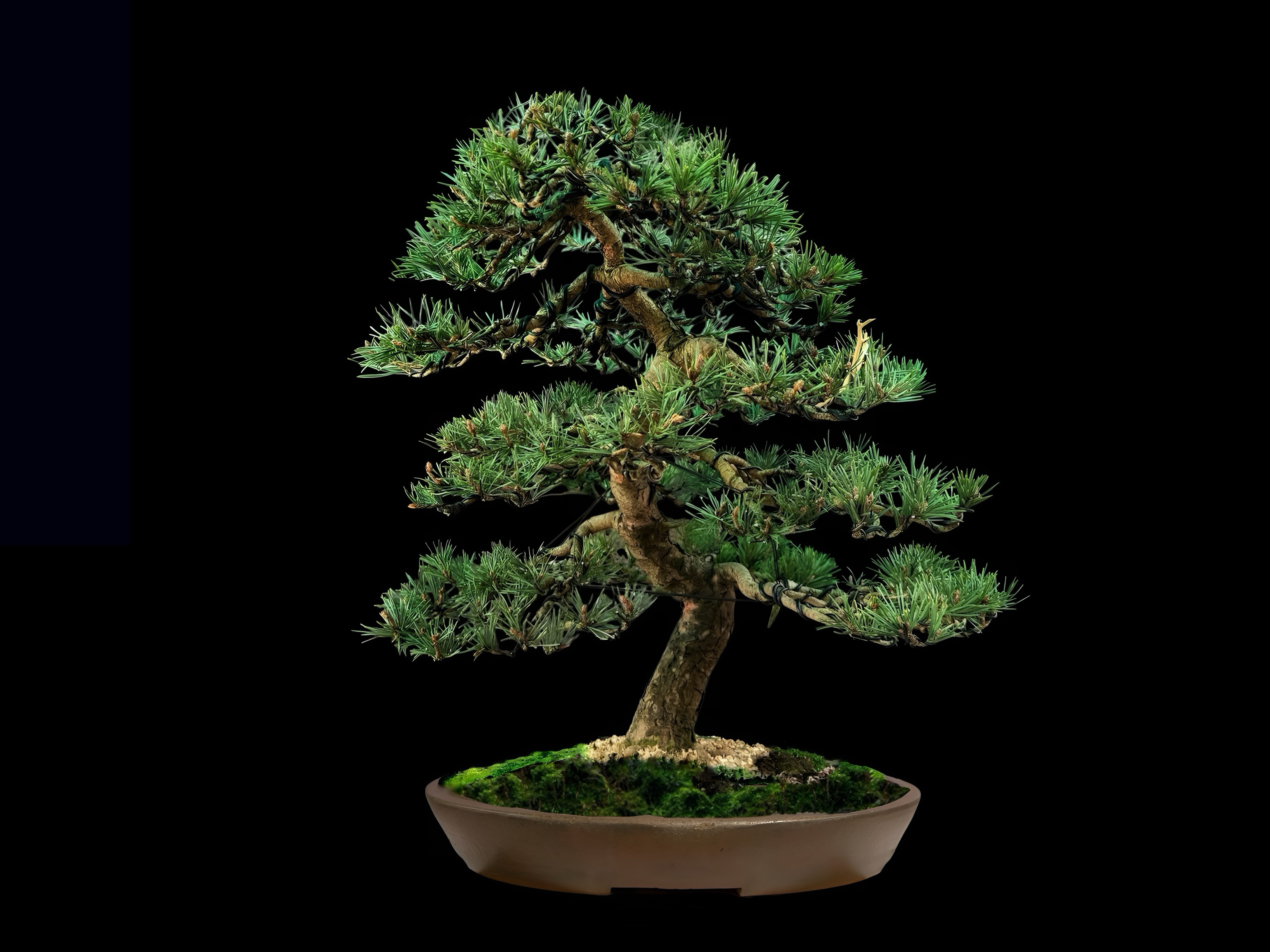 Scots pine / Yōroppa-akamatsu (ヨーロッパアカマツ) / Pinus sylvestris
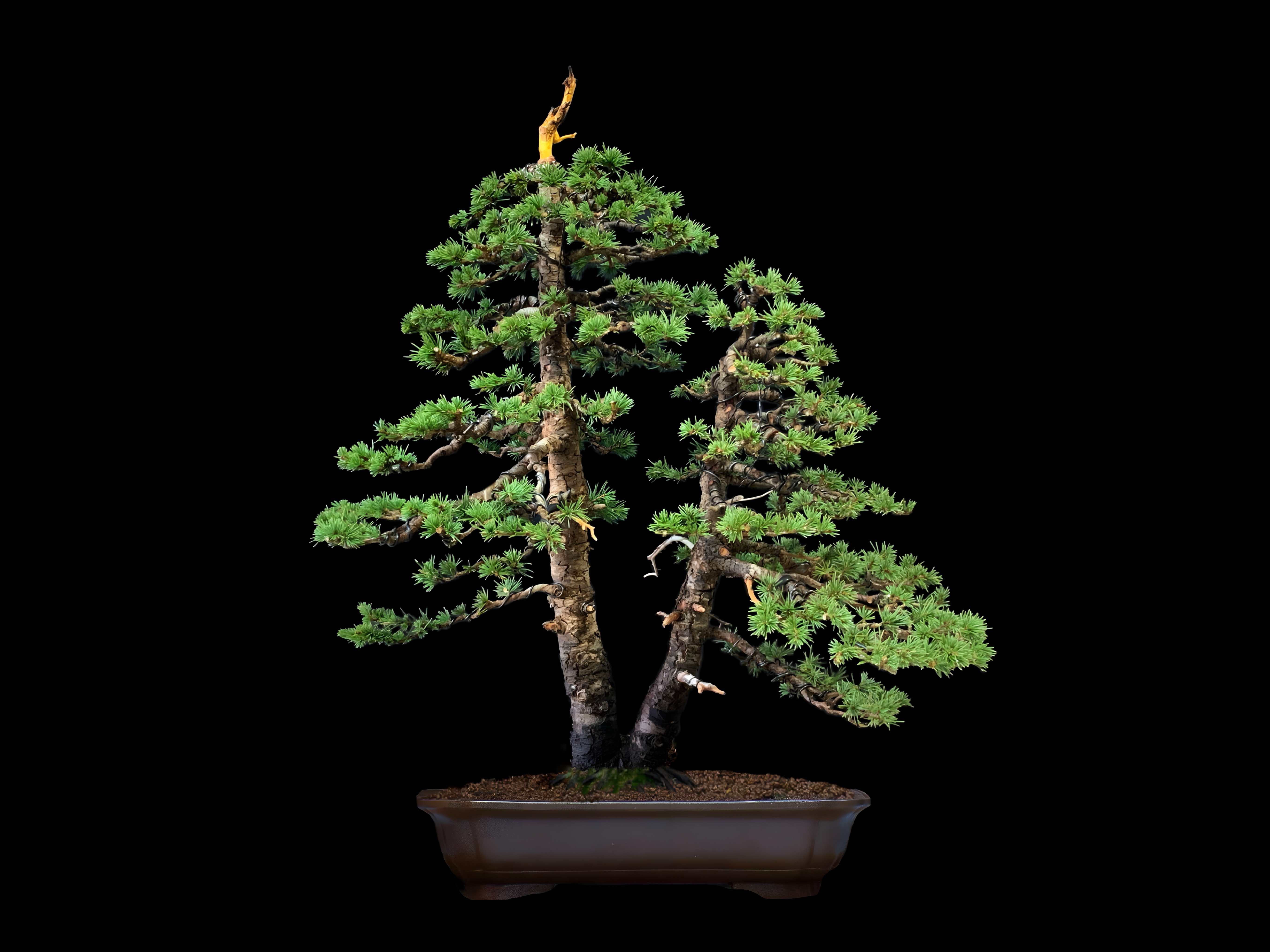 Atlas cedar / Cedrus atlantica
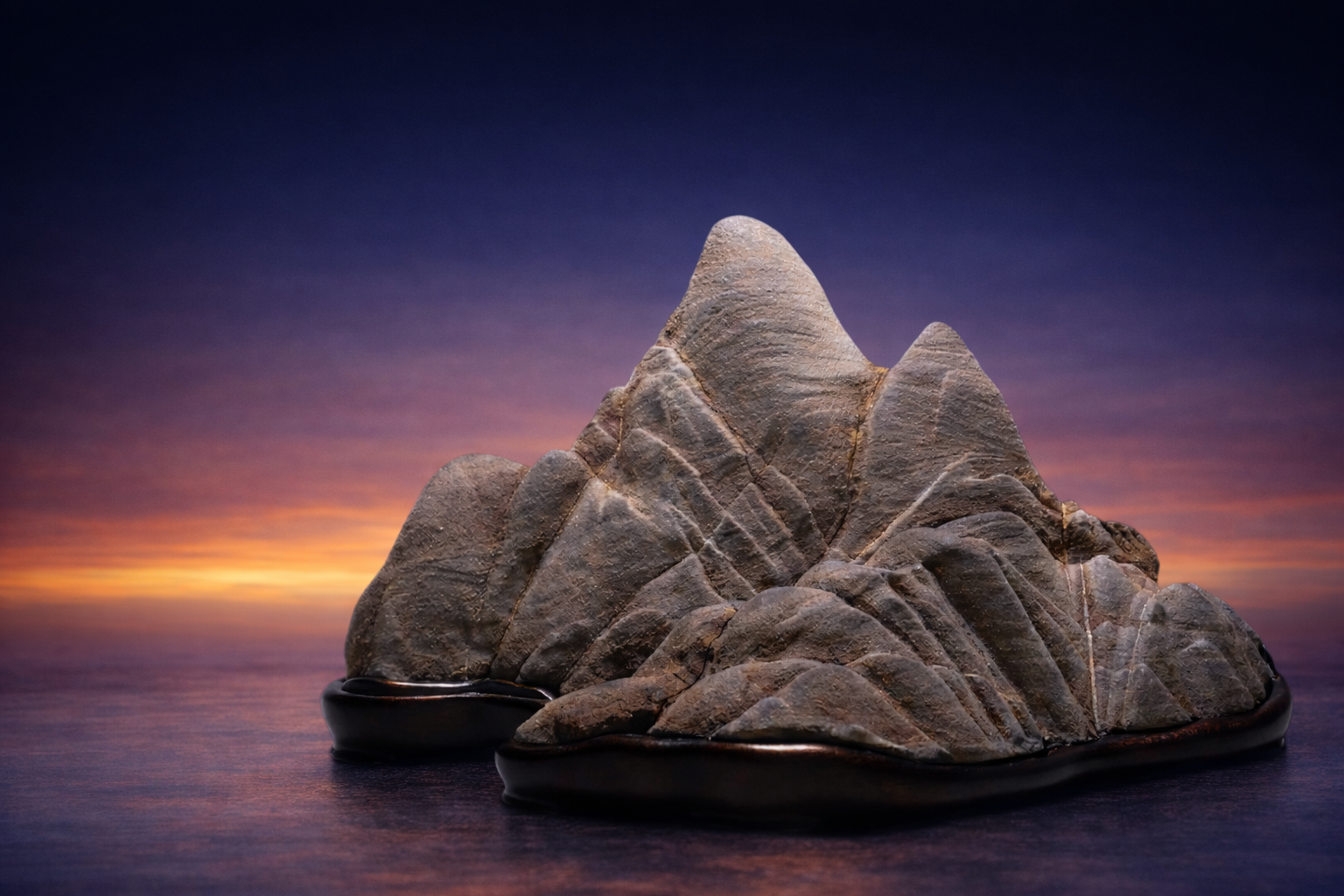 Nearby mountain stone / Yamagata-ishi (山形石) / Kinzan-seki (近山石)
 Bridge stone / Hashi-ishi (橋石)
 Distant mountain stone / Yamagata-ishi (山形石) / Toyama-ishi (遠山石)
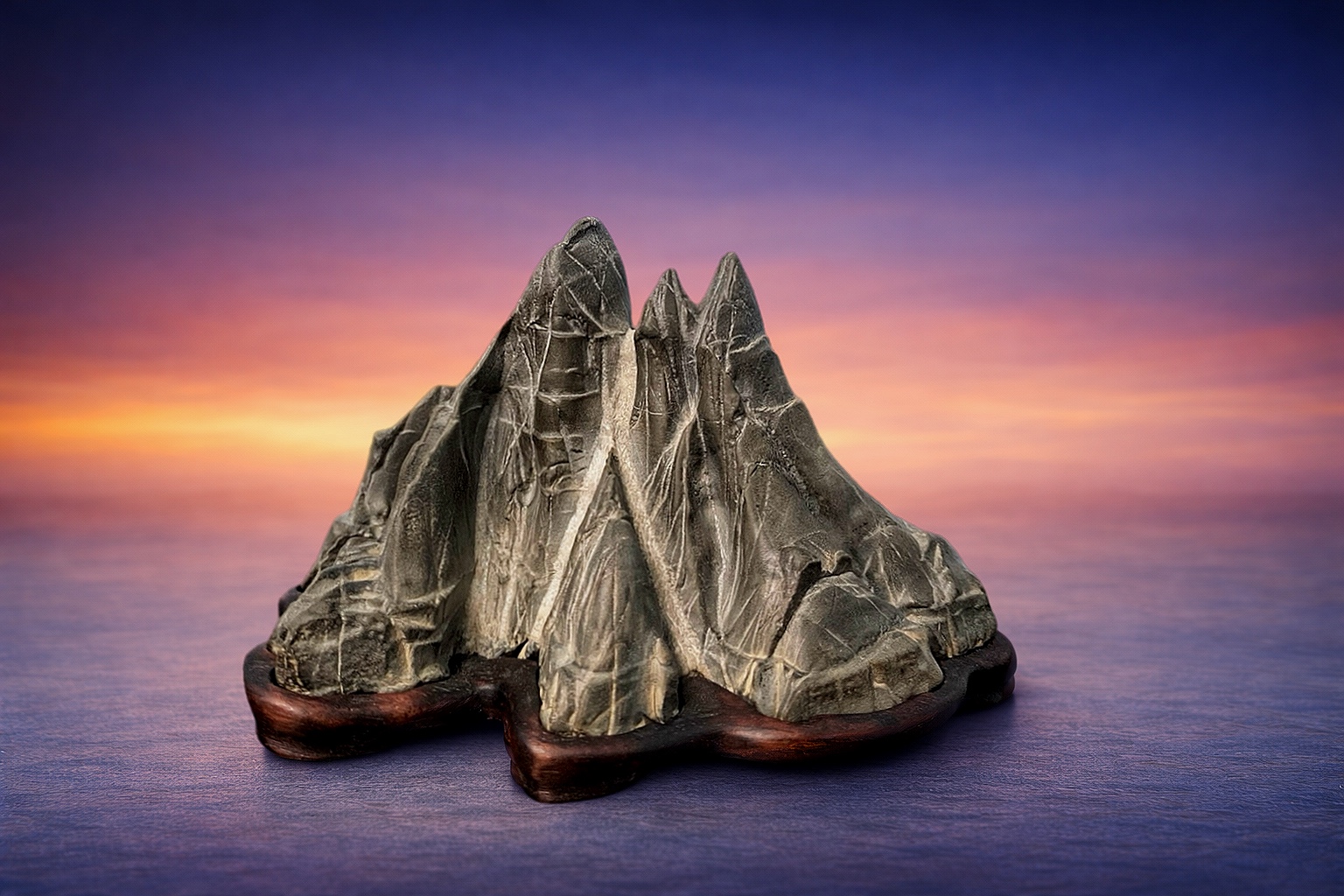 Single-peak mountain stone / Yamagata-ishi (山形石) / Koho-seki (孤峰石)
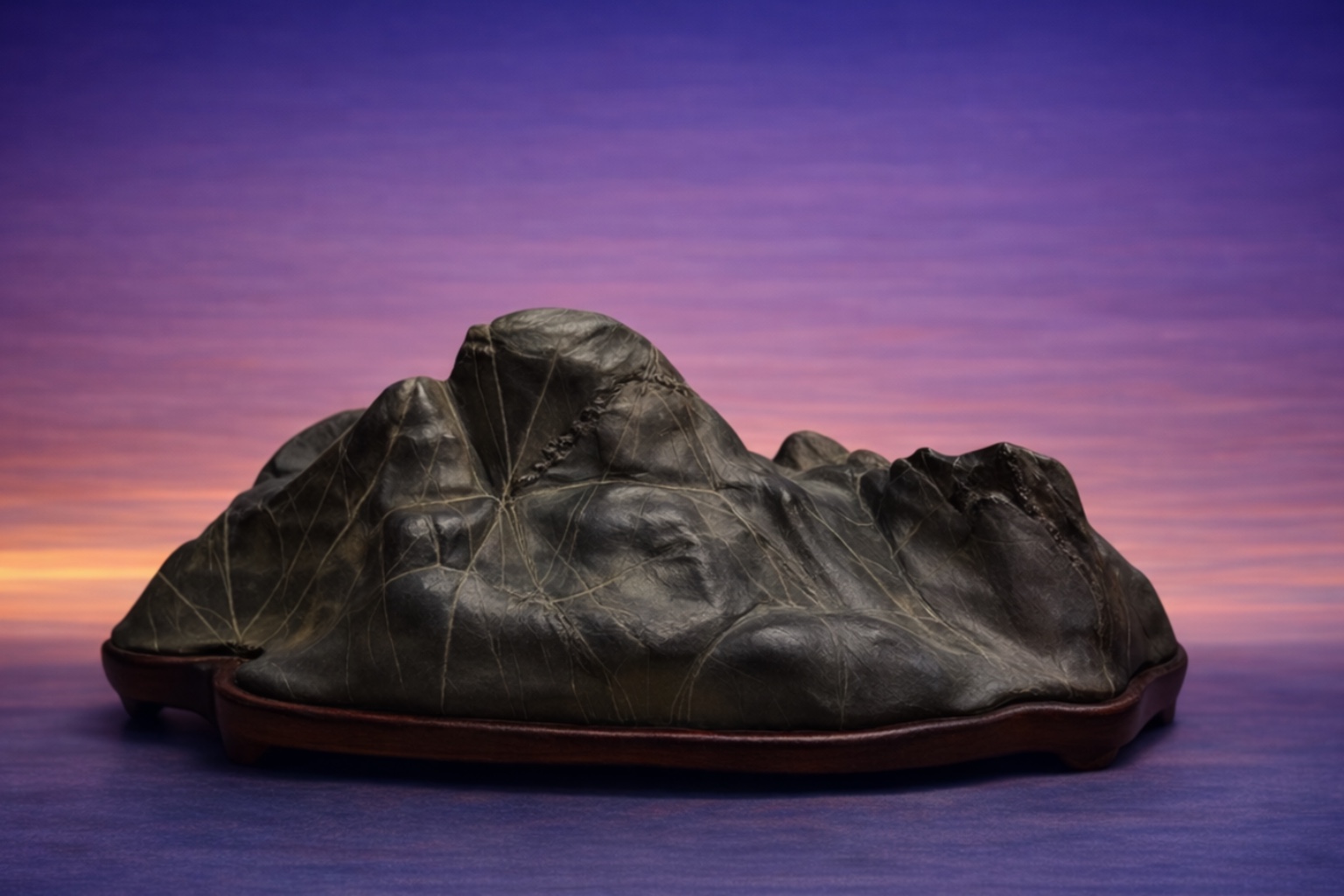 Distant mountain stone / Yamagata-ishi (山形石) / Toyama-ishi (遠山石)
 Distant mountain stone / Yamagata-ishi (山形石) / Toyama-ishi (遠山石)
 Distant mountain stone / Yamagata-ishi (山形石) / Toyama-ishi (遠山石)
 Snow-covered mountain stone / Sekkei-ishi (雪渓石)
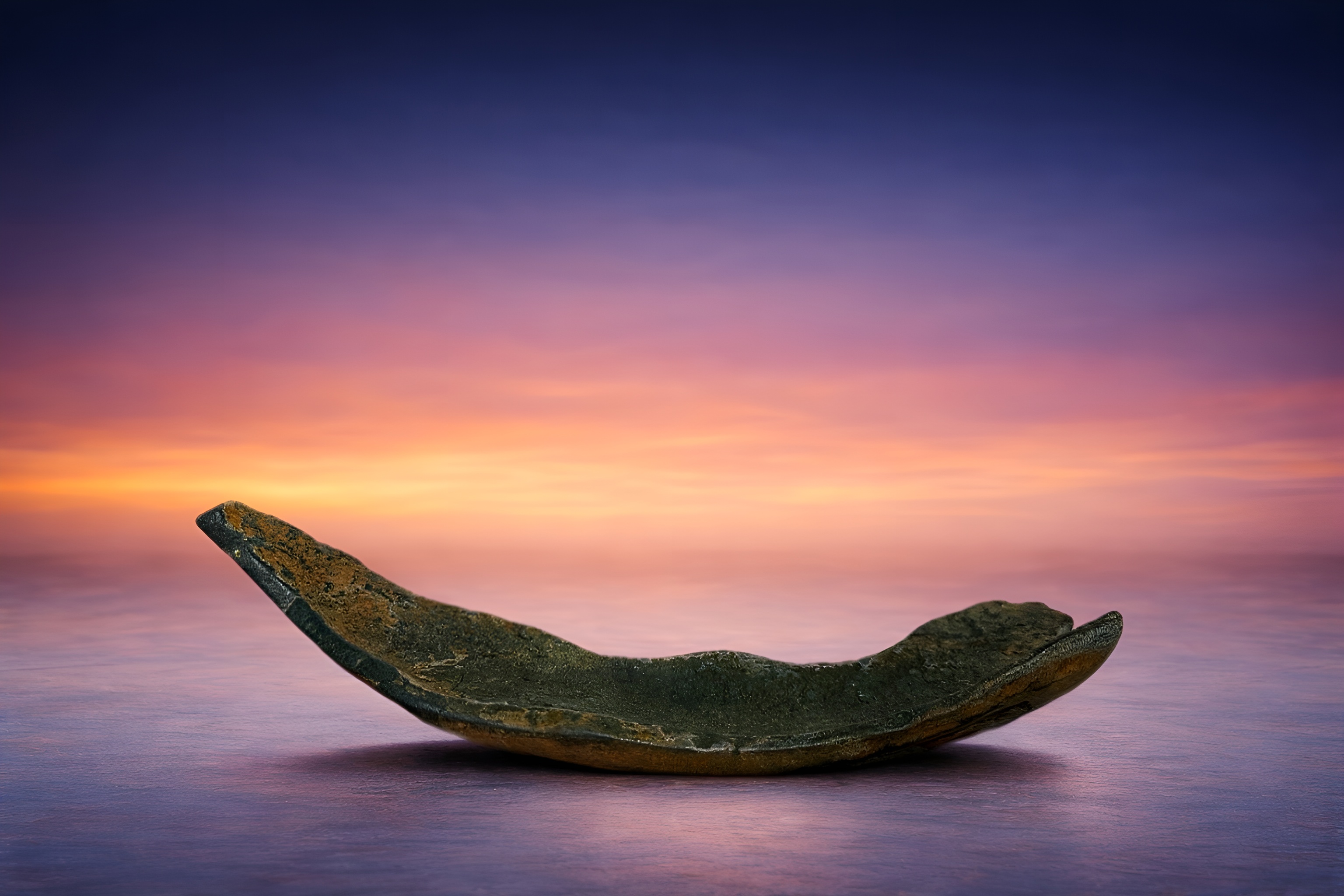 Boat-shaped stone / Funagata-ishi (舟形石)
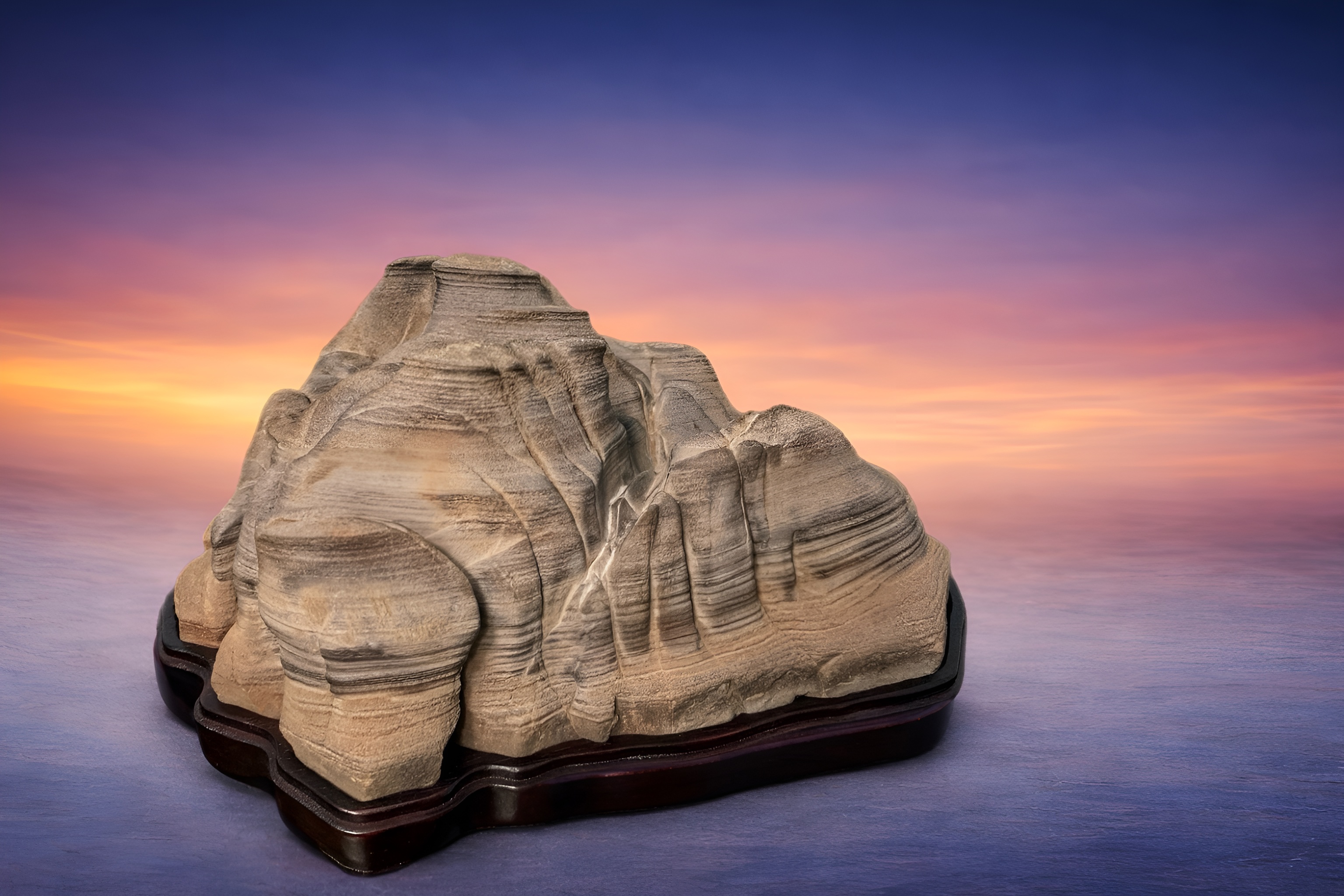 Distant mountain stone / Yamagata-ishi (山形石) / Toyama-ishi (遠山石)
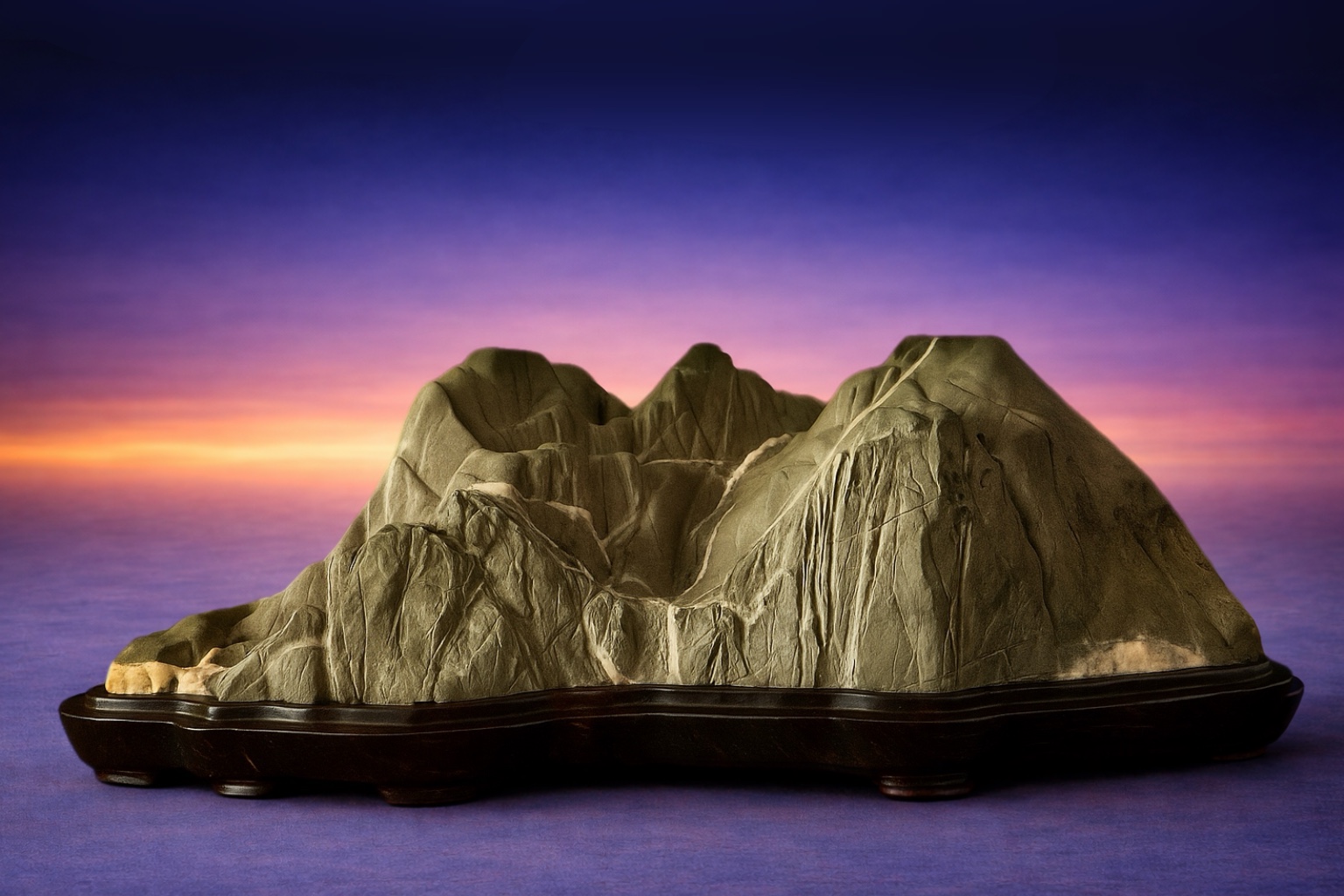 Twin-peak mountain stone / Yamagata-ishi (山形石) / Soho-seki (双峰石)
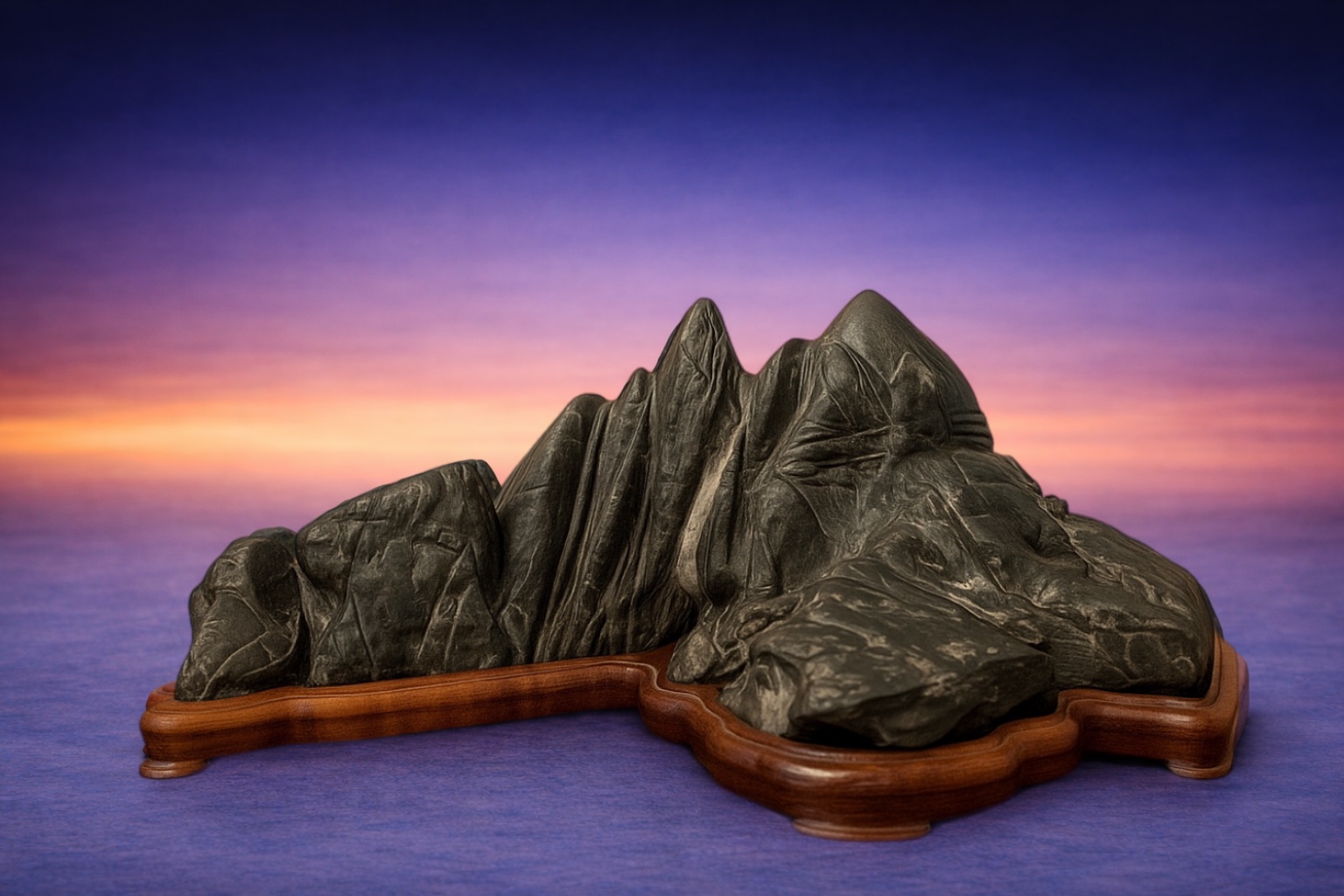 Mountain range stone / Yamagata-ishi (山形石) / Rempo-seki (連峰石)
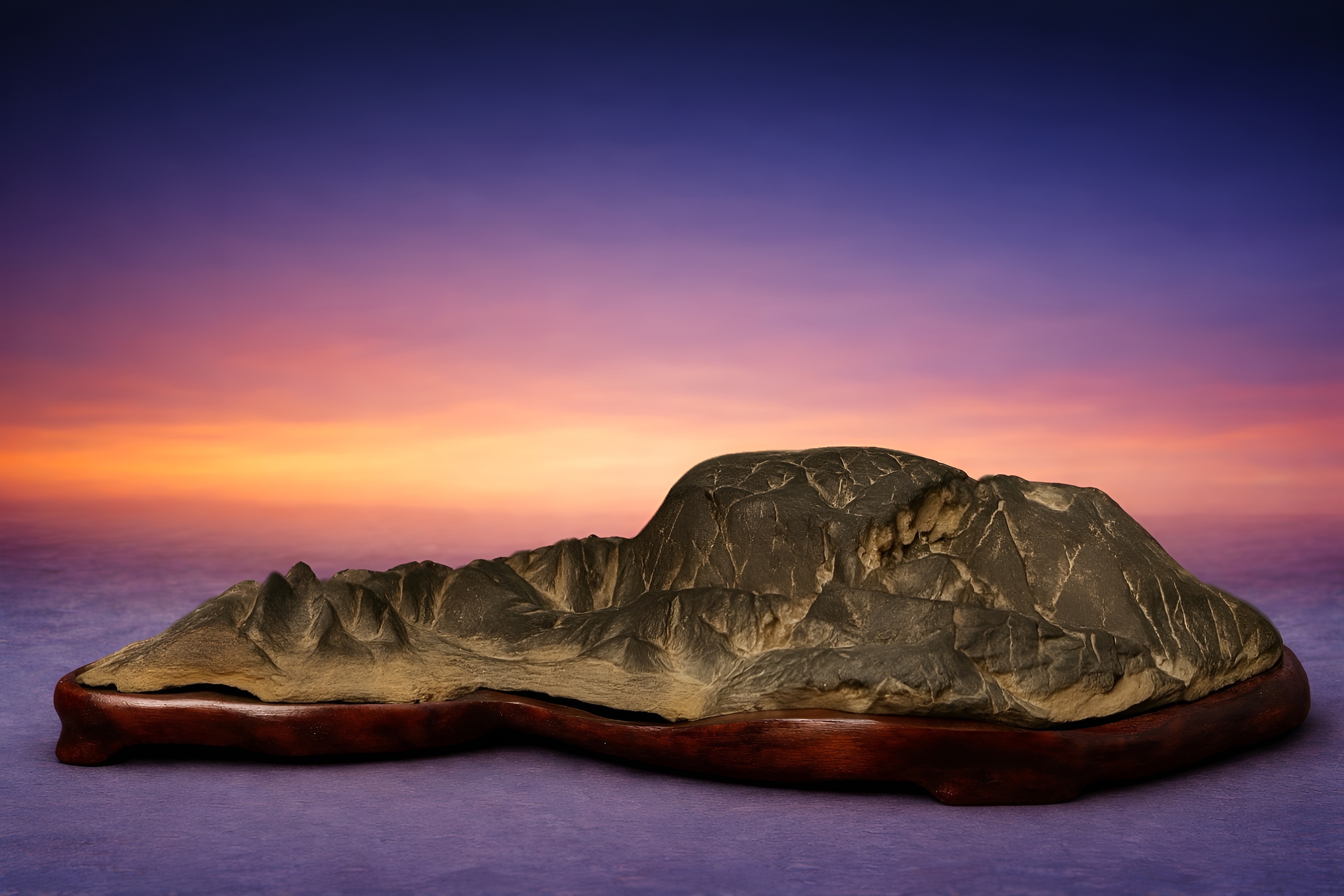 Distant mountain stone / Yamagata-ishi (山形石) / Toyama-ishi (遠山石)
 Distant mountain stone / Yamagata-ishi (山形石) / Toyama-ishi (遠山石)
 Distant mountain stone / Yamagata-ishi (山形石) / Toyama-ishi (遠山石)
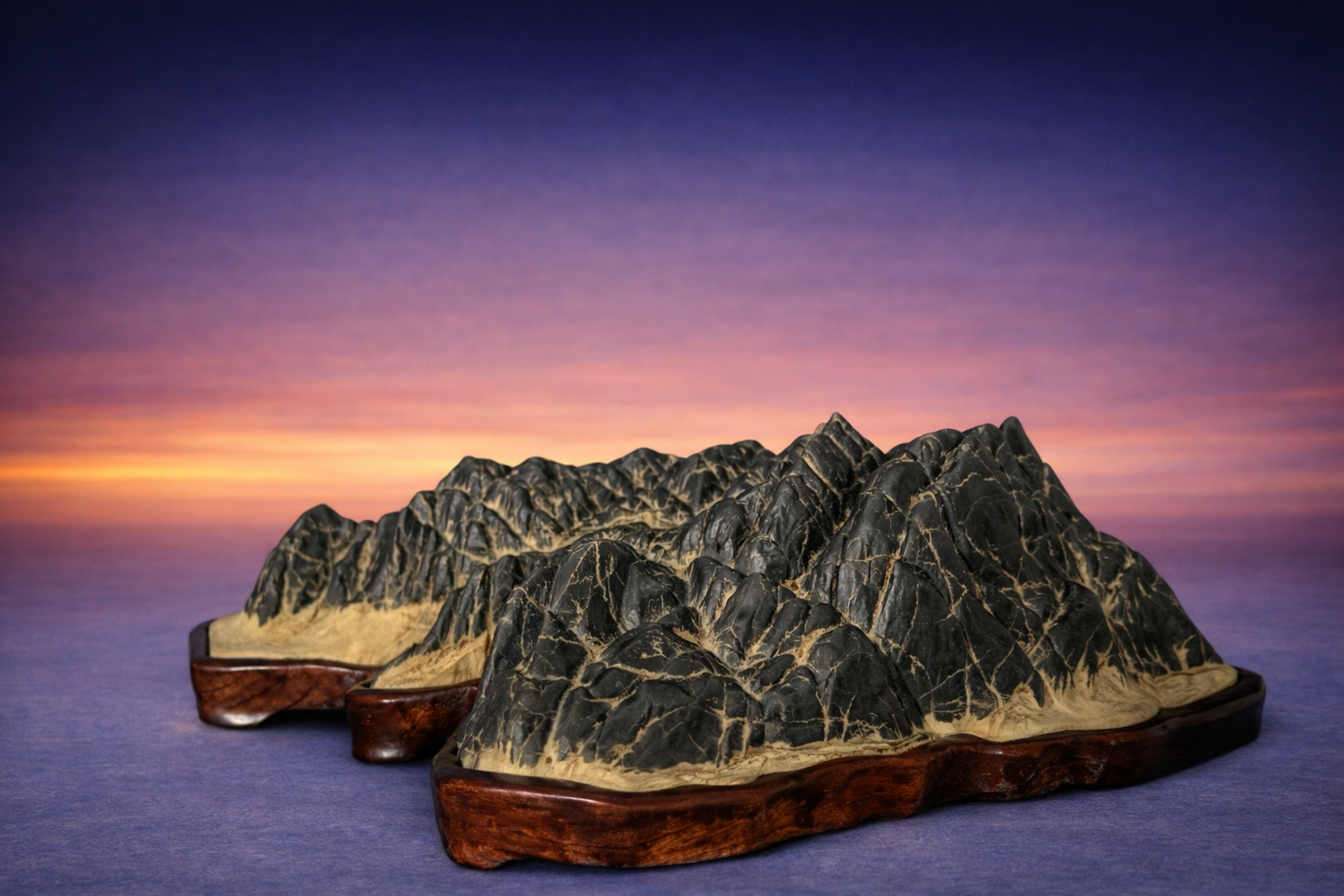 Mountain range stone / Yamagata-ishi (山形石) / Rempo-seki (連峰石)
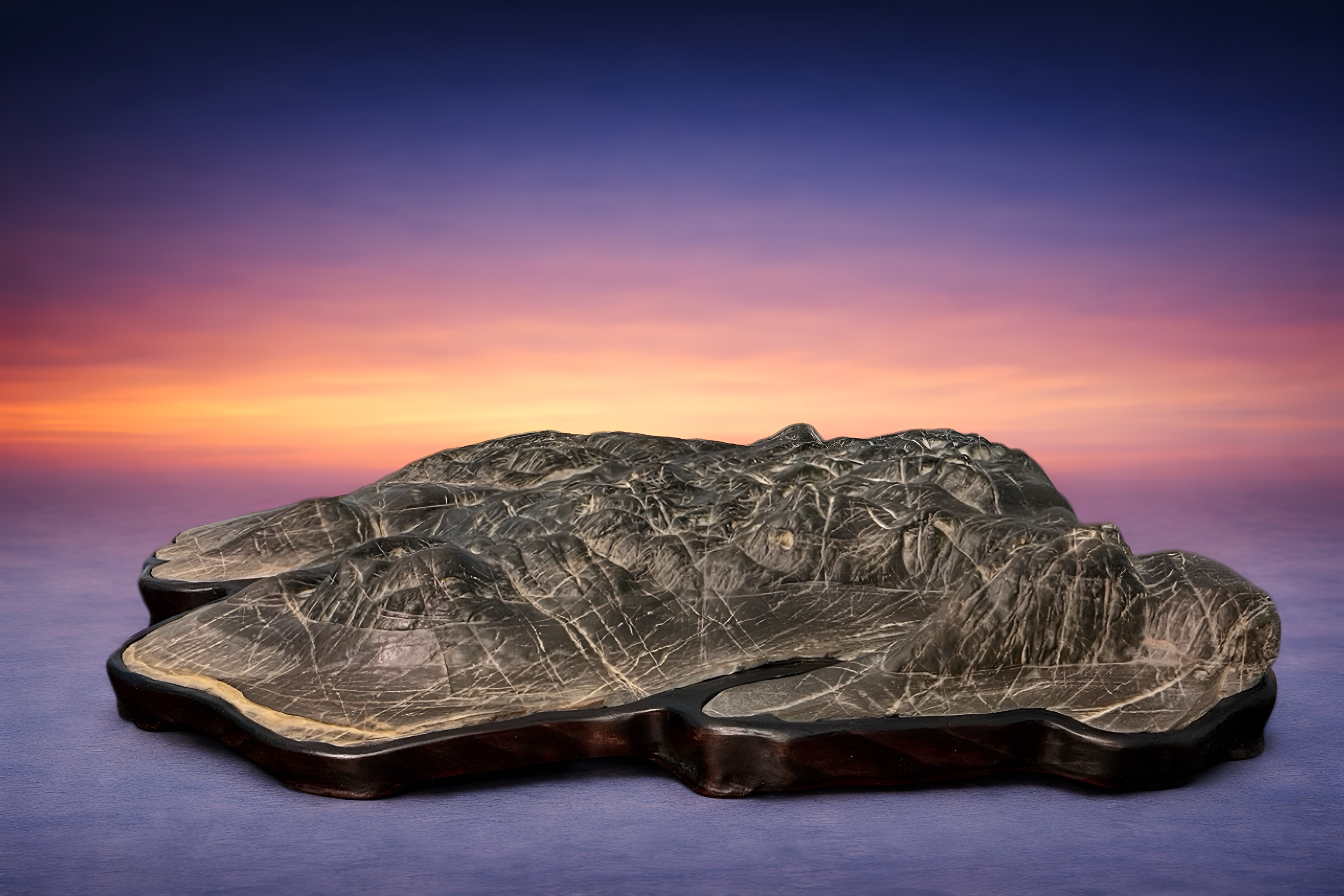 Distant mountain stone / Yamagata-ishi (山形石) / Toyama-ishi (遠山石)
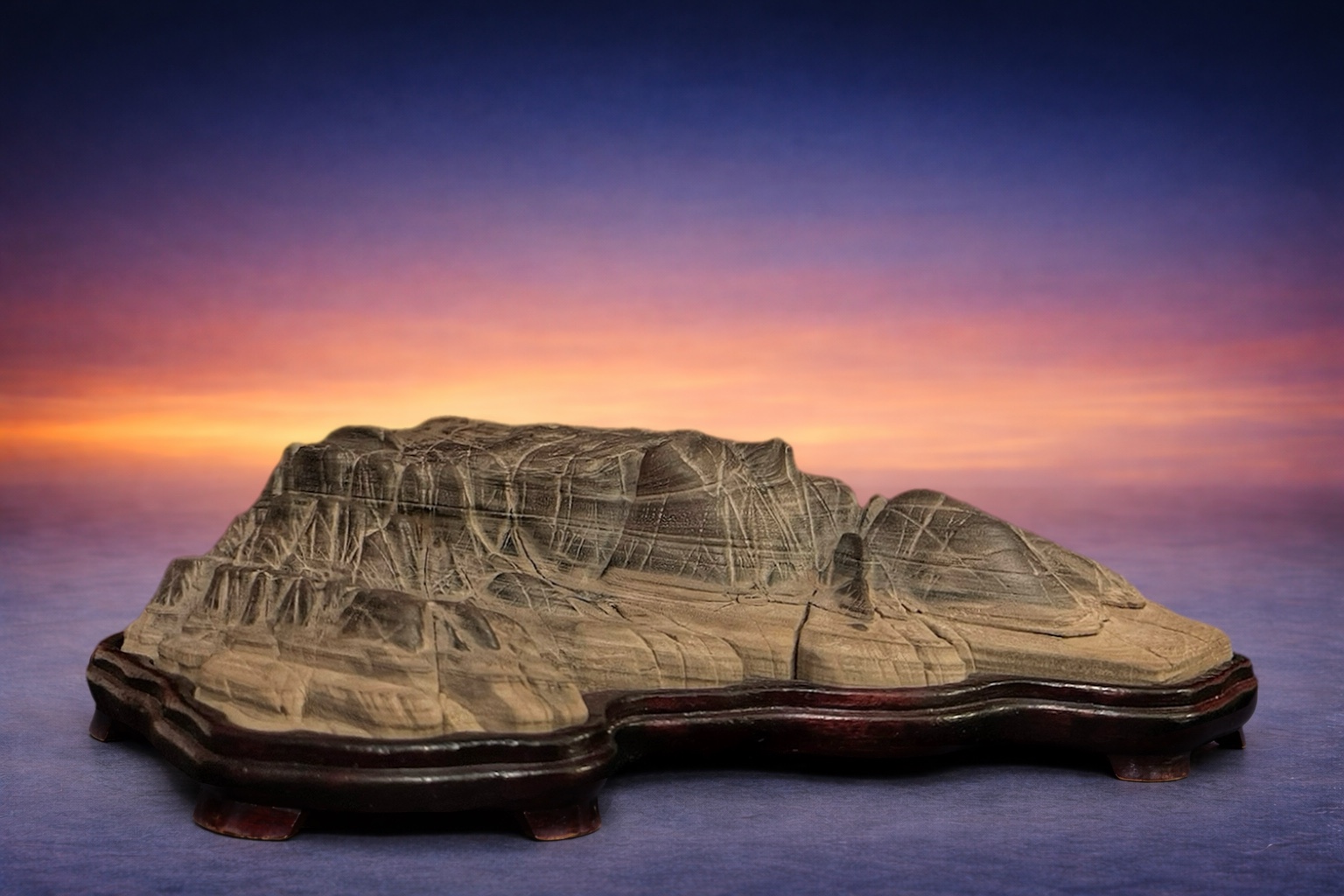 Distant mountain stone / Yamagata-ishi (山形石) / Toyama-ishi (遠山石)
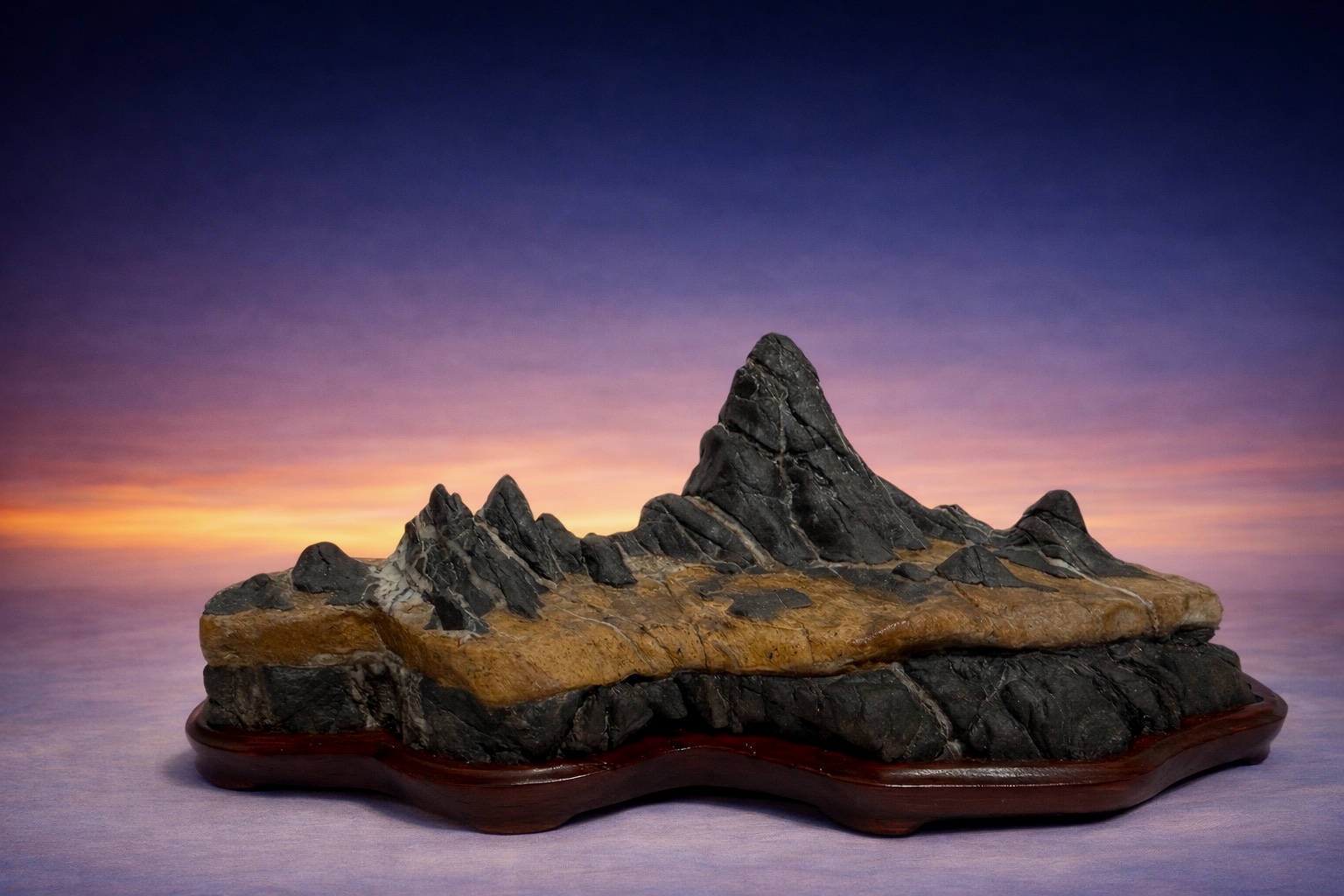 Mountain range stone / Yamagata-ishi (山形石) / Rempo-seki (連峰石)
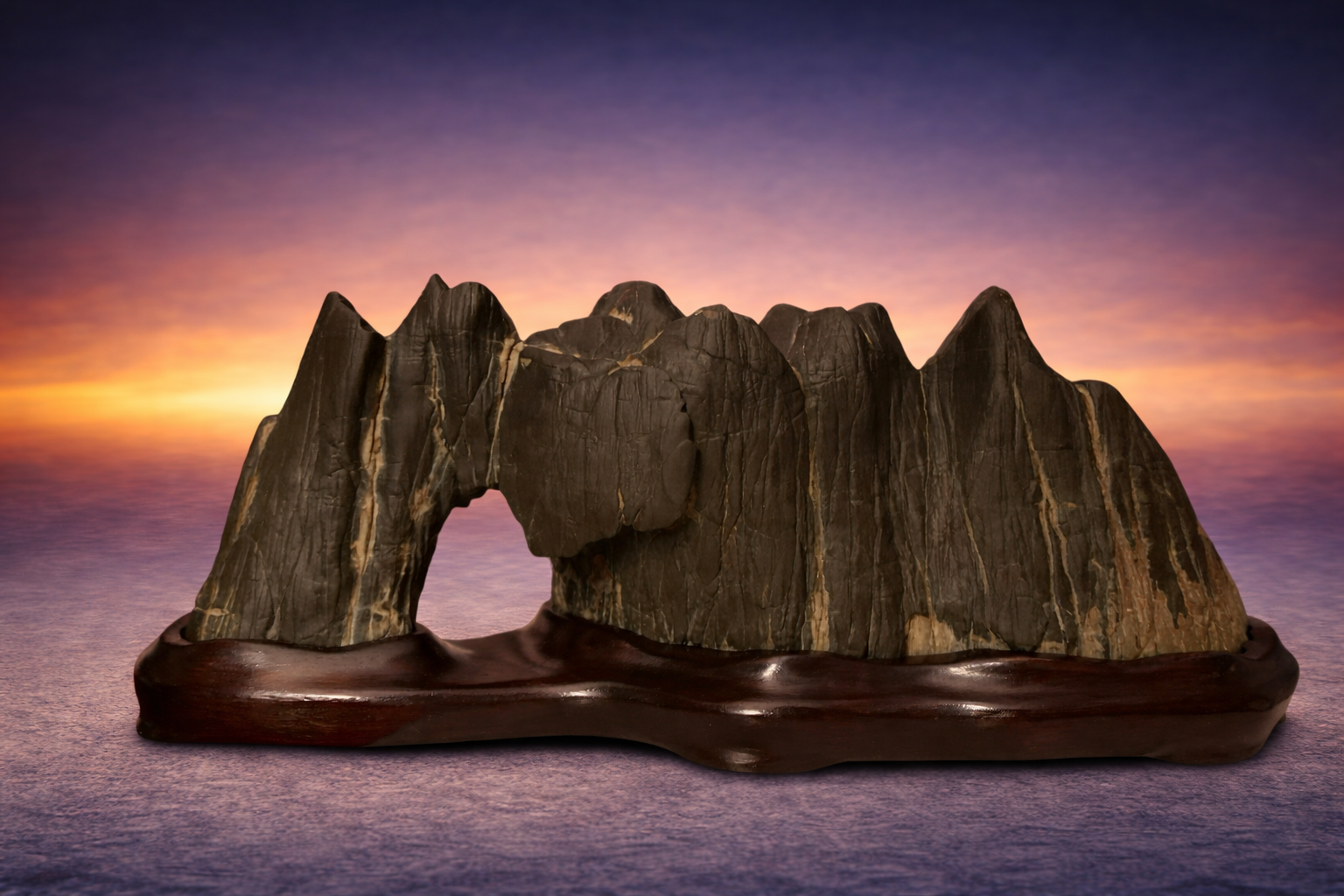 Bridge stone / Hashi-ishi (橋石)
 Mountain range stone / Yamagata-ishi (山形石) / Rempo-seki (連峰石)
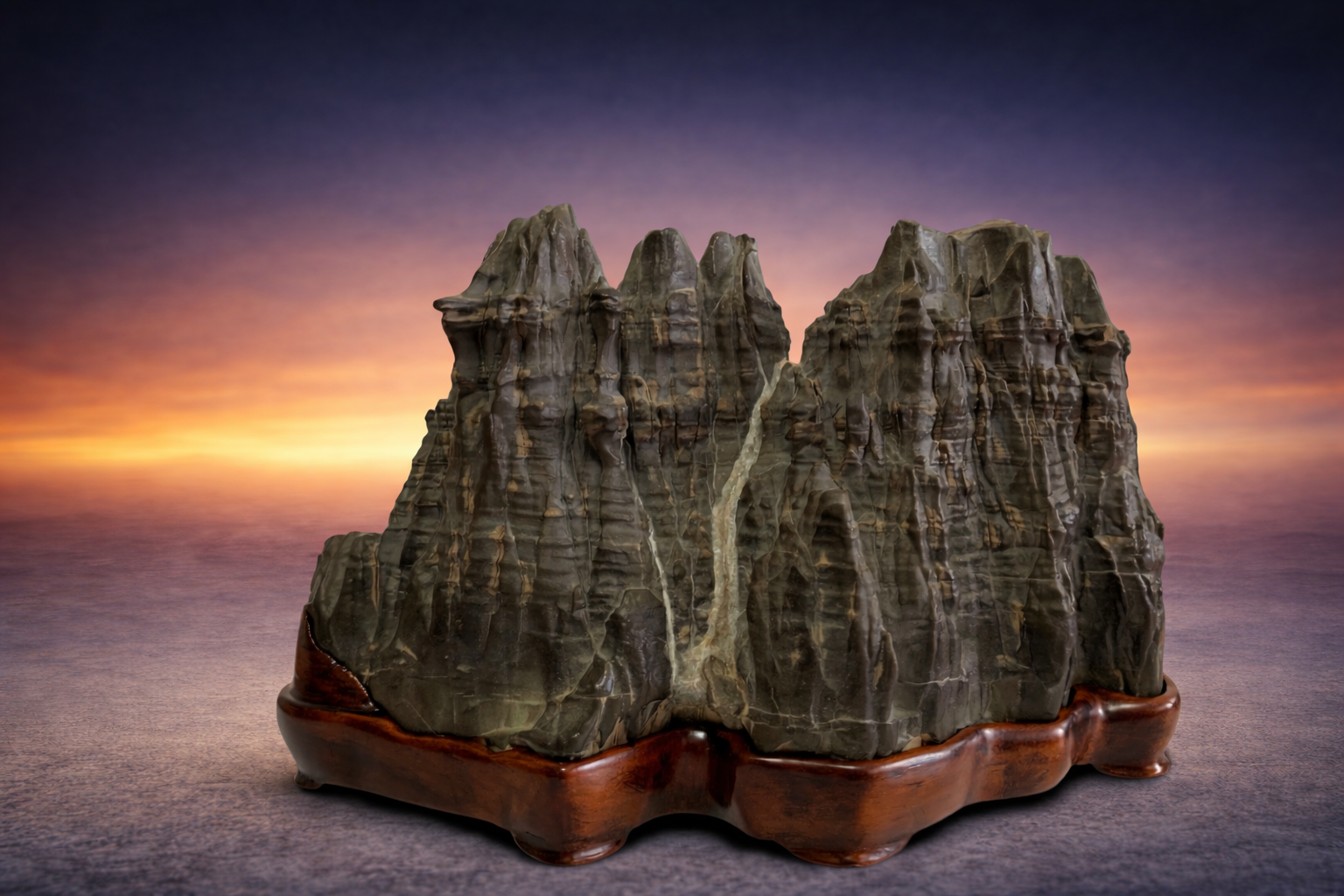 Twin-peak mountain stone / Yamagata-ishi (山形石) / Soho-seki (双峰石)
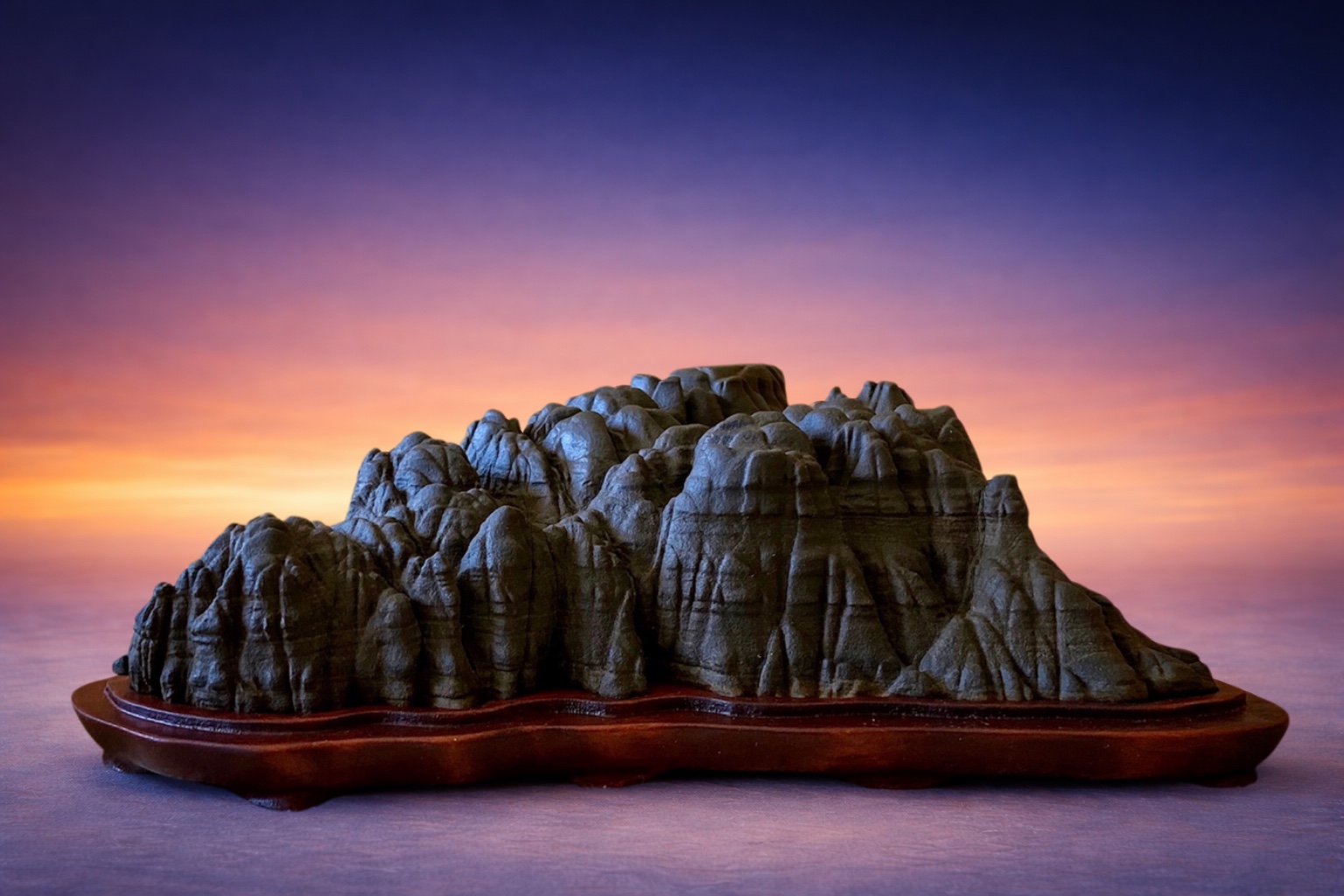 Mountain range stone / Yamagata-ishi (山形石) / Rempo-seki (連峰石)
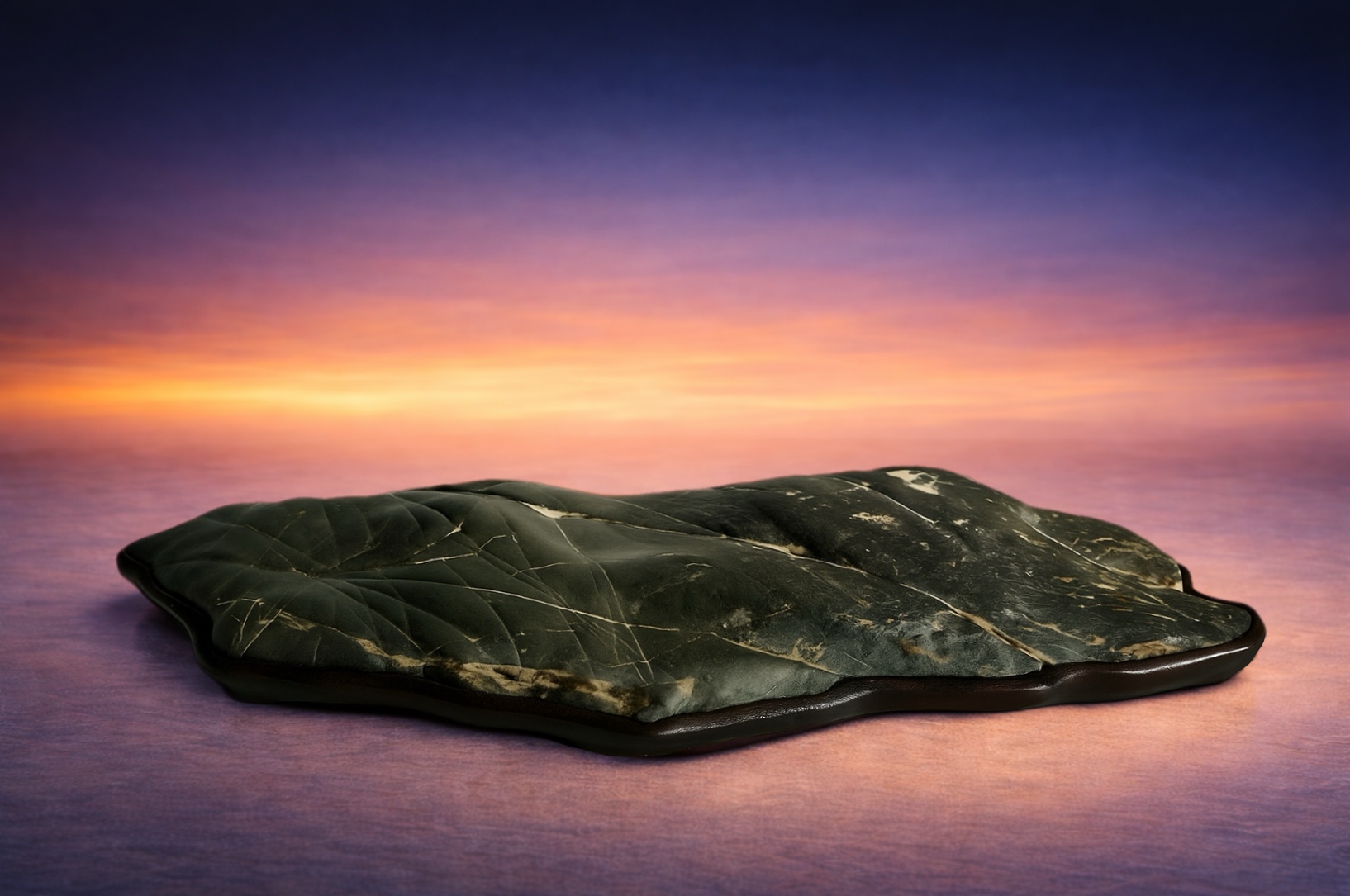 Distant mountain stone / Yamagata-ishi (山形石) / Toyama-ishi (遠山石)
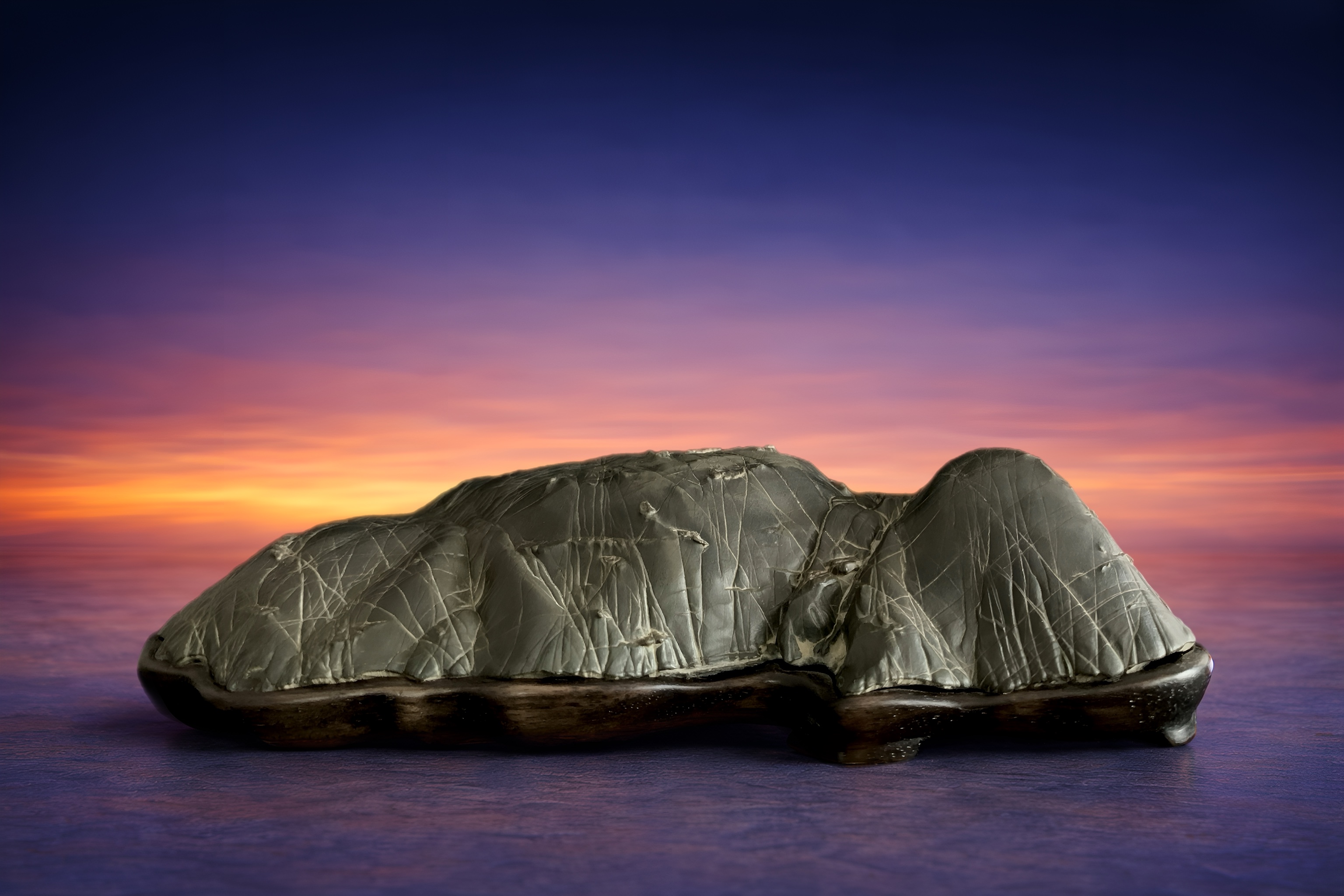 Distant mountain stone / Yamagata-ishi (山形石) / Toyama-ishi (遠山石)
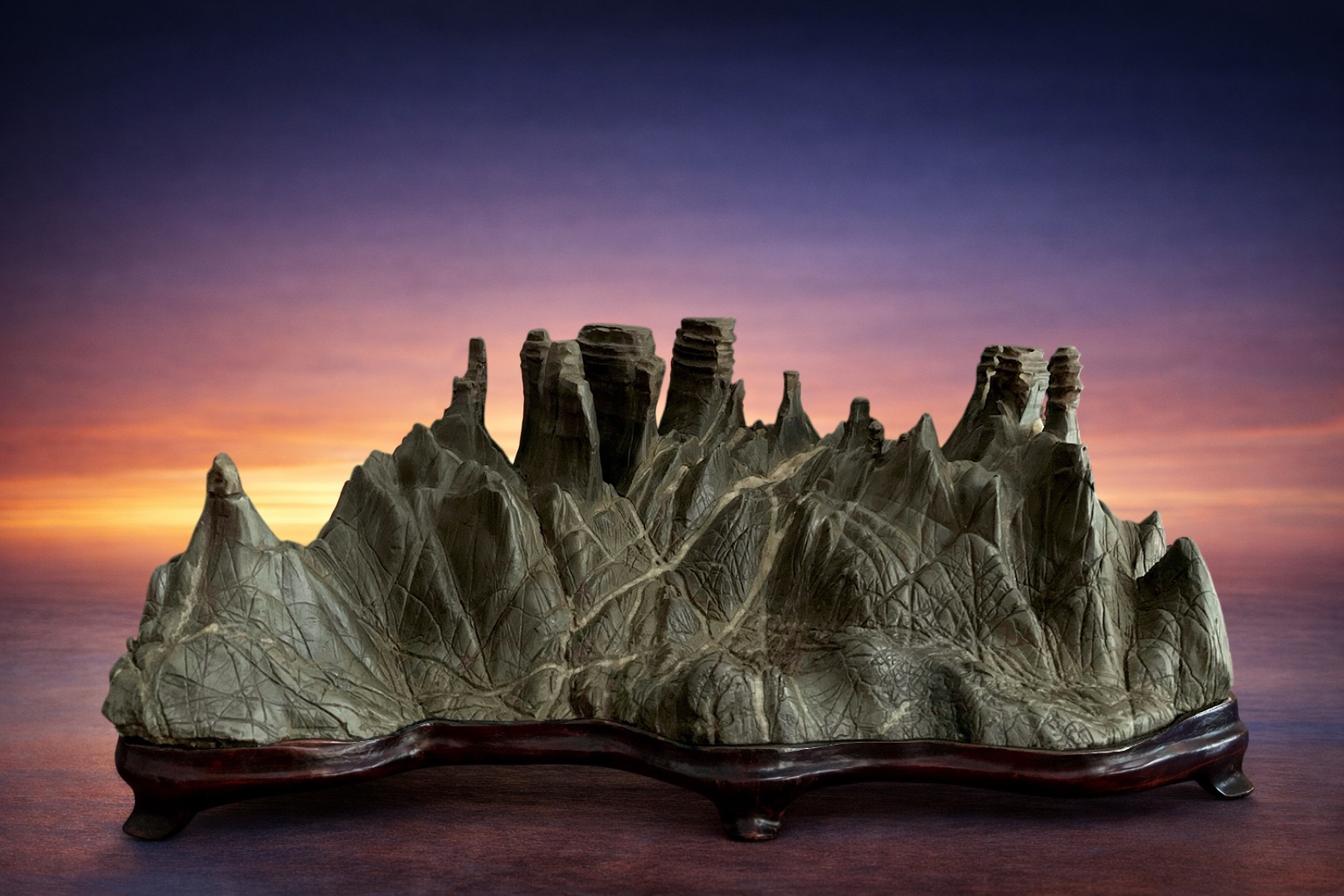 Mountain range stone / Yamagata-ishi (山形石) / Rempo-seki (連峰石)
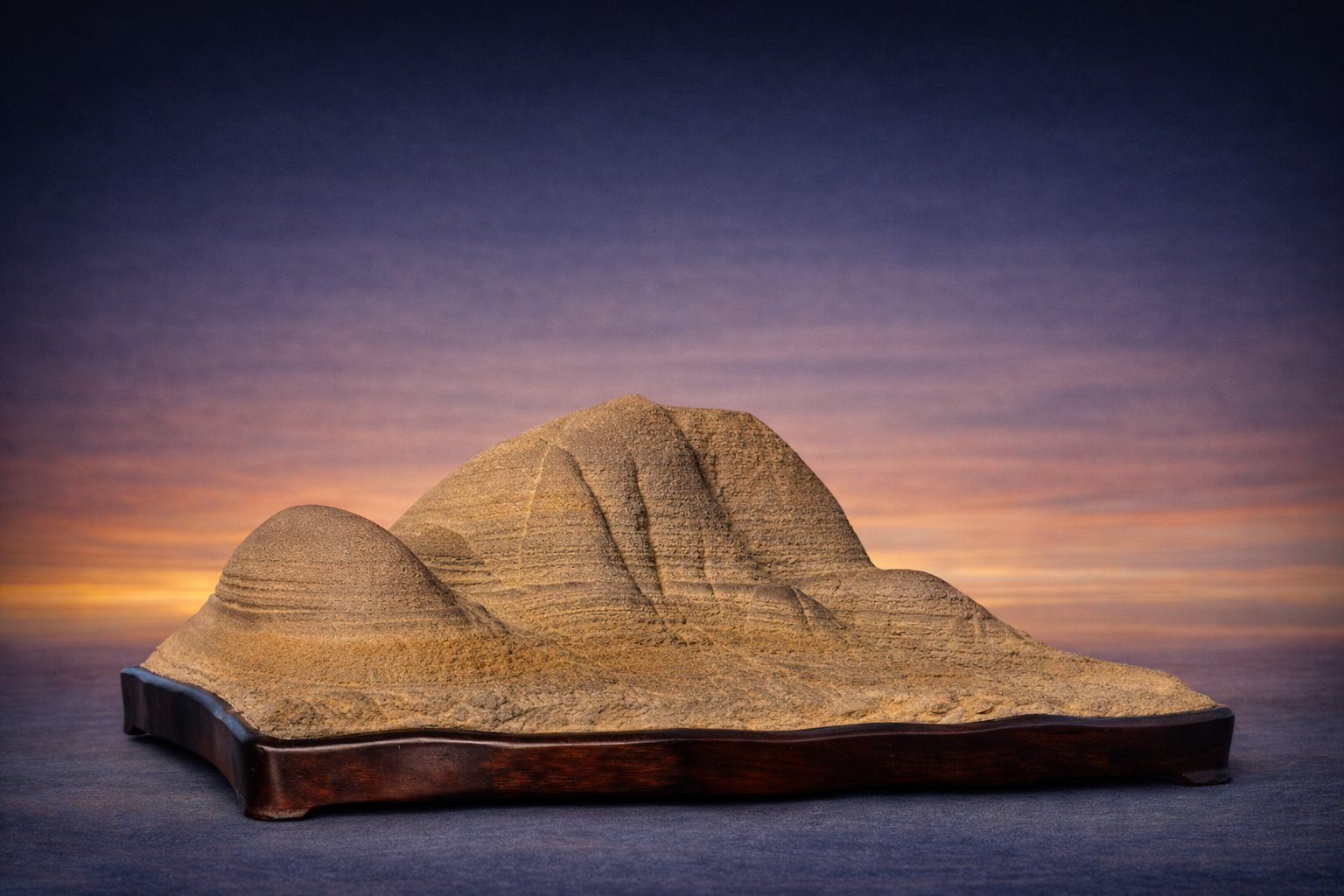 Distant mountain stone / Yamagata-ishi (山形石) / Toyama-ishi (遠山石)
 Mountain range stone / Yamagata-ishi (山形石) / Rempo-seki (連峰石)
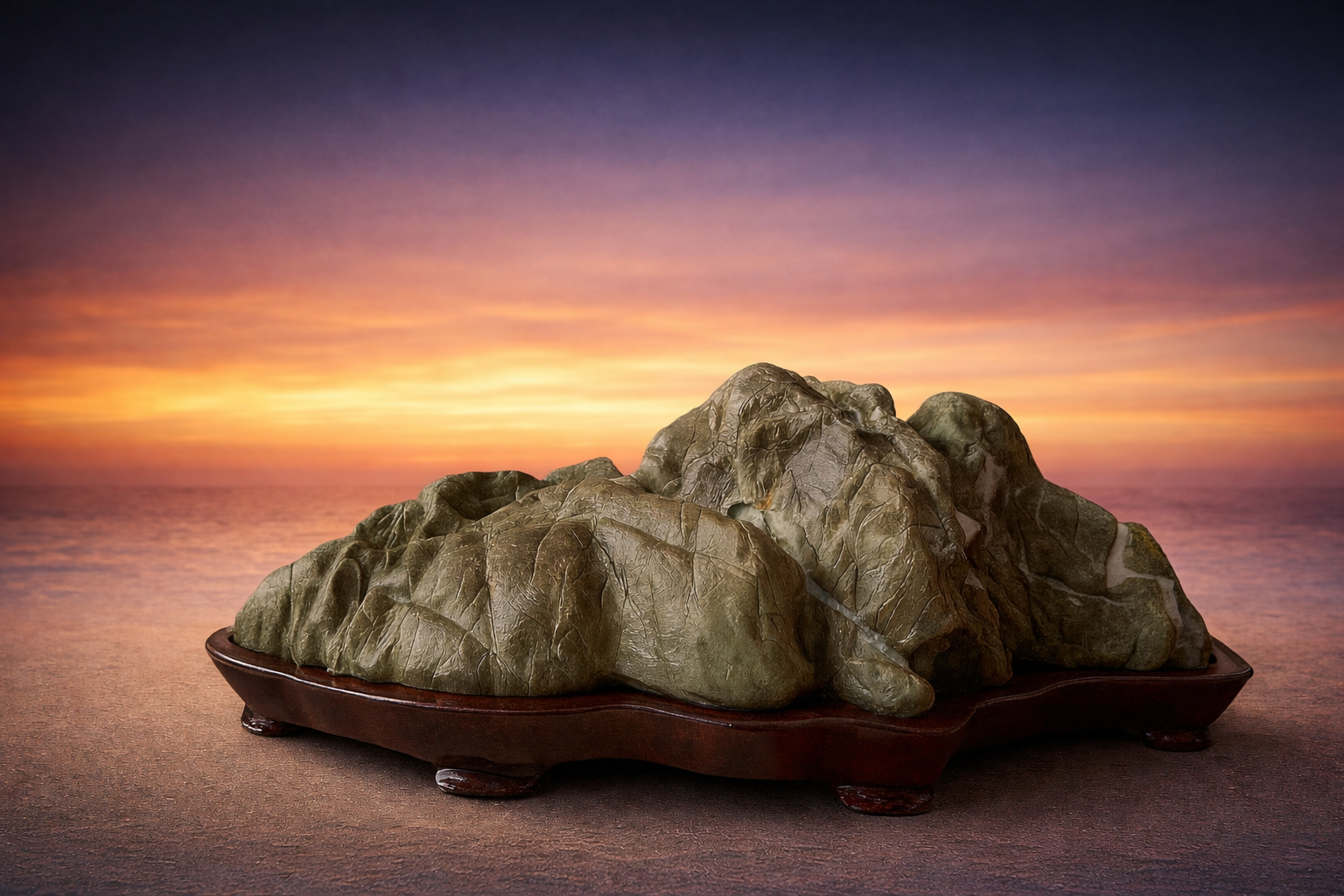 Distant mountain stone / Yamagata-ishi (山形石) / Toyama-ishi (遠山石)
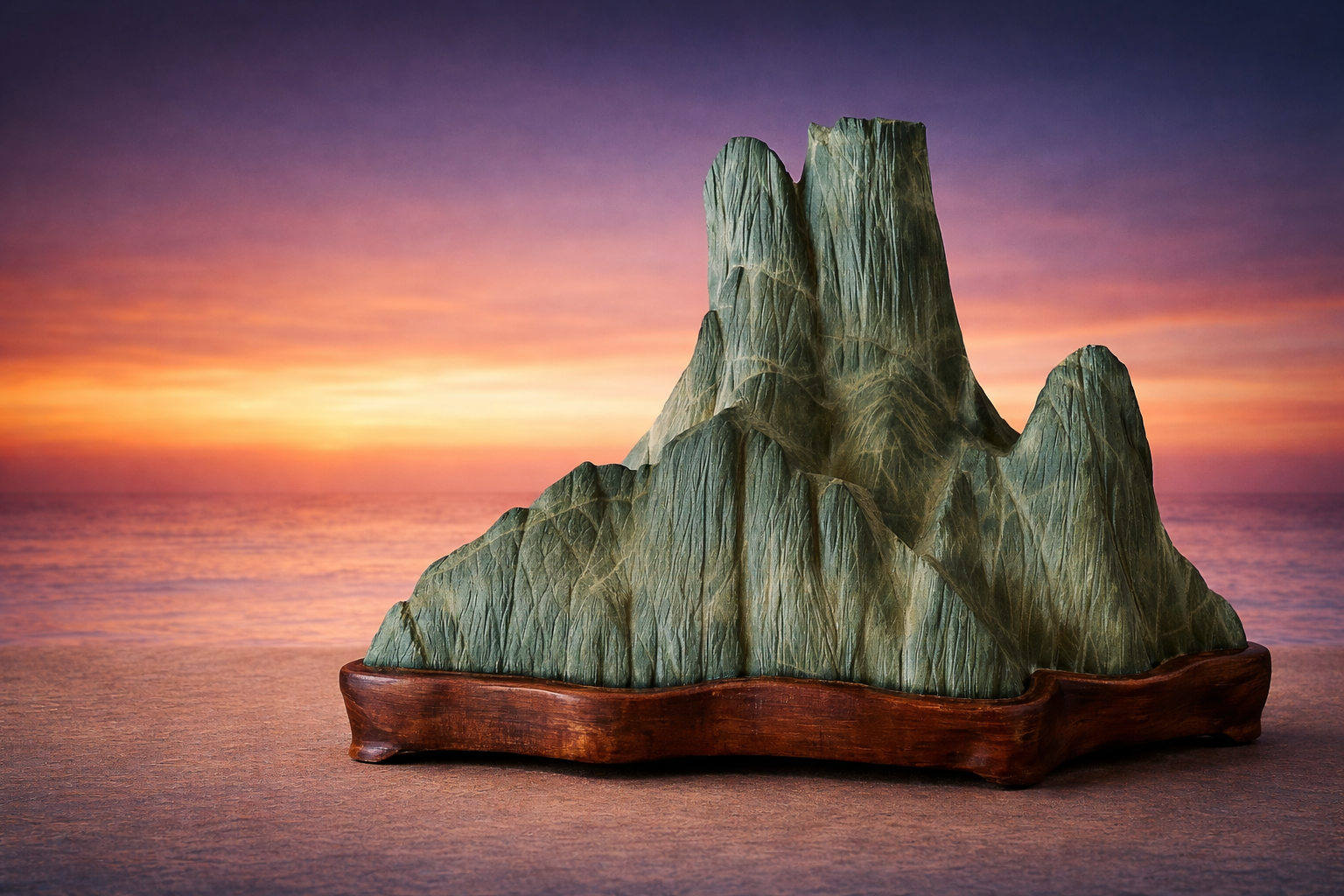 Nearby mountain stone / Yamagata-ishi (山形石) / Kinzan-seki (近山石)
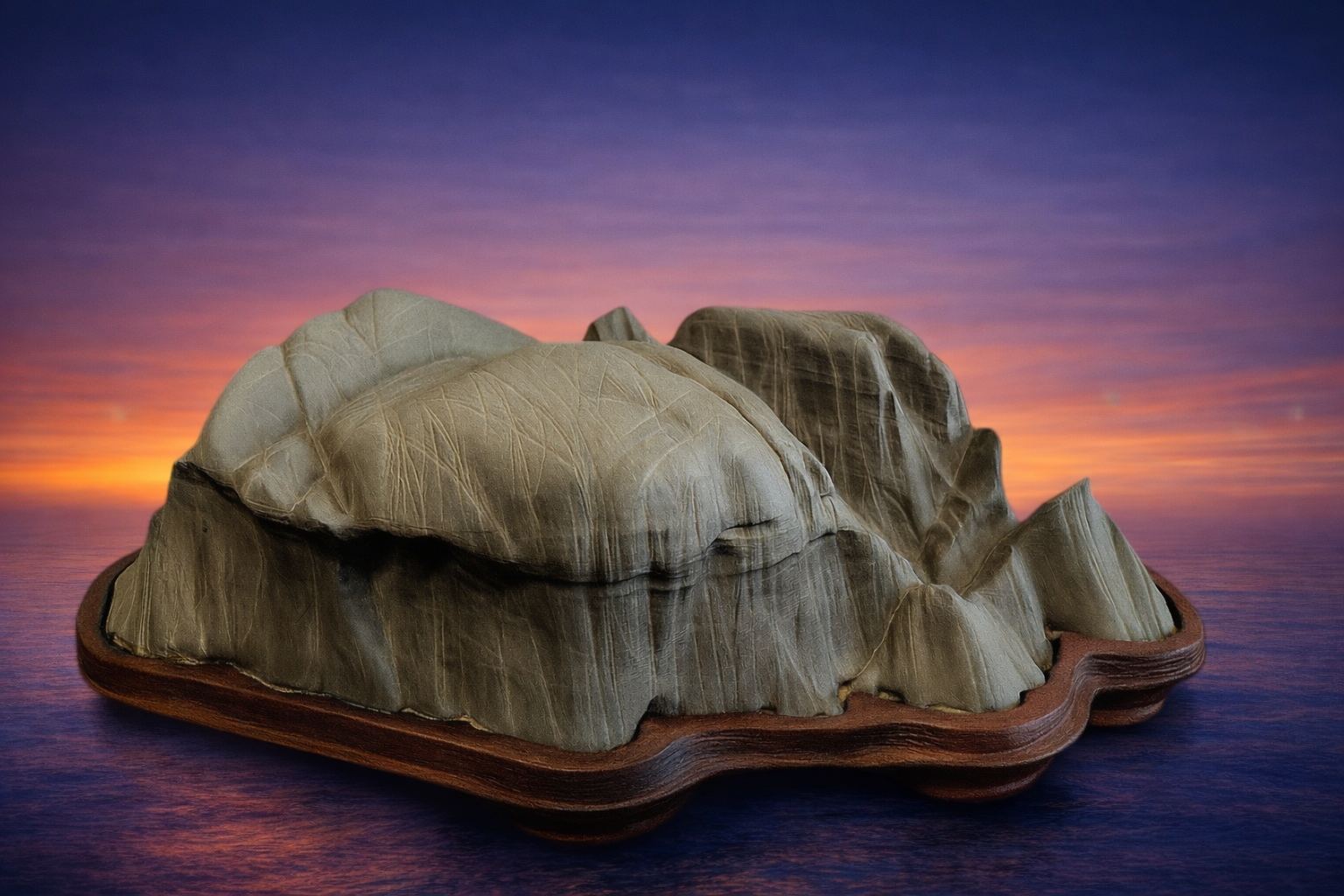 Distant mountain stone / Yamagata-ishi (山形石) / Toyama-ishi (遠山石)
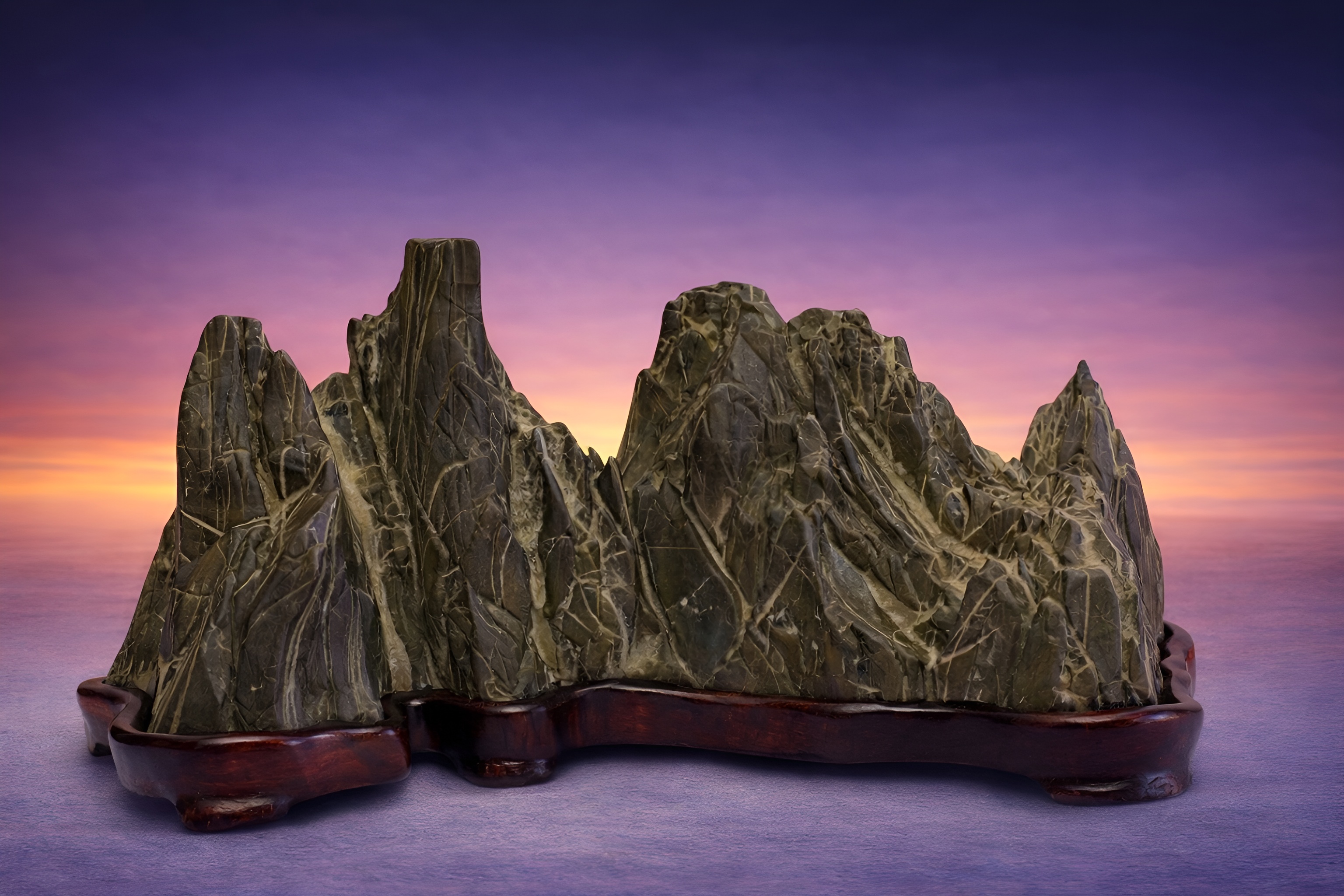 Mountain range stone / Yamagata-ishi (山形石) / Rempo-seki (連峰石)
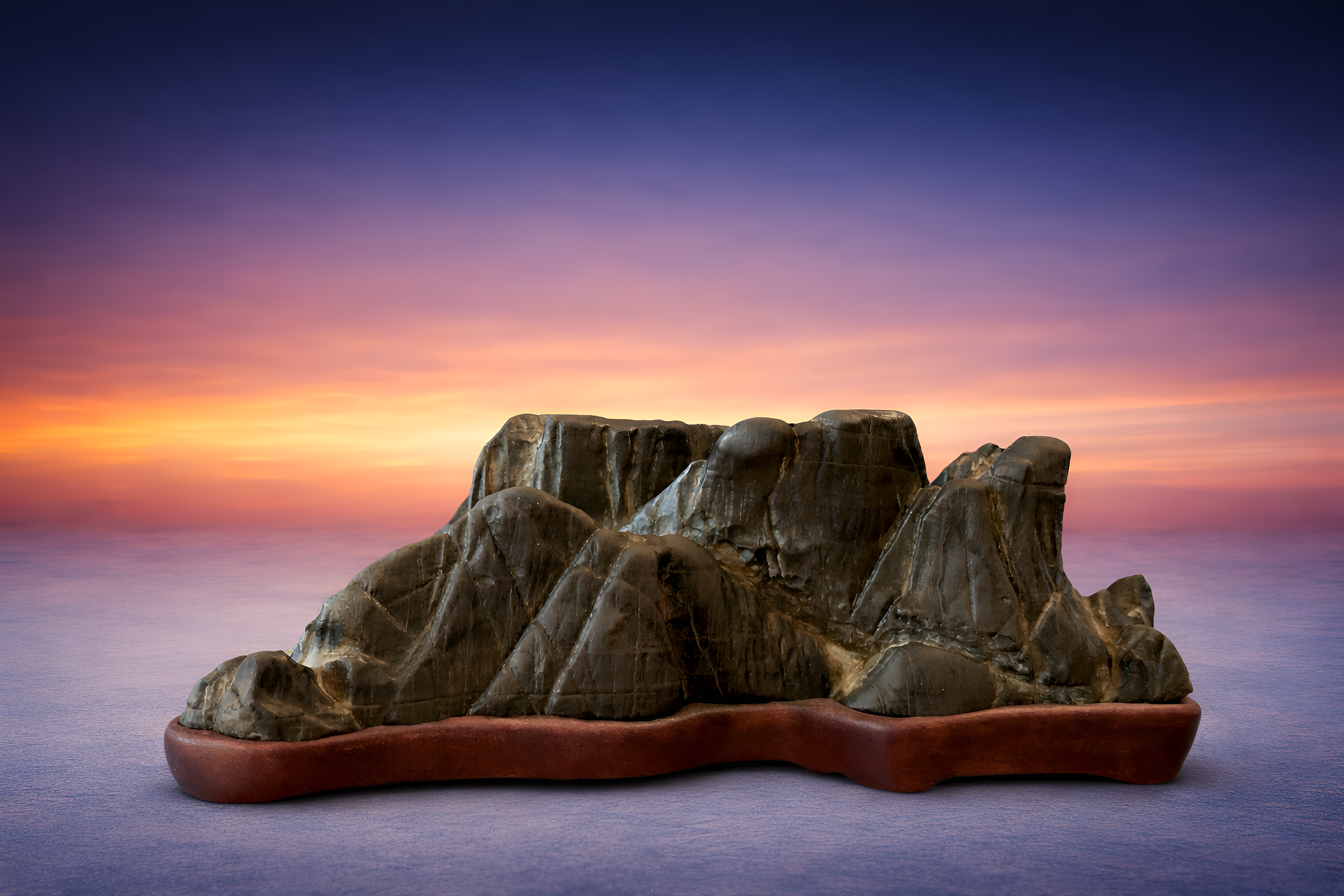 Nearby mountain stone / Yamagata-ishi (山形石) / Kinzan-seki (近山石)
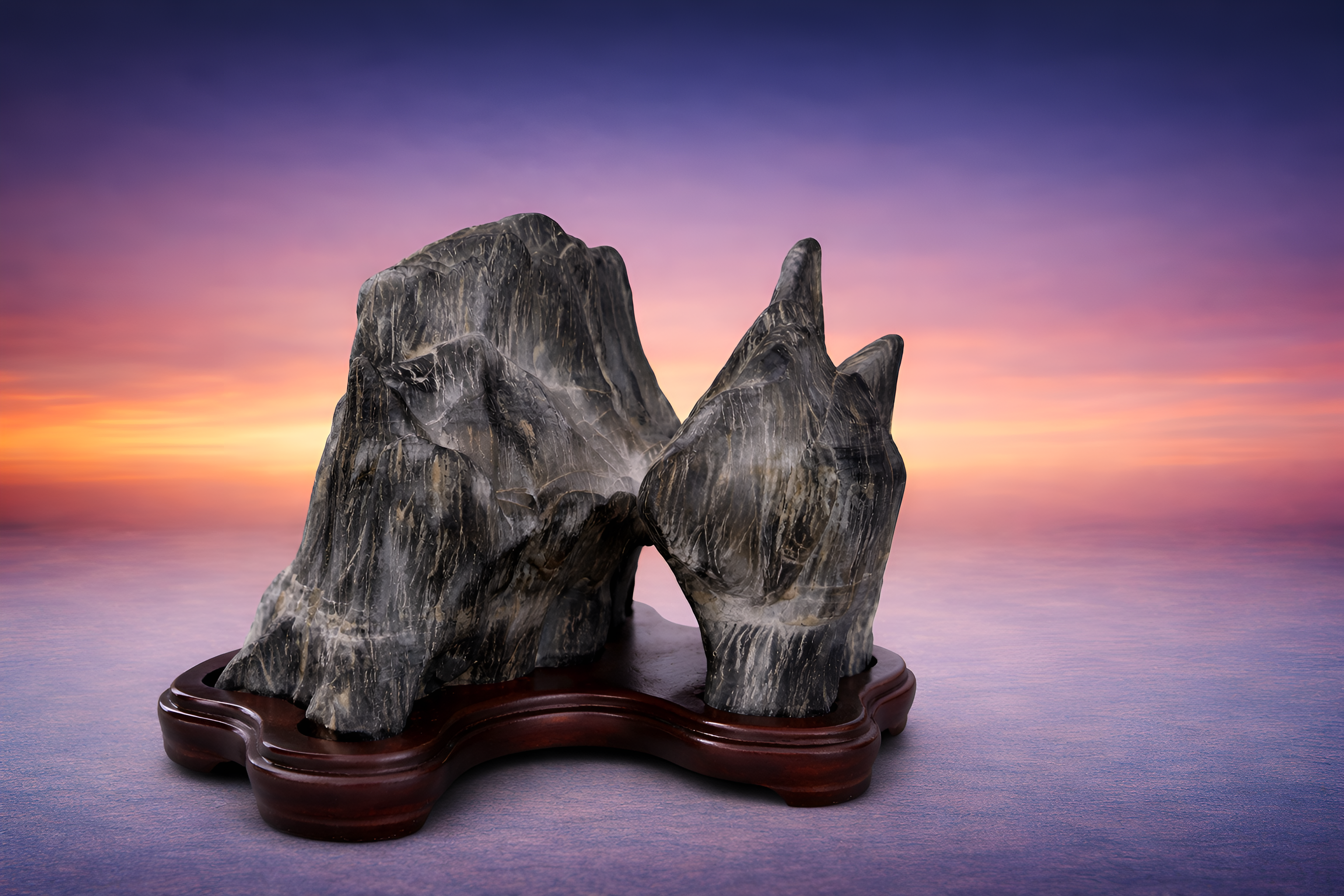 Bridge stone / Hashi-ishi (橋石)
 Distant mountain stone / Yamagata-ishi (山形石) / Toyama-ishi (遠山石)
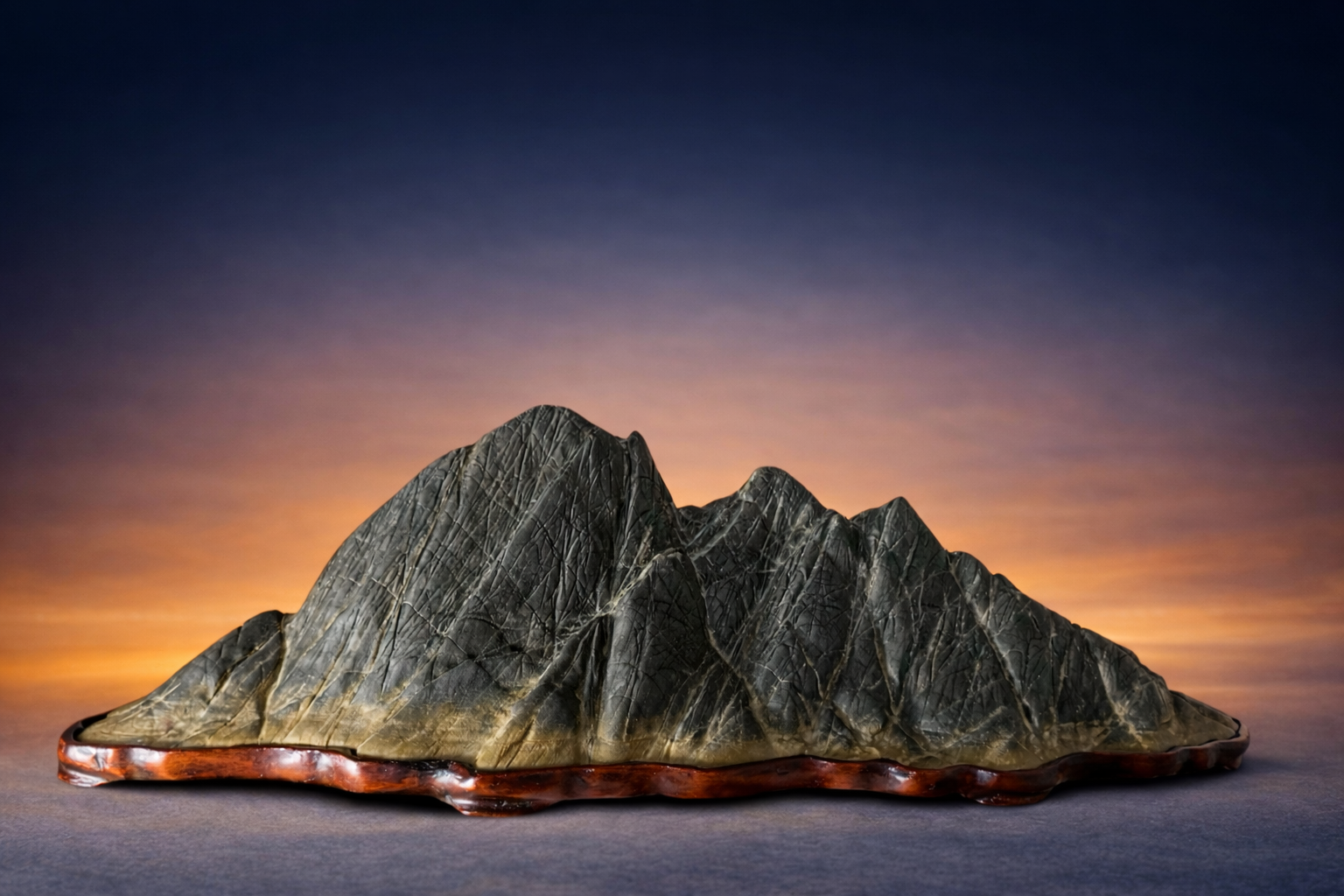 Mountain range stone / Yamagata-ishi (山形石) / Rempo-seki (連峰石)
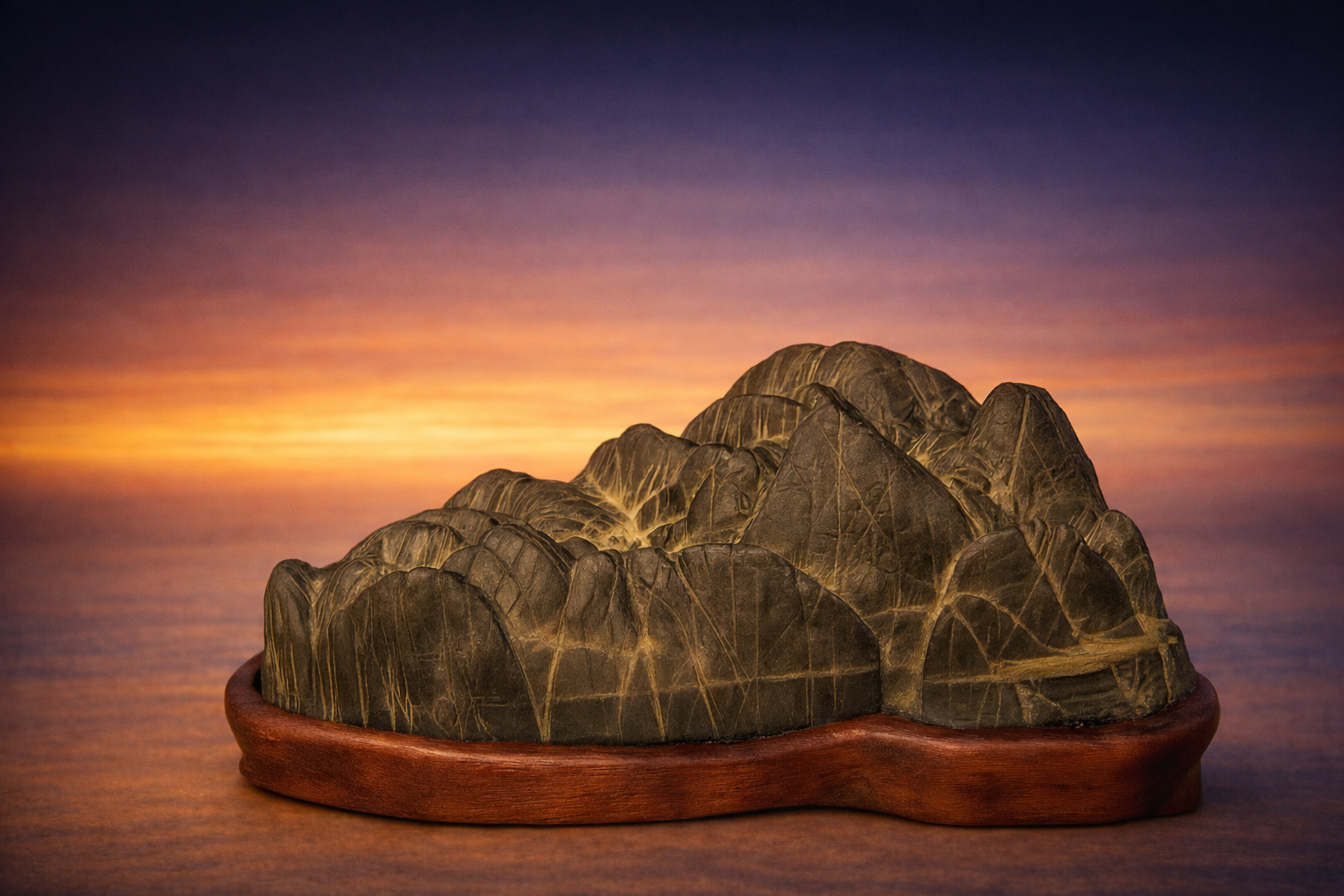 Nearby mountain stone / Yamagata-ishi (山形石) / Kinzan-seki (近山石)
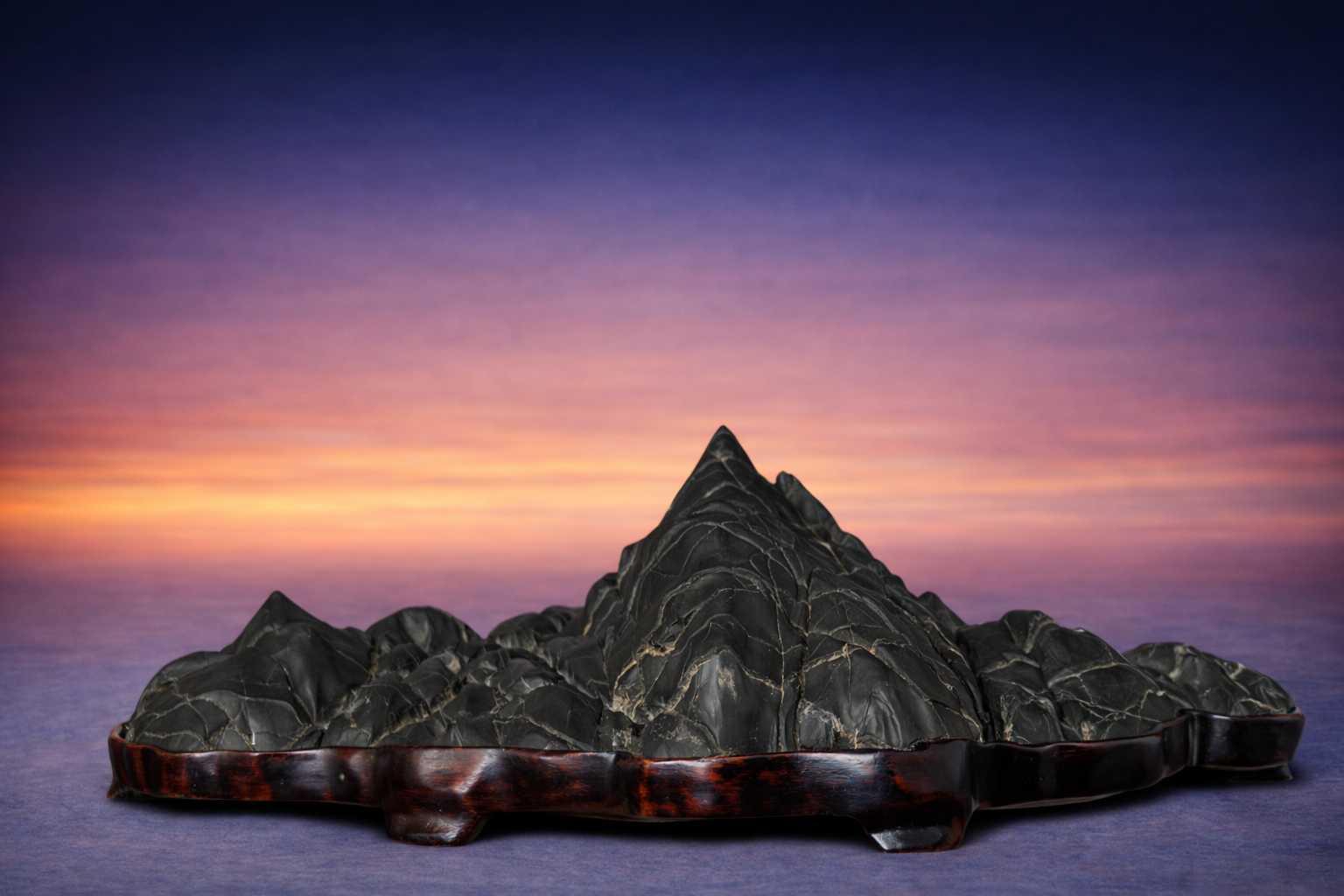 Single-peak mountain stone / Yamagata-ishi (山形石) / Koho-seki (孤峰石)
 Distant mountain stone / Yamagata-ishi (山形石) / Toyama-ishi (遠山石)
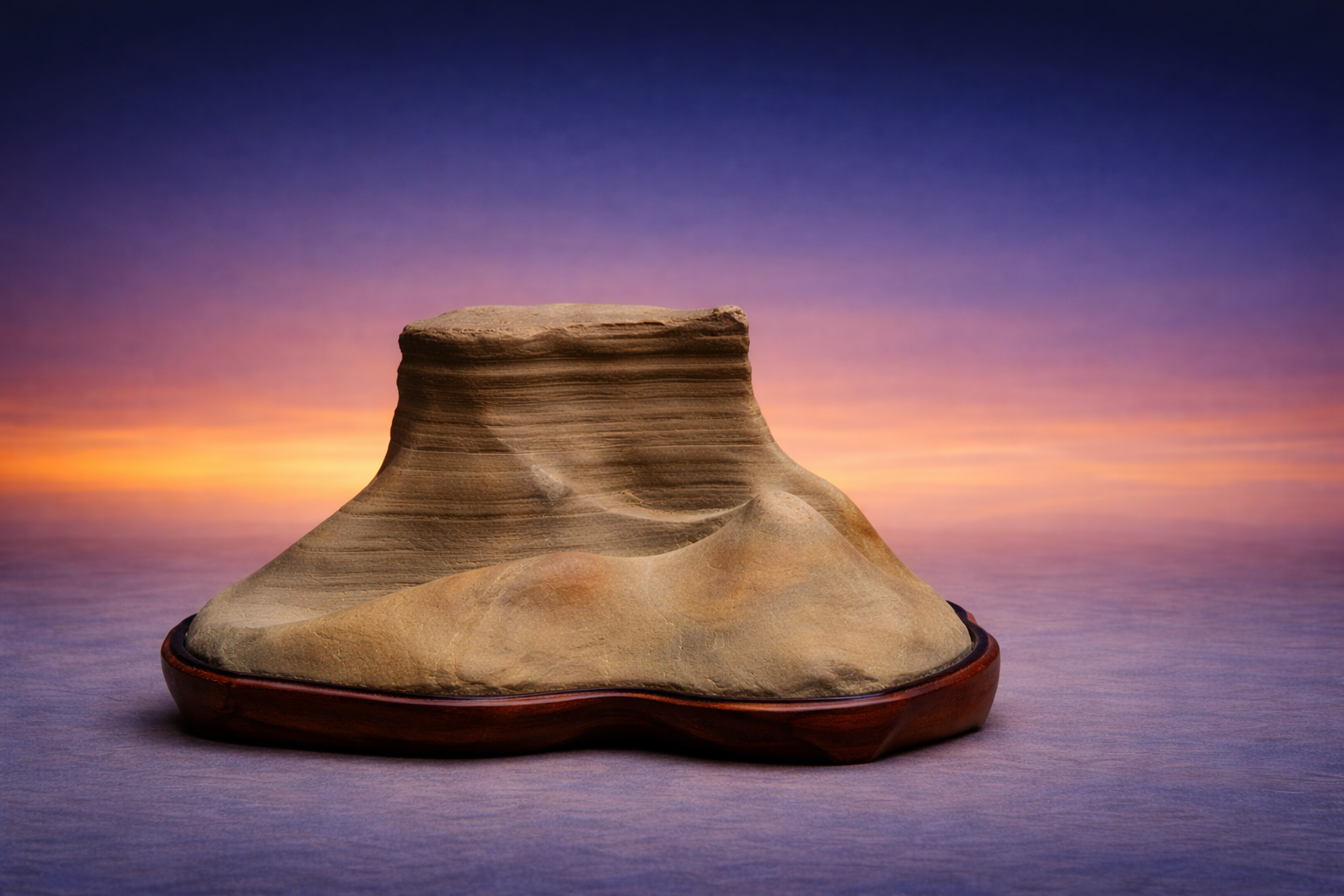 Distant mountain stone / Yamagata-ishi (山形石) / Toyama-ishi (遠山石)
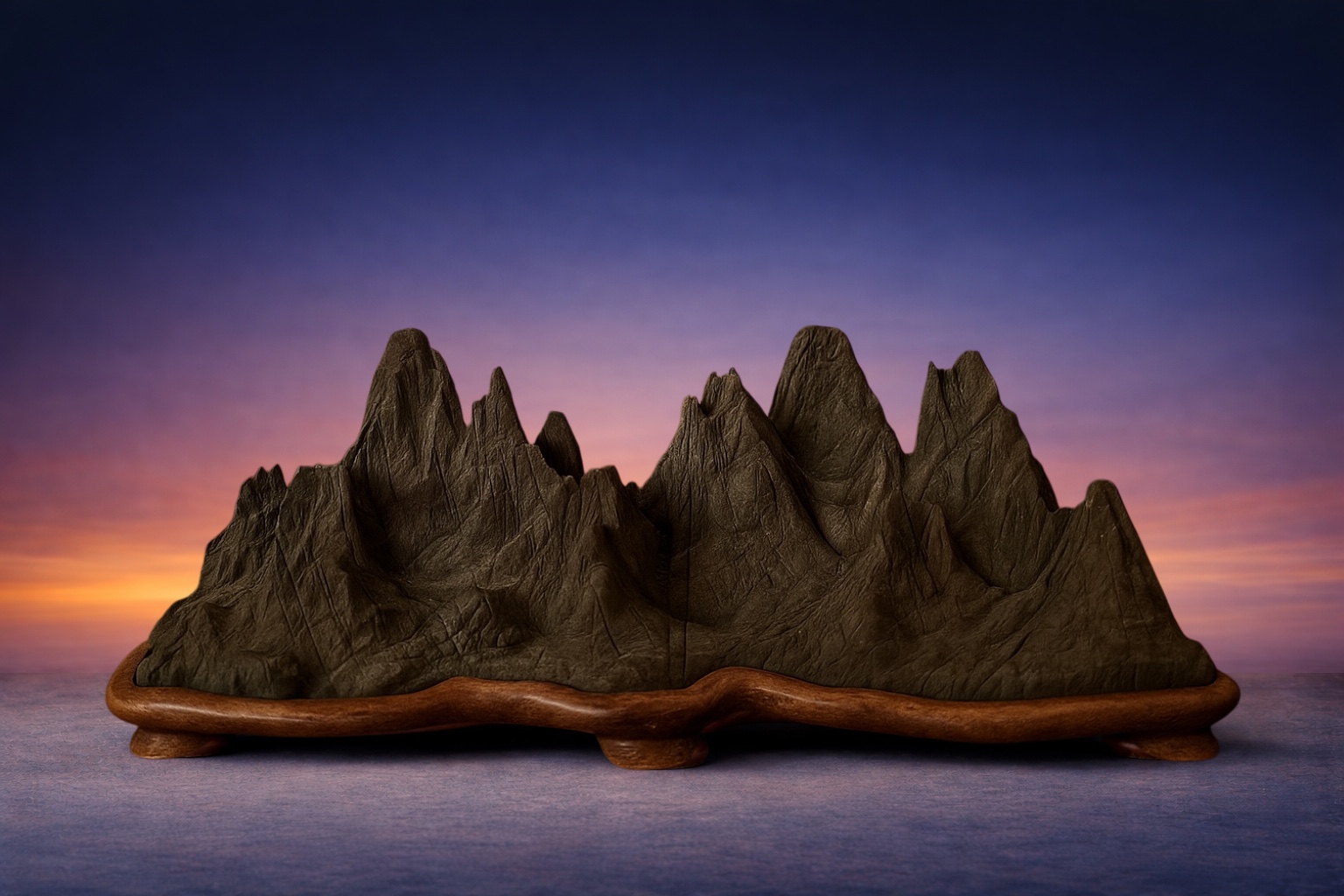 Mountain range stone / Yamagata-ishi (山形石) / Rempo-seki (連峰石)
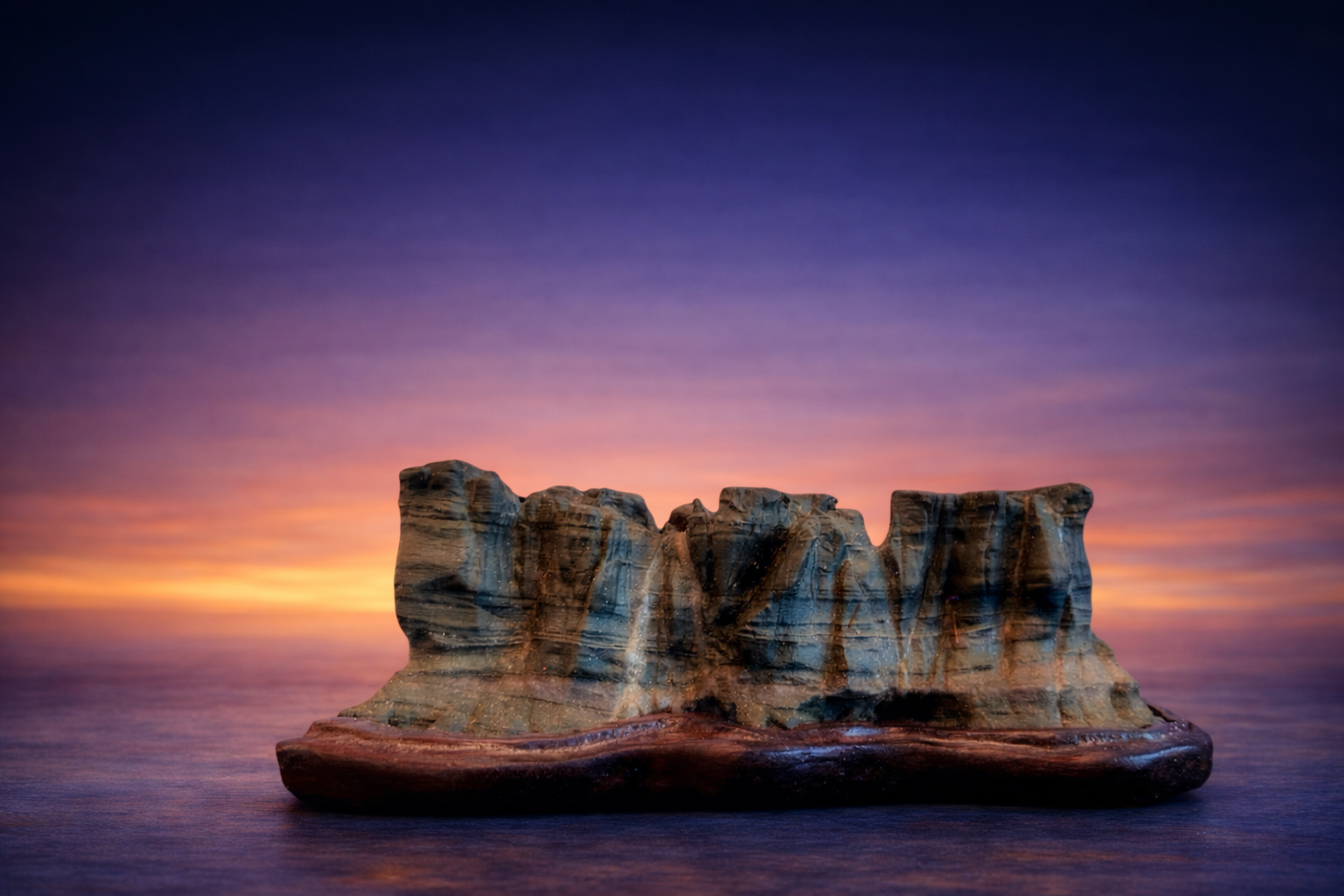 Distant mountain stone / Yamagata-ishi (山形石) / Toyama-ishi (遠山石)
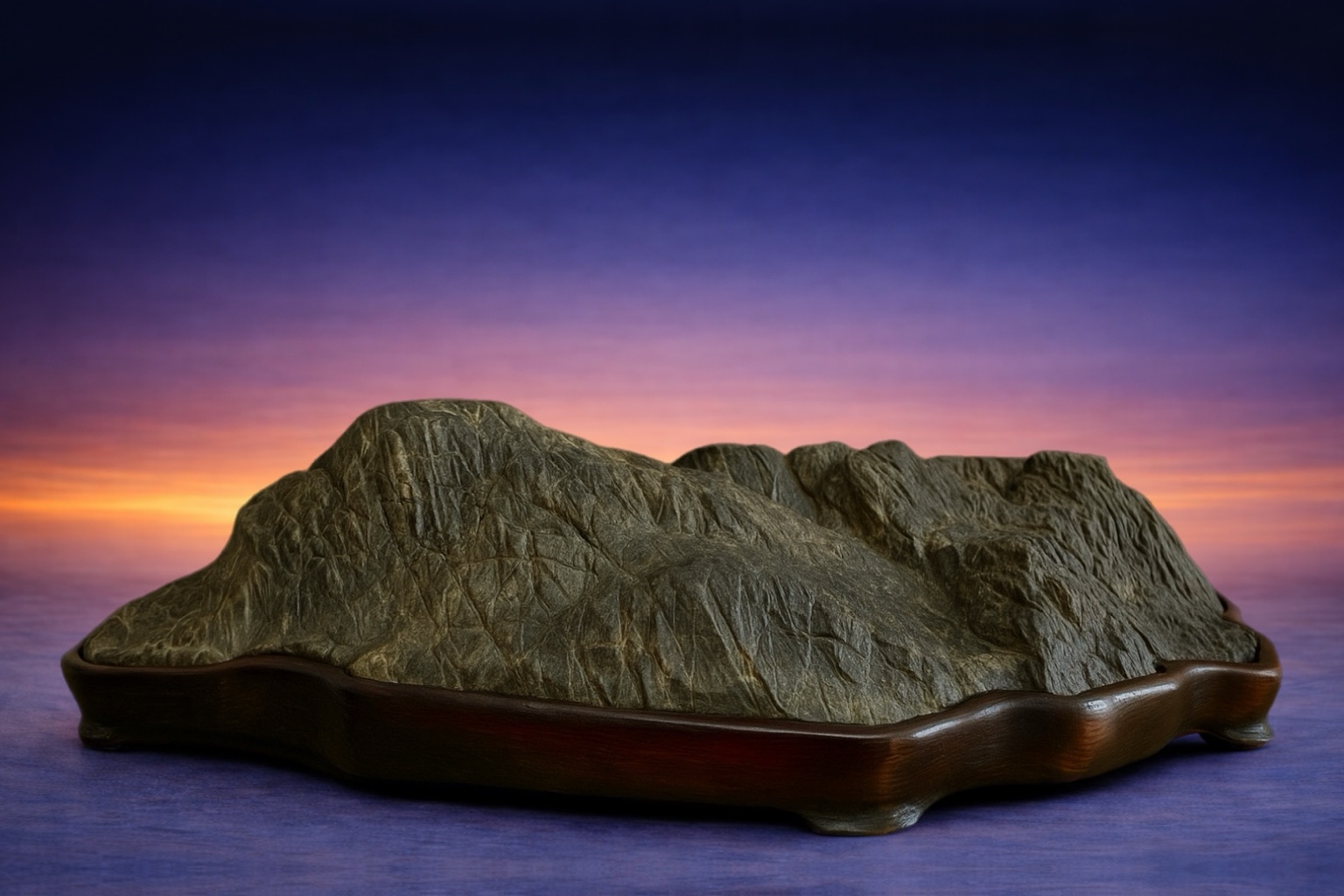 Distant mountain stone / Yamagata-ishi (山形石) / Toyama-ishi (遠山石)
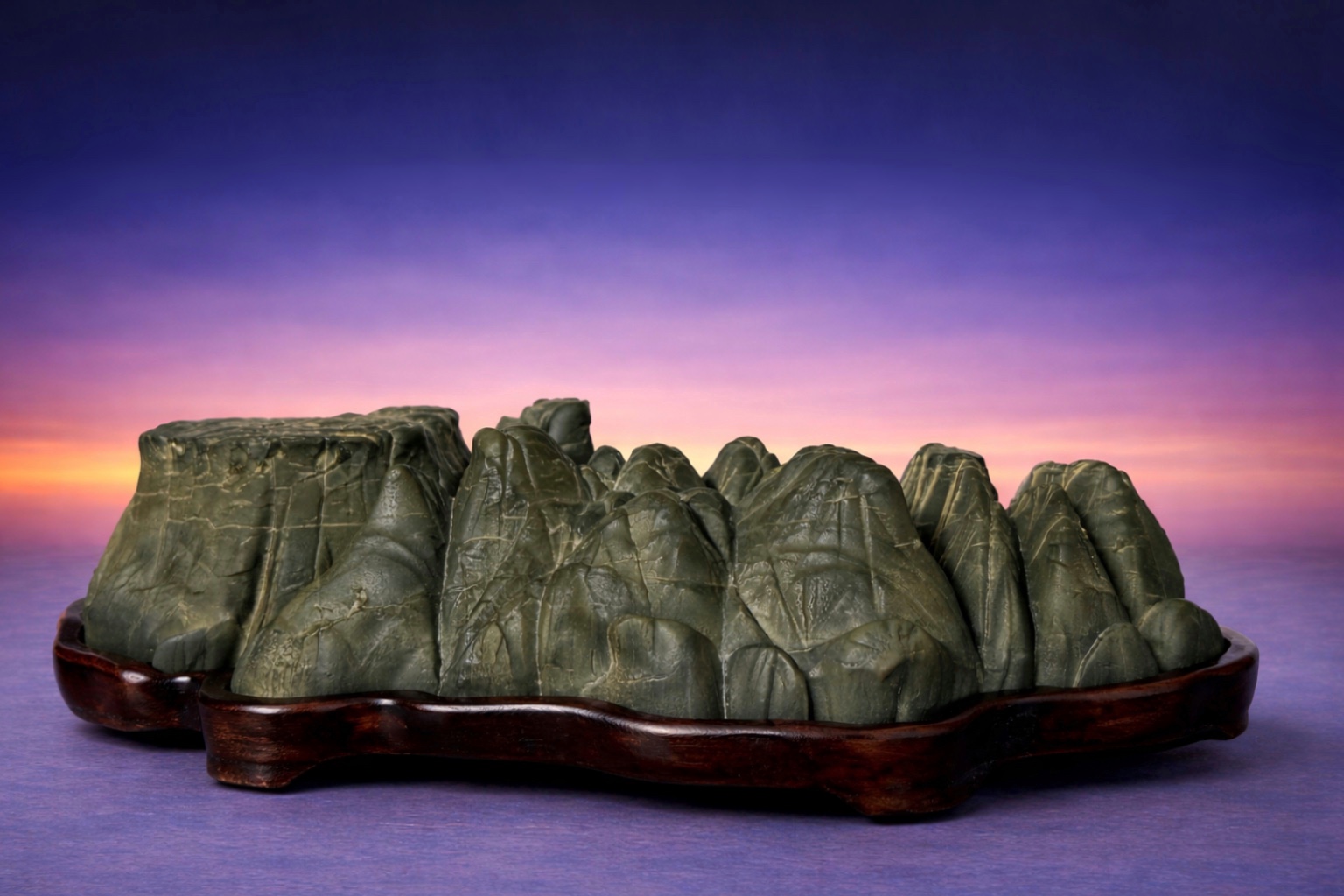 Distant mountain stone / Yamagata-ishi (山形石) / Toyama-ishi (遠山石)
 Distant mountain stone / Yamagata-ishi (山形石) / Toyama-ishi (遠山石)
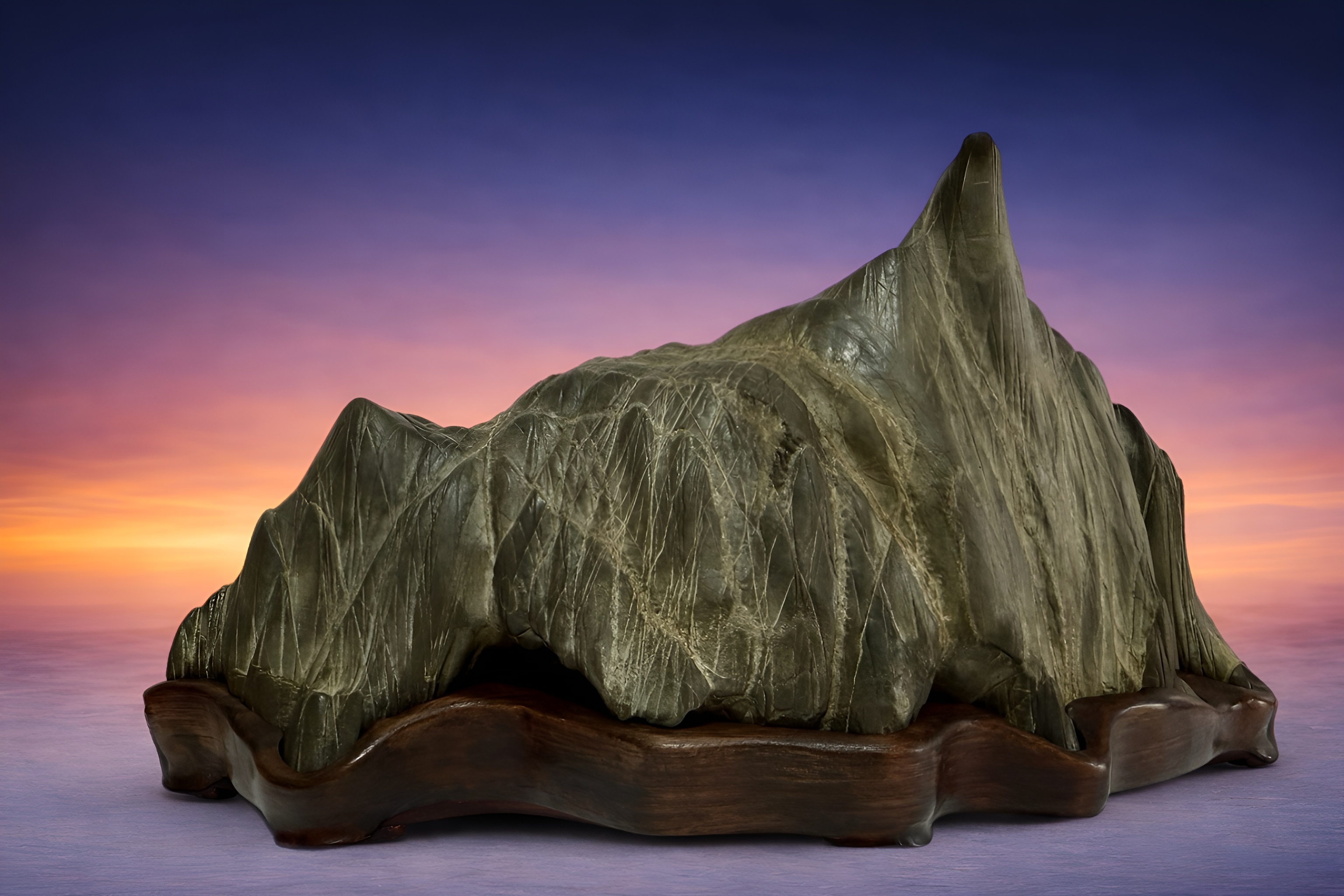 Single-peak mountain stone / Yamagata-ishi (山形石) / Koho-seki (孤峰石)
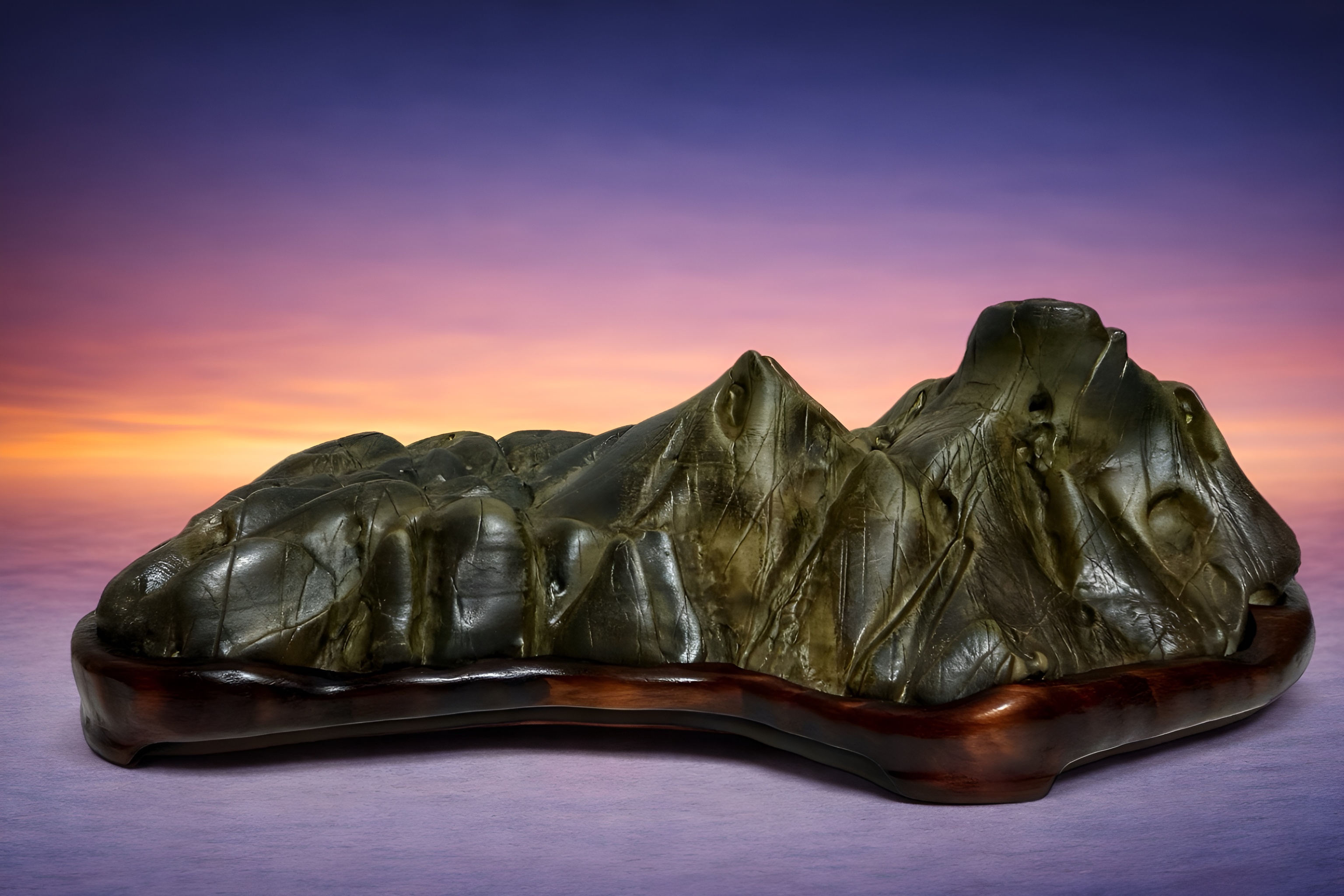 Mountain range stone / Yamagata-ishi (山形石) / Rempo-seki (連峰石)
 Distant mountain stone / Yamagata-ishi (山形石) / Toyama-ishi (遠山石)
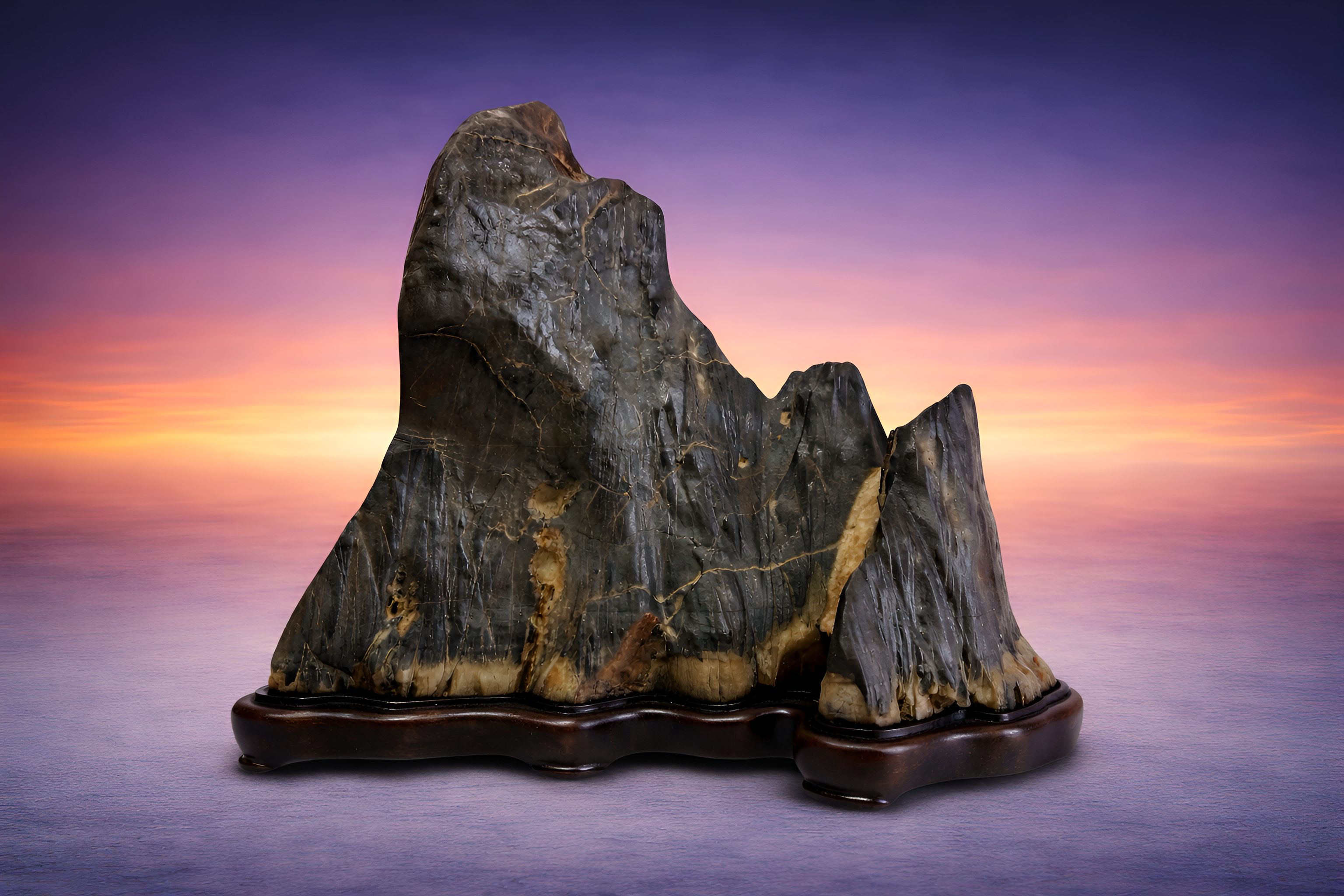 Nearby mountain stone / Yamagata-ishi (山形石) / Kinzan-seki (近山石)
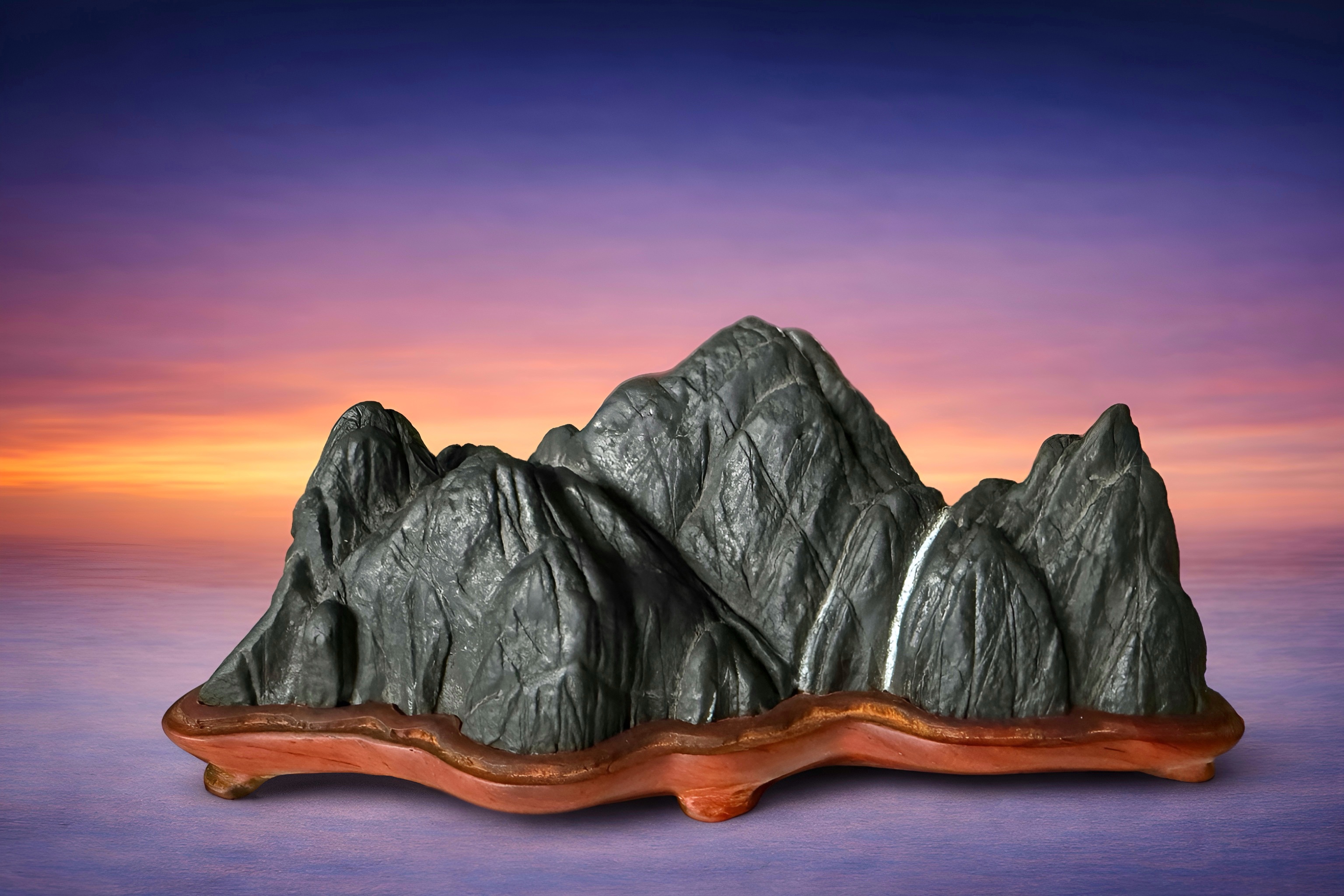 Mountain range stone / Yamagata-ishi (山形石) / Rempo-seki (連峰石)
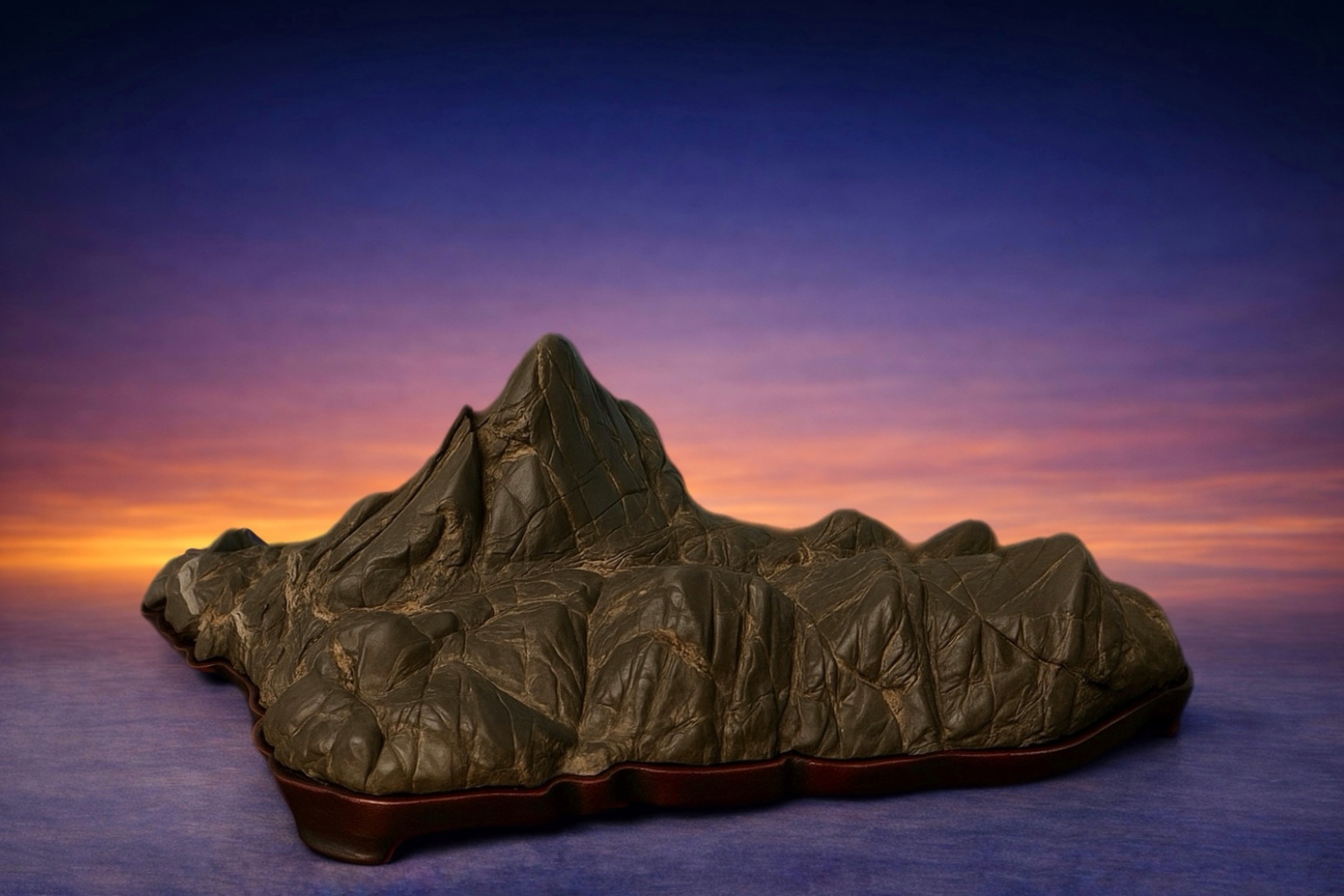 Single-peak mountain stone / Yamagata-ishi (山形石) / Koho-seki (孤峰石)
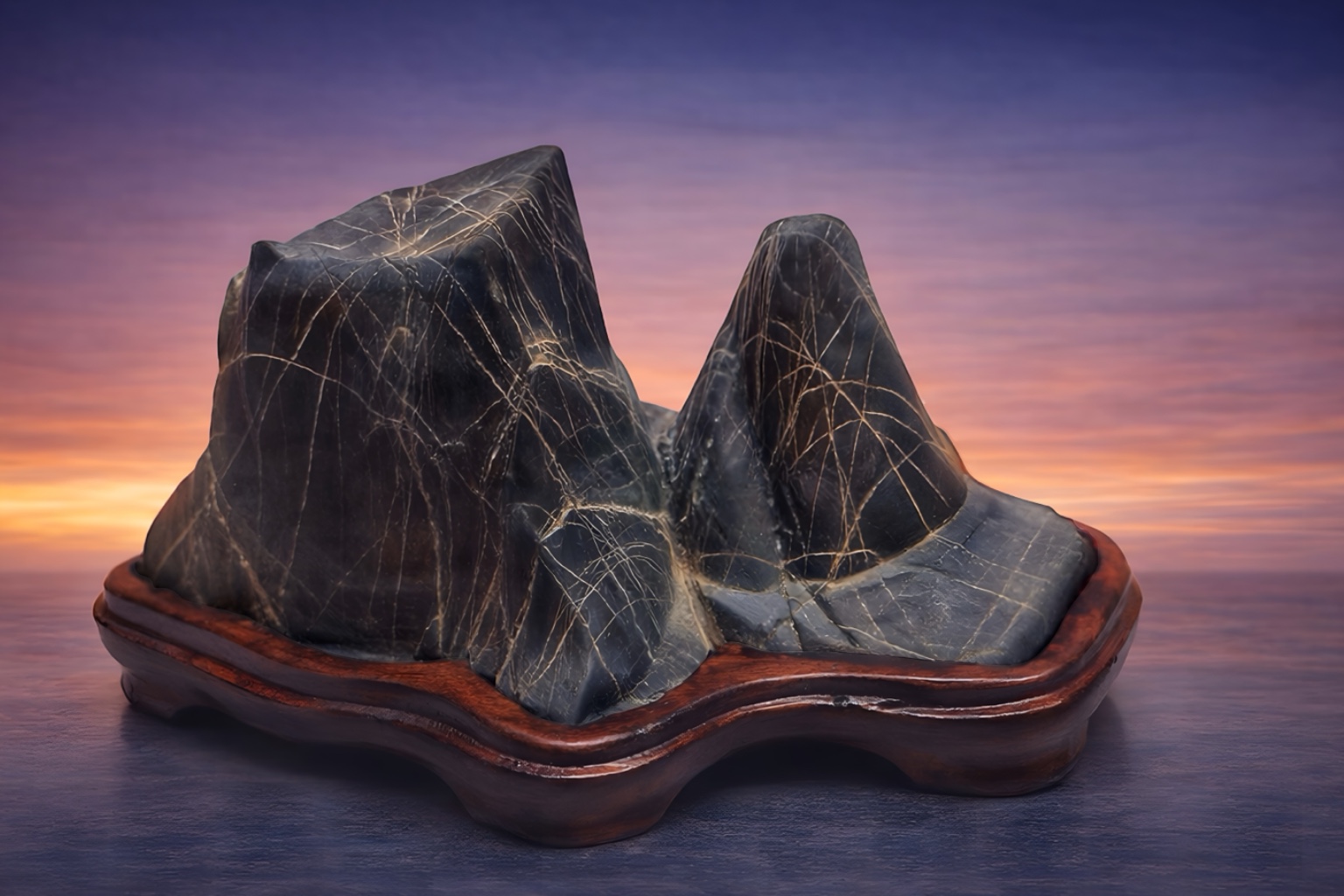 Twin-peak mountain stone / Yamagata-ishi (山形石) / Soho-seki (双峰石)
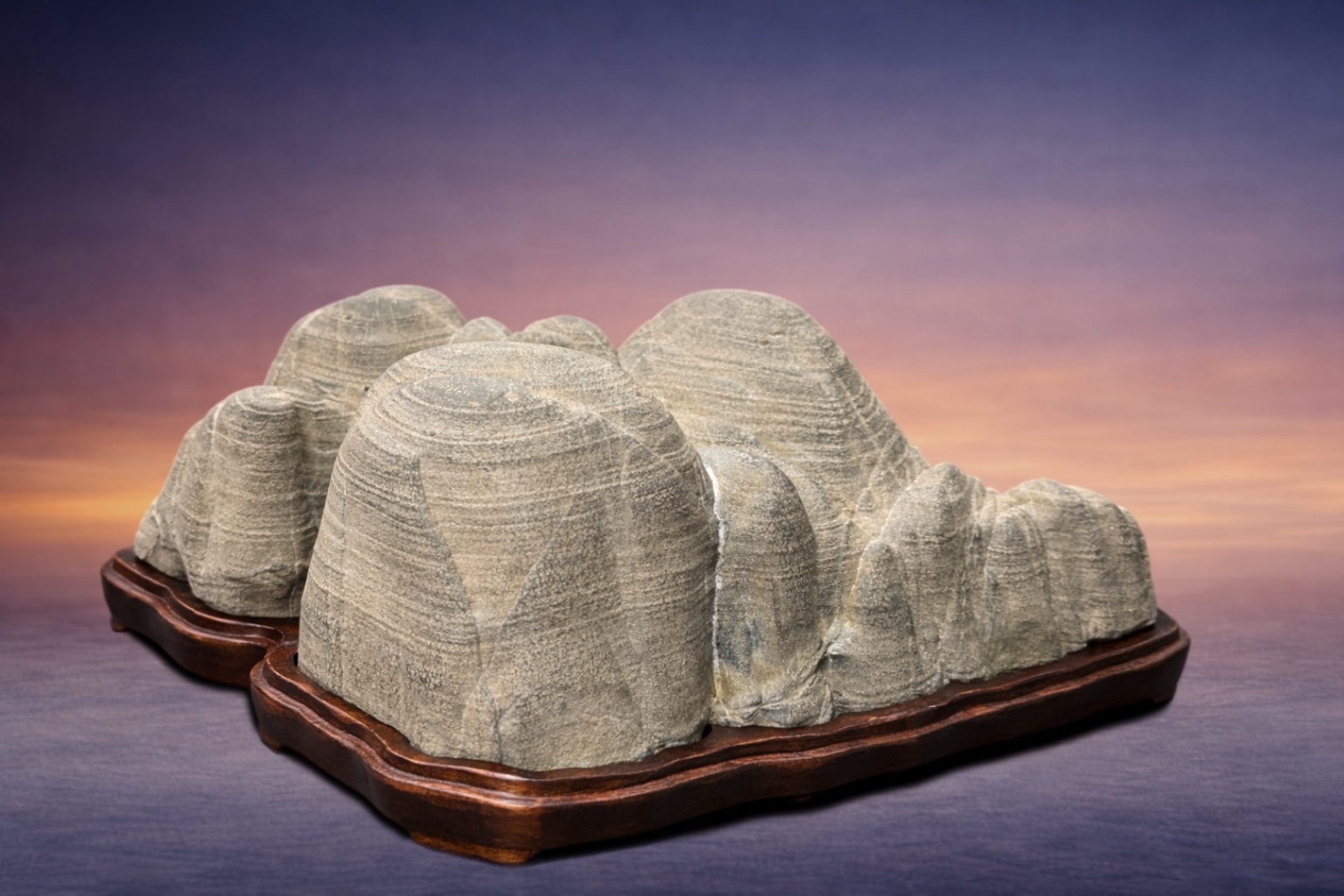 Distant mountain stone / Yamagata-ishi (山形石) / Toyama-ishi (遠山石)
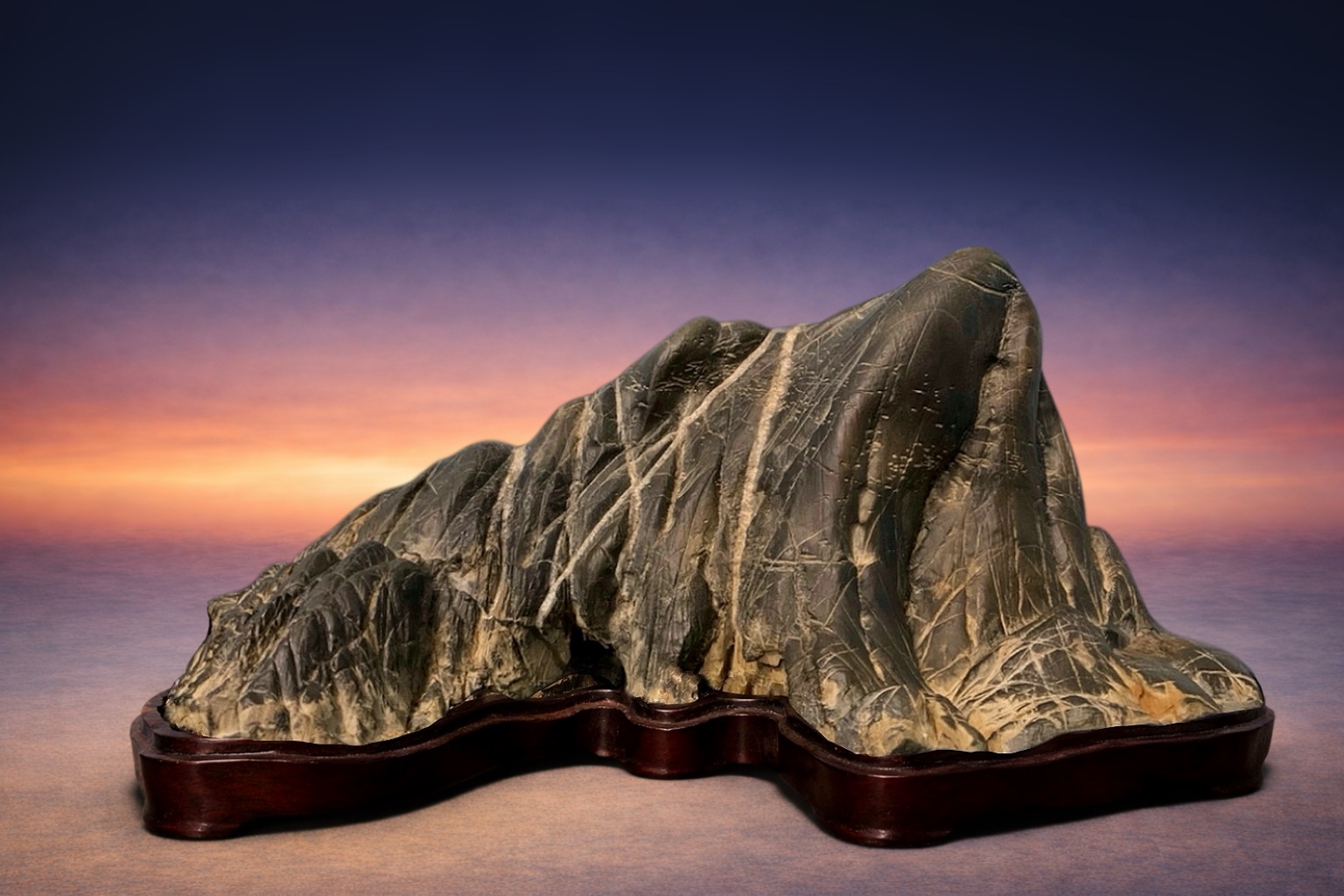 Nearby mountain stone / Yamagata-ishi (山形石) / Kinzan-seki (近山石)
 Single-peak mountain stone / Yamagata-ishi (山形石) / Koho-seki (孤峰石)
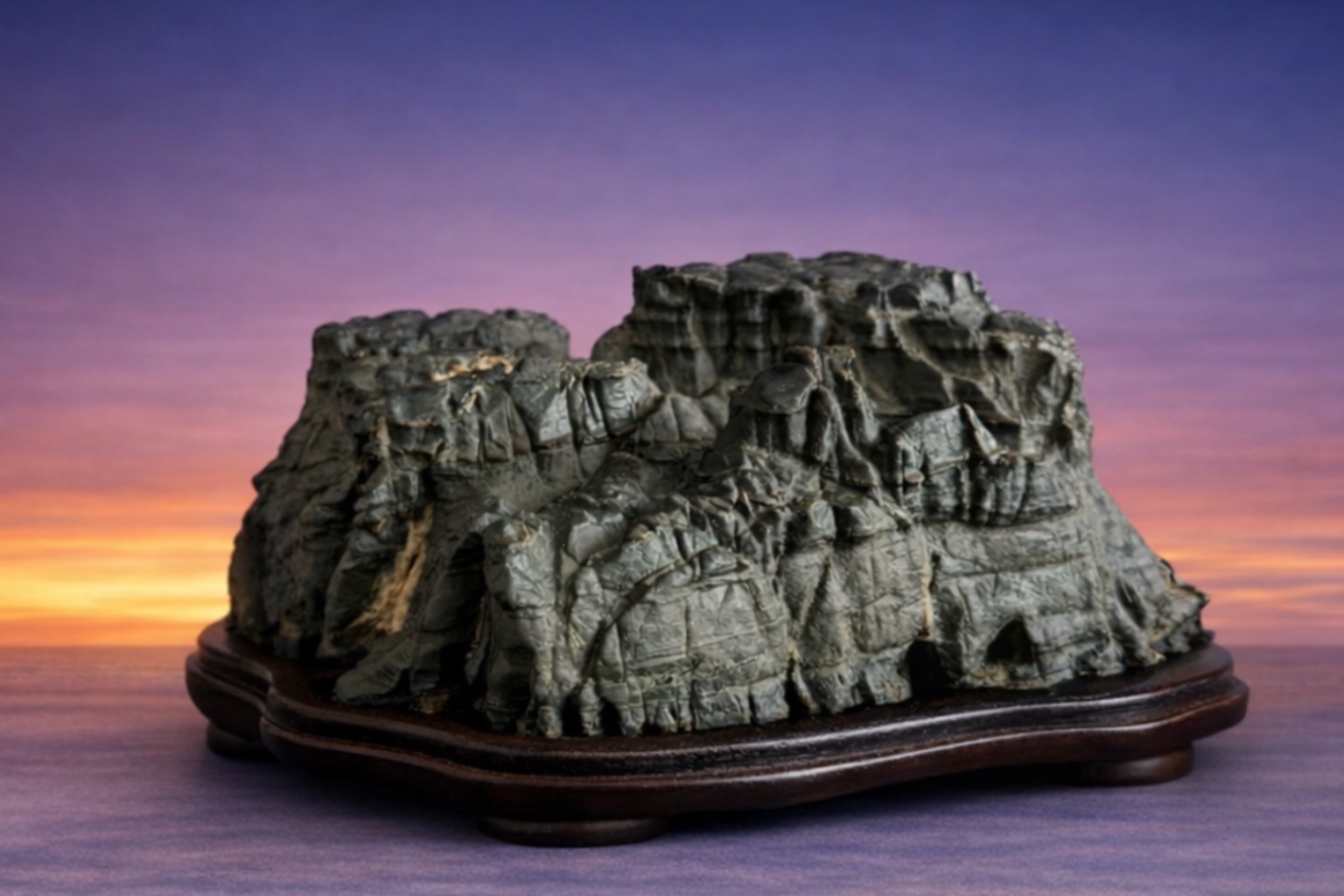 Nearby mountain stone / Yamagata-ishi (山形石) / Kinzan-seki (近山石)
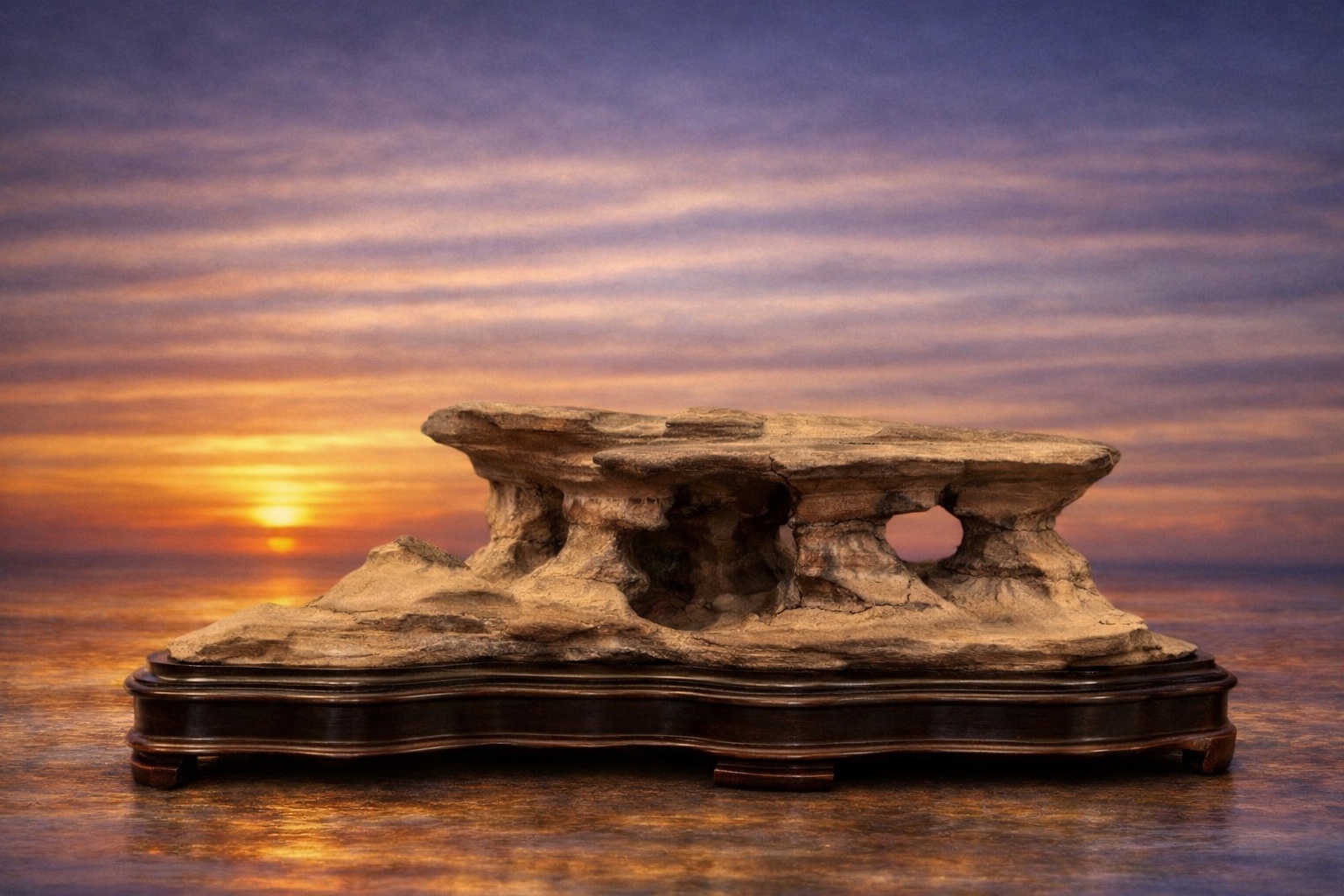 Distant mountain stone / Yamagata-ishi (山形石) / Toyama-ishi (遠山石)
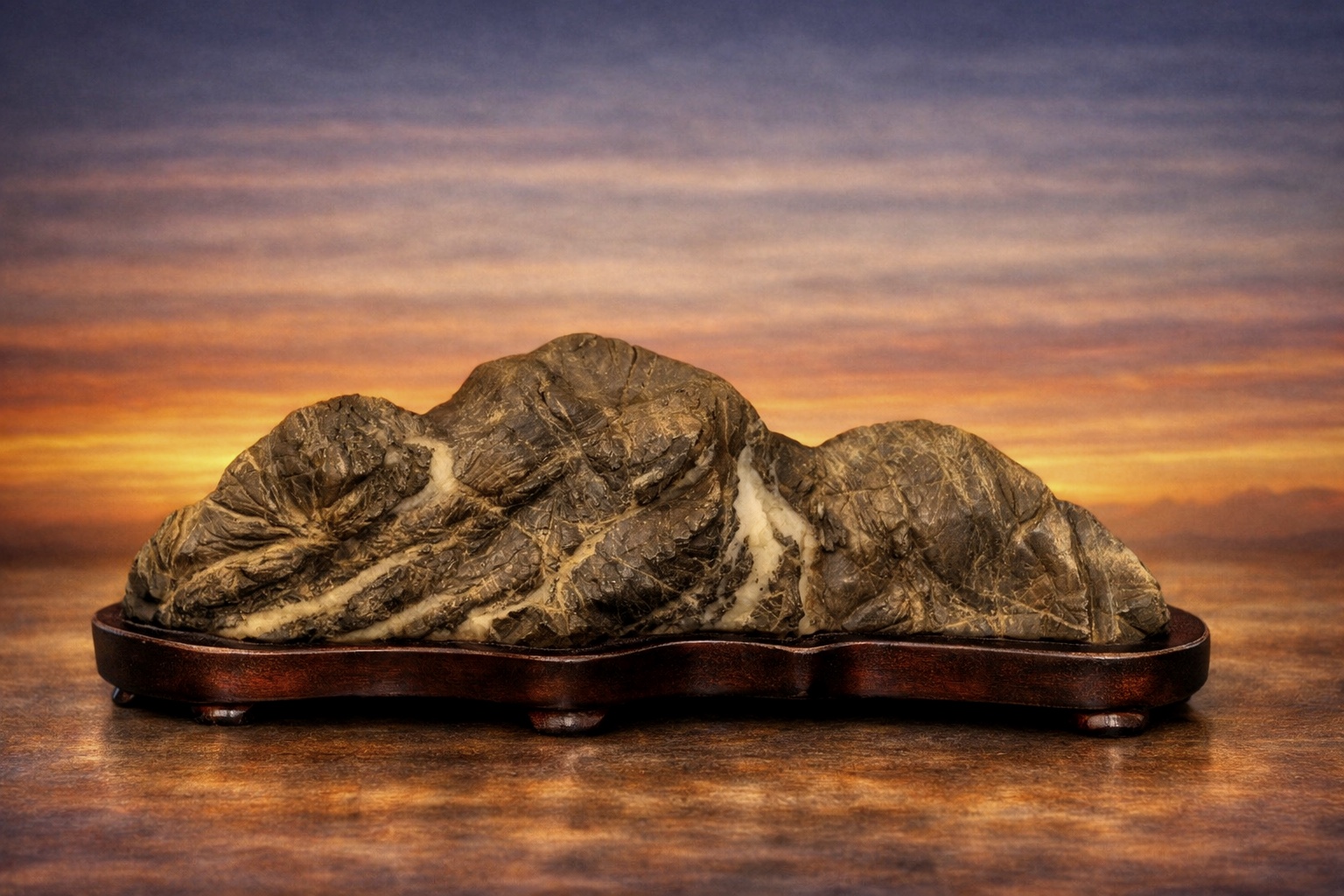 Nearby mountain stone / Yamagata-ishi (山形石) / Kinzan-seki (近山石)
 Mountain range stone / Yamagata-ishi (山形石) / Rempo-seki (連峰石)
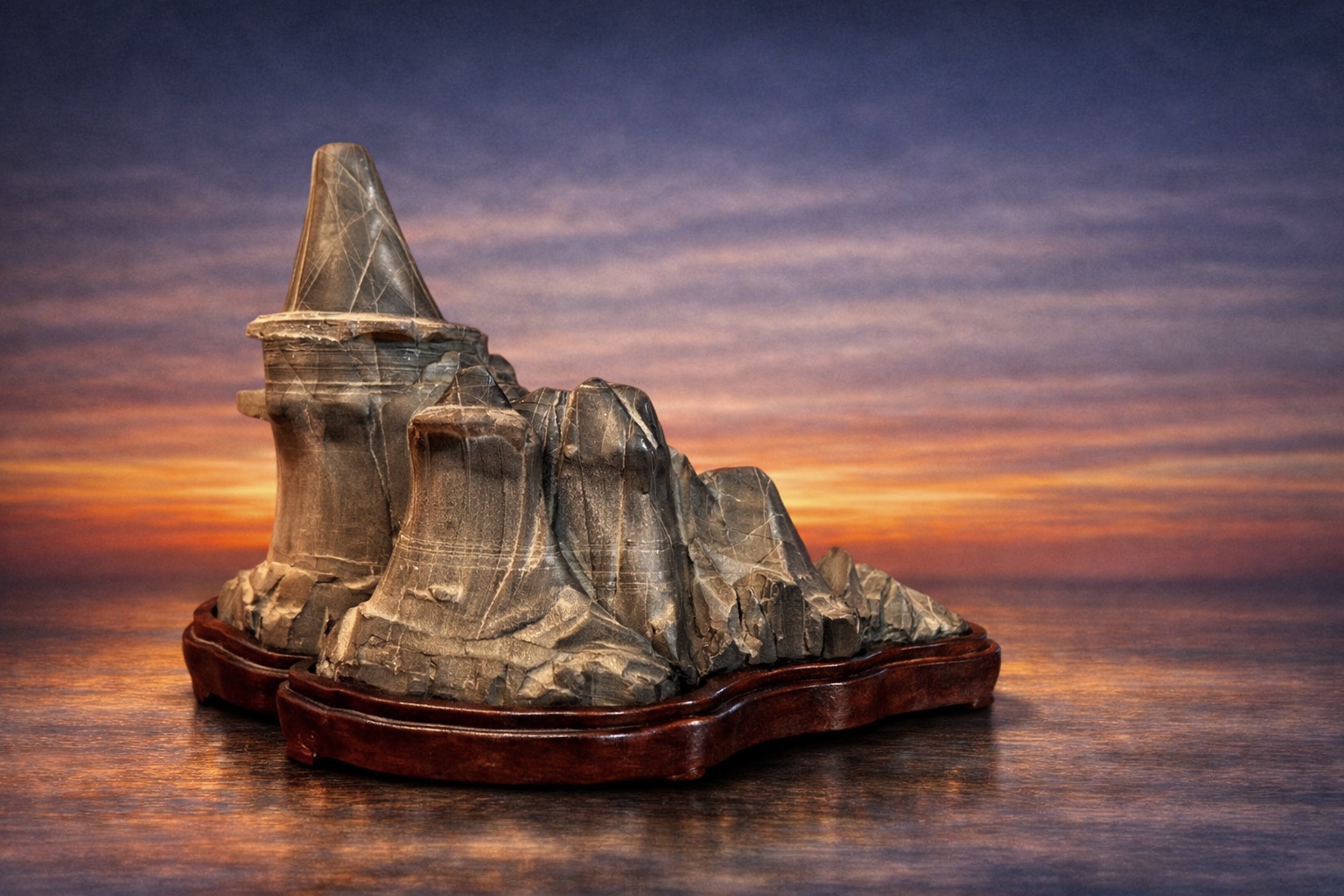 Single-peak mountain stone / Yamagata-ishi (山形石) / Koho-seki (孤峰石)
 Distant mountain stone / Yamagata-ishi (山形石) / Toyama-ishi (遠山石)
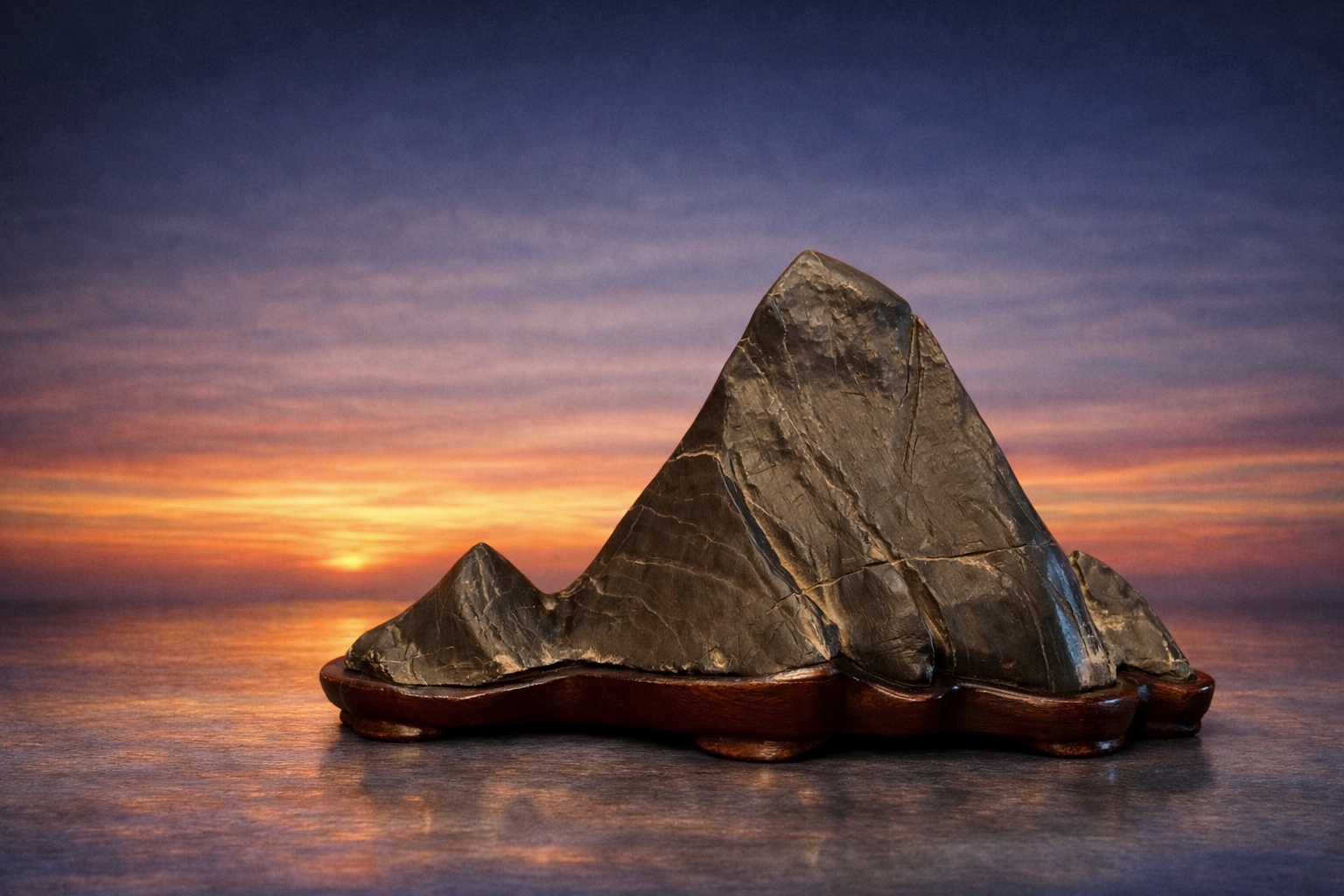 Twin-peak mountain stone / Yamagata-ishi (山形石) / Soho-seki (双峰石)
 Mountain range stone / Yamagata-ishi (山形石) / Rempo-seki (連峰石)
 Bridge stone / Hashi-ishi (橋石)
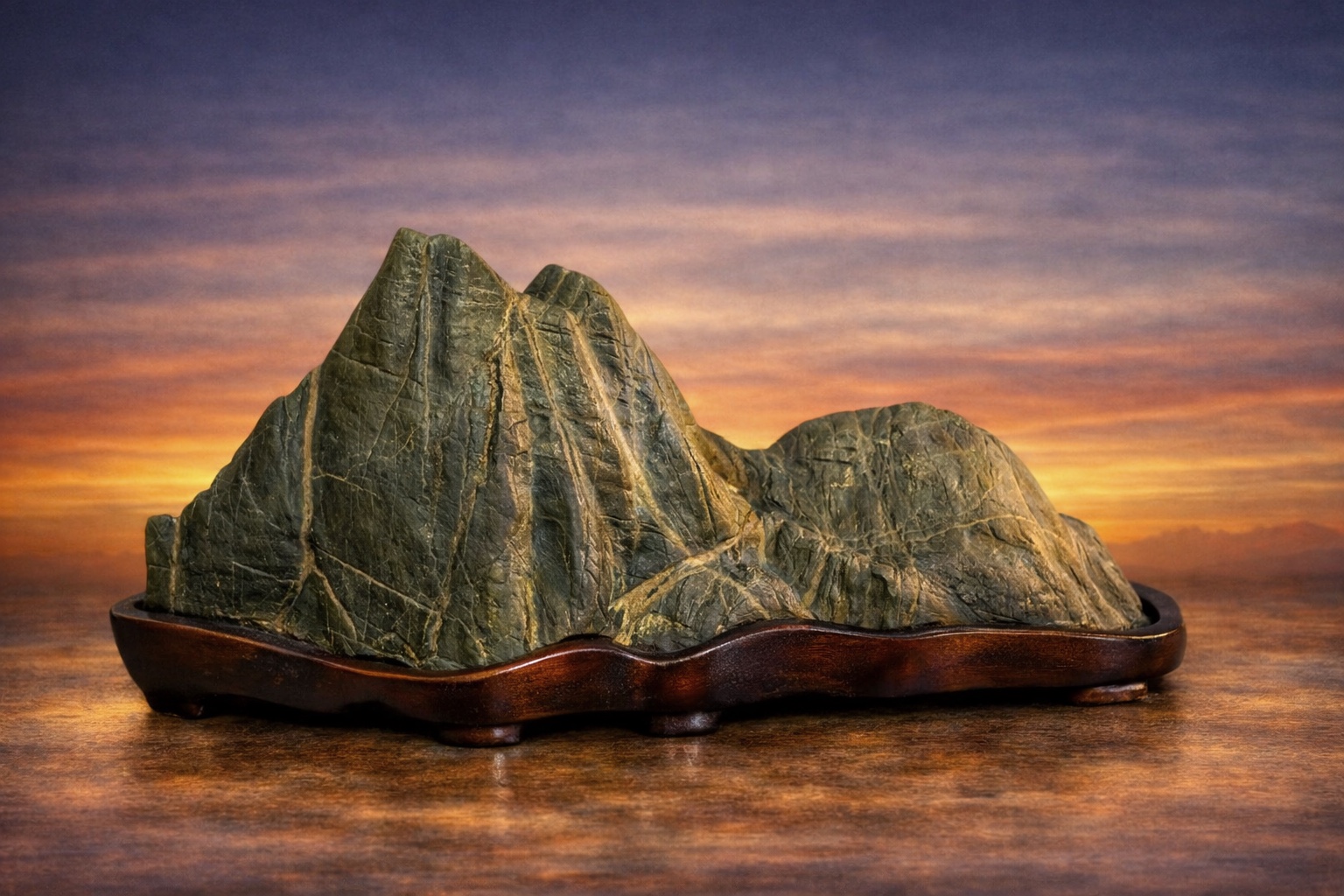 Distant mountain stone / Yamagata-ishi (山形石) / Toyama-ishi (遠山石)
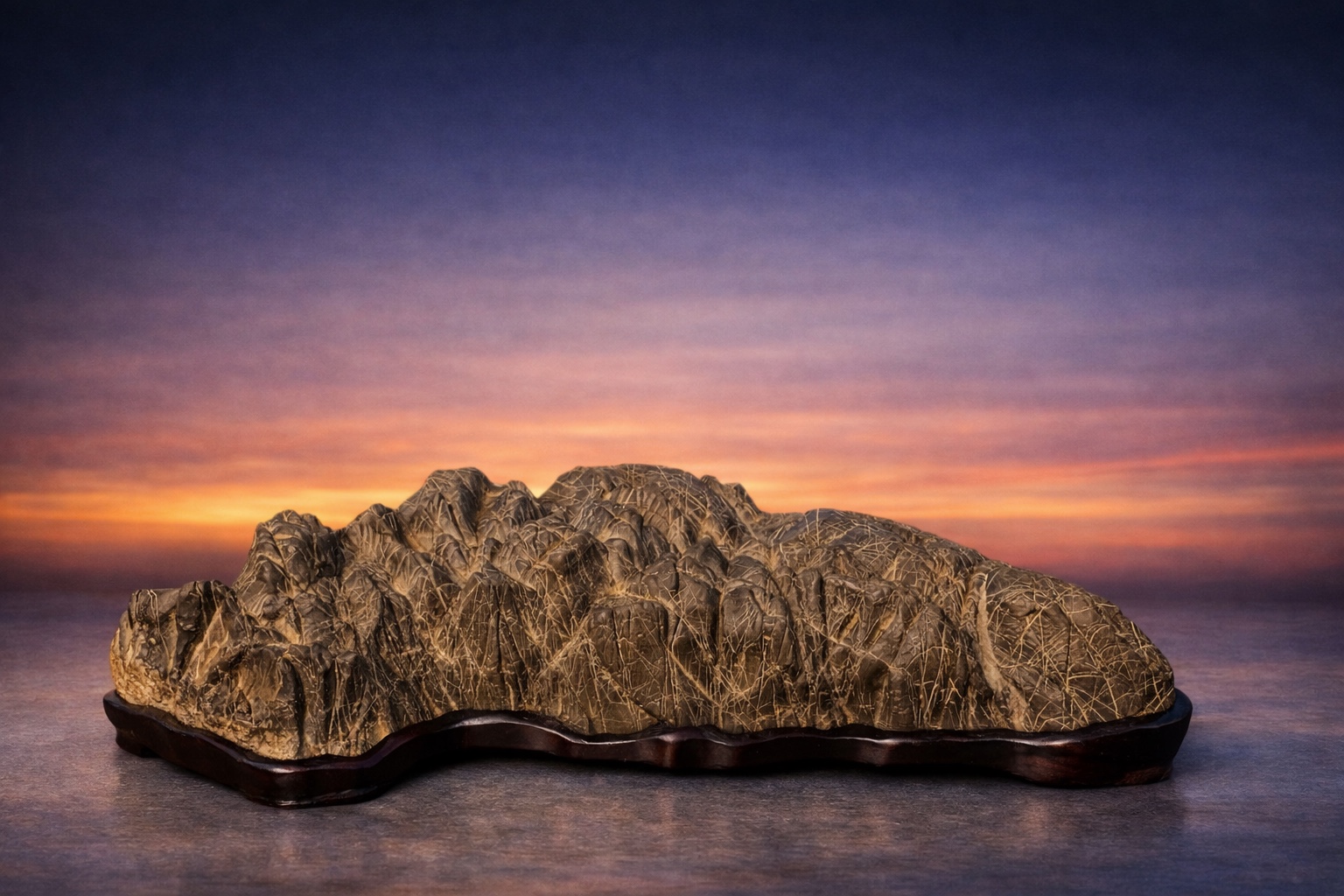 Nearby mountain stone / Yamagata-ishi (山形石) / Kinzan-seki (近山石)
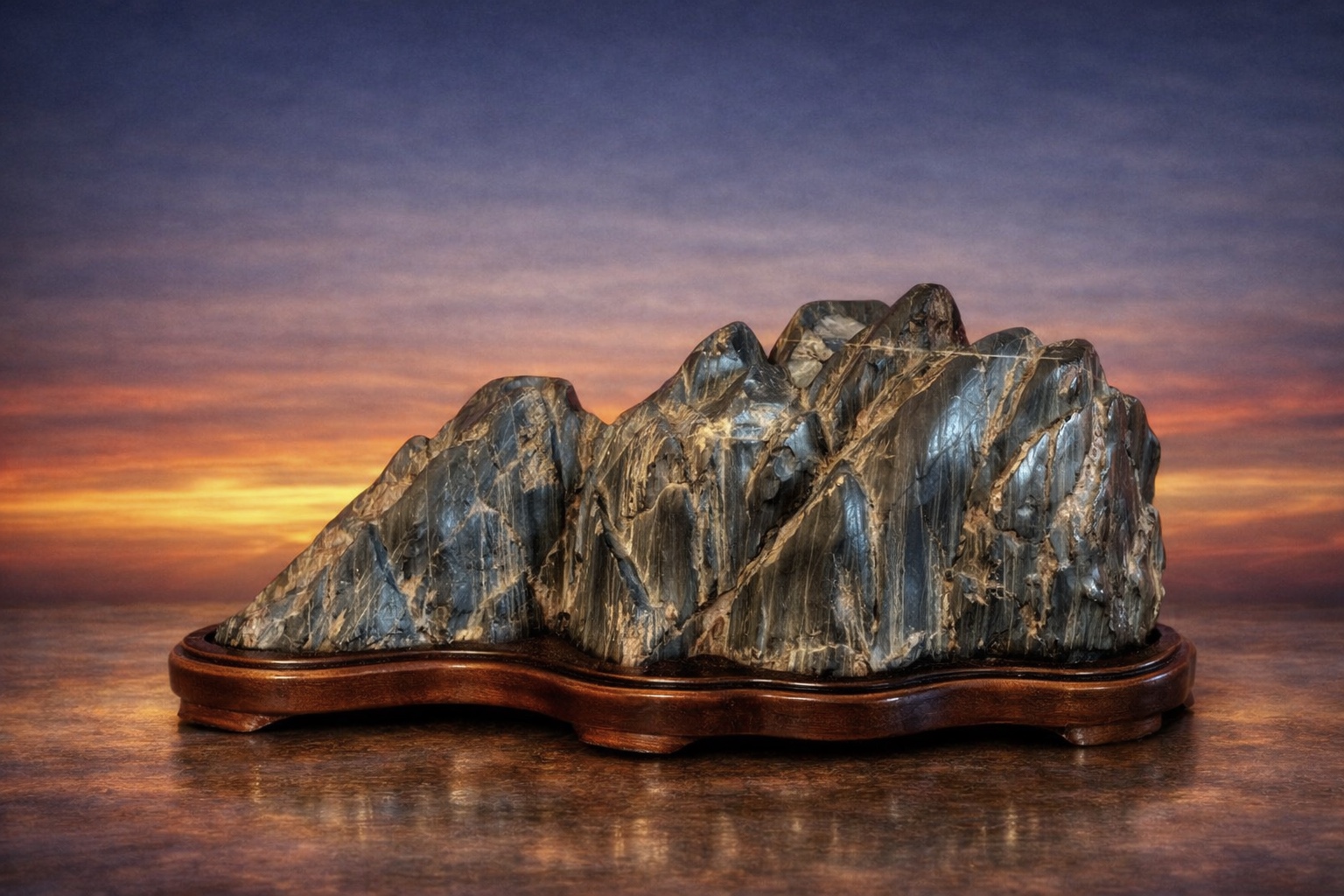 Single-peak mountain stone / Yamagata-ishi (山形石) / Koho-seki (孤峰石)
 Snow-covered mountain stone / Sekkei-ishi (雪渓石)
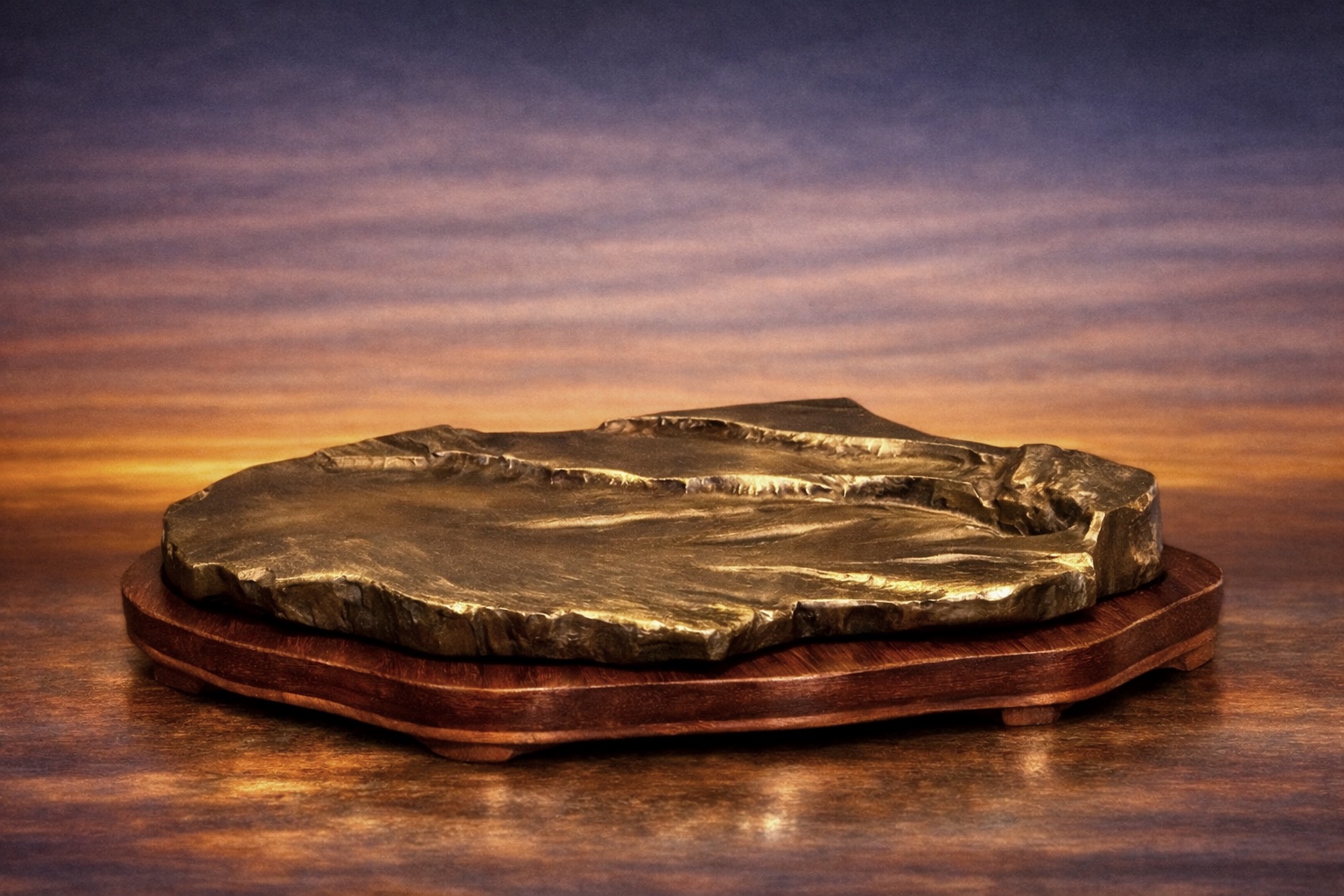 Distant mountain stone / Yamagata-ishi (山形石) / Toyama-ishi (遠山石)
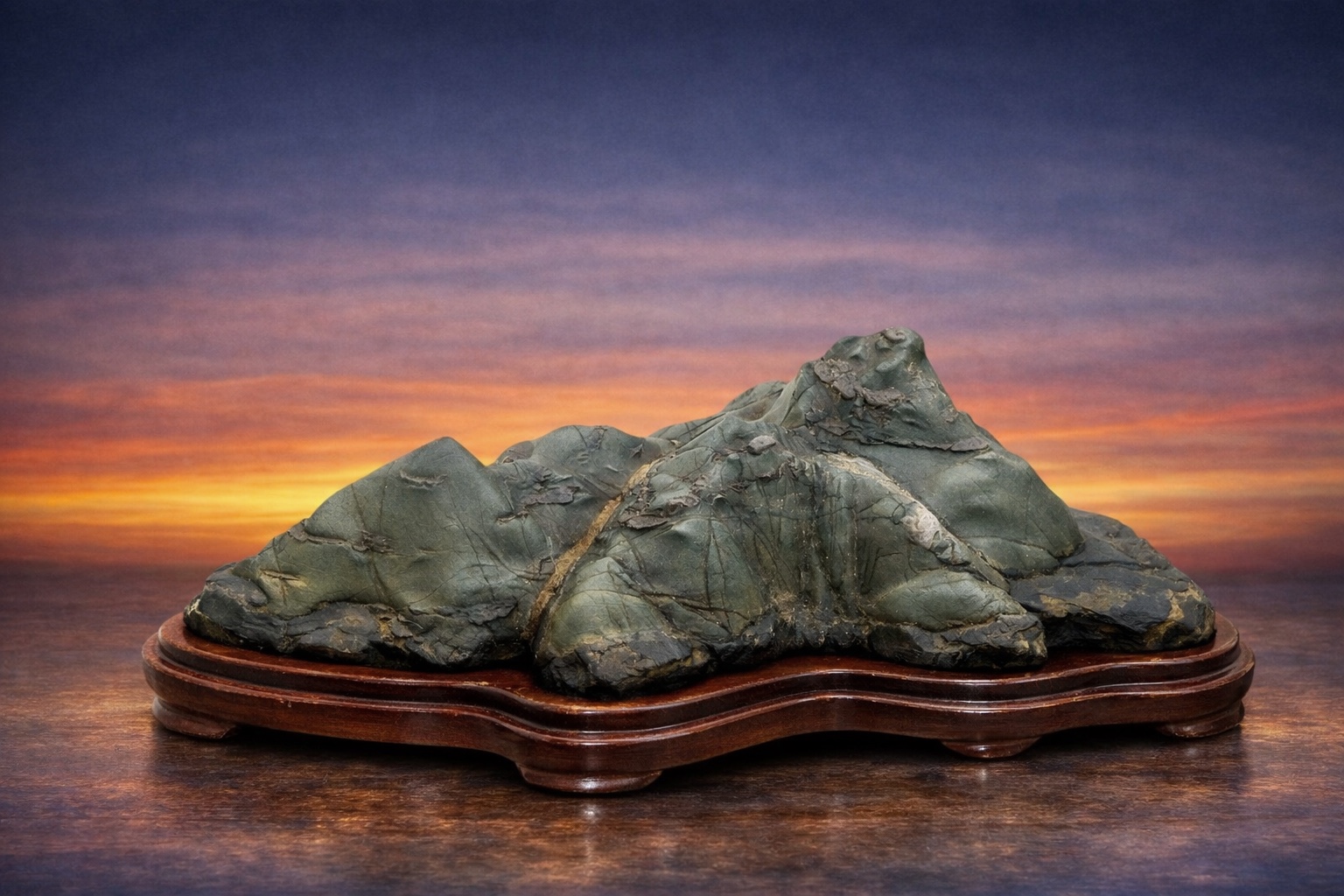 Mountain range stone / Yamagata-ishi (山形石) / Rempo-seki (連峰石)
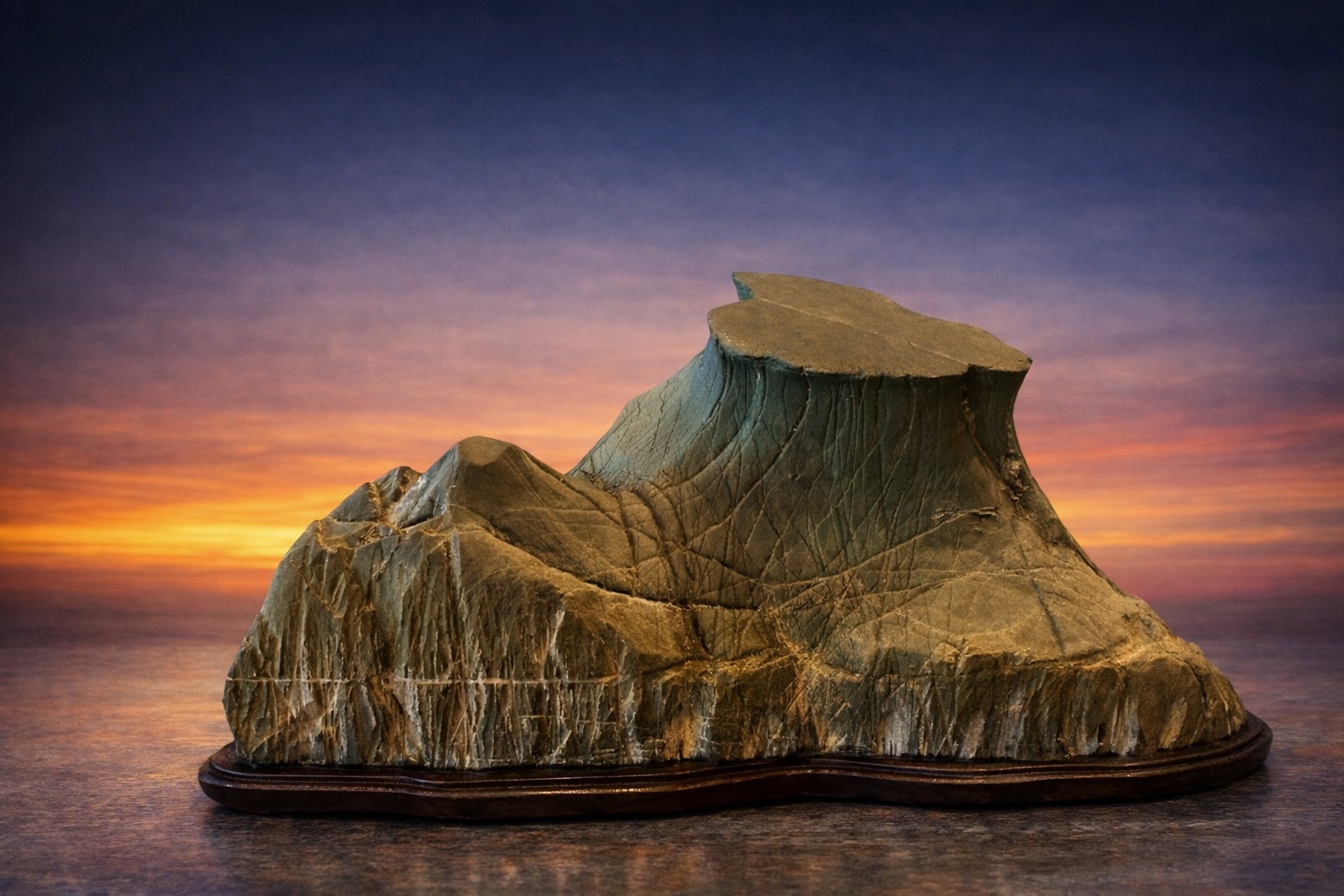 Twin-peak mountain stone / Yamagata-ishi (山形石) / Soho-seki (双峰石)
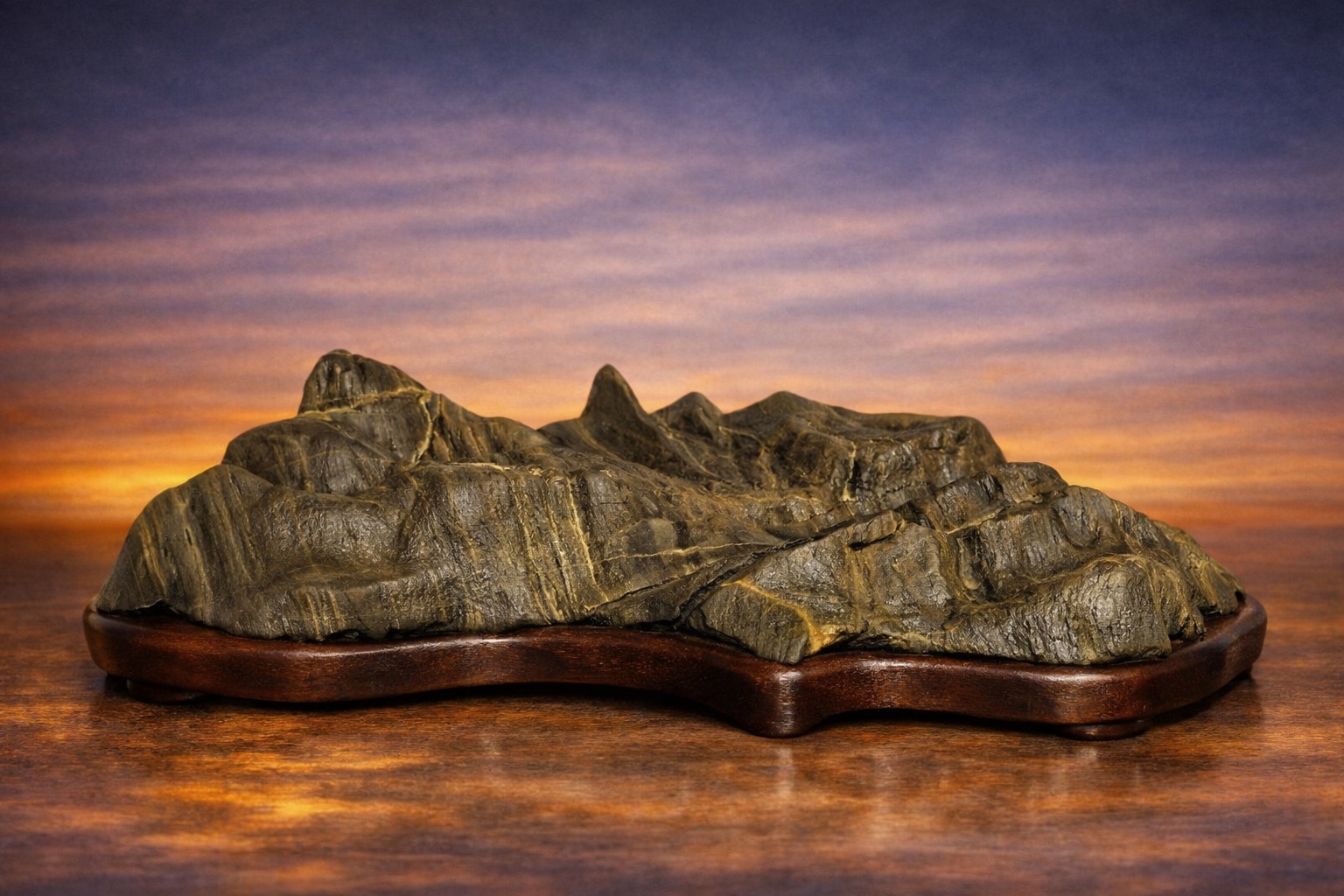 Boat-shaped stone / Funagata-ishi (舟形石)
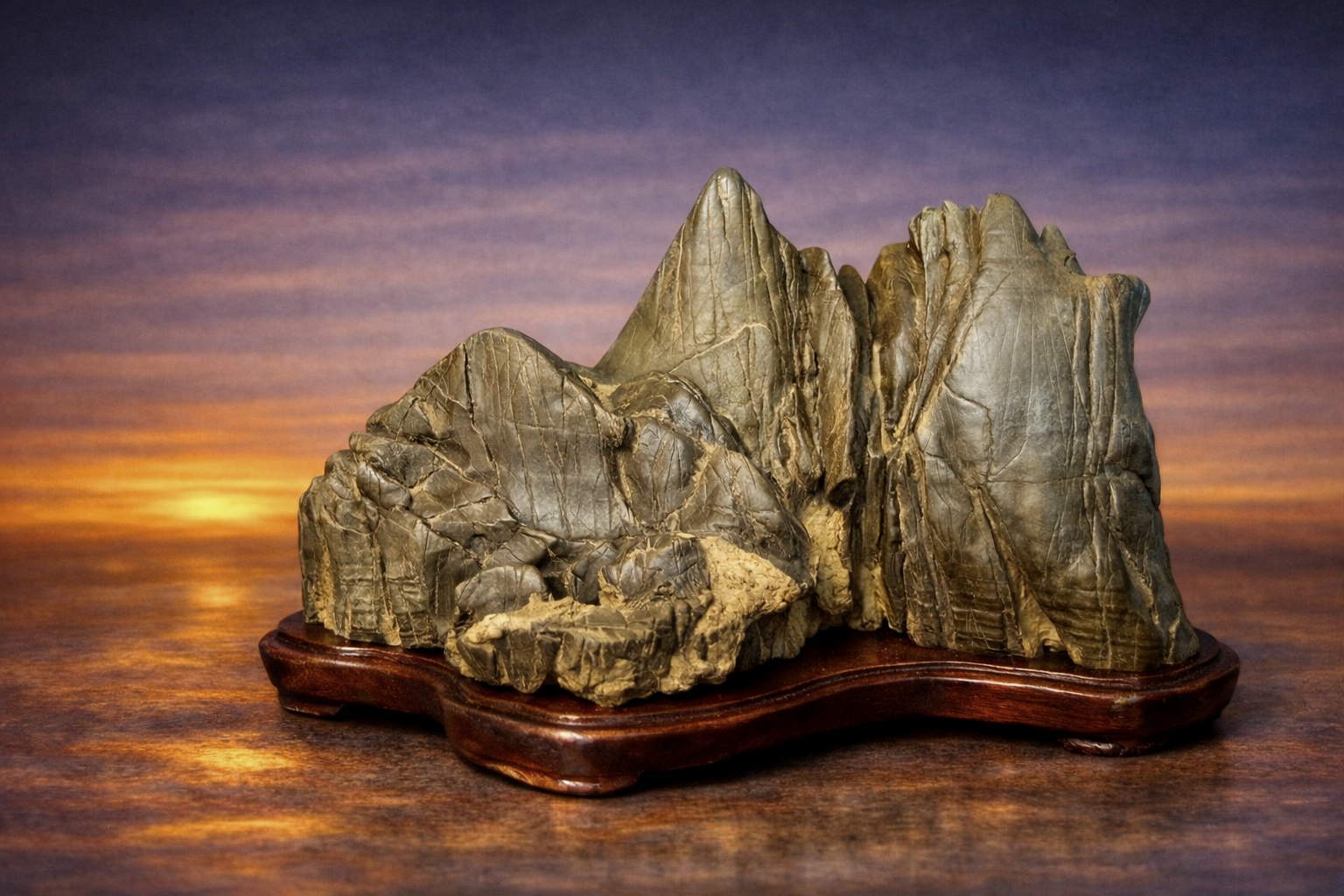 Distant mountain stone / Yamagata-ishi (山形石) / Toyama-ishi (遠山石)
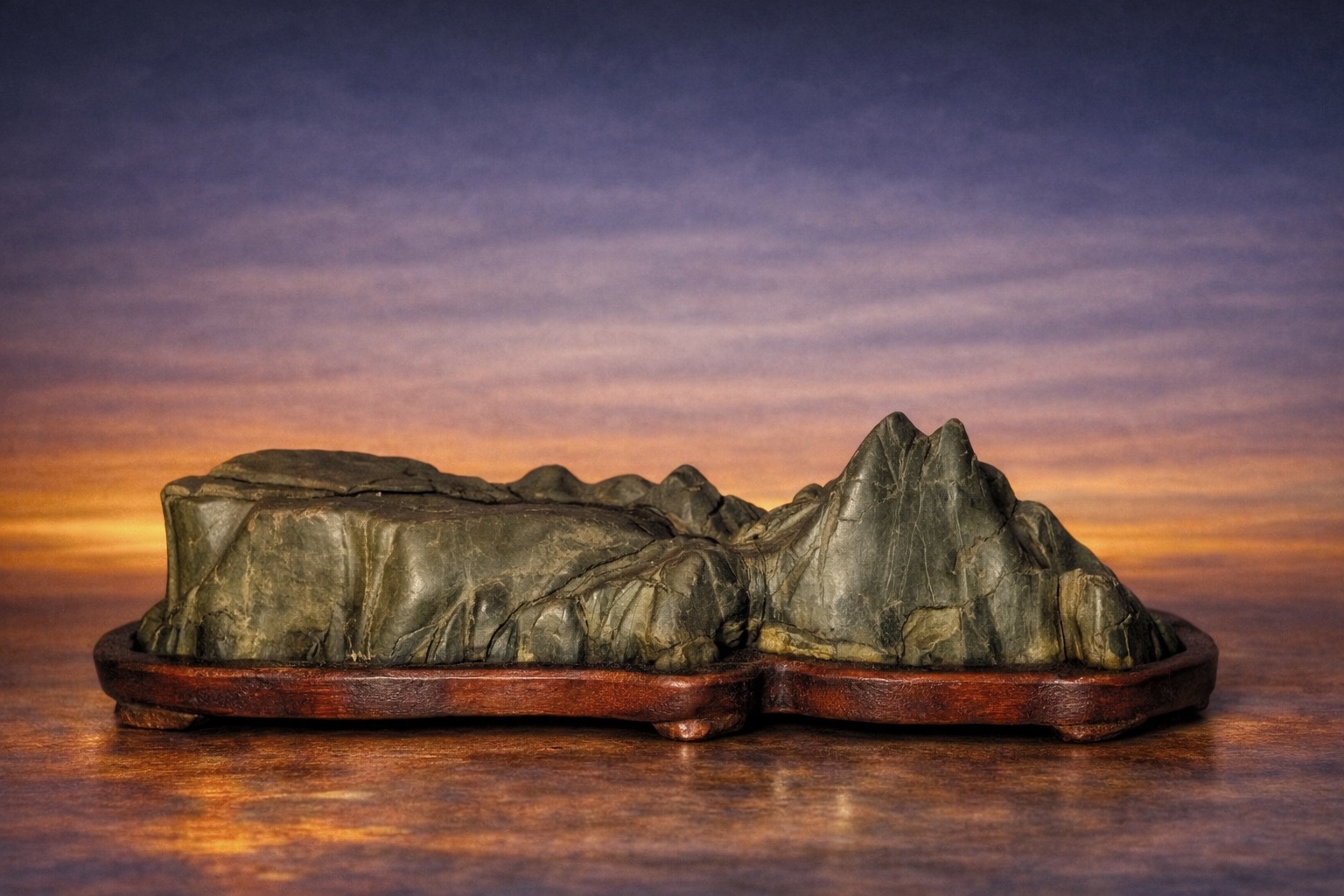 Nearby mountain stone / Yamagata-ishi (山形石) / Kinzan-seki (近山石)
 Mountain range stone / Yamagata-ishi (山形石) / Rempo-seki (連峰石)
 Single-peak mountain stone / Yamagata-ishi (山形石) / Koho-seki (孤峰石)
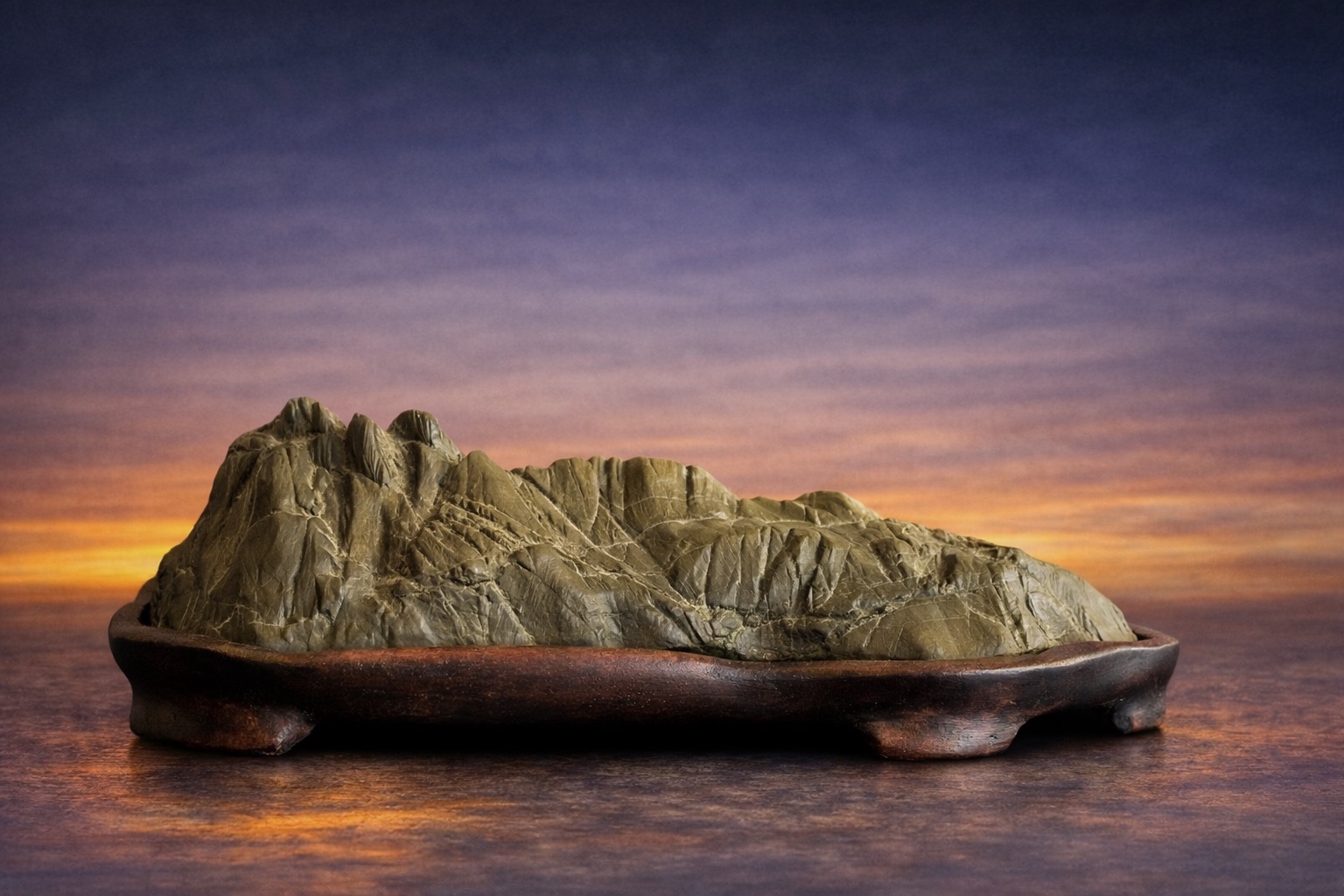 Distant mountain stone / Yamagata-ishi (山形石) / Toyama-ishi (遠山石)
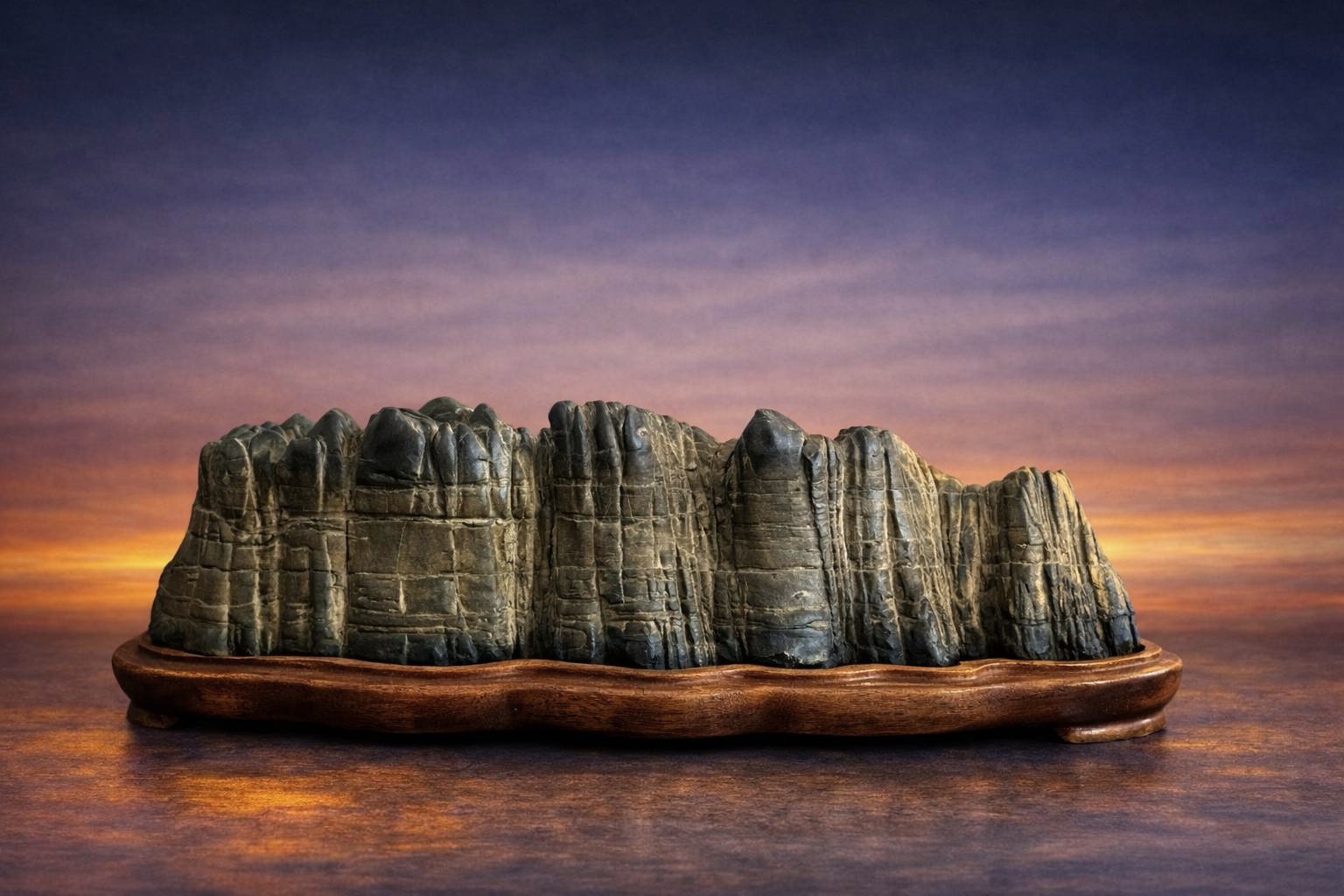 Twin-peak mountain stone / Yamagata-ishi (山形石) / Soho-seki (双峰石)
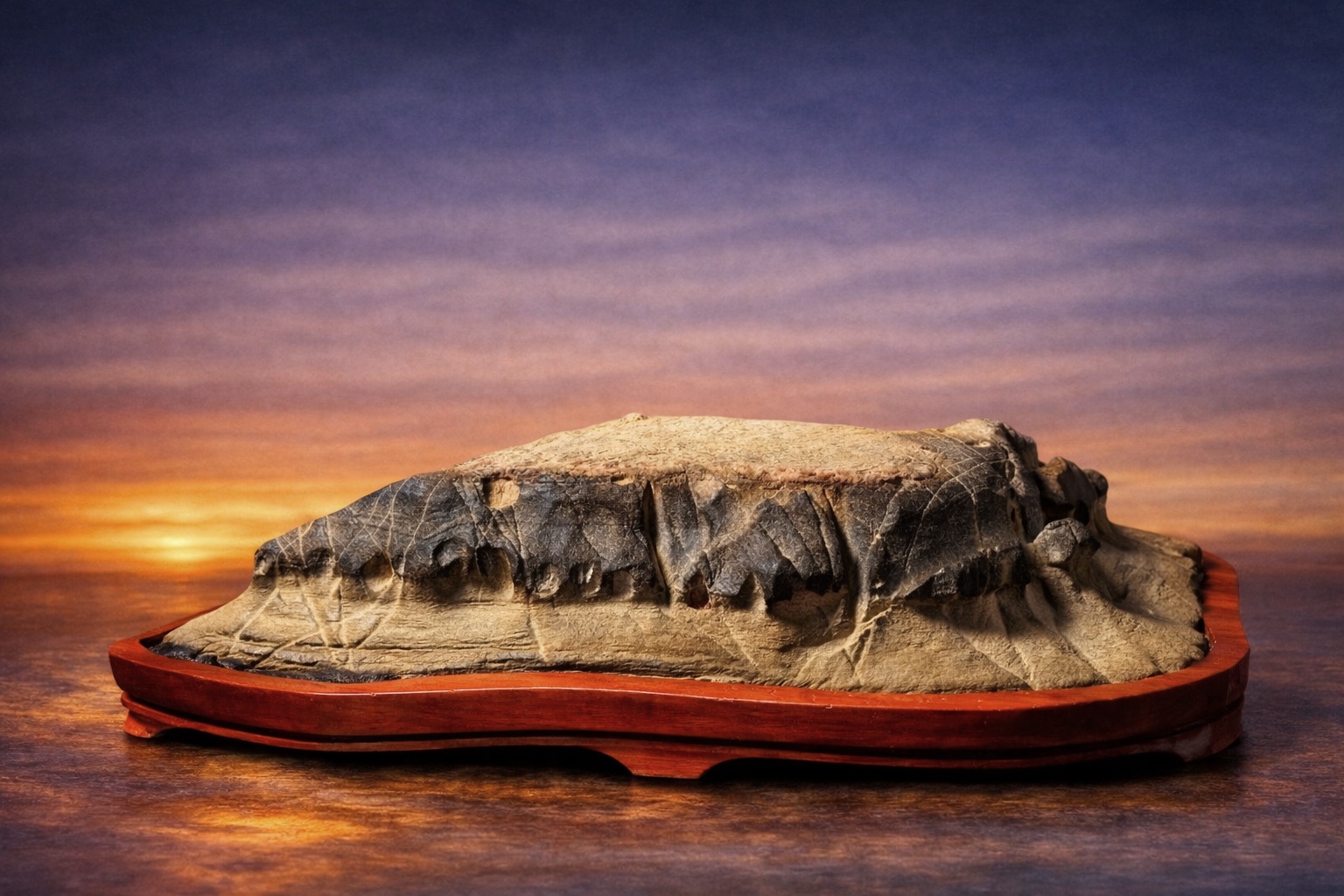 Mountain range stone / Yamagata-ishi (山形石) / Rempo-seki (連峰石)
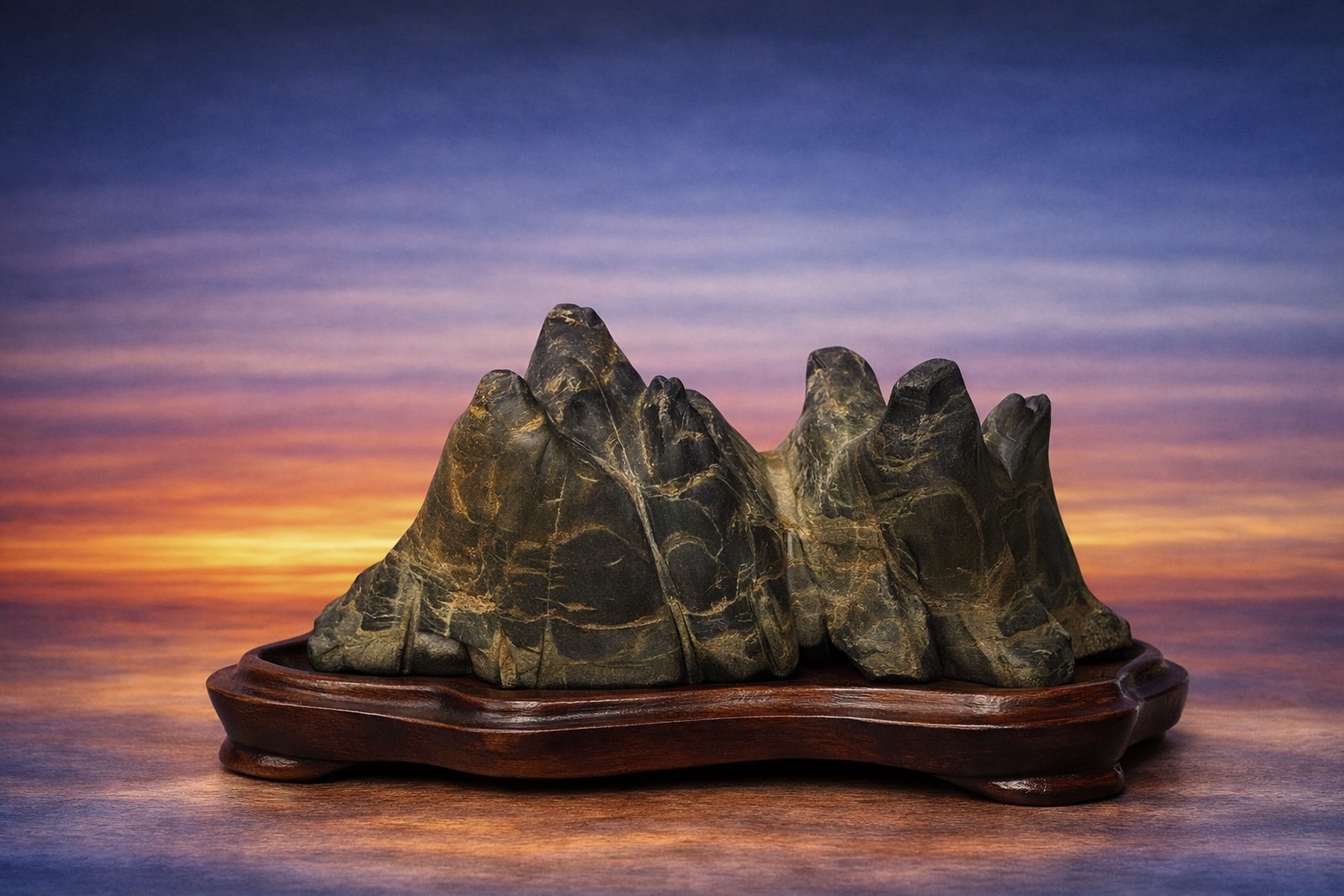 Bridge stone / Hashi-ishi (橋石)
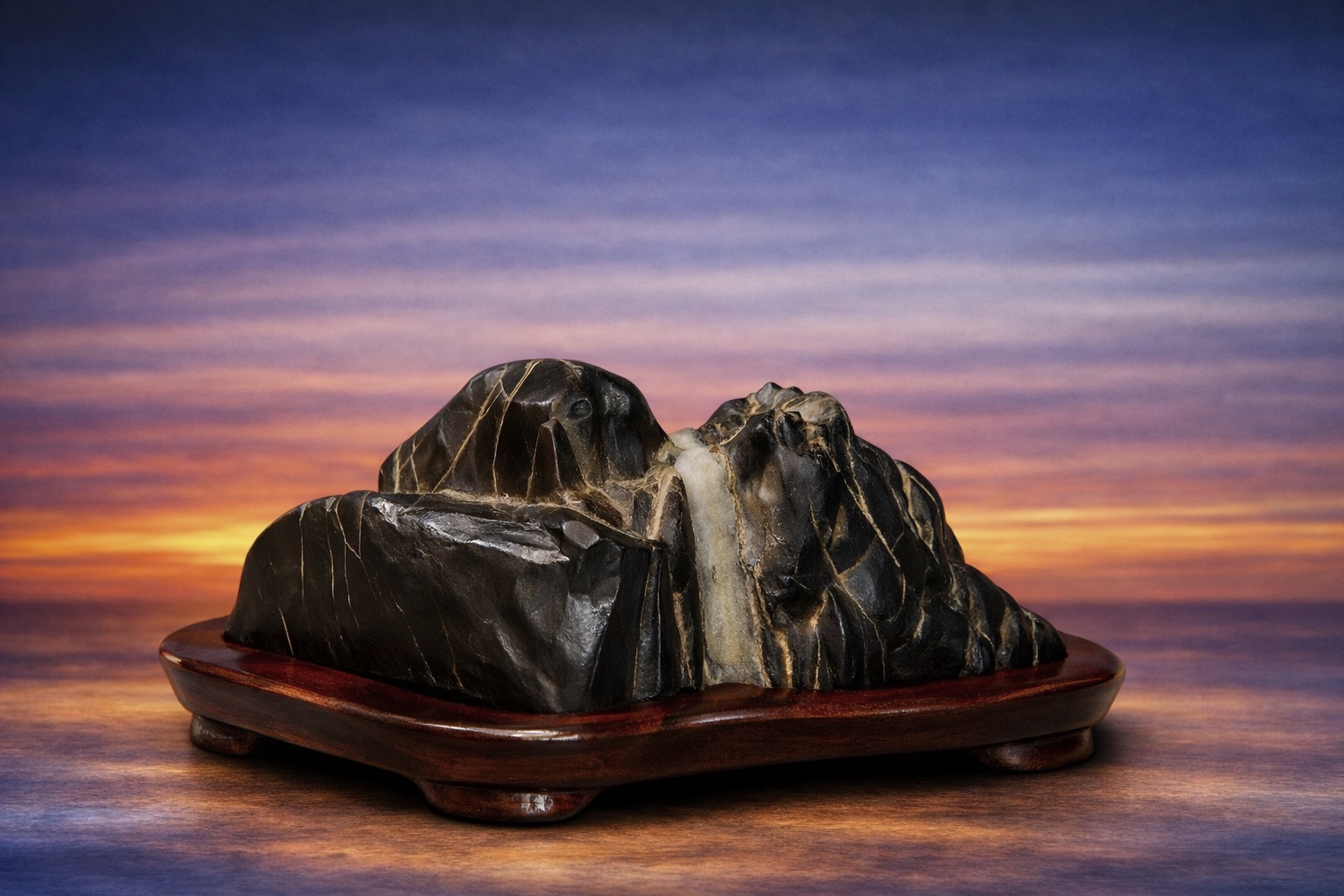 Distant mountain stone / Yamagata-ishi (山形石) / Toyama-ishi (遠山石)
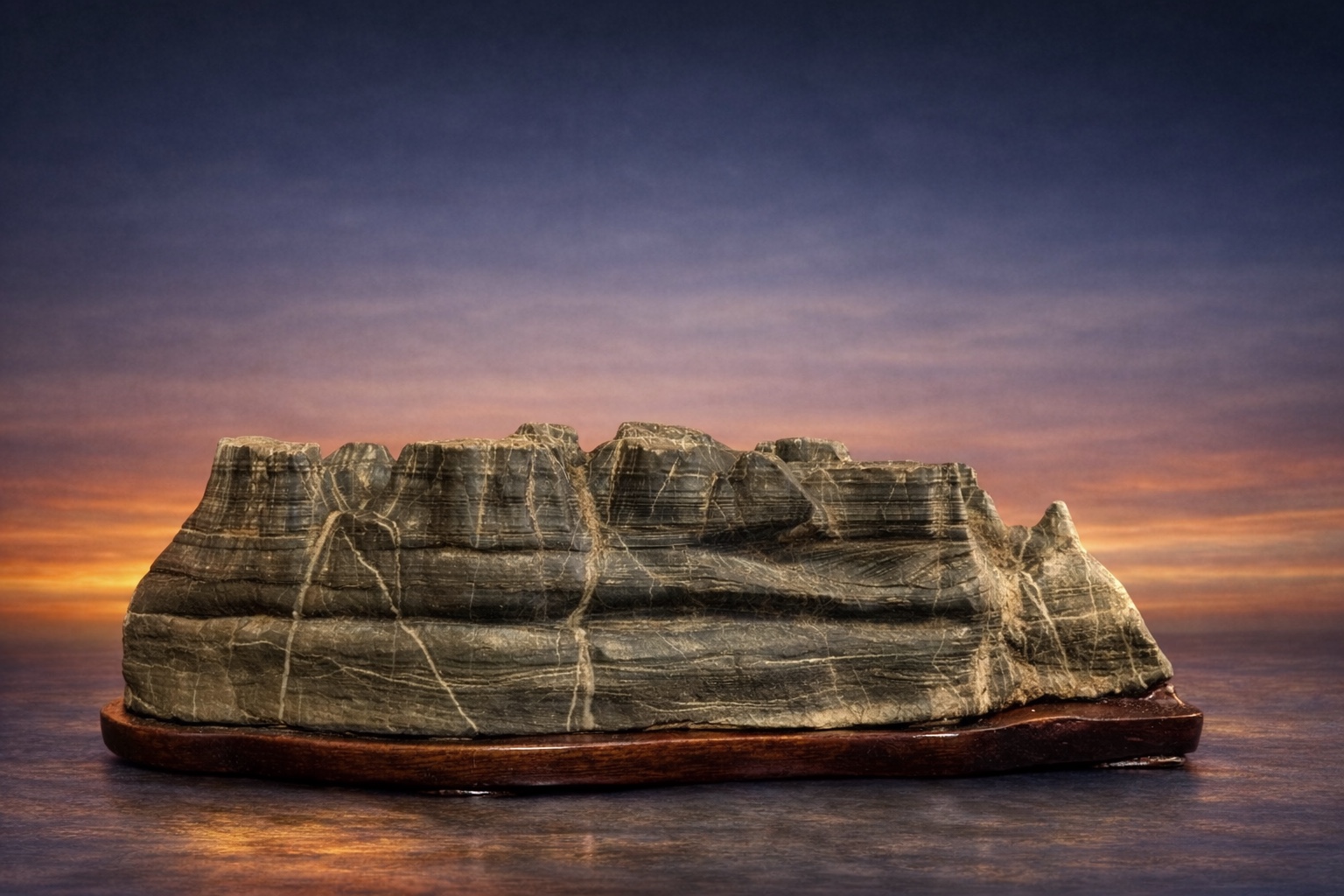 Nearby mountain stone / Yamagata-ishi (山形石) / Kinzan-seki (近山石)
 Single-peak mountain stone / Yamagata-ishi (山形石) / Koho-seki (孤峰石)
 Snow-covered mountain stone / Sekkei-ishi (雪渓石)
 Distant mountain stone / Yamagata-ishi (山形石) / Toyama-ishi (遠山石)
 Mountain range stone / Yamagata-ishi (山形石) / Rempo-seki (連峰石)
 Twin-peak mountain stone / Yamagata-ishi (山形石) / Soho-seki (双峰石)
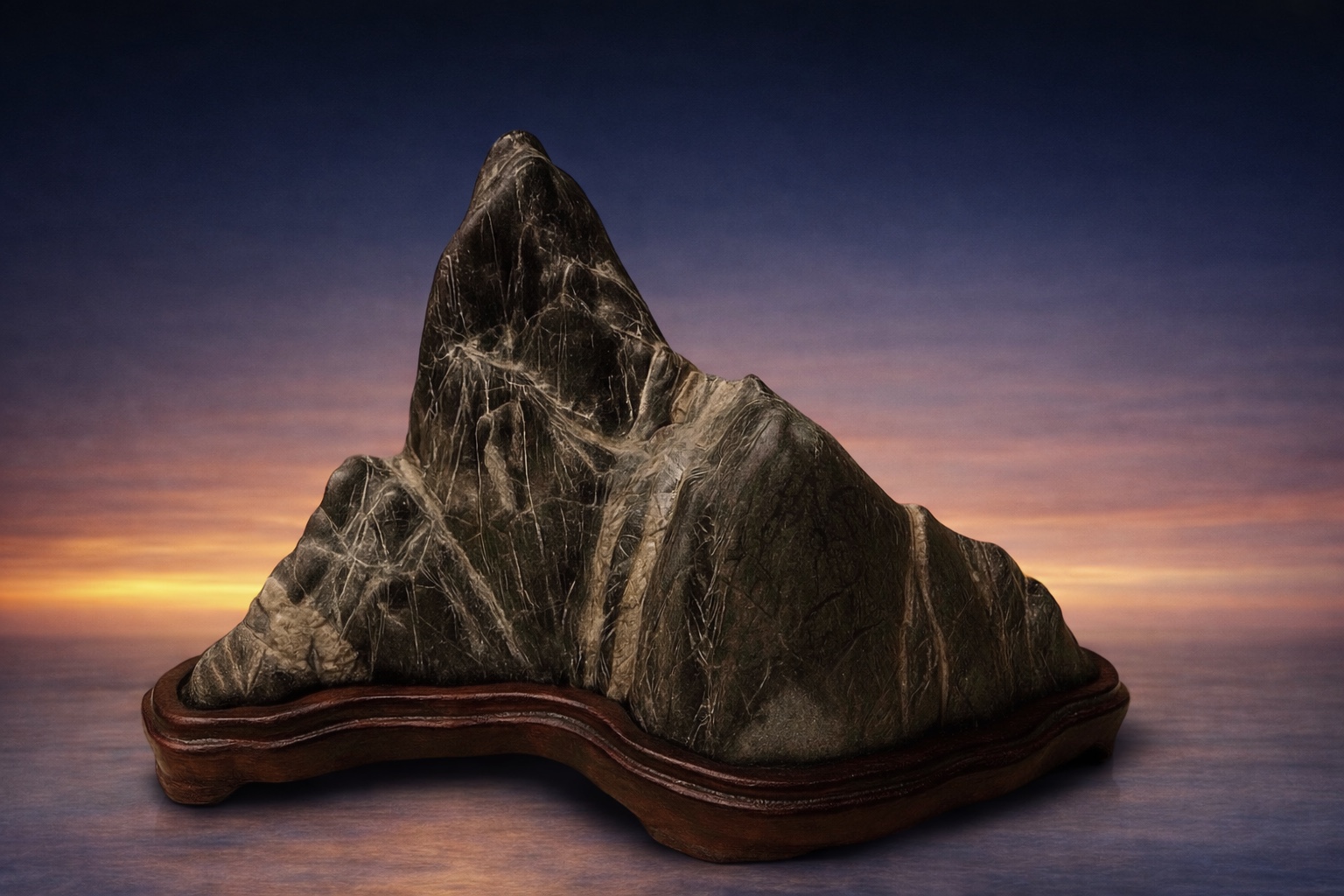 Boat-shaped stone / Funagata-ishi (舟形石)
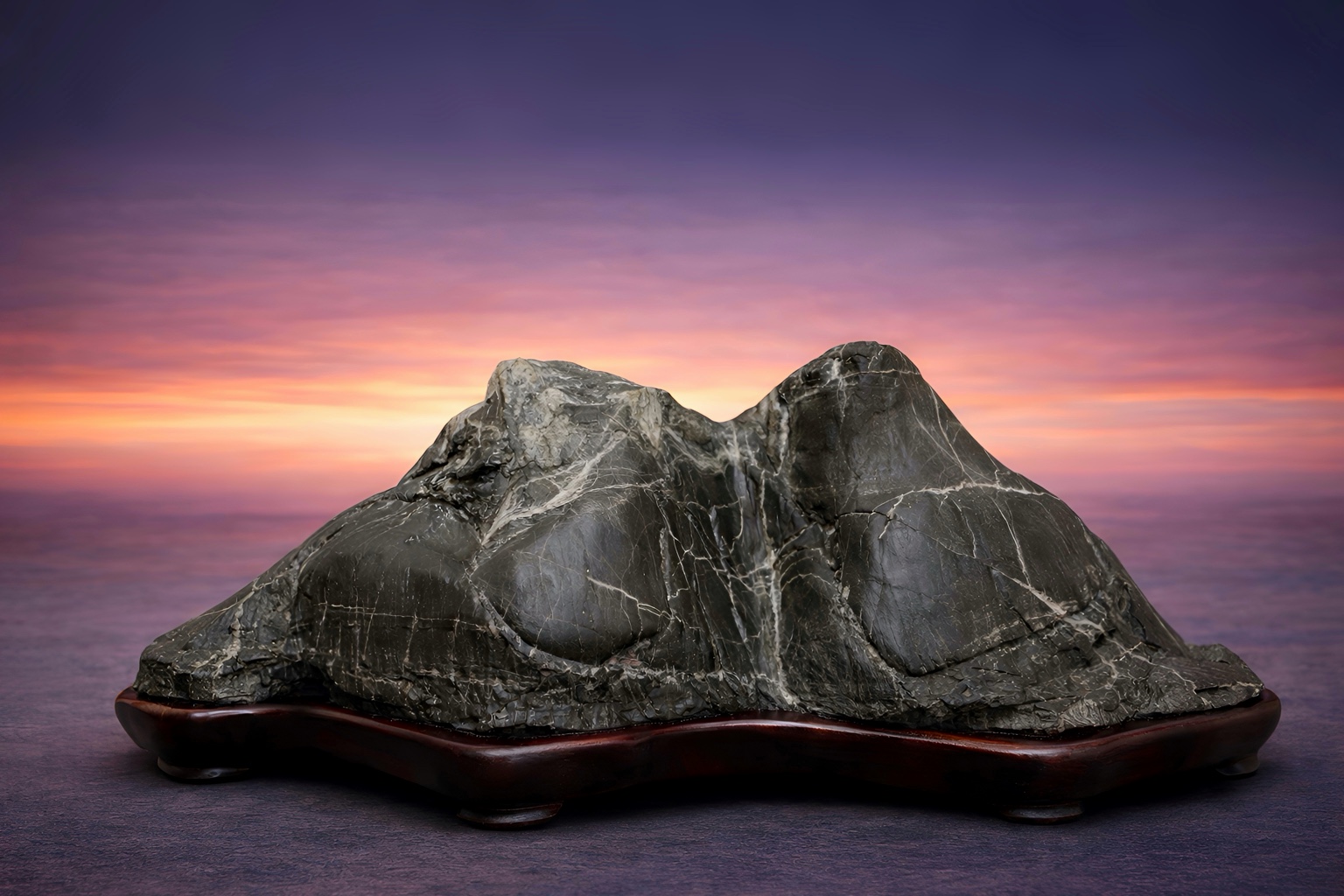 Distant mountain stone / Yamagata-ishi (山形石) / Toyama-ishi (遠山石)
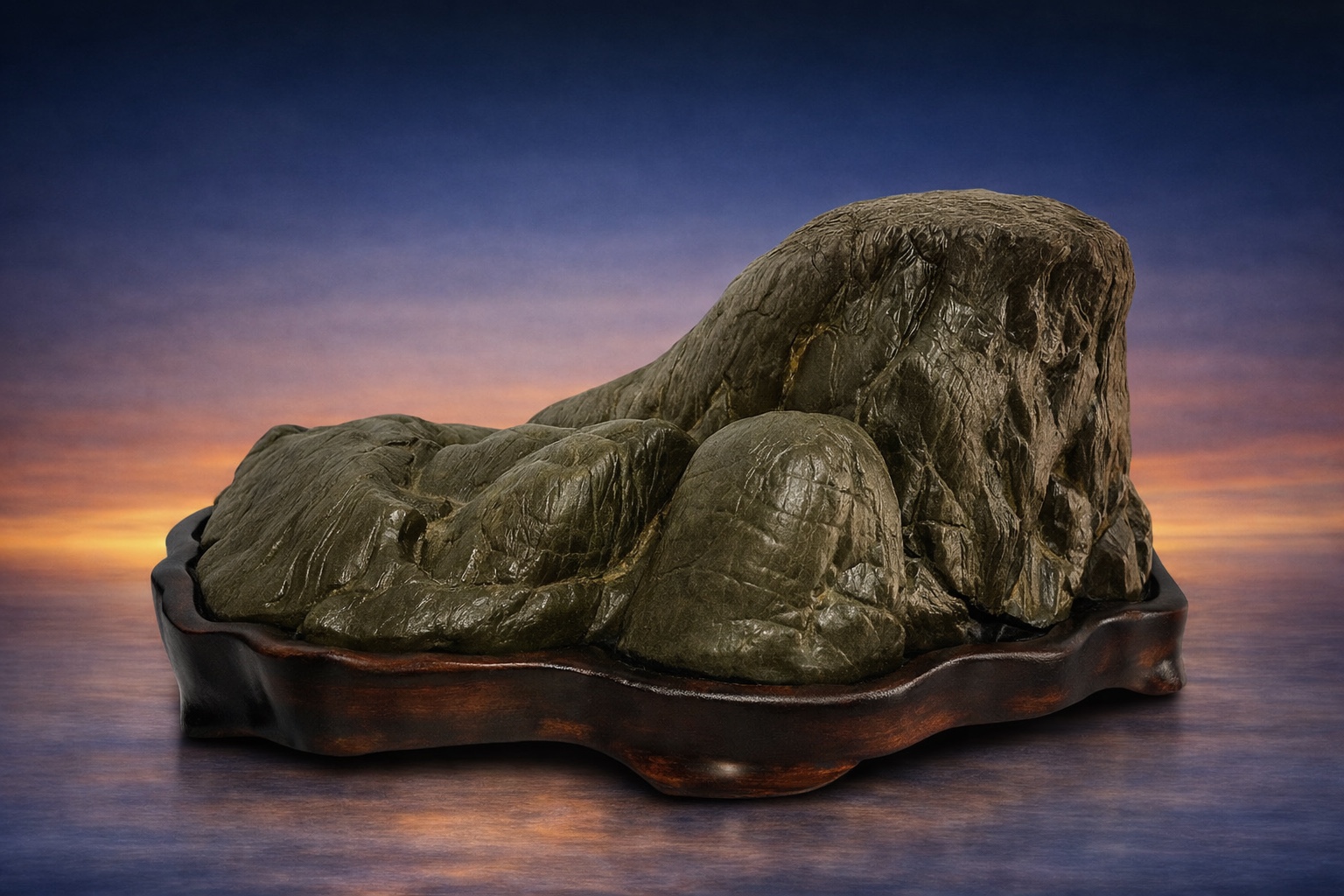 Nearby mountain stone / Yamagata-ishi (山形石) / Kinzan-seki (近山石)
 Mountain range stone / Yamagata-ishi (山形石) / Rempo-seki (連峰石)
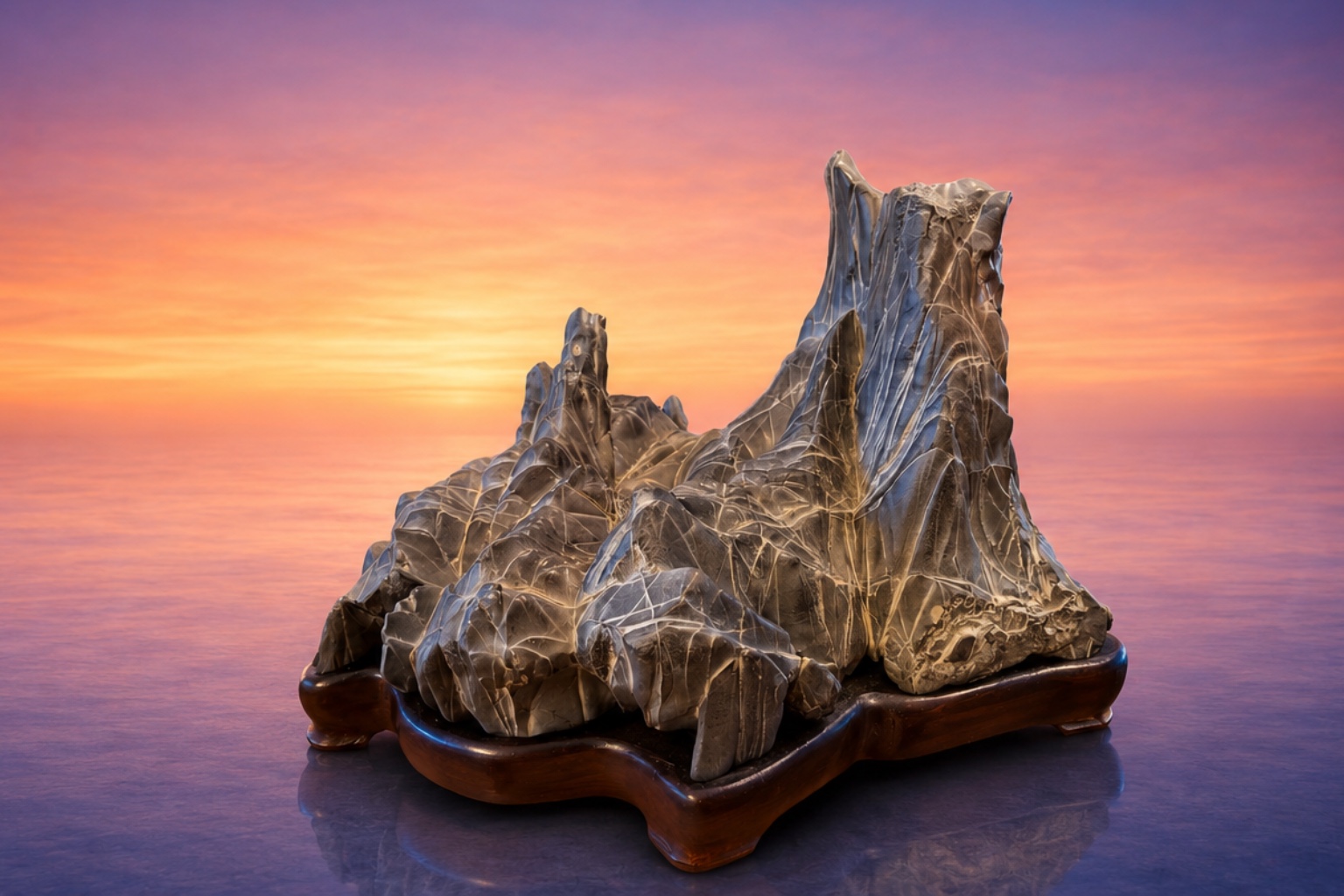 Mountain range stone / Yamagata-ishi (山形石) / Rempo-seki (連峰石)
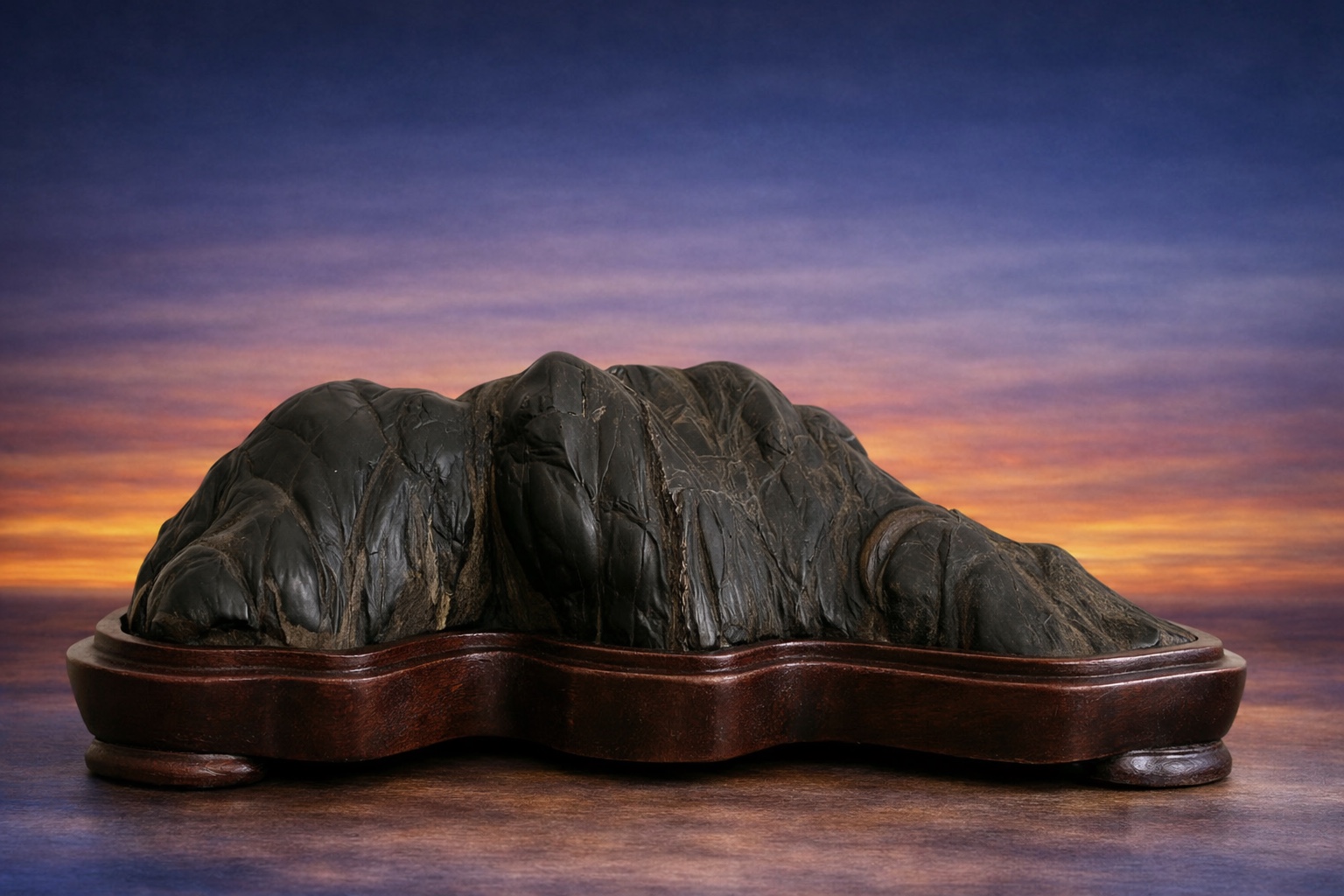 Distant mountain stone / Yamagata-ishi (山形石) / Toyama-ishi (遠山石)
 Twin-peak mountain stone / Yamagata-ishi (山形石) / Soho-seki (双峰石)
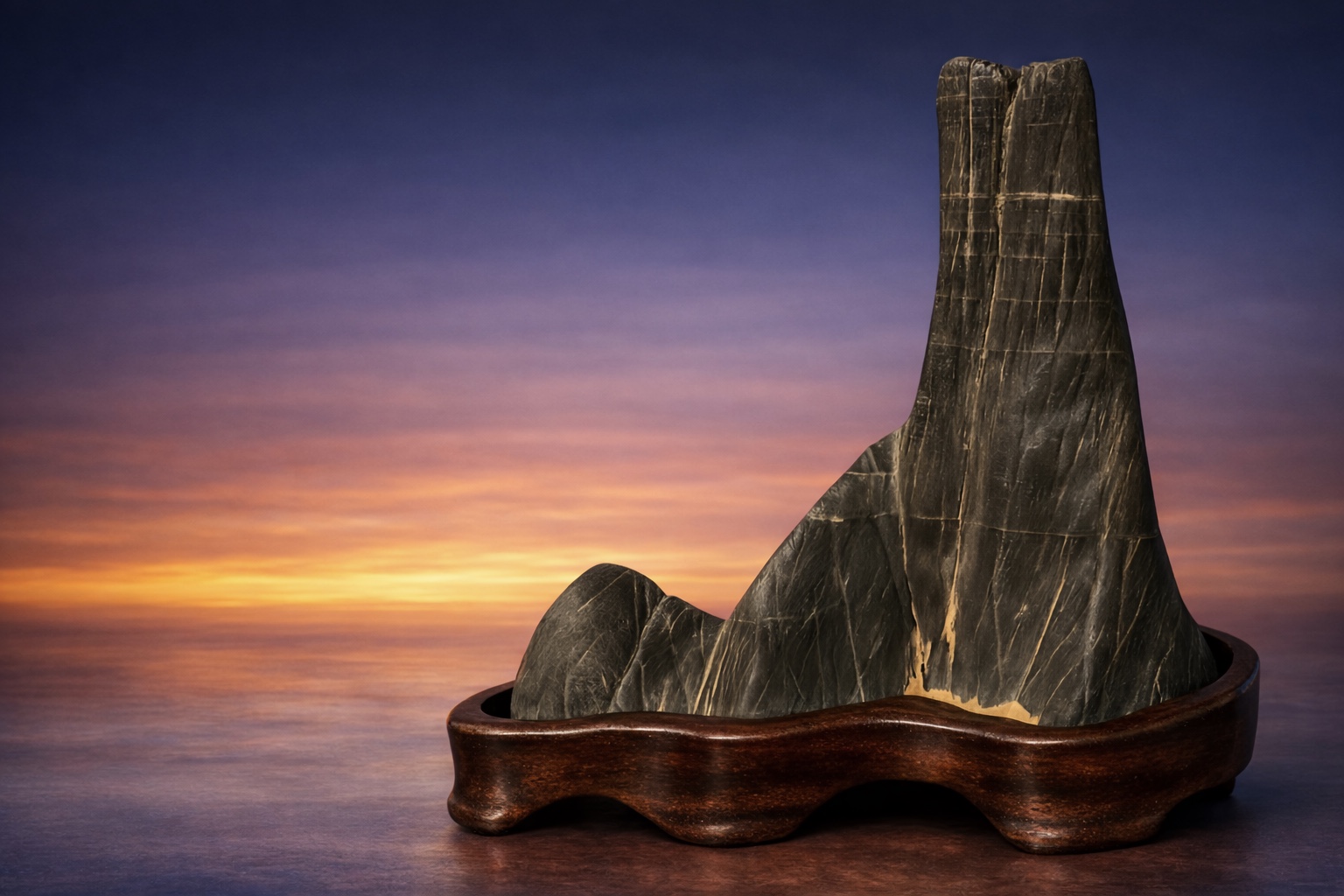 Mountain range stone / Yamagata-ishi (山形石) / Rempo-seki (連峰石)
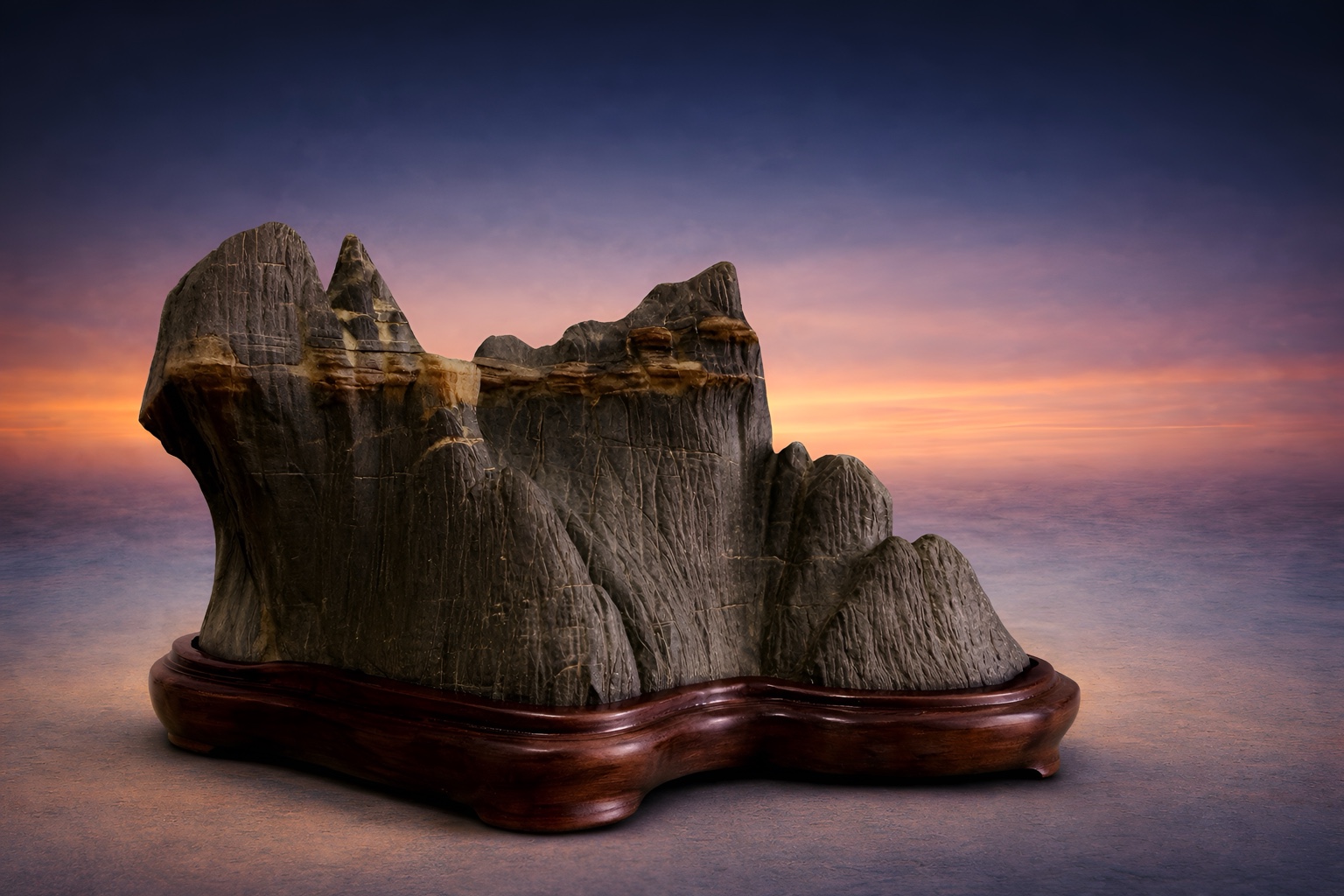 Bridge stone / Hashi-ishi (橋石)
 Distant mountain stone / Yamagata-ishi (山形石) / Toyama-ishi (遠山石)
 Nearby mountain stone / Yamagata-ishi (山形石) / Kinzan-seki (近山石)
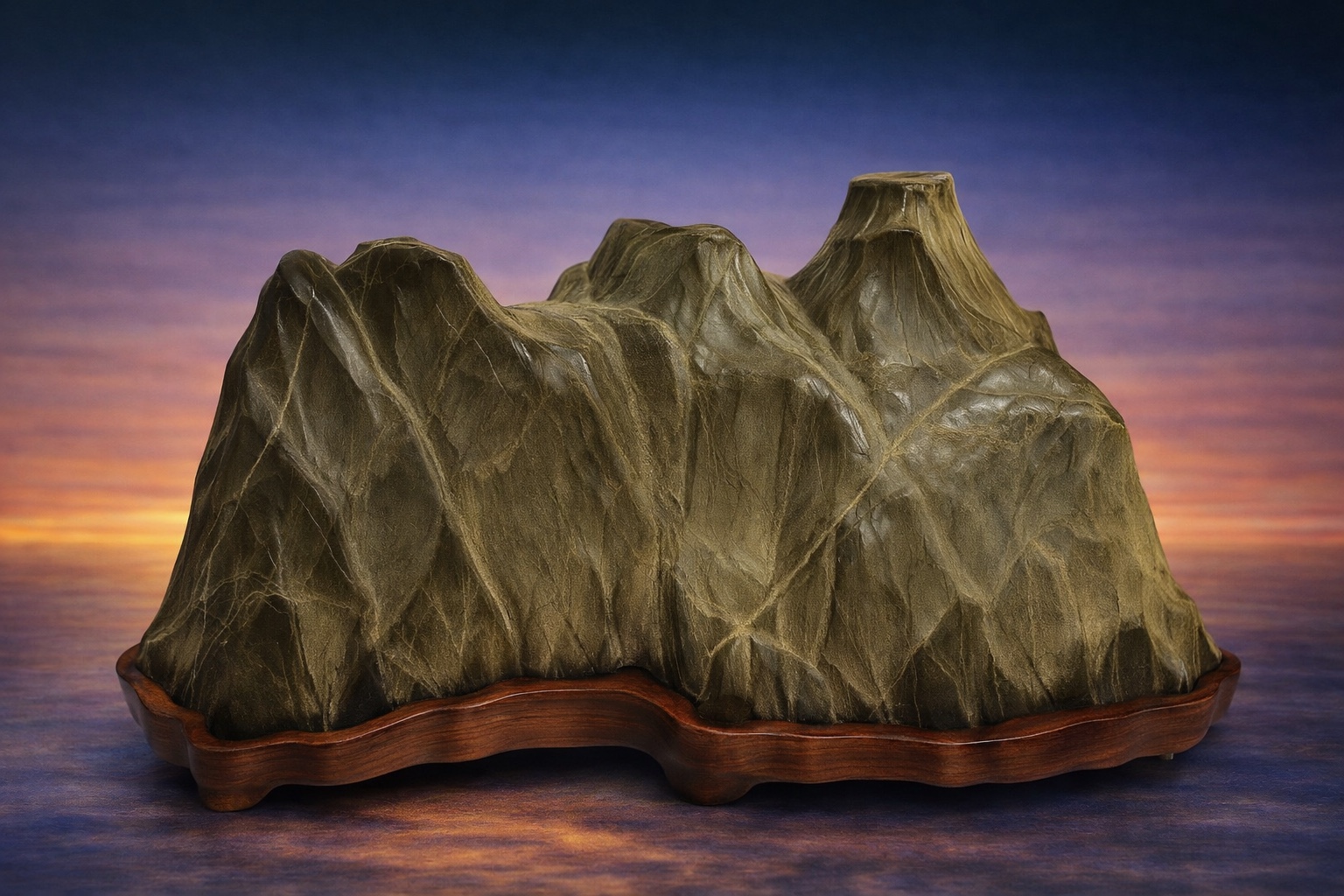 Single-peak mountain stone / Yamagata-ishi (山形石) / Koho-seki (孤峰石)
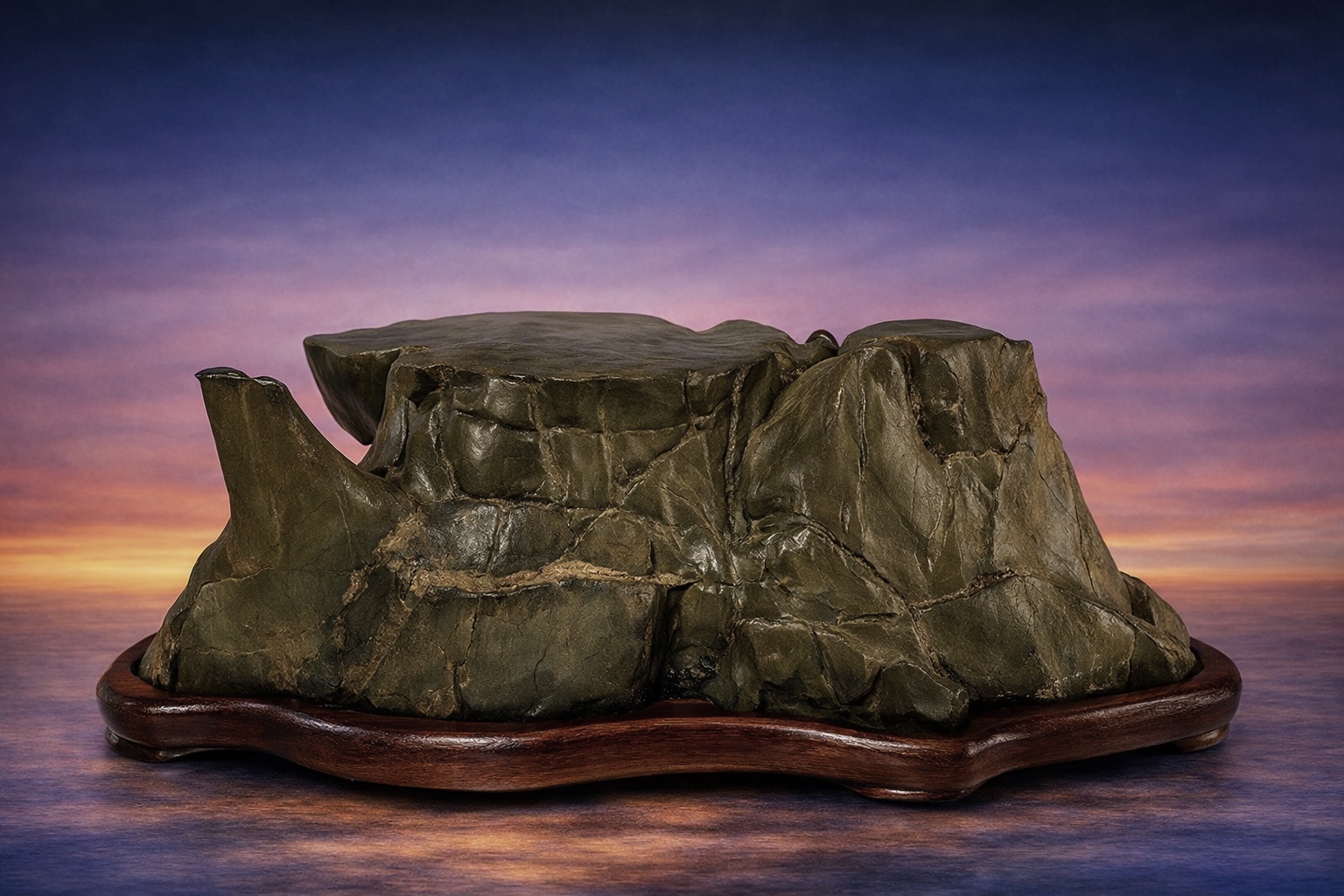 Snow-covered mountain stone / Sekkei-ishi (雪渓石)
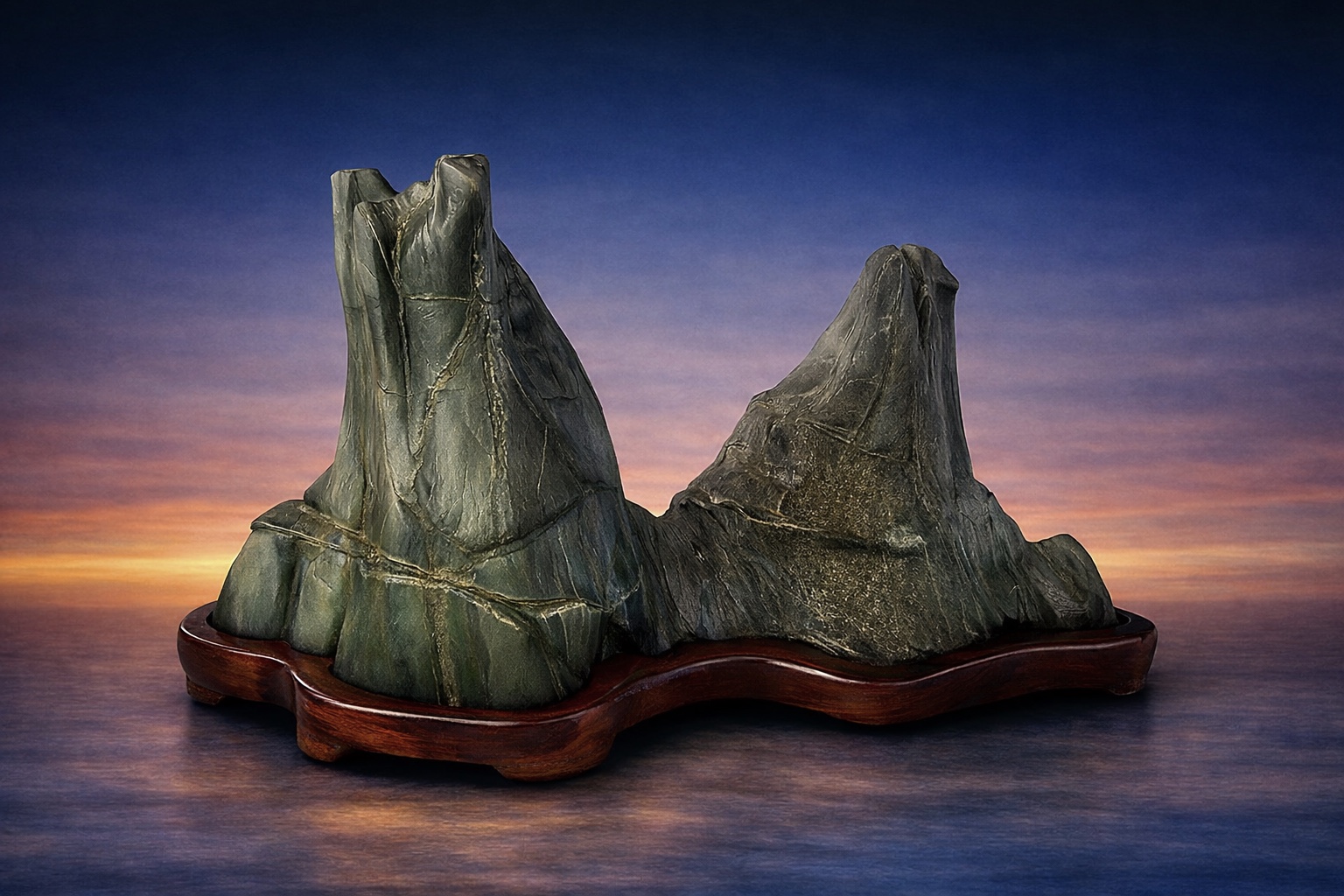 Distant mountain stone / Yamagata-ishi (山形石) / Toyama-ishi (遠山石)
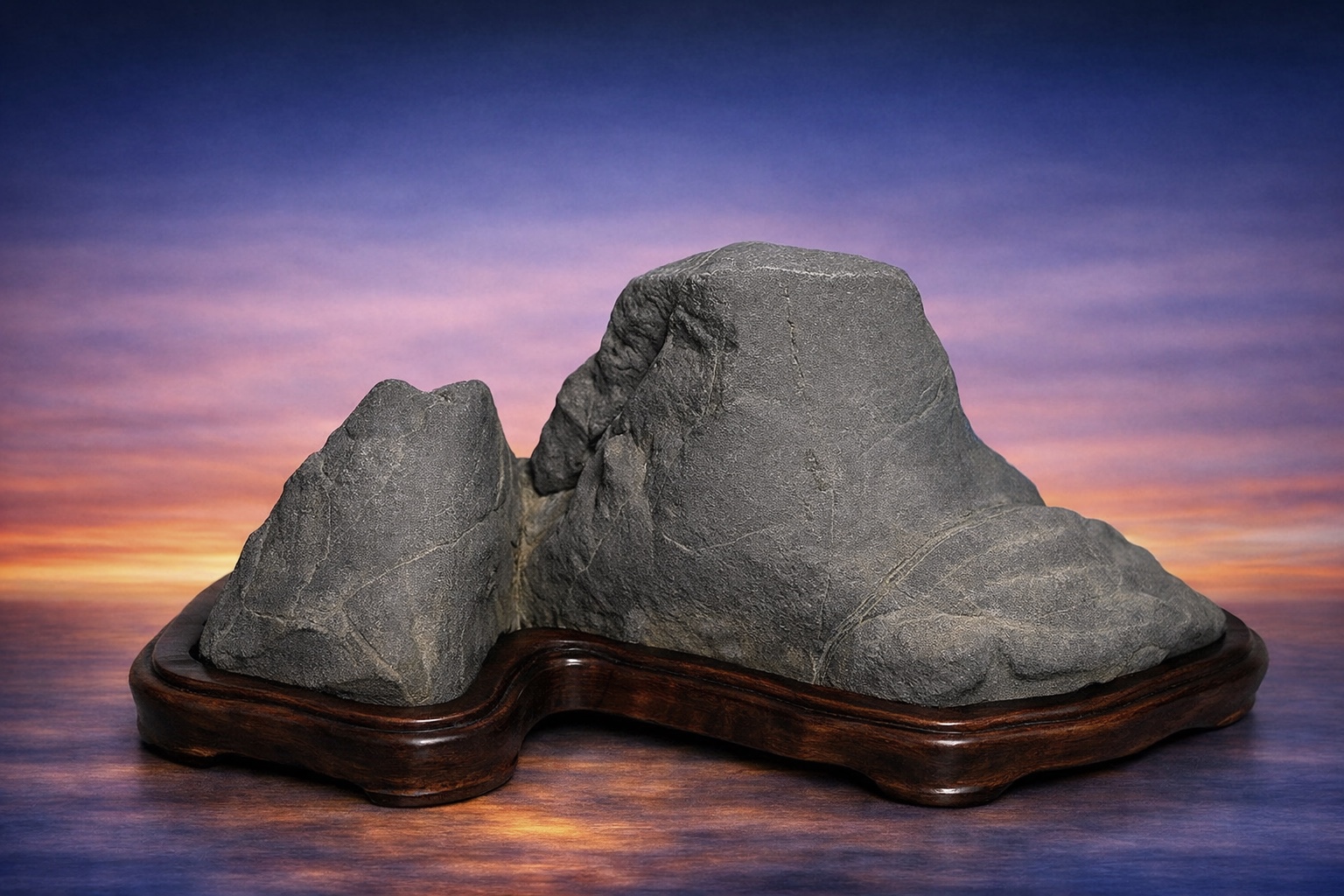 Mountain range stone / Yamagata-ishi (山形石) / Rempo-seki (連峰石)
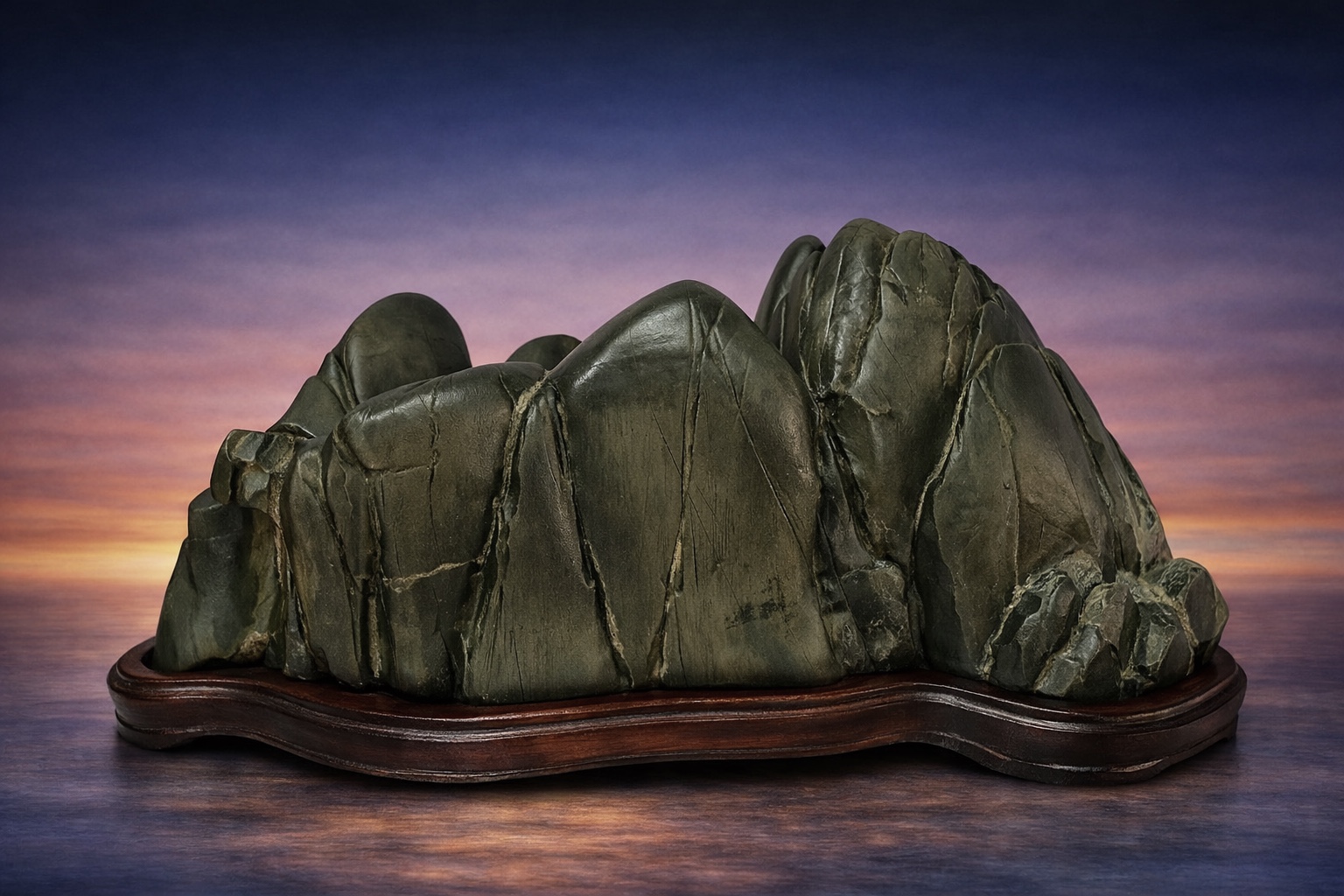 Distant mountain stone / Yamagata-ishi (山形石) / Toyama-ishi (遠山石)
 Twin-peak mountain stone / Yamagata-ishi (山形石) / Soho-seki (双峰石)
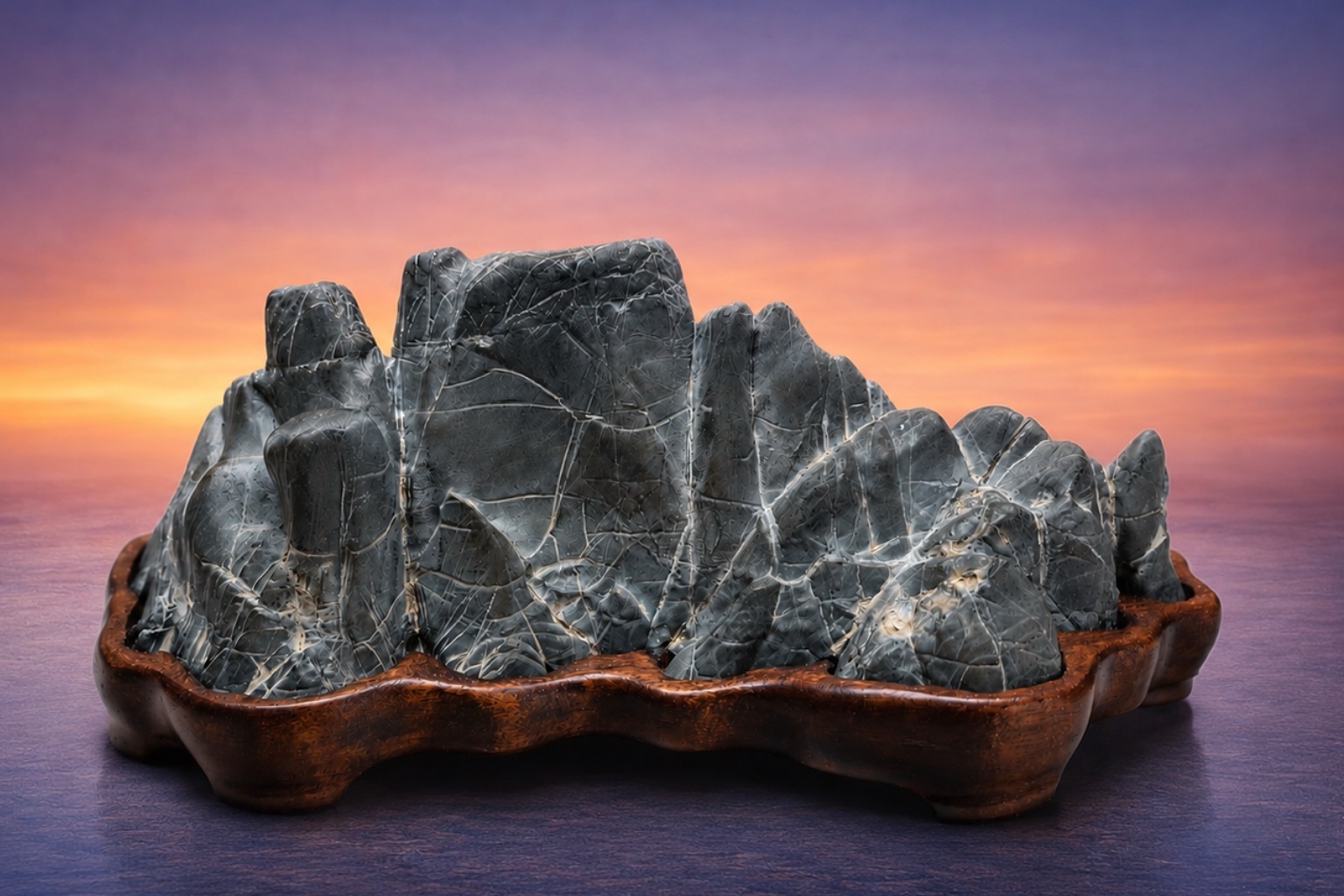 Distant mountain stone / Yamagata-ishi (山形石) / Toyama-ishi (遠山石)
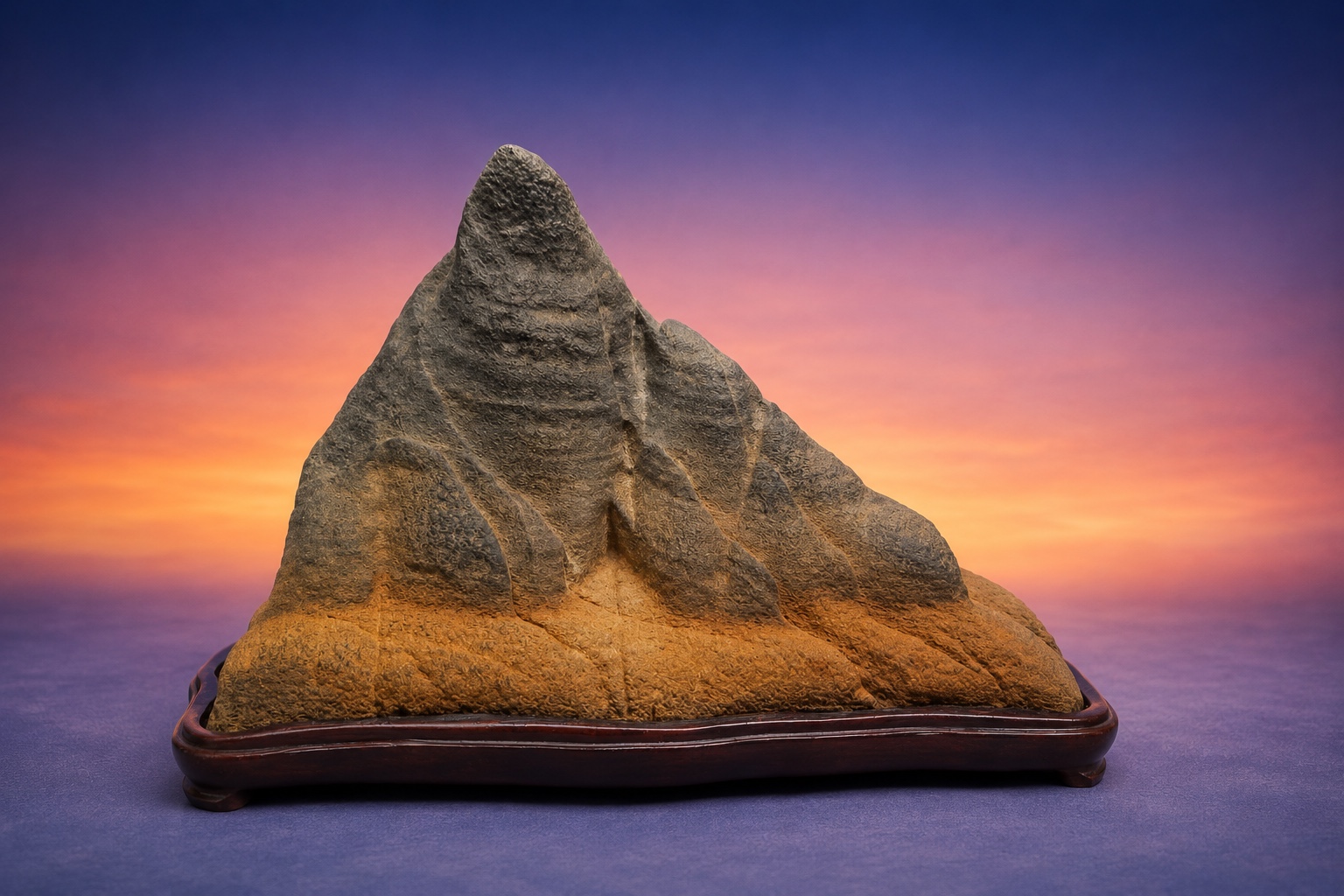 Solitary peak on a base, terrace / Yamagata-ishi (山形石) / Ippan-seki (一般石) / Dan-seki (段石)
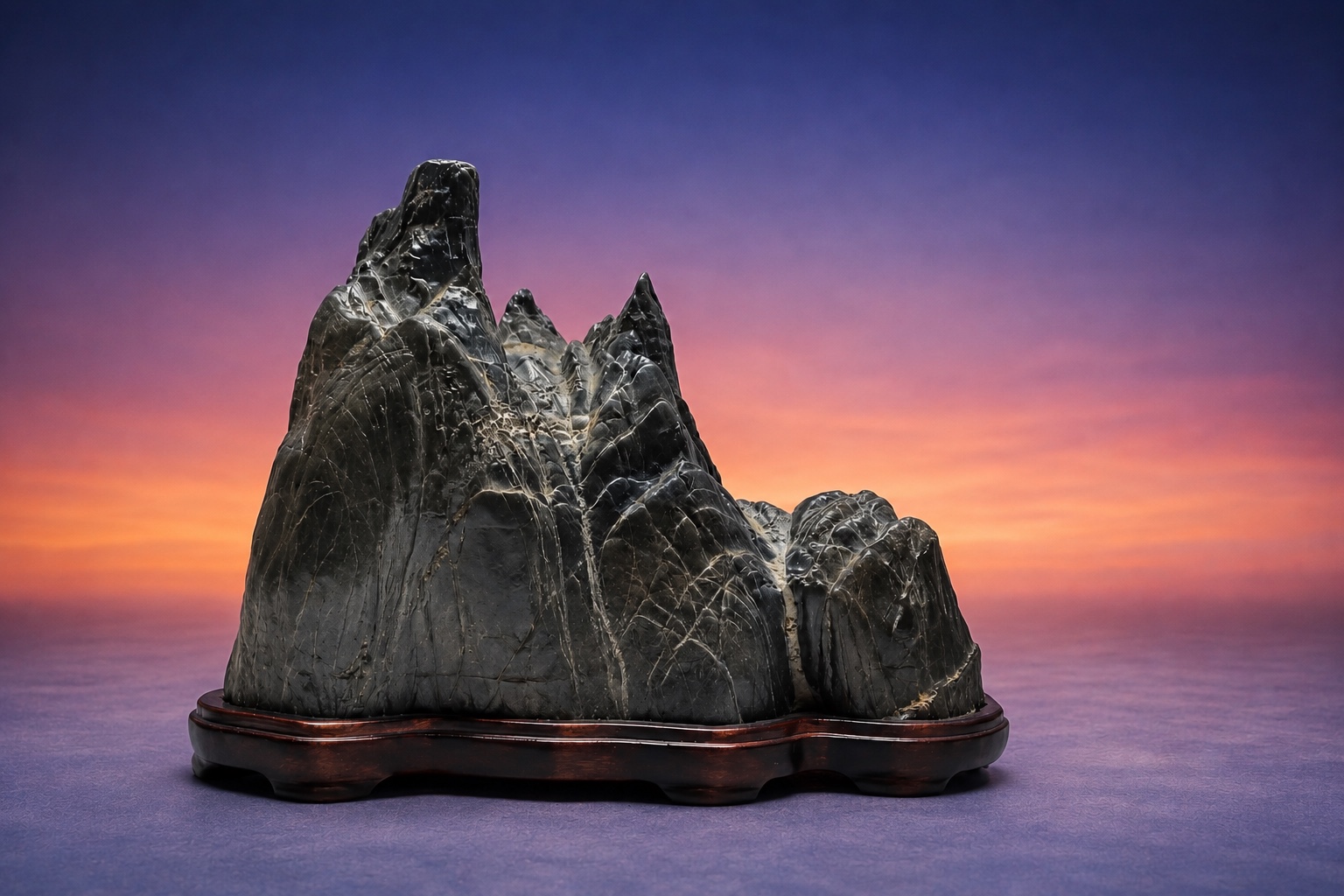 Jagged peaks, three peaks / Yamagata-ishi (山形石) / Kenzan-seki (剣山石) / Sanzan-seki (三山石)
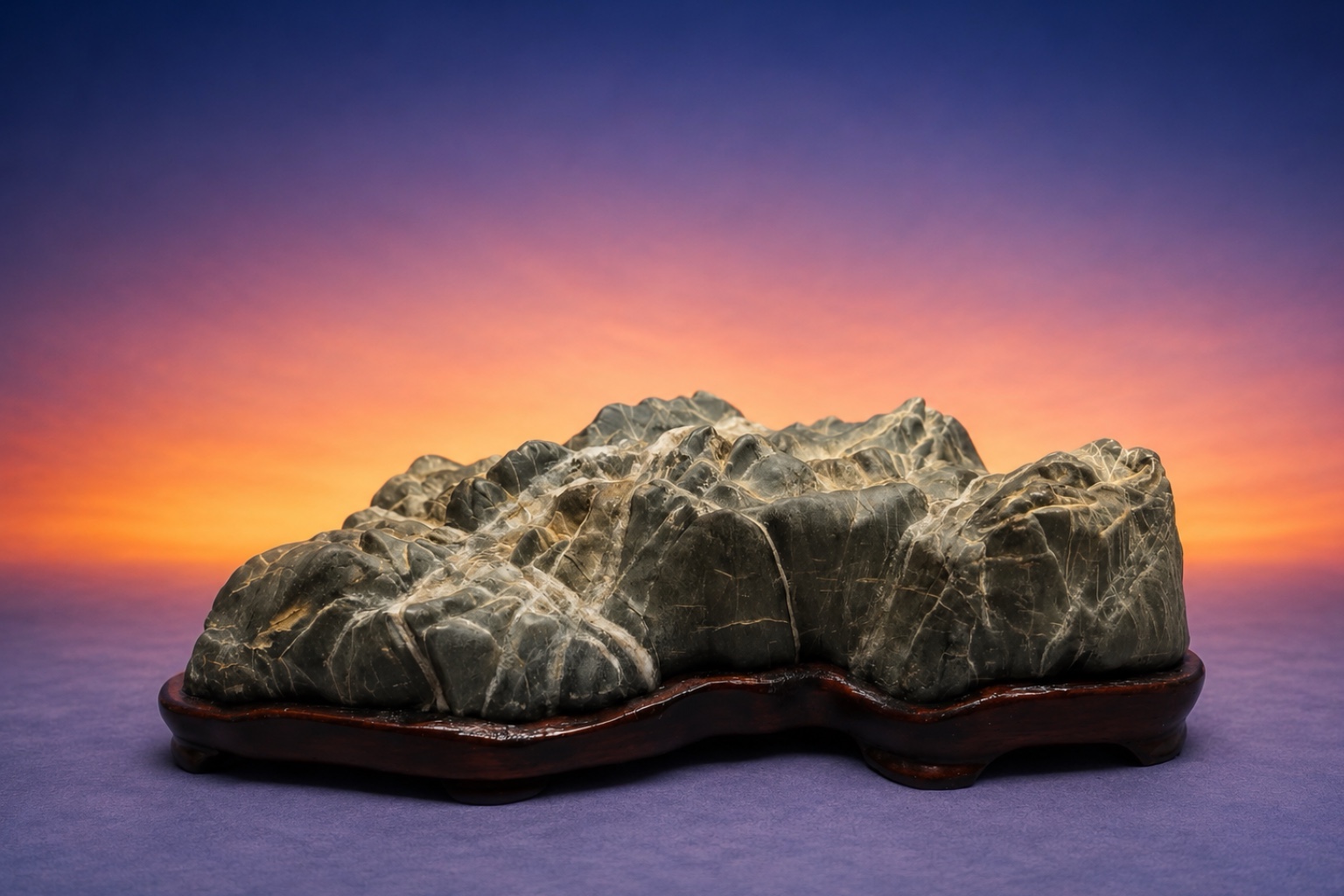 Distant mountain stone / Yamagata-ishi (山形石) / Toyama-ishi (遠山石)
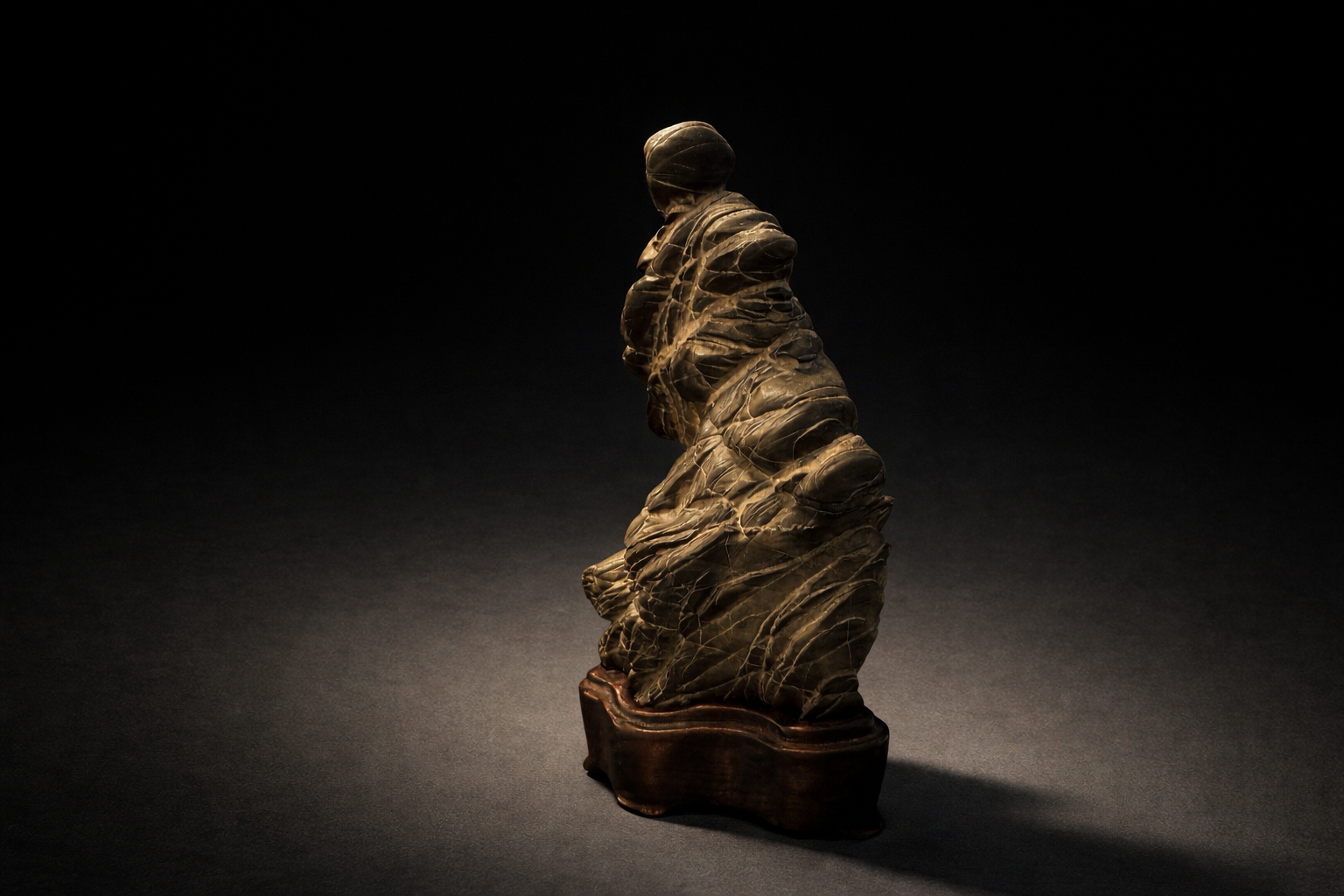 Human or divine figure / Sugata-ishi (姿石)
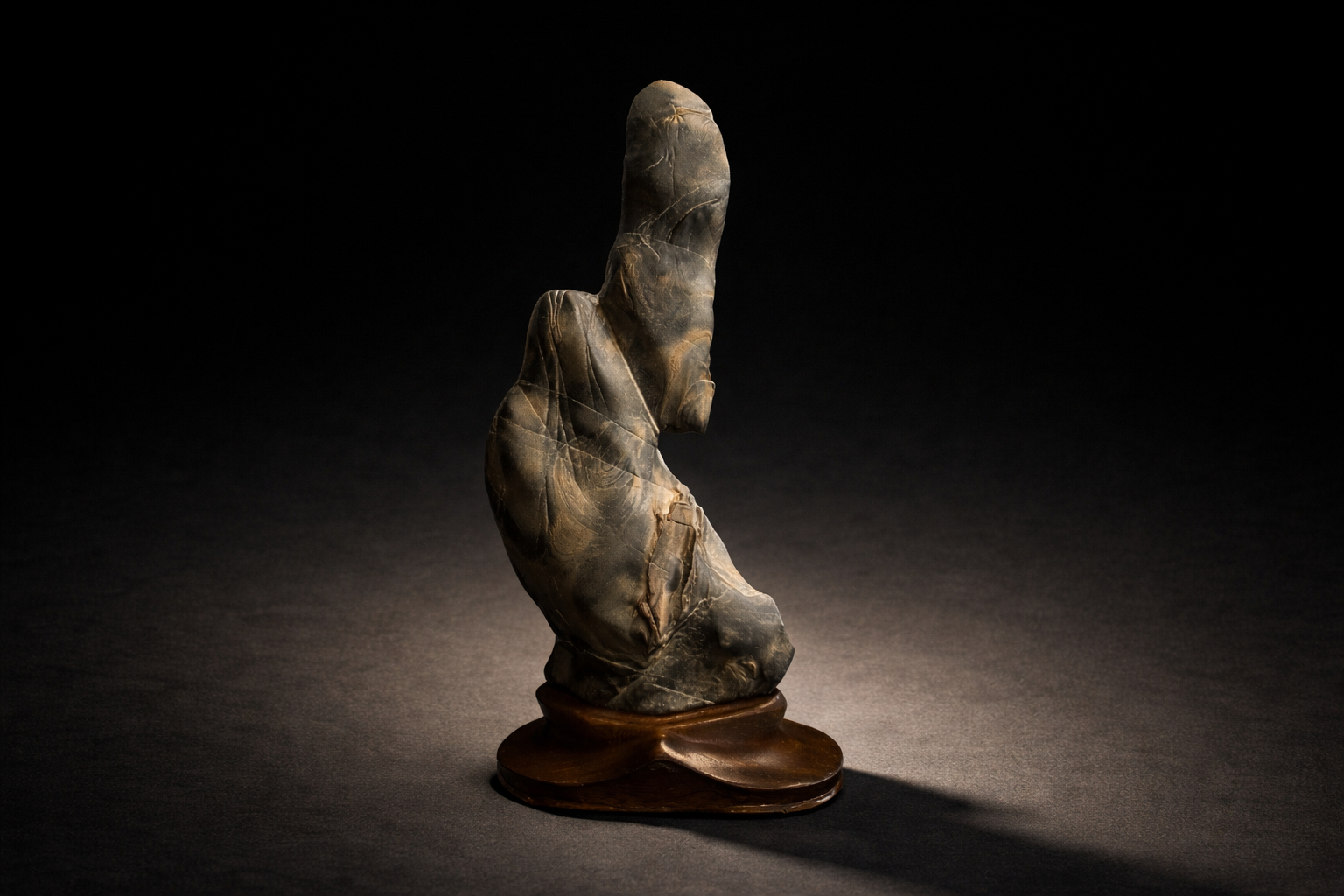 Human or divine figure / Sugata-ishi (姿石)
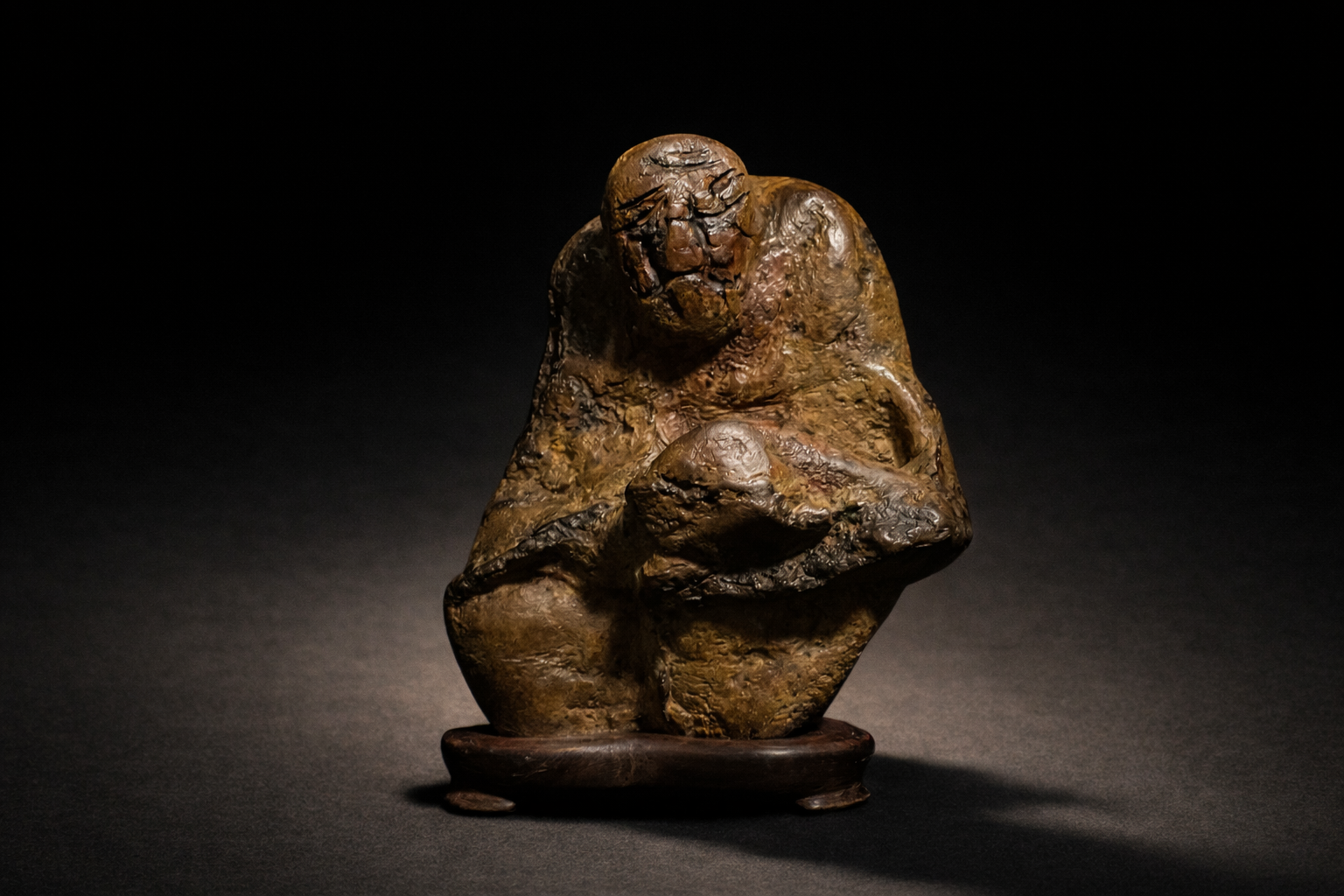 Human or divine figure / Sugata-ishi (姿石)
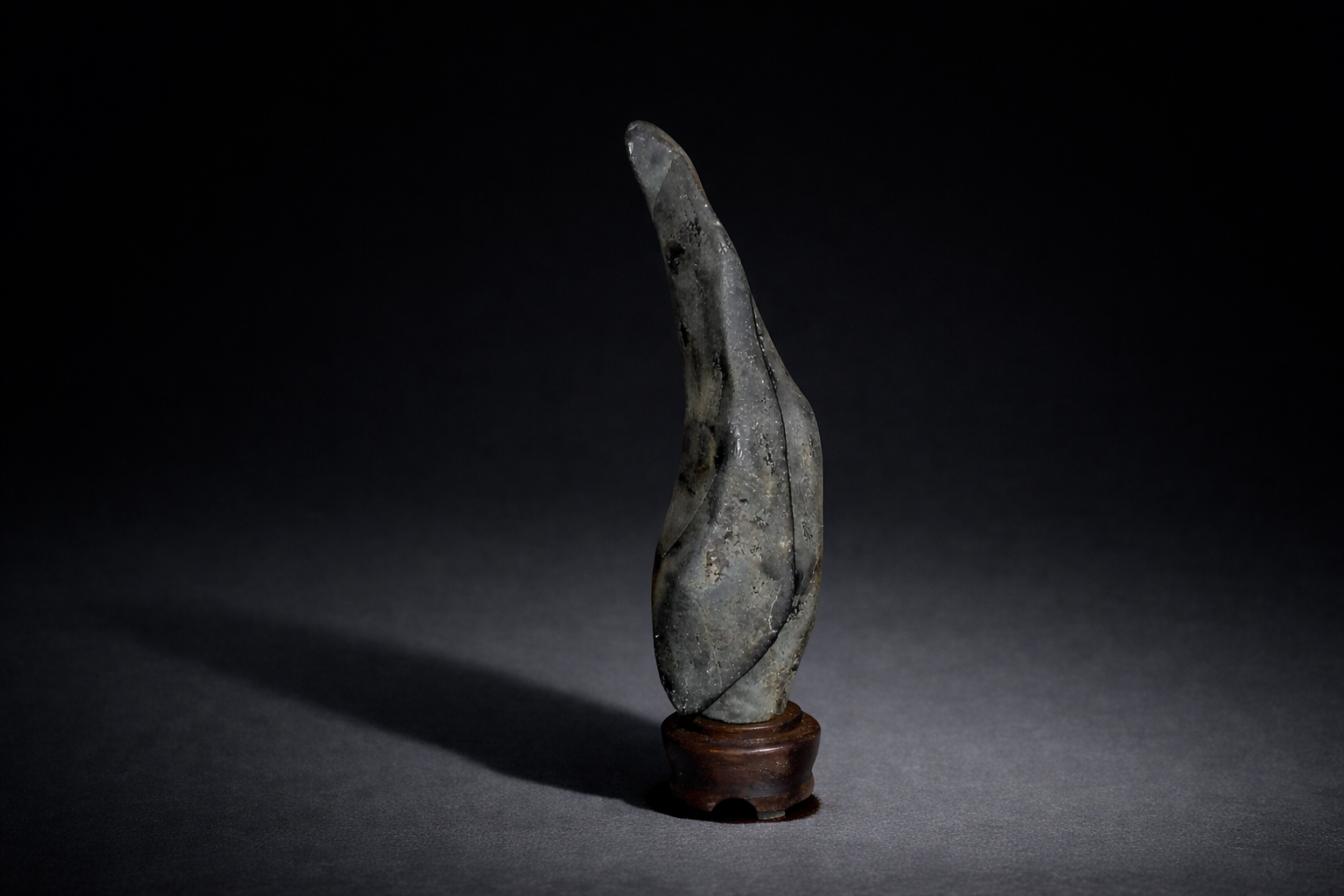 Human or divine figure / Sugata-ishi (姿石)
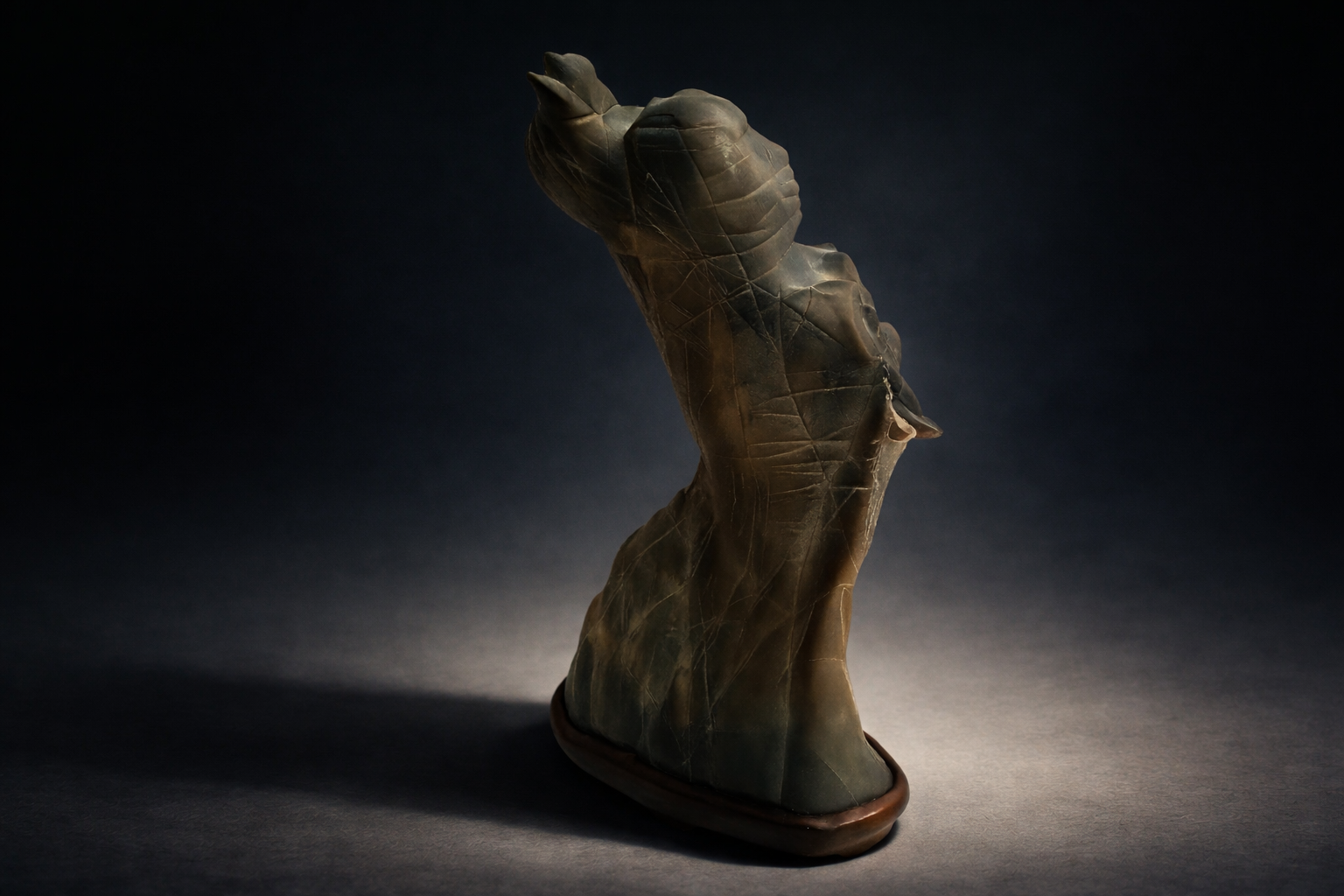 Human or divine figure / Sugata-ishi (姿石)
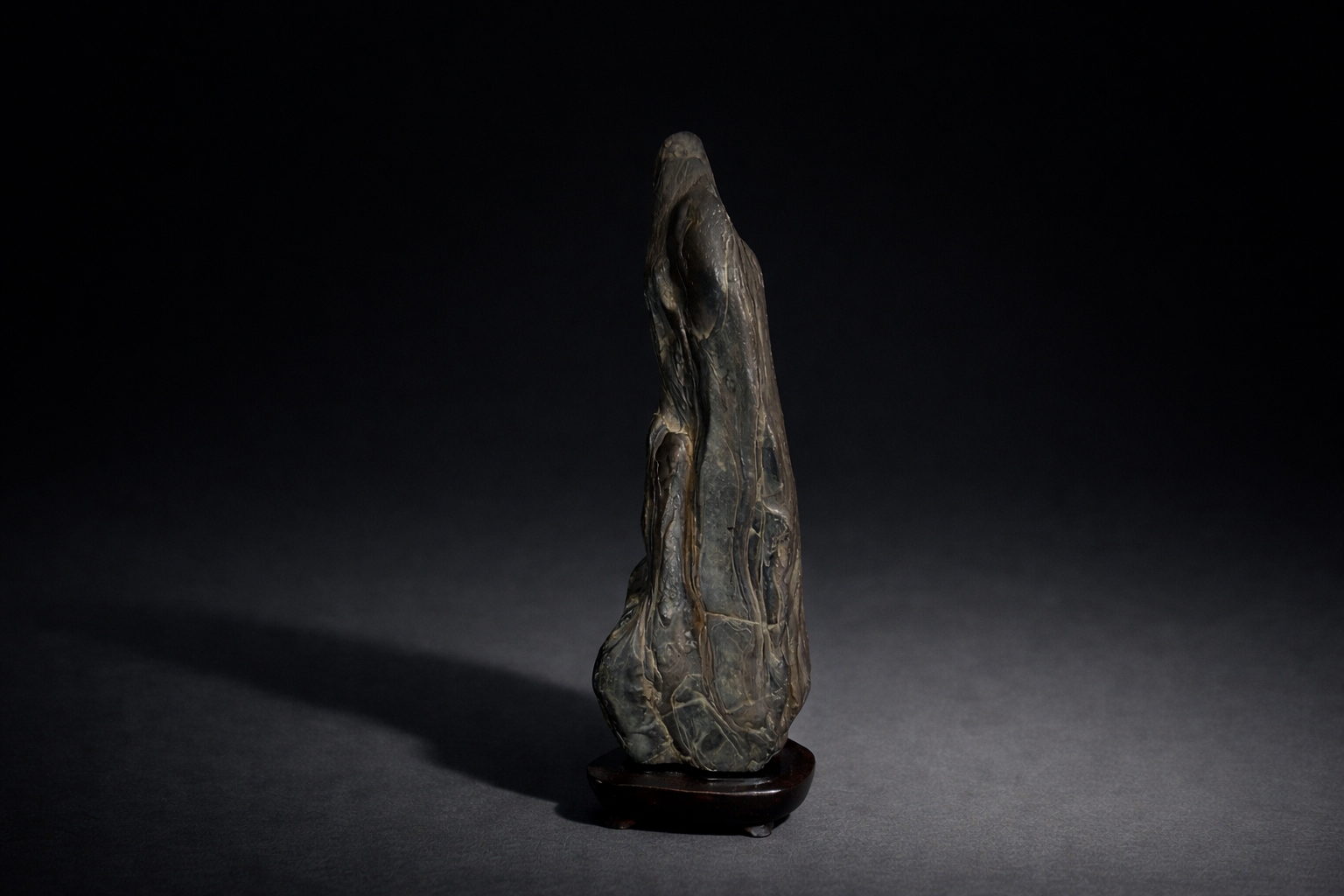 Human or divine figure / Sugata-ishi (姿石)
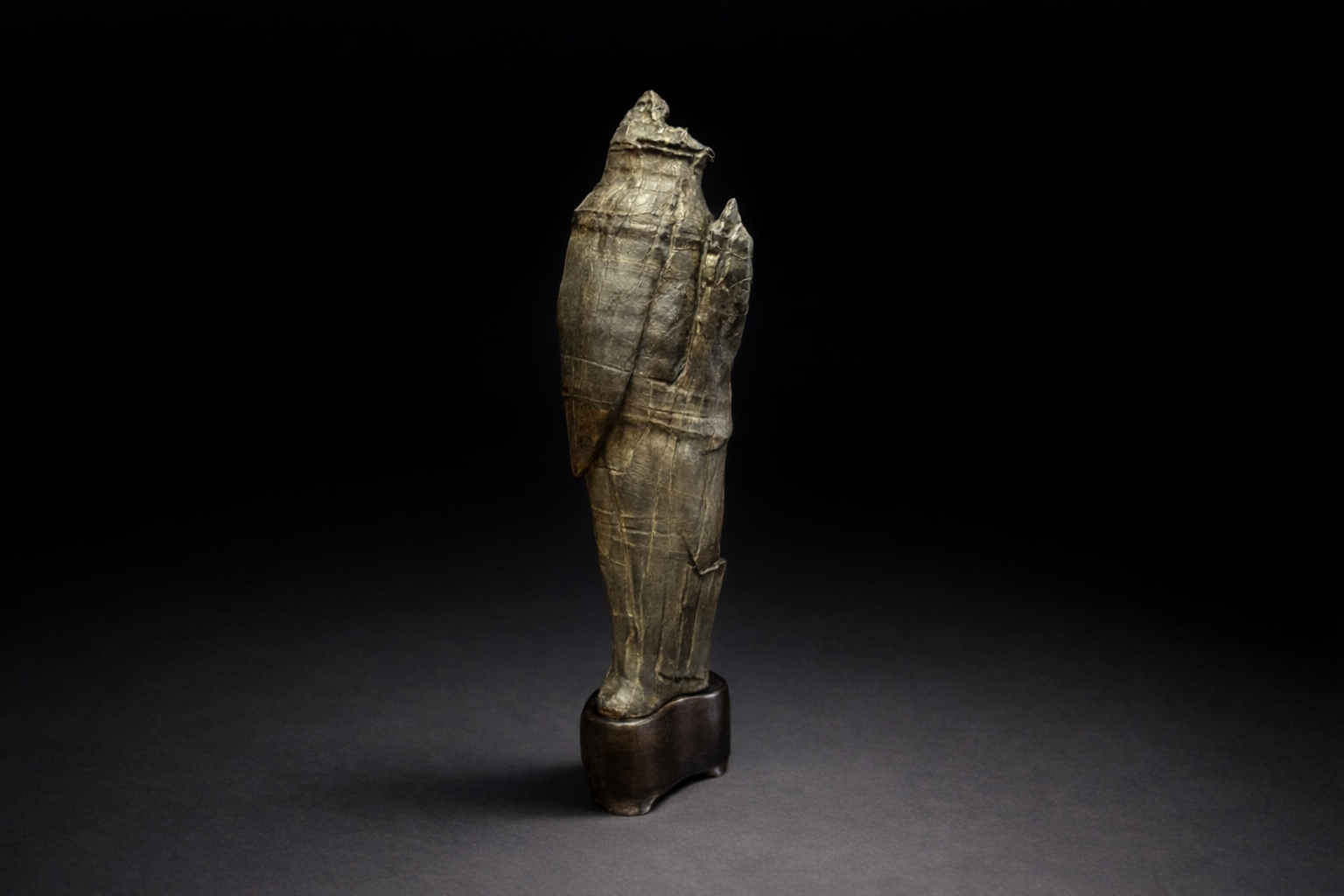 Human or divine figure / Sugata-ishi (姿石)
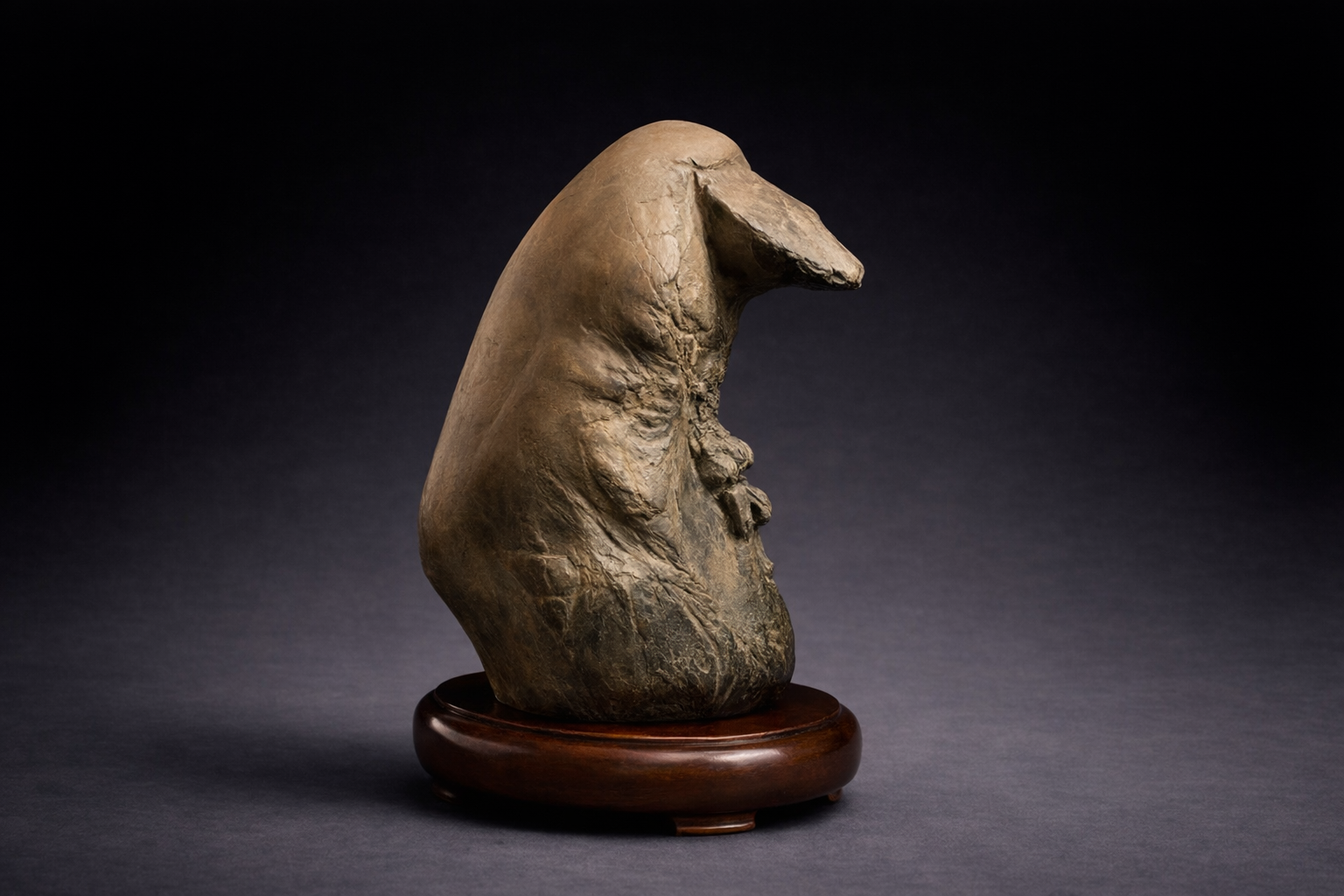 Human or divine figure / Sugata-ishi (姿石)
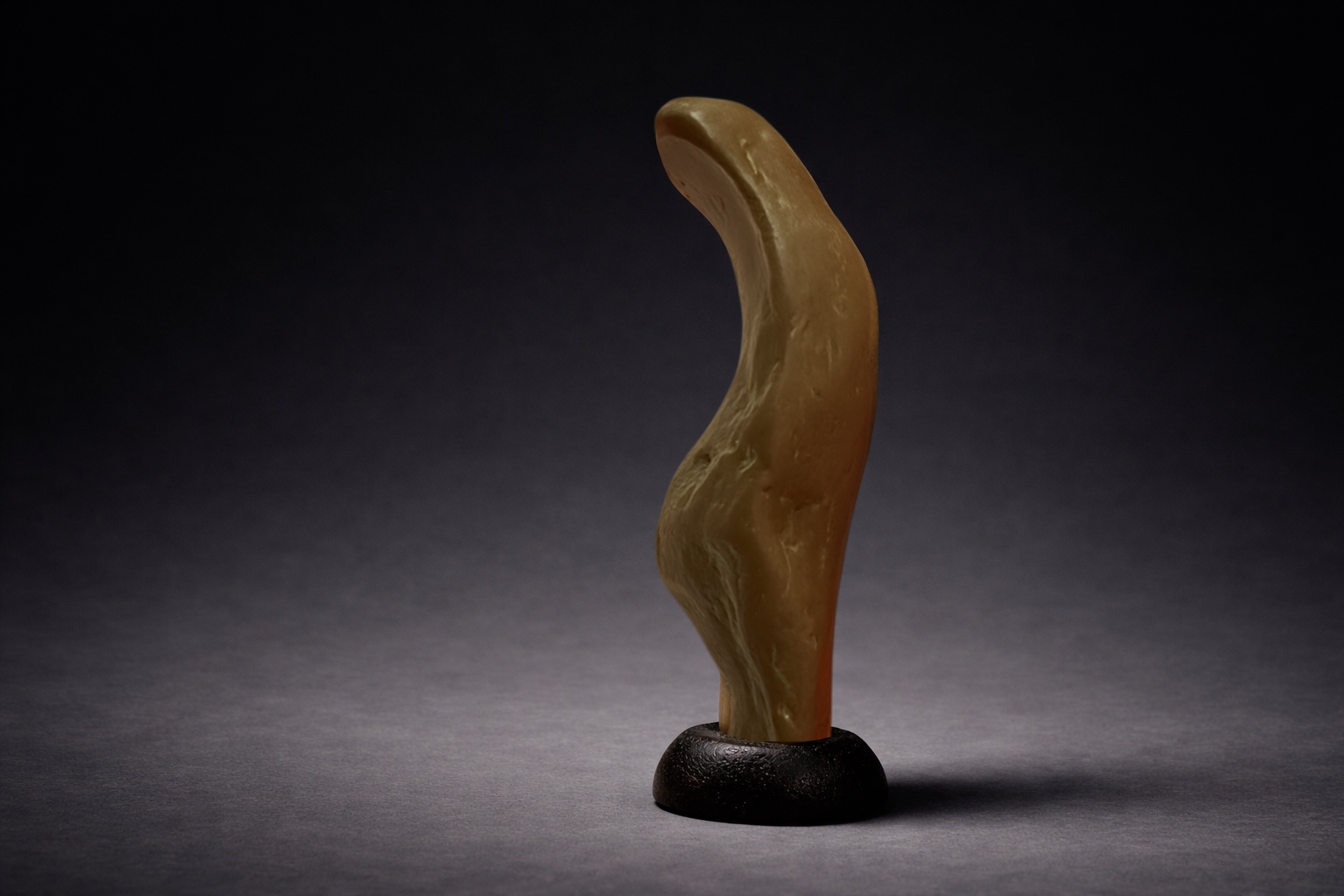 Human or divine figure / Sugata-ishi (姿石)
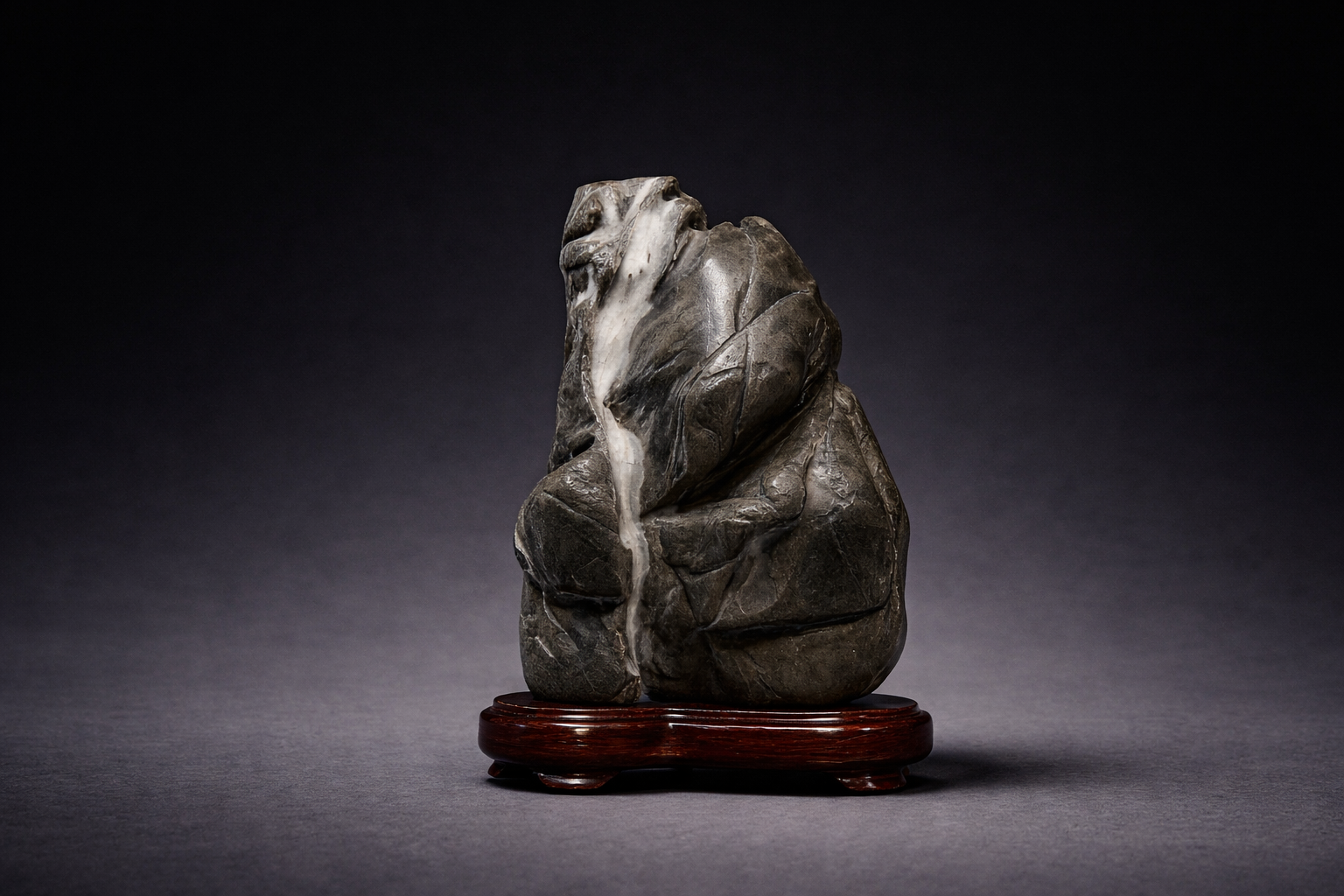 Human or divine figure / Sugata-ishi (姿石)
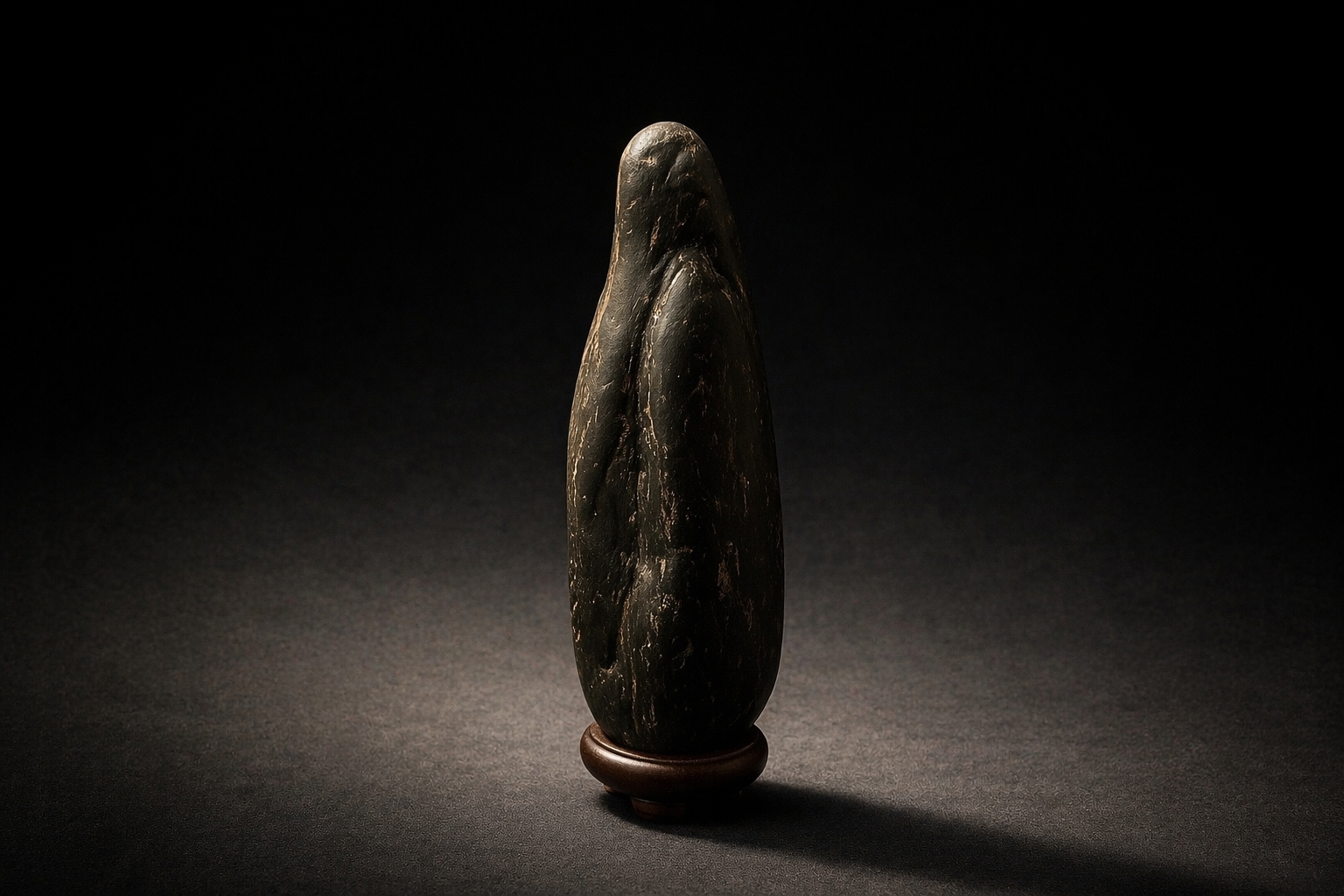 Human or divine figure / Sugata-ishi (姿石)
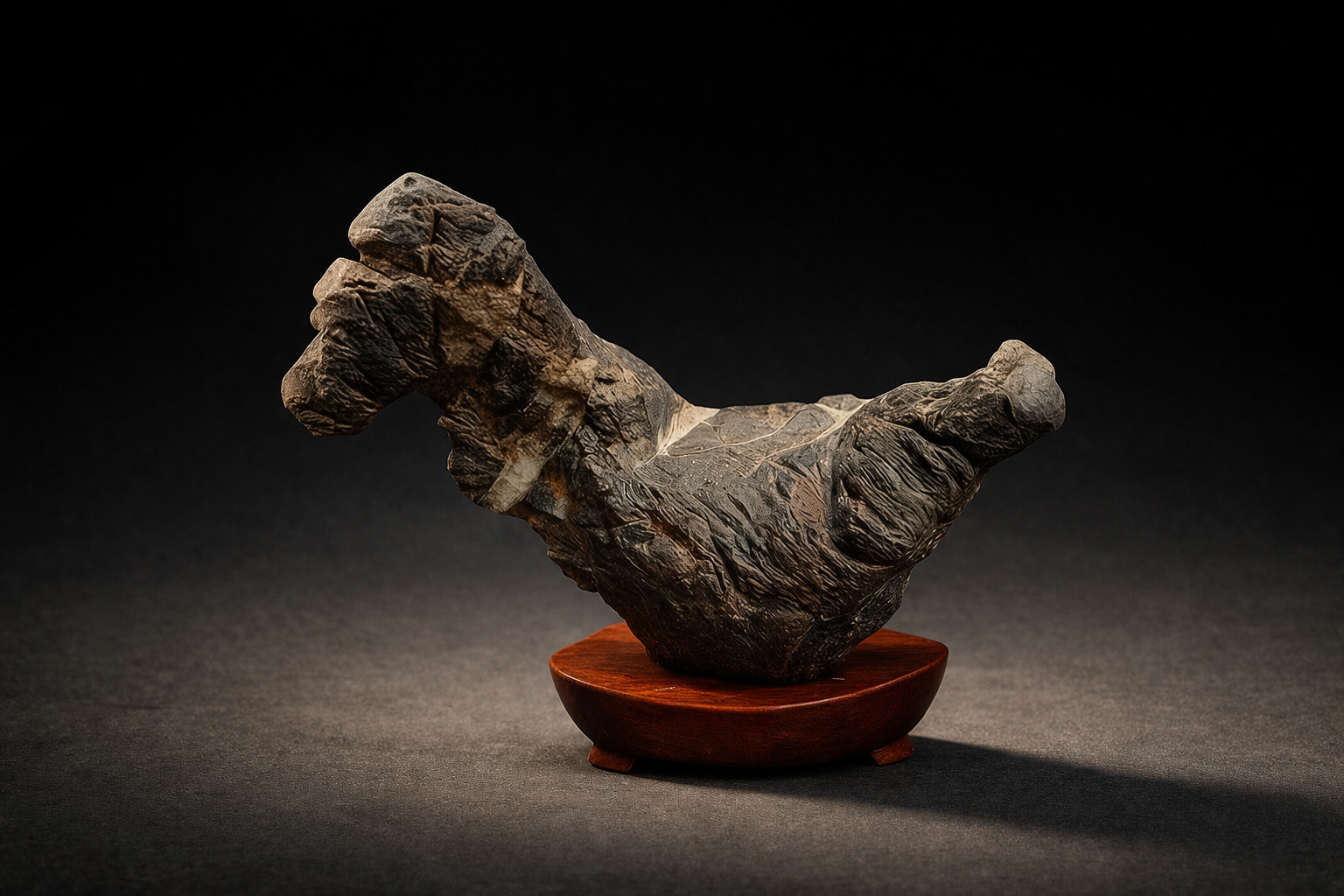 Animal figure / Dōbutsu-seki (動物石)
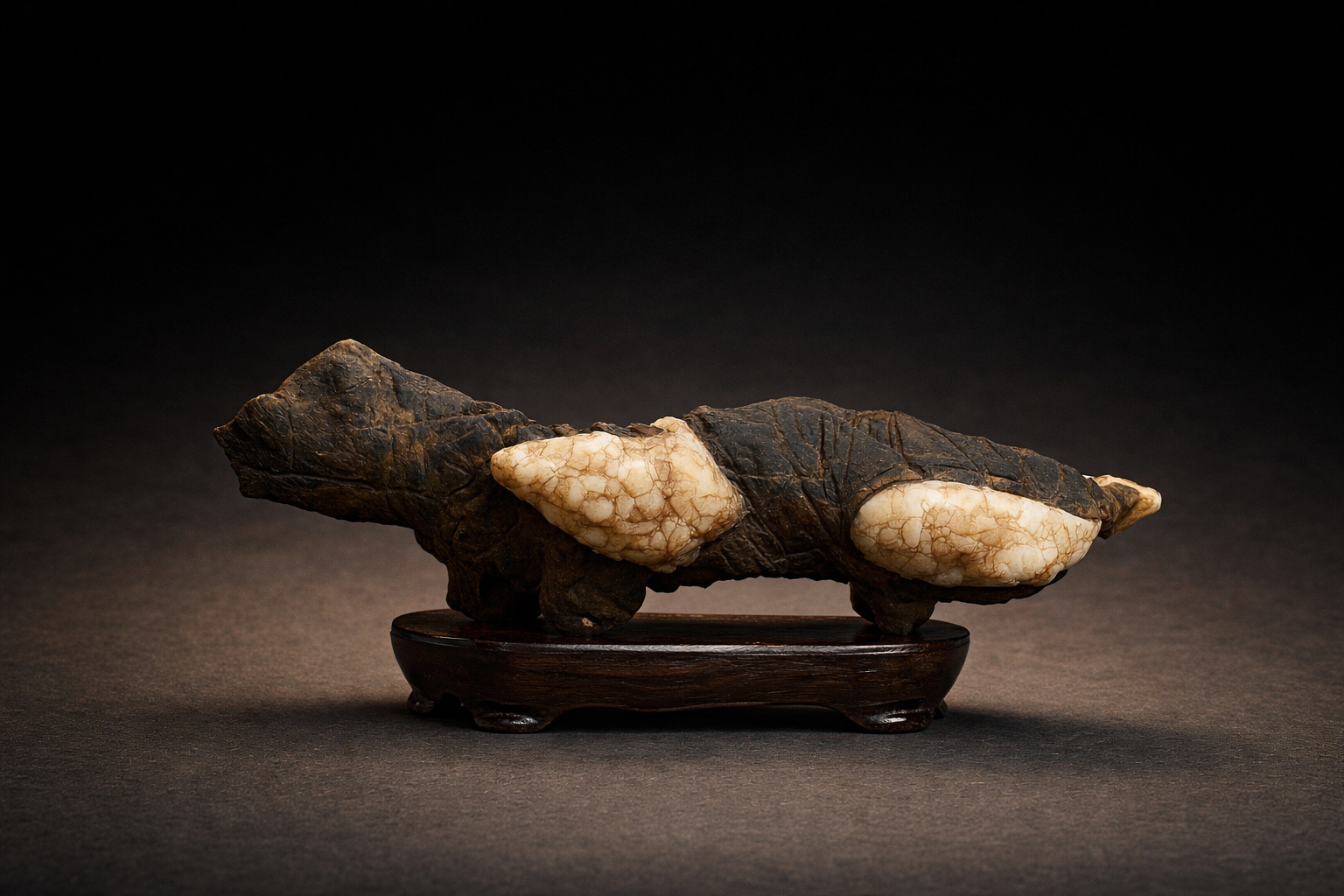 Animal figure / Dōbutsu-seki (動物石)
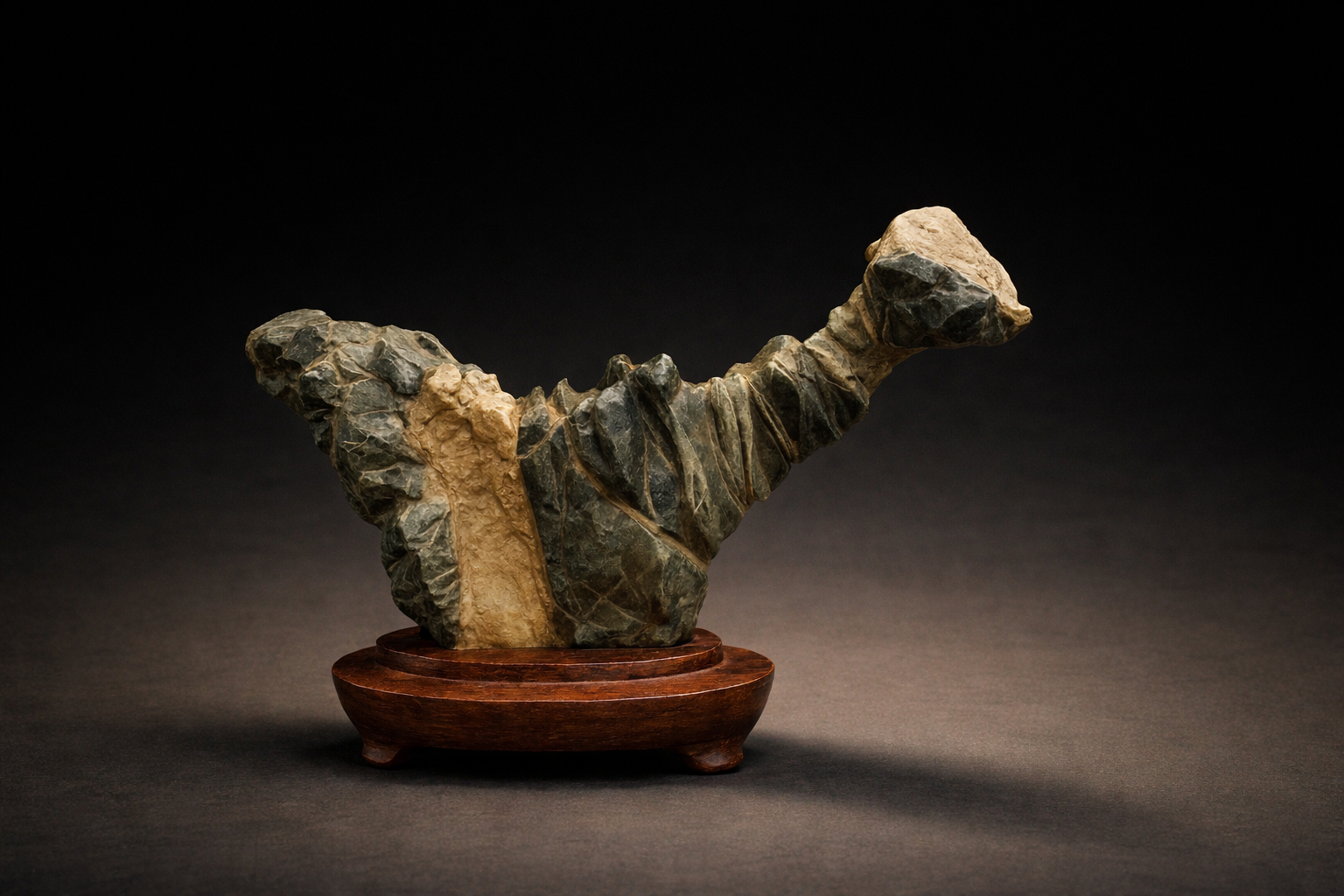 Animal figure / Dōbutsu-seki (動物石)
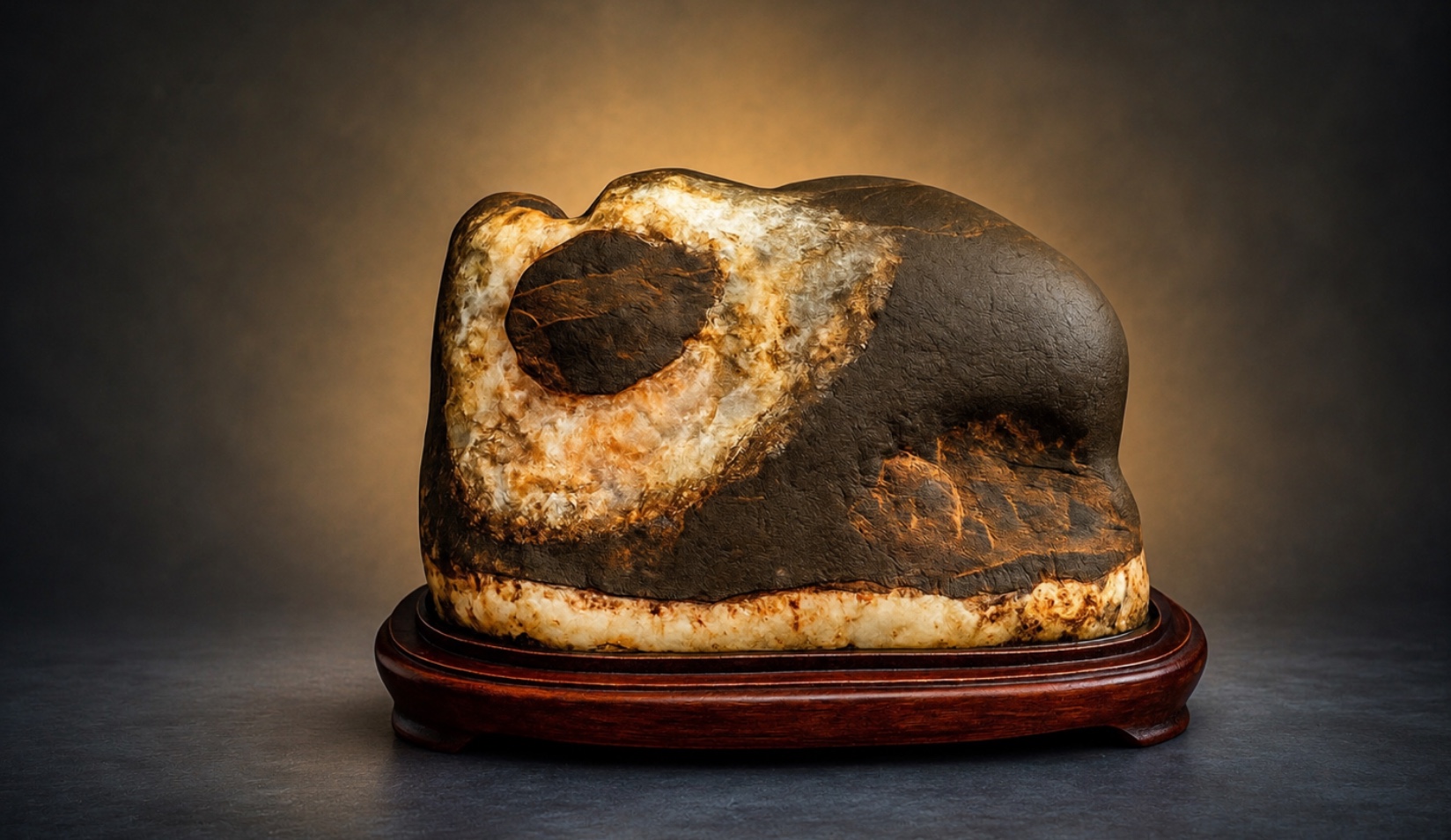 Kokudō-monseki · 黒洞紋石
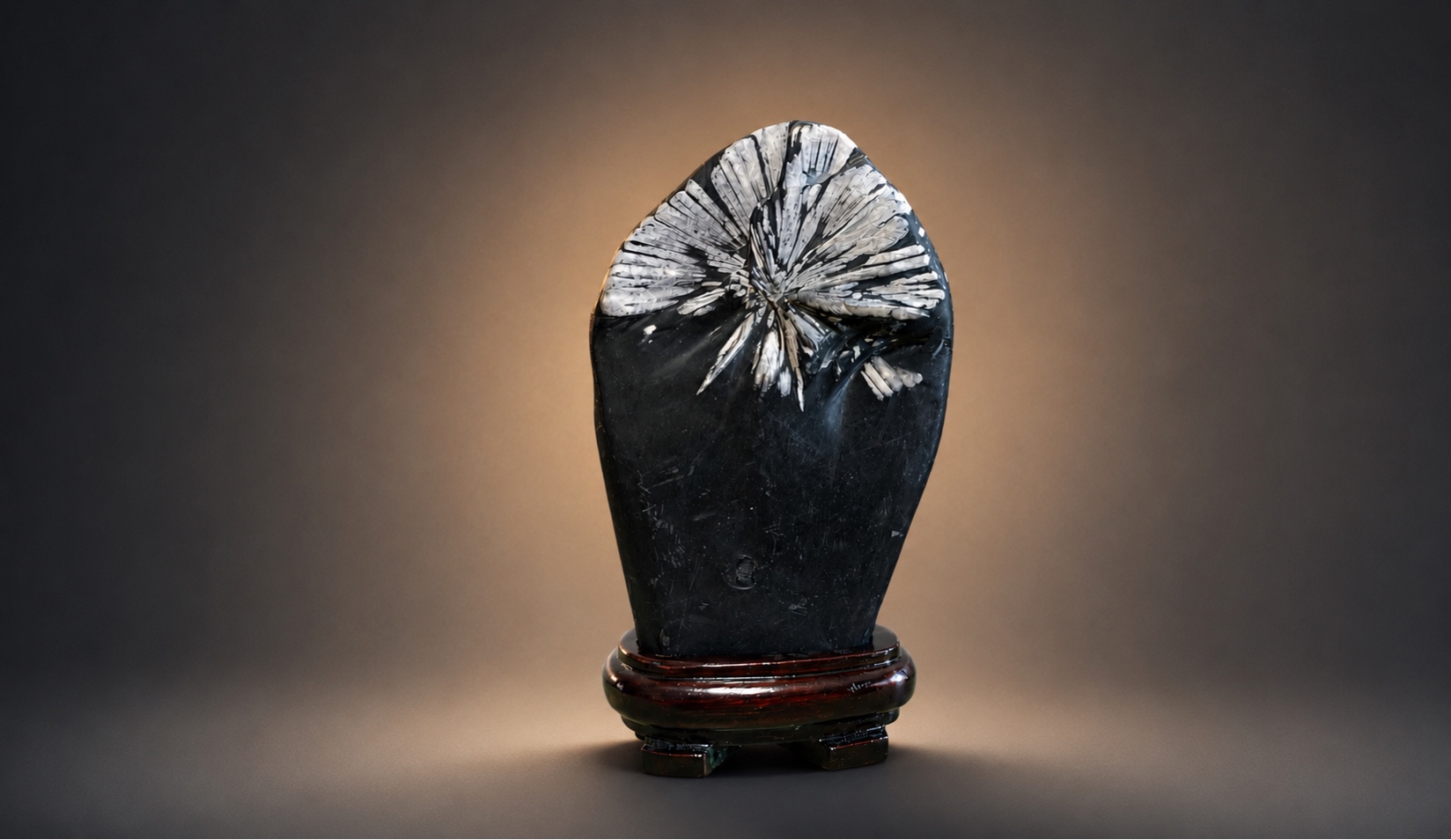 Kikka-seki · 菊花石
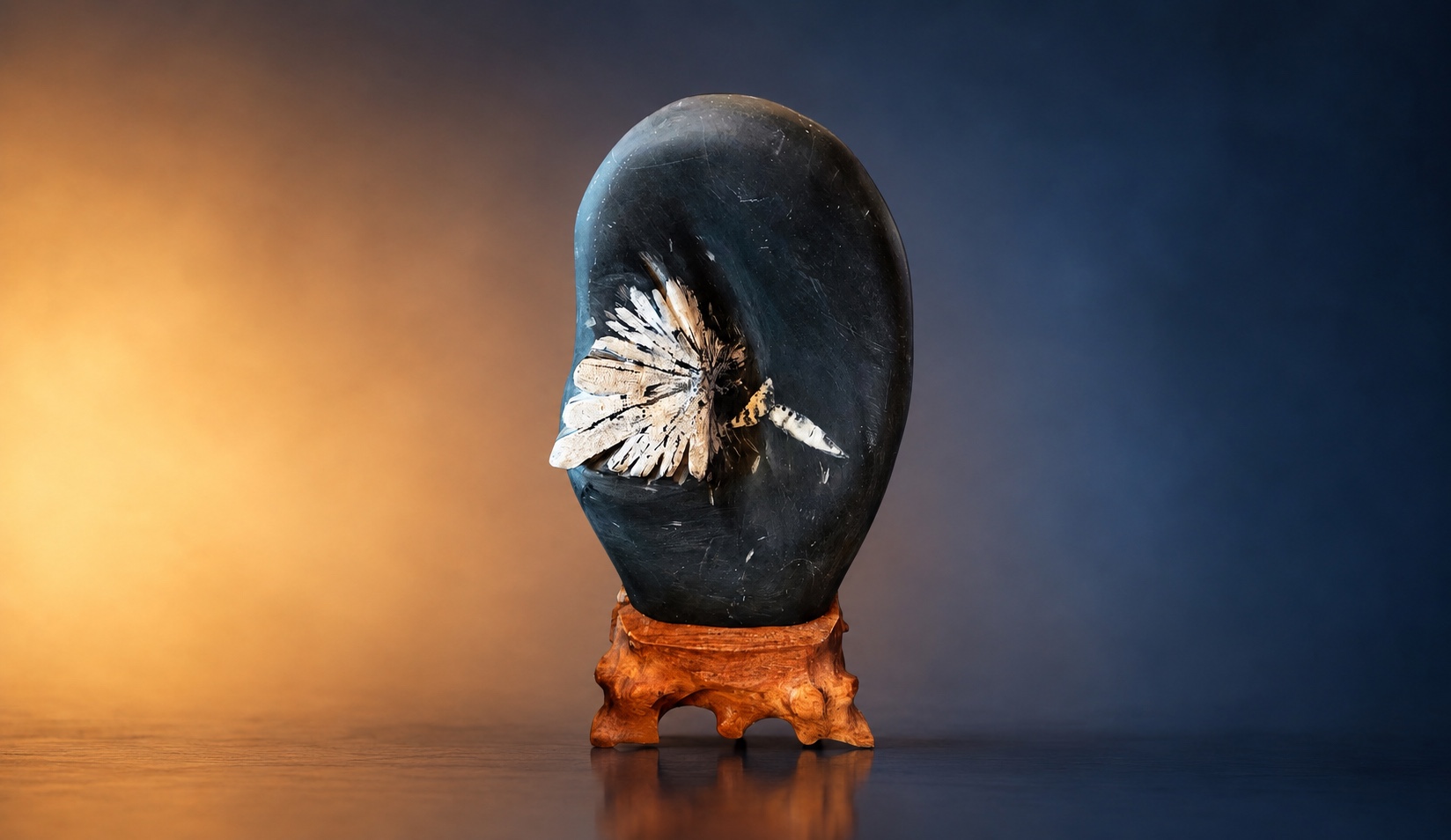 Chōzu-seki · 蝶図石
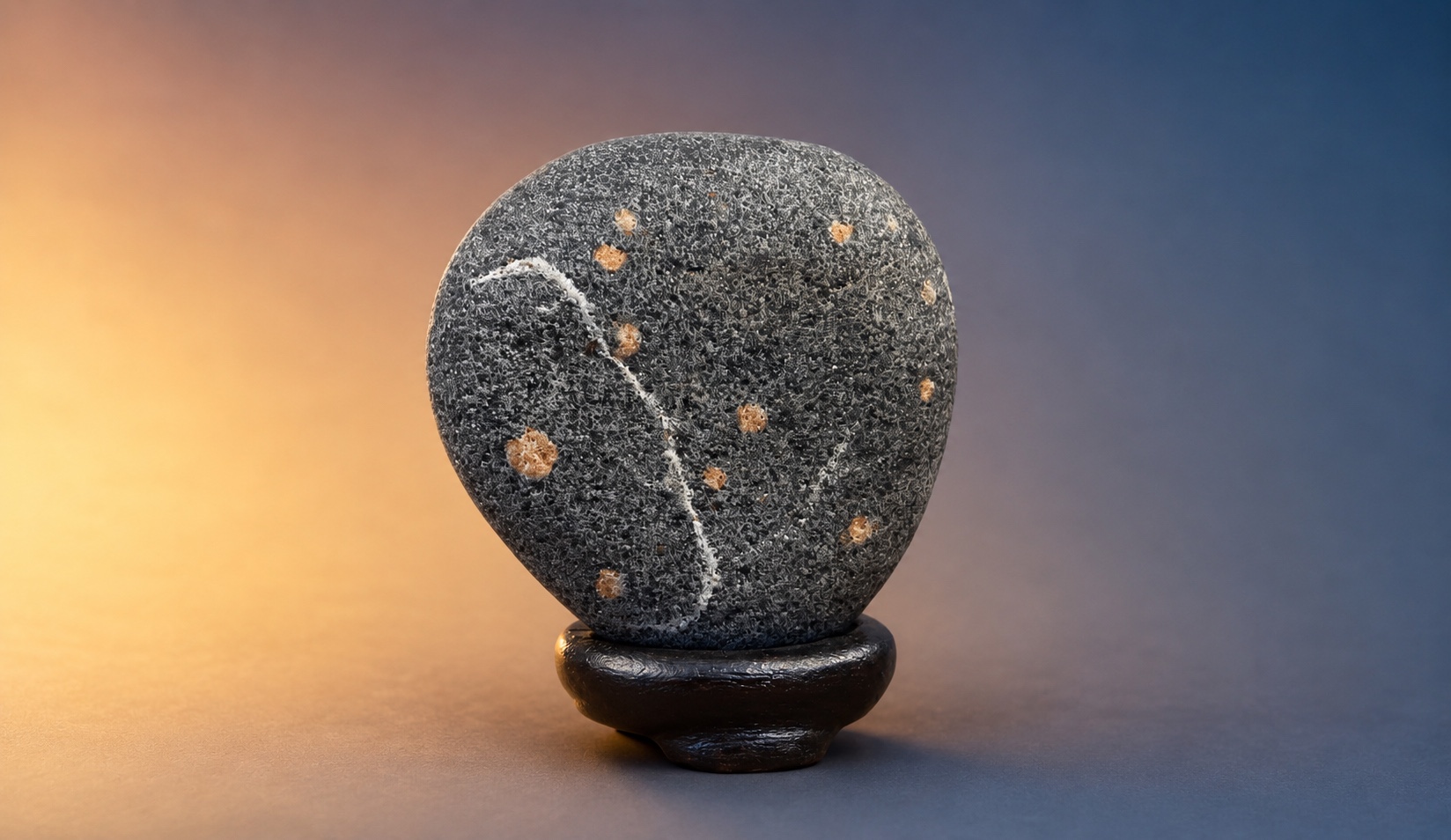 Ōka-zu-seki · 桜花図石
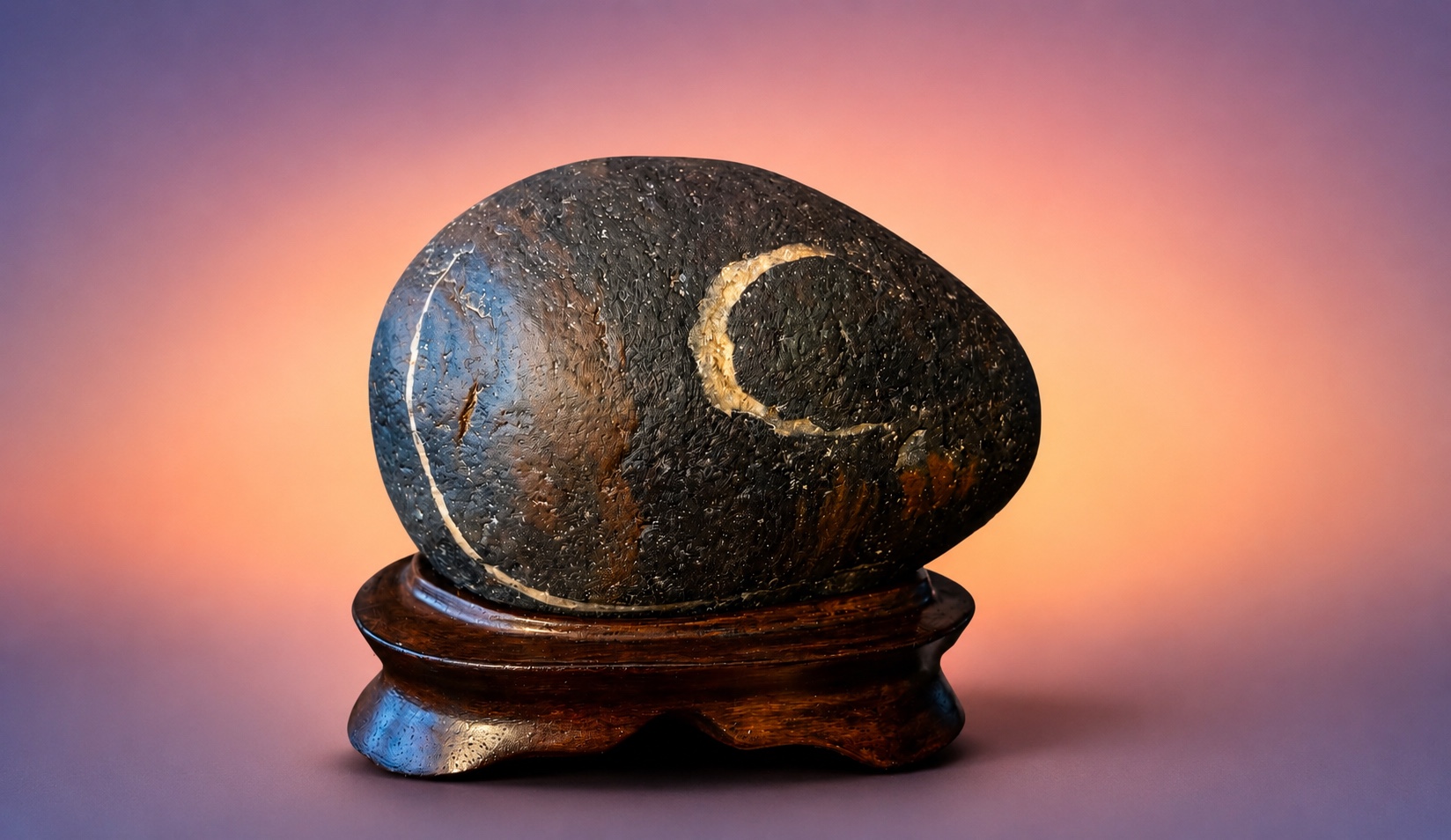 Tsuki-ishi · 月石
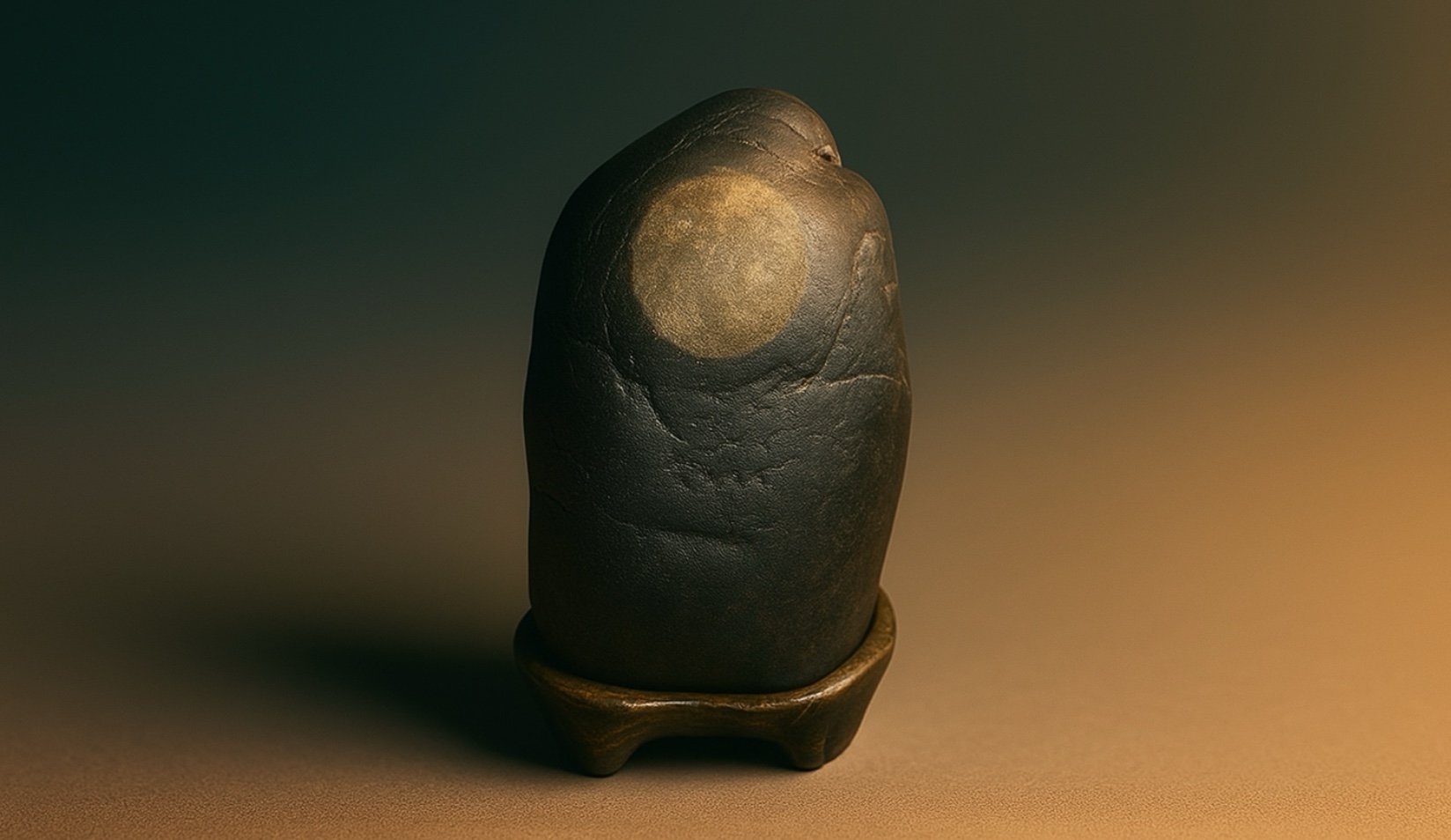 Tsuki-ishi · 月石
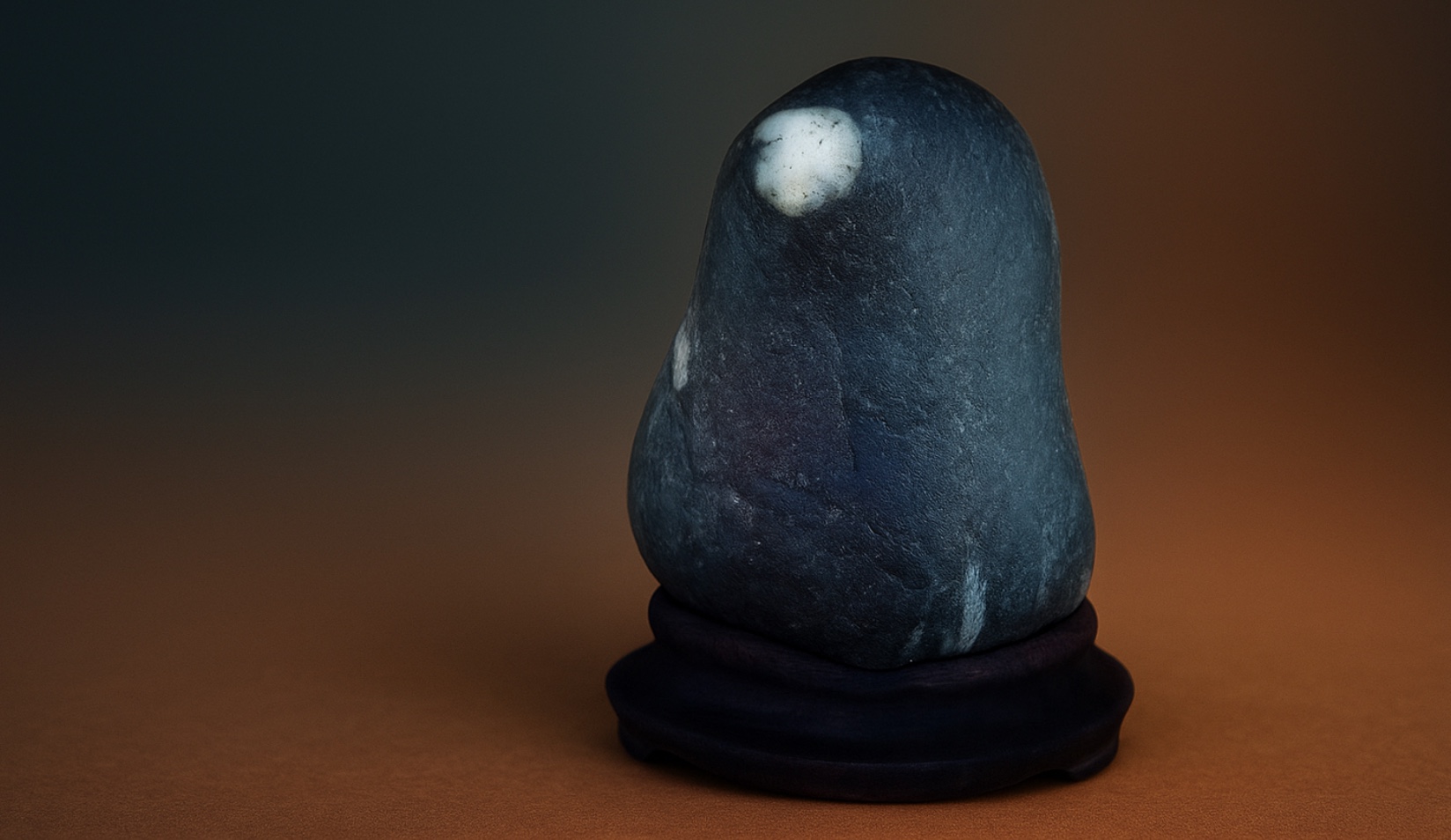 Tsuki-ishi · 月石
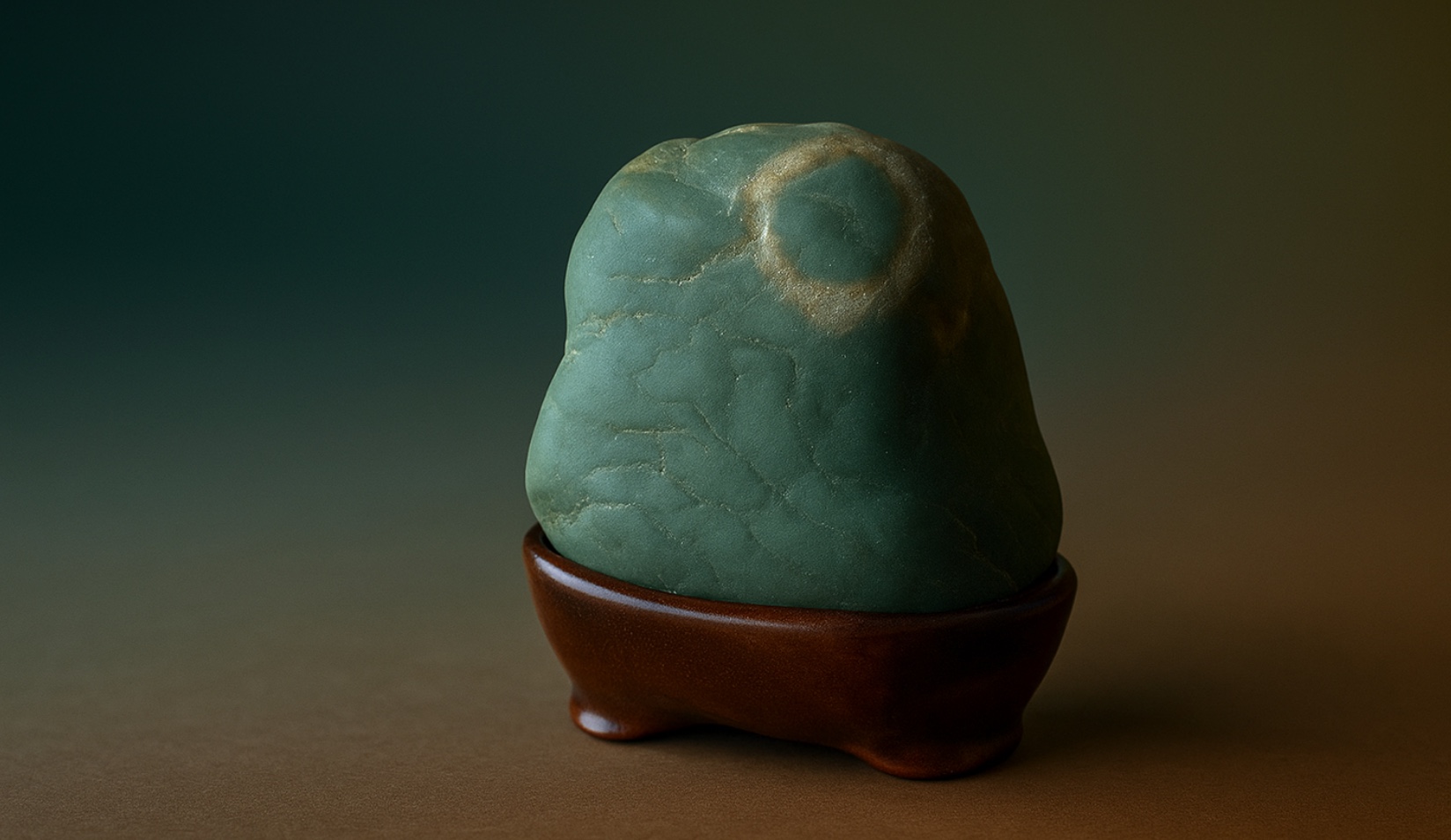 Nisshoku-zu-seki · 日食図石
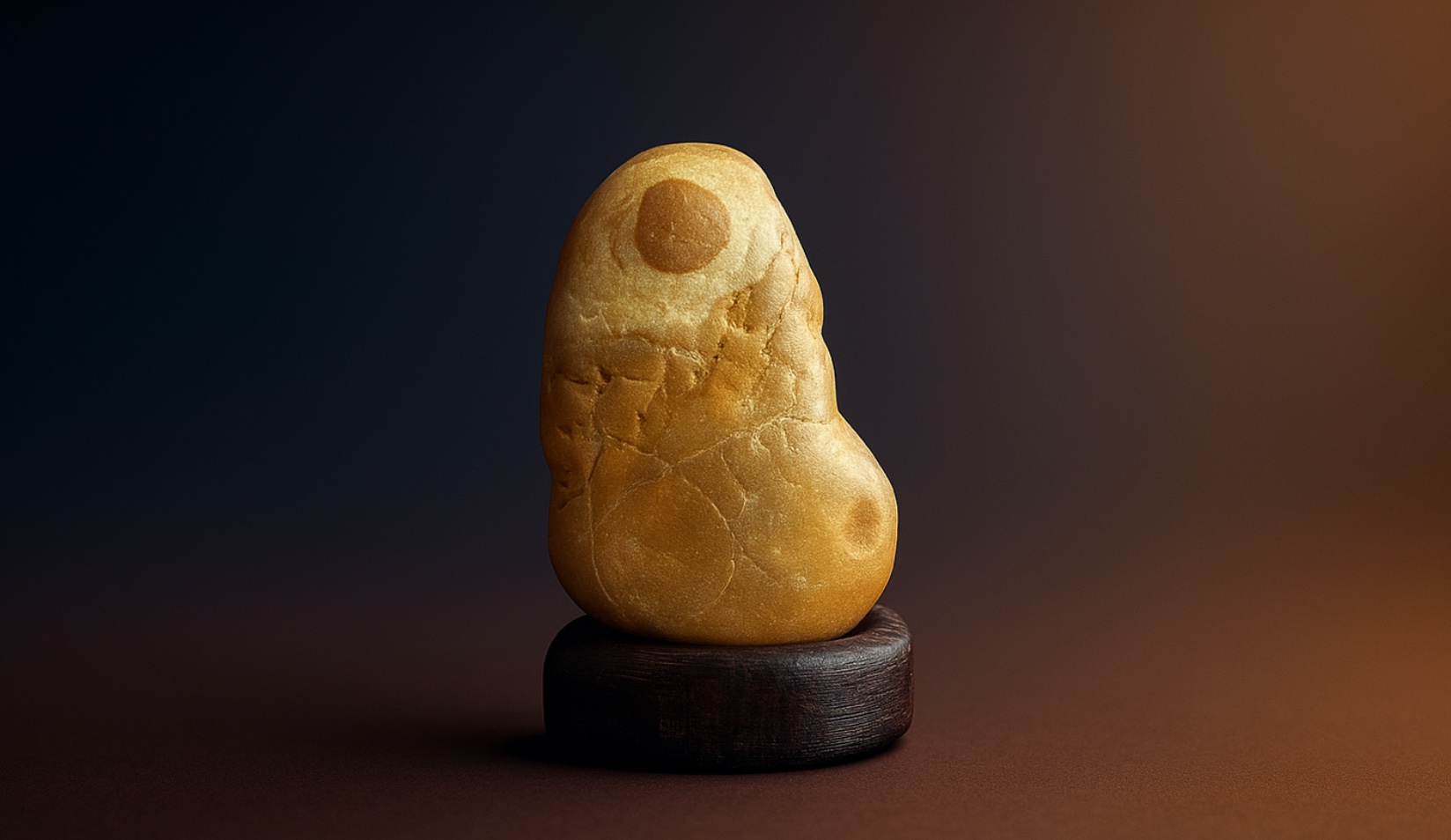 Nichirin-seki · 日輪石
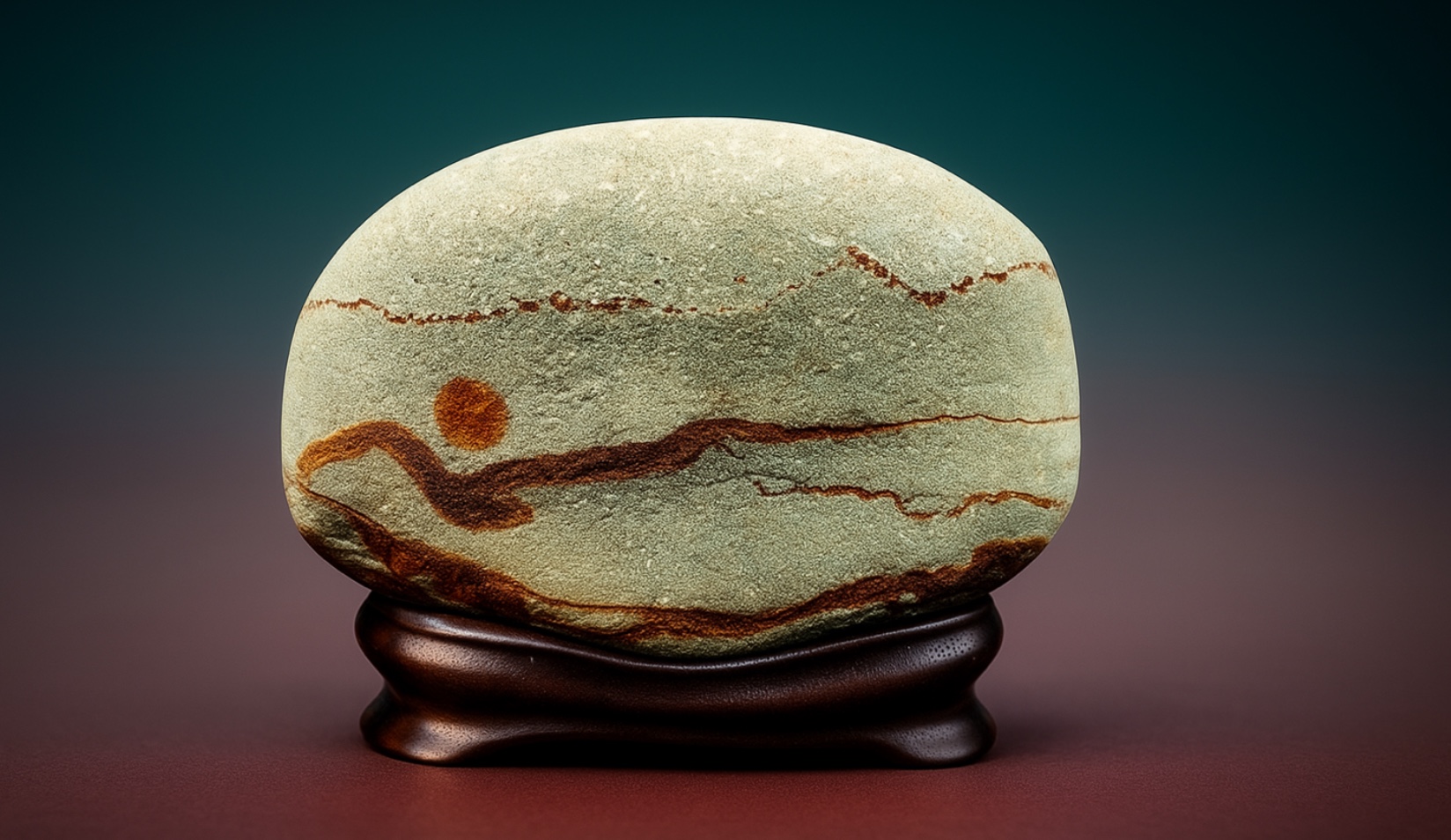 Yūkei-seki · 夕景石
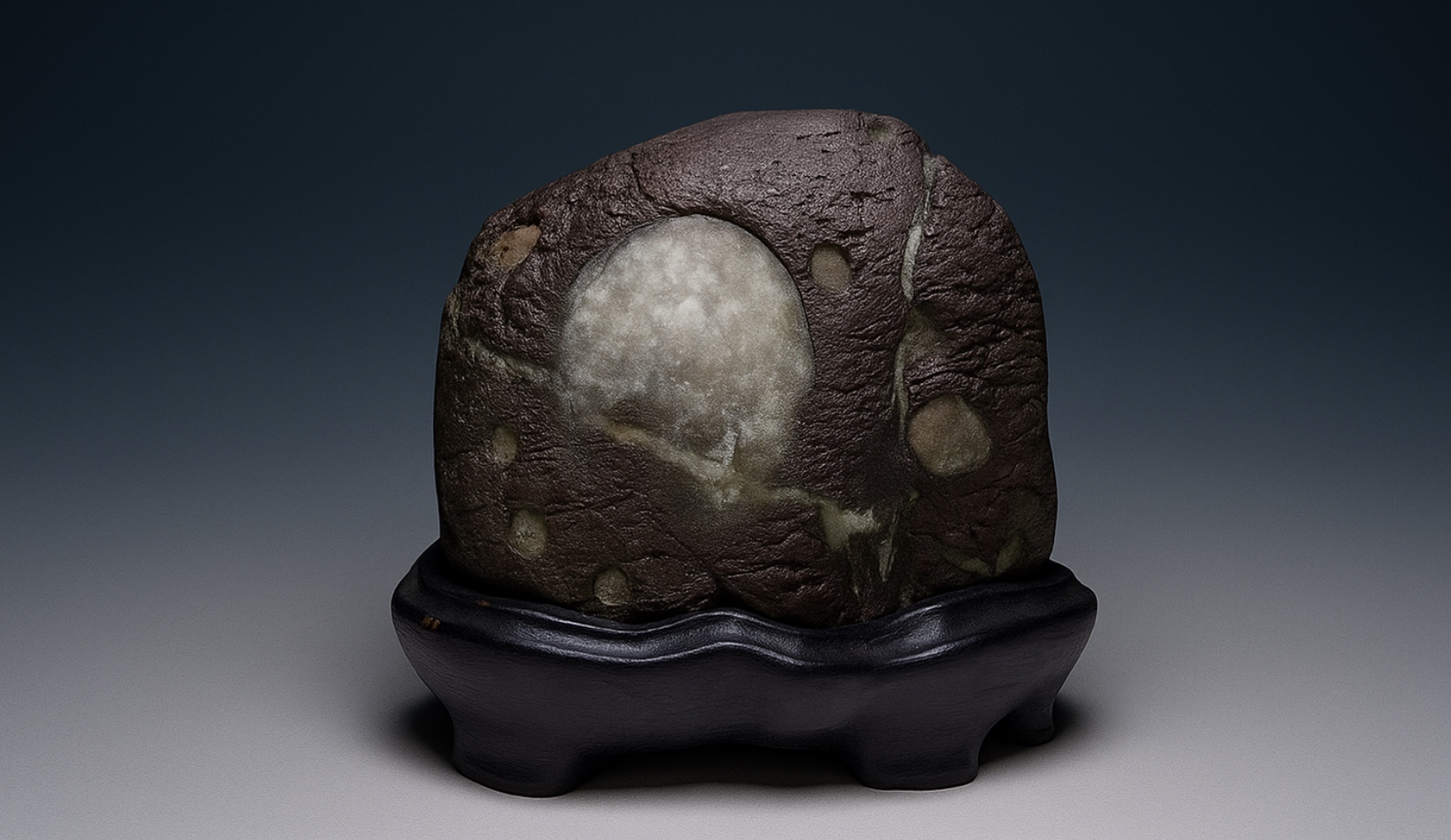 Tentai-zu-seki · 天体図石
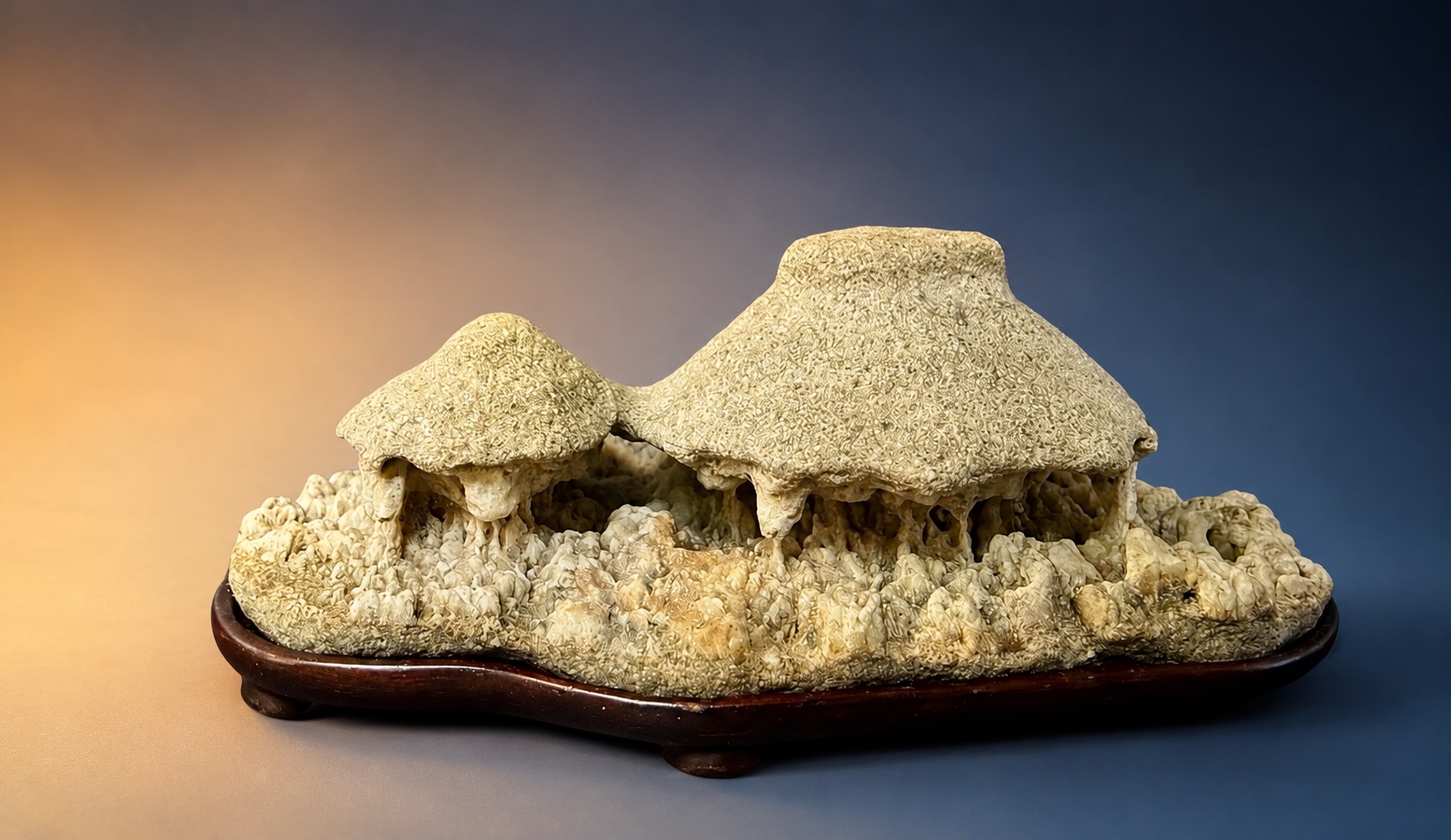 Kuzuya-ishi · 屑屋石
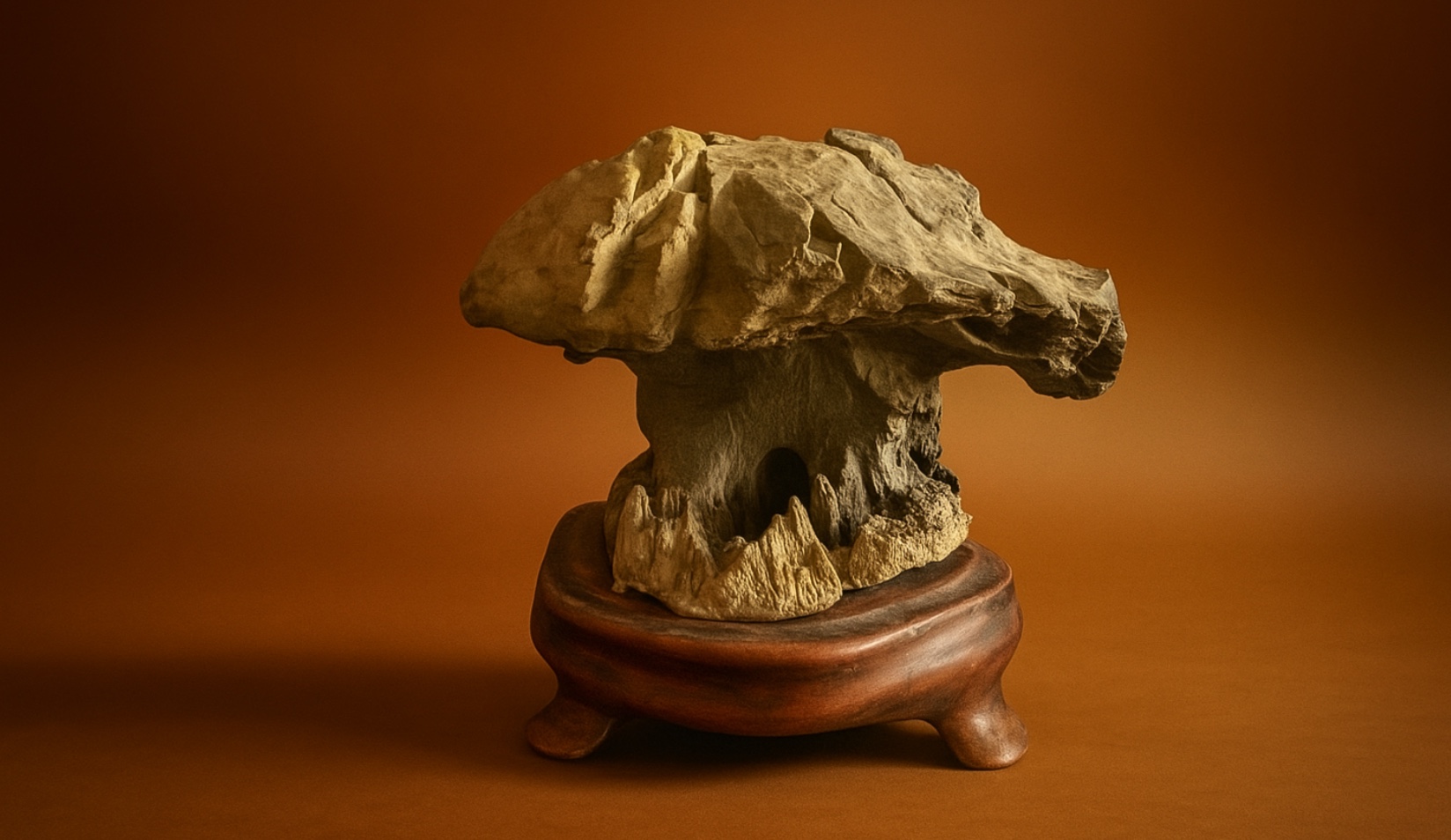 Kuzuya-ishi · 屑屋石
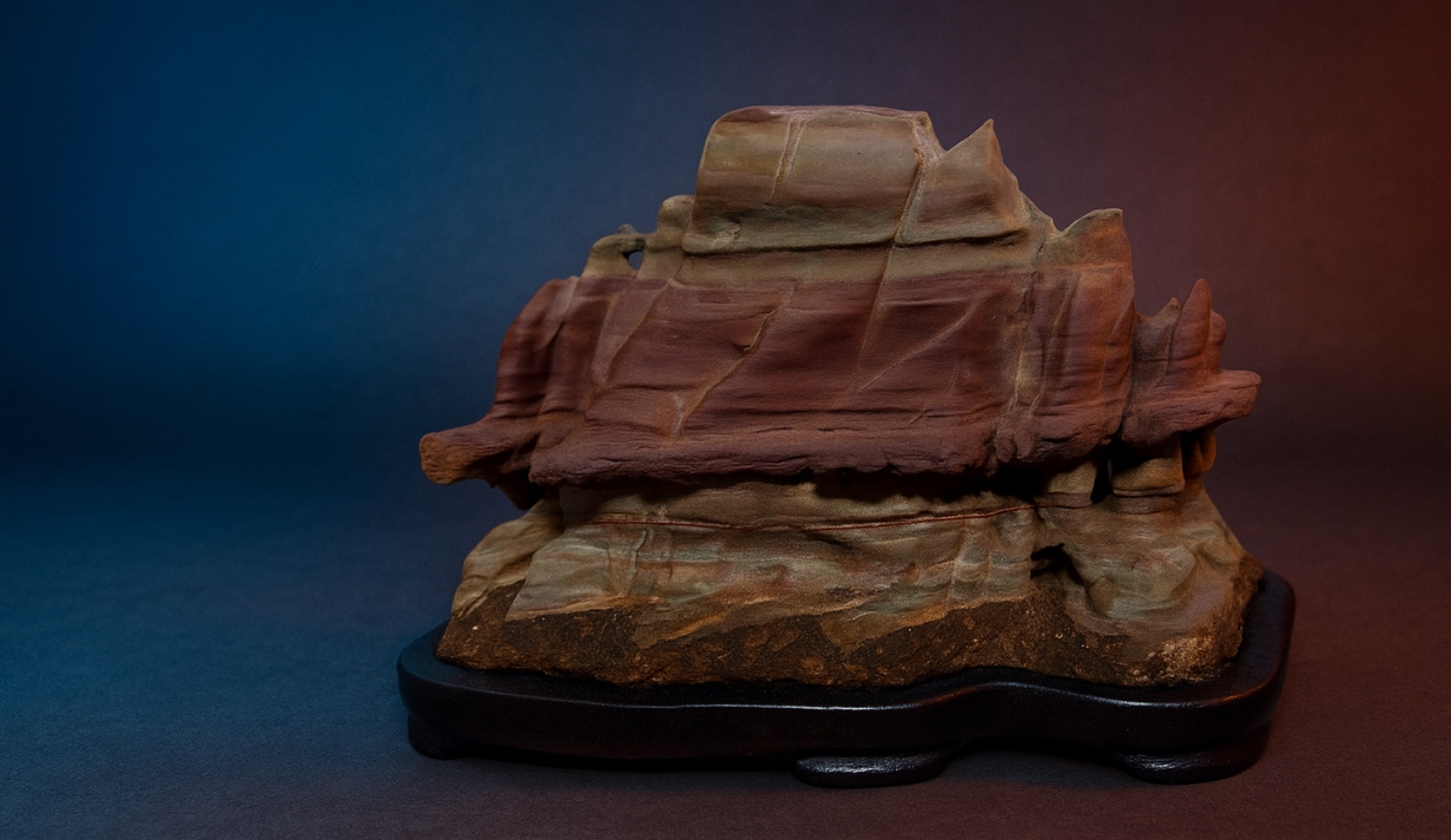 Kuzuya-ishi · 屑屋石
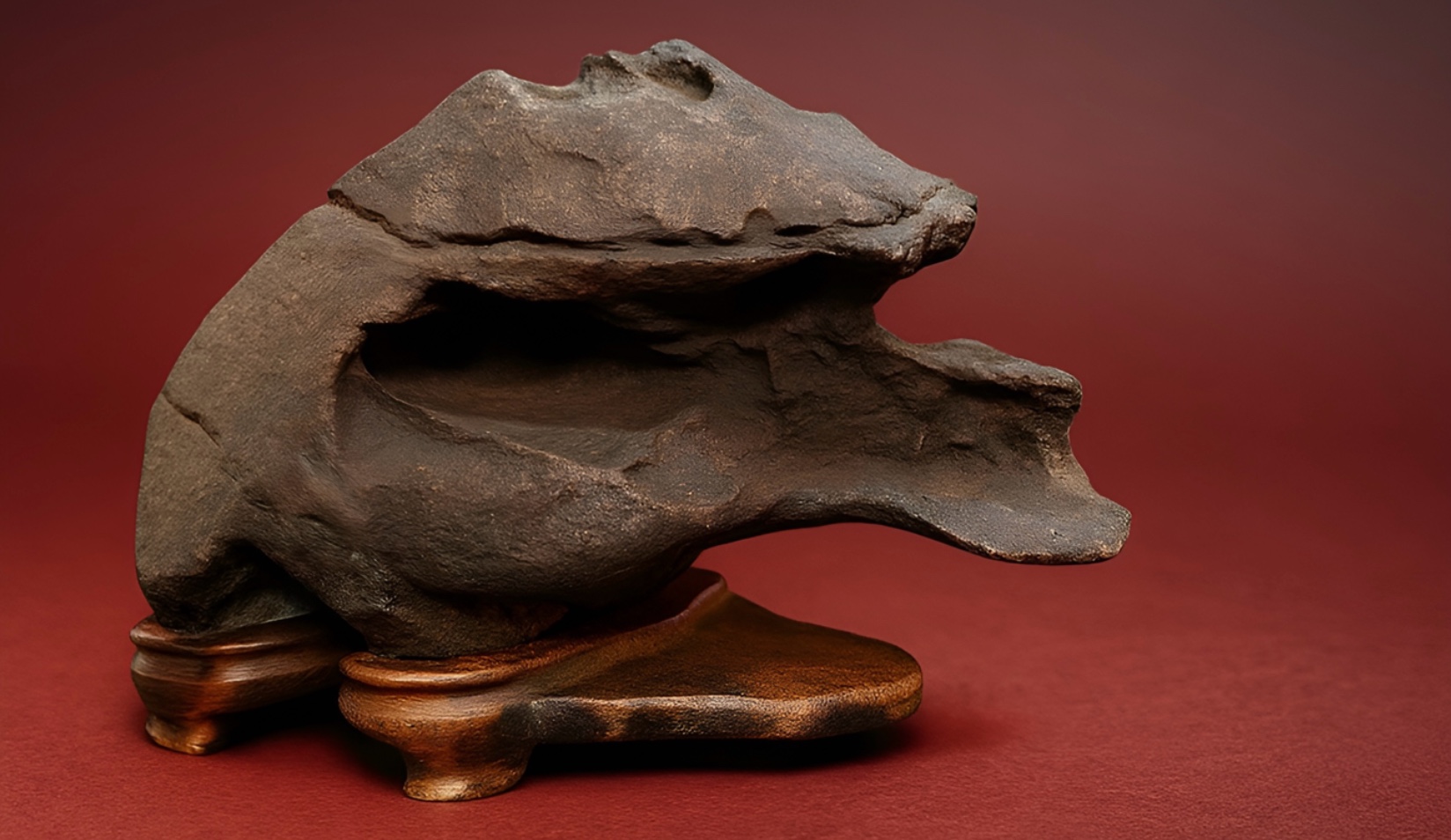 Iwaya-ishi · 岩屋石
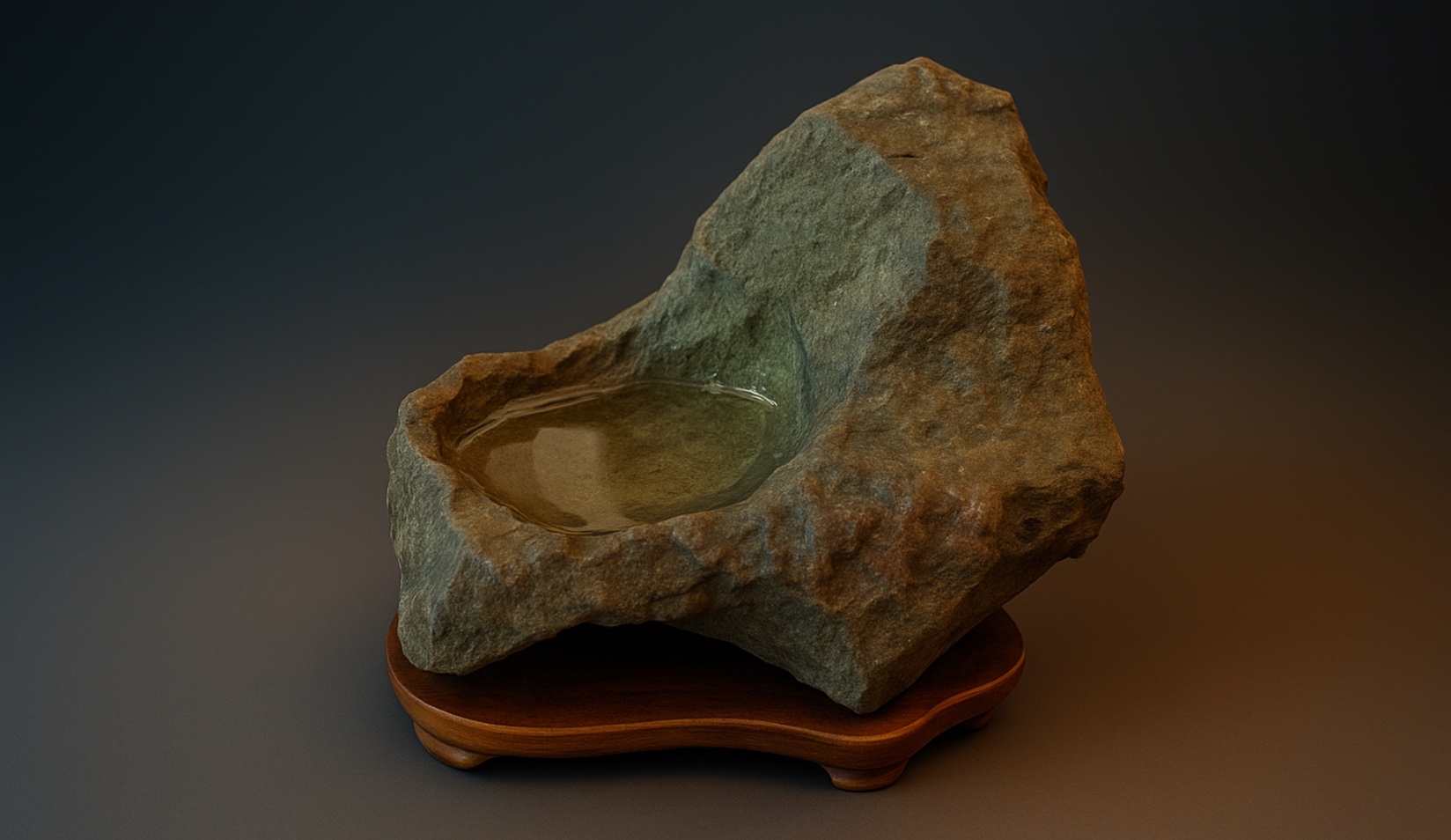 Mizutamari-ishi · 水溜石
Publications
Articles and contributions published in leading international bonsai and suiseki journals.
- Yuste Blasco, M. (2023). Suiseki and Viewing Stones: A Connection and Return to Mother Nature. BCI: Bonsai & Stone Appreciation, July–September 2023.
- Yuste Blasco, M. (2019). Teaching to see the trees at Sagunt Bonsai School. BCI: Bonsai & Stone Appreciation, April–June 2019.
- Yuste Blasco, M. (2017). Profile: The bonsai passion of Marcial Yuste Blasco. Bonsai Focus EN, September–October 2017.
- Yuste Blasco, M. (2018). La Metamorfosis de un Pino. Esprit Bonsai International, April–May 2018.
- Yuste Blasco, M. (2019). The wild one. Bonsai Focus EN, November–December 2019.
- Yuste Blasco, M. (2020). The wild one. Bonsai Today International, January 2020.
- Yuste Blasco, M. (2021). The wild side. Bonsai Today International, December 2021.
- Domínguez Naranjo, M. Á., and Yuste, M. (2025). 2nd Andalusian Suiseki Congress: April 25, 26, and 27, 2025, Las Gabias, Granada (Spain). BCI: Bonsai & Stone Appreciation, July–September 2025.
- Domínguez Naranjo, M. Á., and Yuste, M. (2025). 2nd Andalusian Suiseki Congress: April 25, 26, and 27, 2025, Las Gabias, Granada (Spain). Suiseki Journal, 2025.
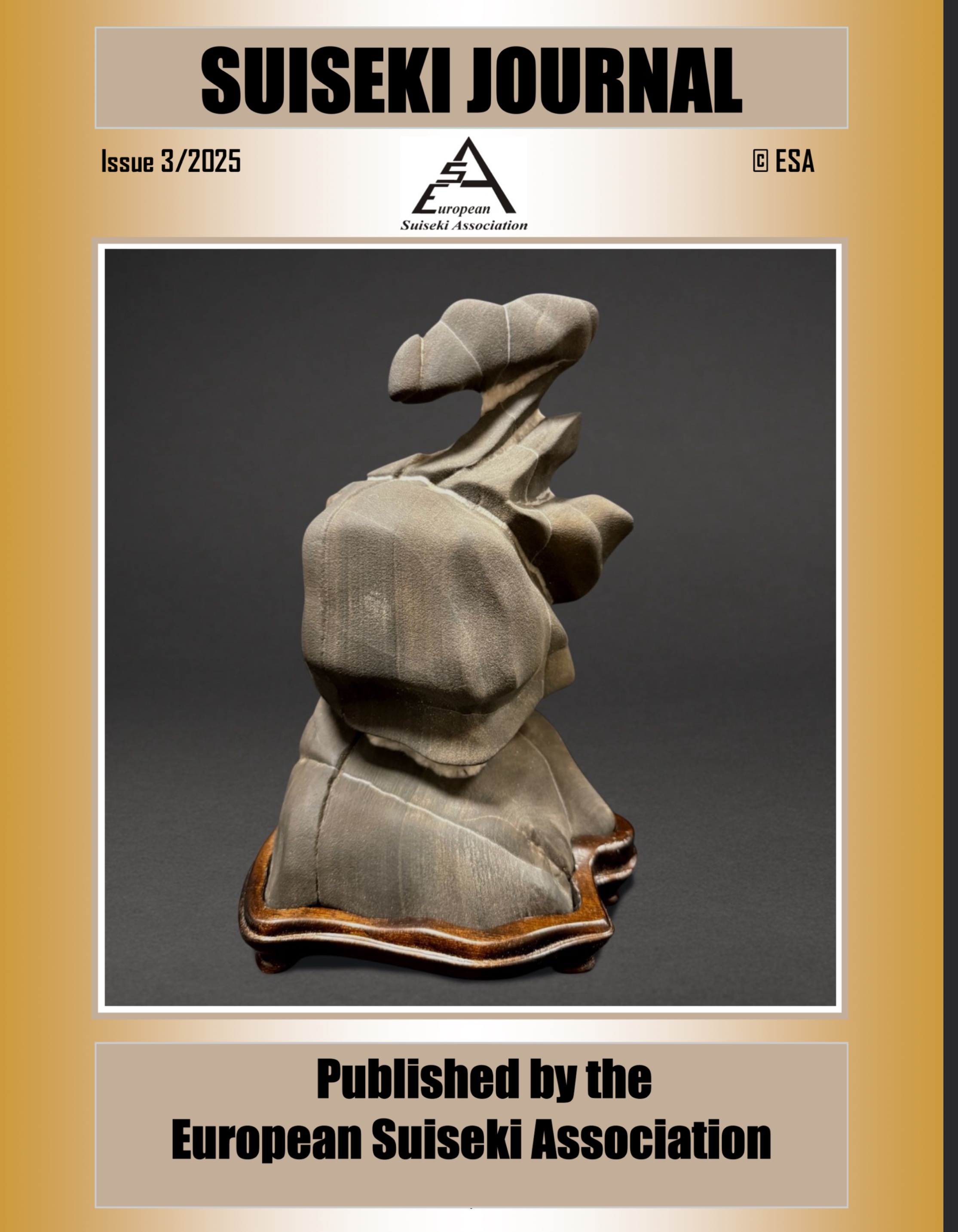
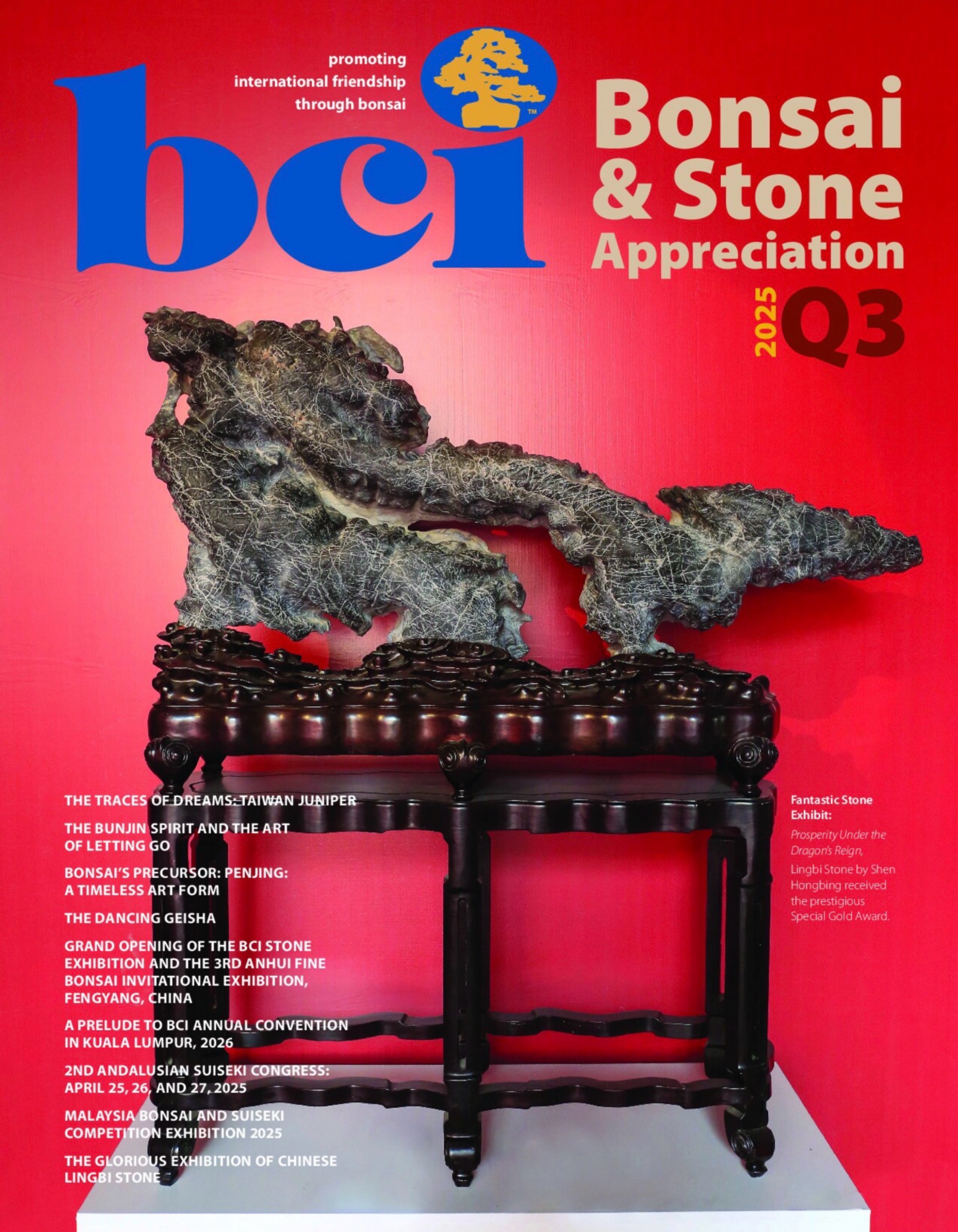
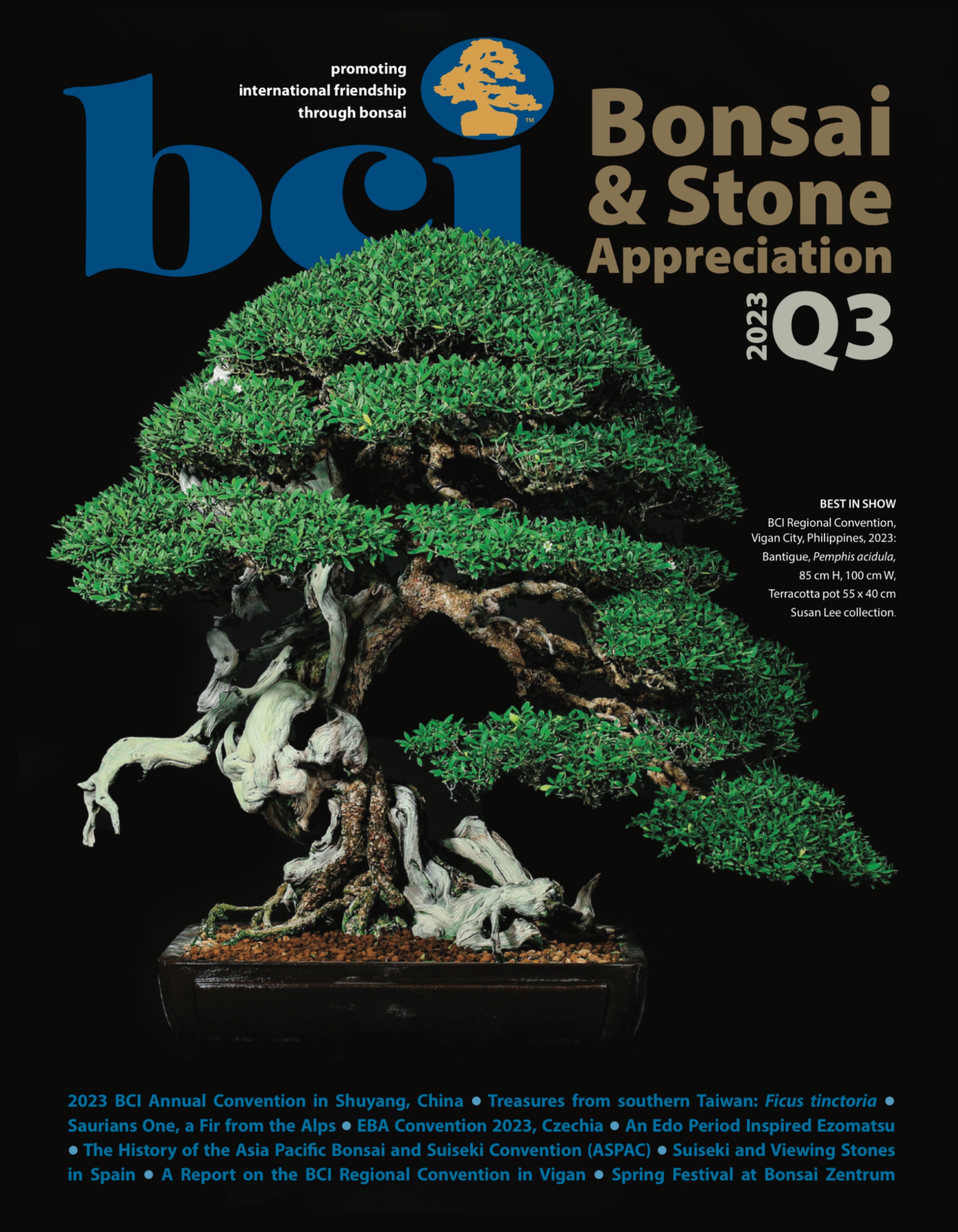
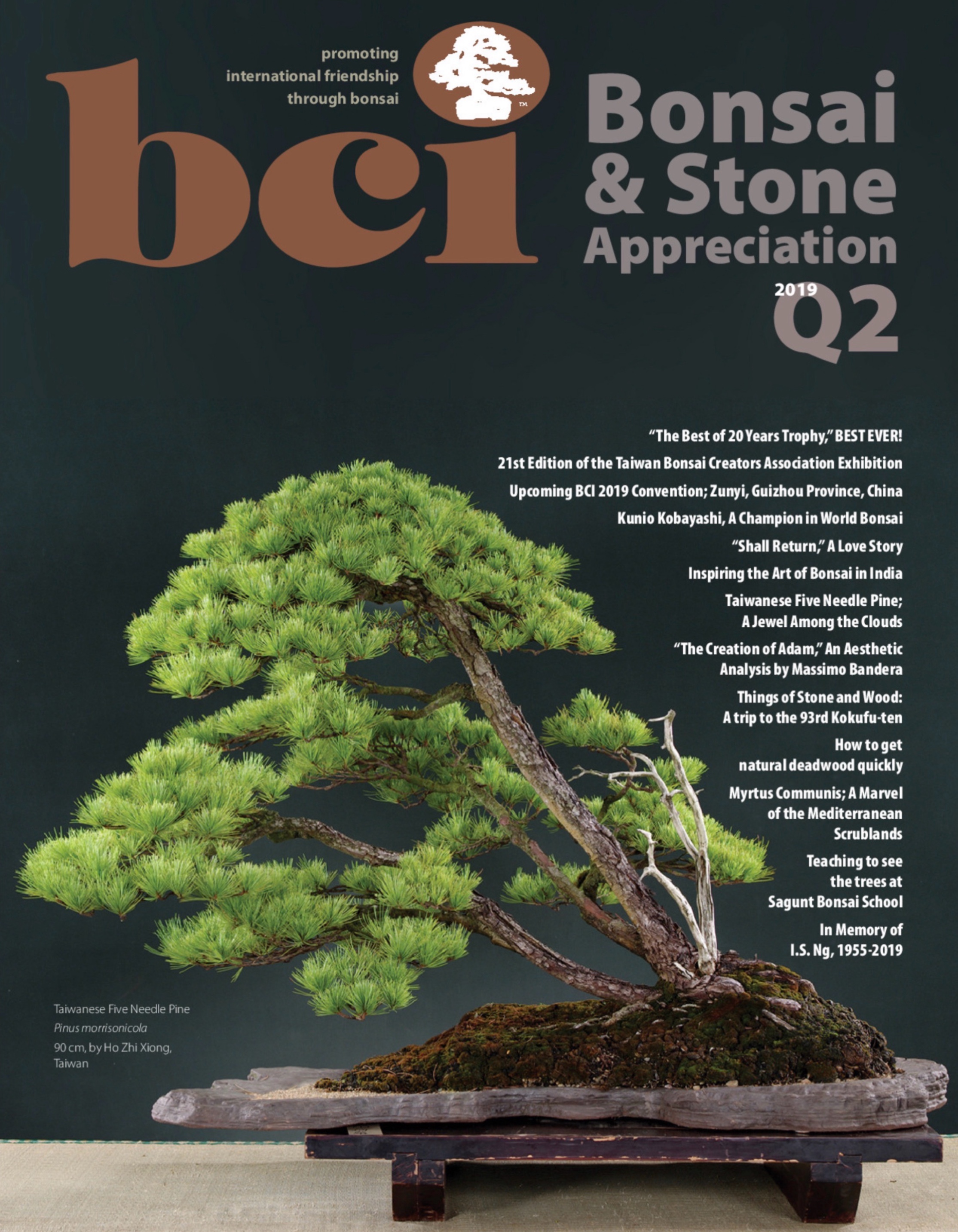
Articles published in international bonsai and suiseki journals
- Yuste Blasco, M. (2026). Suiseki: The Stone, Its Nature, and the Art of Its Display. BCI: Bonsai & Stone Appreciation, July 30, 2026. Online publication.
- Yuste Blasco, M. (2022). Keido y Kazari – Fundamentos y Formas de Exponer un Bonsái. World Bonsai University Blog, April 2022. Online publication.
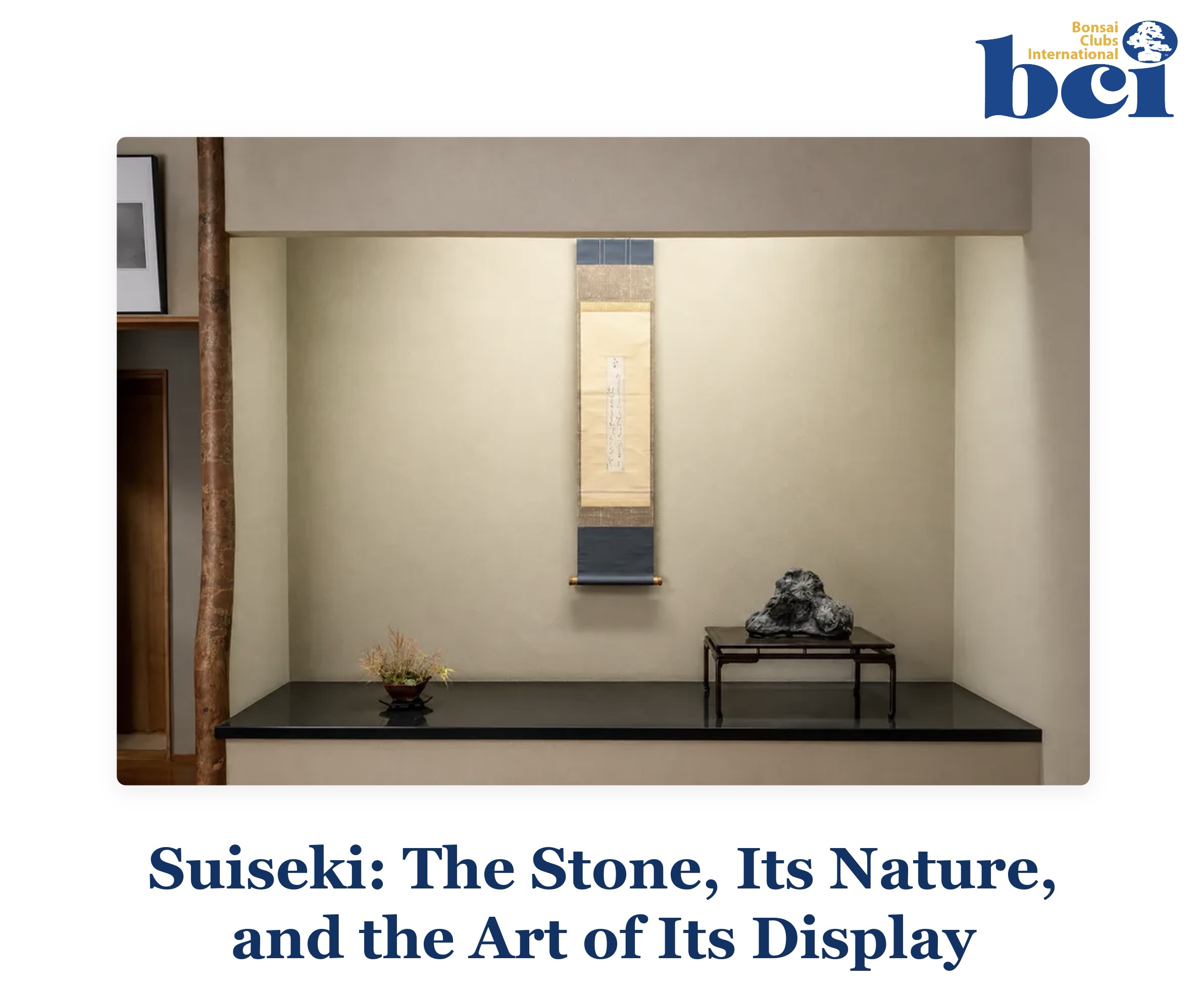
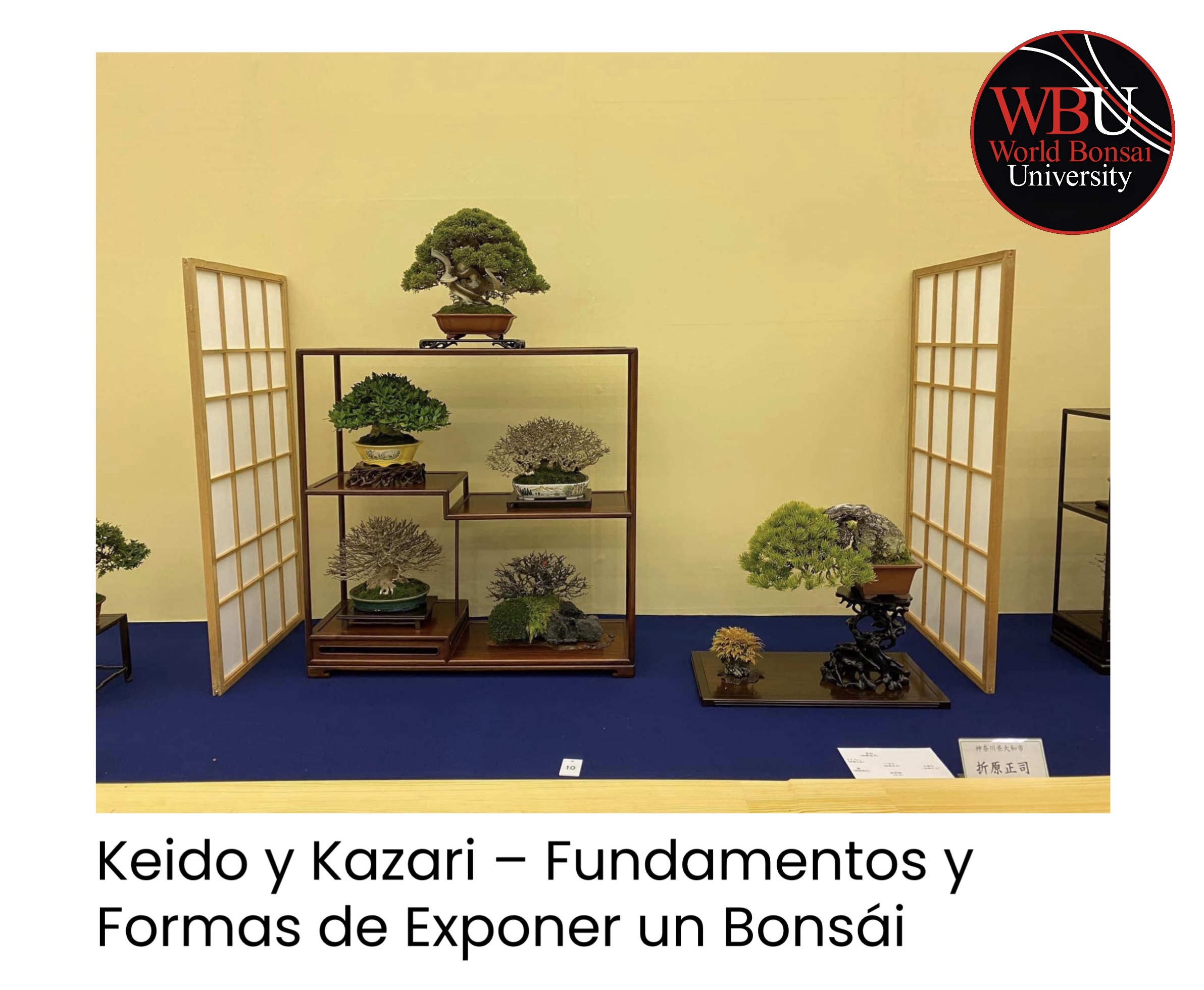
Articles published in digital bonsai and suiseki media
Regularly collaborates with: BCI Bonsai & Stone Appreciation, Bonsai Focus EN, Bonsai Today International, Suiseki Journal, Esprit Bonsai International and European Suiseki Magazine.
This name, chosen by my master, holds a meaning that transcends the artistic name itself. The document explains its symbolism and the principles that are to guide my path within Keidō. Humility as an attitude toward learning, toward nature, and toward the practice itself; a willingness to keep learning, observing, and deepening along the path.
The video also shows the stamping of the official hanko, the red seals of the school and of its Iemoto, on the documents that accompany this recognition. They record the genealogy of the three Iemoto who have transmitted the legacy of the Keidō Katayama-ryū school, as well as its philosophy and its essence.
A moment that represents much more than a formal recognition: the continuity of a tradition, the responsibility of belonging to it, and the personal commitment to embody, through practice, the meaning of the name received.
謙 — Ken. Humility: not only a name to receive, but a principle to cultivate along the path.
The calligraphy is set on a small shikishi (色紙), mounted in a folding presentation case, a personal piece that preserves my master’s original writing.
A single character, drawn by his own hand, that holds an essential principle for my path in Keidō: to cultivate humility, to keep an attitude of learning, and to let practice transform not only the way of seeing, but also the one who observes.
It is not merely a piece of calligraphy. It is a reminder of the spirit in which I wish to continue this path.
This name represents the evolution of my path within Keidō. The name Masaru Buko (勝讓武古), which I have carried over the last three years of study, gives way to Masaru Ken, keeping 勝讓 (Masaru) and incorporating 謙 (Ken), humility, as the principle that is to accompany my practice and my personal evolution.
On the kakejiku, my master also writes the name of the Keidō Katayama-ryū school and signs it as Kobayashi Ippū, stamping the official red hanko of the school and of its Iemoto. Every stroke, every character, and every seal is part of a work made entirely by hand, which binds my artistic name to the tradition that receives it.
In Keidō, the kakejiku is one of the central elements of the tokonoma, a space in which calligraphy, objects, and nature converse to express an intention and a vision of the world. For this reason, this work transcends its condition as calligraphy: it represents the recognition of my artistic identity within the school and my official membership in it as a disciple.
To receive a name is also to receive a responsibility. And to see it take shape, stroke by stroke, by my master’s hand, is to understand that the path is not limited to what was learned over these years, but continues in the way one observes, practices, and lives.
勝讓謙 — Masaru Ken. A name that joins the continuity of a path with the humility needed to keep walking it.
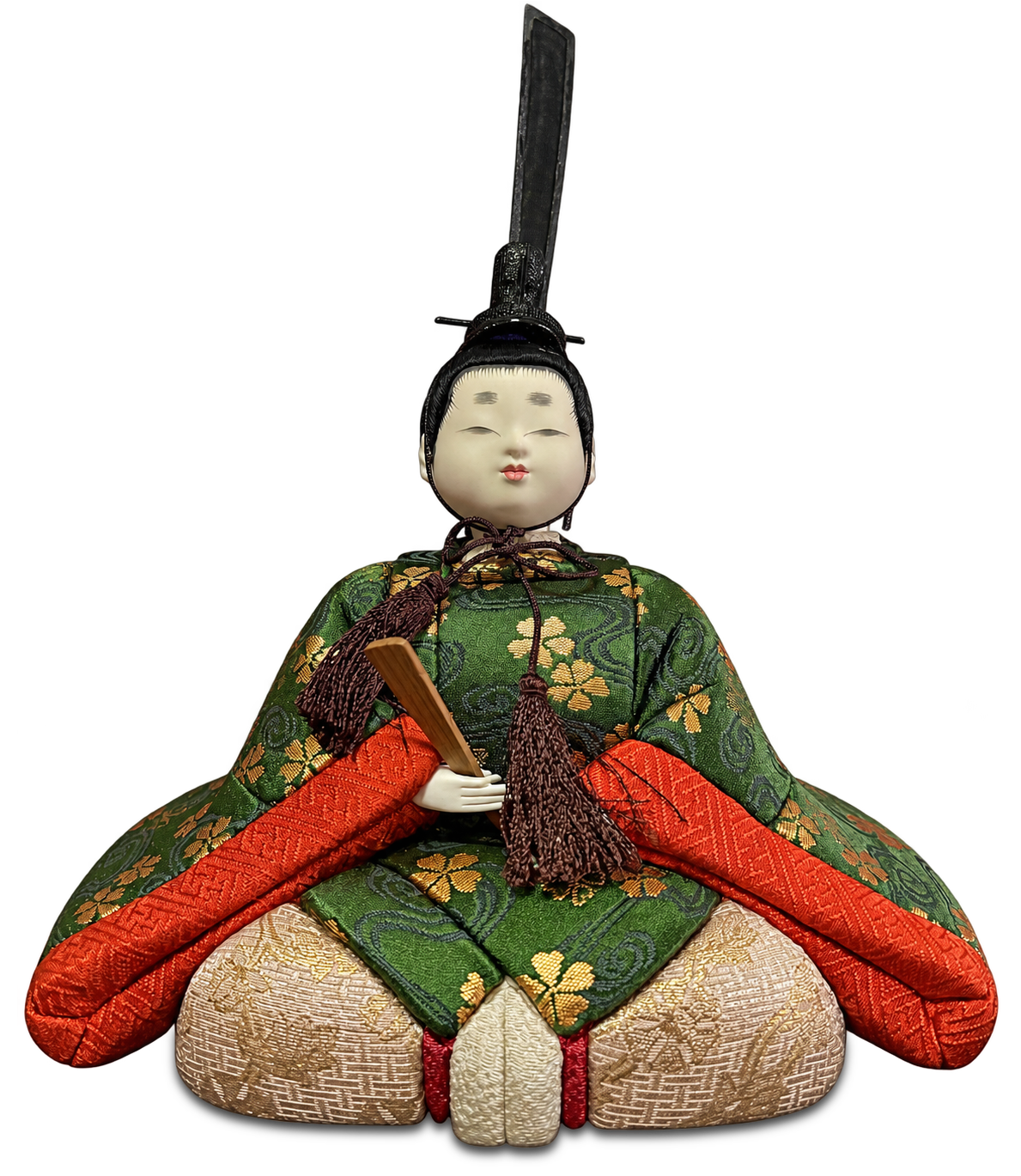
Bird watching, the Mediterranean landscape, suiseki, bonsai, and Keidō are not separate stages of one life, but different ways of approaching the same reality: the contemplation of nature.

 We are born in a breath, and in a breath we return…

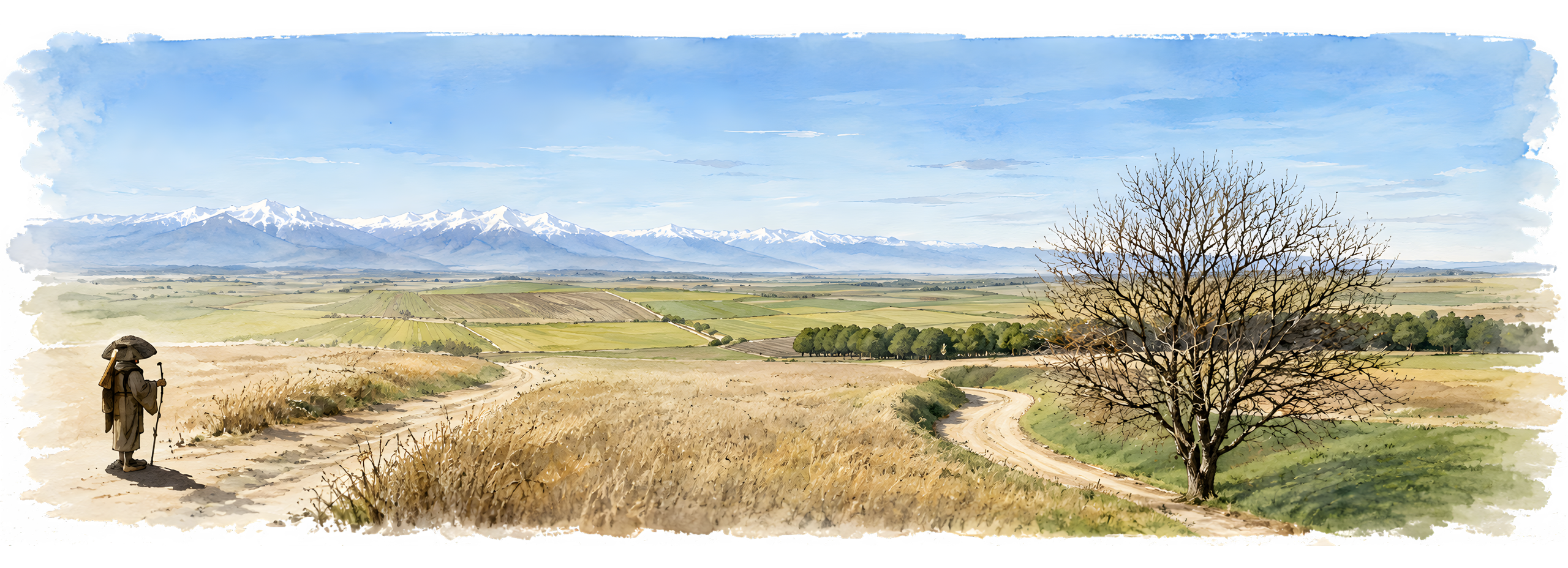
The Path of Landscape
Nature doesn't need grand landscapes to surprise us. Sometimes it's enough to stop, observe, and let what seemed insignificant slowly reveal its beauty.
In my journeys throughout the year, I keep finding small fragments of that world that usually goes unnoticed: a texture, a shape, a light, a plant, a stone, a moment.
This gallery gathers some of those encounters. A personal journey through the nature that surrounds me and through the things that manage to make me pause along the way.
Because perhaps one of the greatest spectacles within reach of our eyes is, simply, learning to contemplate nature.
We are all born with eyes. Learning to see is another path.
Glossary of Terms
A reasoned glossary of the Japanese terms used throughout this website, grouped according to the same sections in which they appear.
序 Hero 5 terms
- Keidō 景道
- Japanese art of composing a contemplative landscape using bonsai, suiseki, hanging scrolls, and other traditional elements. Its aim is to express harmony between nature, space, and the season of the year.
- Katayama-ryū 片山流
- School or lineage founded in 1986 in which Keidō is practiced and transmitted. Ryū literally means “school” or “lineage.”
- Iemoto 家元
- Master who heads a traditional Japanese school and ensures the transmission of its lineage, teachings, and authenticity.
- Shunkaen 春花園
- Bonsai museum in Tokyo and an internationally recognized center where part of the training described on this website takes place.
- Suiseki 水石
- Japanese art of appreciating naturally formed stones that evoke landscapes, mountains, or figures, without artificial alteration.
道 The Path 12 terms
- Kazari 飾り
- Art of arranging bonsai, suiseki, hanging scrolls (kakejiku) and other elements within a display space (tokonoma), according to seasonal and formal principles.
- Gō 号
- Artistic or transmission name bestowed by a master upon a disciple in recognition of their integration into a lineage.
- Natori 名取
- Formal recognition granted by a traditional Japanese school certifying a specific level of training and authorizing the use of an artistic name.
- Hanko 判子
- Traditional Japanese personal seal, hand-carved, and used to authenticate documents, artworks, and certificates.
- Taikanten 大観展
- One of Japan’s major annual bonsai exhibitions, alongside the Kokufu-Ten, where distinguished masters and students exhibit their work.
- Makimono 巻物
- Traditional Japanese scroll; here, the document certifying formal inclusion in a lineage genealogy (keizu).
- Keizu 系図
- Genealogical record tracing the succession of masters and disciples within a traditional artistic lineage.
- Kakejiku 掛軸
- Hanging scroll, usually featuring calligraphy or painting, displayed as part of a composition in the tokonoma.
- Ichiji-hairyō 一字拝領
- Ceremony in which a master grants a disciple one kanji character from the master’s own name as a symbol of lineage and continuity.
- Shūryōshō 修了証
- Completion certificate, hand-calligraphed by the master, formally certifying the completion of a stage of training within the lineage.
- Zengo 禅語
- Brief Zen expression, often transmitted in writing or through calligraphy, whose condensed meaning calls for reflective reading beyond its literal sense.
- Matsuo Bashō 松尾芭蕉 (1644–1694)
- Japanese poet of the Edo period, regarded as the most influential master of haiku. His travel poetry, centered on the contemplation of nature, remains a constant reference within Keidō.
系 The Lineage 12 terms
- Tokonoma 床の間
- Recess or alcove in traditional Japanese architecture intended to display an artwork of particular importance, such as a bonsai, suiseki, or kakejiku.
- Sukiya 数寄屋
- Refined and understated architectural style derived from the Japanese tea ceremony, from which the design of the tokonoma evolved.
- Muromachi Period 室町時代 (1336–1573)
- Historical period during which many traditional Japanese arts that shaped the tokonoma and the aesthetics of Keidō became established.
- Sen no Rikyū 千利休 (1522–1591)
- Master who codified the Japanese tea ceremony and established aesthetic principles that influenced many traditional Japanese arts.
- Wabi-sabi 侘寂
- Japanese aesthetic ideal that finds beauty in simplicity, imperfection, and the passage of time.
- Senpai 先輩
- Member with greater experience or seniority within the same school or learning group who serves as a guide for newer members.
- Furoshiki 風呂敷
- Traditional Japanese wrapping cloth used to carry and present objects with elegance and respect, particularly in ceremonial contexts.
- A-Un 阿吽
- Buddhist and Zen concept representing beginning and end as an inseparable unity, symbolizing continuity and harmony.
- Shodō 書道
- Japanese art of calligraphy, practiced through various writing styles ranging from formal to highly cursive.
- Noh theater 能
- Classical form of Japanese theater, ceremonial and stylized in character, that uses masks, music, and movement to portray spiritual and legendary subjects.
- Okina 翁
- One of the oldest and most venerated pieces in Noh theater, ritual rather than dramatic in character; its character, portrayed with an old man’s mask, symbolizes longevity, peace, and blessing.
- Sumi-e 墨絵
- Japanese ink painting based on simplicity, the expressiveness of the brush and the use of empty space.
想 Philosophy 5 terms
- Bonsaidō / Suisekidō 盆栽道・水石道
- The understanding of bonsai and suiseki as ways (dō, 道) of artistic refinement and personal development.
- Shitakusa 下草
- Accent plant accompanying the main bonsai within a kazari composition, providing seasonal context and visual balance.
- Tenkei / Tenpai 添配
- Small decorative figure or object that accompanies a composition to reinforce its atmosphere or suggest a scene.
- Zen 禅
- School of Buddhism centered on meditation and direct experience, whose aesthetic sensibility inspires Keidō without constituting a religious practice within this discipline.
- Haiku 俳句
- Traditional Japanese short poem centered on the contemplation of nature and the changing seasons.
石 The Way of Suiseki 7 terms
- Mitate 見立て
- The act of recognizing within a stone the suggestion of a landscape, a mountain, or any other natural form, without altering it—the central principle of suiseki appreciation.
- Ma 間
- The meaningful interval or emptiness within a composition and within the Japanese space of contemplation; the place where beauty can breathe.
- Shakkei 借景
- “Borrowed scenery”: the principle by which a composition or space opens outward, evoking wider panoramas than those it physically contains.
- Yūgen 幽玄
- Profound, suggested beauty that is never revealed in full, characteristic of classical Japanese aesthetics.
- Suibans 水盤
- Flat ceramic trays without a drainage hole, used to present suiseki stones or landscape compositions with water and sand, unlike the bonsai’s perforated pot.
- Kusamono 草物
- A composition of small wild grasses and plants grown in a pot or container, displayed on its own in the tokonoma or as an accompaniment (shitakusa) to a bonsai.
- Shoku 卓
- A wooden table or stand used to raise and set off the presentation of a suiseki, bonsai, or other object displayed in the tokonoma.
塾 School 1 term
- Happi 法被
- Traditional short Japanese coat worn during festivals, ceremonies, and other cultural occasions.
学 Training 4 terms
- Kokufu-Ten 国風展
- Japan’s most prestigious bonsai exhibition and one of the foremost international references for the art of bonsai.
- Nebari 根張り
- Visible surface roots at the base of a bonsai trunk, considered one of the tree’s most important aesthetic features.
- Shin-gyō-sō 真行草
- Japanese system of three degrees of formality (formal, semi-formal, and informal) applied to disciplines such as calligraphy, the tea ceremony, and kazari.
- Kata 型
- Traditional model or pattern of learning based on conscious repetition until its principles become fully internalized.
形 Bonsai Styles 7 terms
- Chokkan 直幹
- Formal upright style: a straight, vertical trunk with branches arranged in a symmetrical, balanced structure.
- Moyogi 模様木
- Informal upright style, with gentle, natural curves in the trunk; one of the most common styles in bonsai.
- Sokan 双幹
- Twin-trunk style, in which two trunks grow from a shared base, representing a primary element and a secondary one.
- Kengai 懸崖
- Cascade style, in which the trunk descends below the base of the pot, evoking a tree growing over a cliff.
- Han-kengai 半懸崖
- Semi-cascade style, a variant of Kengai in which the trunk descends without falling below the base of the pot.
- Bunjingi 文人木
- Literati style: a slender, sinuous trunk left largely bare of branches until near the apex, with a painterly, poetic inspiration.
- Fukinagashi 吹き流し
- Windswept style, in which branches and foliage lean toward one side, as if the tree had grown under constant wind.
匠 Training (Master’s Program) 3 terms
- Metsumi / Mekiri / Mekaki / Hagari 芽摘み・芽切り・芽かき・葉刈り
- Collection of specialized pruning and pinching techniques for conifers used to control vigor, branching, and tree structure.
- Shibui 渋い
- Japanese aesthetic quality characterized by understated beauty, restraint, and quiet elegance.
- Jin / Shari / Sabamiki / Tanuki 神・舎利・裂幹・狸
- Advanced deadwood techniques in bonsai used to express the passage of time and the effects of natural forces on the tree.
師 Teaching 7 terms
- ABE-AEB
- Acronym for the Asociación del Bonsái Español, Spain’s leading organization for the promotion and dissemination of bonsai.
- BCI
- Acronym for Bonsai Clubs International, an international organization dedicated to the promotion and advancement of bonsai and suiseki.
- WBU
- Acronym for World Bonsai University, an international educational platform specializing in bonsai.
- WORBAC
- Acronym for World Bonsai Artists Community, an international community of bonsai artists founded by Robert Steven.
- NBA
- Acronym for the Nippon Bonsai Association, the Japanese organization devoted to the preservation and promotion of bonsai.
- Liga Bonsái
- Chilean organization dedicated to the promotion and teaching of bonsai through exhibitions, talks, and international seminars.
- CEART
- Centro de Arte Tomás y Valiente, a municipal cultural center in Fuenlabrada (Madrid) dedicated to the visual and performing arts.
会 Traditional Arts 8 terms
- Rokkon Shōjō 六根清浄
- Buddhist expression referring to the purification of the six senses; it lends its name to the International Meeting of Traditional Japanese Arts held at CEART in Fuenlabrada in March 2026.
- Chadō 茶道
- “The Way of Tea”: the traditional Japanese ceremony of preparing and offering matcha, understood as an aesthetic and spiritual discipline.
- Chōzubachi 手水鉢
- Stone basin used in Japanese gardens and in the tea ceremony for the ritual washing of hands, traditionally accompanied by a hishaku (柄杓), a bamboo ladle.
- Ikebana 生け花
- Japanese art of flower arrangement, based on balance, line, and empty space.
- Nihon Buyō 日本舞踊
- Traditional Japanese classical dance, historically linked to Kabuki theater.
- Taiko 太鼓
- Traditional Japanese drum; the term is also used for the percussion ensembles that perform with it.
- Tsumami Zaiku つまみ細工
- Japanese craft technique of folding small squares of fabric to create flowers and decorative motifs.
- Koto 琴
- Japanese plucked string instrument, one of the country’s traditional zithers.
蔵 Collection 18 terms
- Sansui Keijō-seki 山水景情石
- Classical category of suiseki consisting of stones that evoke natural landscapes such as mountains, coastlines, valleys, or waterfalls.
- Toyama-ishi 遠山石
- Distant mountain stone: a soft, blurred silhouette evoking a mountain range seen from far away.
- Yamagata-ishi 山形石
- Stone with a mountain-shaped silhouette; the most representative and recognizable form within this category.
- Kinzan-seki 近山石
- Nearby mountain stone, with a sharper, more detailed profile than the Toyama-ishi.
- Rempo-seki 連峰石
- Mountain range stone, depicting a chain of several linked peaks.
- Koho-seki 孤峰石
- Single isolated peak stone.
- Soho-seki 双峰石
- Twin-peak stone.
- Ippan-seki 一般石
- Solitary-peak stone set on a broad base; a general classification within single-peak mountain stones.
- Dan-seki 段石
- Stone with a predominantly flat profile, featuring a raised terrace- or plateau-like area.
- Kenzan-seki 剣山石
- Stone with sharp, jagged peaks and an abrupt, cutting profile.
- Sanzan-seki 三山石
- Stone depicting three distinct peaks.
- Sekkei-ishi 雪渓石
- Stone whose pale veining evokes snow lying across a valley or mountainside.
- Hashi-ishi 橋石
- Stone featuring a natural opening or arch that suggests a bridge.
- Funagata-ishi 舟形石
- Stone whose silhouette resembles a boat.
- Sugata-ishi / Dōbutsu-seki 姿石 / 動物石
- Categories of suiseki whose shapes resemble human figures, deities, animals, or other recognizable forms.
- Mame 豆
- Miniature size category applied to both bonsai and miniature suiseki.
- Mon'yō-seki / Eshō-seki 紋様石 / 絵象石
- Categories of suiseki valued for their natural patterns, veining or pictorial surface markings.
- Keishō-seki 景勝石
- Category of suiseki comprising stones that evoke landscapes or scenes of exceptional scenic beauty.
春 Video / Shunkaen 2 terms
- Chashitsu 茶室
- Traditional Japanese tea room designed as a space for the tea ceremony, characterized by simplicity, contemplation, and tranquility.
- Kokoro 心
- A word hard to translate with a single term: it can mean heart, mind, or spirit, but above all it expresses the unity of all three. Technique can be taught; kokoro can only be revealed over time.
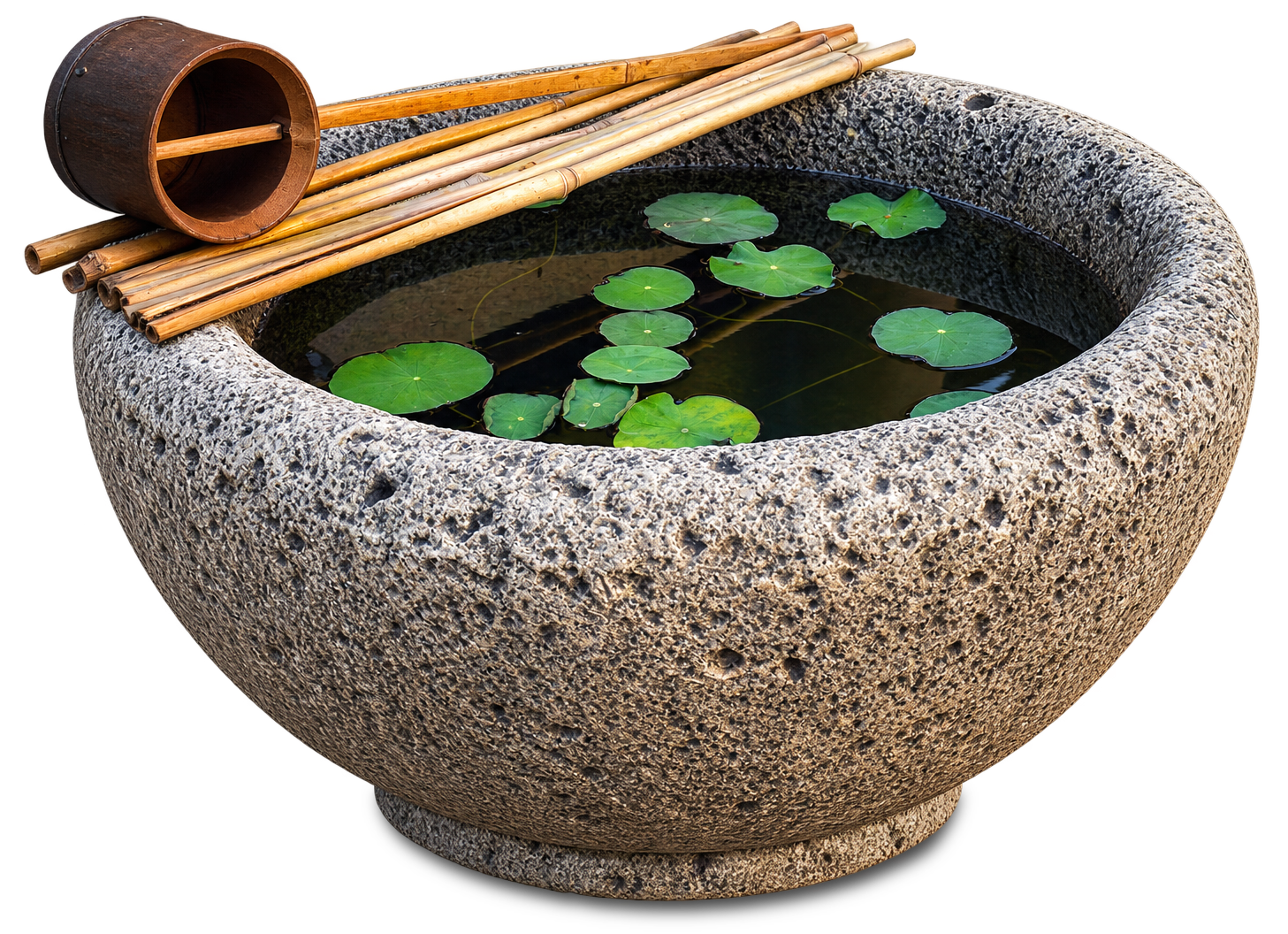
景道片山流
Keidō Katayama-ryū · The Way of the Landscape
One Path Madrid · Tokyo · Shunkaen
2022–2026
Four years ago I began a path that seemed unattainable:
studying Keidō under Kobayashi Kunio, III iemoto of the
Keidō Katayama-ryū school—a venerated master in Japan,
the foremost reference in contemporary bonsai.
He accepted me.
I studied remotely for a year and a half, in a format without precedent.
On completing that cycle, I received my first diploma,
signed and sealed by the iemoto.
The guardian of the lineage granted me my art name:
A name built with profound philosophical intent.
No one in the West had ever received a natori from this school.
I traveled to Tokyo for an in-person residency of study and evaluation.
On its completion, the iemoto hand-calligraphed my second diploma:
more than sixty kanji personally brushed,
numbered No. 1 among all his Western disciples.
I returned to Shunkaen and received an official recognition from the school:
an artistic name of a single kanji, 謙, calligraphed on a kakejiku,
and the transmission document that inscribes me as belonging to the school.
景道片山流 · III Iemoto Kobayashi Kunio · 一風 · Shunkaen Bonsai Museum, Tokyo
There are different ways of pursuing a path in bonsai and suiseki. Some are oriented toward participation in competitions and competitive exhibitions; others find their expression in study, research, teaching, and the transmission of knowledge. The path recorded on this page deliberately follows this latter orientation.
From the outset, this path has been founded on the study of Japanese tradition, ongoing training, research, teaching, and outreach, founded on the conviction that knowledge, sustained practice, and respect for the artistic and cultural legacy to which bonsai and suiseki belong form the foundation of a lasting dedication to these disciplines.