The path toward 謙
Madrid → Narita → Kyoto → Shunkaen → Fuji → Nikkō → Kamakura
Departure
Thirteen hours from Madrid to Narita, nonstop, along a route a geographer can't help but trace mentally: the great circle that climbs through the European Arctic, brushes past Scandinavia, crosses the Siberian taiga, and descends through Sakhalin to the Pacific. Window seat on the north side, out of habit. Down there, invisible at night but present on the mental map: the permafrost, the braided rivers of the Ob and the Lena, the steppe turning into boreal forest and then the Sea of Okhotsk. Somewhere over Siberia the plane crosses the night twice and loses count of what hour it's pretending to keep. I slept in fragments, poorly, with that light wakefulness of someone who knows there'll be no room for jet lag once we land: walking starts the very next day. There's something of mushin in it, a mind without anchor, in crossing time zones without resisting them: disorientation accepted as threshold, not setback.
Narita: First Contact
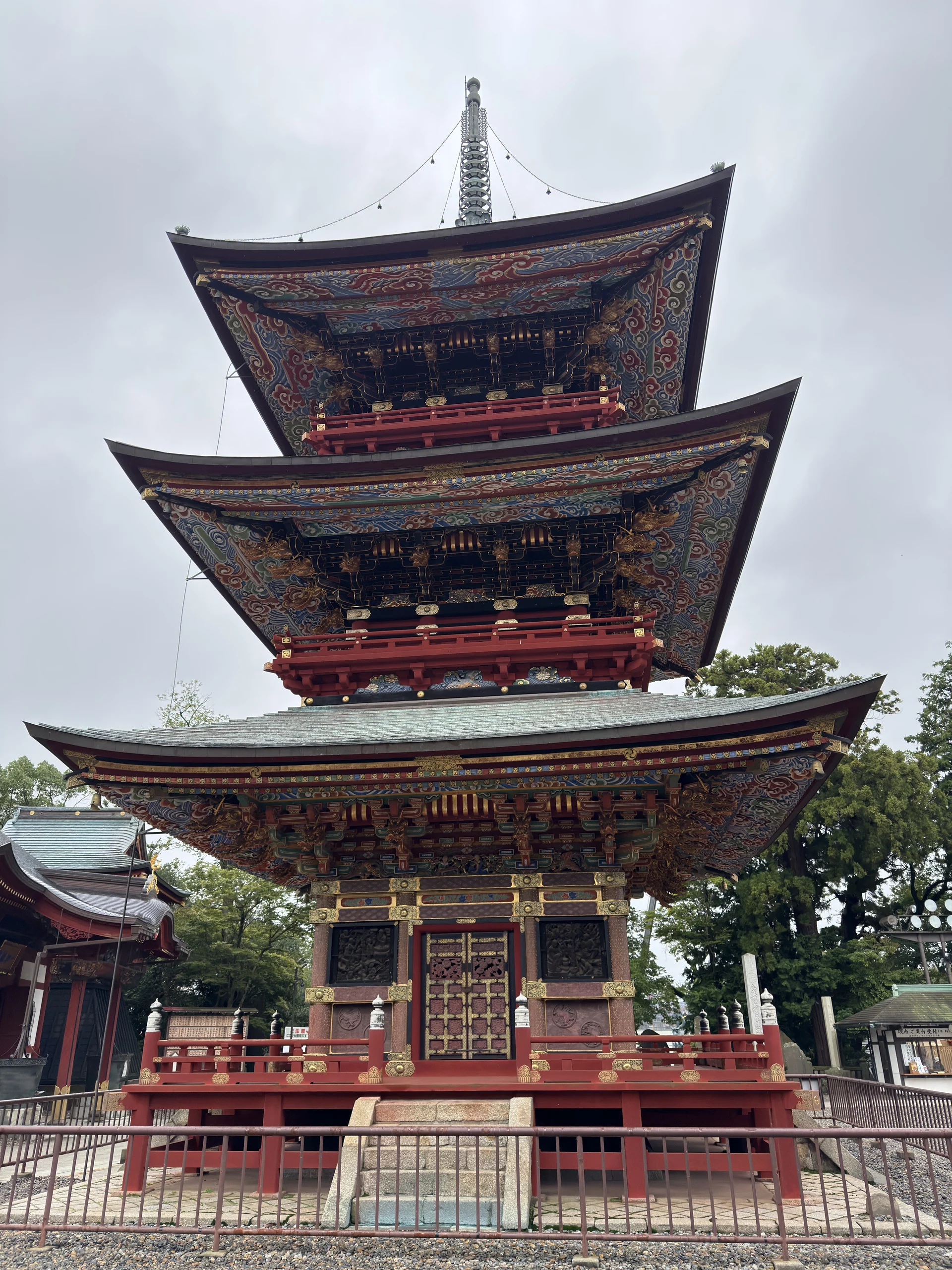
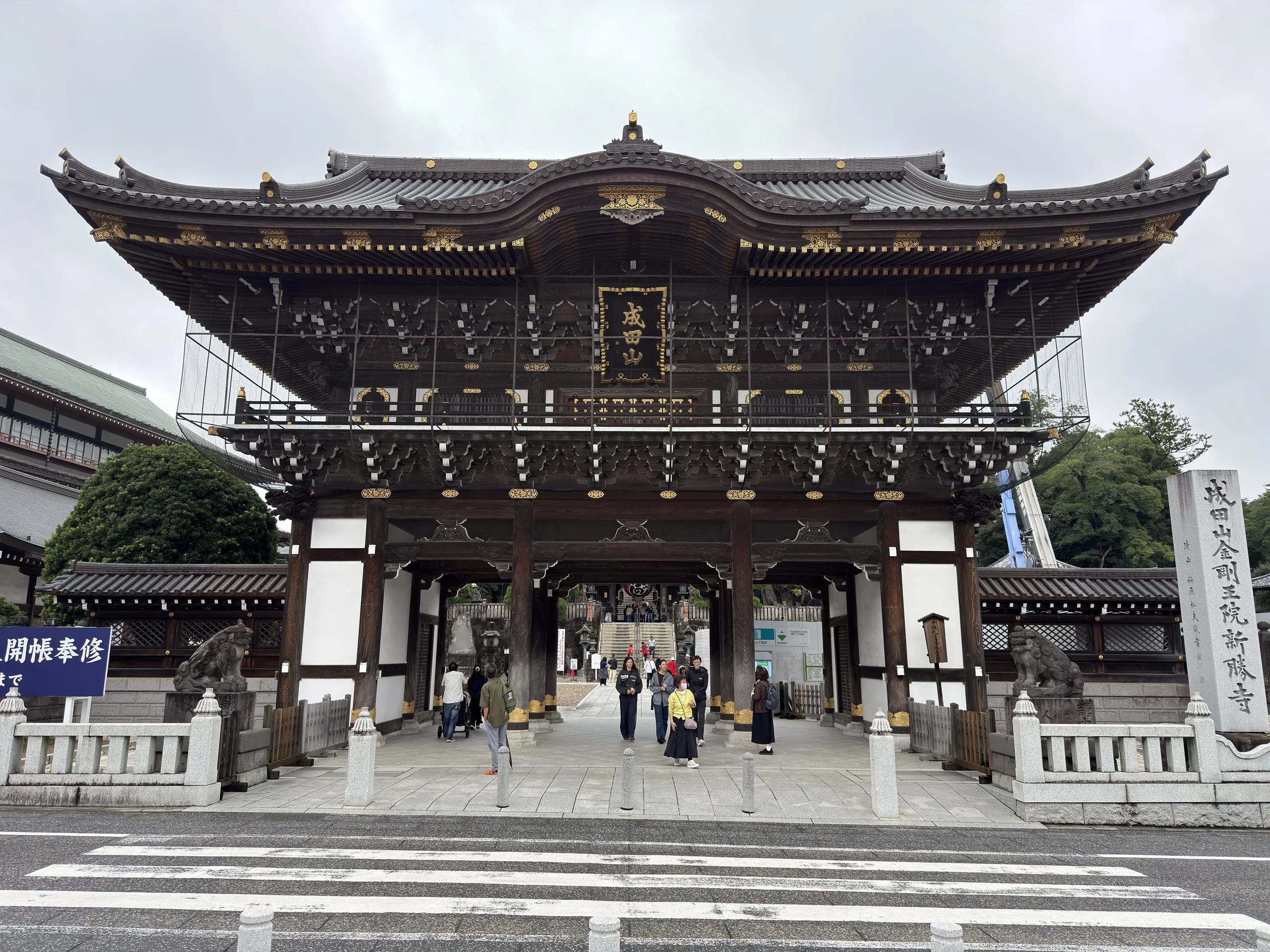
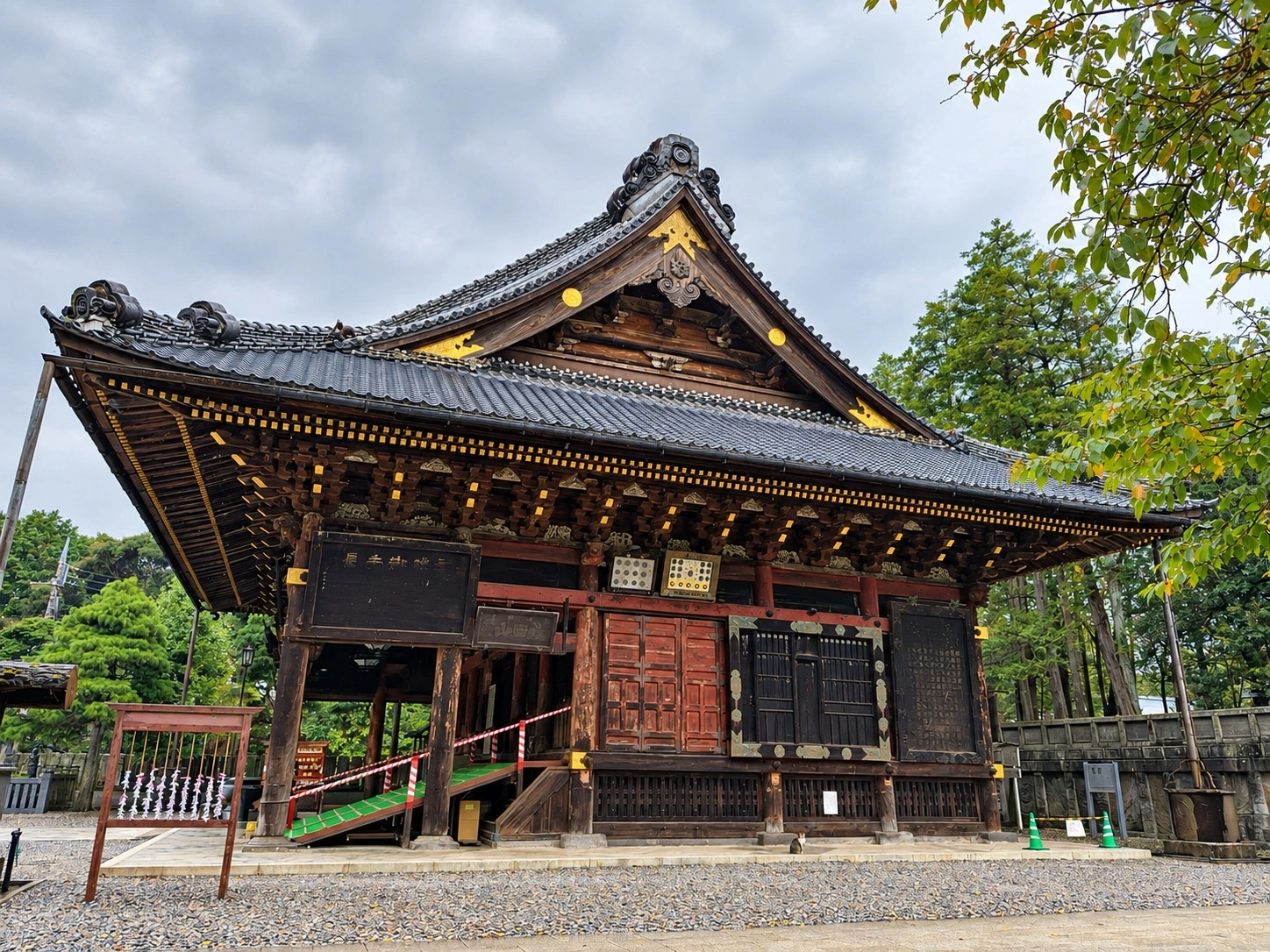
Naritasan Shinshōji, founded in the year 940, sits ten minutes from the airport, which never stops surprising me each time I confirm it: whoever arrives through Narita is, without knowing it, already walking on pilgrim ground, the same dust the travelers of Edo trod a thousand years before any runway existed. Crossing the Sōmon — barely treated zelkova wood, twelve zodiac animals carved above — is a real threshold: the ground changes, the air changes, and you don't need to know anything about doctrine to feel it. On either side of the Niōmon stand guard Naraen Kongō and Misshaku Kongō, one with mouth open, the other closed, the sounds "a" and "un" with which ancient Sanskrit marked the beginning and end of all things. In the Daihondō the goma fire burns six times a day before Fudō Myōō, the Immovable King of Wisdom, sword in one hand and rope in the other.
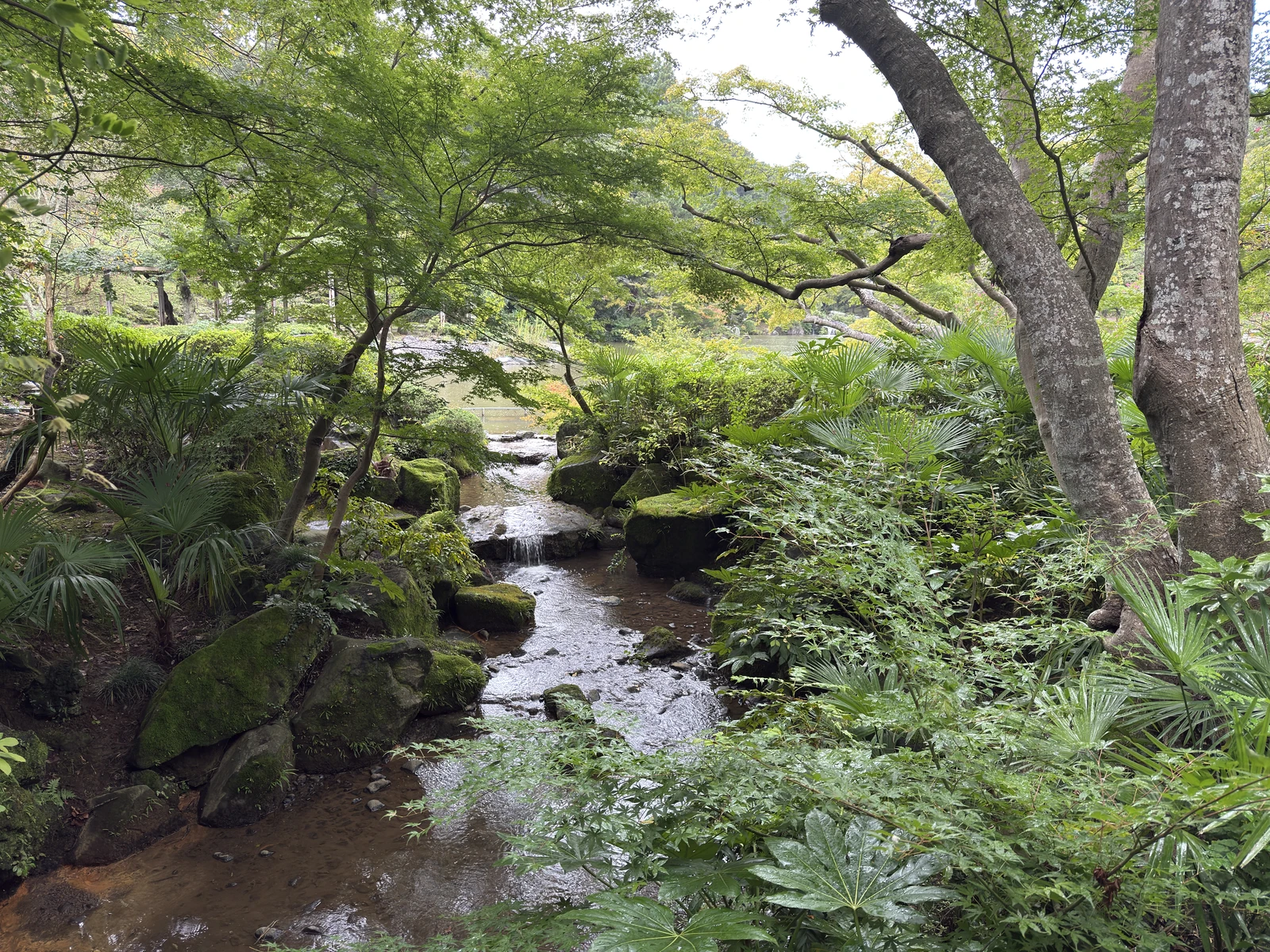
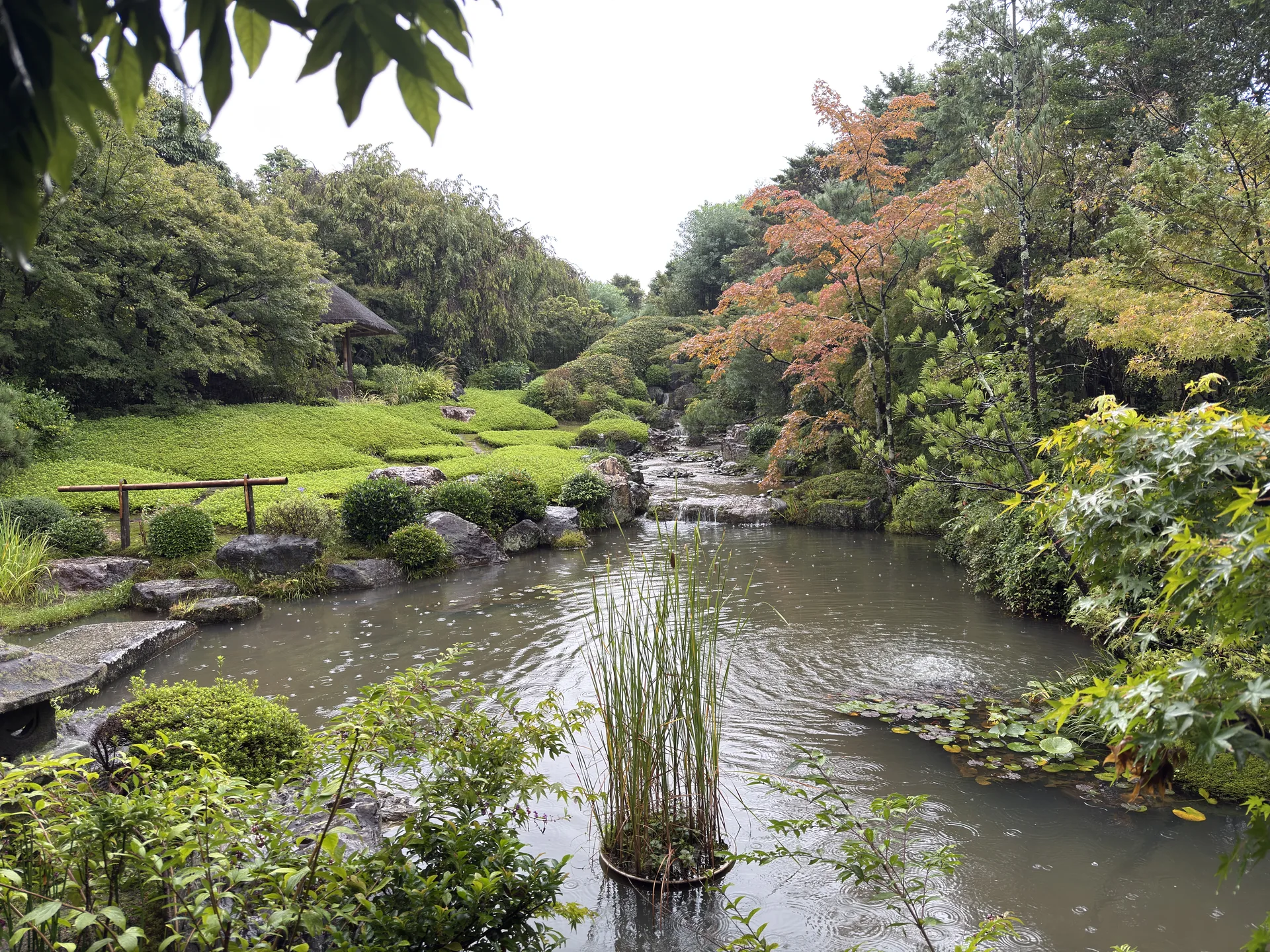
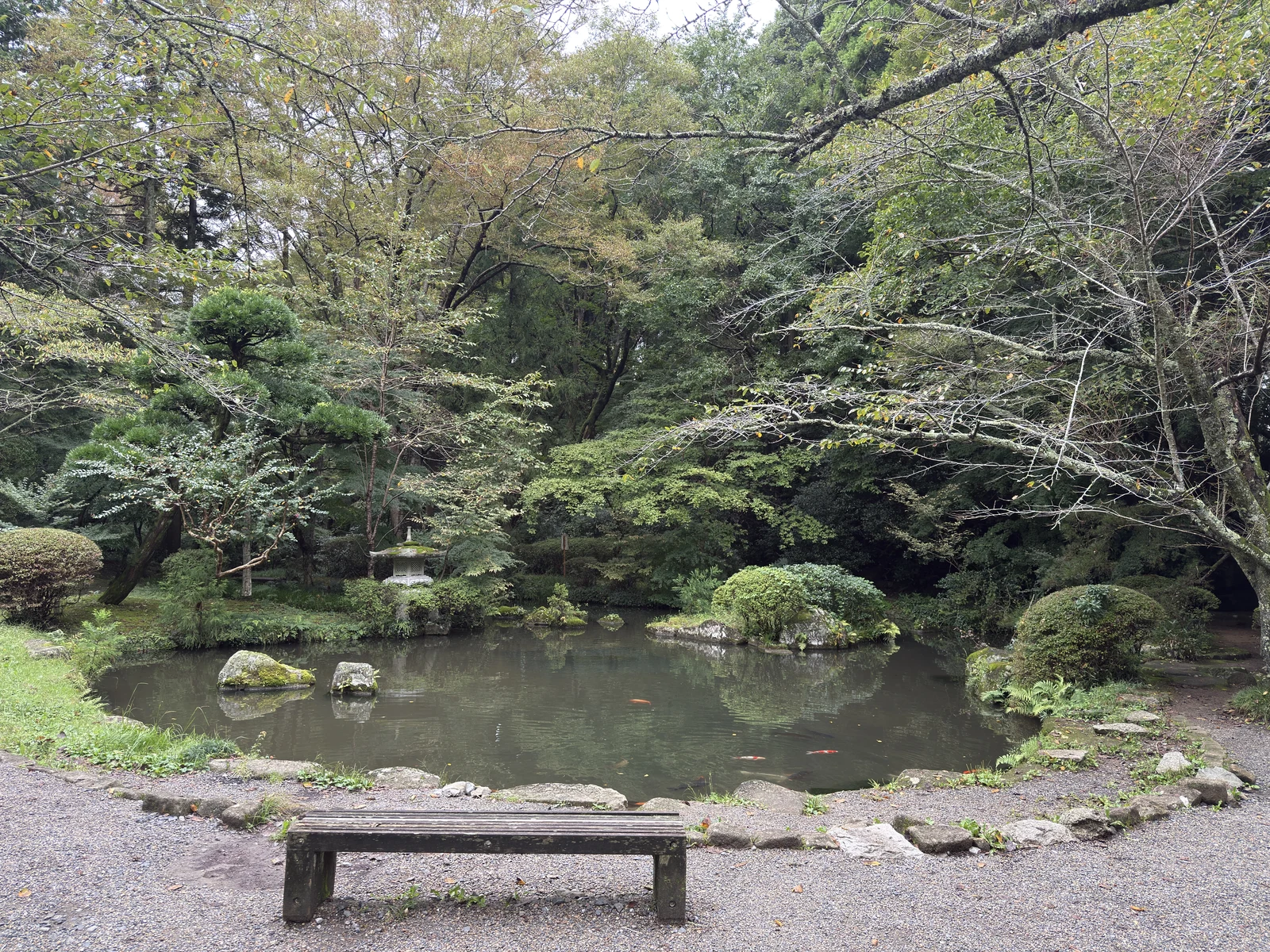
The three-story pagoda, from 1712, hides in its eaves a technical rarity still cited today: the clouds and water carved from a single piece of wood, without joints. But the real heart of the day lies further down, in the park: three ponds — Monju, Ryūju, Ryūchi — arranged with that same nothing-by-chance logic that governs any classical garden, and among the trees, stones engraved with haiku by Bashō and Takahama Kyoshi. Stone, word, landscape — the three materials of haiku converging at the same point: of the whole first day, it's the moment closest to my own sensibility, closer to Keidō than any named building. Cormorants perched on the canal posts, a grey heron motionless on the bank, hunting by waiting, with that predatory patience any suiseki master recognizes as his own — a professional habit, watching the birds before the temples. No agenda on the first day. Body clock still in Madrid, body in Chiba: two natures that will take time to meet, like a graft that takes time to take.
Sawara and the Katori Forest
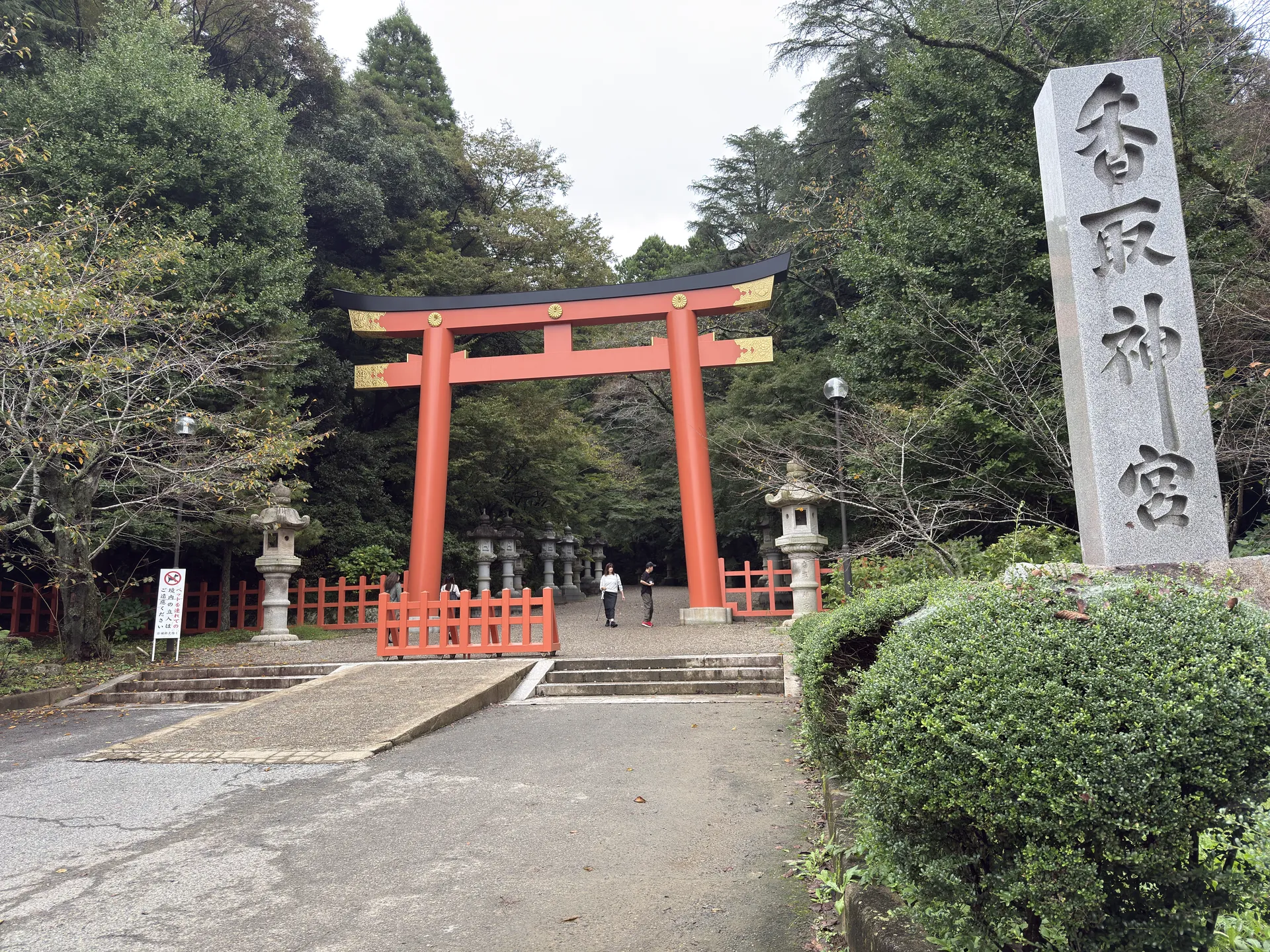
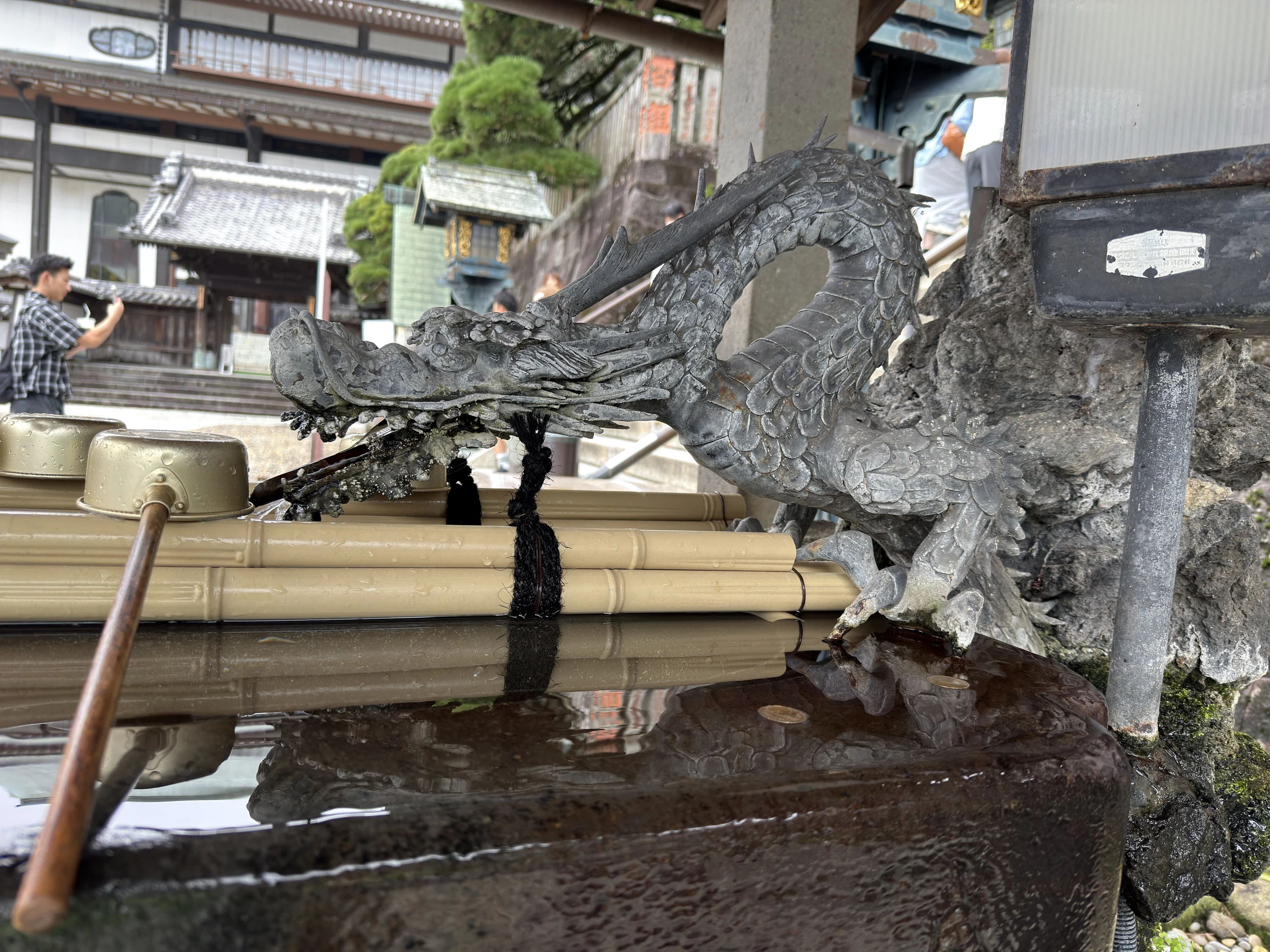
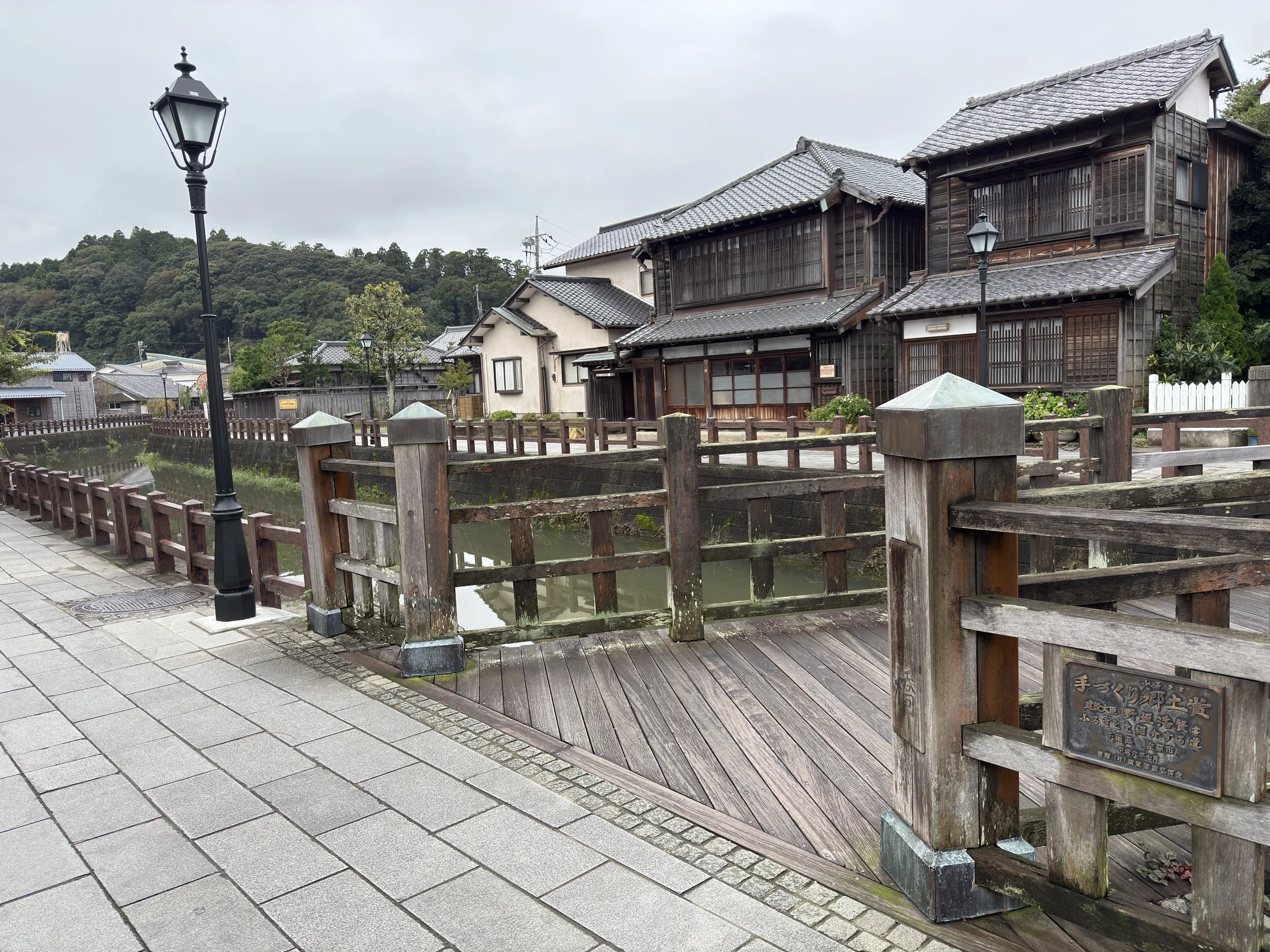
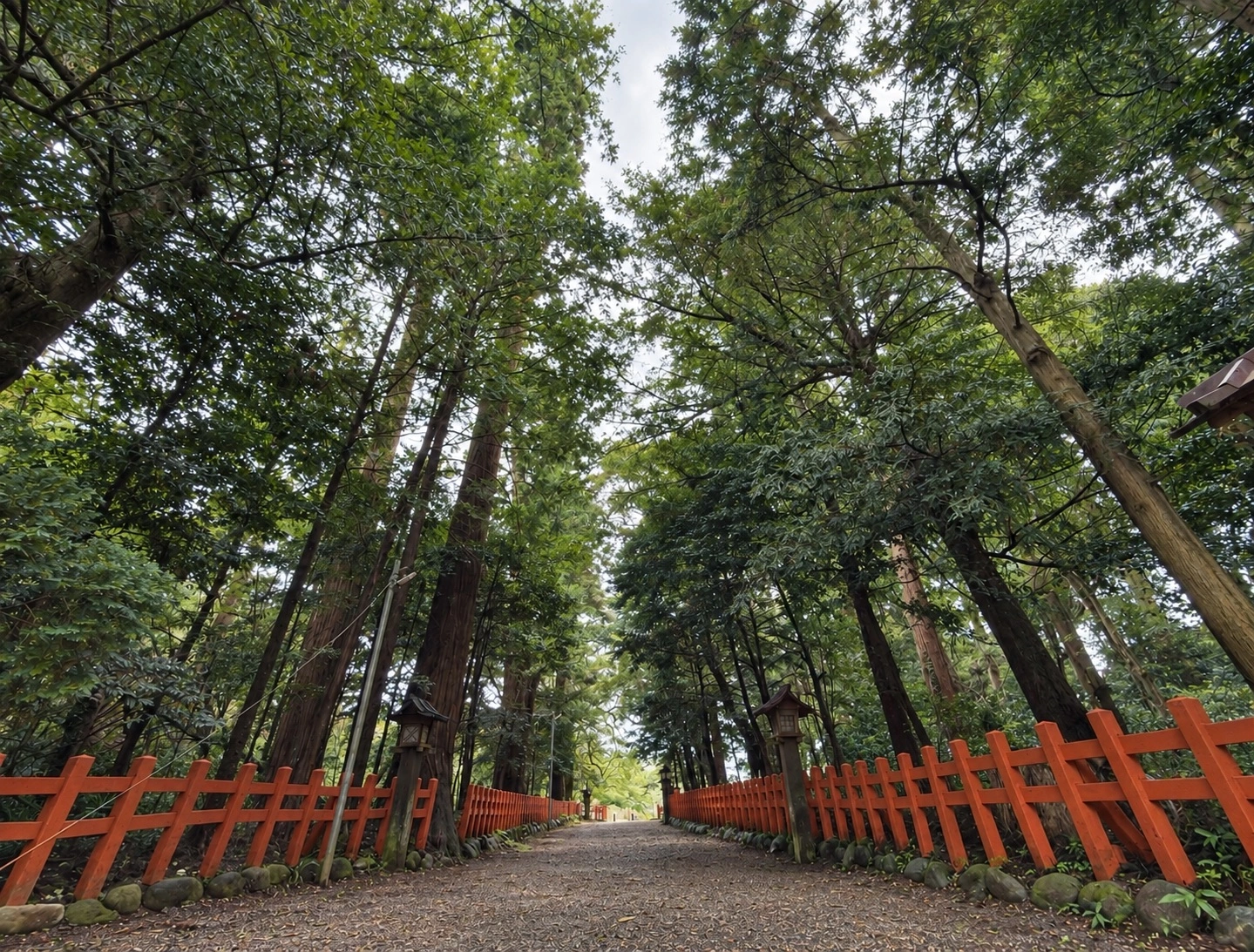
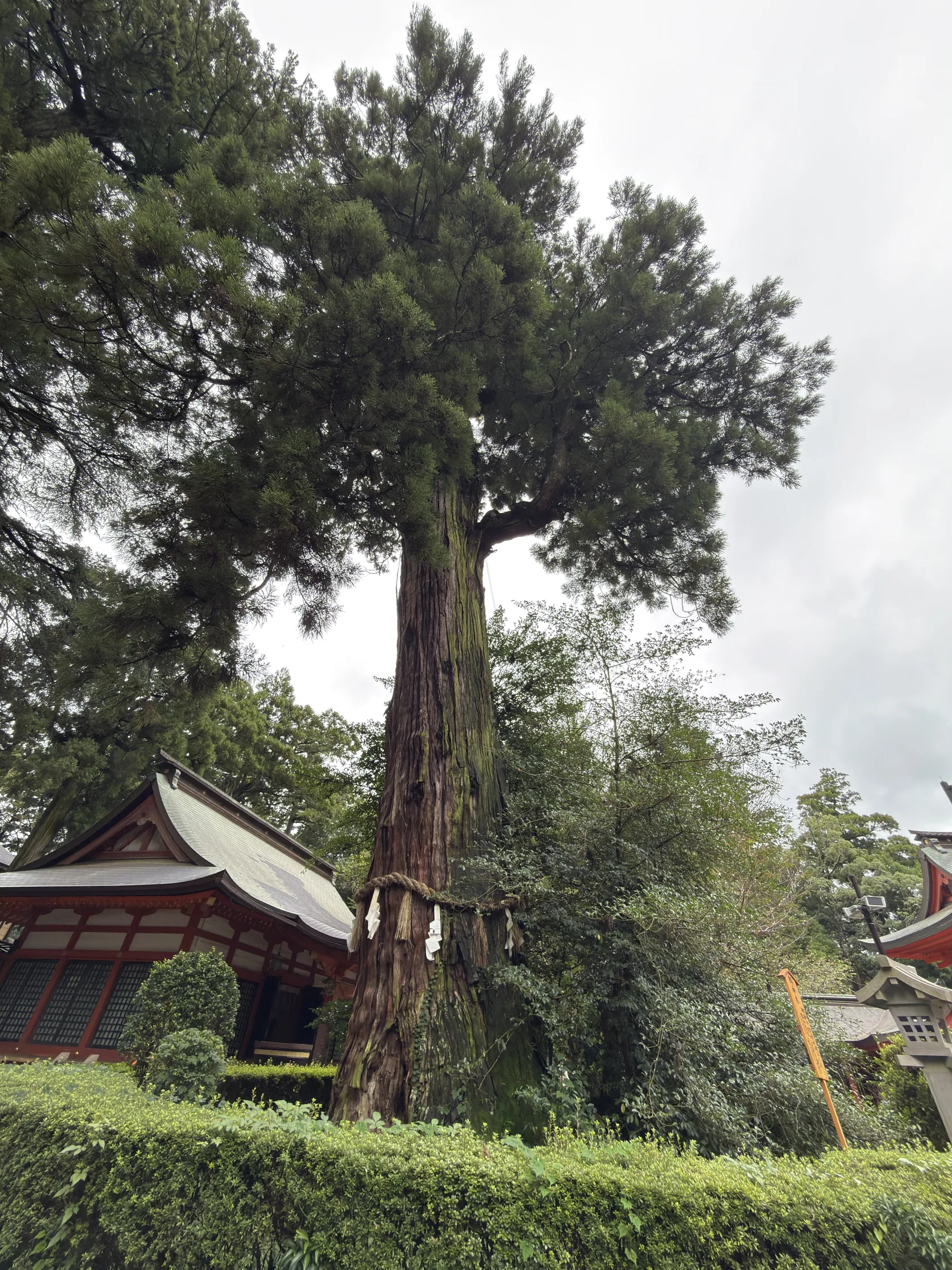
Half an hour by train toward Chōshi, and the landscape changes at once: already-harvested rice paddies across the deltaic plain of the Tone, still-water canals reflecting low clouds, Edo-period merchant houses lined up along the water in Sawara, witnesses to a time when the river was the only road. Four kilometers on foot to Katori Jingū, and from the Chōzuya begins a sequence of thresholds best crossed slowly, one by one: the entrance torii, which is no ornament but a border — crossing it distractedly is not crossing it at all; the stone sandō between century-old cedars, which is not a corridor toward the shrine but already part of it; the vermilion two-story Rōmon, built in 1700 by shōgun Tokugawa Tsunayoshi, with its Zuijin guardians on either side. The Honden, where Futsunushi no Ōkami resides, is not shown, and that not-showing is exactly the point: in Shinto, what is truly sacred is protected, suggested, never displayed — the same logic that governs the tokonoma, or ma. Behind it, deep in the forest, the Okumiya keeps the oldest and wildest form of the kami, prior to any formalized ritual; there the forest is not a frame, it is the shrine itself, and fifteen or twenty minutes of silence with no other purpose than presence are the only part of the day meant for doing nothing. Further on, the Kanameishi, a stone barely breaking the surface: tradition holds it pins down underground the head of a giant catfish, namazu, cause of earthquakes — no one has ever dug it up — and it expresses, with a precision any suiseki practitioner recognizes, how a single stone can condense an entire force, an entire landscape. Nearby, a centuries-old tree bound with a shimenawa rope: you walk around it slowly, the way you'd walk around a century-old bonsai, searching for the angle that reveals the most. Katori Jingū stands within a forest of cedars (sugi, Cryptomeria japonica) — trunks over a meter in diameter, fibrous bark, that near-black green found only in old conifers, the same patina of age pursued for decades in an exhibition shimpaku — and a solitary torii is planted downstream, on the bank of the Tone, between rice paddies and open sky: the kami belongs not only to the forest, but also to the water and the farmland surrounding it. Back in Sawara, the Ino Tadataka Museum commemorates a cartographer who walked the whole of Japan, between the ages of fifty-five and seventy-three, to produce the country's first precision map — his surveys, compared today with satellite images, match almost to the millimeter. There's something fraternal in that vocation: the geographer who walked an entire country on foot to truly know it isn't so different from the gardener who circles a tree, or a stone, until finding the single angle from which it's understood. On the way back, four or five kilometers between forest and paddies, with a black kite tracing high circles over the fields, reading the thermals rising from the harvested ground.
Kyoto: Four Days of Temples
Four almost-consecutive days of Zen temples, each with its own register, each a different lesson in landscape composition.
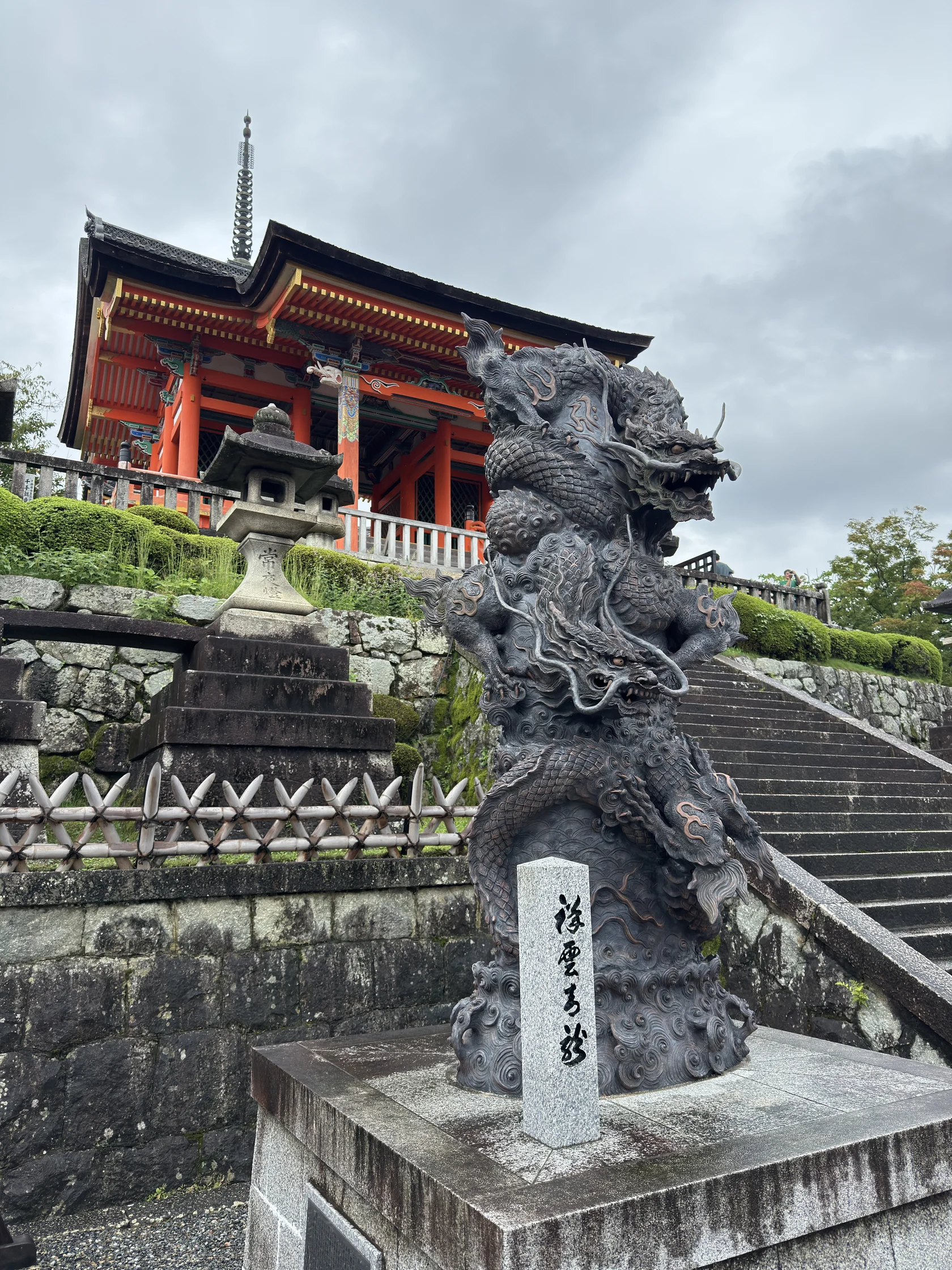
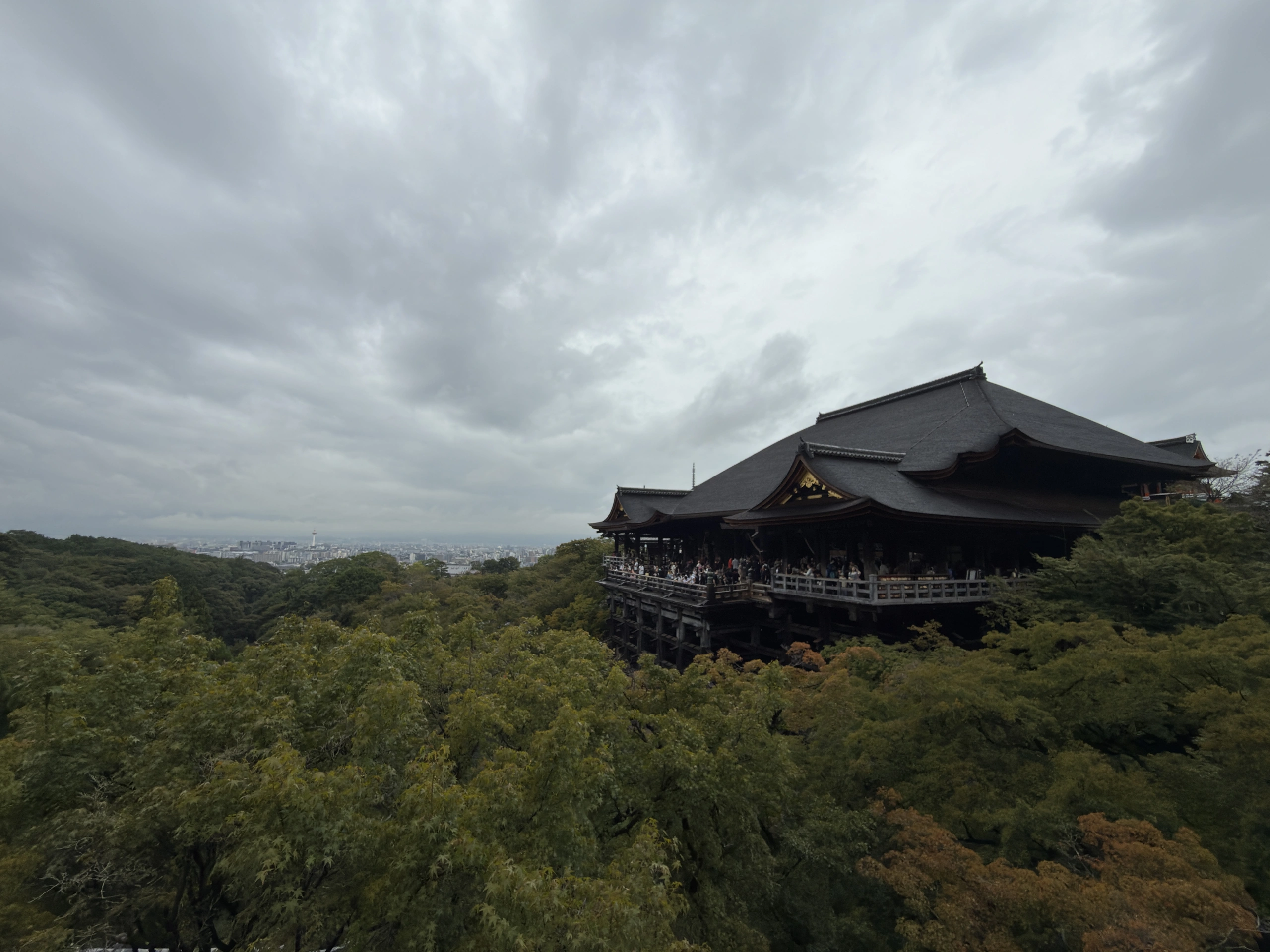
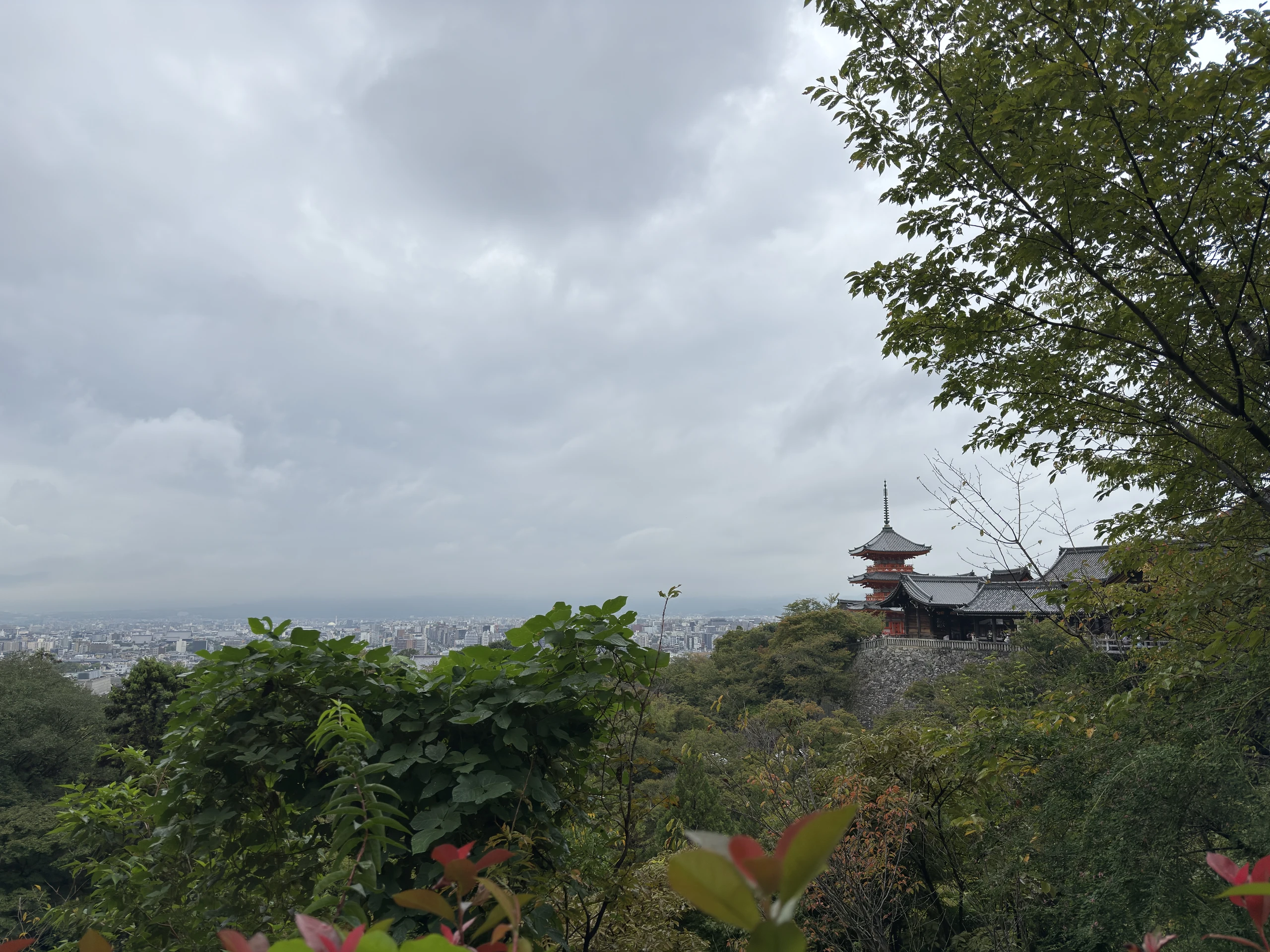
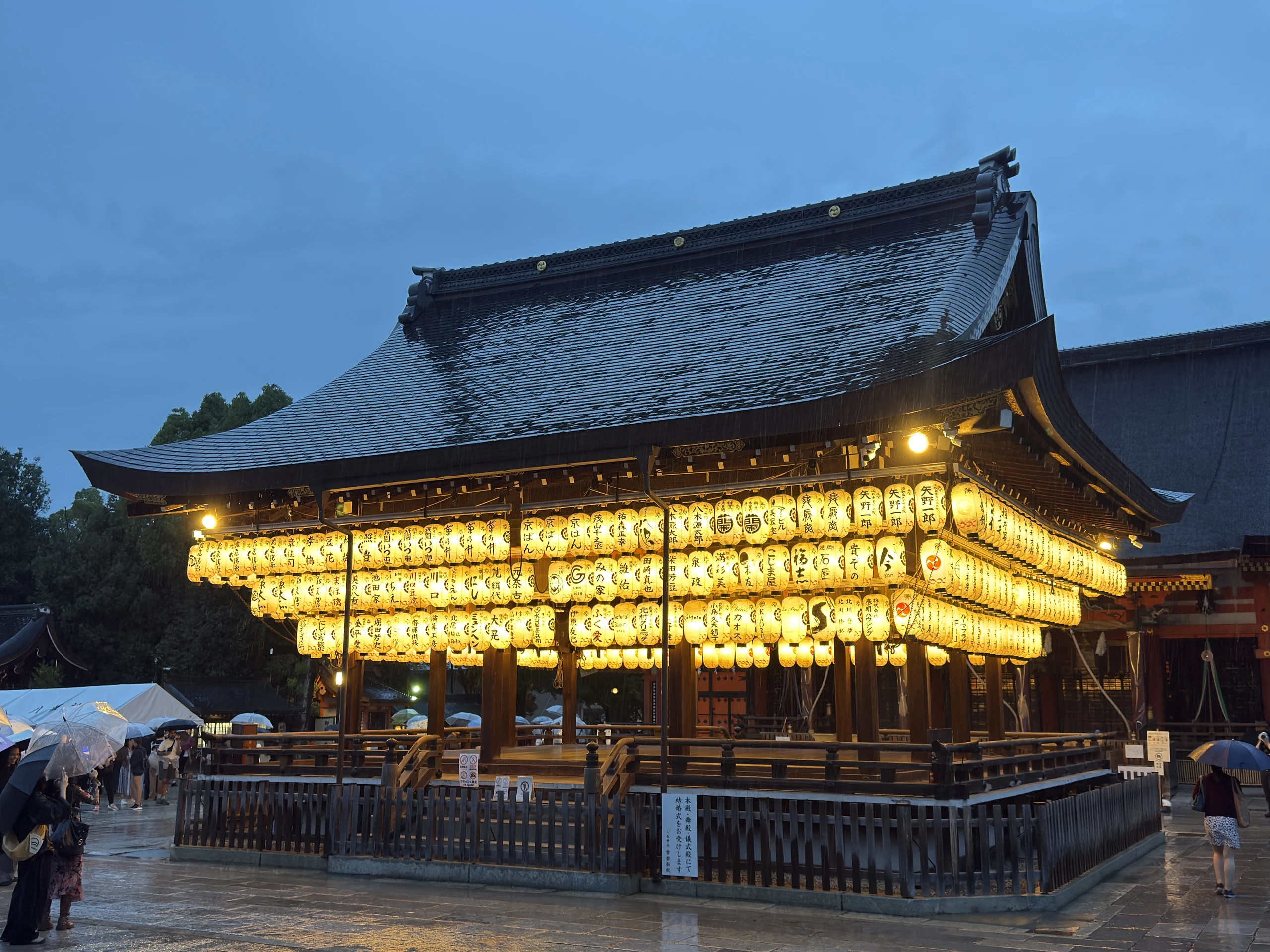
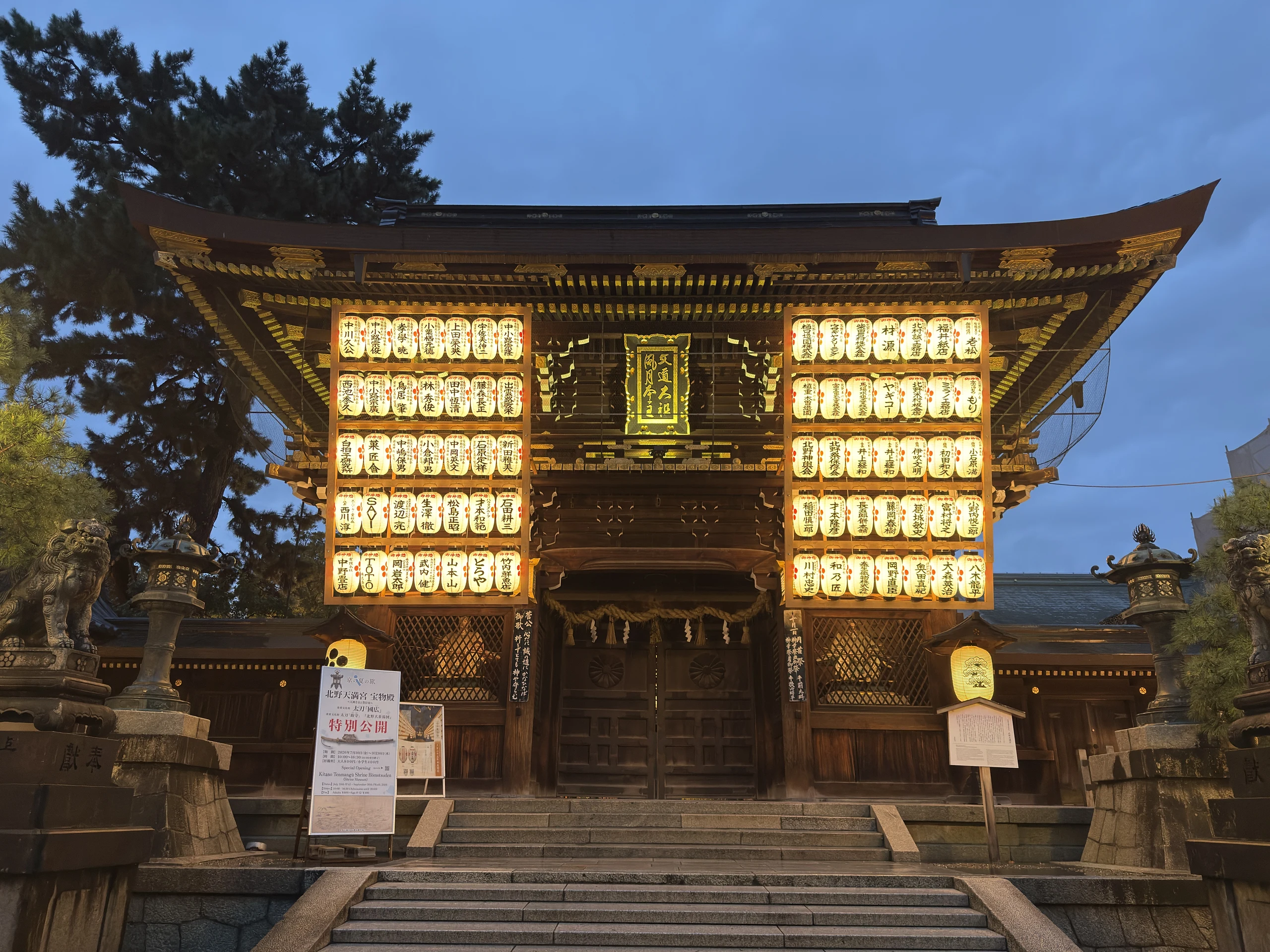
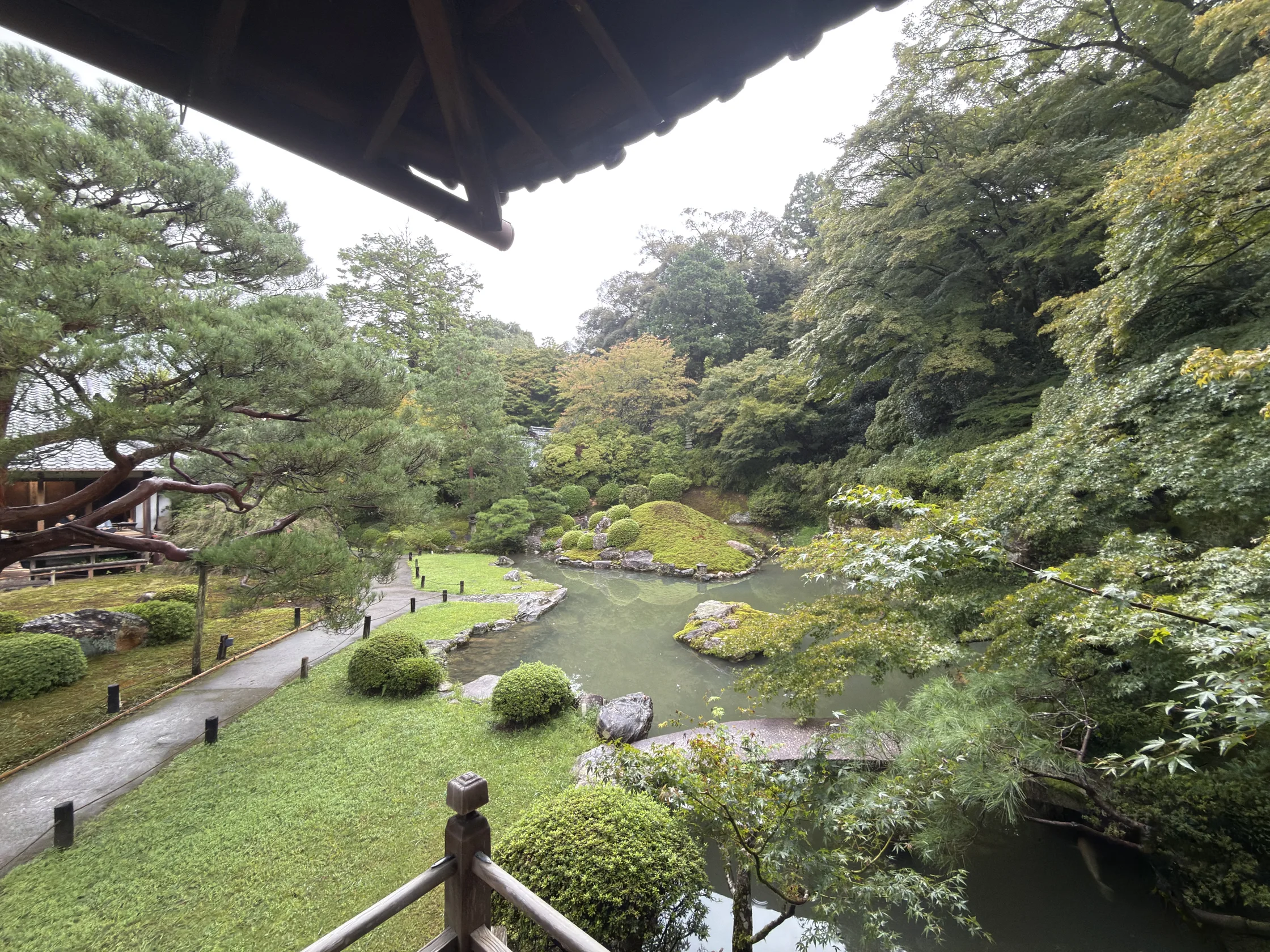
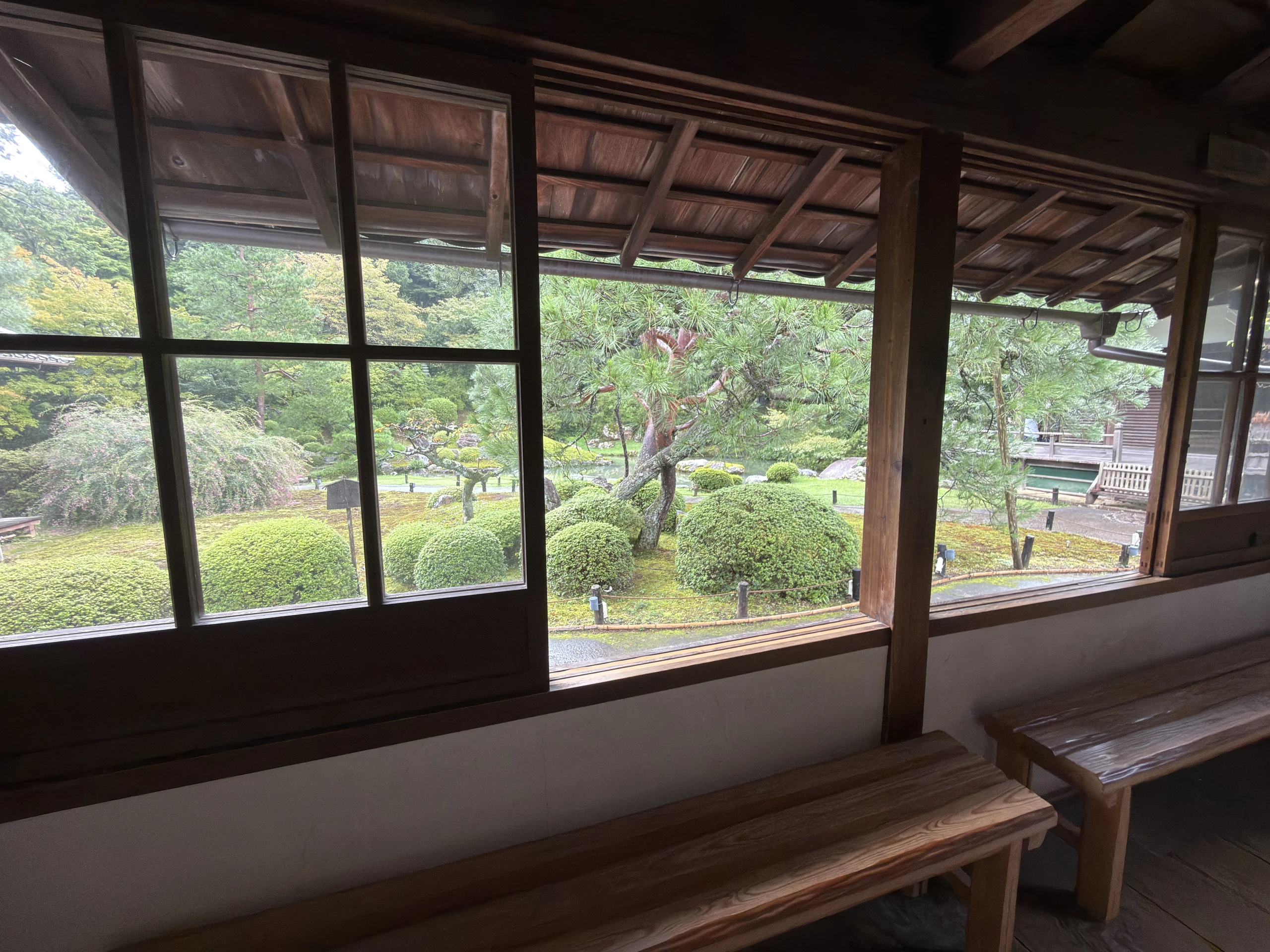
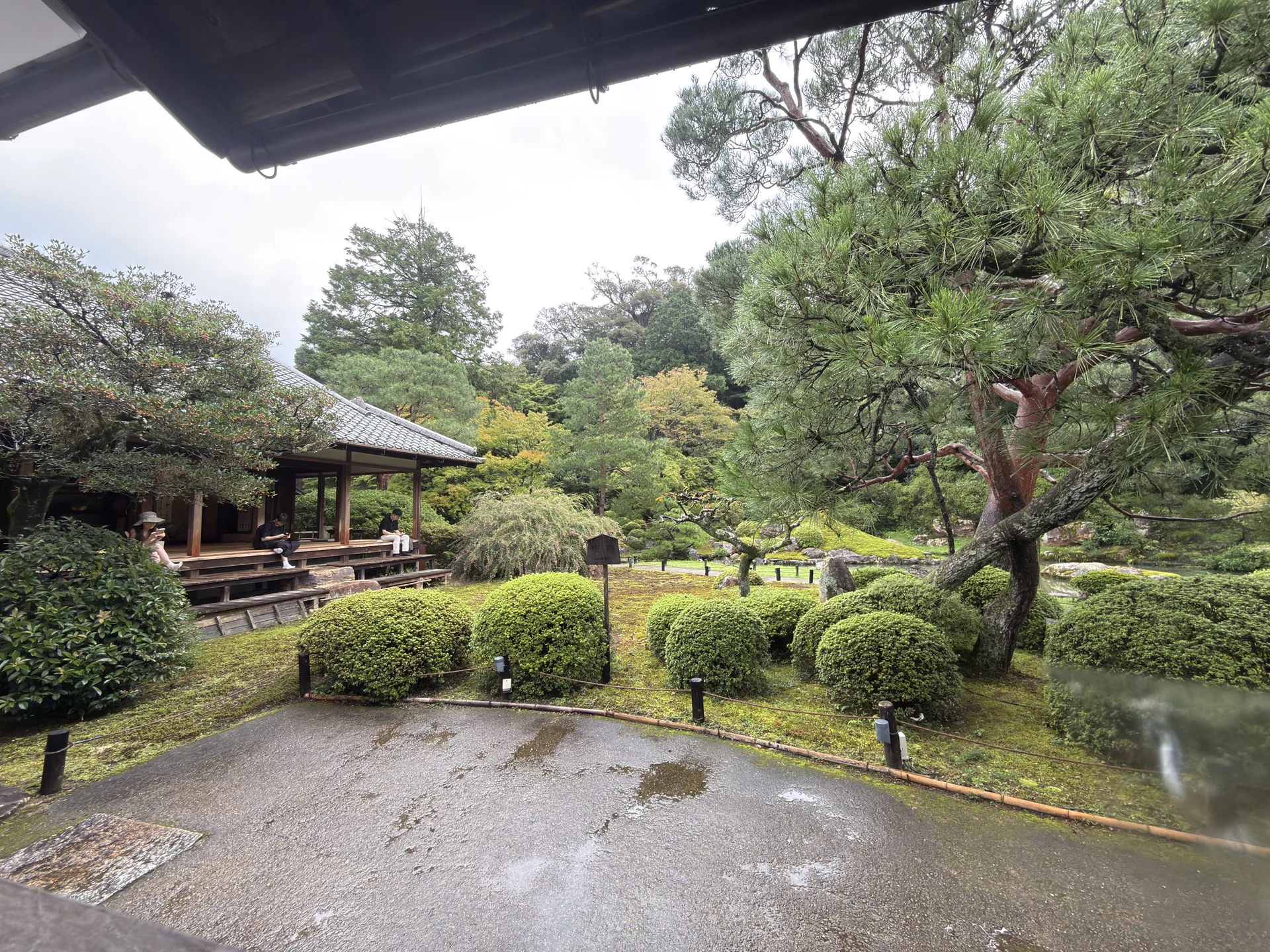
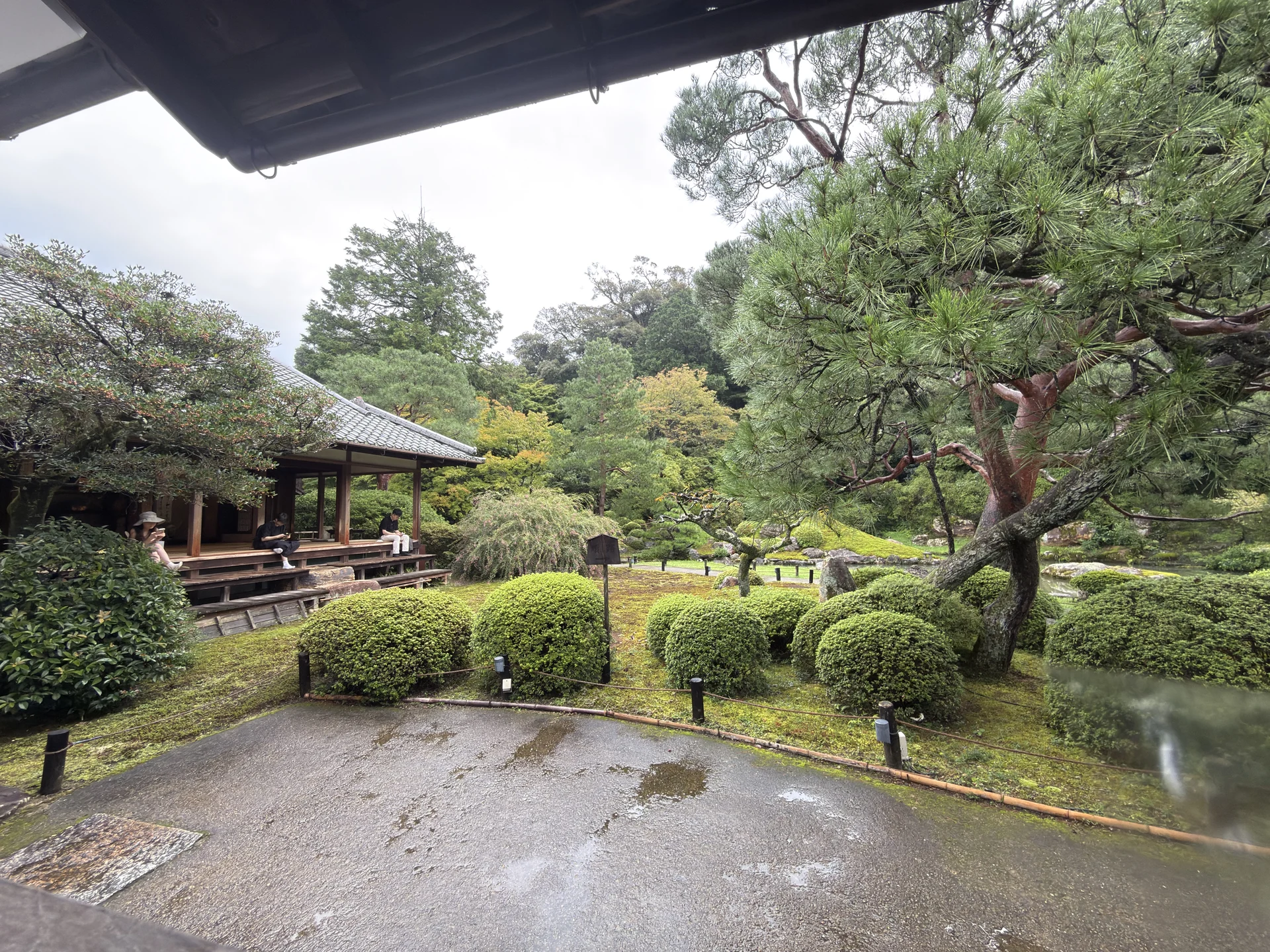
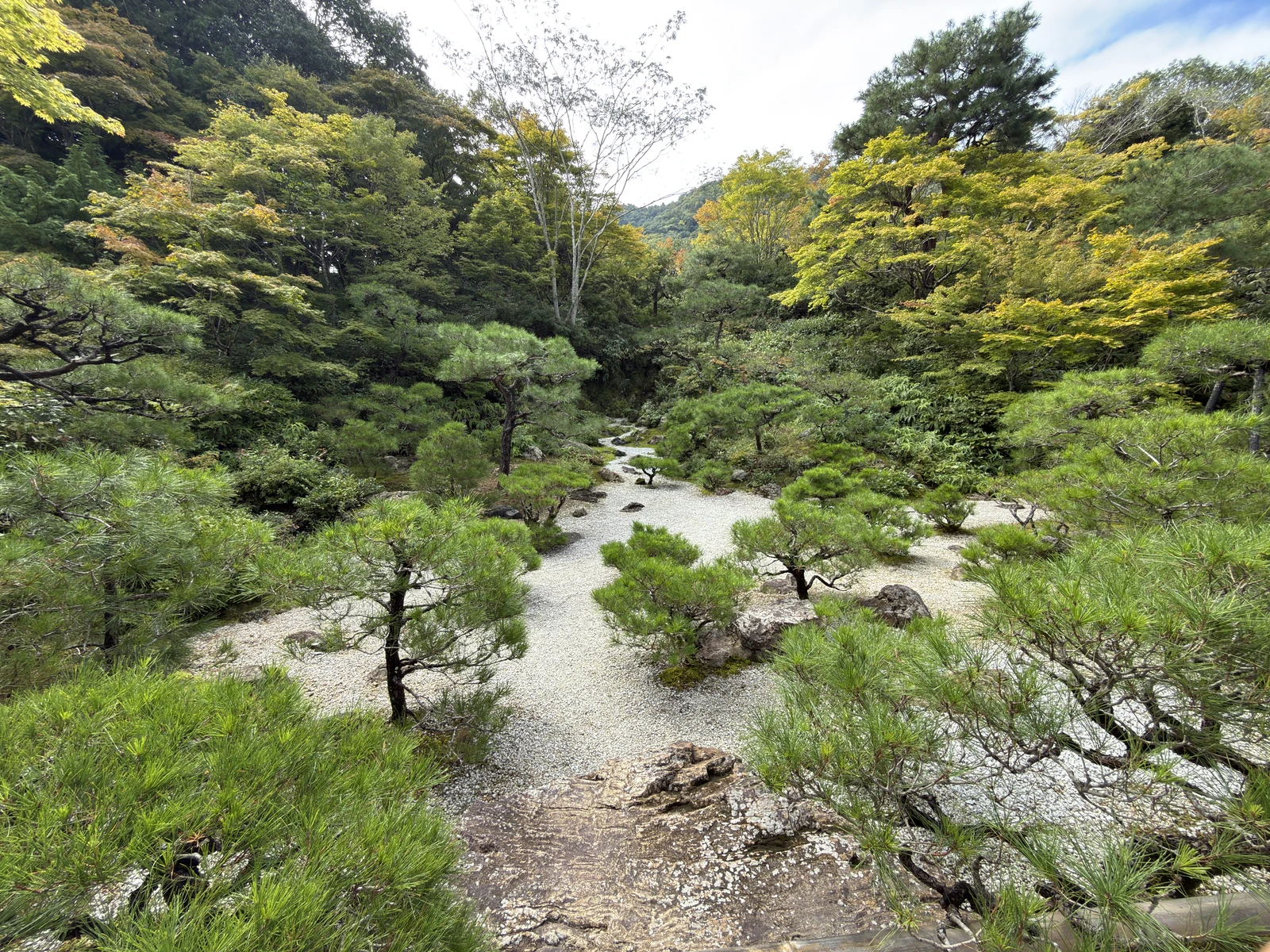
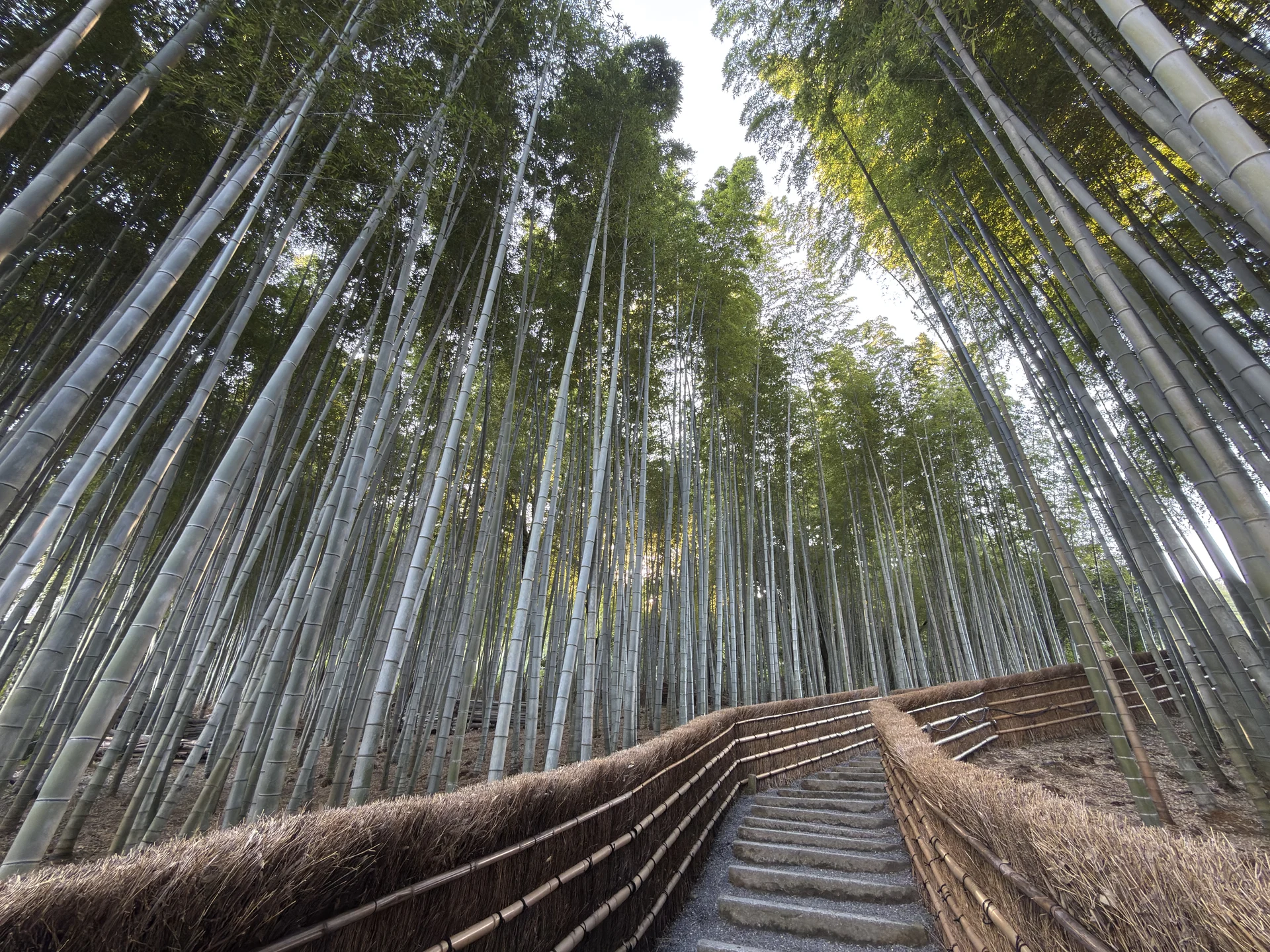
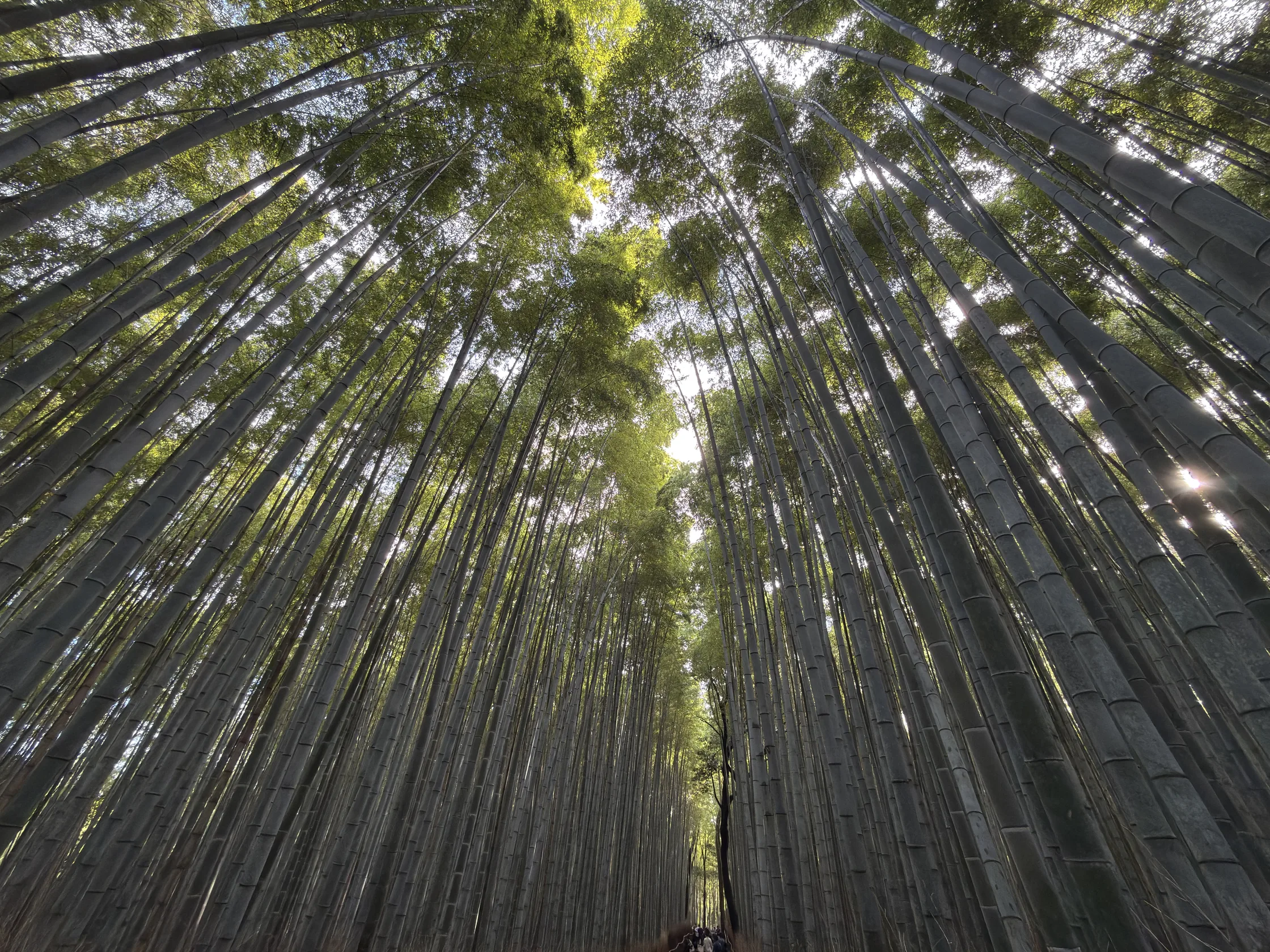
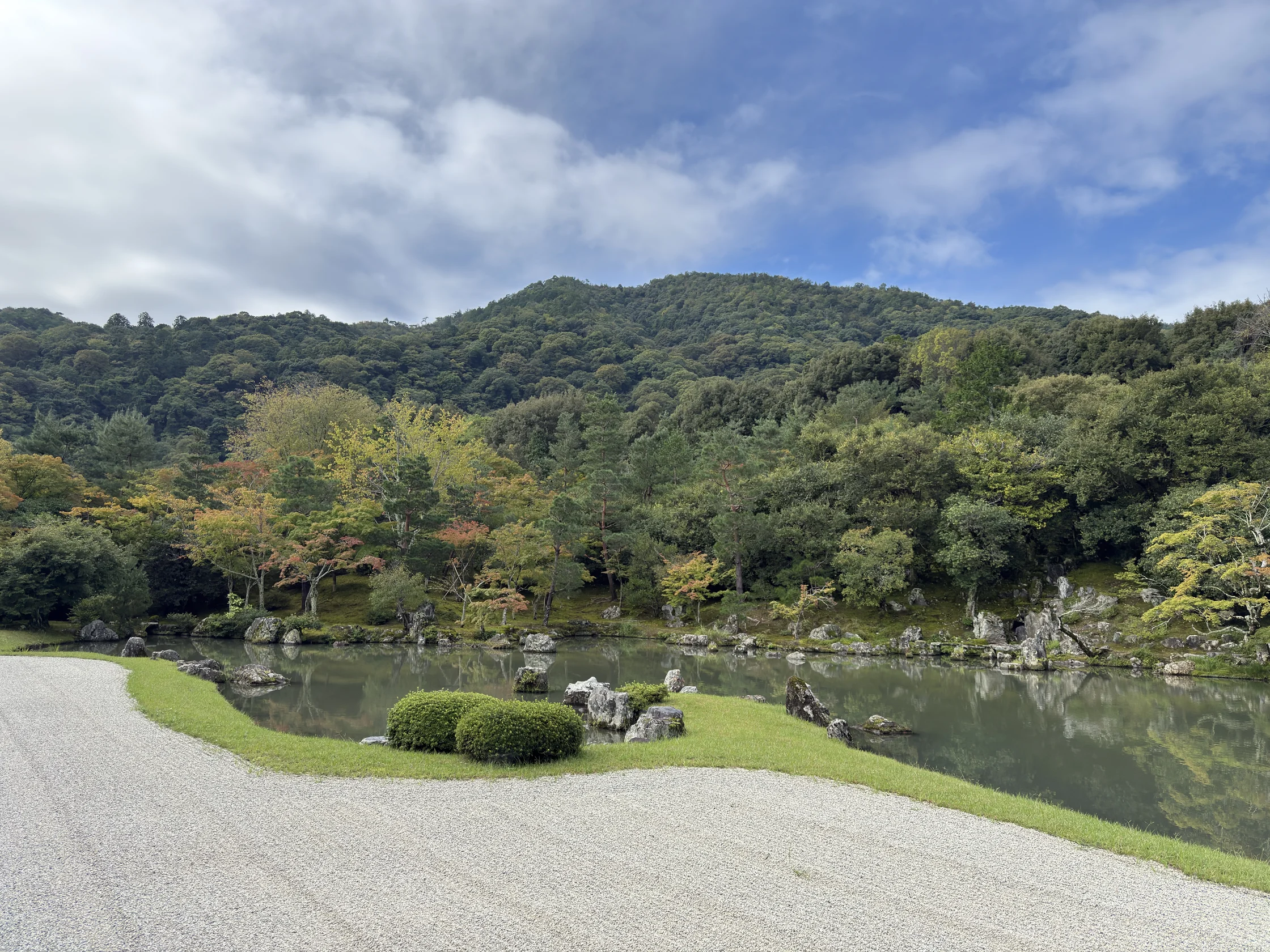
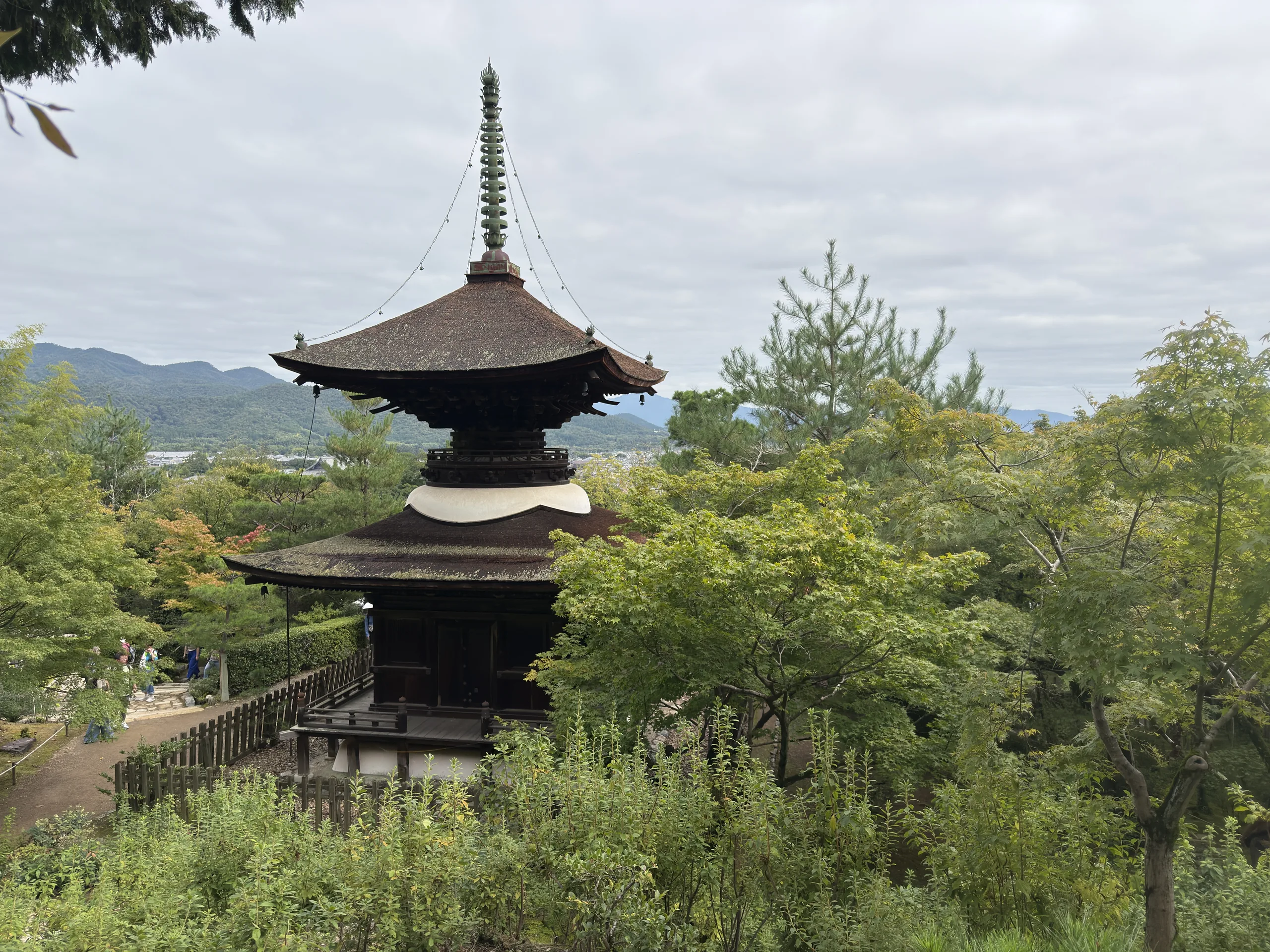
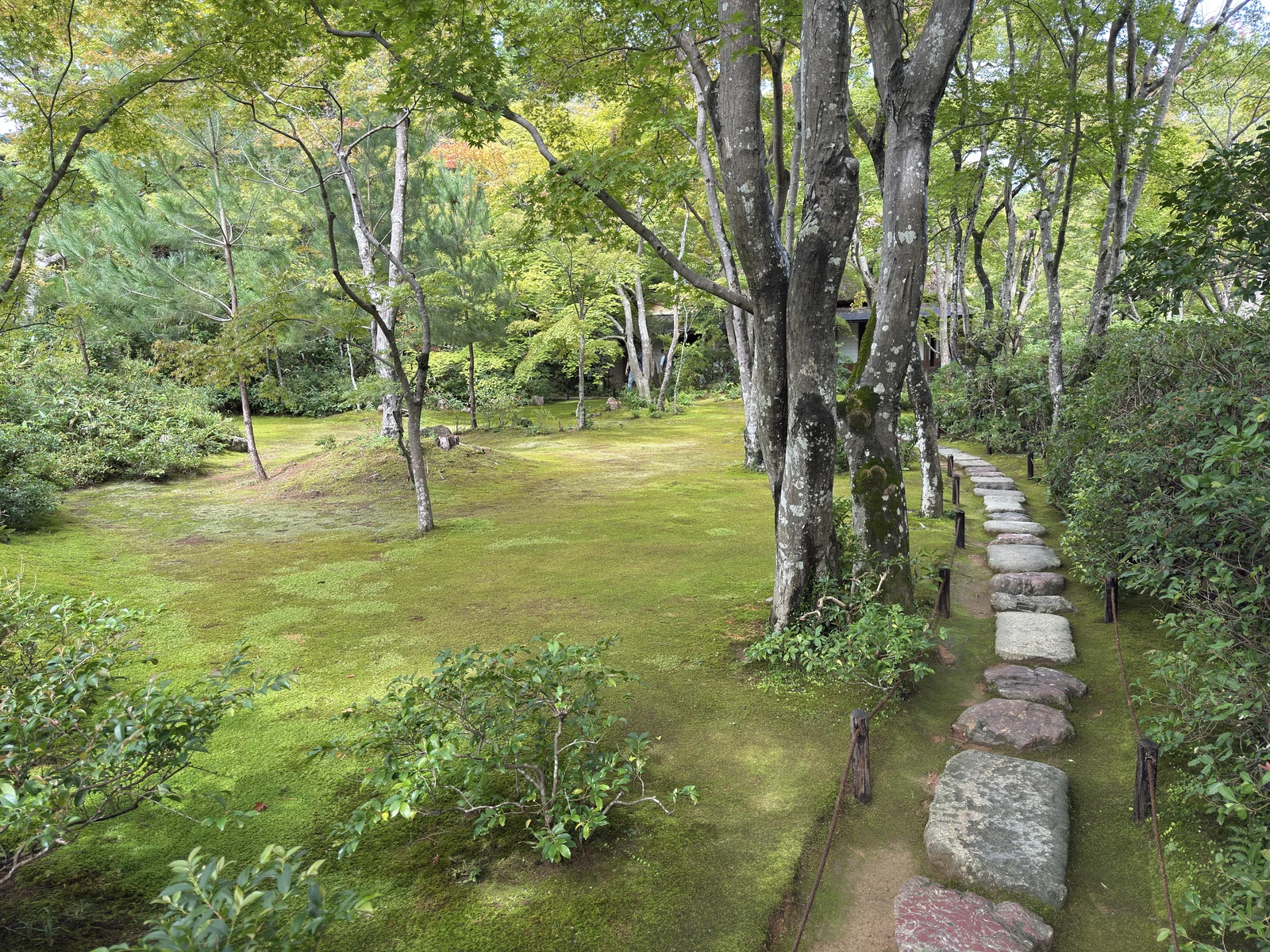
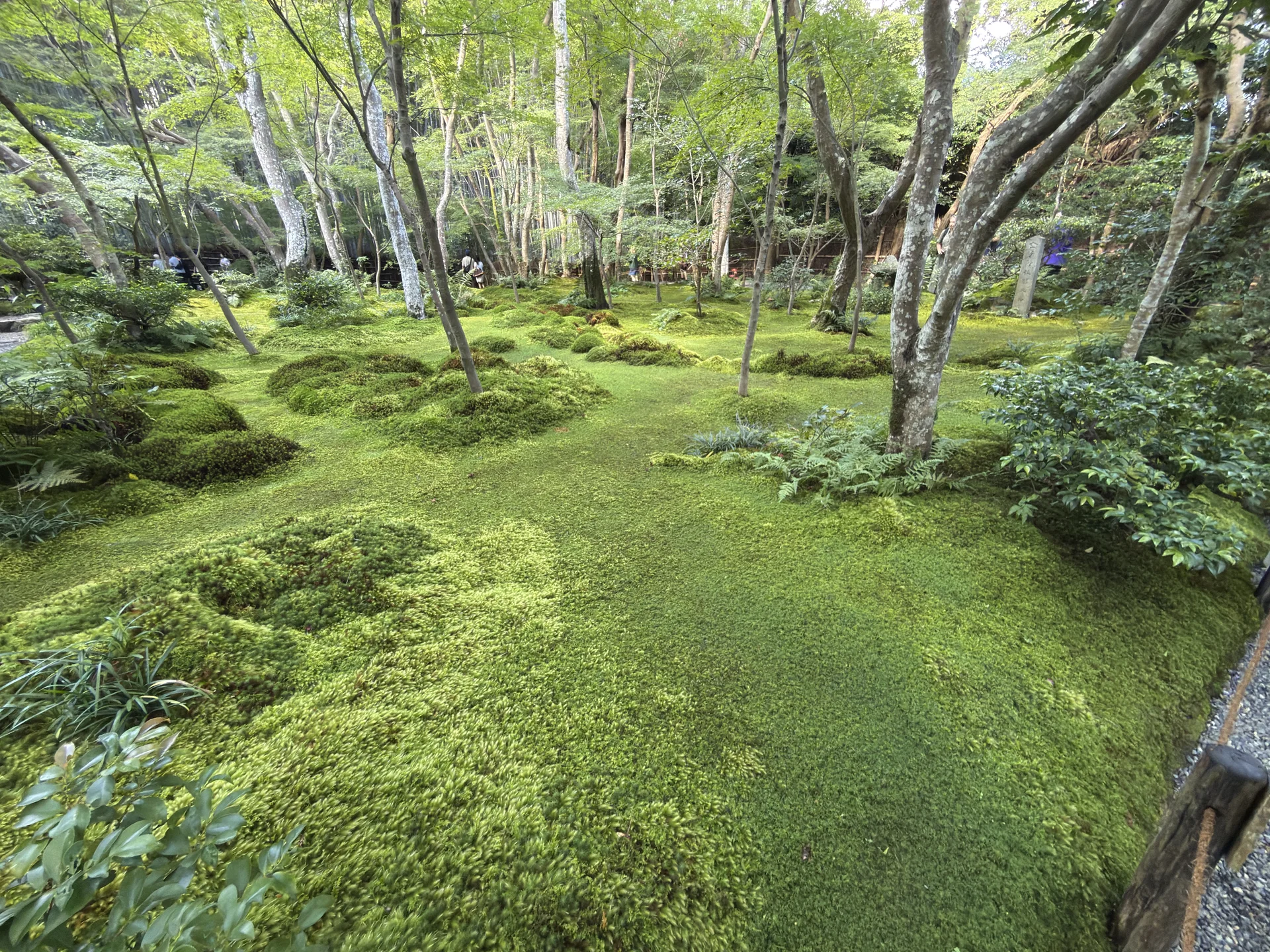
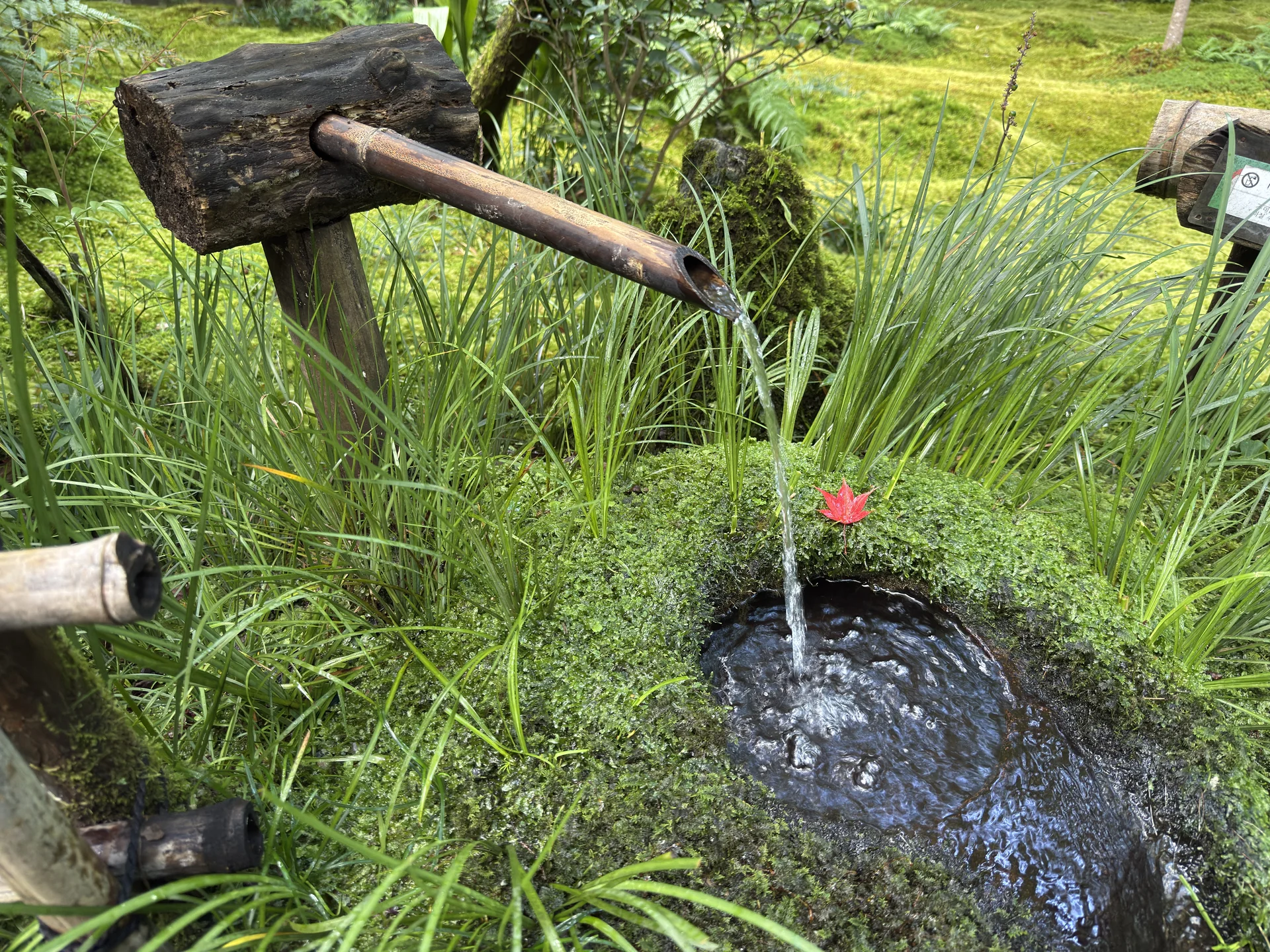
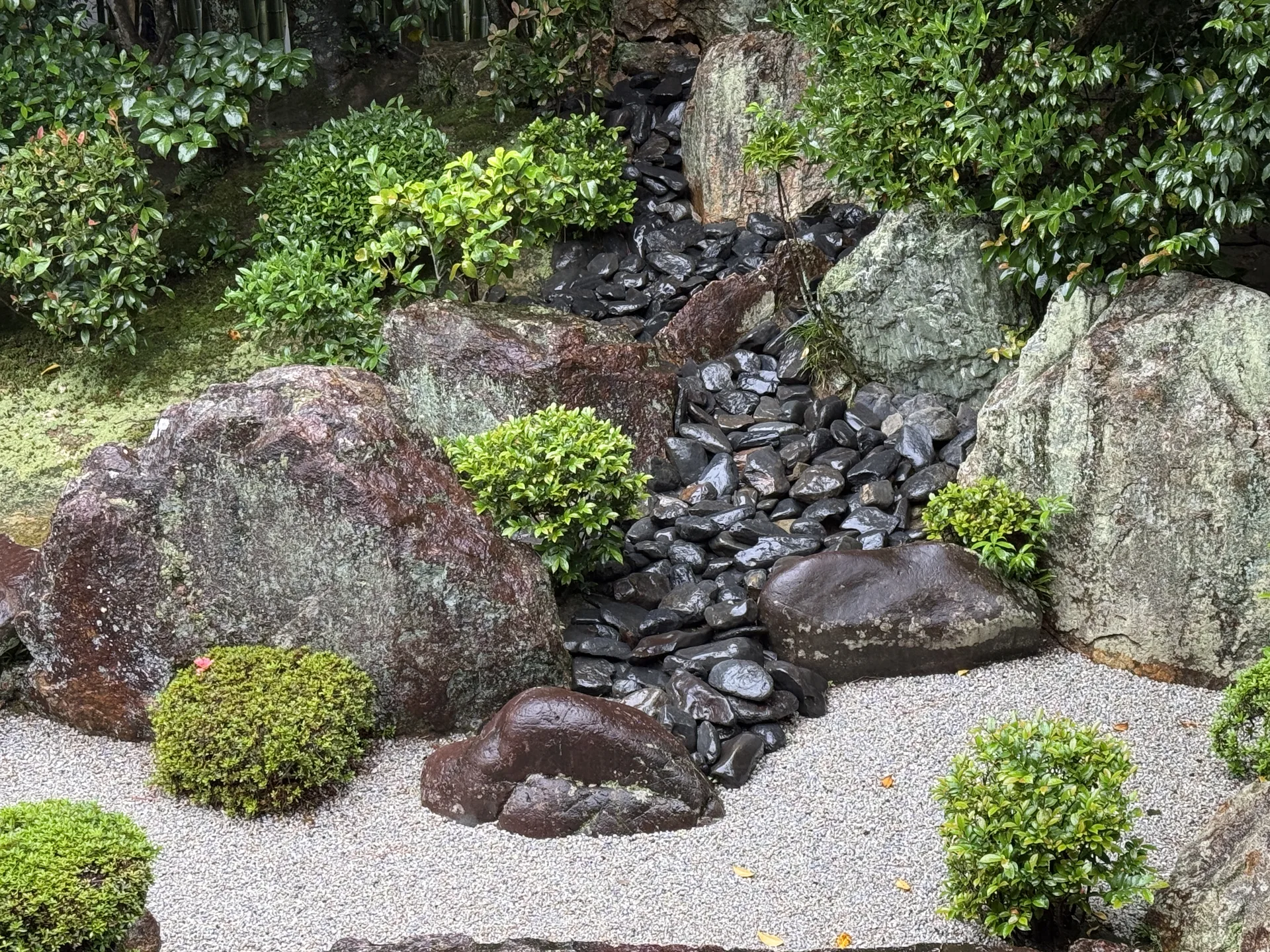
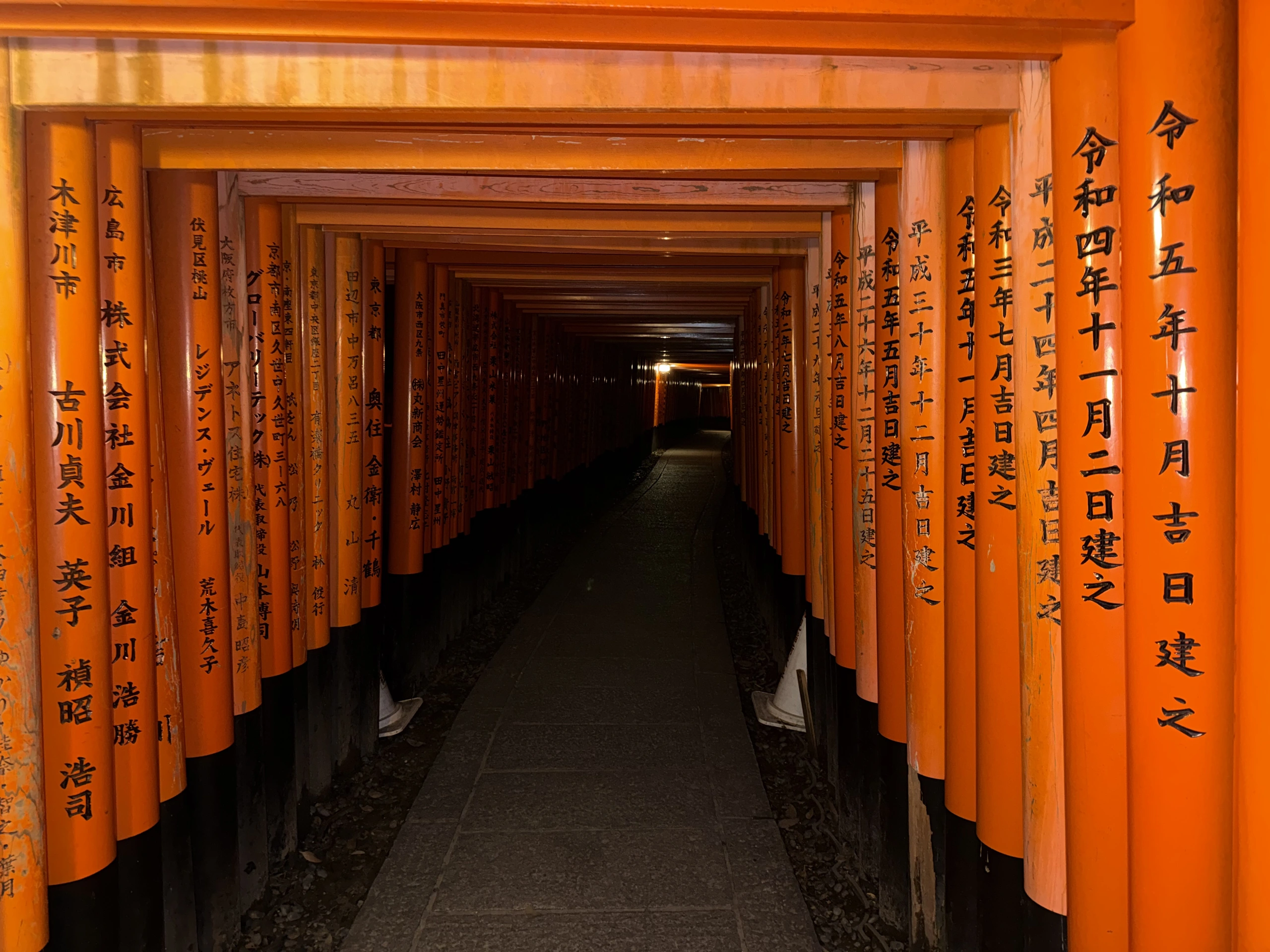
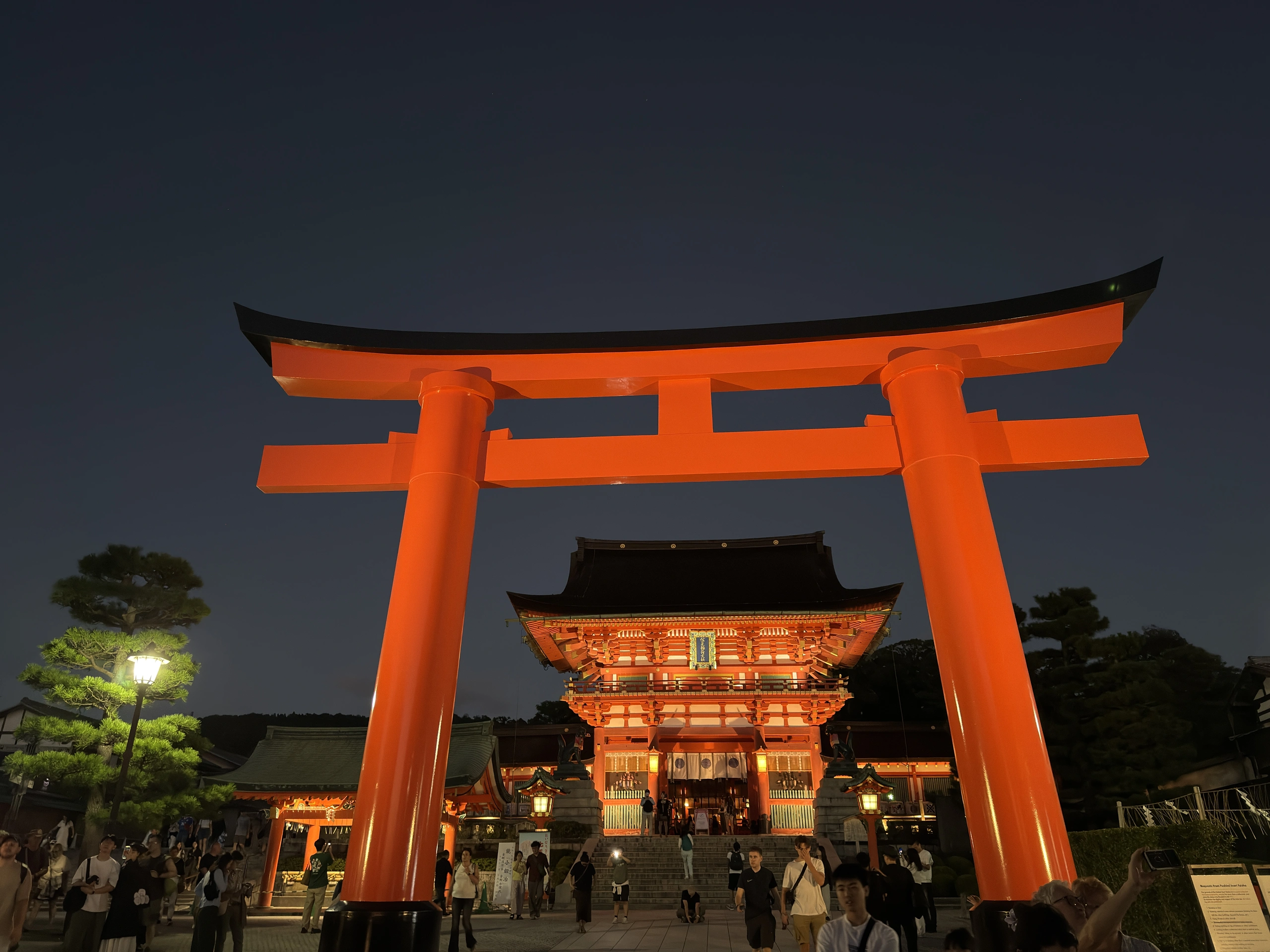
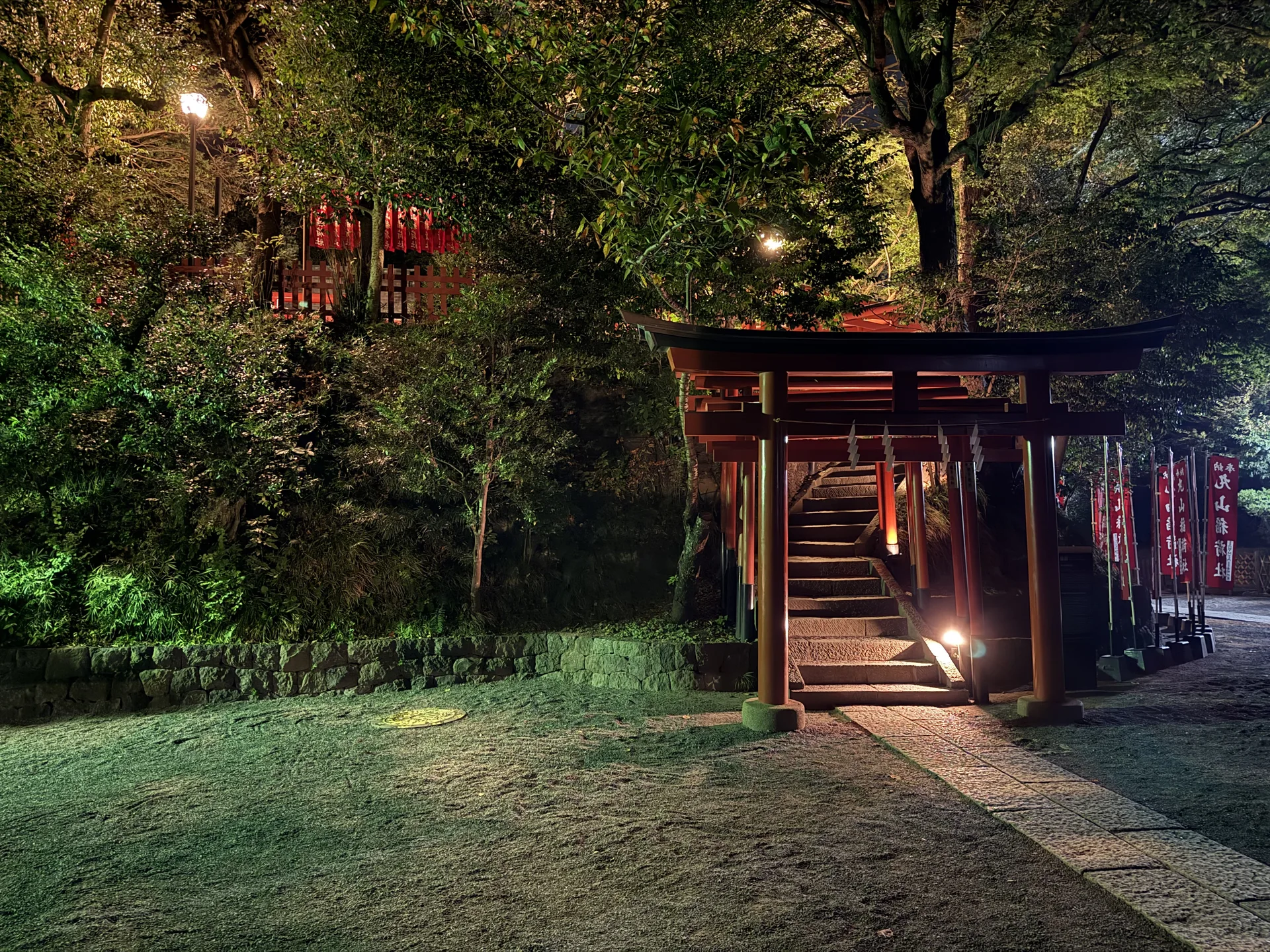
Higashiyama at night, with the Yasaka Pagoda lit at the top of the slope — standing on the same site since the 6th century, on a street where the power lines were deliberately removed so as not to disturb its silhouette against the sky — and the roof tiles of Kiyomizu-dera glistening with damp, a Heian-period temple built in 1633 on the wooded hillside without a single nail, its engawa soaring over the valley in the same gesture that separates, and at once unites, human construction and forest: the whole structure exists to hold that intermediate emptiness, the ma, between temple and landscape. Shōren-in, one of the city's three imperial-rank monzeki, keeps behind its thousand-year-old camphor trees sliding doors that frame the garden exactly as a kakejiku frames a composition — a shōji slides open and for an instant the whole garden becomes a hanging painting. Arashiyama the next day: the bamboo grove before nine, with light entering in vertical bands and the creaking of the canes as much a part of the experience as the sight of it; Tenryū-ji, foremost among Kyoto's Five Great Zen Temples, with the Sōgenchi garden that Musō Soseki designed in the 14th century and which remains, six centuries later, essentially the same: shakkei in its purest form, the mountains of Arashiyama incorporated into the garden as backdrop, the same borrowed-landscape principle that operates, at a different scale, in any well-planted bonsai; Ōkōchi Sansō overlooking the Hozu valley, a hillside garden that reveals itself in parts as you walk, with no total view ever possible, using distance and mist exactly as aerial perspective is used in a tall bonsai. Jōjakkō-ji, "light of eternal stillness," with its moss-covered stone steps at their September best — a direct reference for reading nebari and okesa in an exhibition tree; Adashino Nenbutsu-ji, founded by Kūkai in the 9th century, with over eight thousand votive stones eroded by centuries of rain: what in suiseki we call hibikake, the patina of time, in its most radical expression. And Giō-ji, barely two hundred square meters of garden, more than one hundred twenty distinct moss species forming a carpet that changes with the hour and the light: of all Kyoto, the place of greatest affinity with bonsai sensibility, where moss holds the same dignity as aged wood or stone. Fushimi Inari at dusk, once the crowds have thinned and the vermilion torii repeat up the hillside like a grammar of repetition and variation — each piece identical in form, distinct in tone according to its age, the same principle that governs a sequence of bonsai on exhibition — and among them, barely noticed by anyone, a goshawk passing toward its roost, the same bird the samurai nobility once trained for falconry, takagari.
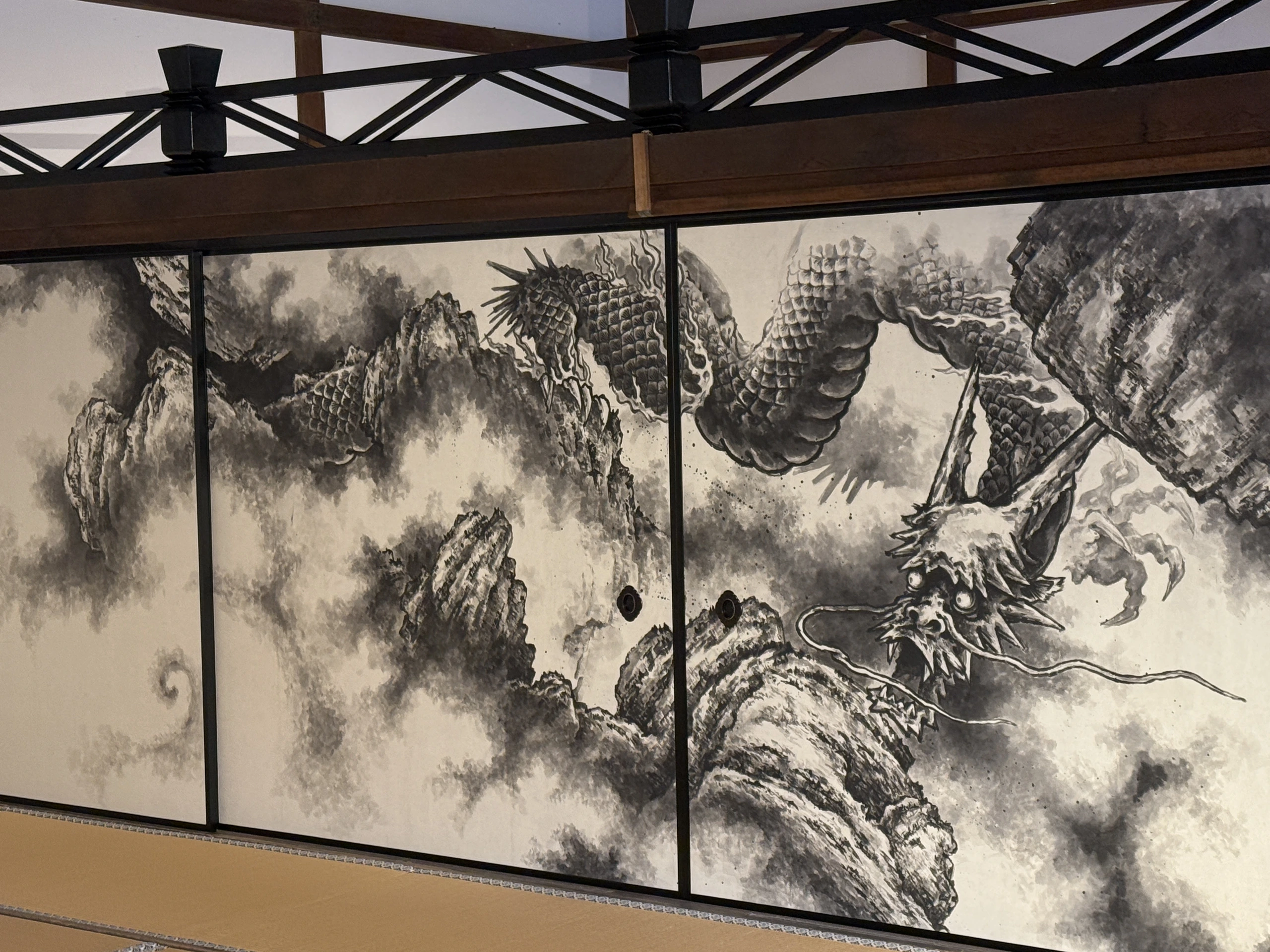
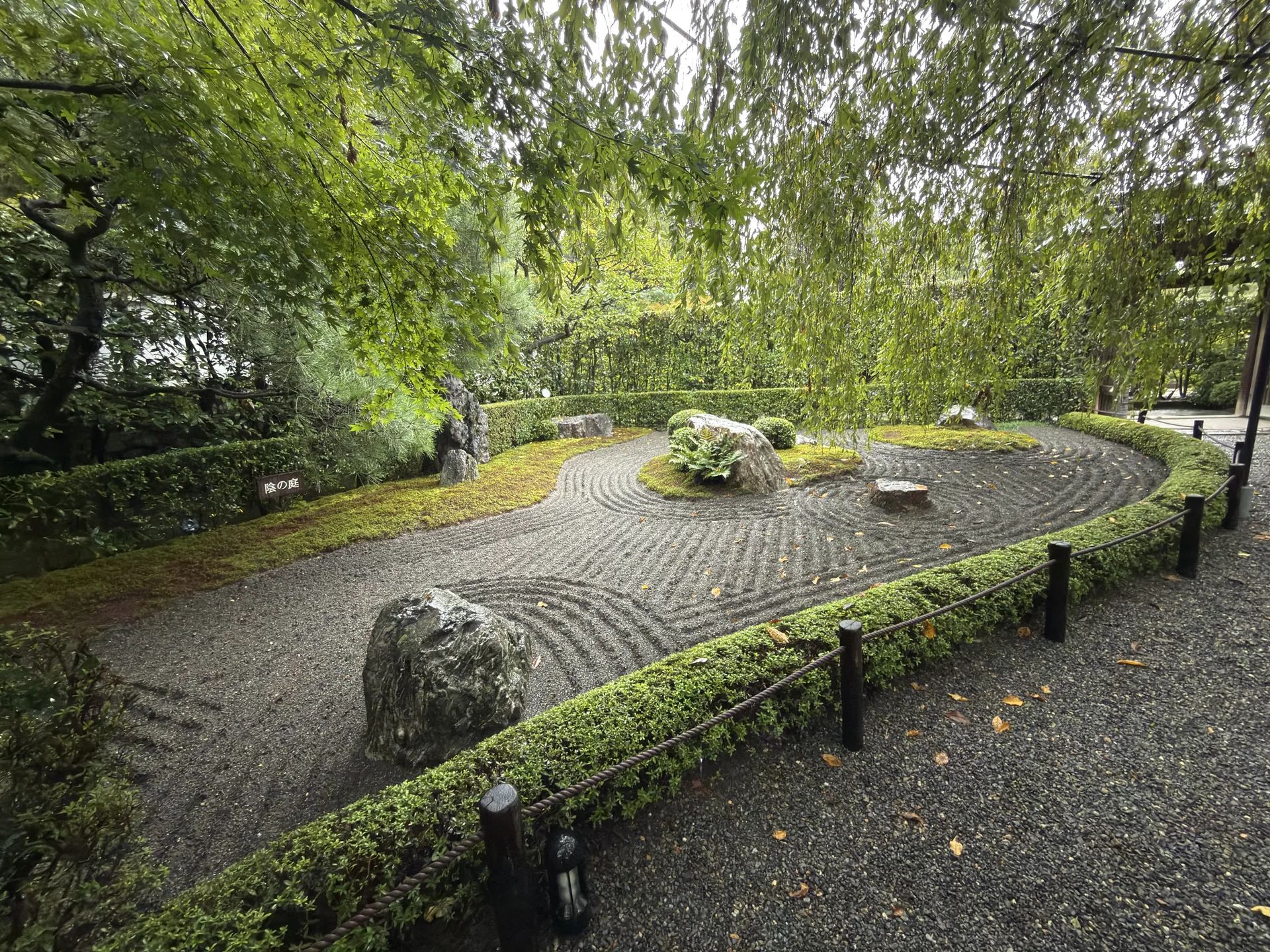
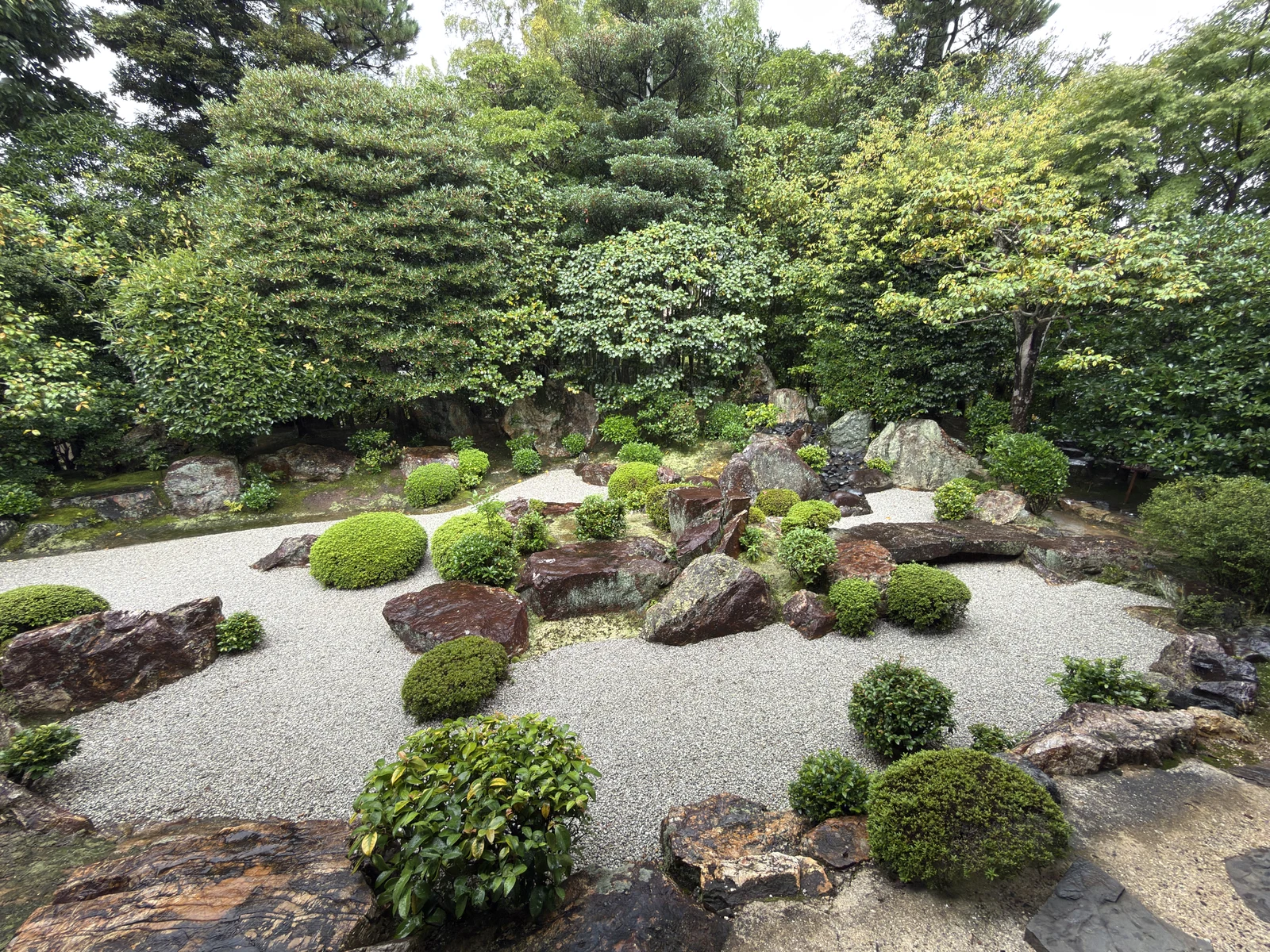
Daitoku-ji brought a different kind of attention, and two names I hadn't expected to find so soon. Hōshun-in holds the first permanent bonsai garden integrated into a Zen temple, founded by Tomio Yamaguchi with the collaboration of Morimae Seiji — the same Morimae who leads the Genkokai I'll attend at Shunkaen in a few days: the lineage, even before reaching Edogawa, had already crossed my path unannounced, as these things tend to do. Collection bonsai and outdoor karesansui in dialogue within the same space, two scales of the same language. At Daisen-in, a dry garden from 1509, five sections of rock and white gravel narrating the entire journey of life from mountain to ocean, I sat without moving for as long as the place asked: it isn't meant to be walked through, but read from a fixed position, and what isn't represented weighs as much as what is — the same lesson that governs literati-style bonsai. In that very room Sen no Rikyū served tea to Toyotomi Hideyoshi, and Takuan Sōhō instructed Miyamoto Musashi: the discipline of tea, the discipline of the sword, and the discipline of the garden sharing, for centuries, the same tatami floor. At Kōtō-in, founded by Hosokawa Tadaoki, a direct disciple of Rikyū, the white marble lantern on the moss of the front garden is calculated with the same precision a chadō master calculates a tokobashira; sitting on the engawa, I compared wiring styles and planting angles among the grounds' bonsai, the logic of nebari exposed after generations of repotting. The Philosopher's Path, between Eikan-dō — over three thousand maples, the Amida who looks back — and Nanzen-ji, runs alongside a narrow canal lined with maples just beginning to turn, the first chromatic warning of a season that within weeks will set the whole city alight.
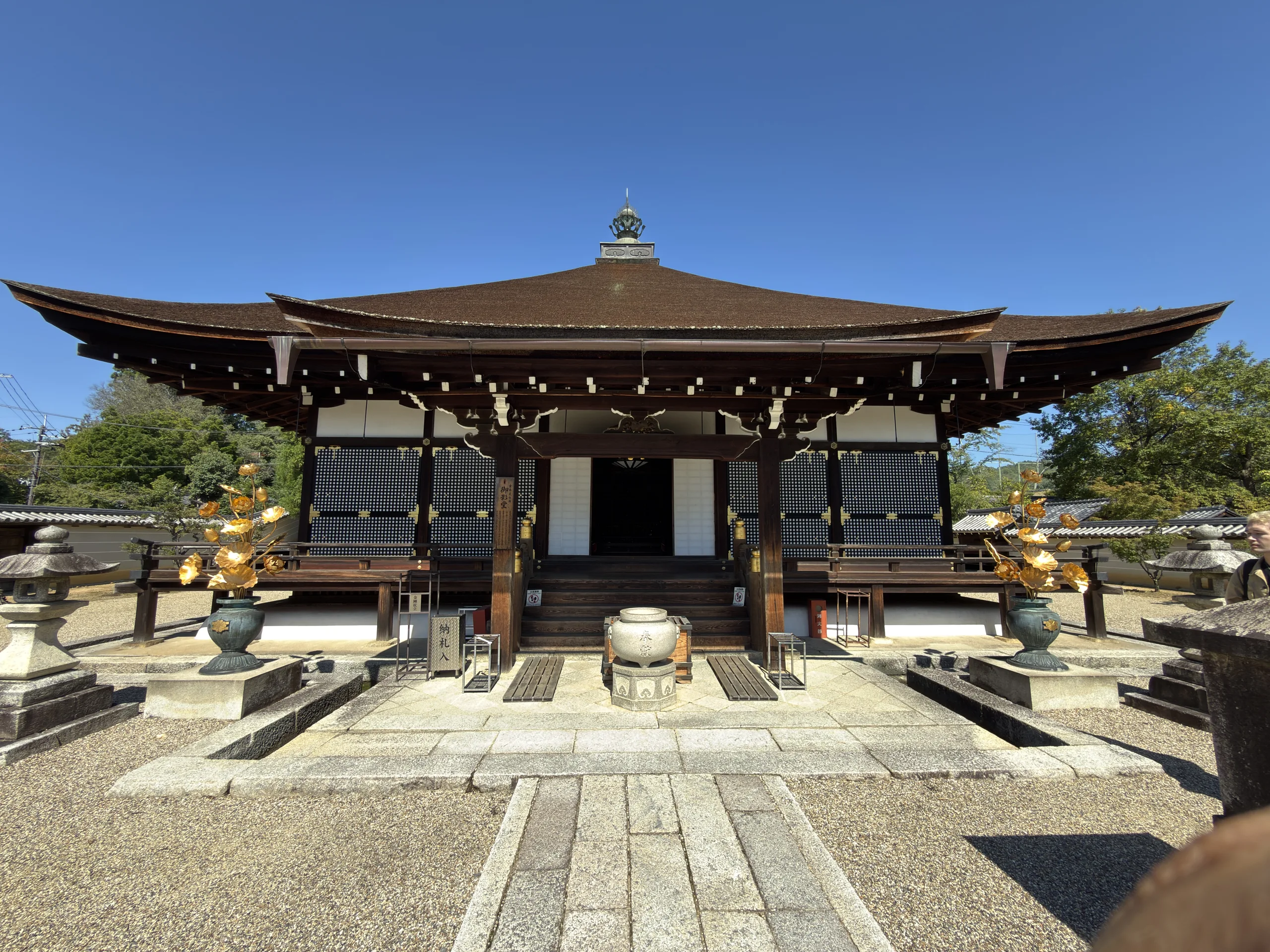
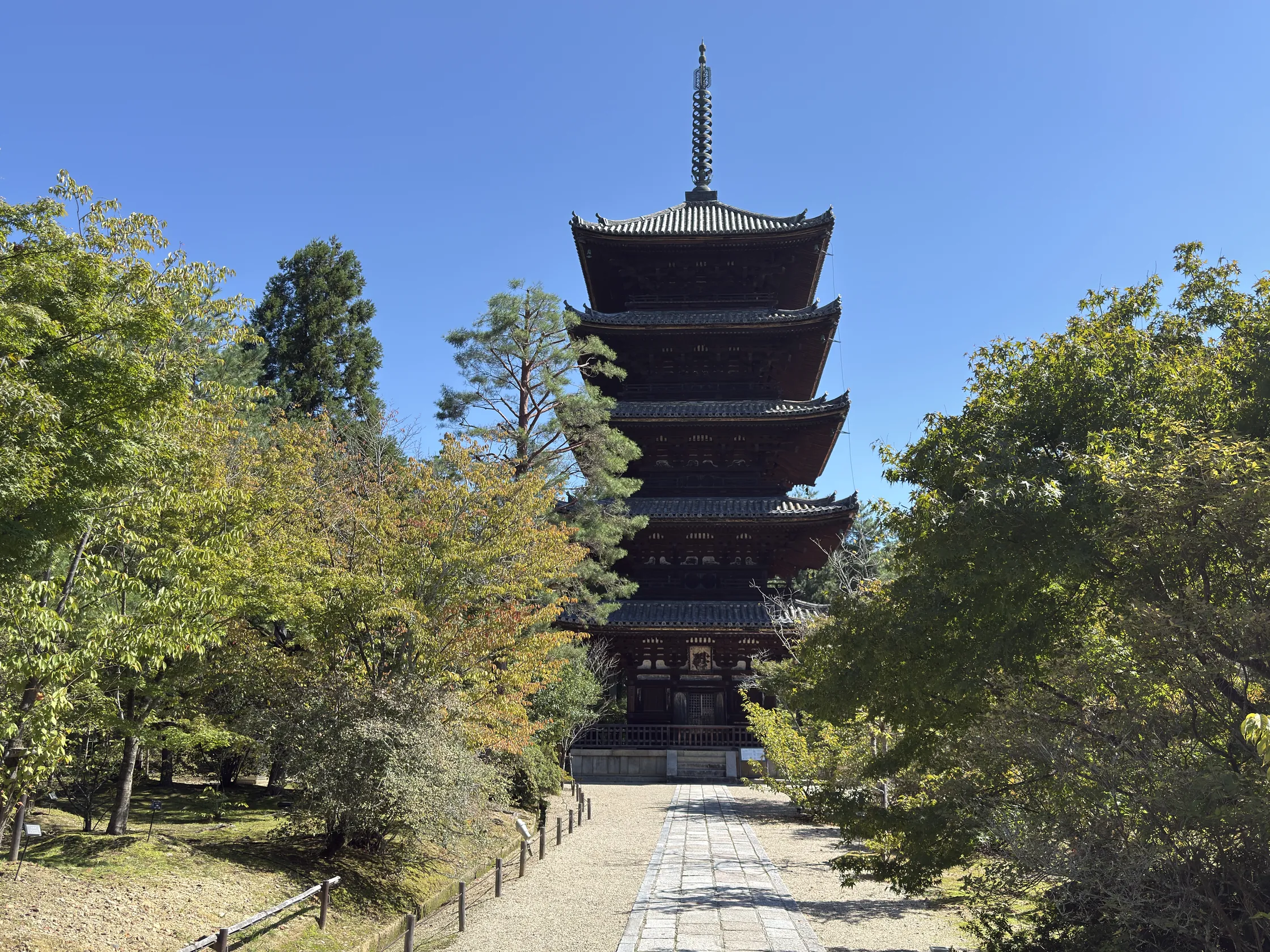
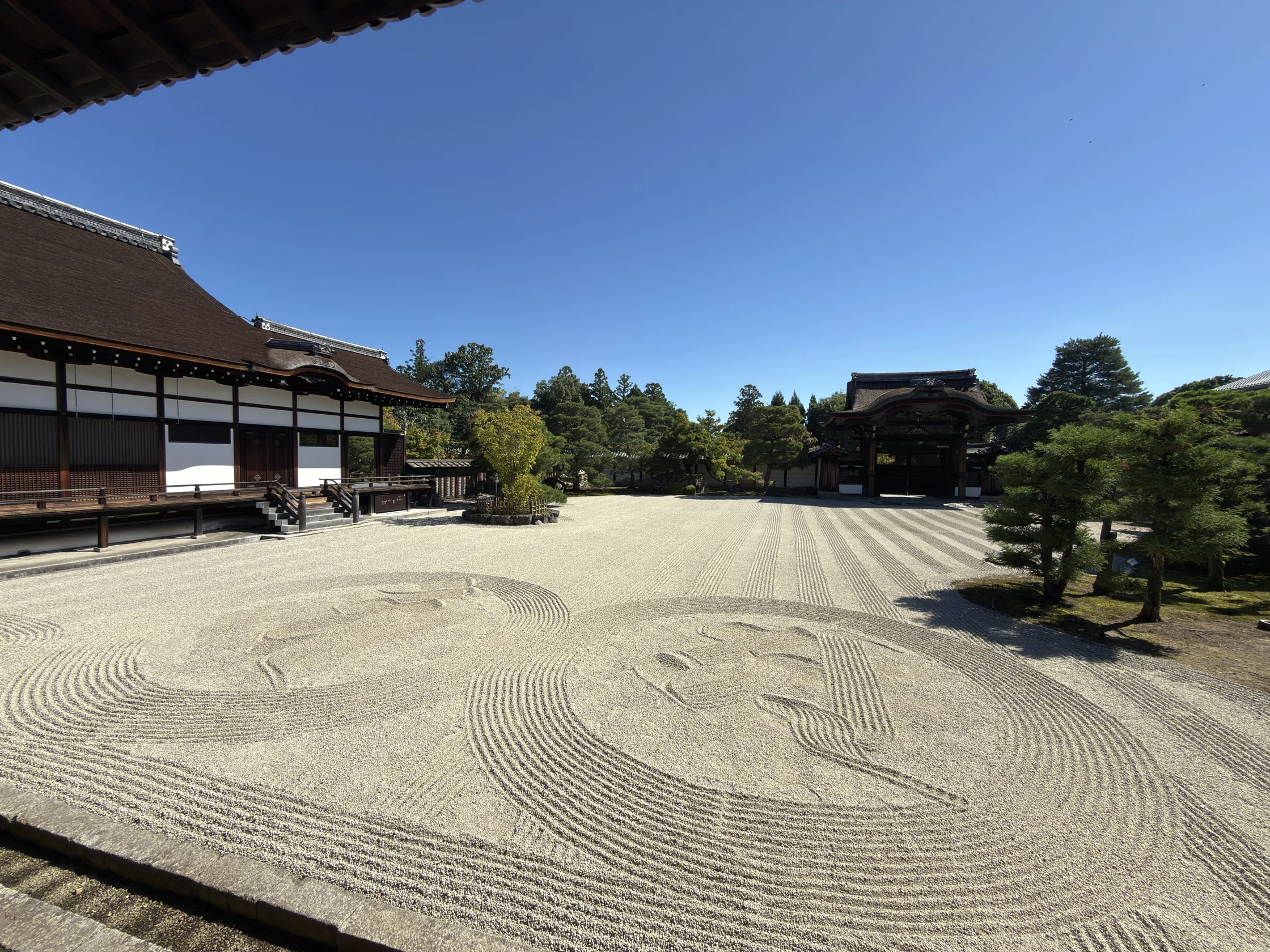
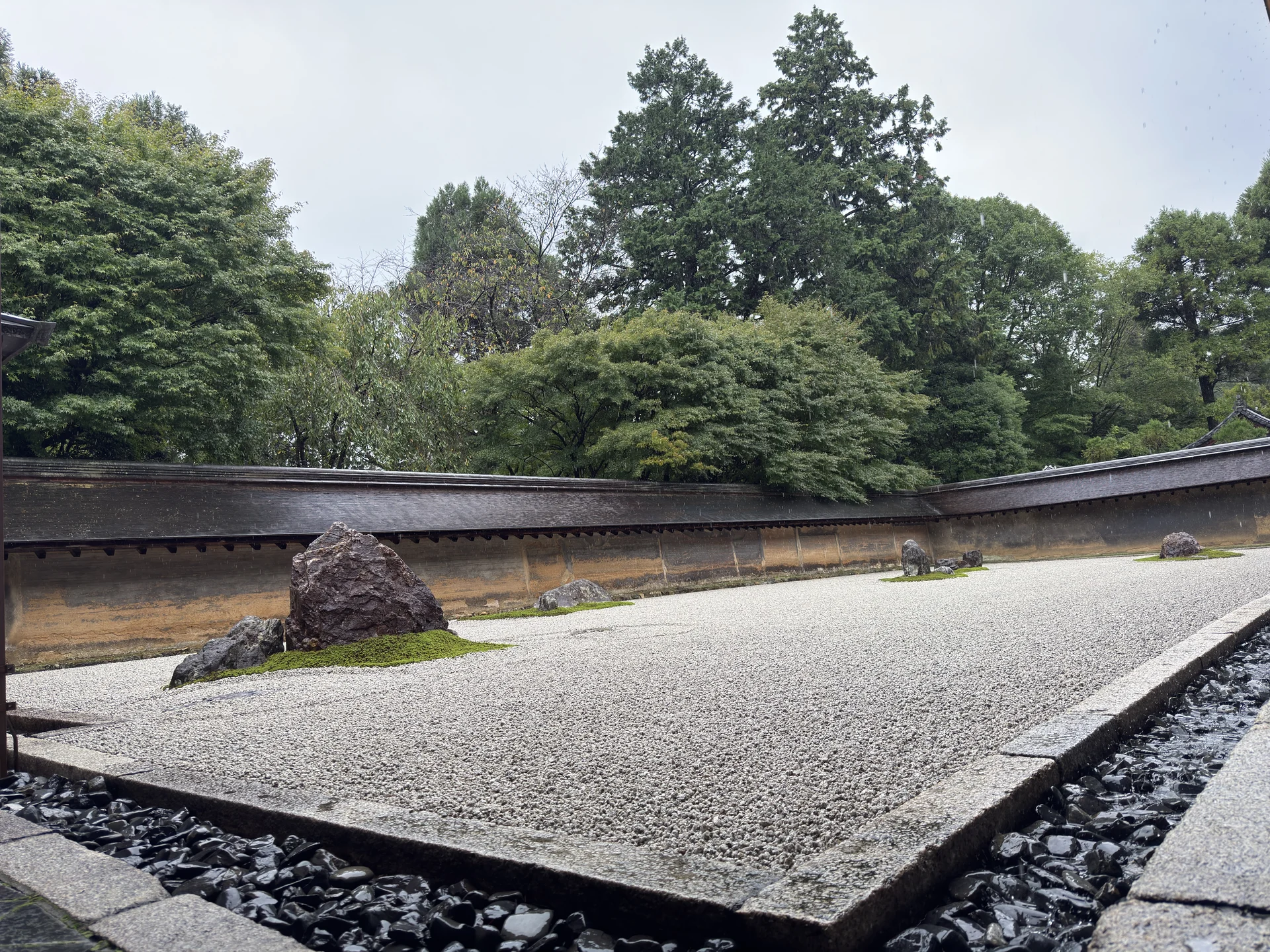
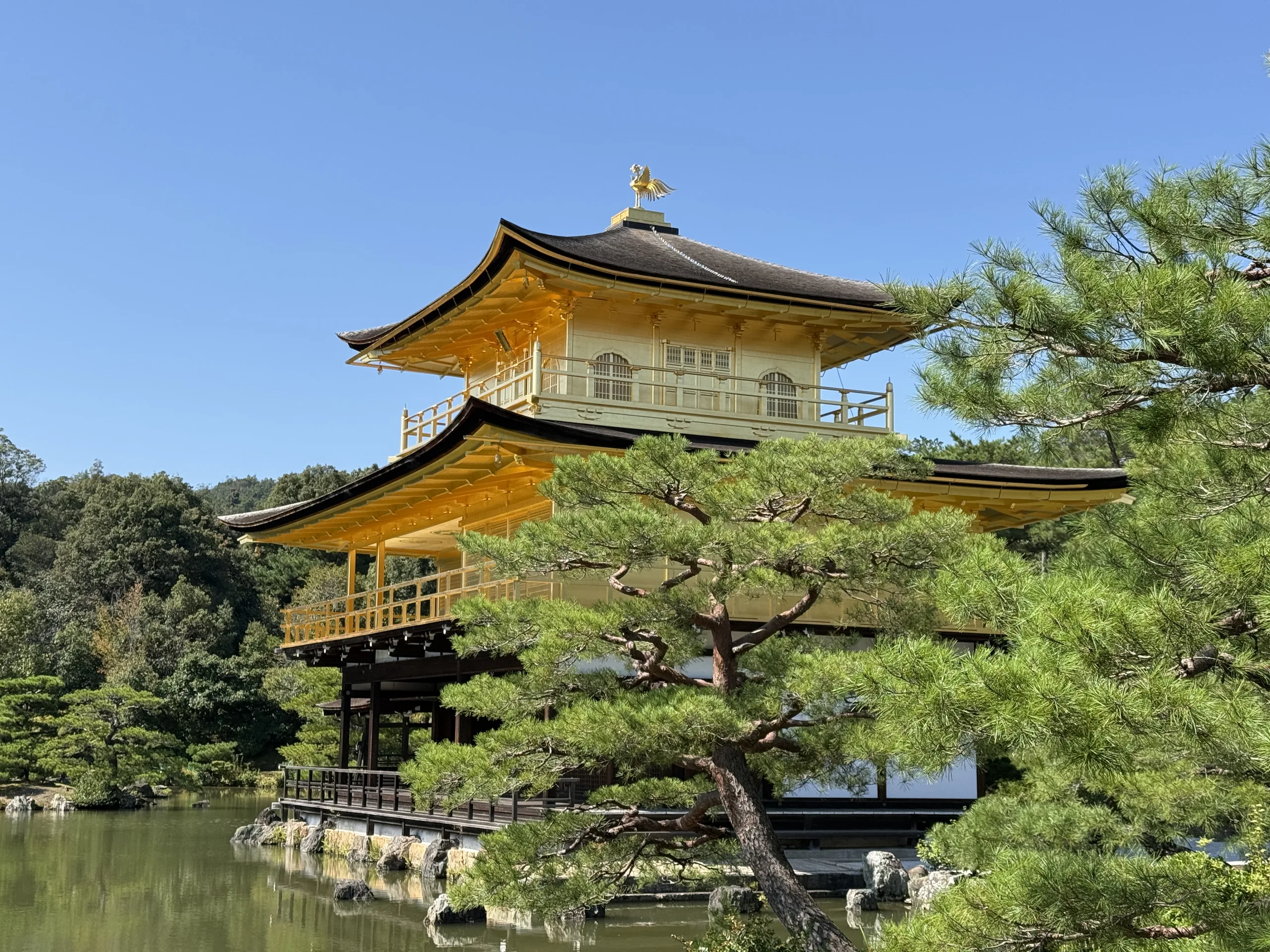
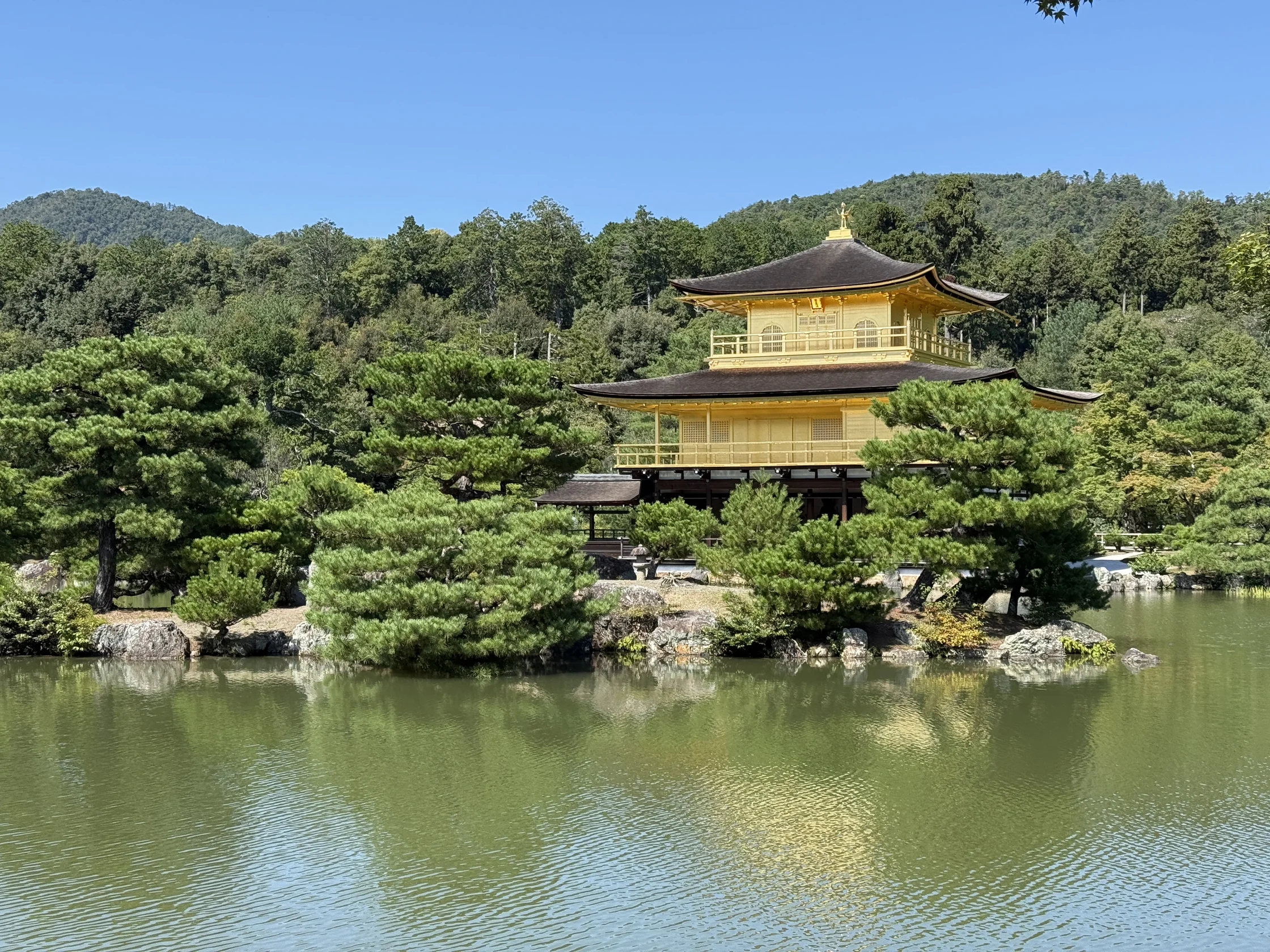
Ryōan-ji, early, before anyone else arrived: fifteen stones on white gravel, arranged so that no point along the wooden corridor allows you to see all of them at once — always fourteen, never the full fifteen — the lesson in asymmetrical composition every bonsai practitioner internalizes sooner or later: what is hidden composes as much as what is shown. The first twenty minutes alone in the corridor reveal nothing; the garden begins to speak only once you stop trying to see it whole. Kinkaku-ji, rebuilt in 1955 after the 1950 fire that Mishima recounted in his novel, gold against the dark green of the Kyōkochi pond. Last meal in Kyoto at a small family restaurant facing a real tokonoma — an ink kakejiku on bamboo, a floral arrangement, silence — the same logic of background, object, and void that governs the arrangement of a bonsai on exhibition: one principal element, breathing space at the sides, nothing superfluous. Ninna-ji, home to imperial princes for over a thousand years, its five-story pagoda seen from the rear garden, the same vertical structure as a lone pine on rock, but at architectural scale, with the Shinkansen already waiting.
Edogawa: Shunkaen
Seven nights in Edogawa, staying at a small place, Ninshin Koya (仁信小屋), with a daily walk to Shunkaen for intensive study under the III Iemoto Kobayashi Kunio, Ippū. Walking the same route to the same garden every morning is, in itself, a form of shugyō: repetition as a path of access, not as empty routine. This is how the craft has always been transmitted in Japan, from master to disciple, hand to hand, beyond any paper — the menkyo kaiden of the martial arts schools shares the same root as the certification of a garden lineage: it isn't granted for knowledge, but for having been recognized within a living genealogy.
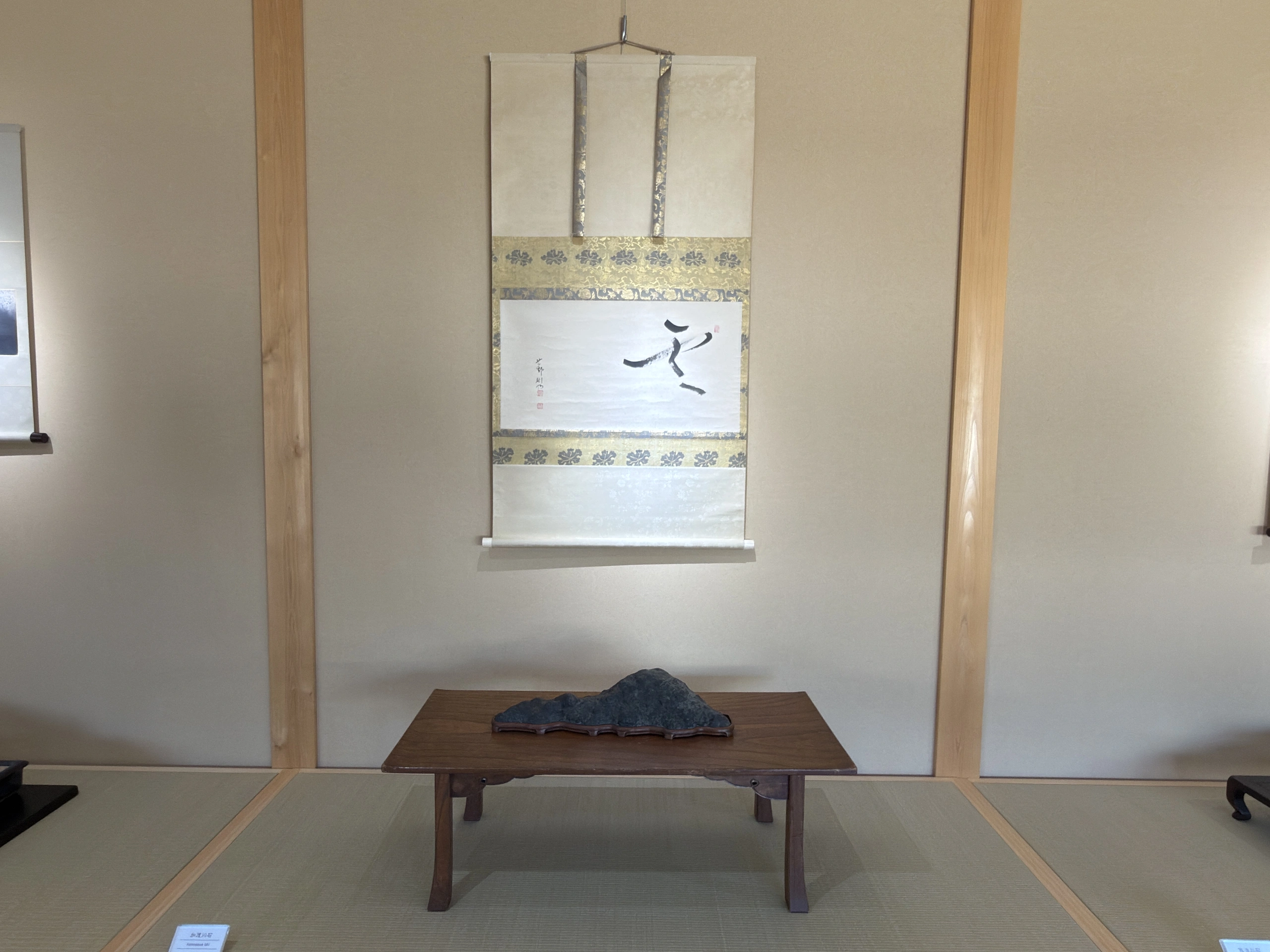
This is the block to be completed upon return: the days of study, the formal transmission ceremony, receiving the kakejiku with the Iemoto's calligraphy and the makimono certifying genealogical standing, inscription into the living genealogy of the Keidō Katayama Ryū. The passage from 勝讓武古 to 勝讓謙. There's no point anticipating it in writing; it will be written with what is actually lived.
Tokyo by Night
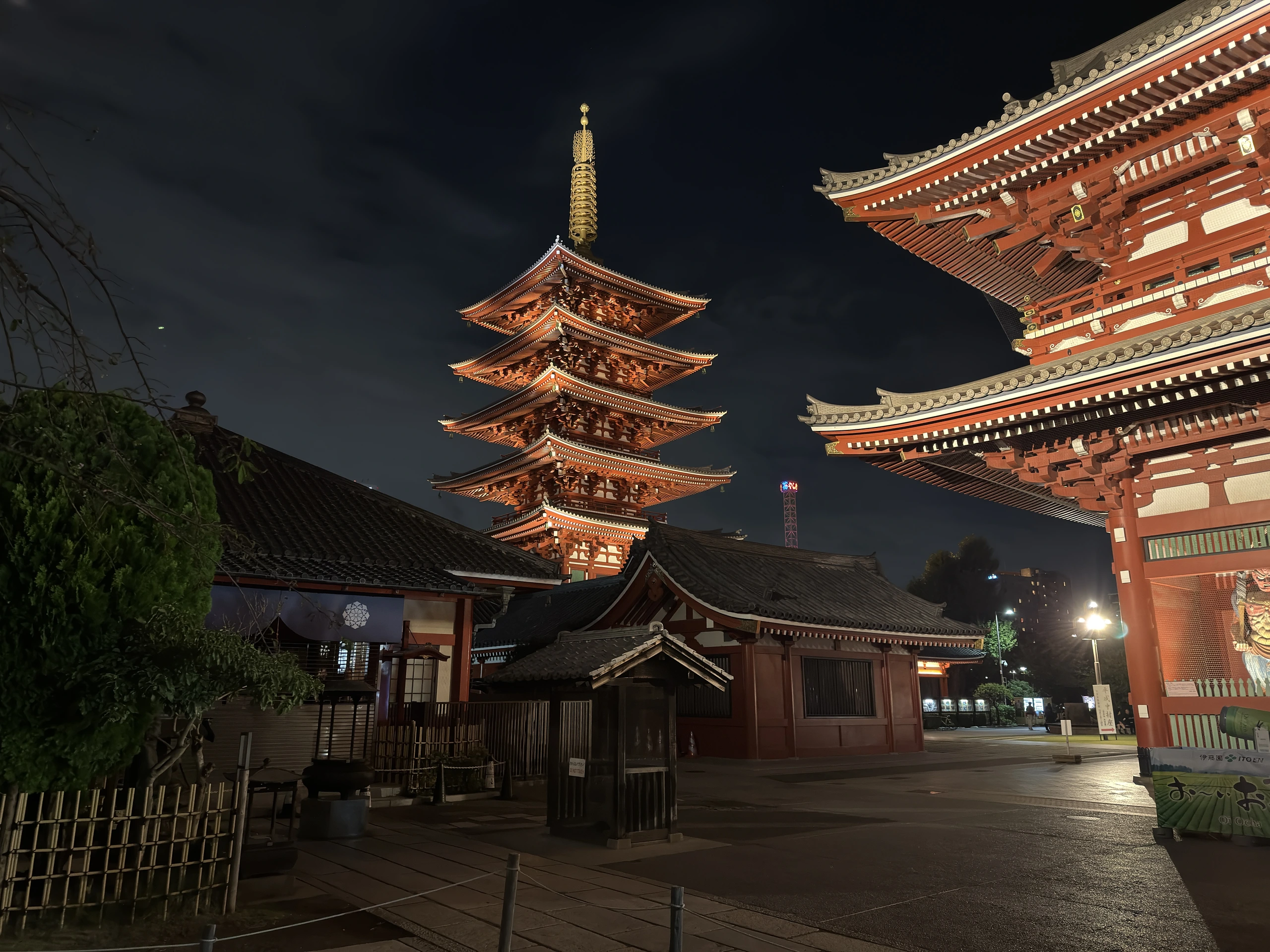
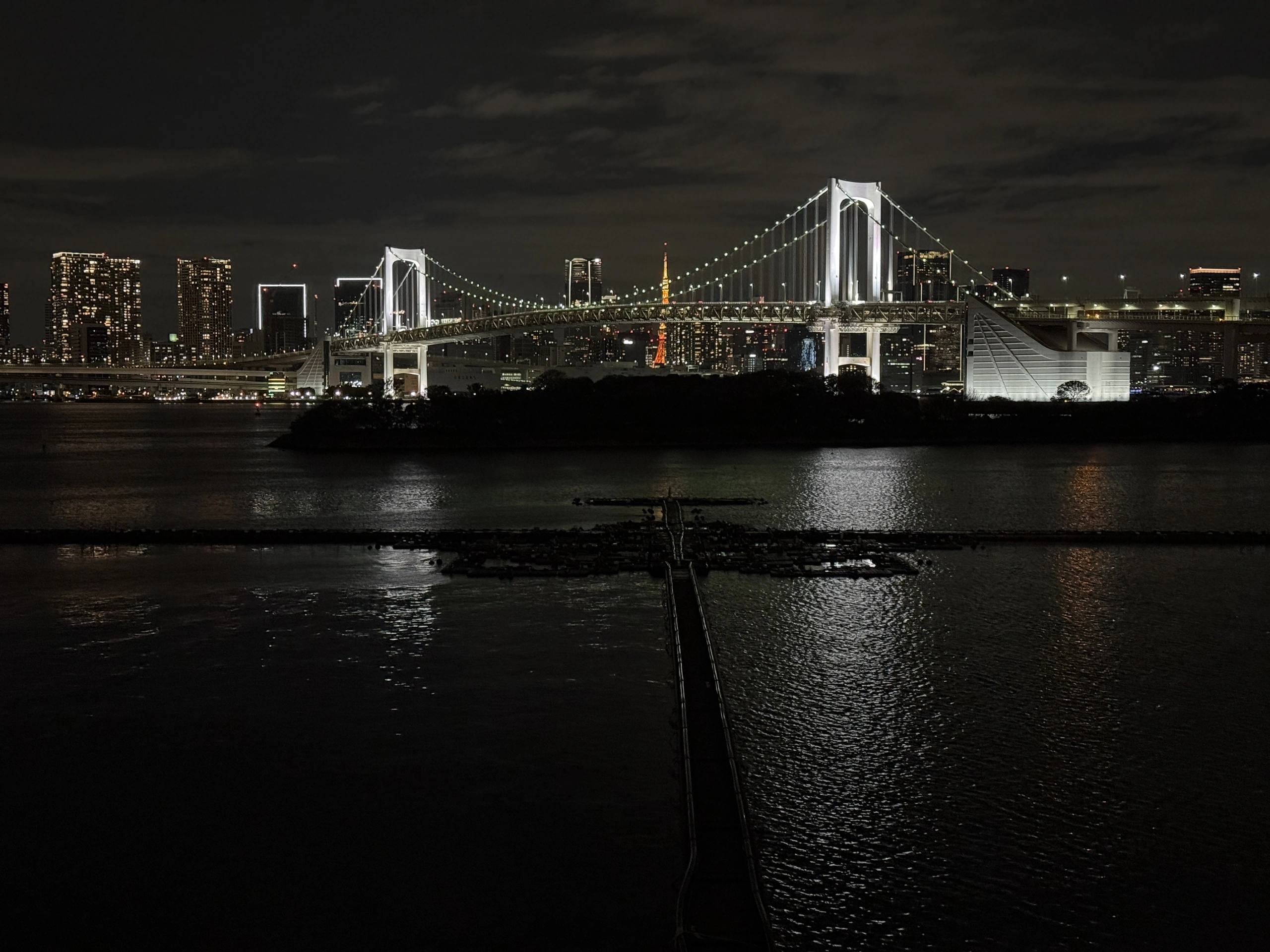
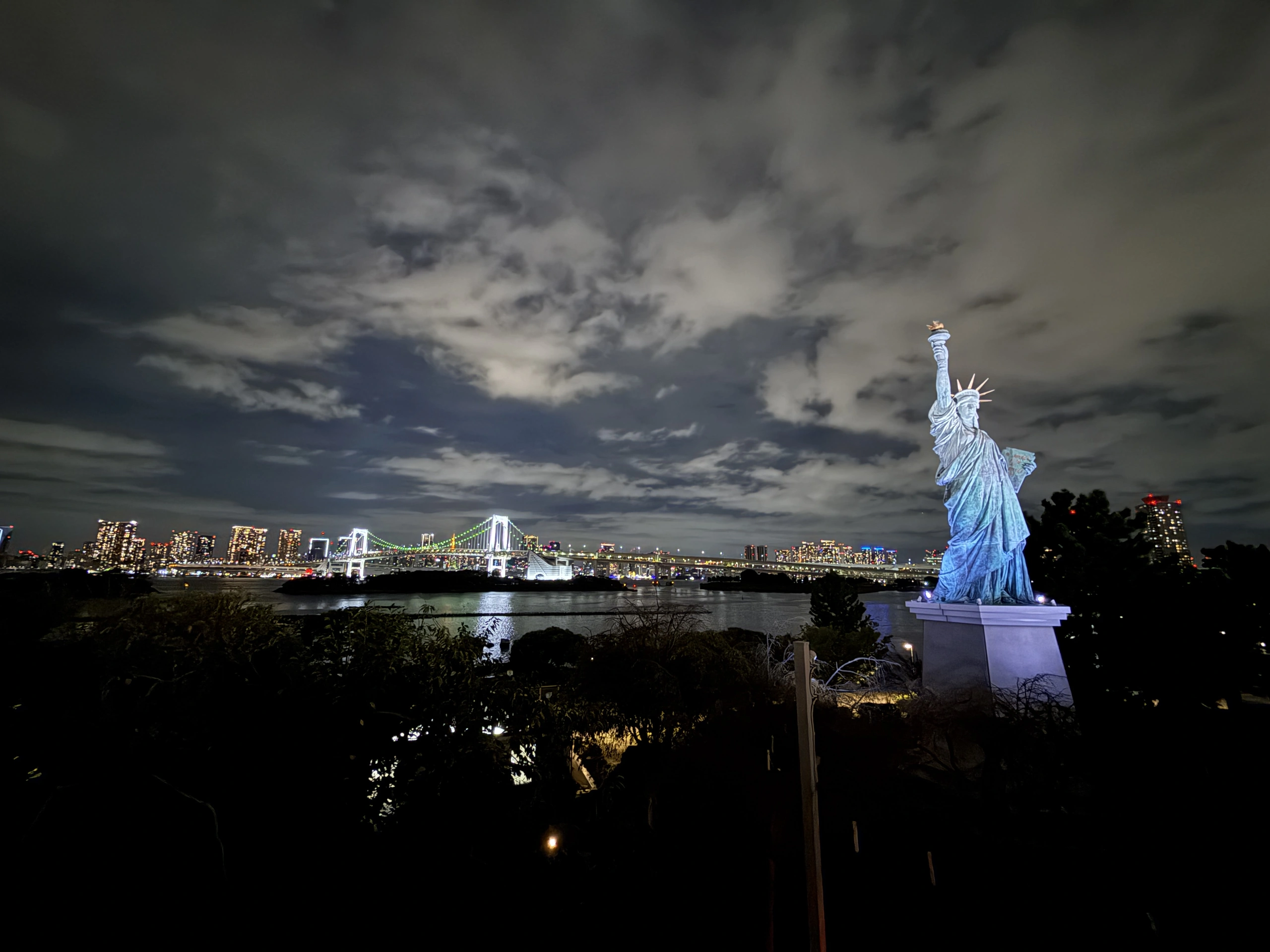
On free nights, Tokyo in another register. Sensō-ji lit up in Asakusa, the Nakamise shops already shuttered: their metal shutters, painted with the Asakusa Emaki, tell the neighborhood's history since the Edo period and can only be read this way, at night, once commerce falls silent and the painting stands alone — a gallery that doesn't exist by day. Beneath the great red lantern of the Kaminarimon stand guard Fūjin and Raijin, gods of wind and thunder, facing the street; on the other side, Tenryū and Kinryū, the celestial and golden dragons, face the temple. The five-story pagoda, lit from below until eleven, hangs suspended in the darkness in a way the daytime bustle never allows you to see. The Rainbow Bridge from Odaiba, taut cables lit white and blue over the bay's artificial landfill, urban geography won inch by inch from the sea, with the replica Statue of Liberty planted in the foreground like a citation in parentheses. And Zōjō-ji, the Tokugawa funerary temple founded in 1393, with its 1622 Sanmon — the "gate of the three liberations": from greed, from hatred, from ignorance, one of the few Edo-era structures to survive the 1945 bombings — and the red-and-white silhouette of Tokyo Tower rising just behind it, two centuries of architectural distance gathered in the same photograph without either ceding ground to the other: each generation builds upon the last without needing to tear it down. On the north side of the grounds, a field of small Jizō figures dressed in red, offerings for unborn children, spin their pinwheels silently beneath the lit tower — the same city capable of holding, a hundred meters apart, the ostentation of power and the quietest mourning, the same juxtaposition of permanence and impermanence that a dry garden condenses into a single stone.
Kimura’s Garden
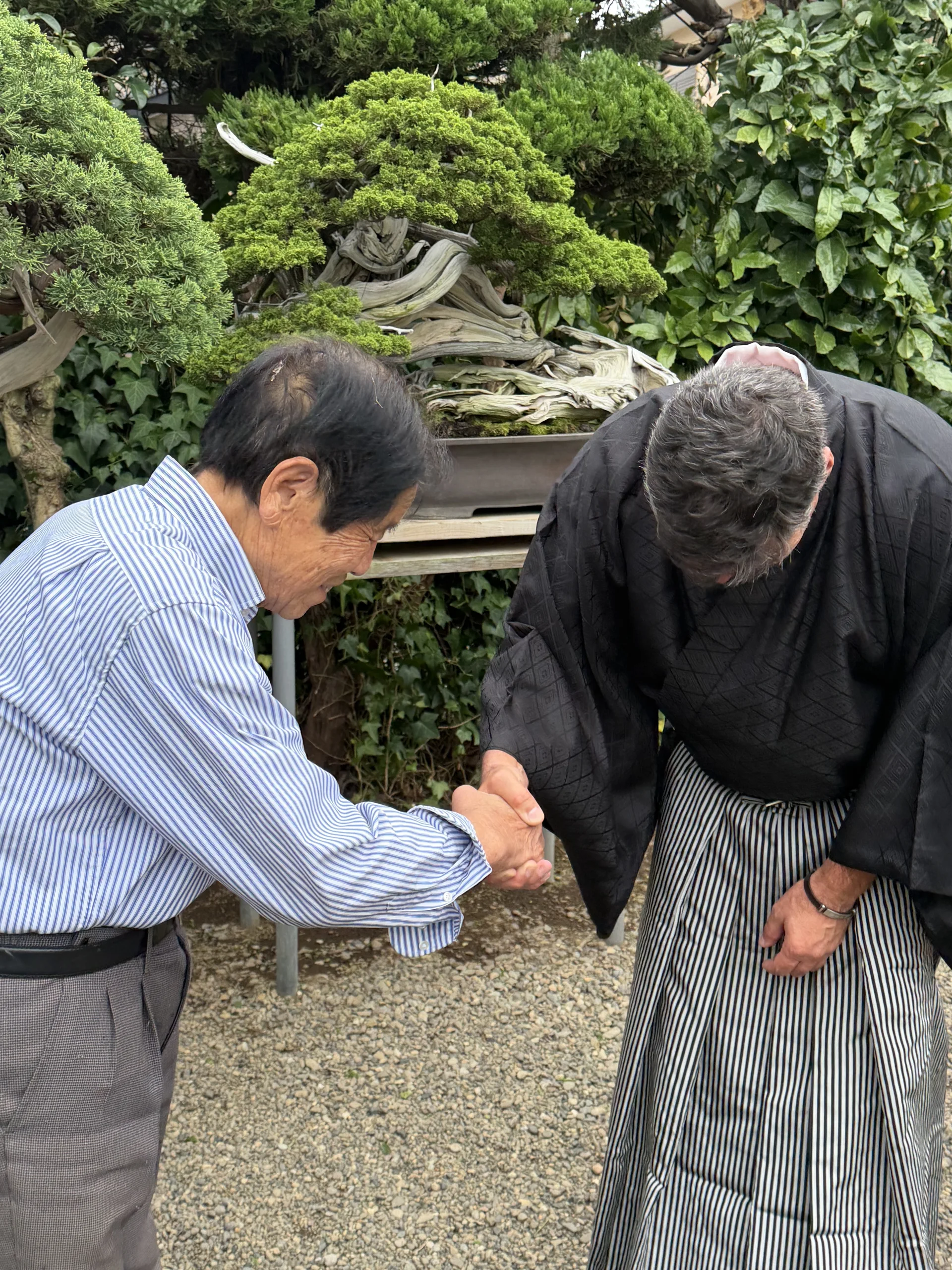
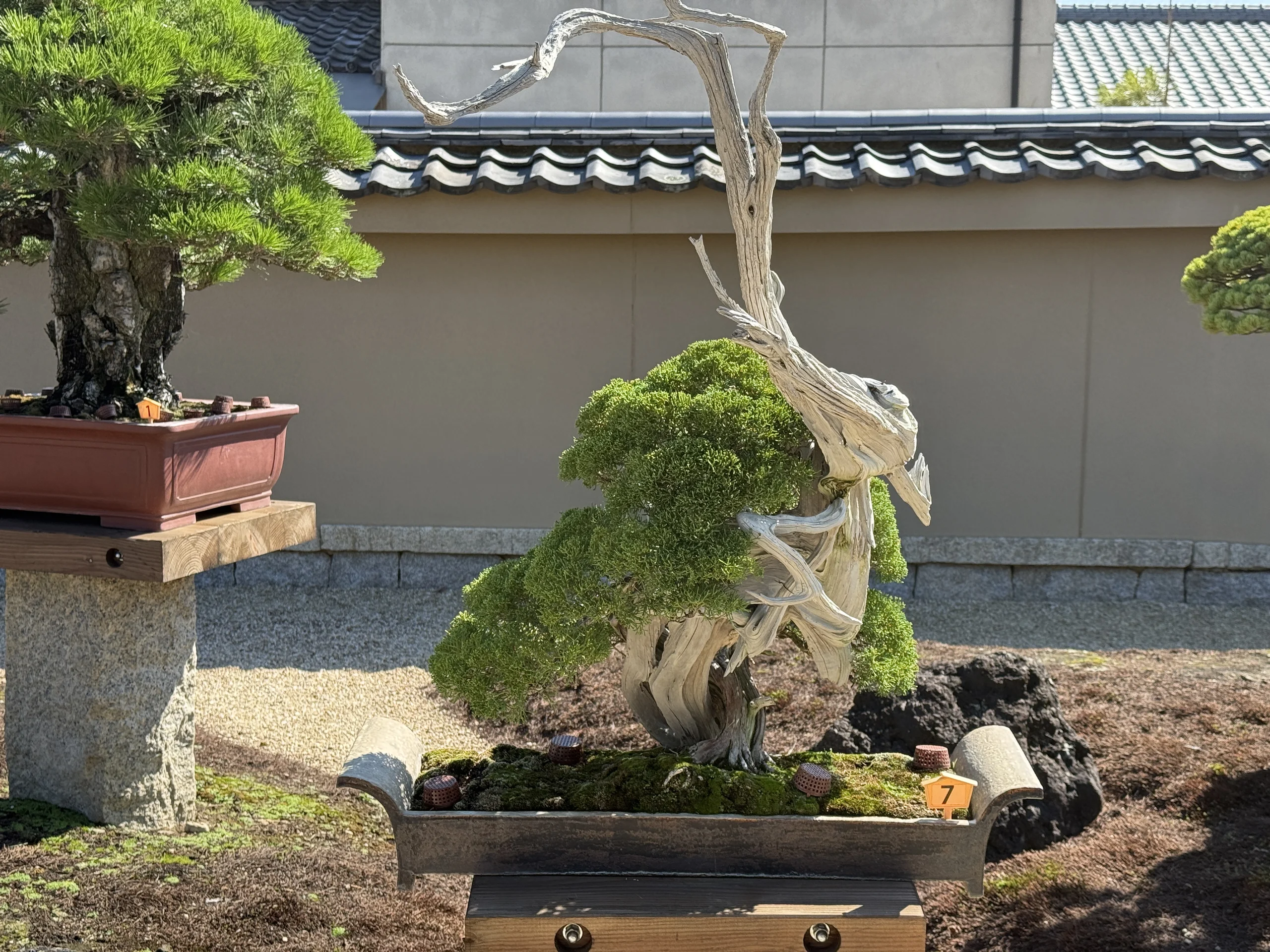
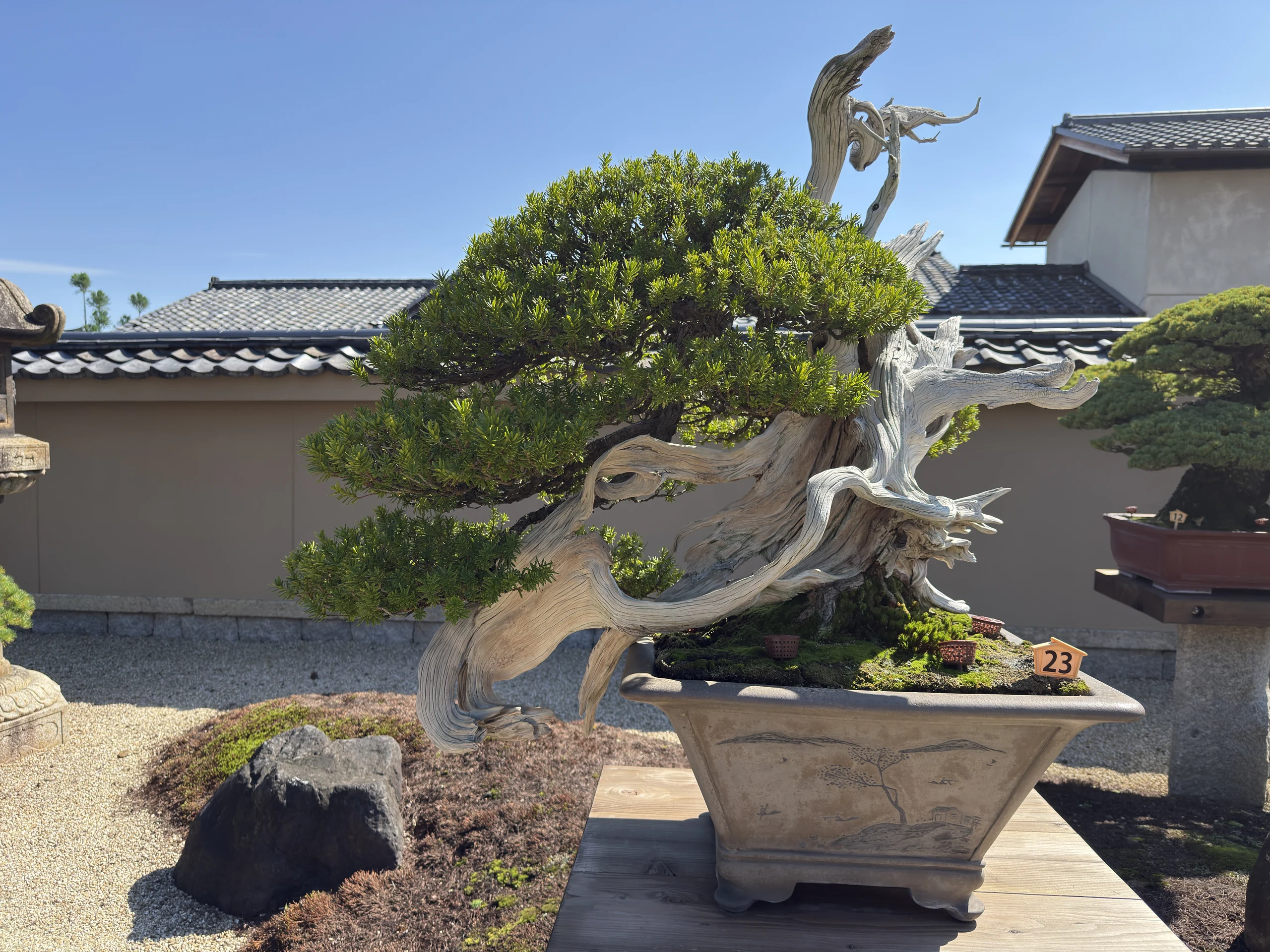
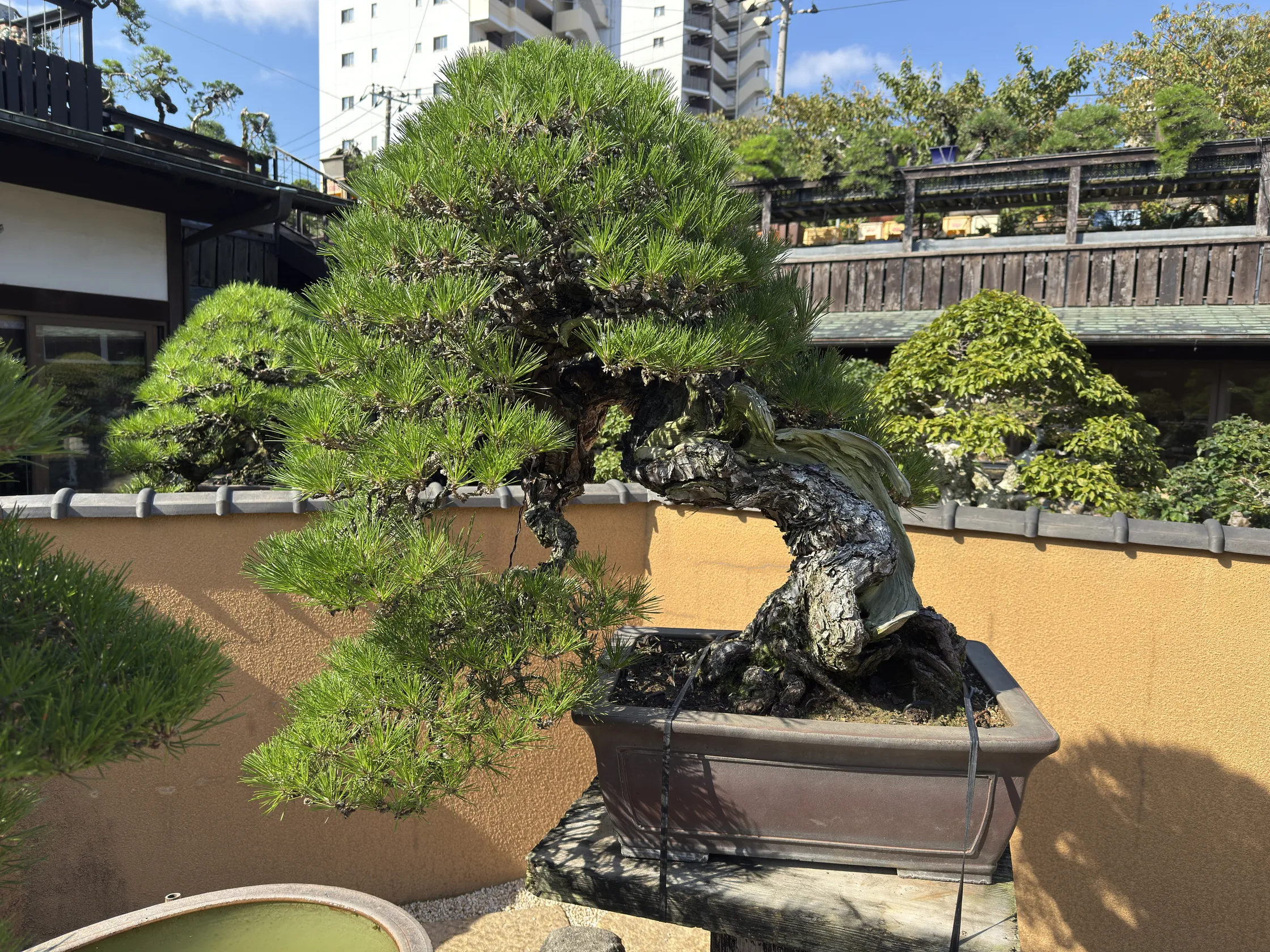
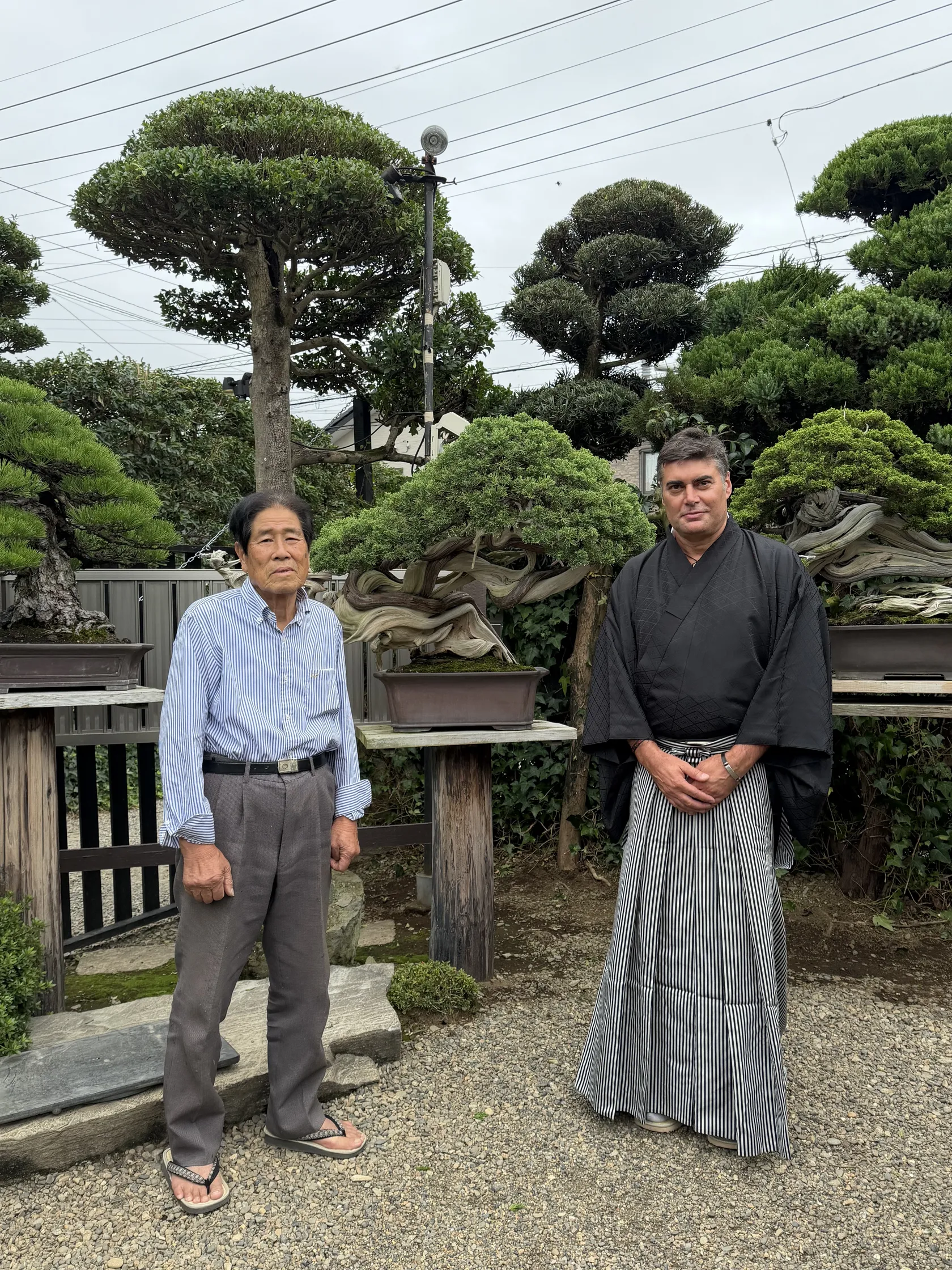
Masahiko Kimura is a name every bonsai enthusiast knows long before crossing the Pacific: his work with juniper and pine, taking deadwood (jin and shari) to an almost sculptural point, has shaped a whole generation. Visiting his garden meant stepping into the workshop where that eye is exercised every day.
Many call him “the Magician”, and not out of exaggeration: his demonstrations, repeated for decades across Europe, the United States and Asia, have something of a stage act, in which a rough tree, fresh from the mountain or the nursery, becomes a composition with character in a matter of hours. Anyone who has watched him work, live or on video, talks about the same thing: his decisiveness. Every wire, every cut, every turn of the trunk answers to an idea of the finished tree that was already clear before he touched it, and that certainty is the fruit of more than half a century of craft, not of chance.
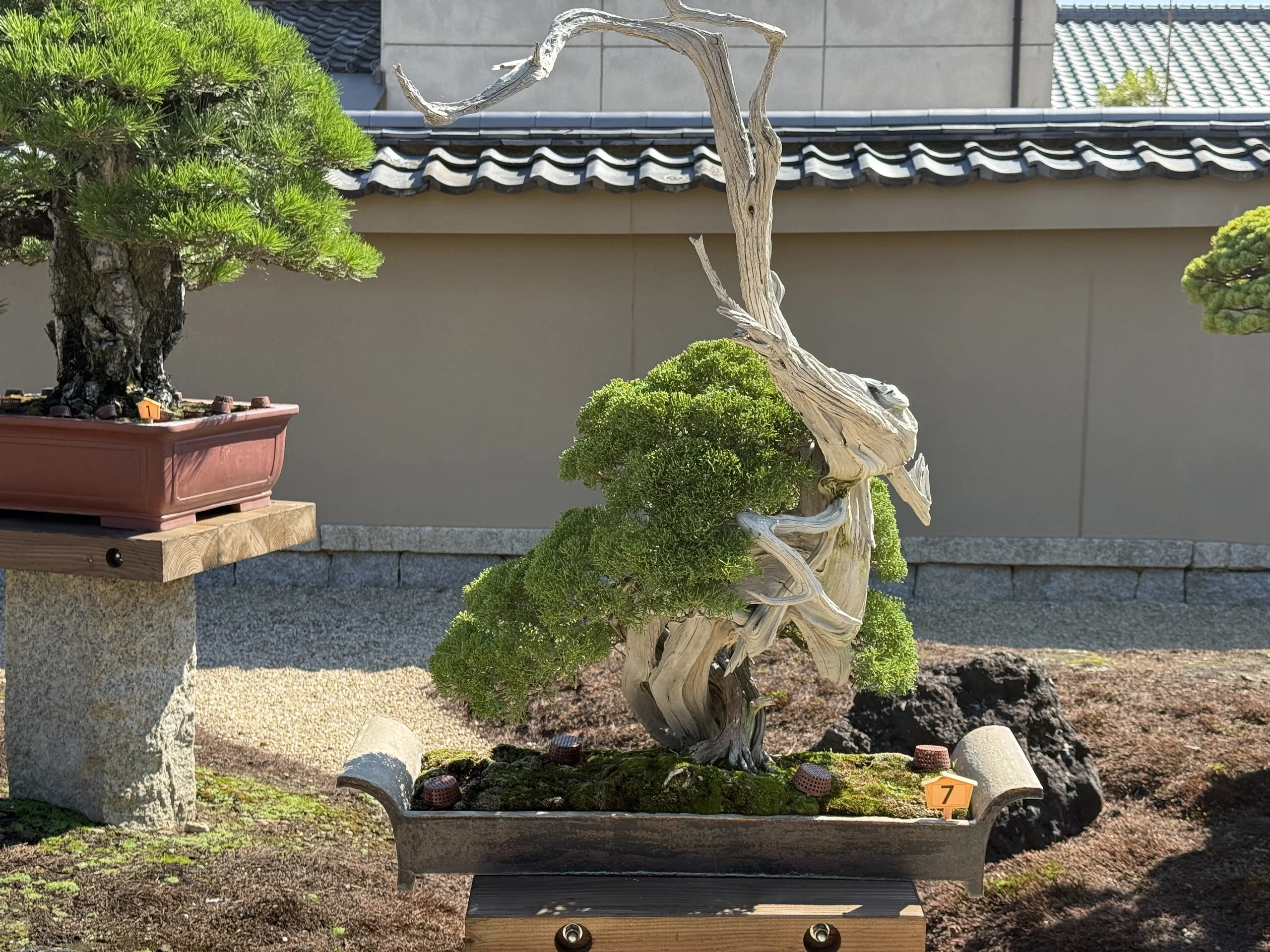
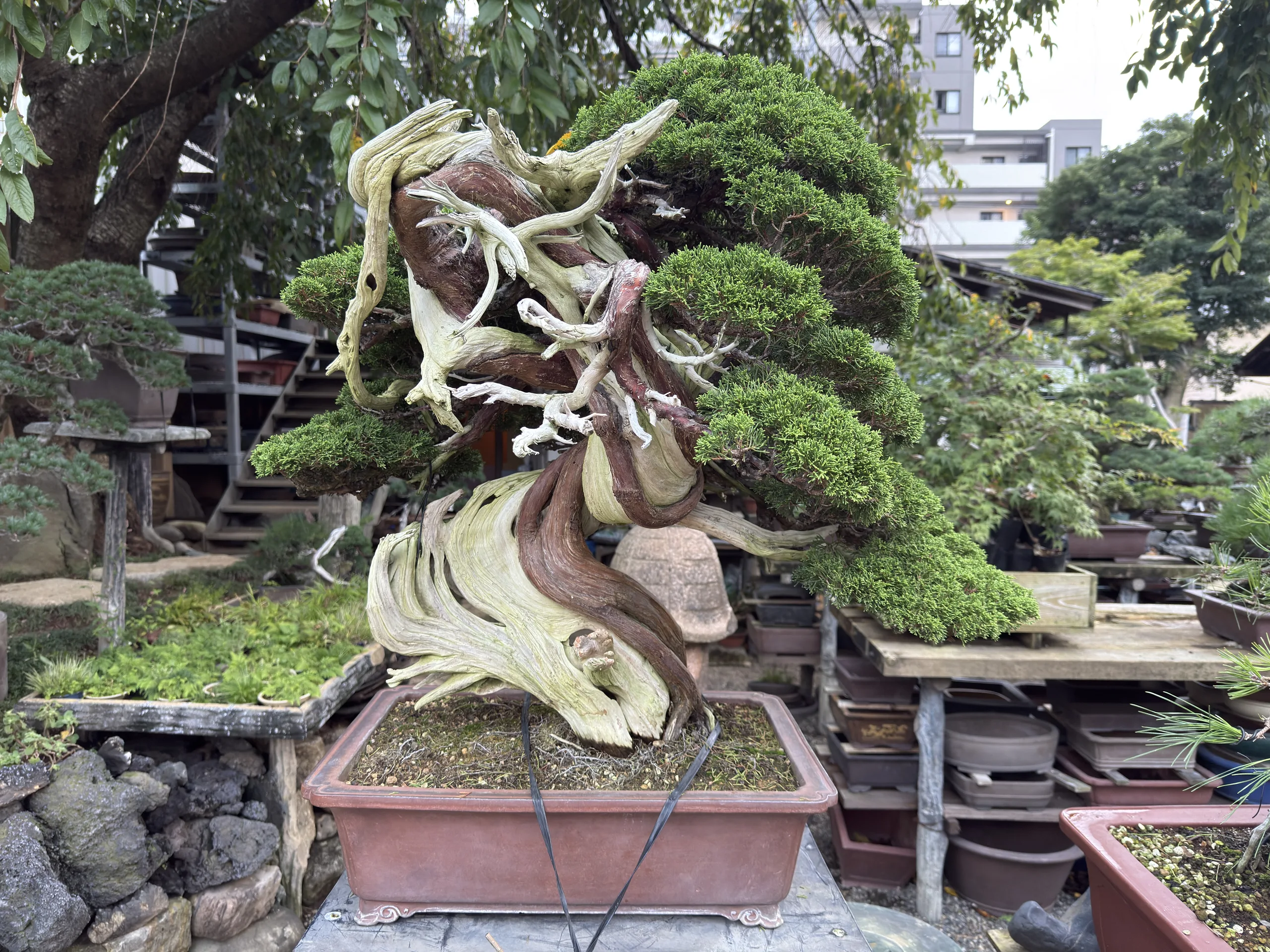
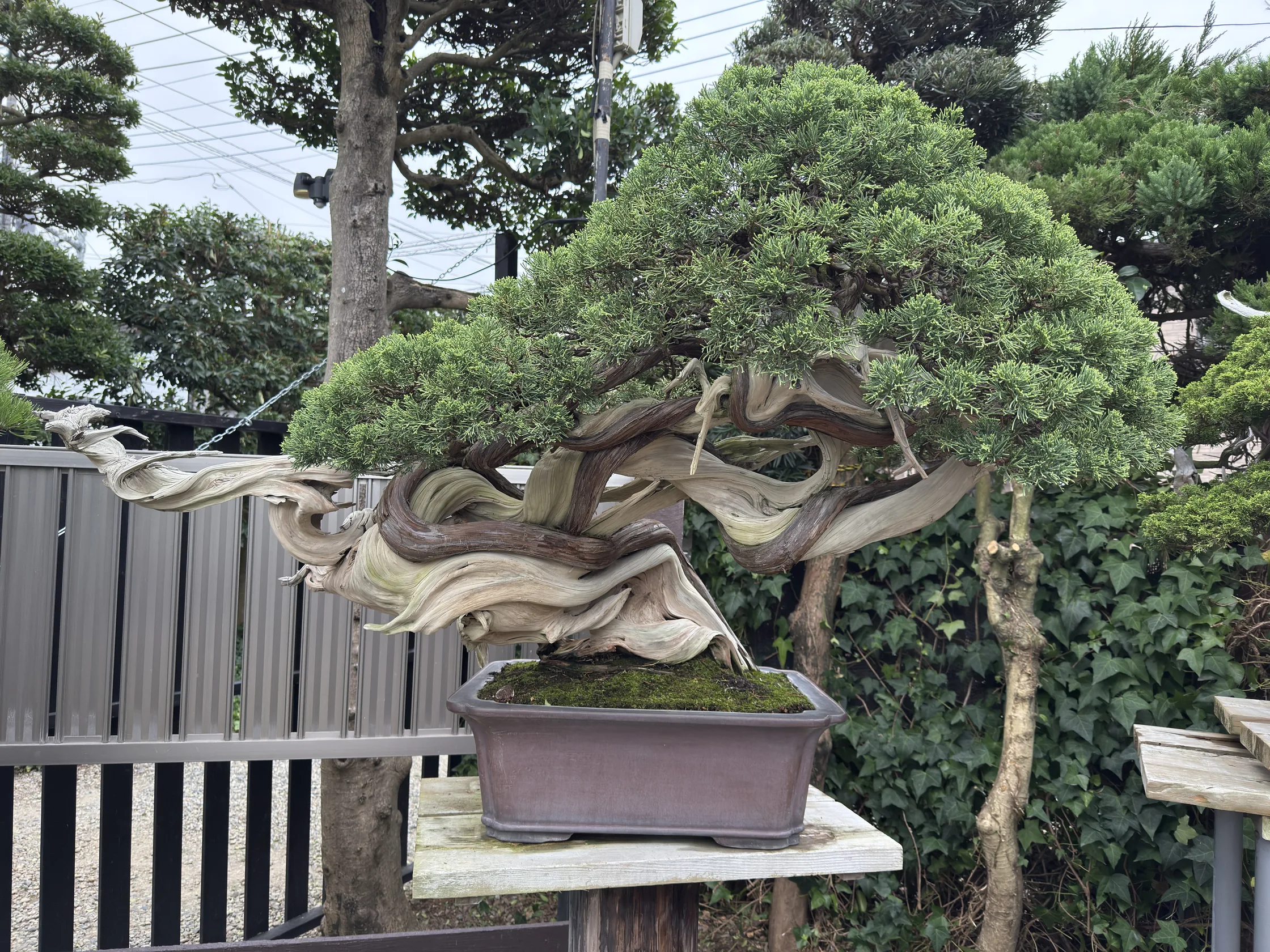
His most recognizable technical contribution is deadwood. Before him, jin and shari were details hinted at with caution; Kimura took them to a grand scale: branches turned into white spears, hollowed trunks, threads of living bark climbing in twists between the stripped wood, all worked until it looks like the doing of wind, lightning and centuries of snow. On a shimpaku, that white wood against the dense green of the foliage is the purest contrast bonsai has to offer.
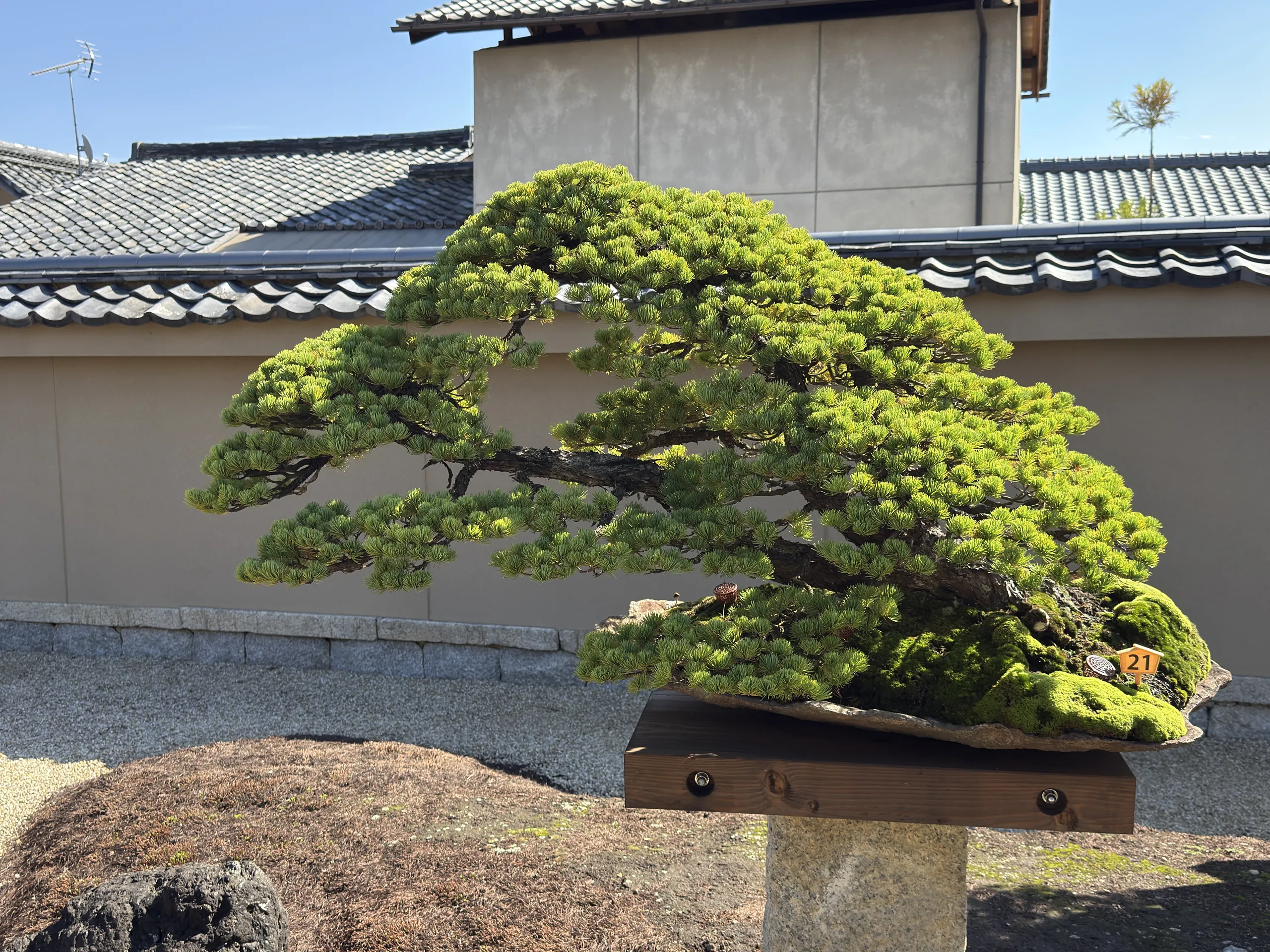
For someone who comes, as I do, from physical geography and field observation, that deadwood is no artifice: it is the exact reading of what happens to a tree in the mountains when the wind tears off a branch, the snow splits a trunk, and the rest goes on living with what remains. Kimura does not invent that story; he condenses it and makes it visible. Among the benches and the trees at different stages of work, some specimens stop you in your tracks; one of them, whose white deadwood coils like a dragon around the living trunk, deserves the large photograph that follows.
Mount Fuji
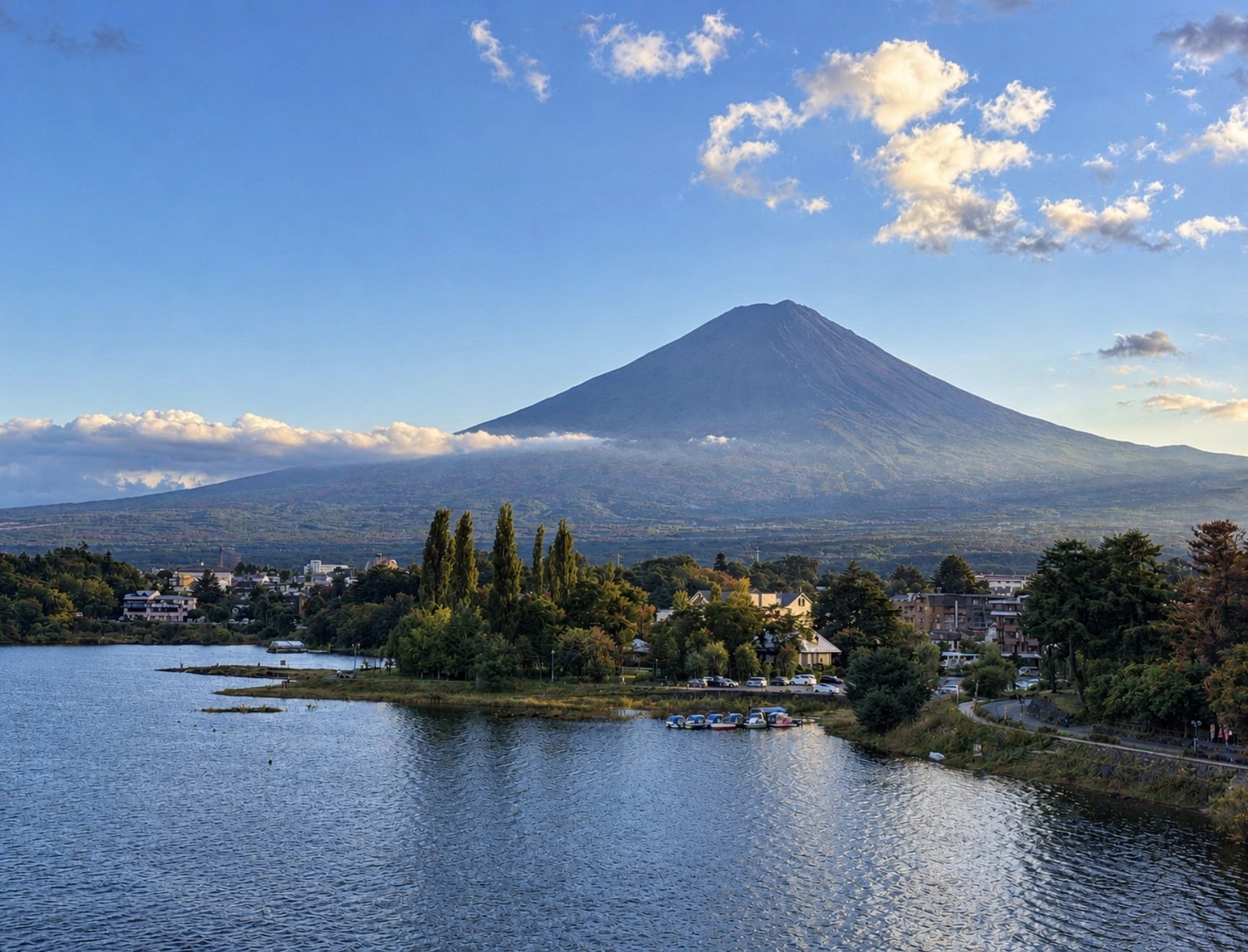
Early departure from Shinjuku, direct bus to Kawaguchiko. Fuji is, geologically, a very young stratovolcano, almost perfect in its conical symmetry because its last great eruption — the Hōei, in 1707 — has barely had time to be worn down by erosion. From the north shore, at Ubuyagasaki, it doubles in the water when there's no wind — the Sakasa Fuji, a perfect cone and its mirror, cut across by some heron crossing the frame at the worst or best possible moment, depending how you look at it. Further on, from Oishi Park, the same snow-capped cone repeats with the entire lake in the foreground and forest all around: it's the point where the day stops hurrying, where you sit down and no longer try to get anywhere else. In the suiseki tradition, this silhouette has its own name, fuji-gata, the mountain-stone par excellence, the shape every collector searches for and almost never finds at tray scale. The Momiji Tunnel, a passage of maples (Acer palmatum) already turning from green to red and ochre as chlorophyll breaks down and gives way to anthocyanins, framing the mountain in the background as though the entire autumn had been planted with that single compositional intent. The Kachikachi ropeway climbs to 1,075 meters; I walked down through the forest, a black kite (Milvus migrans) gliding over the lake below, reading the same landscape as I was, but from a very different vertical.
Omiya Bonsai Village
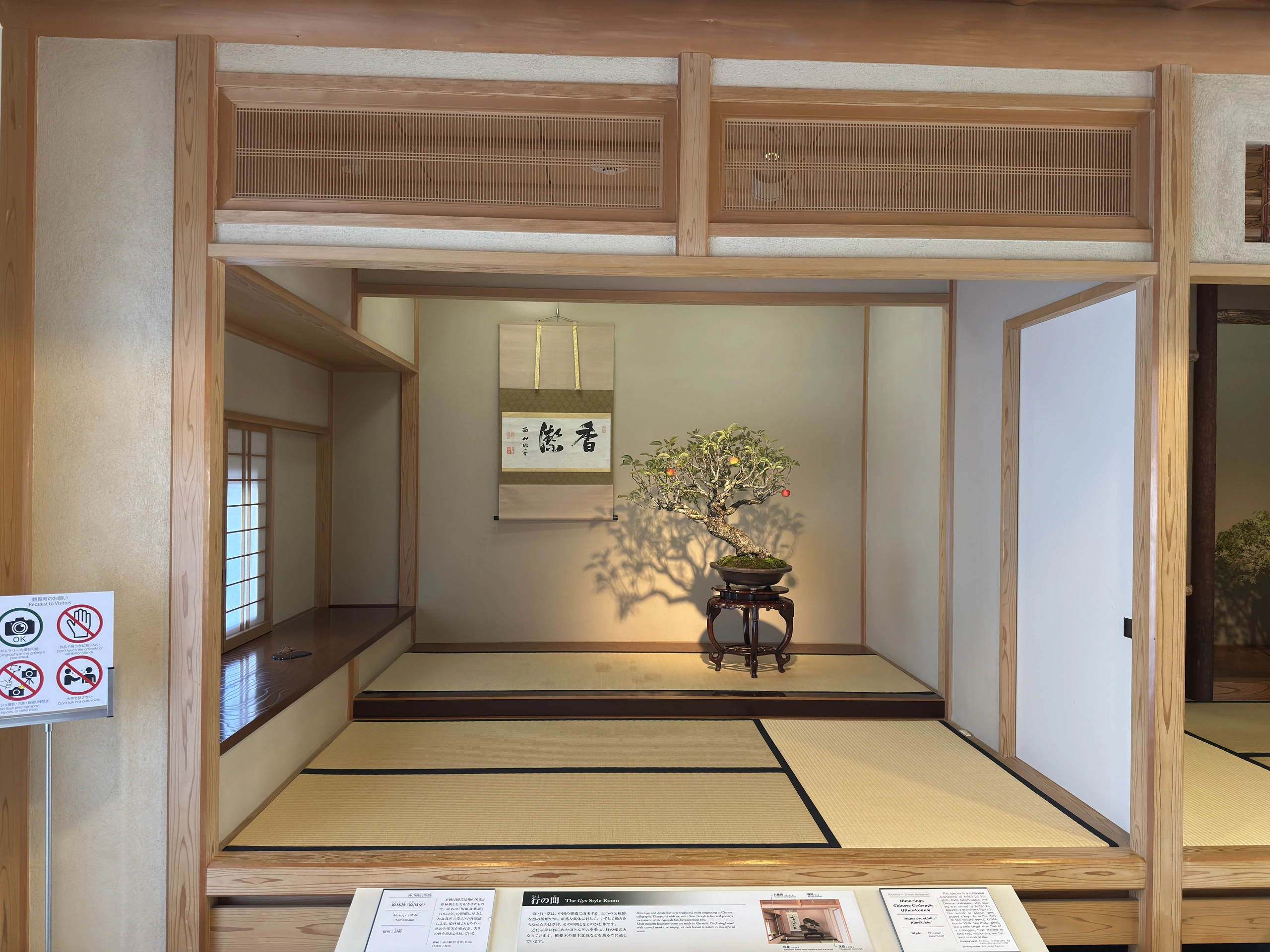
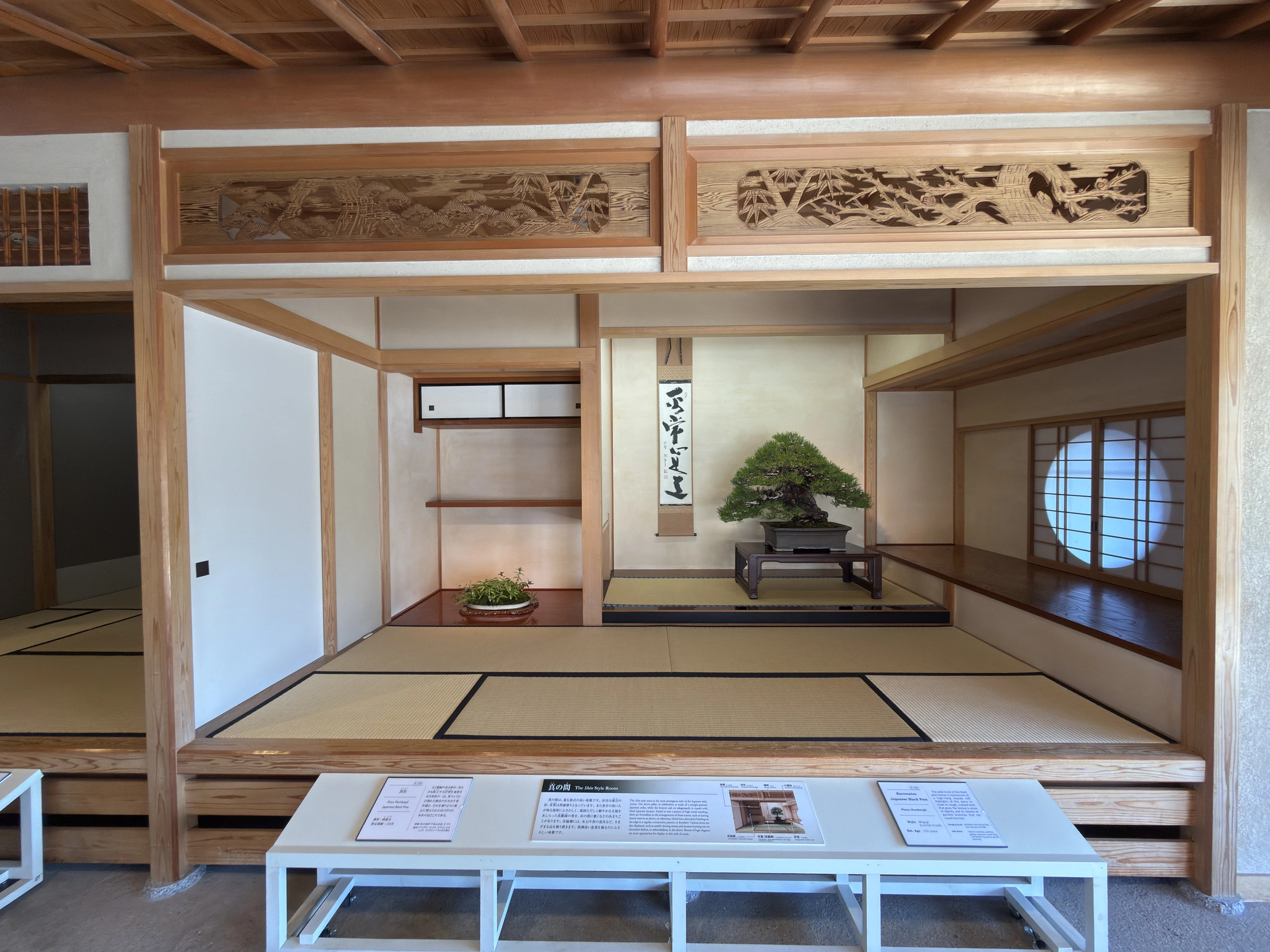
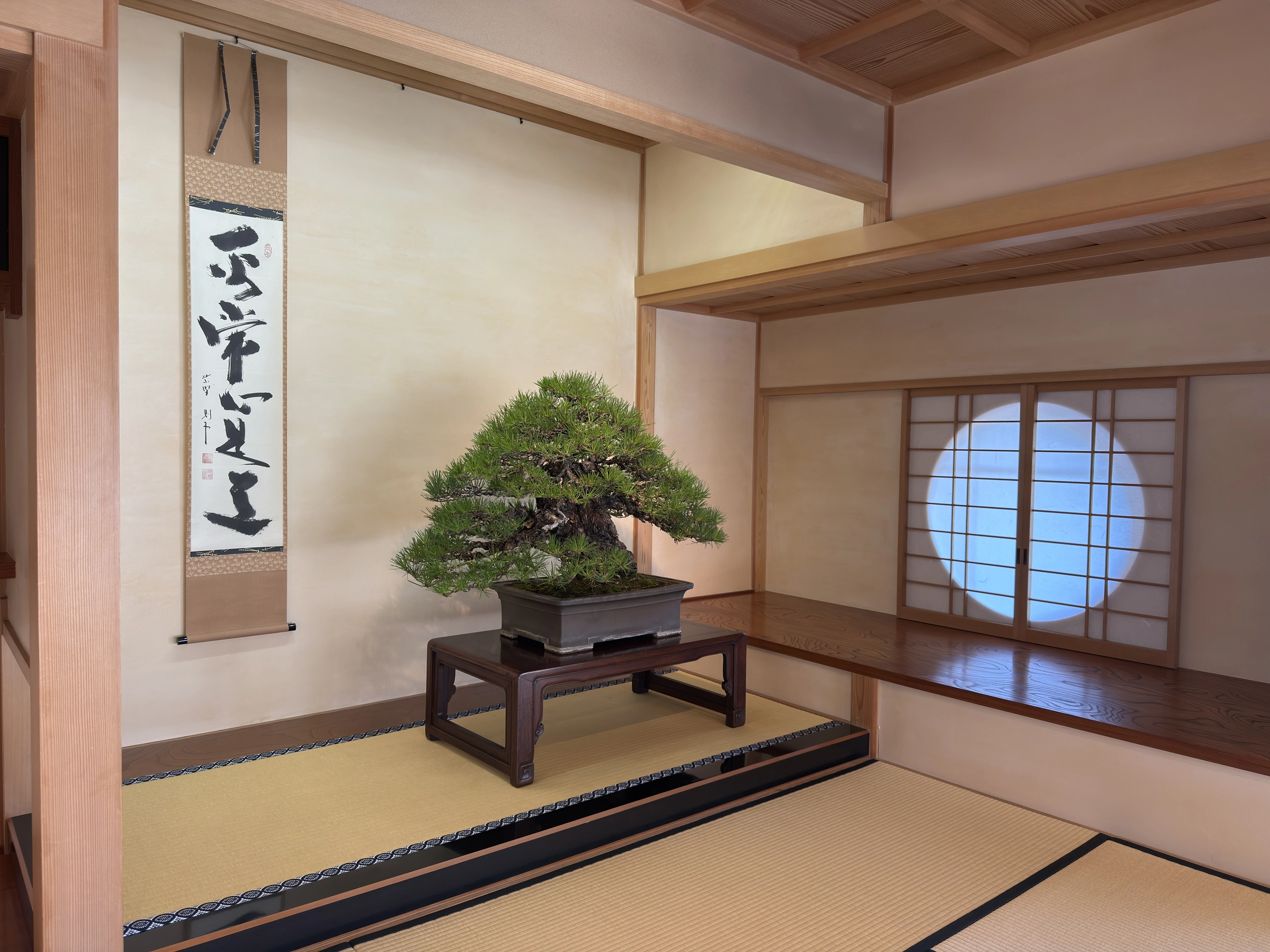
Five museums and several private nurseries covered in one long afternoon. Specimens of shimpaku (Juniperus chinensis var. sargentii) and black pine (Pinus thunbergii) with centuries of documented cultivation history, jin and shari techniques I've been studying for twenty-three years but here seen at their origin, not in copy. There's a palpable difference between studying a technique in a book and laying a hand on a tree that has passed through six or seven generations of different hands, all faithful to the same intention of form. After the days at Shunkaen, the gaze is no longer only that of an instructor: the lineage is now recognized in the technique as well, not just on paper — ki, the tree's vital energy, is transmitted in the gesture of pruning just as it is in the calligraphic stroke, and both are learned the same way: through repetition, correction, and silence.
The museum, the first in the world dedicated exclusively to bonsai, holds pieces that would seem almost unbelievable anywhere else: a Yeso spruce (Picea glehnii) collected in 1931 on Kunashir Island by Tomekichi Katō and his son Saburō, with an estimated thousand years of life and known as Todoroki, which over time became a quiet symbol of the village itself — Saburō Katō would later become one of the figures behind both the founding of Omiya and the spread of bonsai beyond Japan. White pines with five centuries of documented cultivation, some protected as cultural properties, share the room with junipers two or three hundred years old that, in such company, almost pass for young. No glass case or rope separates the visitor from the tree: the only distance is the one imposed by respect, and a stillness no sign explicitly asks for.
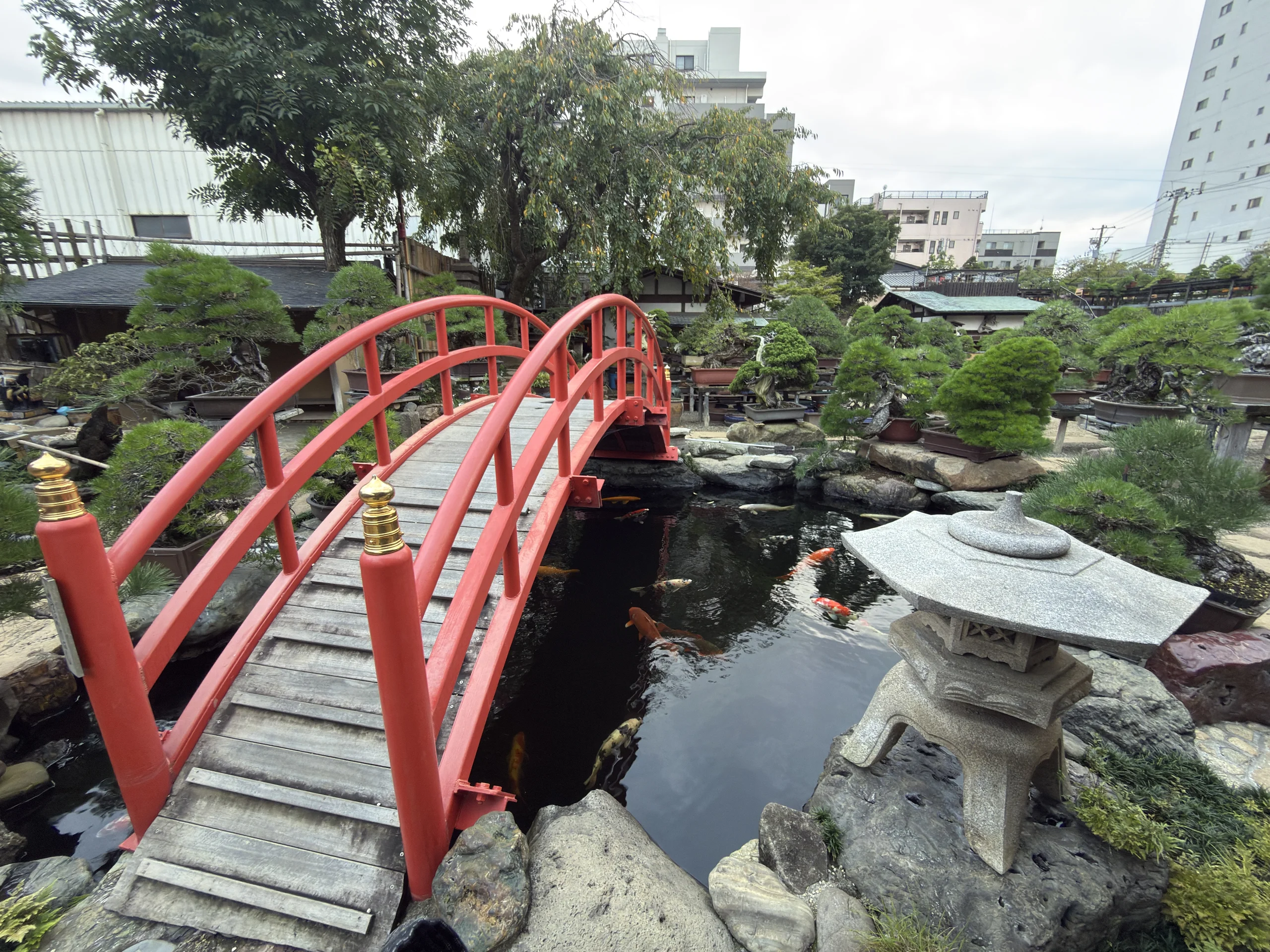
Outside the museum, the village unfolds into a handful of private nurseries that have stood since 1925, when a group of professional gardeners settled on what was then farmland here after the great Kantō earthquake of 1923. Among those nurseries is that of Masahiko Kimura, born in this very district of Saitama in 1940 and trained for eleven years at the Tōju-en nursery under master Motosuke Hamano: today he is recognized as the great technical innovator of contemporary bonsai, the one who took jin and shari — deadwood worked as an active part of the composition, not as a flaw to disguise — to extremes no one before him had dared show in a shimpaku. His garden can only be visited by appointment and doesn't always fit into a single afternoon, but it's enough to walk the surrounding streets, see the specimens in training behind the glass and the black pines half-wired in the yards, to understand that the technique I teach in my own classes is still practiced here daily, as a craft rather than an exception.
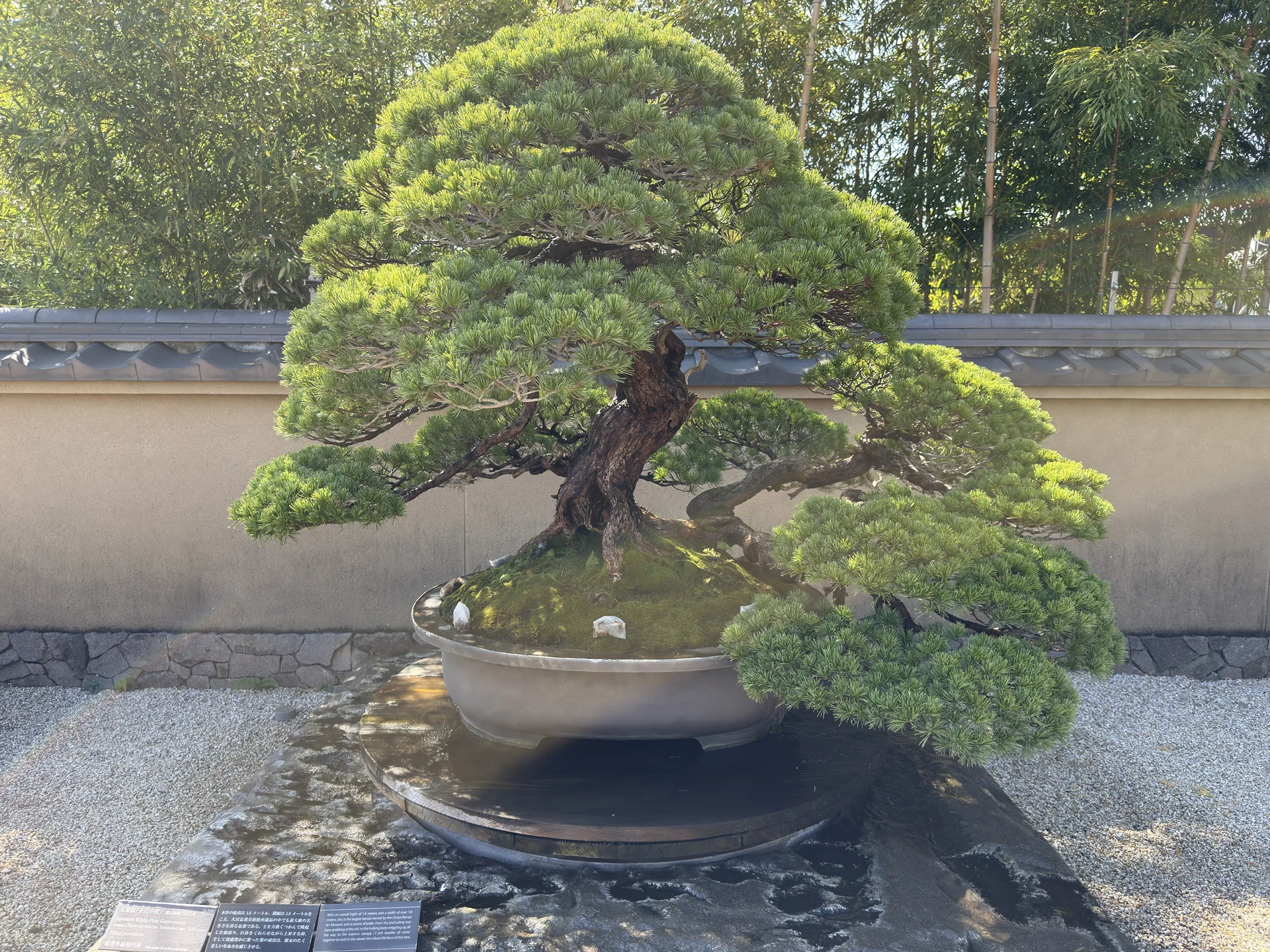
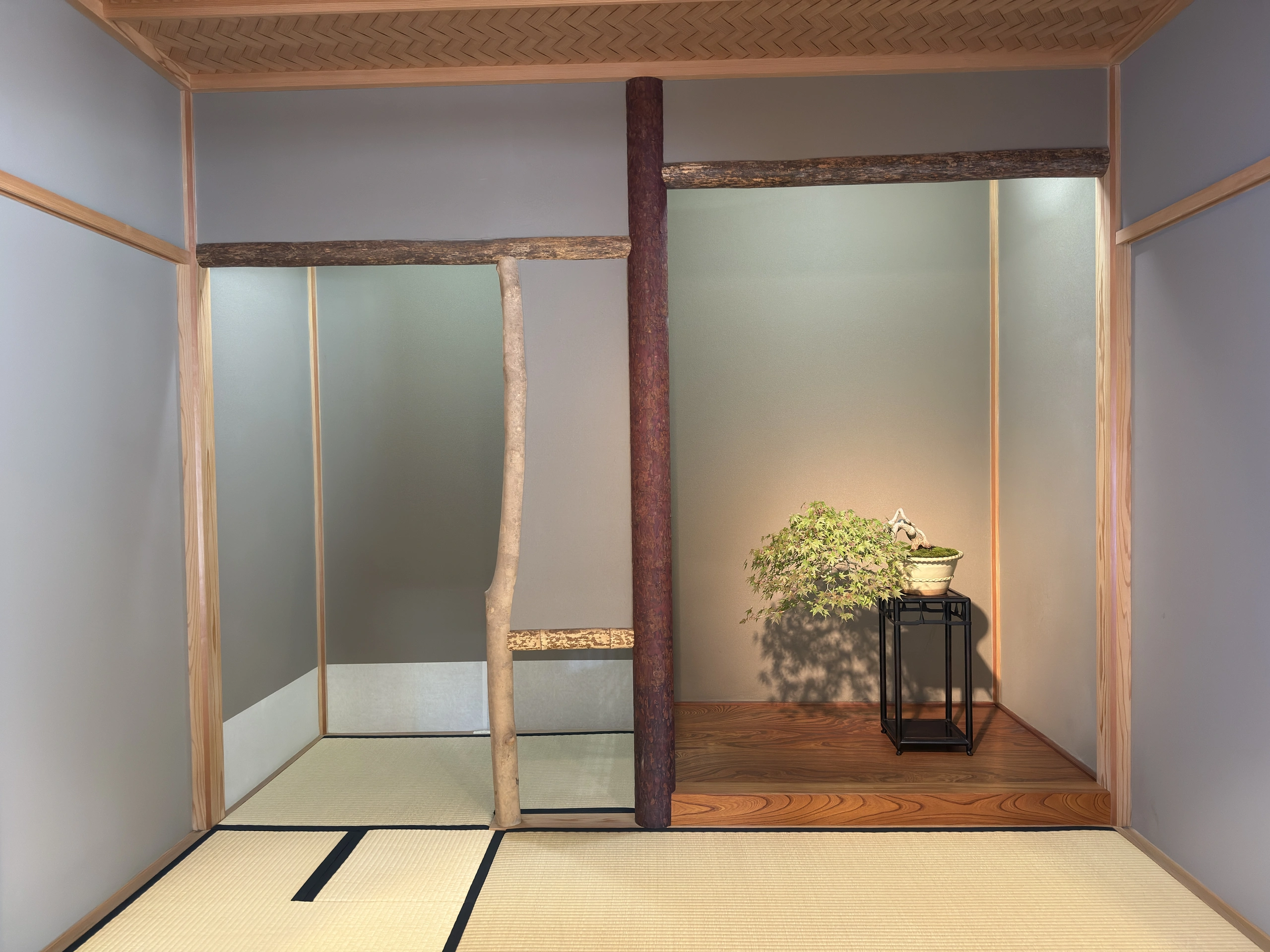
Nikkō
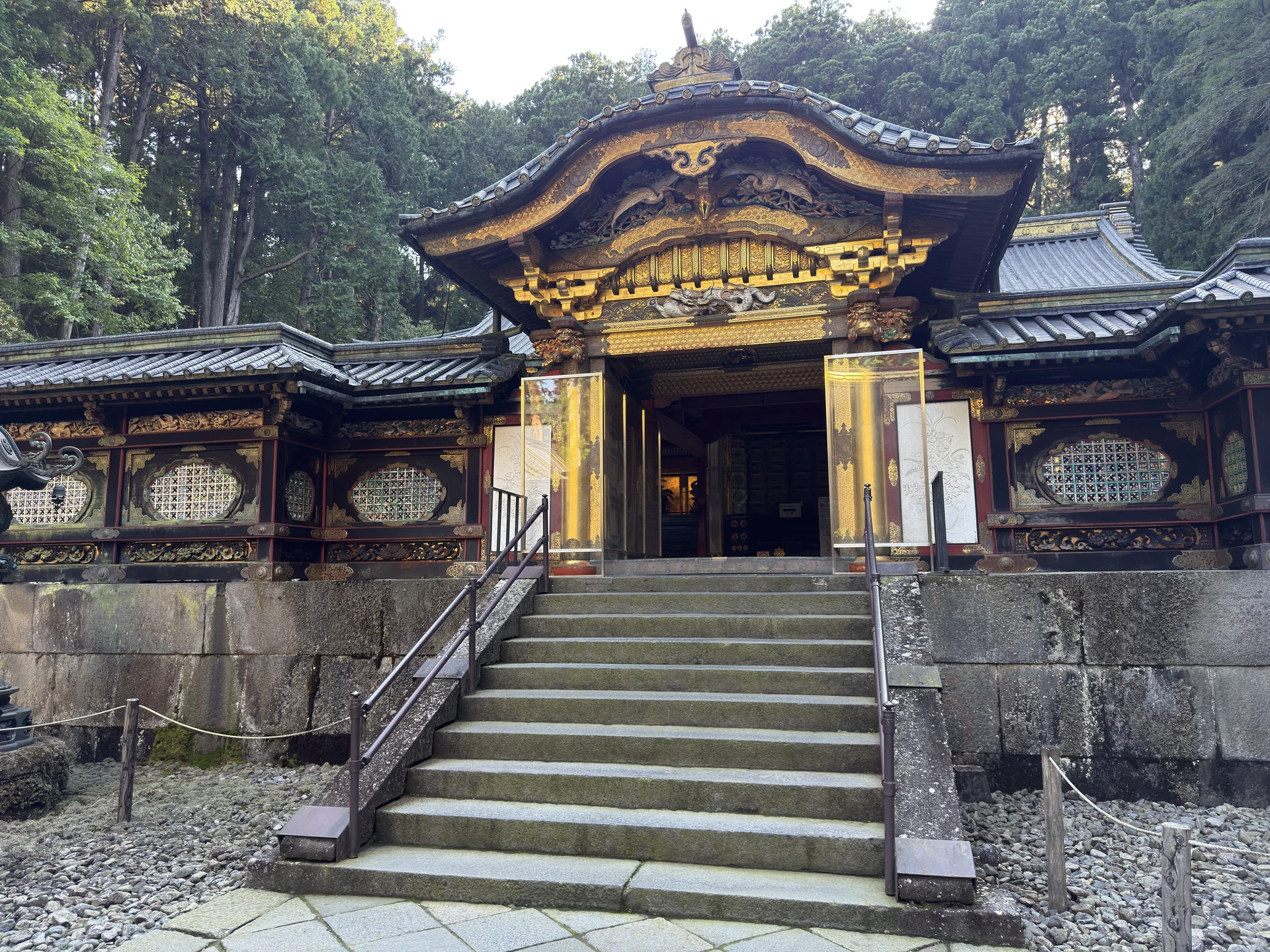
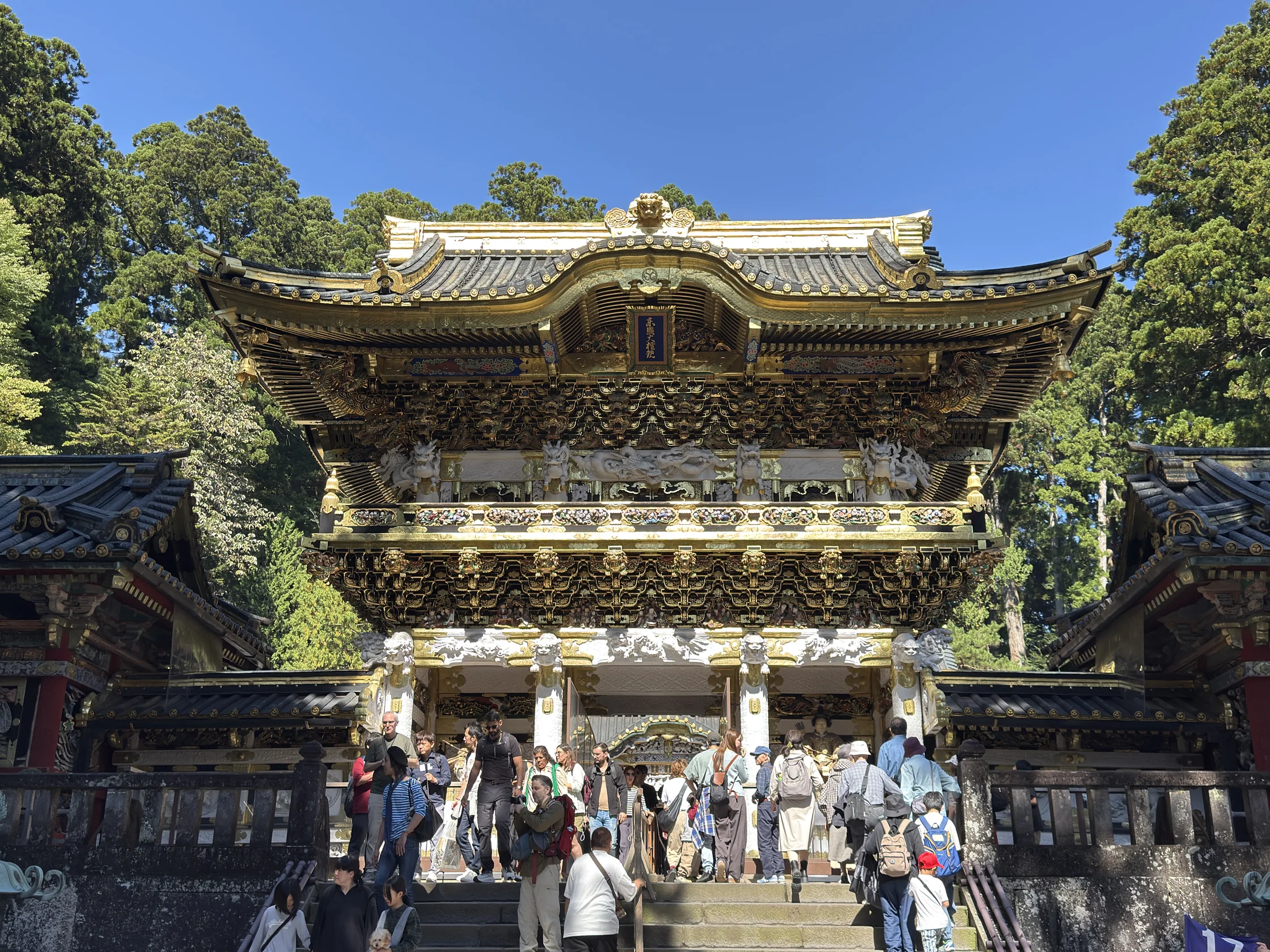
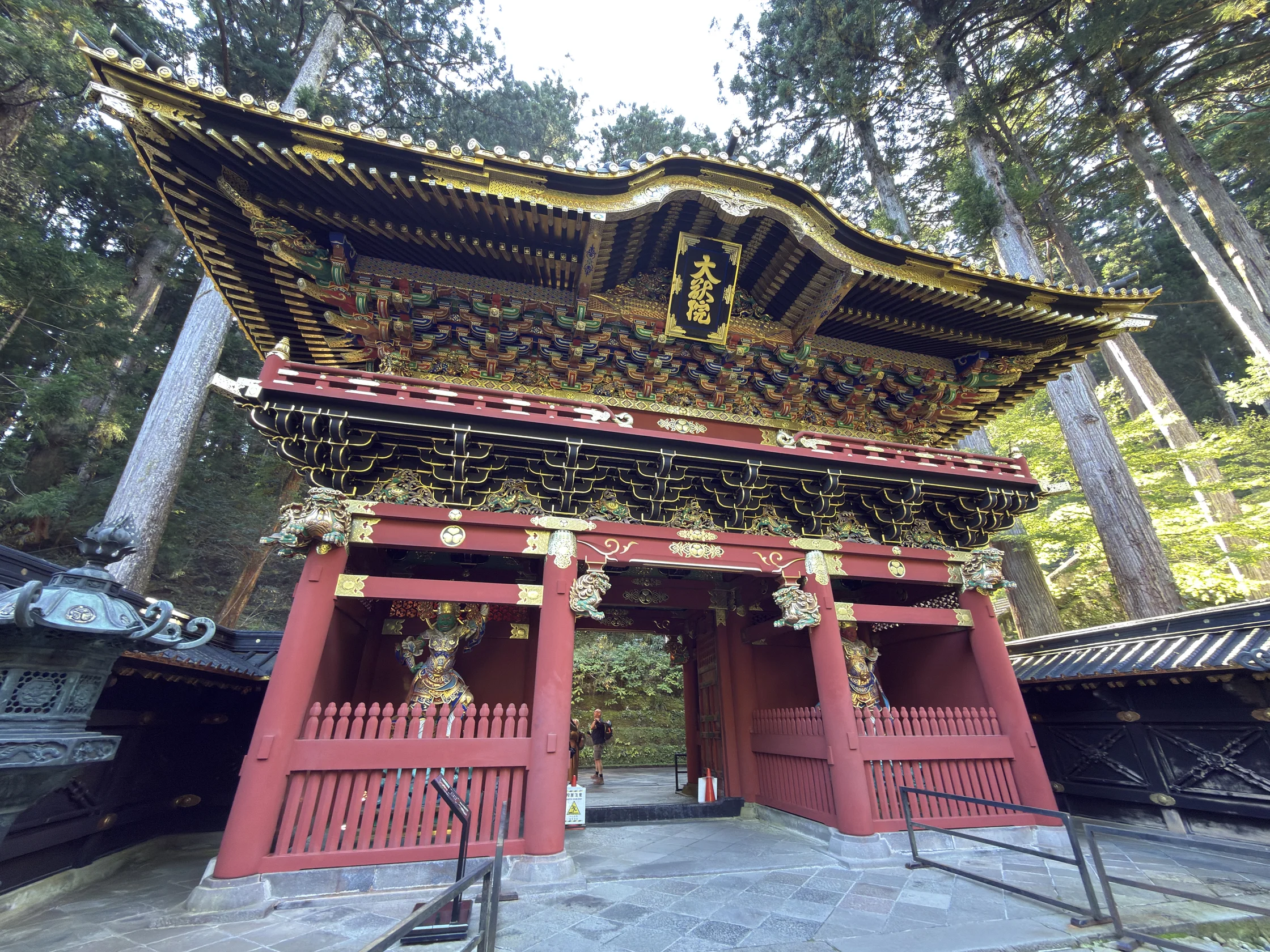
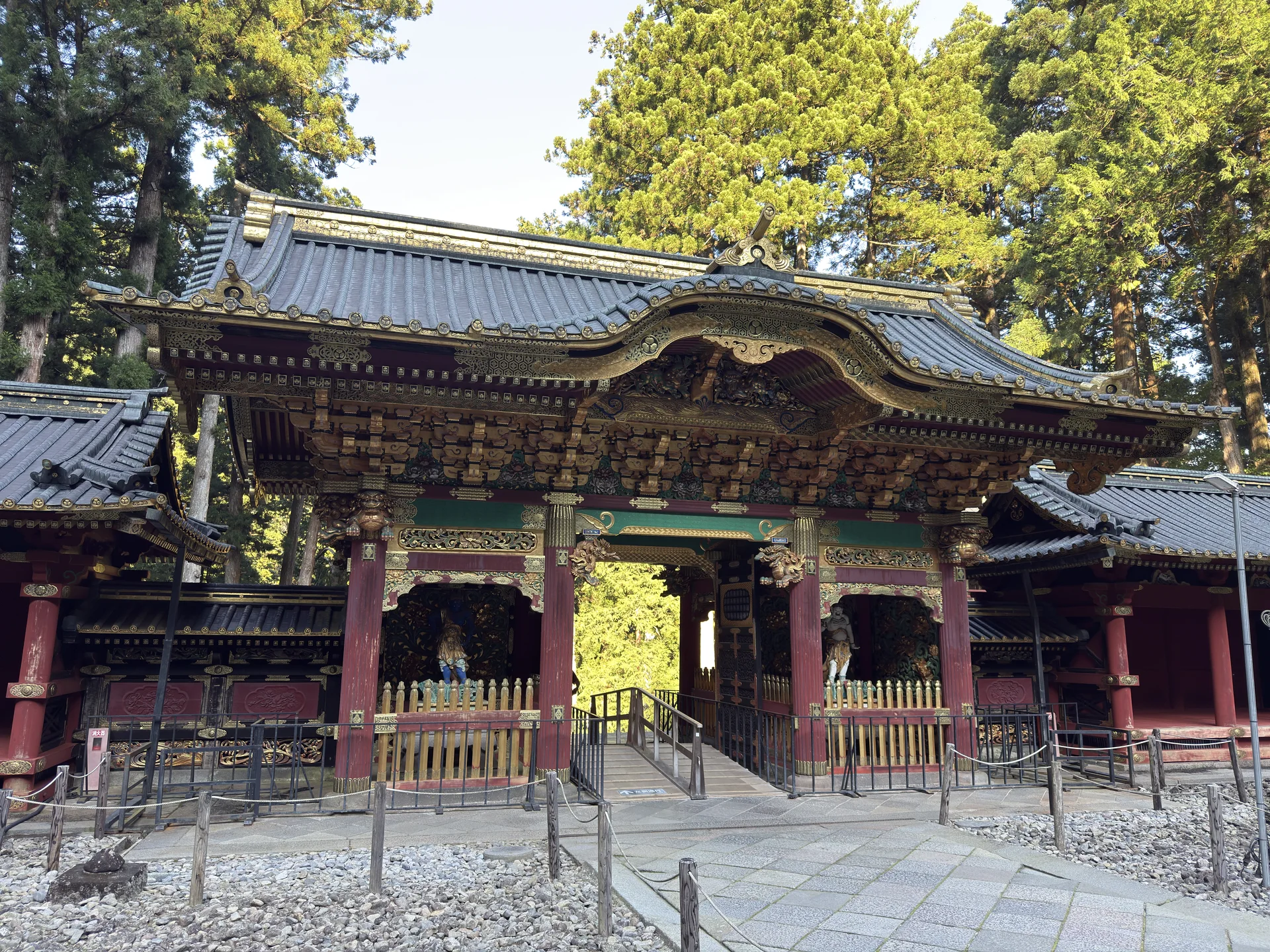
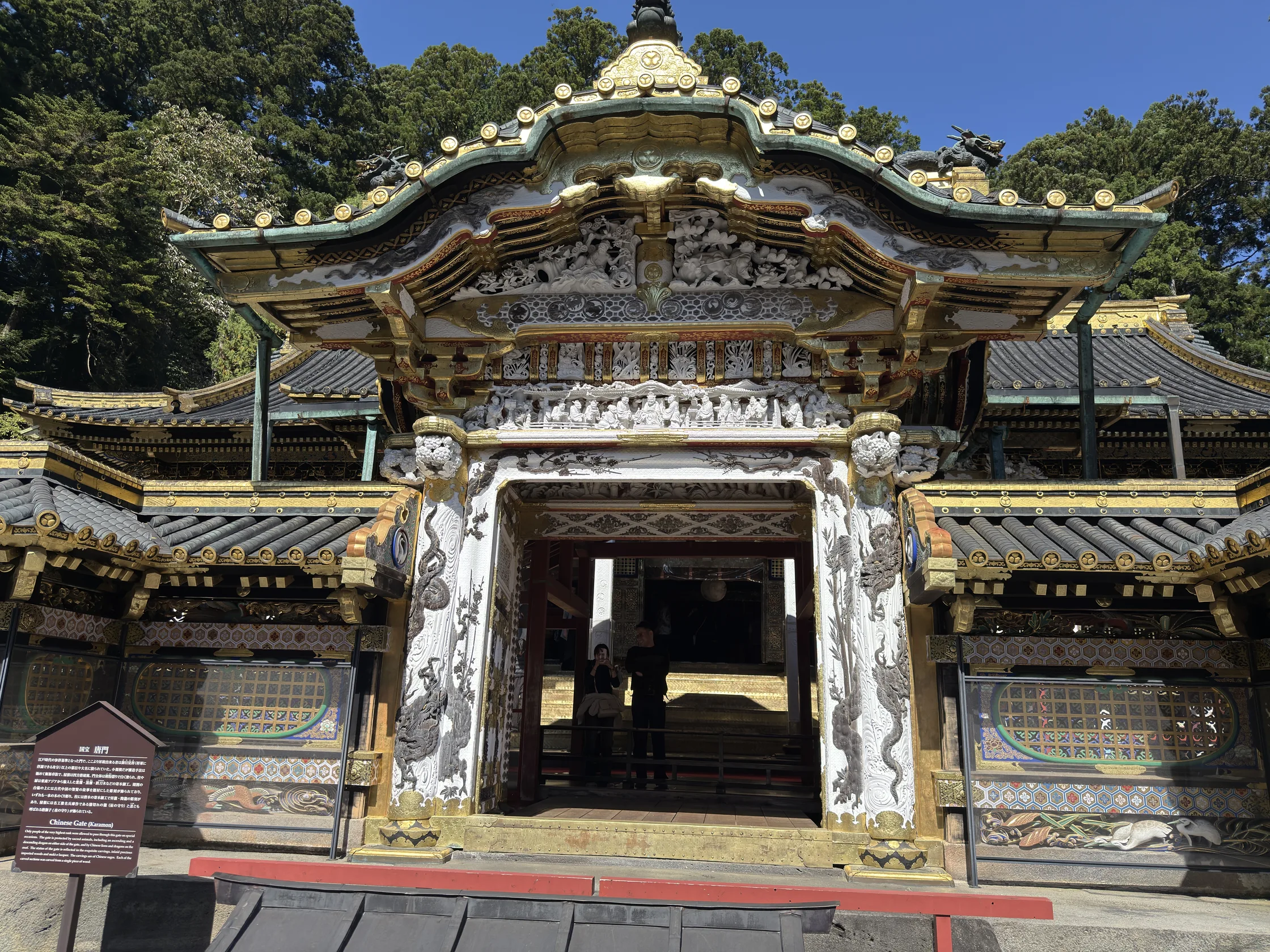
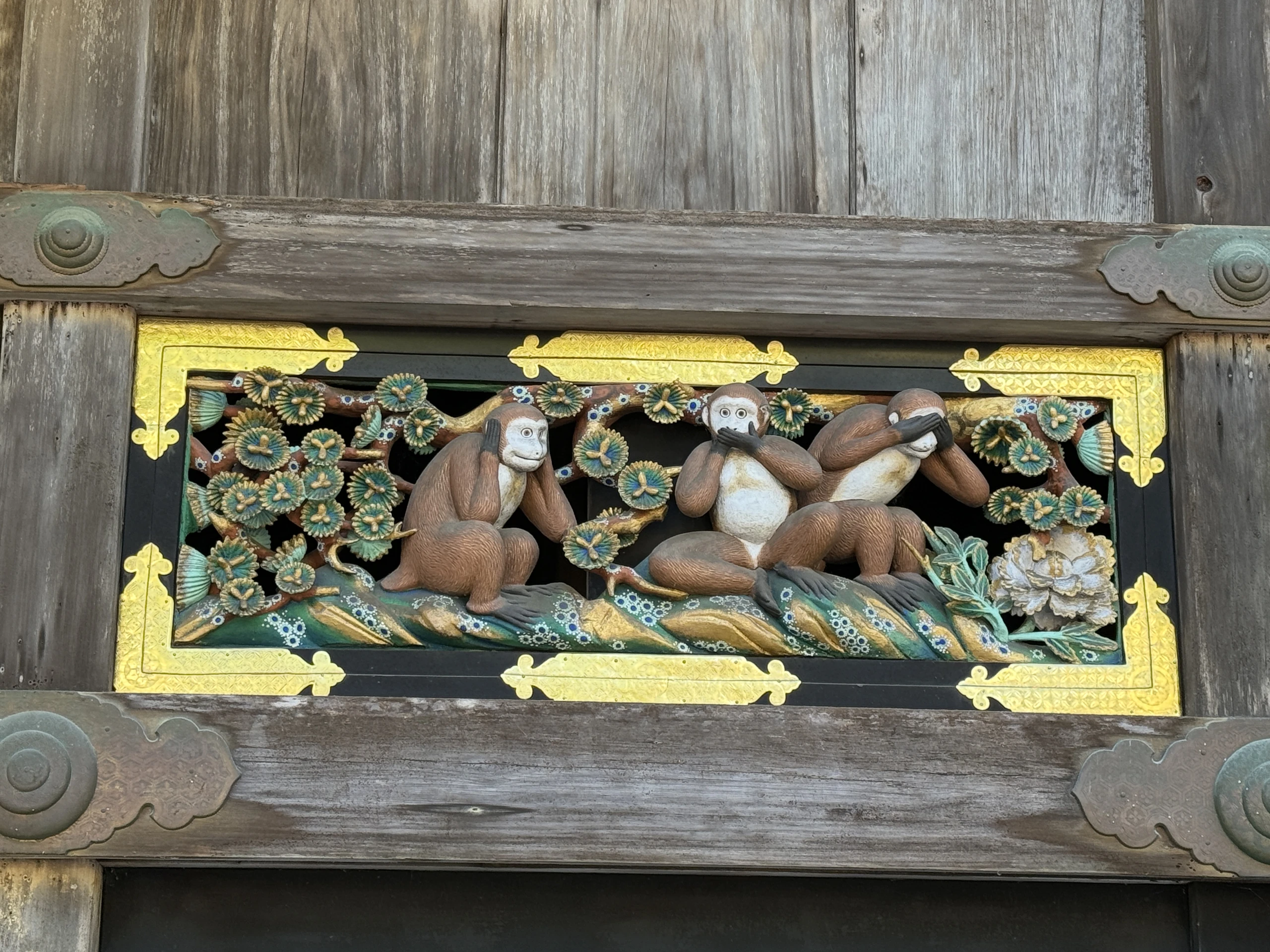
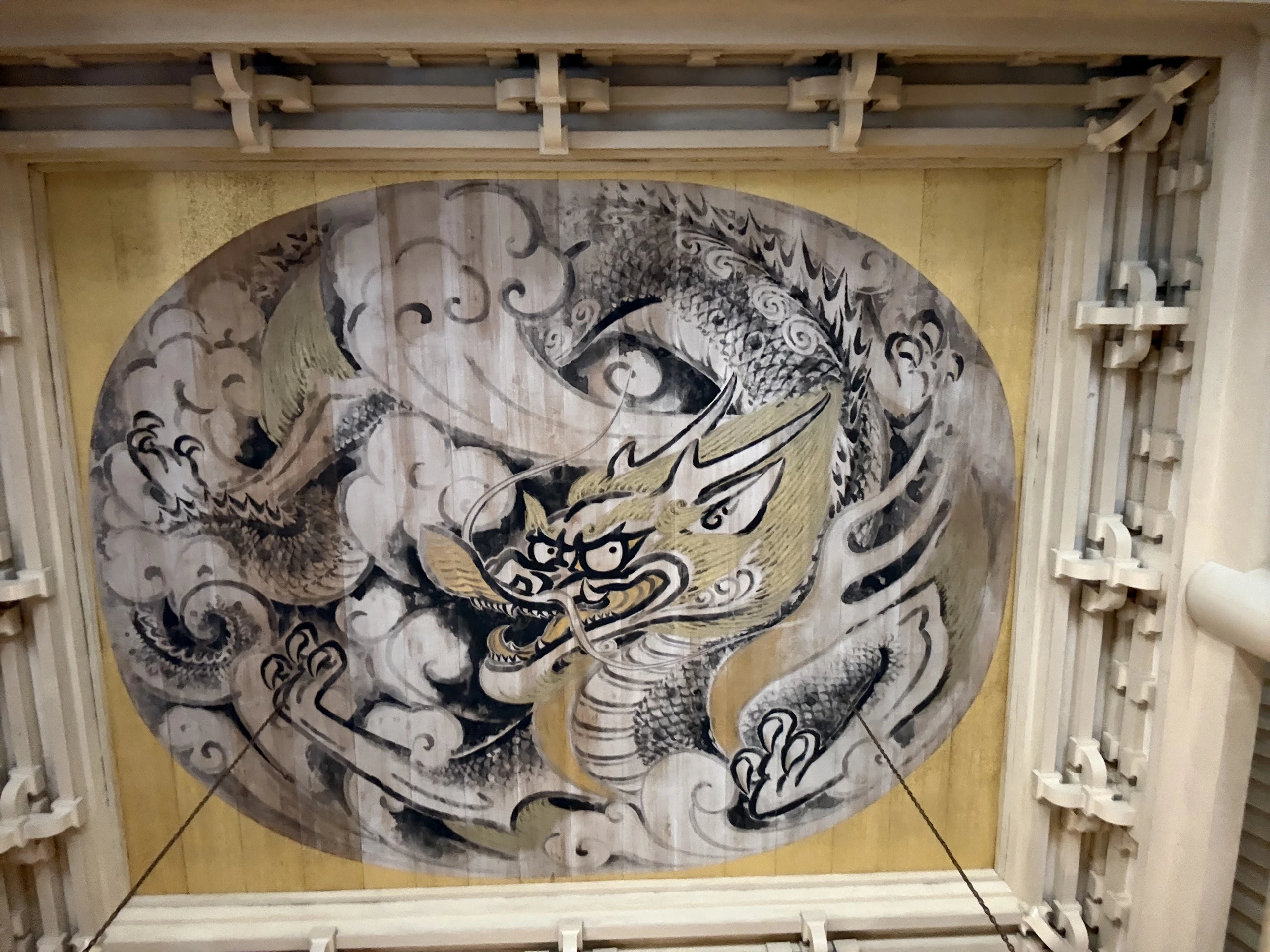
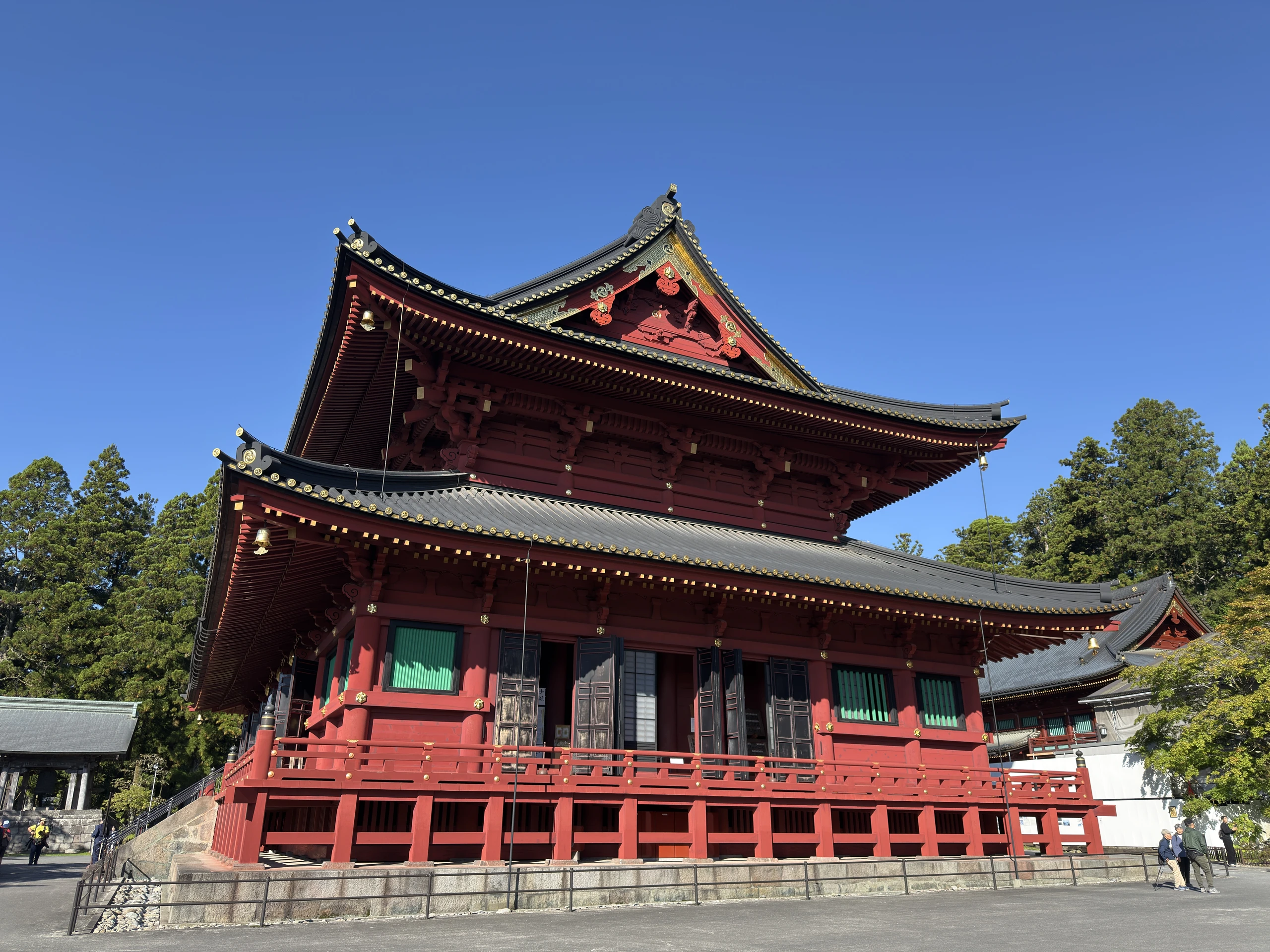
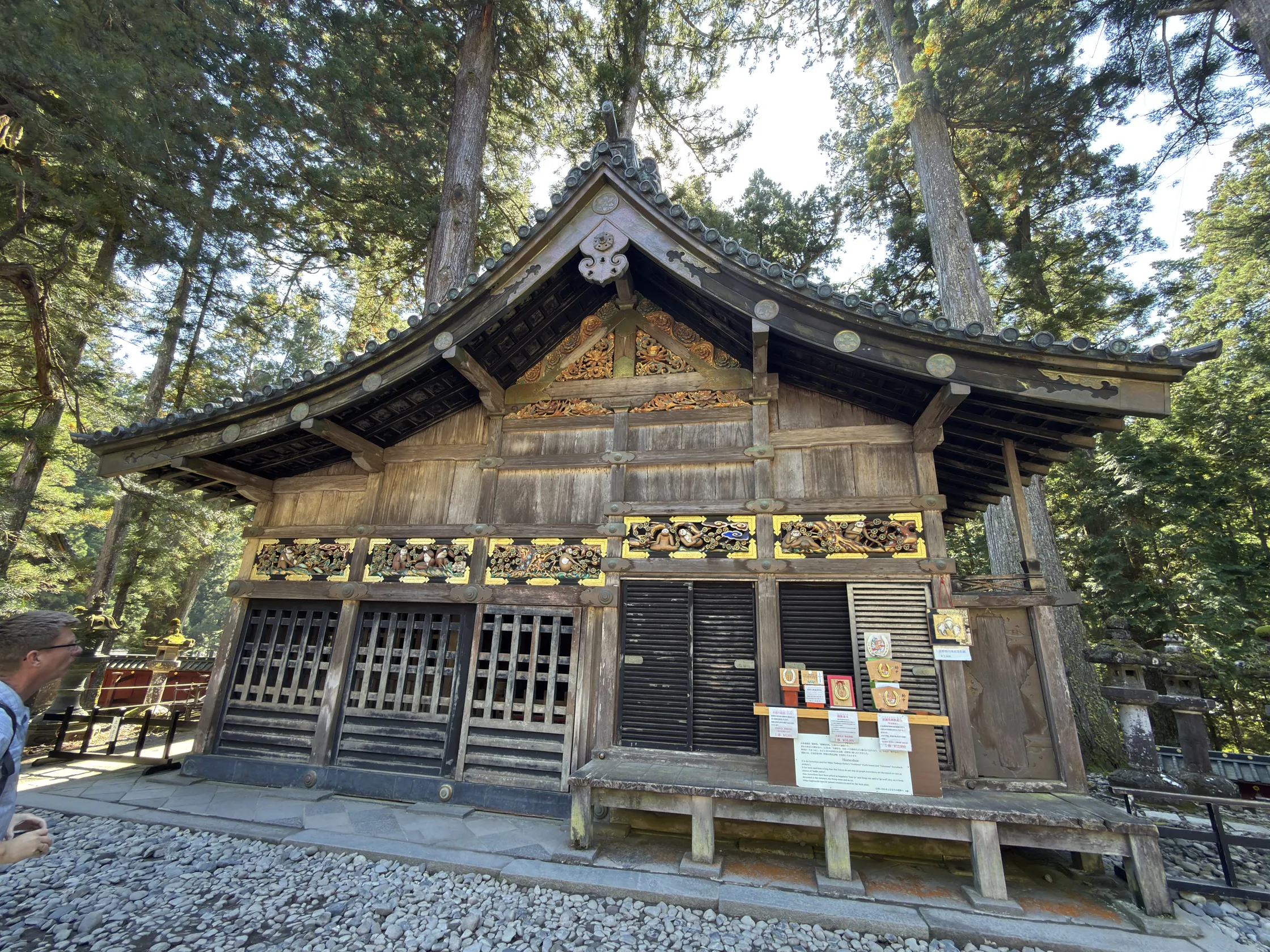
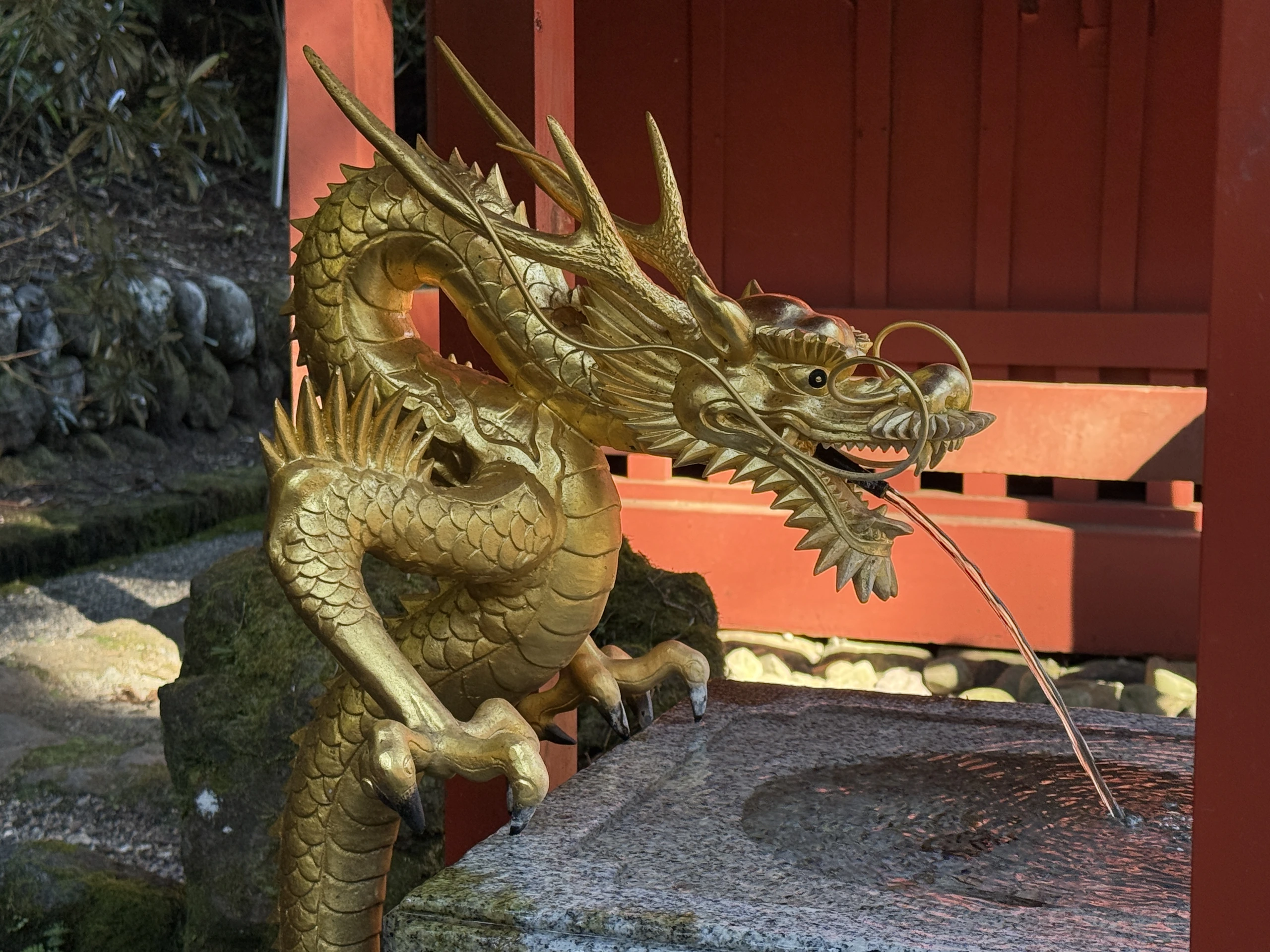
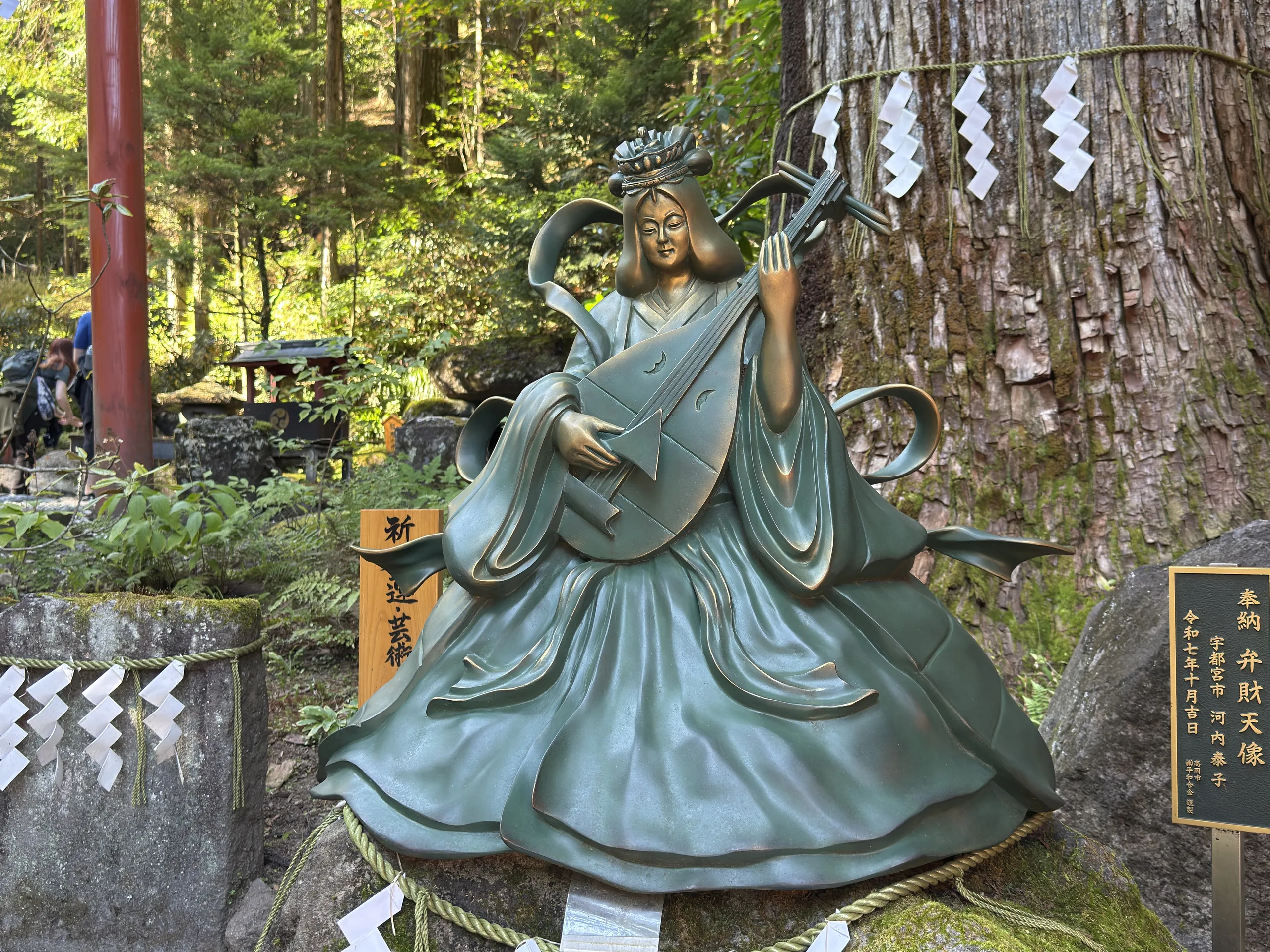
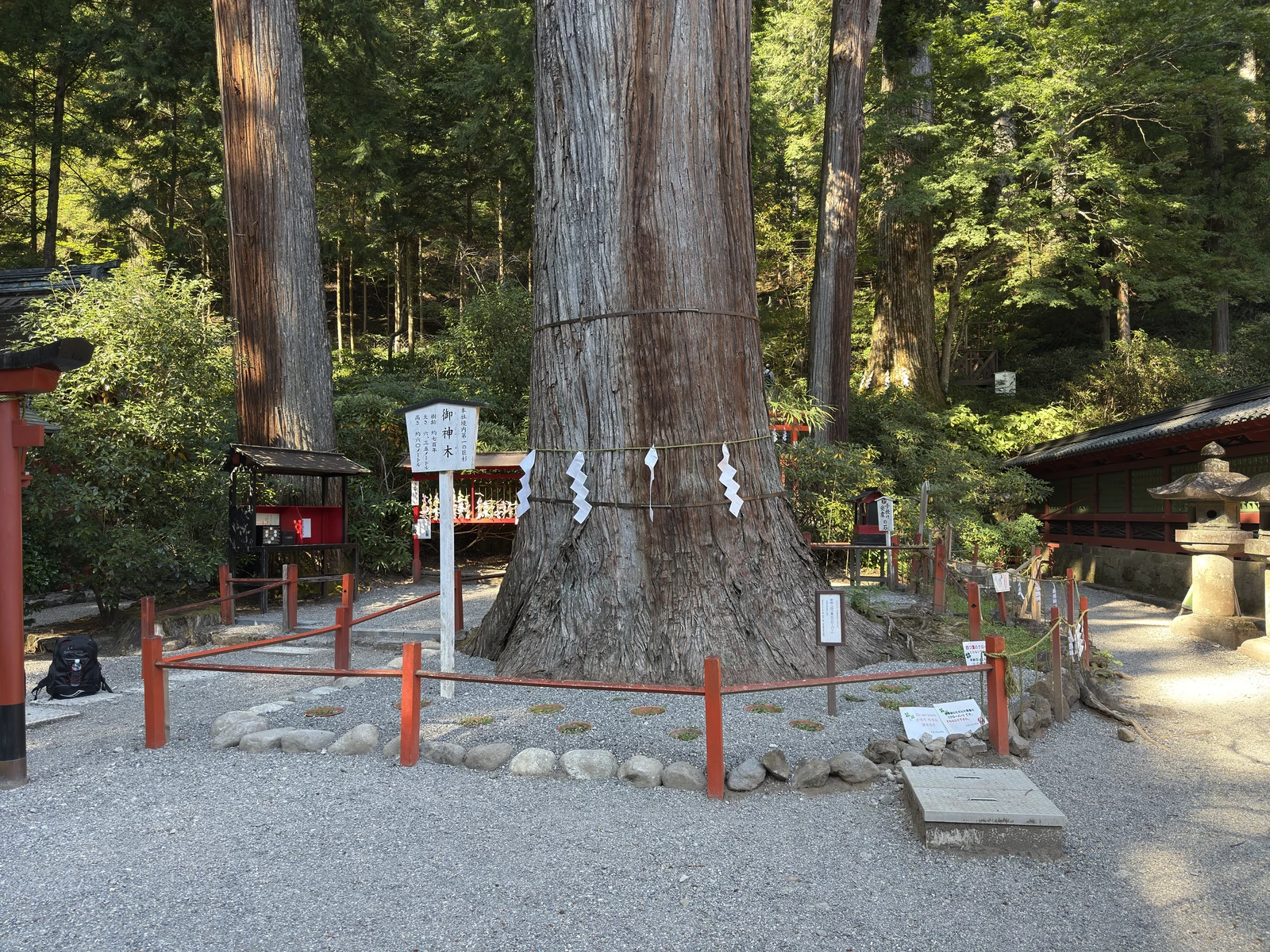
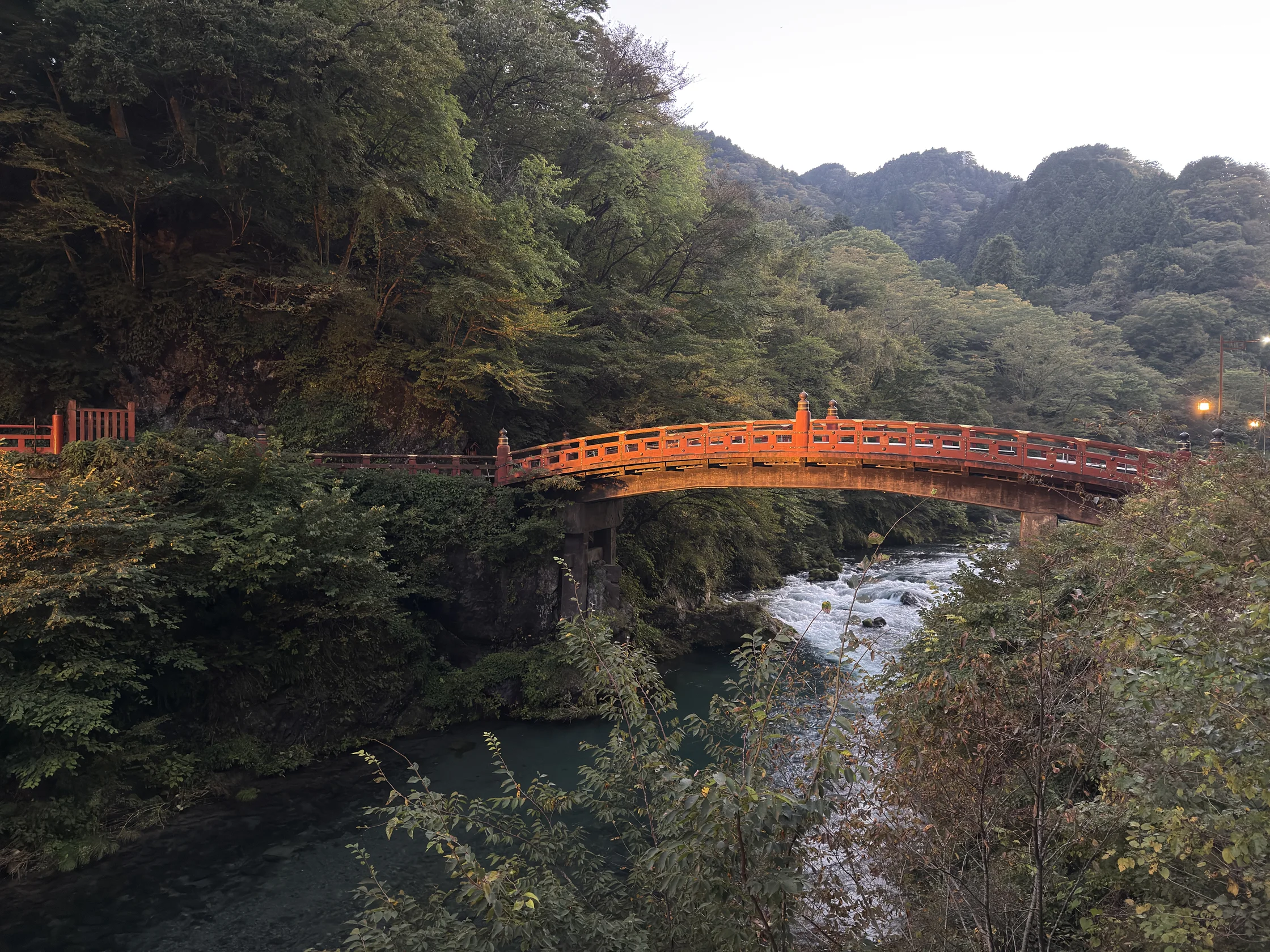
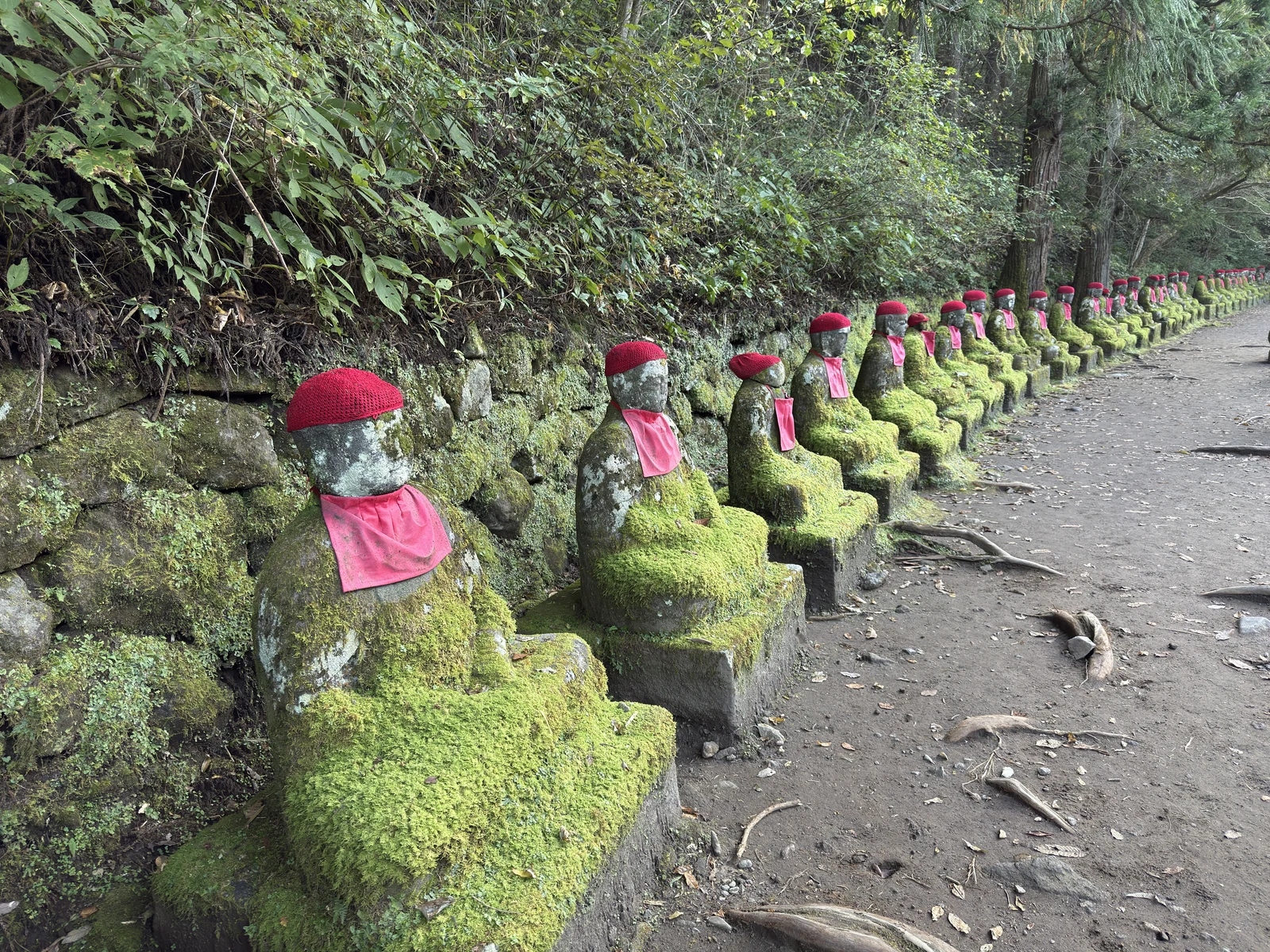
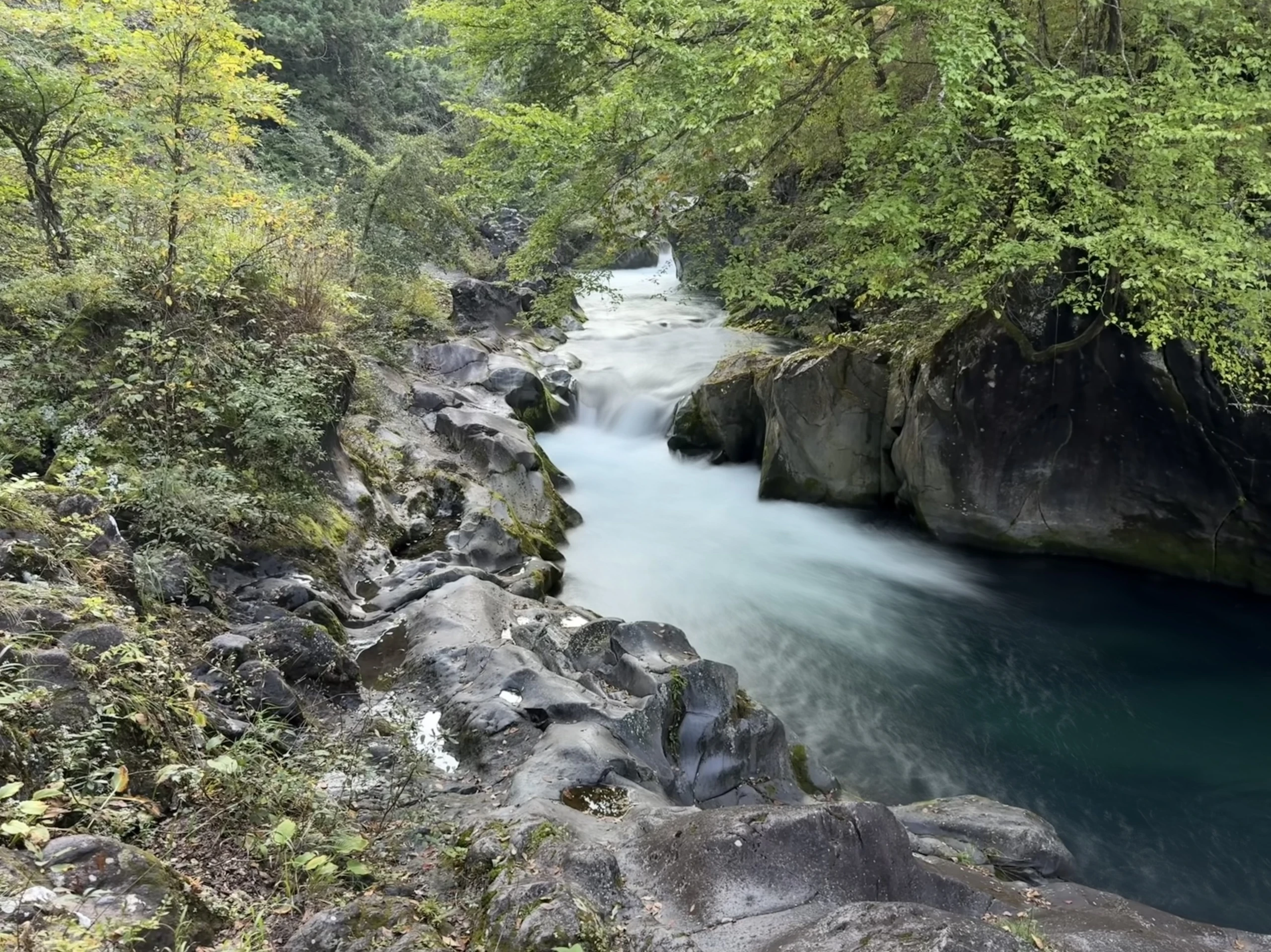
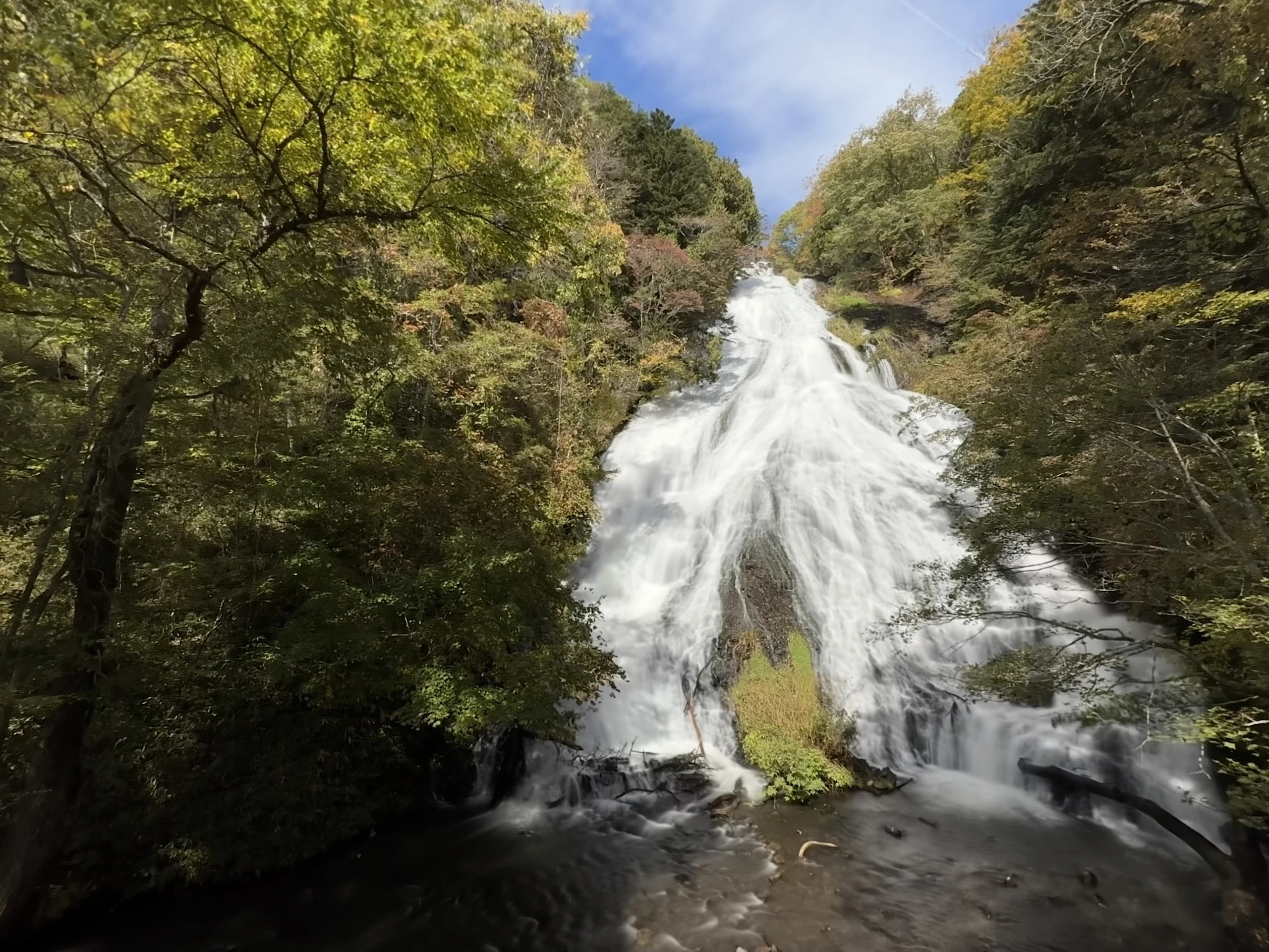
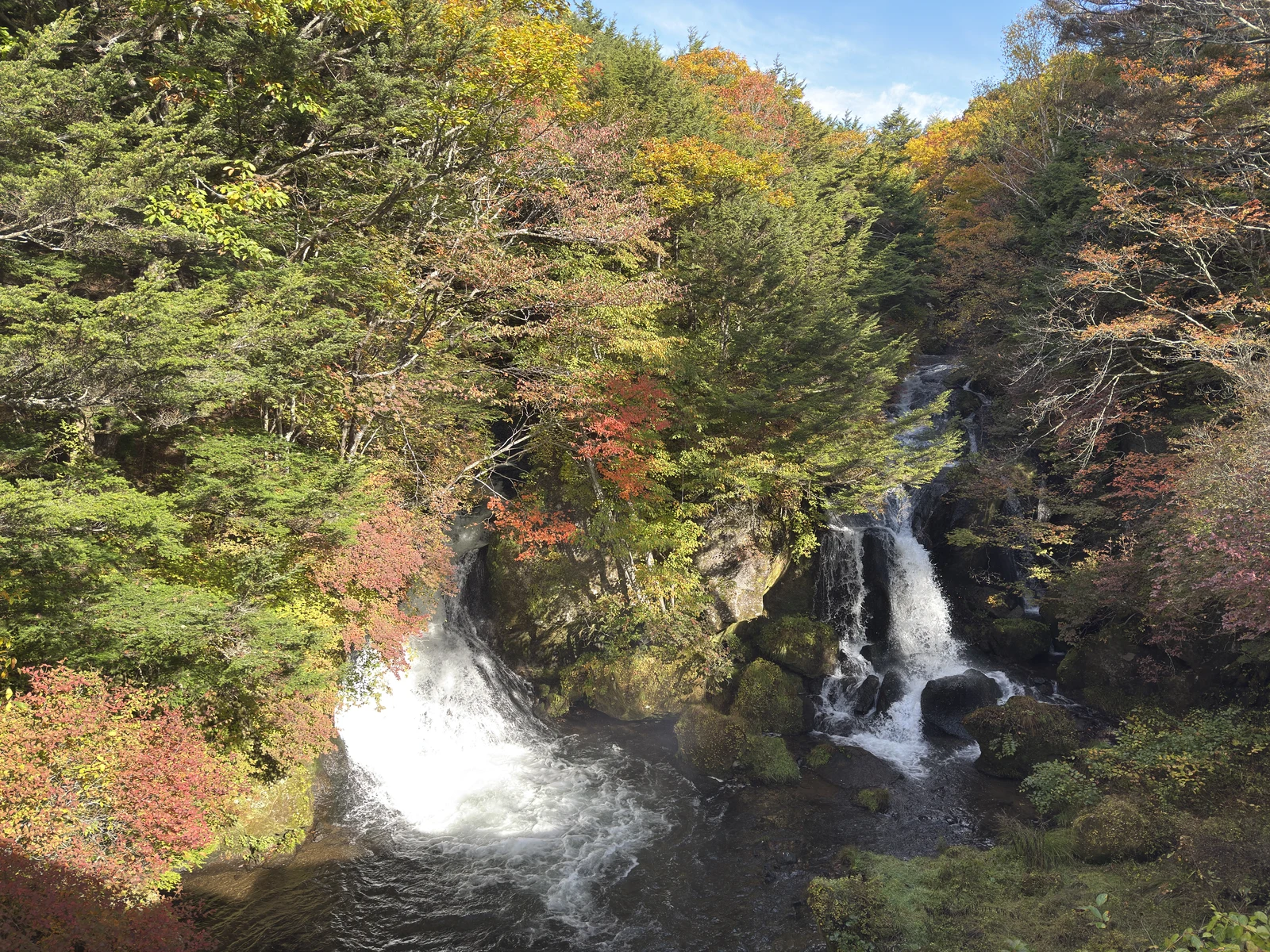
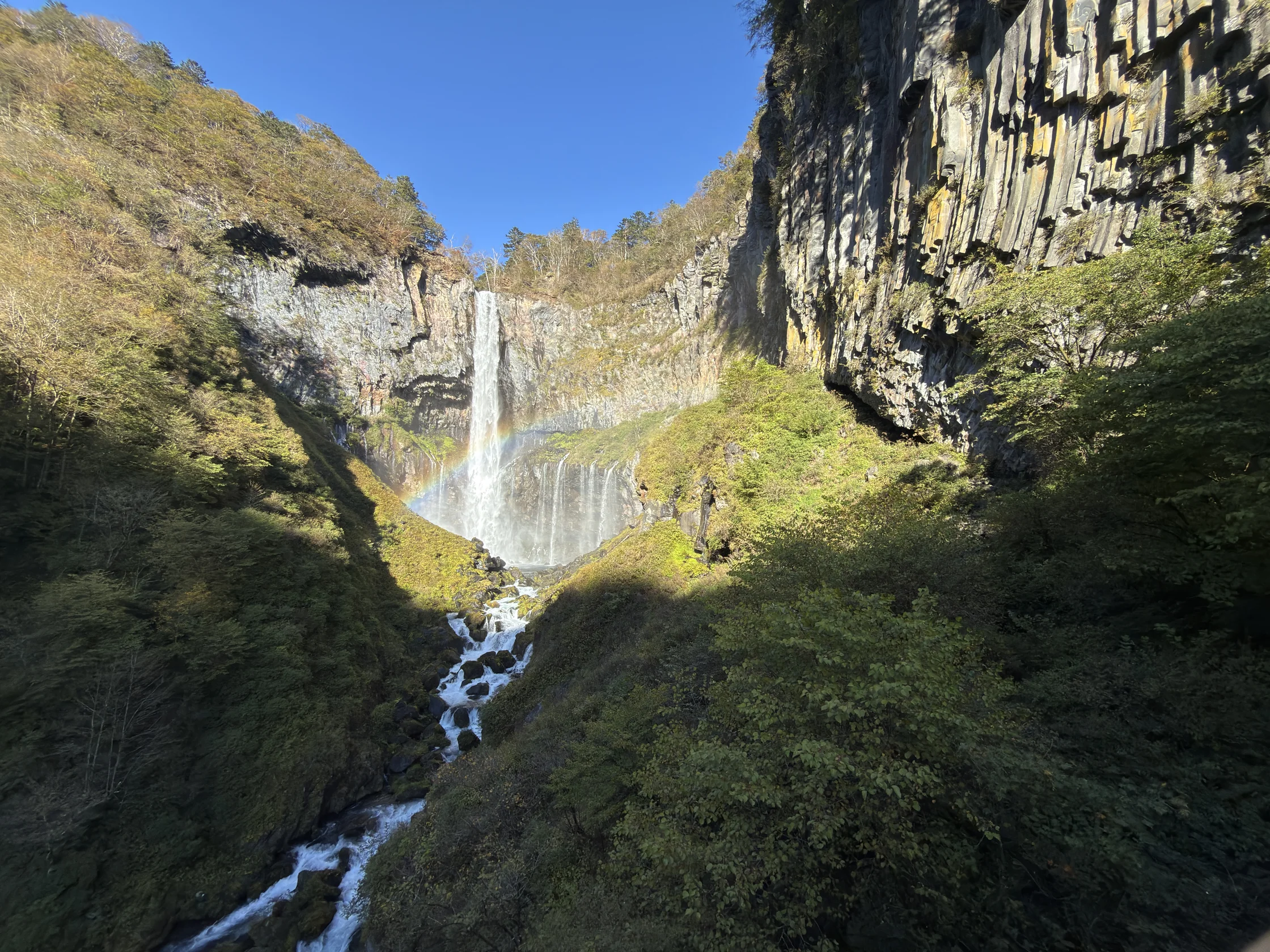
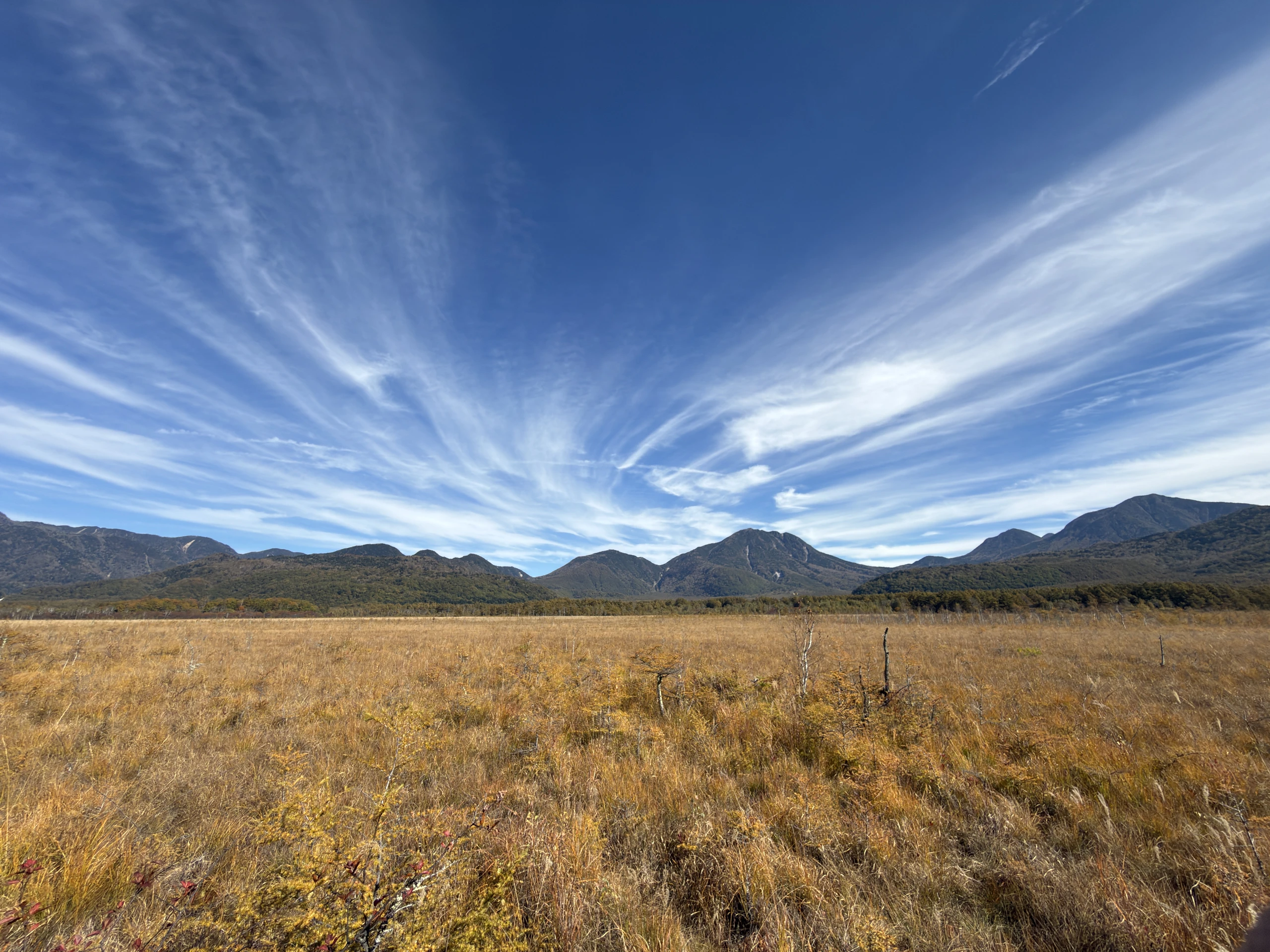
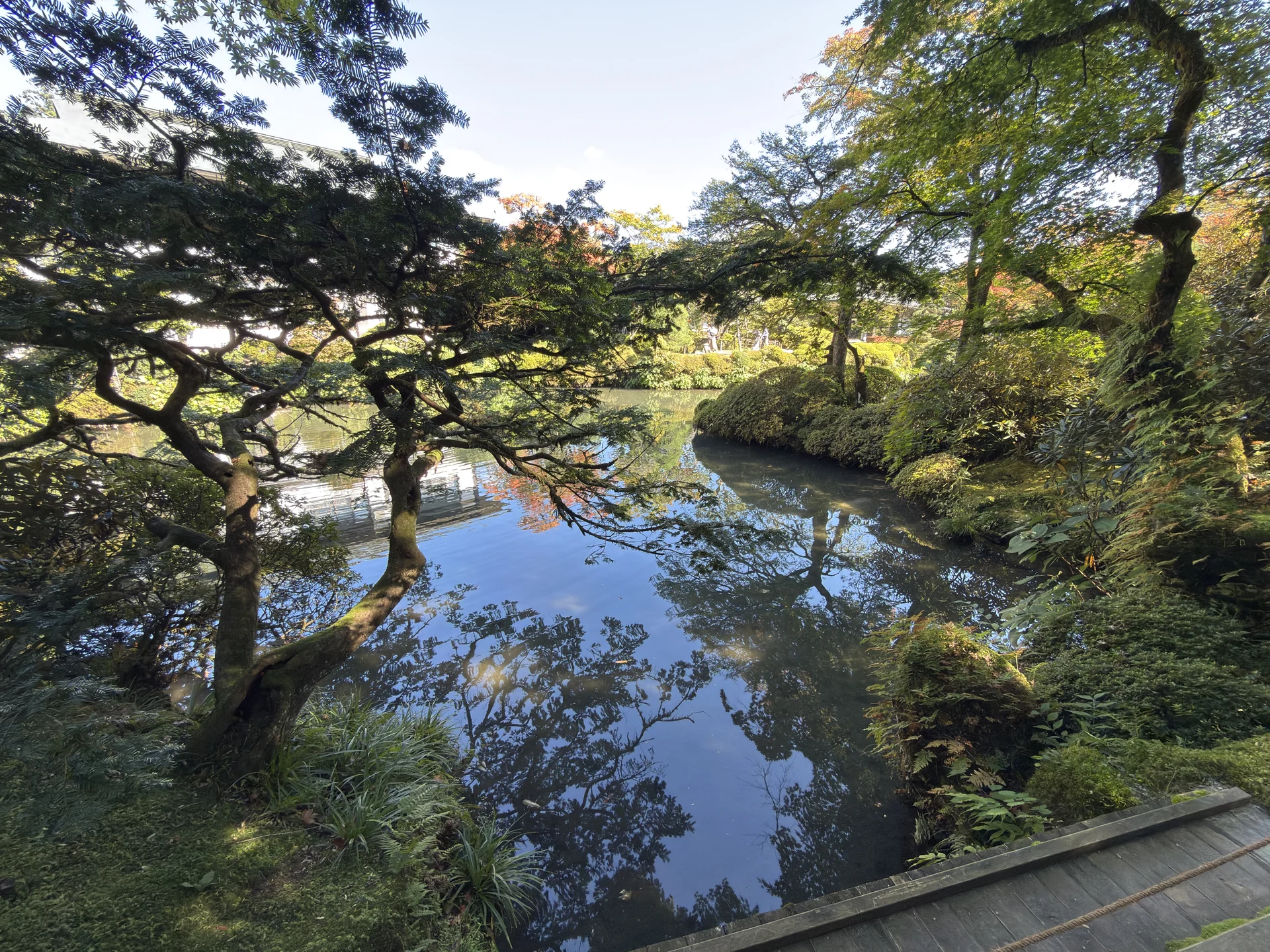
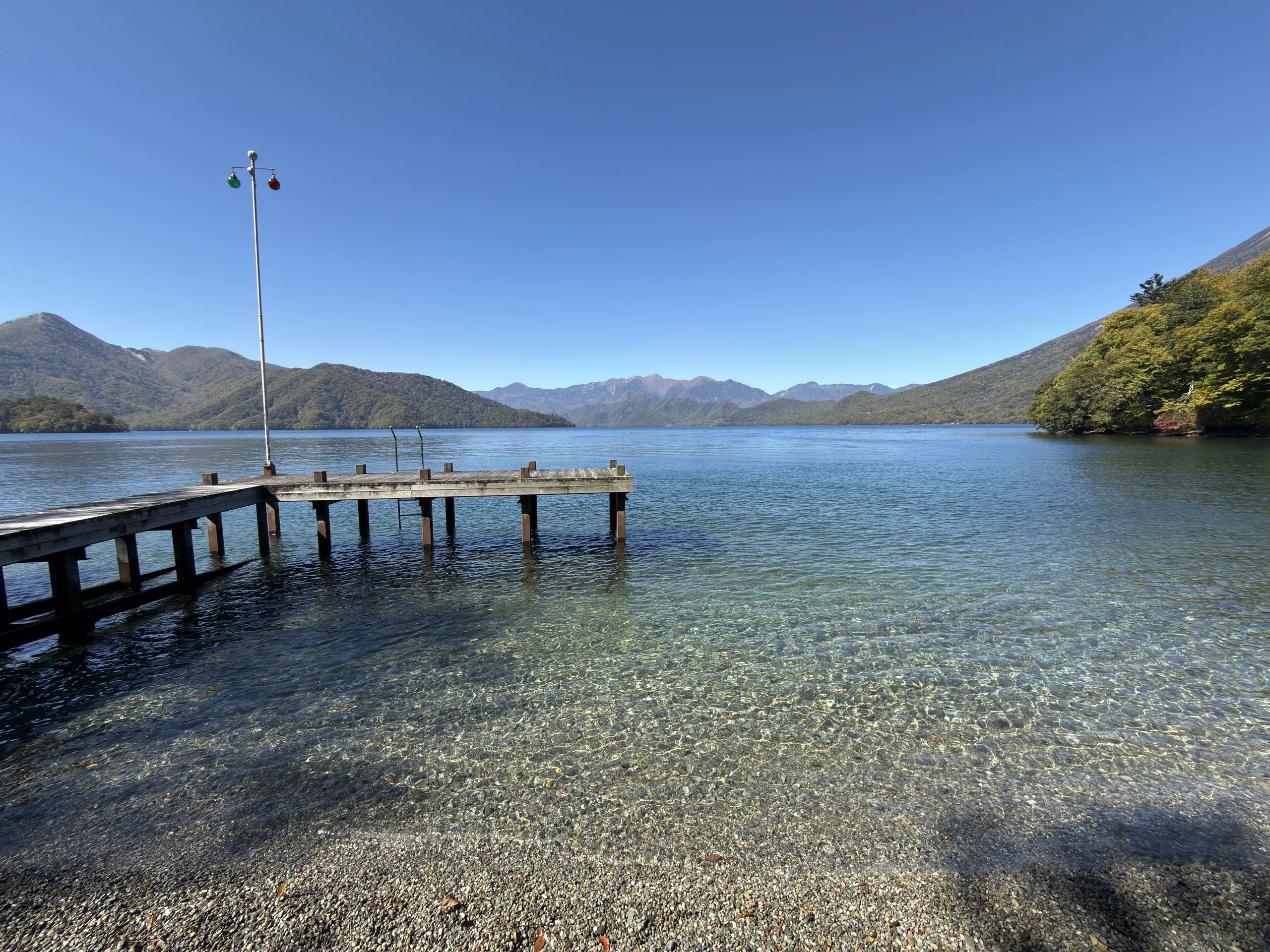
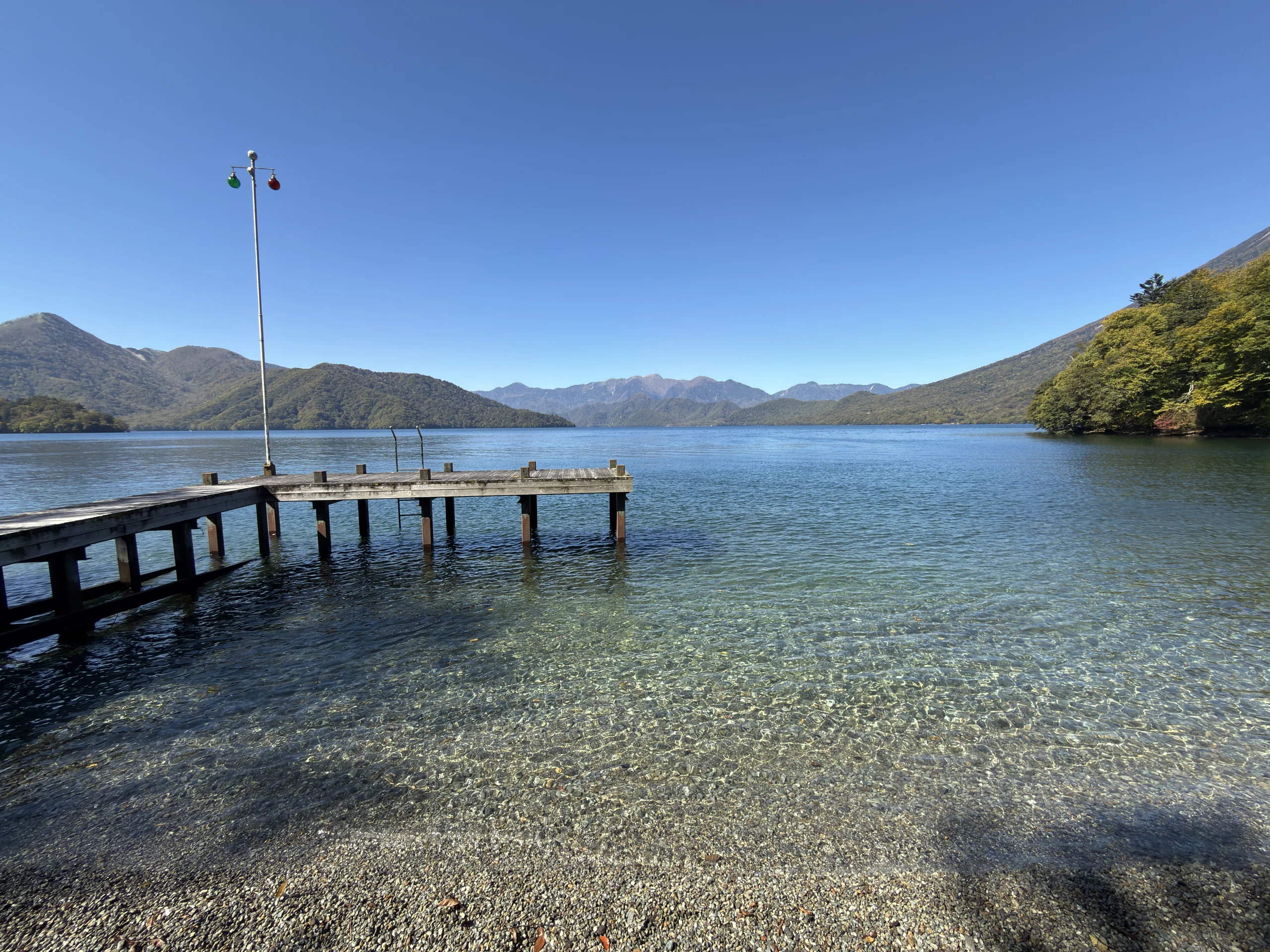
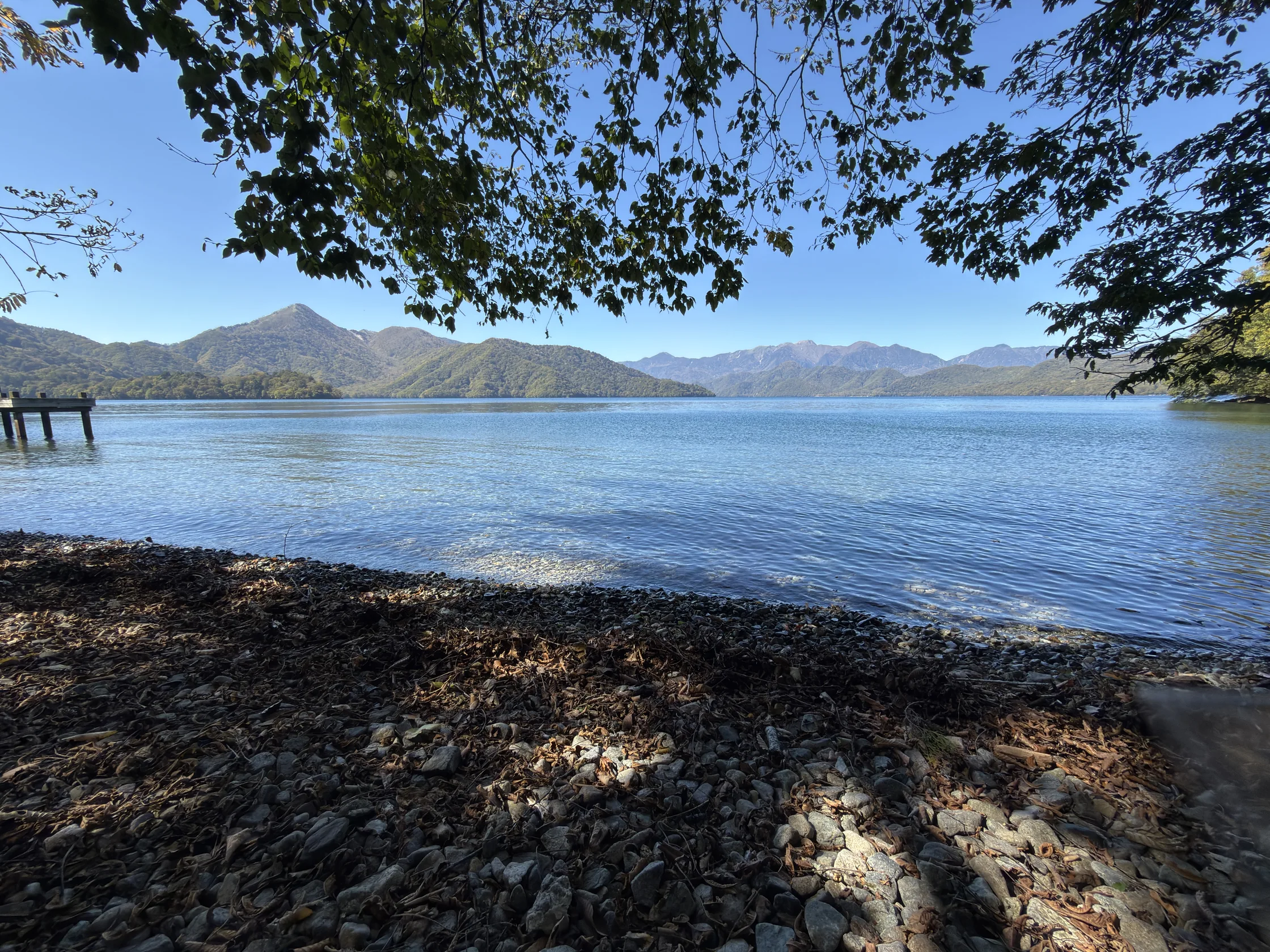
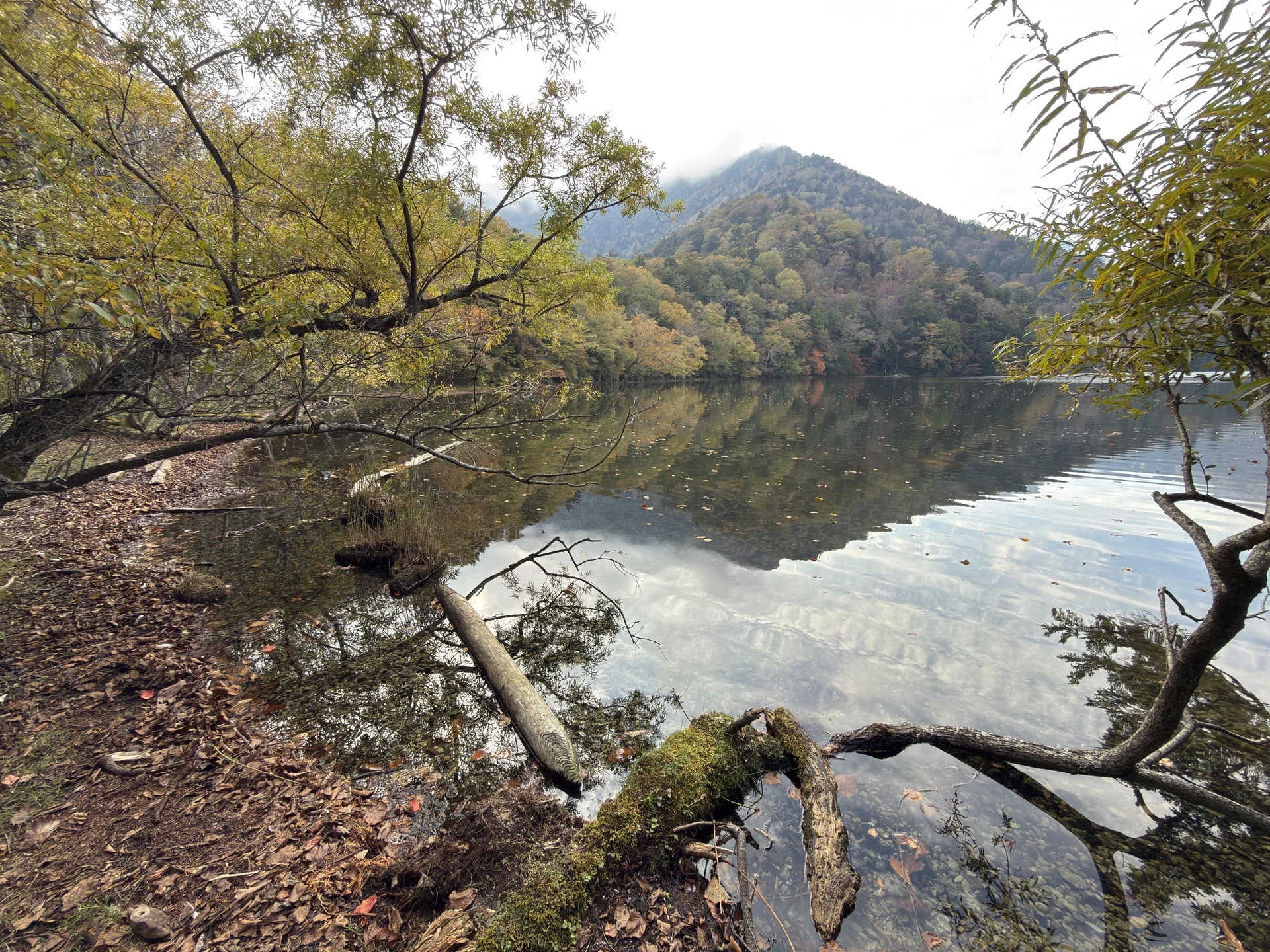
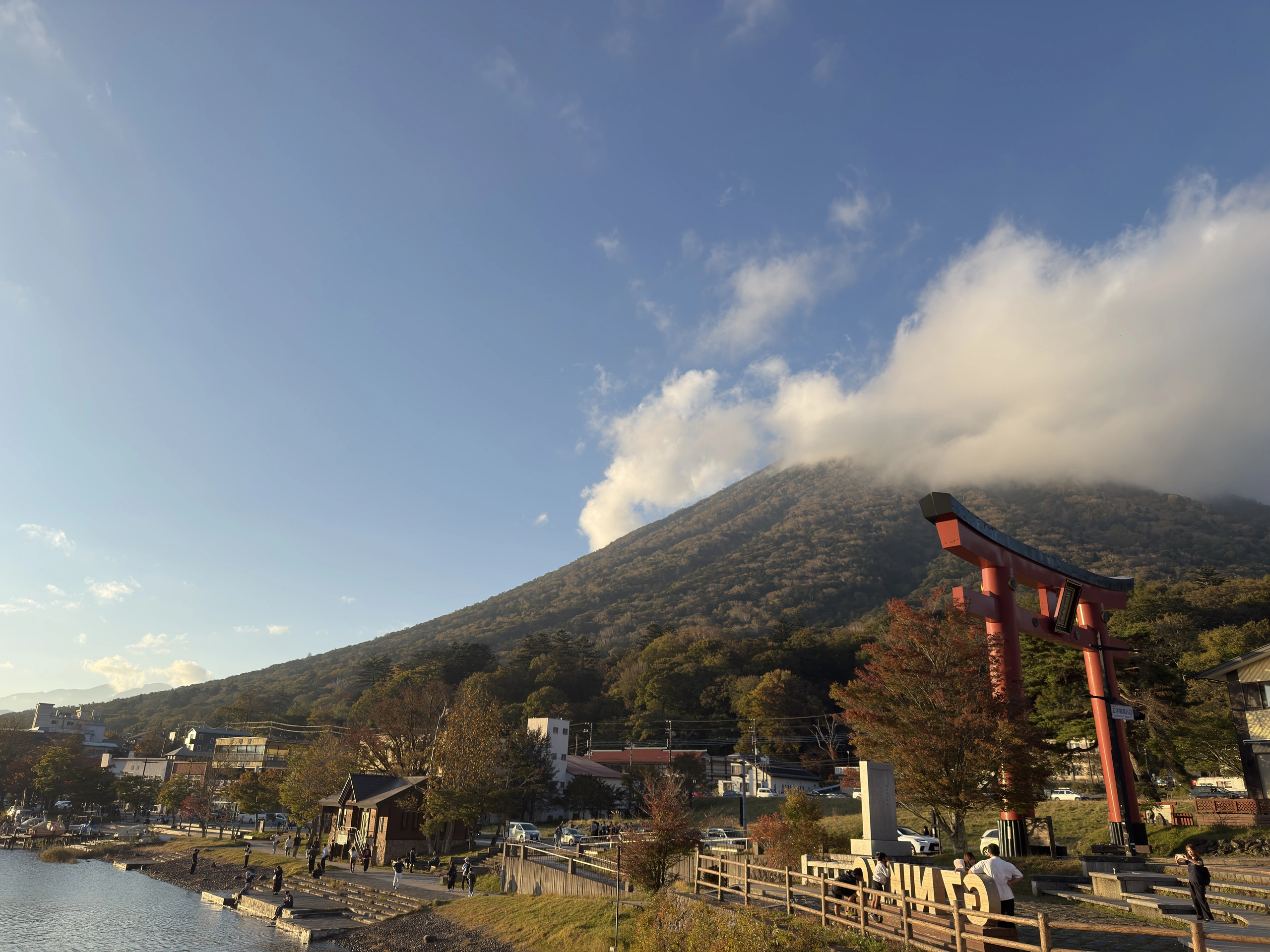
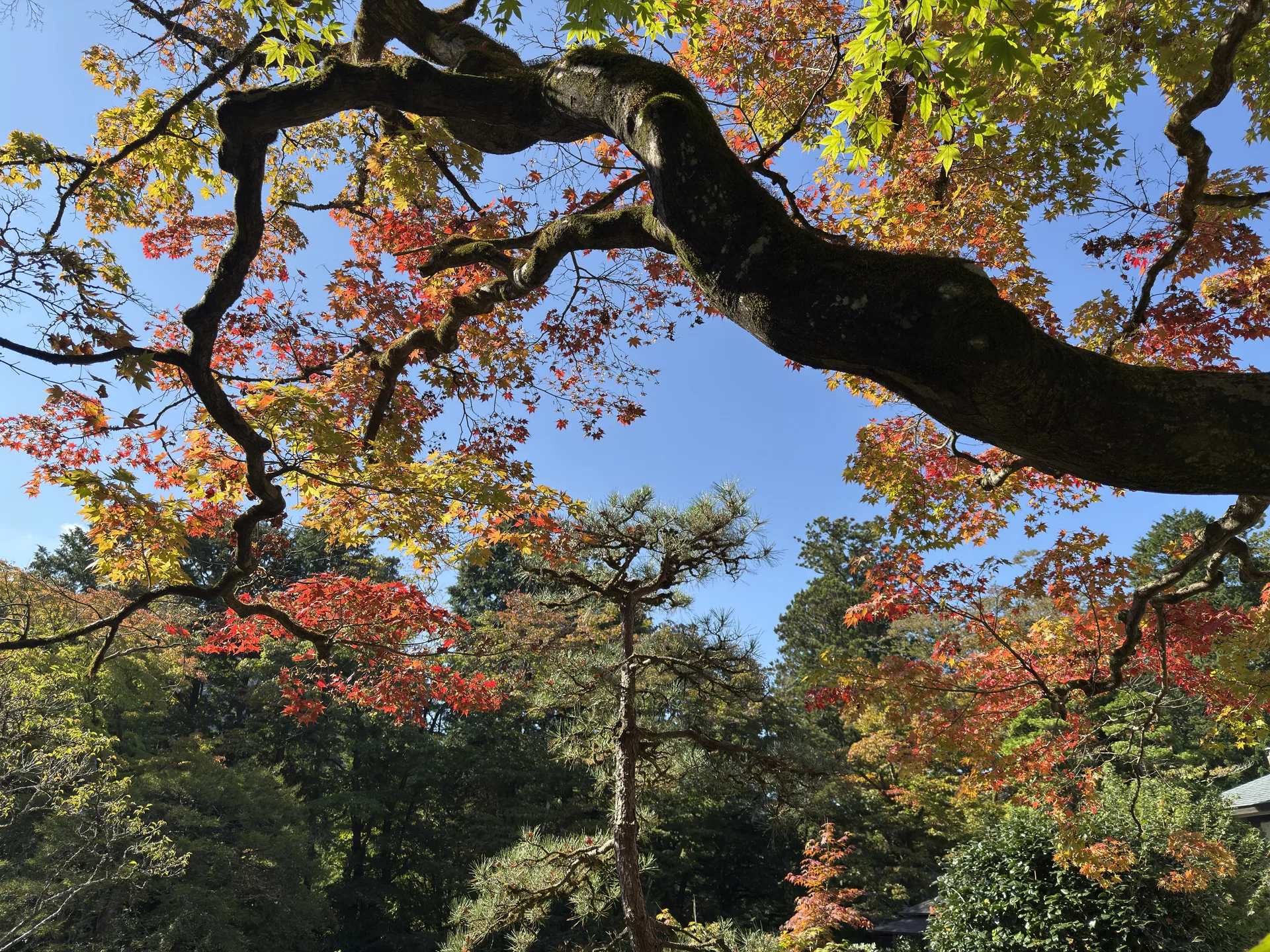
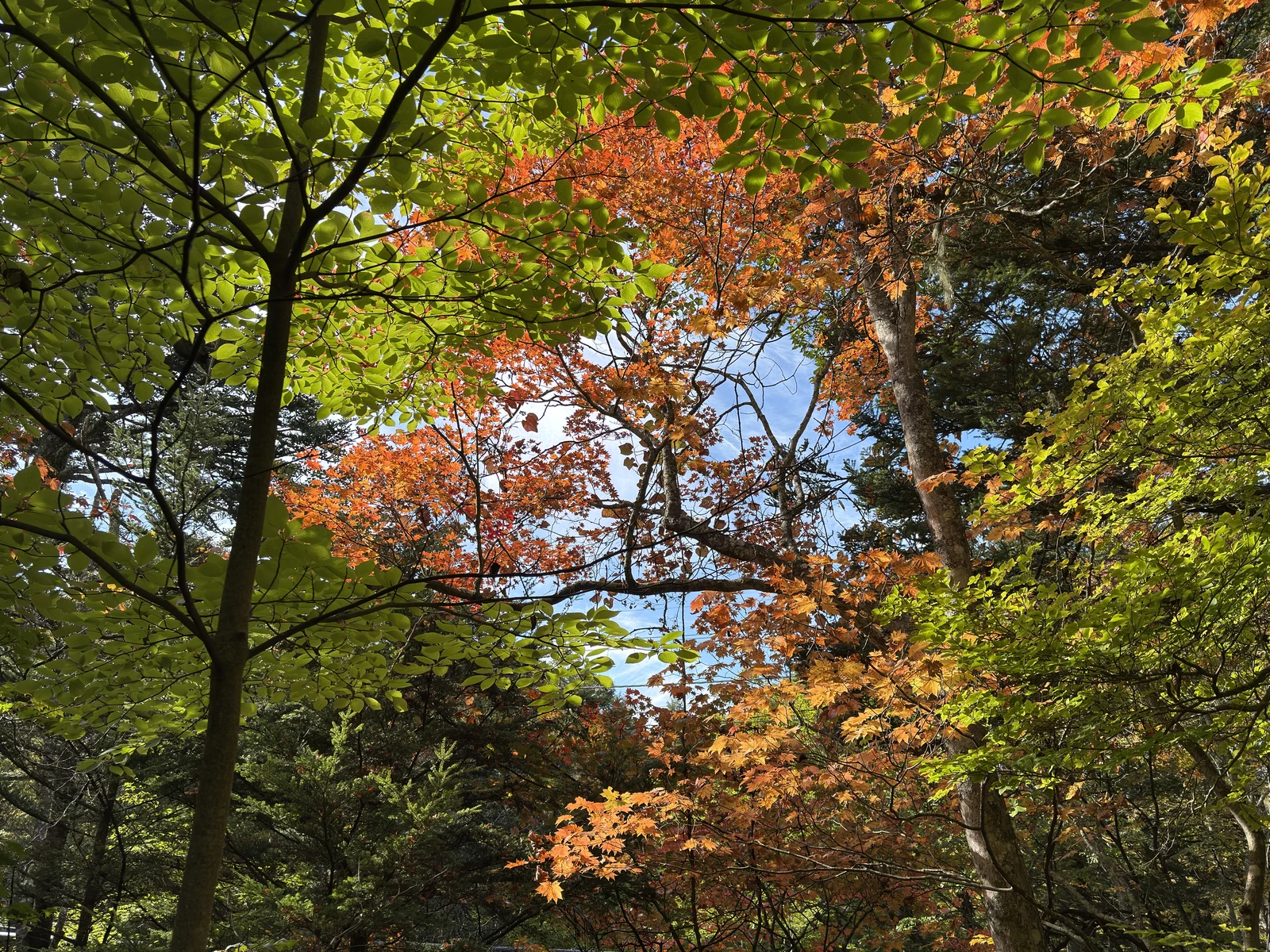
I arrive in Nikkō three days after receiving the transmission at Shunkaen. What opens up here is no longer tourism: it's the first landscape I contemplate as a formal disciple of the Keidō Katayama Ryū, and that changes the way I look at it, even though nothing in the landscape itself has changed. The Shinkyō, the Sacred Bridge, red lacquer over the Daiya River amid centuries-old cedars — tradition places it in the 8th century, though the current structure dates to the 17th — doesn't separate two banks: it separates two states of presence, and with October's low mist among the trunks it's one of the most powerful images of the entire trip. Tōshōgū and Taiyūin-byō at opening time, before the holiday Monday filled the grounds: the mausoleum of Tokugawa Ieyasu, the man who ended centuries of samurai civil war, with over five hundred polychrome and gilded carvings on the Yōmeimon gate — among them the three wise monkeys, hear no evil, see no evil, speak no evil — a calculated display of Tokugawa power, to be viewed as an aesthete, not as a practitioner. A step away, the Taiyūin-byō, mausoleum of the third shōgun Iemitsu, deliberately more restrained than his grandfather's as a mark of reverence: chosen restraint outweighs imposed ornament, the same philosophy that governs literati bonsai or kusamono, and among its four-hundred-year-old cedars there's more contemplative density than in the entire neighboring complex. The avenue of cryptomeria leading to the shrines, the sugi namiki, is itself a work of bonsai at landscape scale: thousands of trees planted in the 17th century with an overall intent only appreciated by walking it end to end. In the afternoon, Kanmangafuchi: seventy moss-covered Jizō statues lined up along the Daiya River, on a bed of volcanic lava, each slightly different from the next, none aware of being so. The moss accumulated on each figure is, in bonsai, the exact equivalent of nebari: time's patina as aesthetic material, erosion that doesn't degrade but adds — what in suiseki we call hibikake in its most radical expression. Of the whole itinerary, it's the place whose atmosphere comes closest to bonsai and suiseki, and also the most serene: no clock holds any weight here. Okunikkō the next day: the Akechidaira ropeway, with Kegon Falls, Lake Chūzenji, and Mount Nantai gathered in a single view impossible from any trail; the falls dropping ninety-seven meters in one sheer fall over a lava front that dammed the lake after an ancient eruption of Nantai itself; the water completely still in the early hours, a mirror of volcanic origin any suiseki practitioner would recognize as a landscape already made by nature, needing no tray. On the holiday Monday, Rinnōji and Futarasan Jinja — with its sacred fire burning for more than four hundred years — are quieter, and the lake's north shore, free of crowds, closes out the Nikkō stretch asking for nothing more than to stay. I ruled out the Senjōgahara and Odashirogahara trails due to confirmed presence of Asian black bears (Ursus thibetanus japonicus) in the area — field caution, not legend.
Kamakura
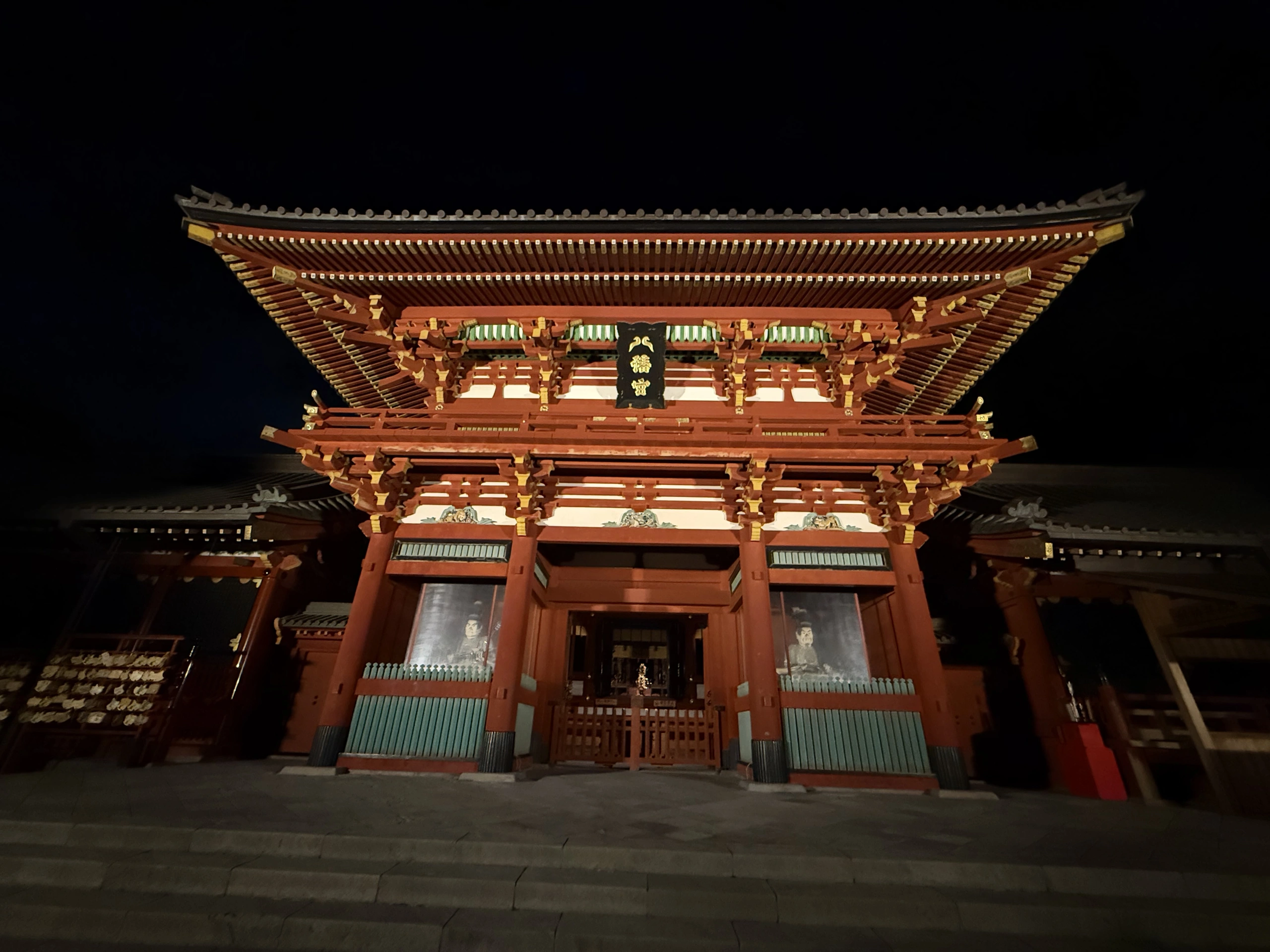
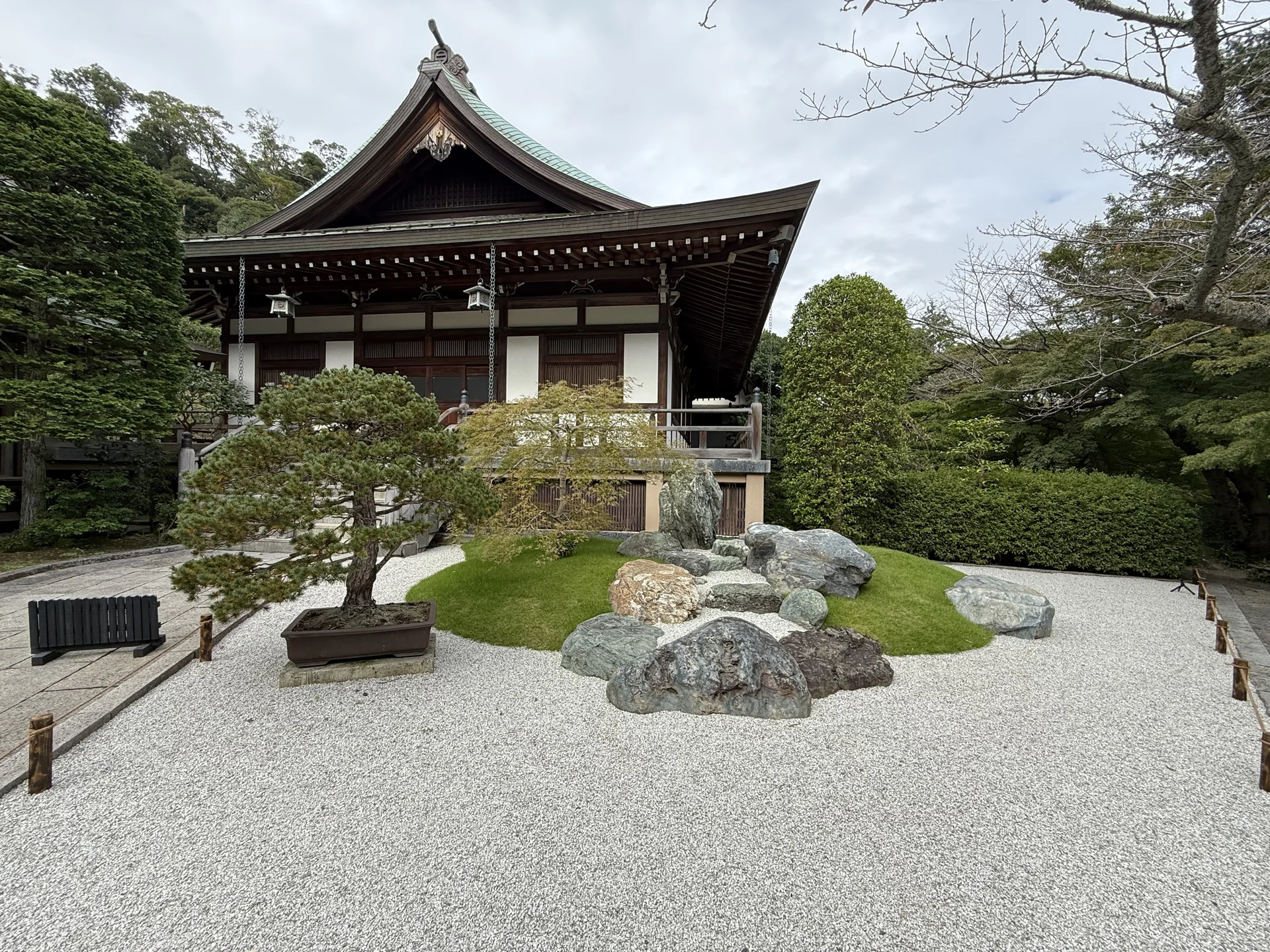
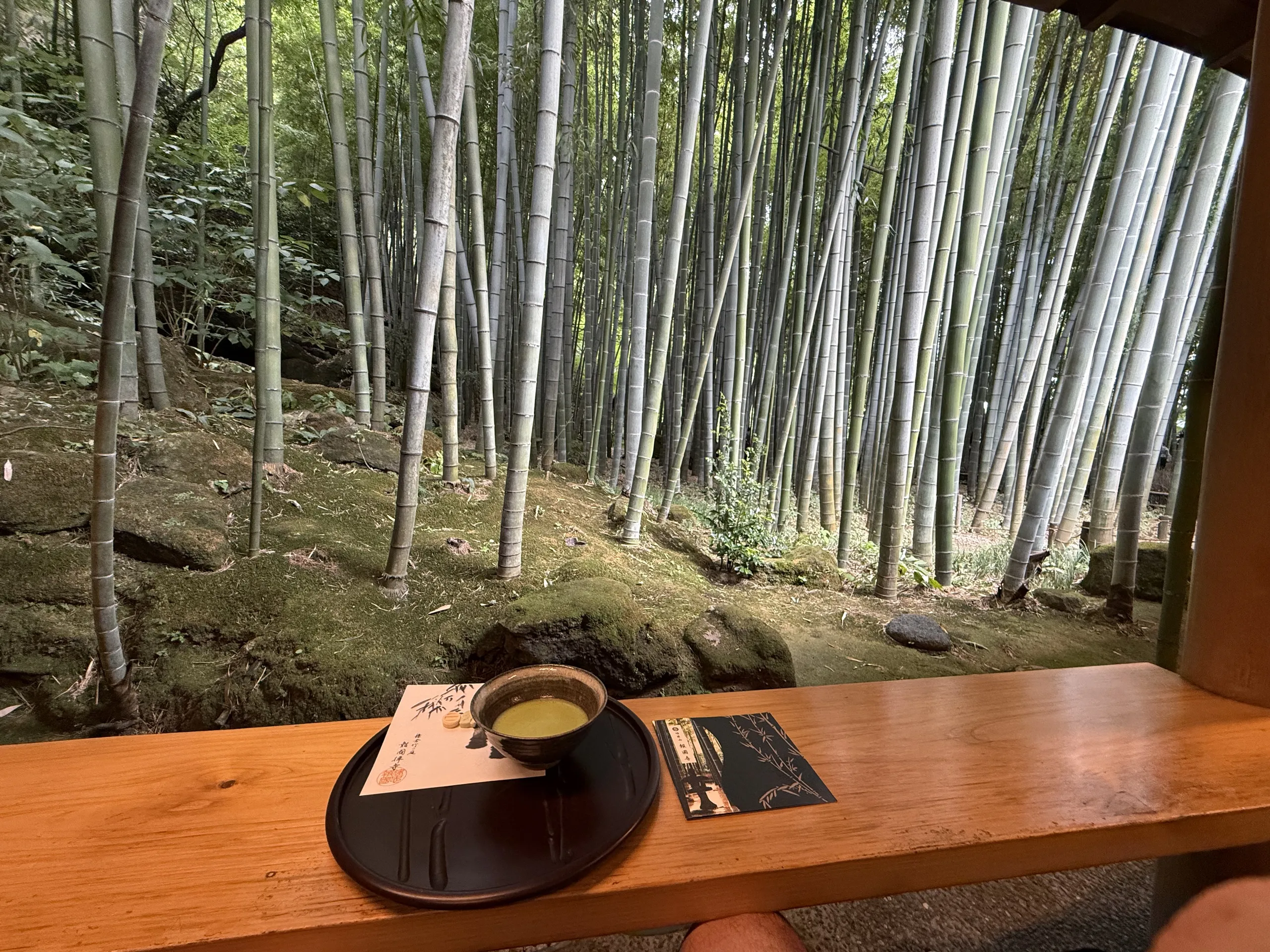
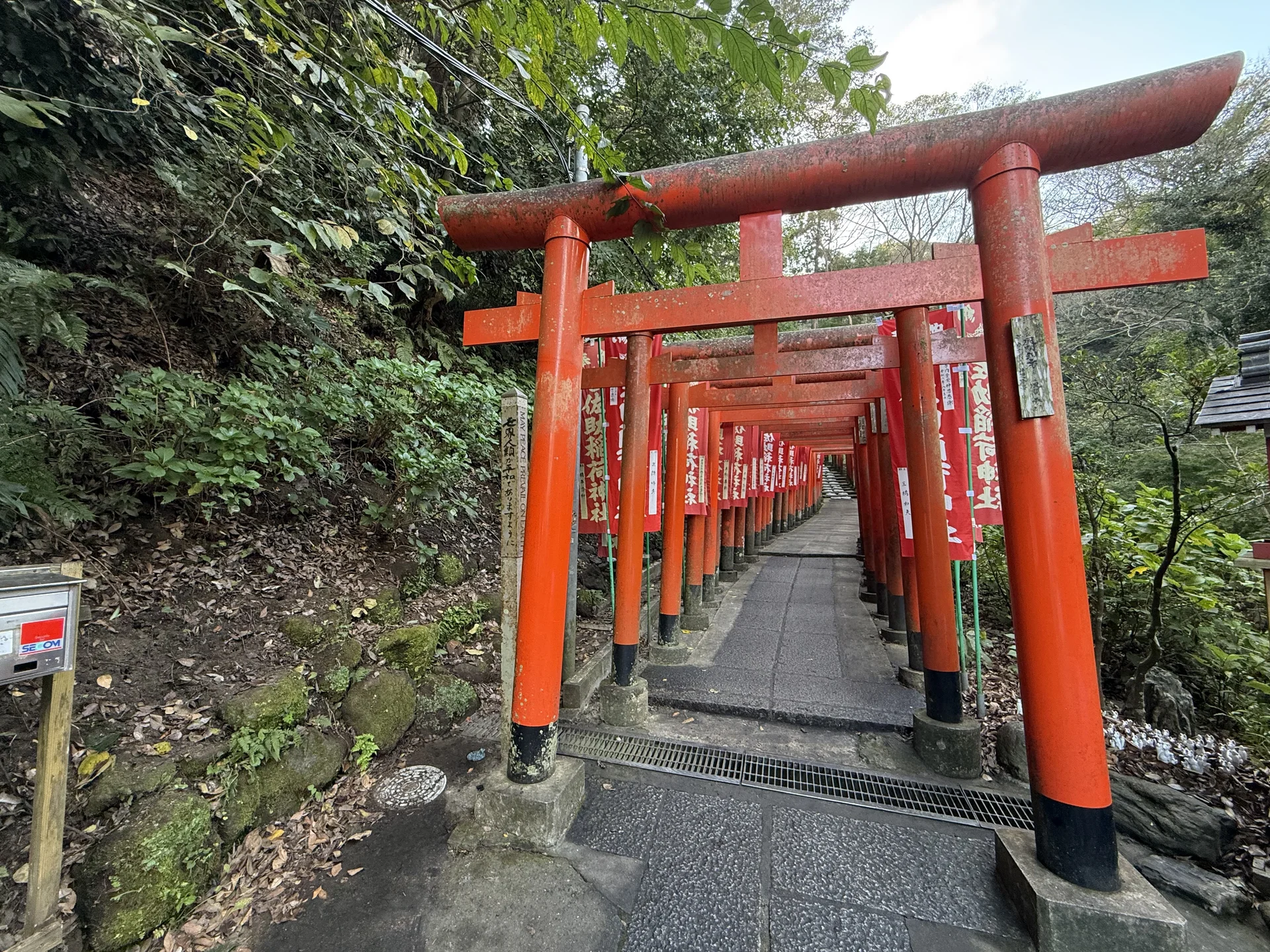
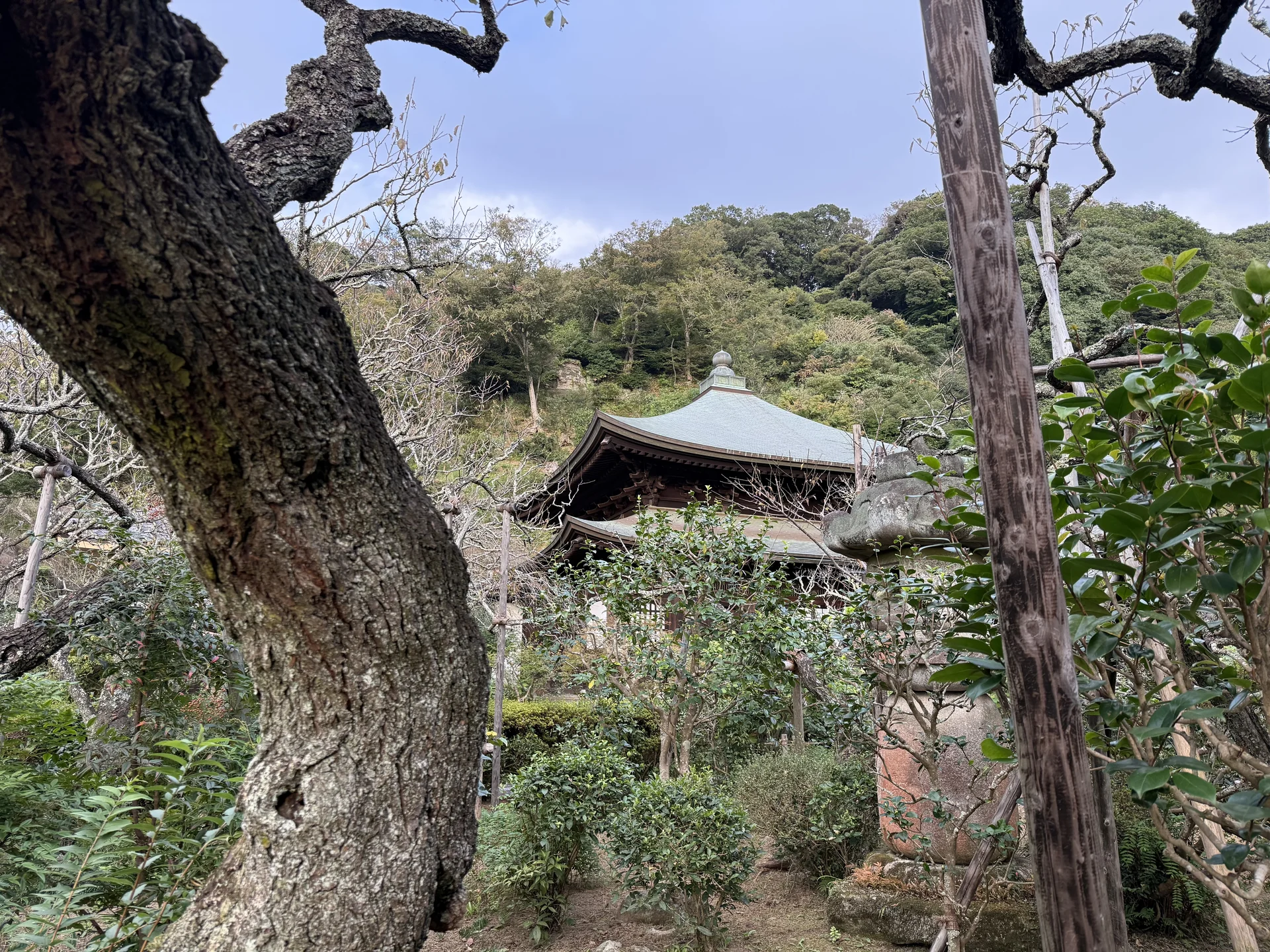
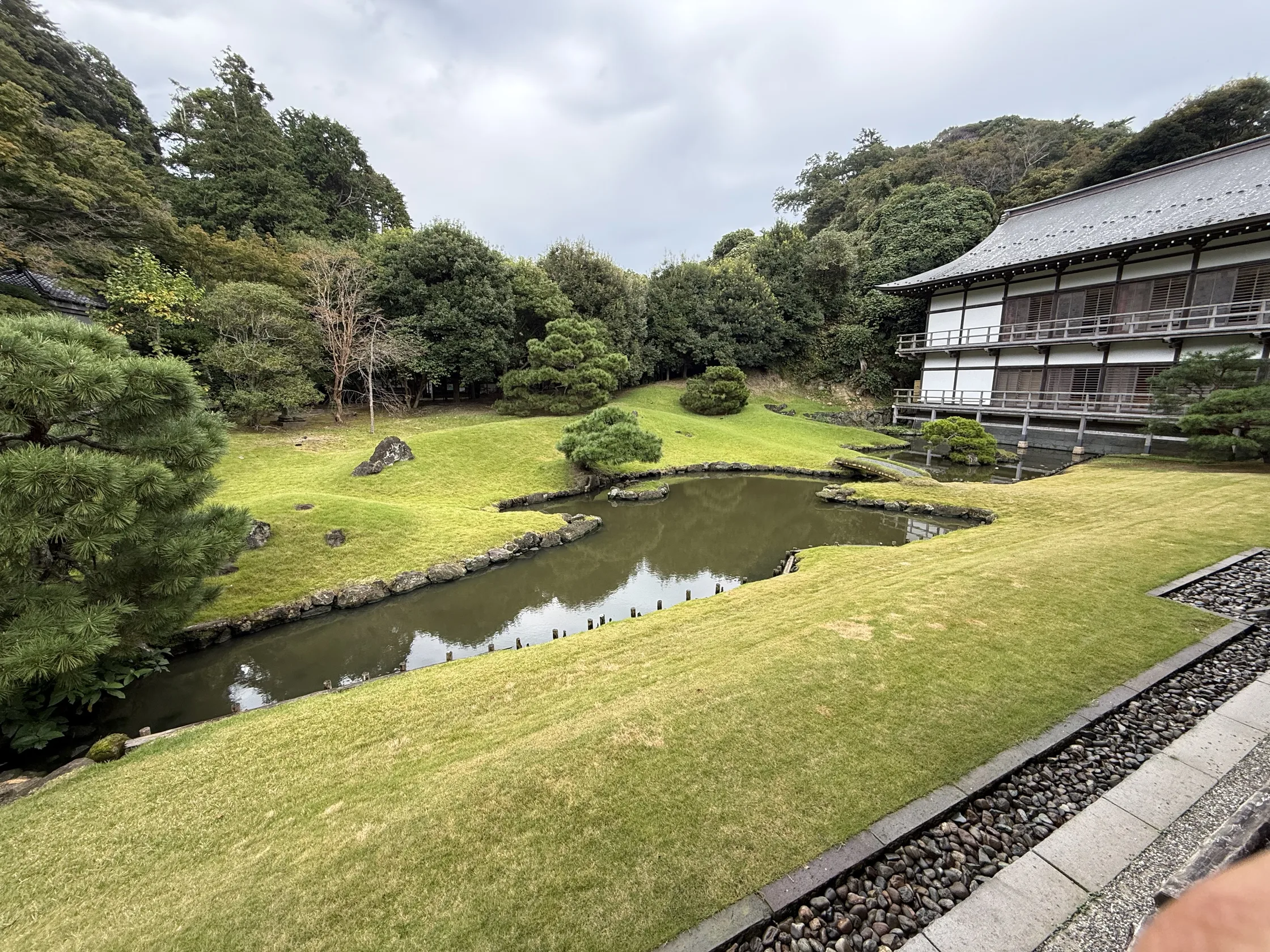
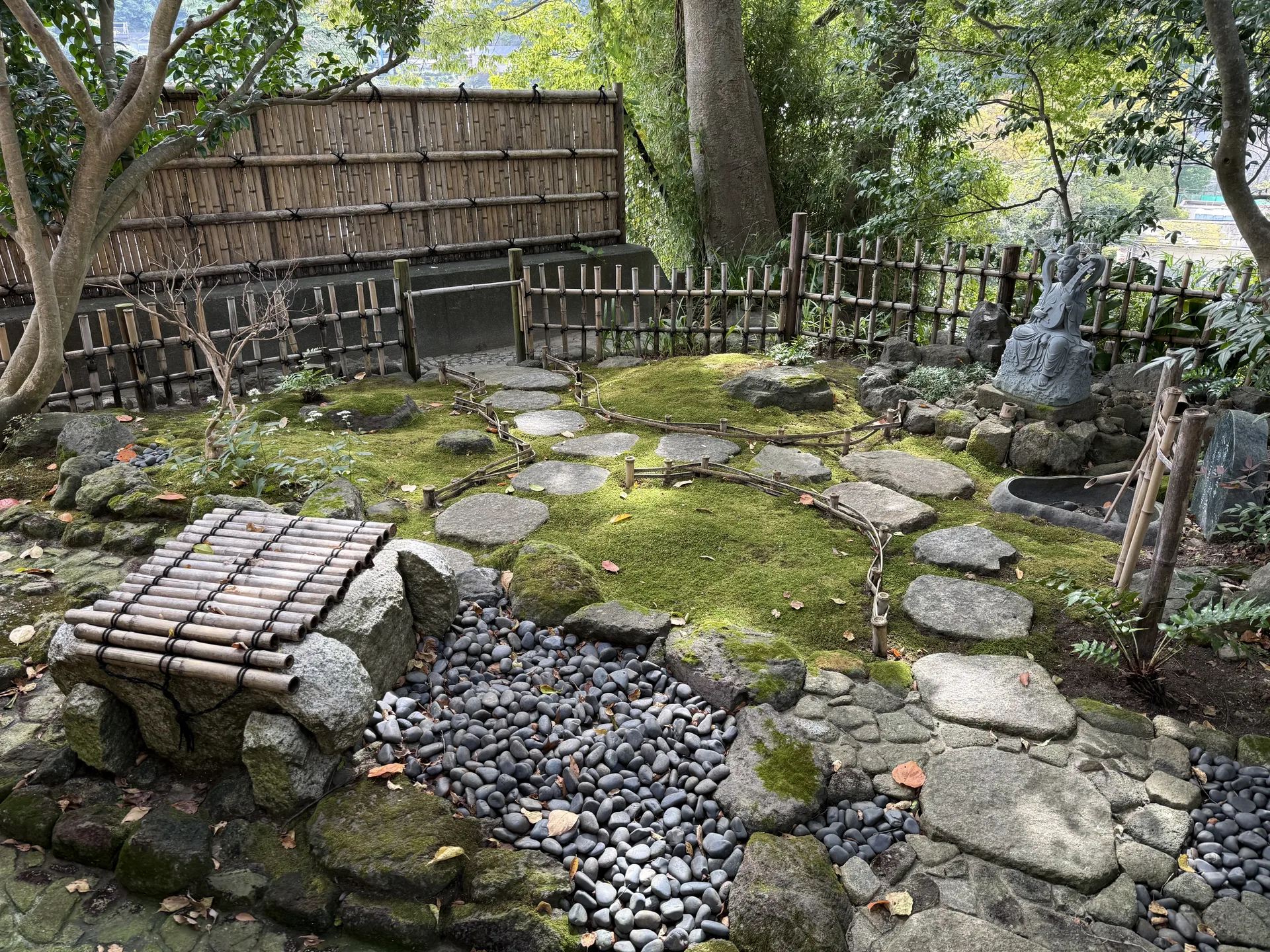
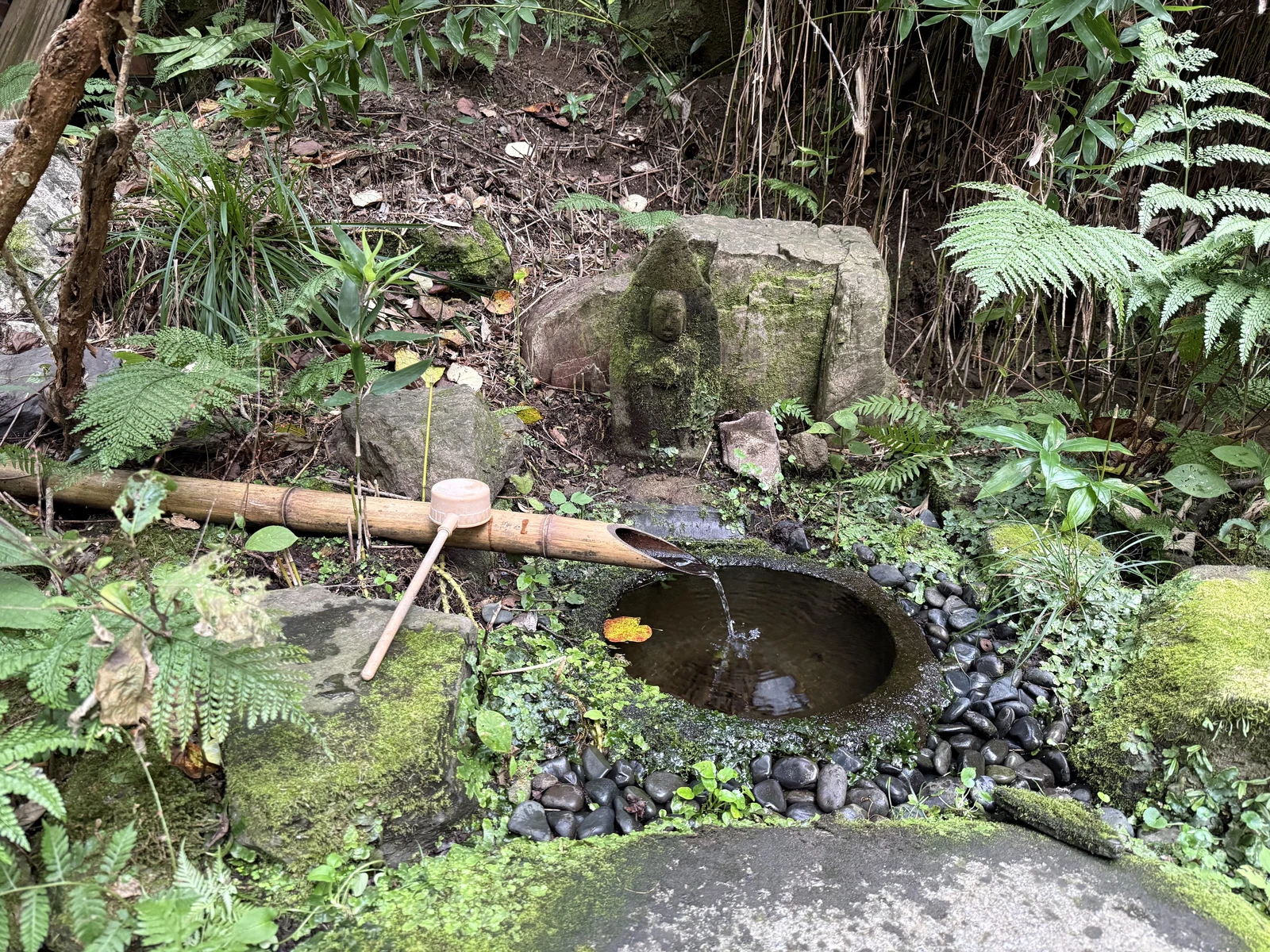
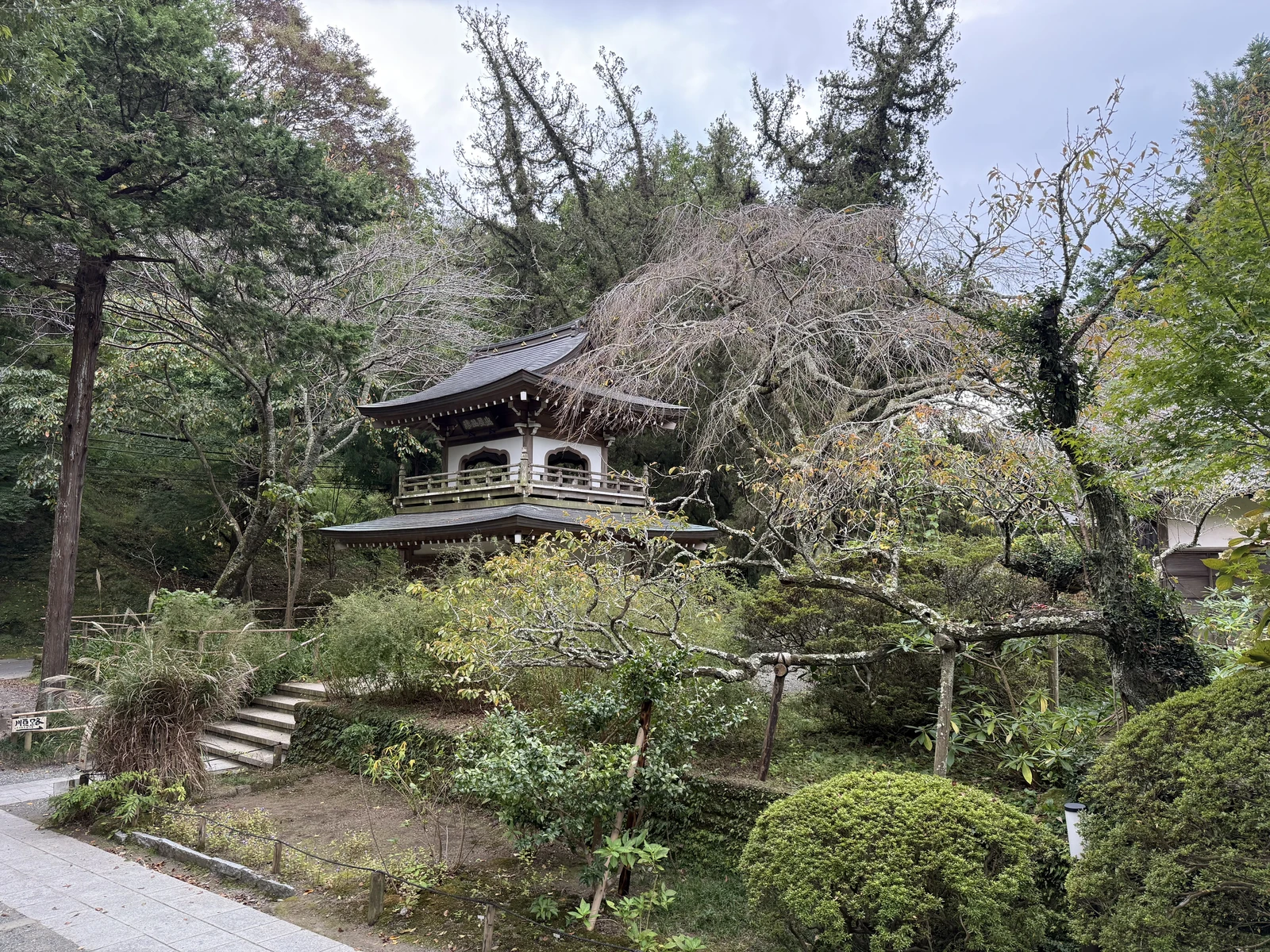
Sugimoto-dera, the city's oldest temple, moss-covered stone steps beneath a closed canopy of trees. Zuisen-ji, with Musō Soseki's rock garden carved directly into the cliff's living stone — suiseki in reverse, if you like: instead of bringing the stone to the garden, the Zen master carved the garden into the stone. Hokoku-ji and its bamboo forest, matcha served in the pavilion at the end of the path. Kamakura, enclosed by hills in a natural bay that made it a stronghold during the shogunate that bears its name, was also the gateway through which Rinzai Zen entered Japan, and with it, much of the aesthetic we now associate with bonsai and dry gardens: samurai discipline found in Zen meditation the same demand for attention and renunciation.
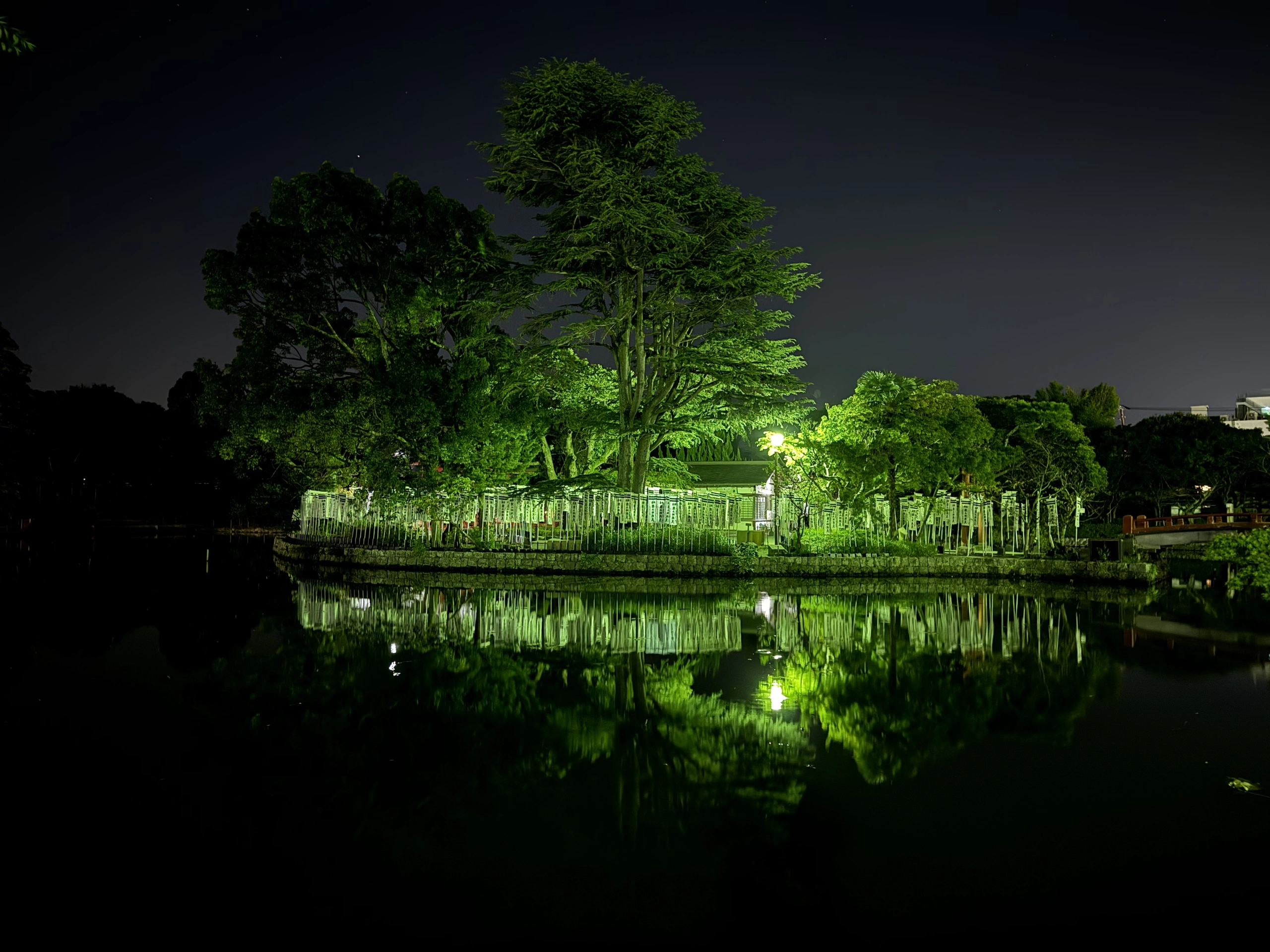
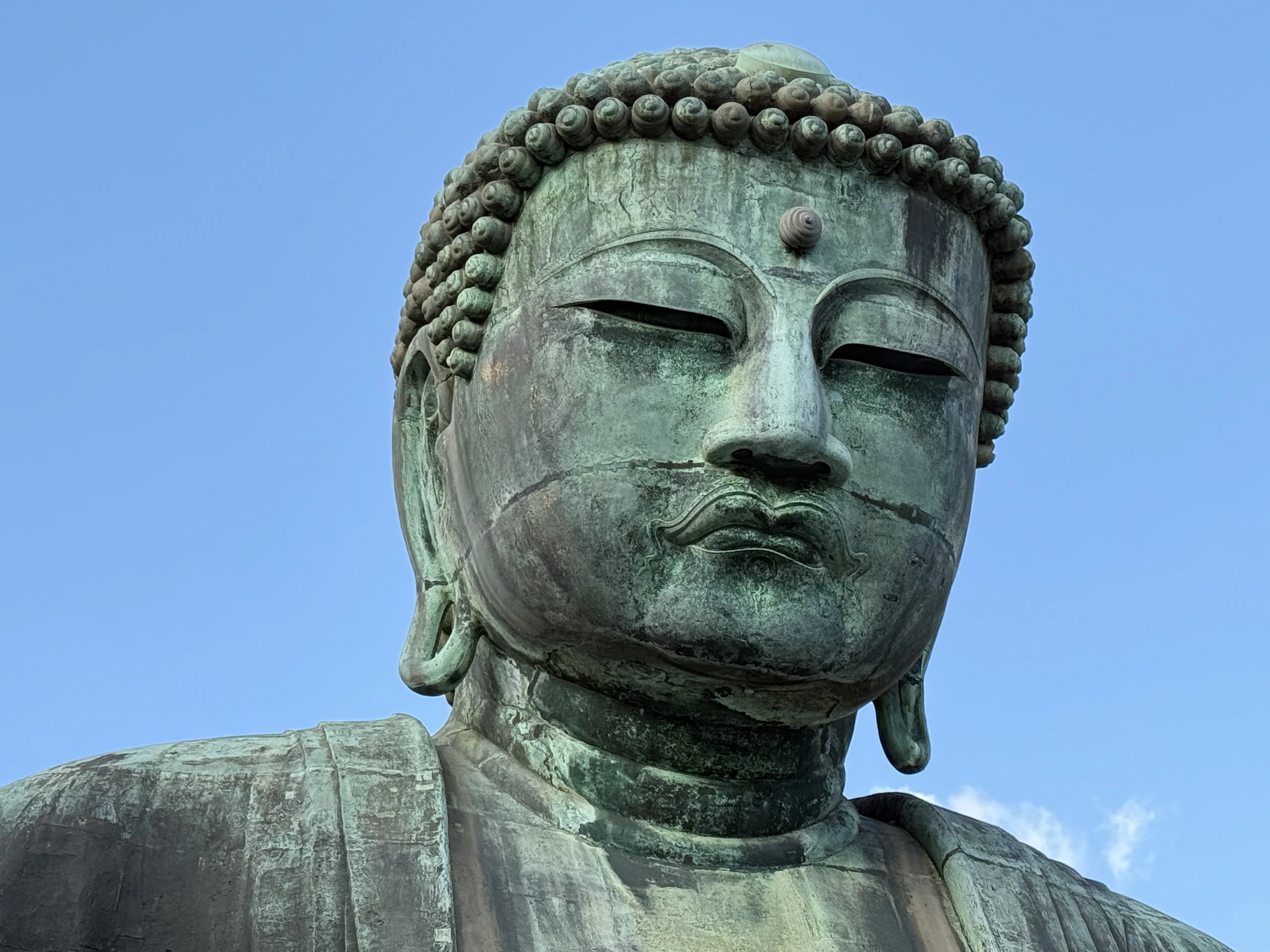
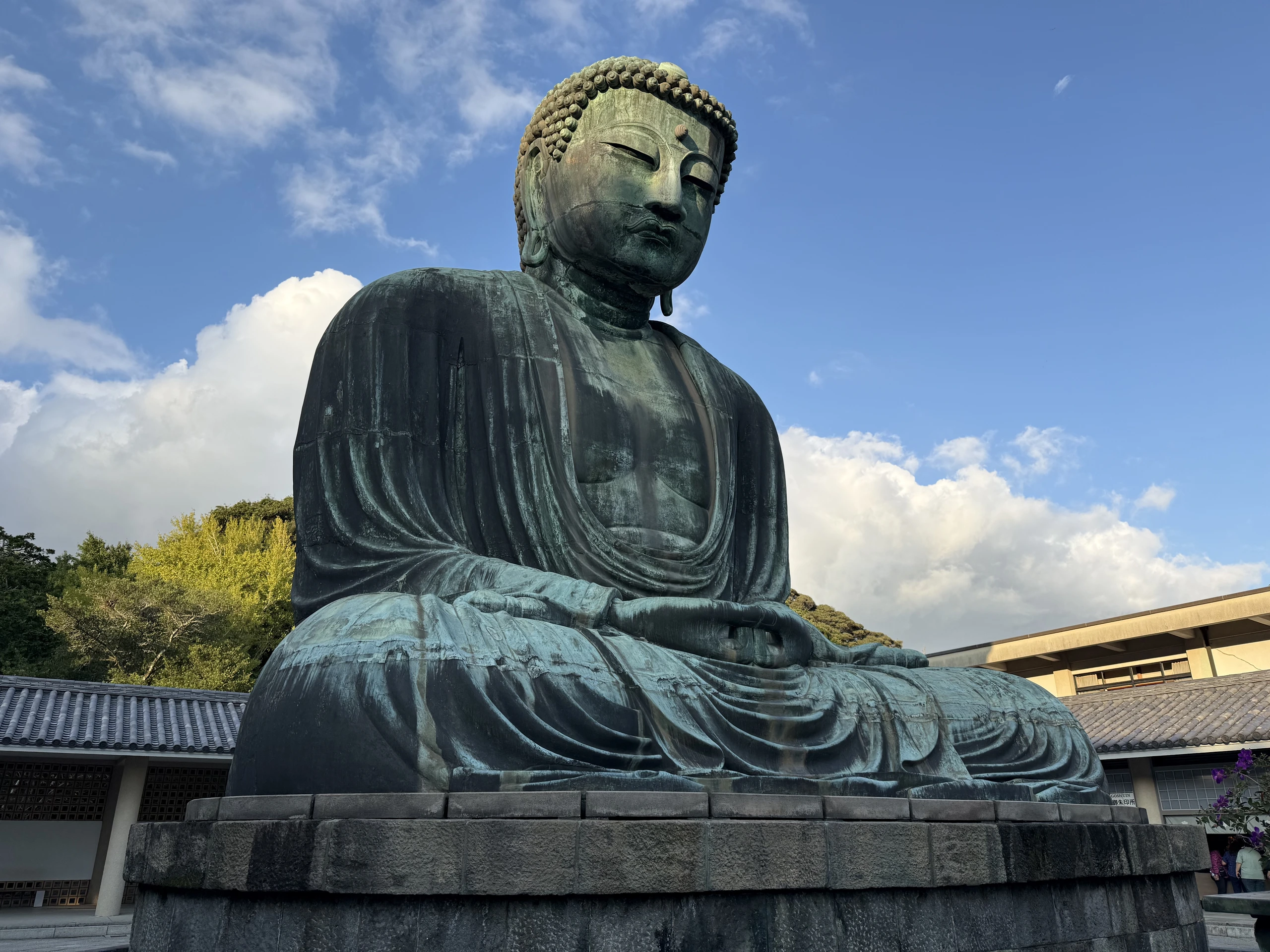
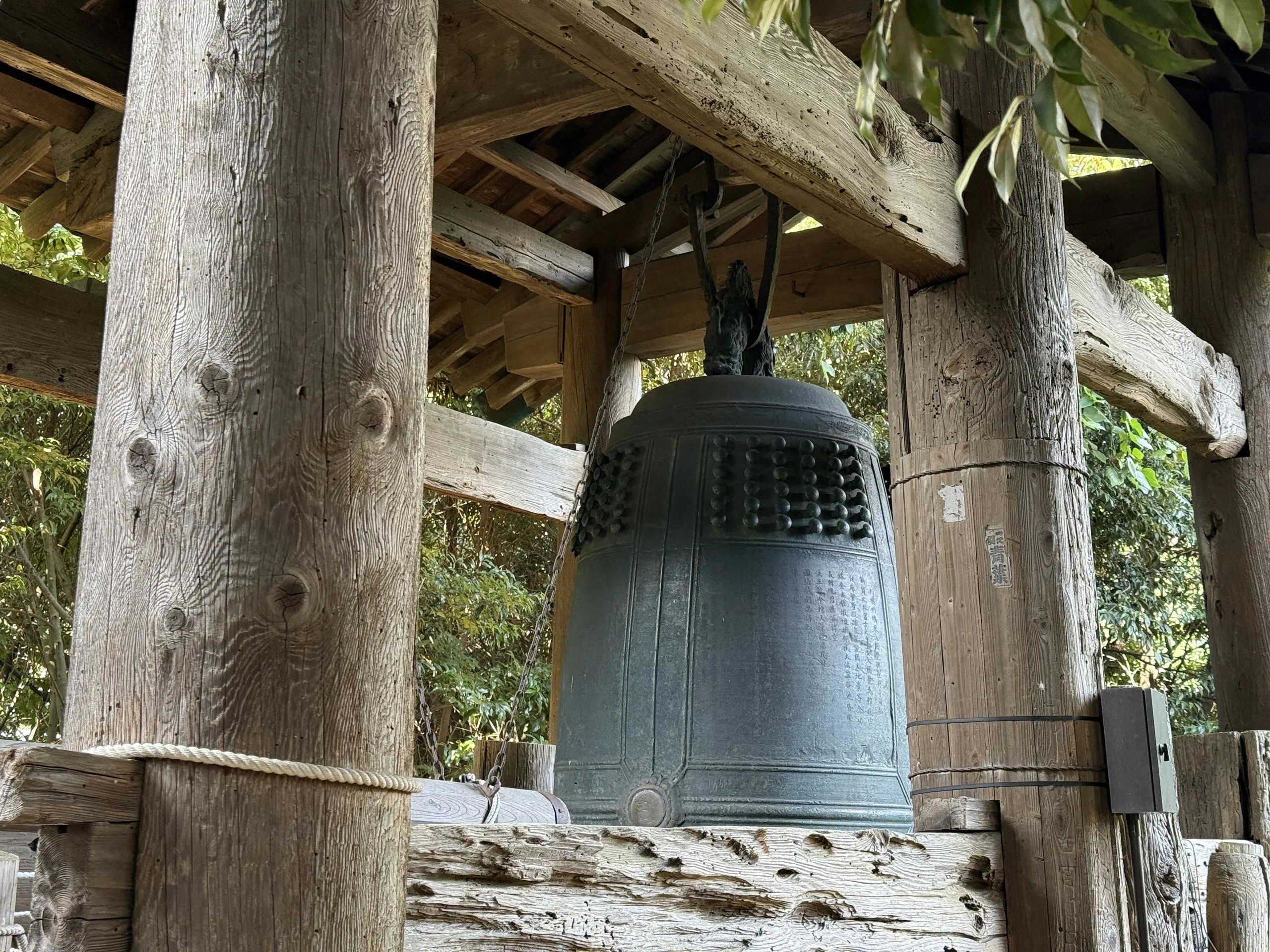
Second day: Engaku-ji at opening — the country's first great Zen monastery, founded to honor the fallen of the Mongol invasions — the ridge of the Daibutsu Hiking Trail between Kenchō-ji and the Great Buddha of Kōtoku-in, bronze over seven meters tall, green patina from centuries of weathering, the same patina we call jin in a shimpaku when it's wood rather than metal. Hase-dera overlooking Sagami Bay, and back along the Yuigahama coast, with cormorants drying their wings on the shoreline rocks, wing open to the sun in that heraldic gesture I've seen repeated so many times from Chiba to here, a bird that unknowingly frames the whole journey.
The Return
From Kamakura to Yokohama, from there to Haneda, with no departure time fixed in advance. Flight on October 15th with a layover in London, closing once more the great circle that opened this notebook, this time from east to west. Twenty-one days after Madrid, the name I left with isn't exactly the one I return with. In the martial arts schools there's a notion of symbolic death preceding any true change of name: a title isn't added, something is given up first. Just as a bonsai gains no shape without first losing a branch, or a suiseki stone reveals no face until water and time have decided which part to hide. The body returns; what remains to be seen, in the calm that follows, is how much the one who looks has changed.
One detail deserves its own paragraph: during the flight back, over Greenland, the plane crossed a landscape I had not expected. Dark rock peaks breaking through the ice, glaciers running down to a deep blue sea, and a faintly curved horizon beneath an intense blue sky: probably one of the most beautiful landscapes I have ever seen. The three photographs below do not do it justice, but they are what remains.